Deutsch
  English
  简体中文
简体中文  Español
  Français
  Italiano
  日本語
日本語  한국어
한국어  Polski
  Português
  Русский
  Türkçe
  Nederlands
  Tiếng Việt
  ไทย
ไทย 
Die Verbesserung der Gebäudeakustik bedeutet, das Verhalten in einem Raum zu steuern, sodass Komfort, Kommunikation und täglicher Gebrauch unterstützt werden, anstatt dagegen zu arbeiten. Gute Akustik reduziert unerwünschtes Rauschen, begrenzt Echo und Nachhall und hilft dabei, klar und verständlich zu bleiben. Wenn die Akustik schlecht ist, erleben die Menschen Müdigkeit, Ablenkung, Stress und eine geringere Produktivität. Dies gilt in Büros und Coworking Spaces, aber auch in Häusern, Schulen, Krankenhäusern und öffentlichen Gebäuden, in denen Wohlbefinden und Klarheit genauso wichtig sind wie Ästhetik.
Bei der Akustik geht es nicht darum, den Klang vollständig zu beseitigen. Es geht darum, den Sound so zu verwalten, dass er zur Funktion des Raums passt.
Dieser Artikel erläutert praktische Möglichkeiten zur Verbesserung der Gebäudeakustik, der Materialauswahl, Layoutstrategien und modernen Akustiklösungen, die in realen Projekten verwendet werden.
1. Was bedeutet „gute Gebäudeakustik“?
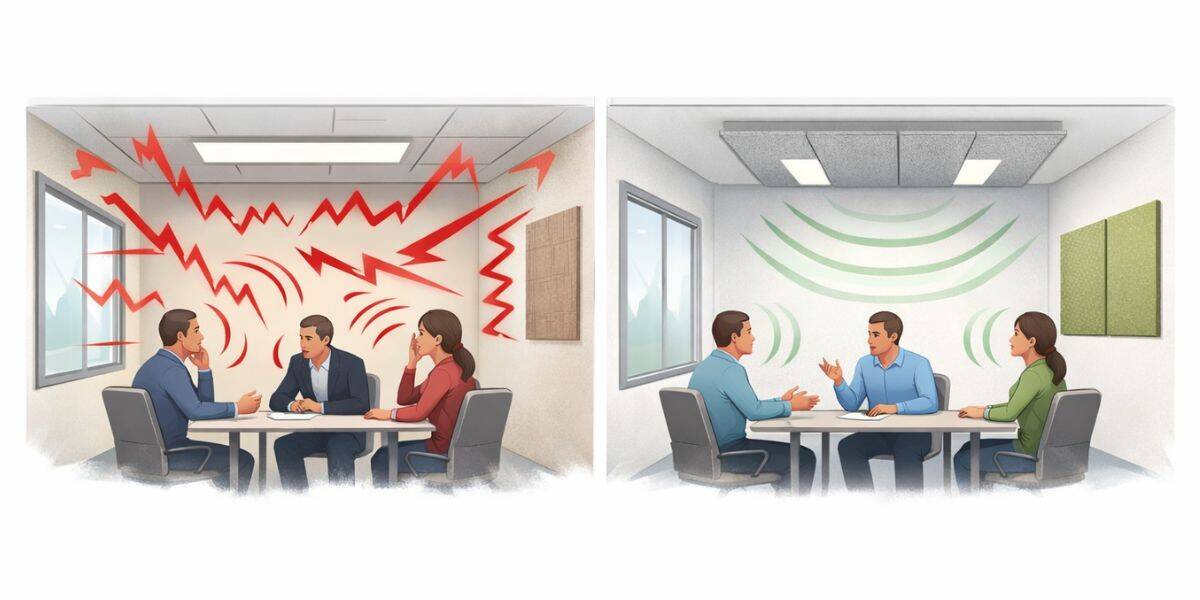
Gute Gebäudeakustik bezieht sich darauf, wie effektiv der Raum den Sound steuert, der dem vorgesehenen Verwendungszweck entspricht. Dies beinhaltet mehr als das Absenken des Geräuschpegels. Es erfordert das Verständnis, wie sich der Schall bewegt, reflektiert und von den Bewohnern wahrgenommen wird.
Ein wichtiger Unterschied ist zwischen Schallabsorption, Schallblockierung und Schallabweichung. Schallabsorption reduziert Echo und Nachhall, indem Schallenergie erfasst wird, anstatt sie zu reflektieren. Materialien wie Akustikplatten, Deckensysteme und Produkte auf Filzbasis absorbieren Schallwellen und verhindern, dass sie in einem Raum herumspringen. Die Schallblockierung konzentriert sich dagegen darauf, dass Schall nicht durch Wände, Böden oder Decken passiert. Dies wird normalerweise durch Massen-, Luftdicht-Konstruktion und strukturelle Trennung erreicht. Die Schallmaske reduziert das Geräusch nicht direkt. Stattdessen wird ein kontrollierter Hintergrundgeräusch eingeführt, der störende Geräusche weniger auffällig macht, was in Großraumbüros üblich ist.
Akustik wird oft fälschlicherweise als Synonym für Rauschunterdrückung behandelt, aber diese Ansicht ist zu eng. Ein Raum kann leise sein und dennoch eine schlechte Akustik haben, wenn die Sprache unklar ist oder sich der Raum unangenehm anfühlt. In Büros verringert eine schlechte Akustik den Fokus und erhöht die kognitive Belastung. In Wohngebäuden wirken sie sich auf die Privatsphäre und die Schlafqualität aus. Akustik in Schulen beeinflusst die Lernergebnisse und das Sprachverständnis. In Krankenhäusern wirken sie sich auf die Patientenwiederherstellung und die Leistung des Personals aus. In Gewerberäumen prägen sie das Kundenerlebnis und die Zeit in der Umwelt.
Gute Bauakustik balanciert Absorption, Blockierung und Layoutentscheidungen aus, um zu unterstützen, wie Menschen den Raum tatsächlich nutzen.
2. Häufige akustische Probleme in Gebäuden
Über moderne Gebäude treten mehrere wiederkehrende akustische Probleme auf, insbesondere wenn das Design Offenheit und harte Oberflächen priorisiert.
- Echo und übermäßiger Nachhall
Schall, der wiederholt von unbehandelten Oberflächen reflektiert, lässt Geräusche verweilen, wodurch sich die Räume lauter und chaotischer anfühlen, als sie tatsächlich sind. - Probleme mit der Sprachverständlichkeit
Reflektierter Klang beeinträchtigt die direkte Sprache, verringert die Klarheit in Besprechungsräumen, Klassenzimmern und offenen Büros und erhöht die Hörermüdung. - Lärmübertragung zwischen den Zimmern
Schall wandert durch Wände, Decken, Böden und gemeinsam genutzte Gebäudesysteme und beeinträchtigt die Privatsphäre in Wohn-, Büro- und Gesundheitsumgebungen. - Überbeanspruchung harter Oberflächen
Materialien wie Glas, Beton, Trockenbau, Stein und Metall reflektieren den Schall effizient und tragen bei kompensationsfreier Verwendung wenig zur akustischen Kontrolle bei. - Hohe Decken und offene Layouts
Große Volumina und ununterbrochene Oberflächen vergrößern die Reflexionswege und verstärken den Nachhall, sofern die Absorption nicht strategisch hinzugefügt wird.
3. Praktische Möglichkeiten zur Verbesserung der Gebäudeakustik
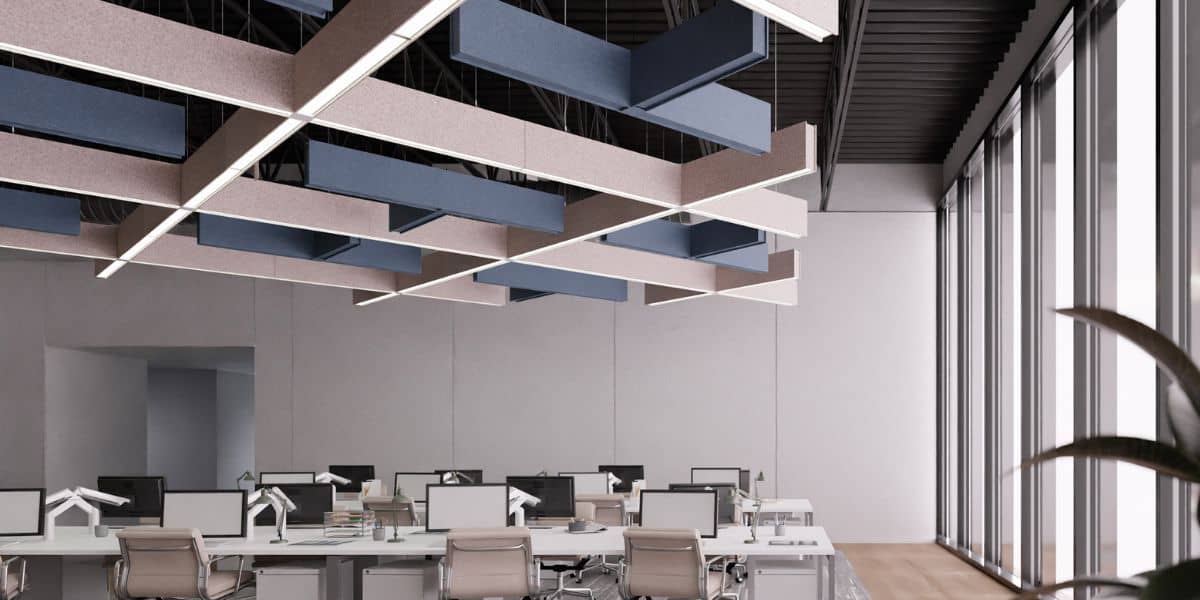
Die Verbesserung der Akustik erfordert keine einzige Lösung. Effektive Ergebnisse ergeben sich aus der Kombination von Materialien, Platzierungen und Designstrategien, die sich mit dem Verhalten im Raum befassen.
Oberflächenabsorption an Wänden und Decken
Das Hinzufügen von Absorption auf Raumoberflächen ist eine der effektivsten Möglichkeiten, um das Echo zu reduzieren und die Klarheit zu verbessern. Akustikplatten an der Wand werden häufig verwendet, Decken werden jedoch trotz ihrer Wirkung häufig nicht genutzt. Der Klang bewegt sich auf natürliche Weise nach oben und reflektiert die Deckenflächen, was sie zu einem kritischen Bereich für die Behandlung macht.
Absorbierende Oberflächen sollten dort platziert werden, wo die Schallenergie am höchsten ist, z. B. in der Nähe von Sitzbereichen, Arbeitsplätzen und Sprechpositionen. Das Ziel ist nicht, jede Oberfläche abzudecken, sondern Reflexionswege zu unterbrechen und die Nachhallzeit zu kontrollieren.
Warum Decken im akustischen Design wichtig sind
Decken beeinflussen die Akustik mehr als viele Menschen erkennen. In Freiräumen tragen Deckenreflexionen stark zum Gesamtgeräuschpegel bei. Die Behandlung von Decken ermöglicht es den Designern, den Ton zu kontrollieren, ohne den Wandraum zu opfern, der möglicherweise für die Aufbewahrung, Anzeige oder Verglasung benötigt wird.
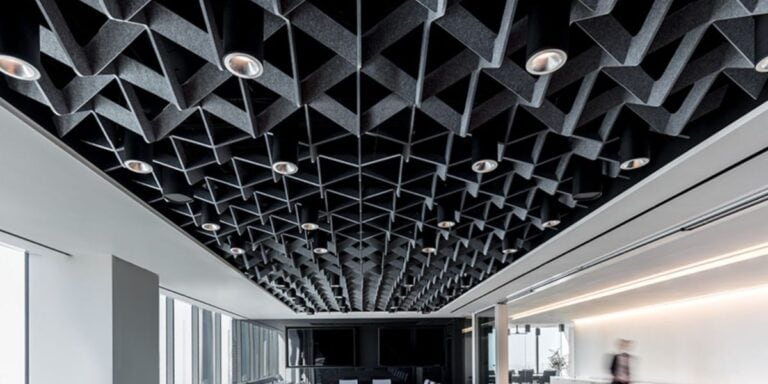
Deckenbasierte Lösungen umfassen akustische Fliesen, Leitbleche und Wolken. Diese Systeme sind besonders nützlich in Räumen mit hohen Decken oder begrenzter Wandfläche. Durch die Platzierung der Insassen wird der Schall näher an seiner Quelle gesteuert.
Die Rolle von Akustikarmaturen in modernen Gebäuden
Moderne Innenräume erfordern oft multifunktionale Elemente, die sowohl technischen als auch ästhetischen Zwecken dienen. Hier spielen Akustikarmaturen eine immer wichtigere Rolle. Diese Elemente verbinden Schallabsorption mit anderen Funktionen, wie z. B. Beleuchtung oder räumliche Definition.
Akustische Vorrichtungen sind besonders wertvoll in modernen Büros und öffentlichen Räumen, in denen sauberes Design und Flexibilität Priorität haben. Sie ermöglichen die Integration der akustischen Behandlung in das Gesamtdesign und nicht als nachträgliche Überlegung.
Wie Akustikbeleuchtung die Akustik verbessert, ohne das Design zu beeinträchtigen
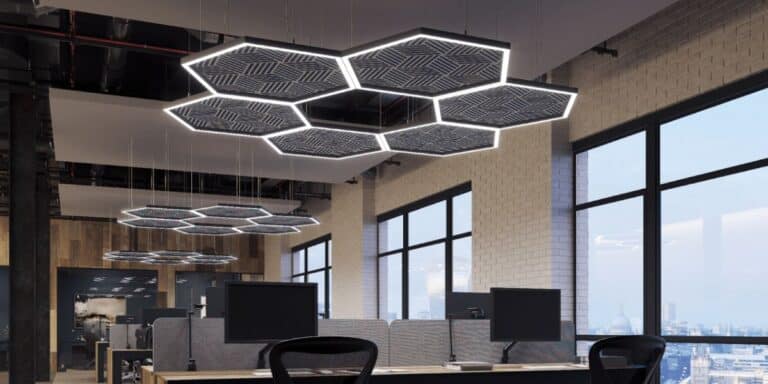
Akustikbeleuchtung Kombiniert schallabsorbierende Materialien mit integrierter Beleuchtung. Dieser Ansatz befasst sich mit zwei wesentlichen Gebäudesystemen gleichzeitig: Beleuchtung und akustische Steuerung. Anstatt separate Paneele und Leuchten hinzuzufügen, können Designer die visuelle Unordnung reduzieren und gleichzeitig die Leistung verbessern.
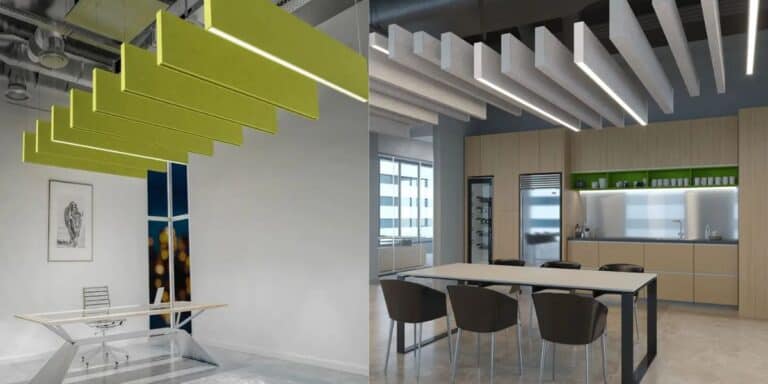
Richtig eingesetzt, hilft akustische Beleuchtung, den Nachhall in offenen Büros, Konferenzräumen und Gemeinschaftsräumen zu verwalten. Produkte, die dafür ausgelegt sind, haben oft die Form von abgehängten Platten oder Leuchten, die Schall absorbieren und gleichzeitig funktionelles Licht liefern. Bei sorgfältiger Vorgabe wird die akustische Beleuchtung eher Teil der architektonischen Sprache des Raums als zu einer rein technischen Intervention. Beispiele für solche integrierten Lösungen sind in modernen Akustik-Beleuchtungssystemen zu finden, die speziell für gewerbliche Innenräume entwickelt wurden.
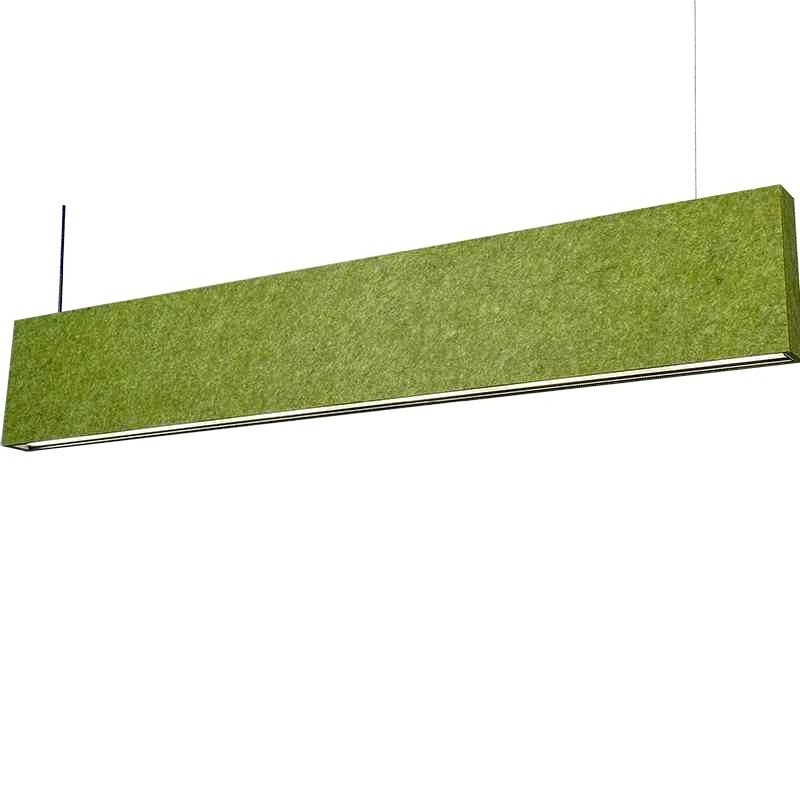
Schlankes, blendfreies akustisches LED-Linearlicht
- Eingangsspannung: AC100-277V / AC220-240V,50-60Hz
- Gehäusegröße: W58*H200 mm/ W58*H300mm
- Ausstrahlen: Abwärts
- Längenoption: 1218mm / 1220mm / 1288mm
- CCT: 3000K / 4000K / 6000K
- Leistung: 30W / 32W
- Lichtstrom: 100-110lm/W
- CRI:> 90ra
- PF:> 0,90
- Flicker frei: ja
- Abstrahlwinkel: 36°
- IP-Grad: IP20
- Garantie: 5 Jahre
- Filz Akustiktafel Farbe: rot / grün / blau / grau mehr als 48 Farben Option
Filzbeleuchtung und Leuchten in zeitgemäßen Innenräumen
Aufgrund ihrer Absorptionseigenschaften und Designflexibilität werden filzbasierte Materialien zunehmend in akustischen Anwendungen eingesetzt. Filzbeleuchtung und -leuchten mildern den Klang und den visuellen Charakter und sind für kollaborative Räume, Lounges und kreative Umgebungen geeignet.
Diese Lösungen funktionieren gut in Räumen, in denen eine wärmere, weniger technische Ästhetik gewünscht wird. Akustikarmaturen auf Filzbasis können den Mittel- und Hochfrequenz-Hallen reduzieren und gleichzeitig zu einer angenehmeren Atmosphäre beitragen.
4. Design-Tipps zur Verbesserung der Akustik
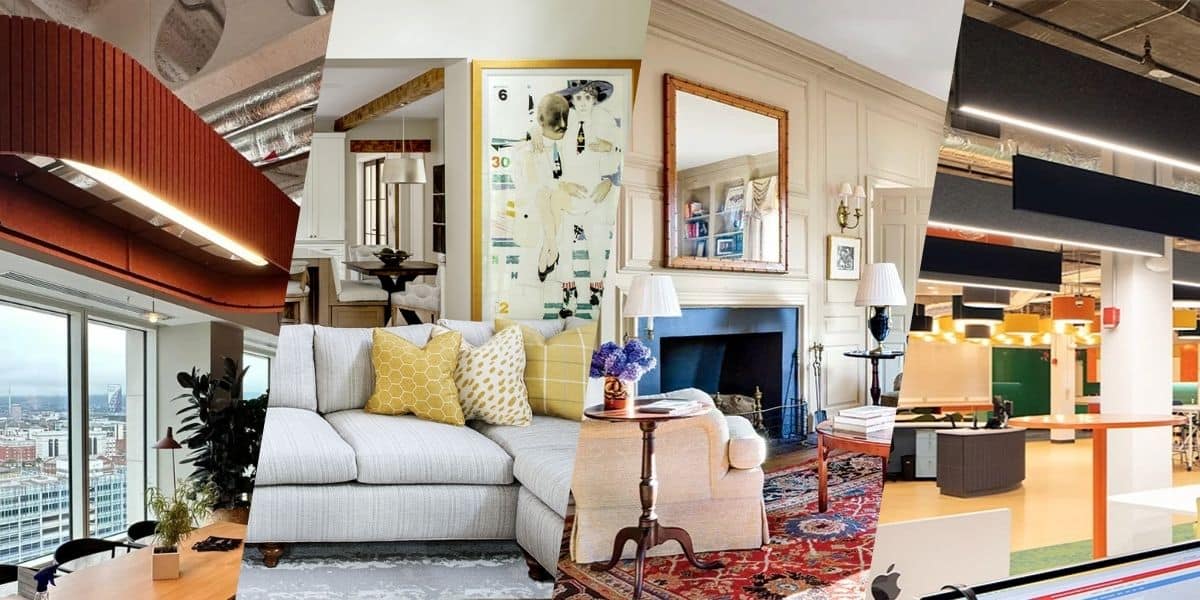
Viele akustische Verbesserungen können durch Design- und Layout-Wahl erzielt werden, ohne die Gebäudestruktur zu verändern.
- Zonenstrategien
Trennen Sie laute Aktivitäten von ruhigen Aktivitäten, indem Sie Layouts absichtlich planen, z. B. das Platzieren von Besprechungsbereichen von fokussierten Arbeitsbereichen. - Platzierung von Möbeln
Gepolsterte Sitzgelegenheiten, Bücherregale, Trennwände und Aufbewahrungseinheiten helfen, den Schall auf Reflexionswegen zu absorbieren und zu diffundieren. - Verwendung weicher Materialien und Oberflächen
Teppiche, Teppiche, Vorhänge und stoffbezogene Möbel reduzieren den reflektierten Klang, insbesondere in Wohn- und gemischten Räumen. - Platzierung vor der Menge priorisieren
Eine kleinere Anzahl gut platzierter Absorptionselemente ist oft besser als übermäßige Behandlung ohne akustische Logik.
5. Akustische Materialien und Lösungen im Vergleich
| Lösungstyp | Hauptfunktion | Bester Anwendungsfall | Notizen |
| Akustische Wandpaneele | Vertief | Büros, Korridore | Reduziert Echo und verbessert die Klarheit |
| Decken-Schallwände oder Wolken | Vertief | Freiflächen | Steuert den Nachhall von oben |
| Akustische Beleuchtungspaneele | Licht und Absorption | Büros, Coworking-Spaces | Zweizwecklösung |
| Filzleuchten | Absorption und Design | Moderne Innenräume | Visuelle und akustische Bal |
| Schallschutzsysteme | Ablenkungskontrolle | Büros | Unterstützt Absorptionsstrategien |
Dieser Vergleich zeigt, dass keine einzige Lösung jede akustische Herausforderung angeht. Jede Option spielt innerhalb einer breiteren akustischen Strategie eine bestimmte Rolle.
6. Wo akustische Beleuchtung am besten in Gebäudedesign passt
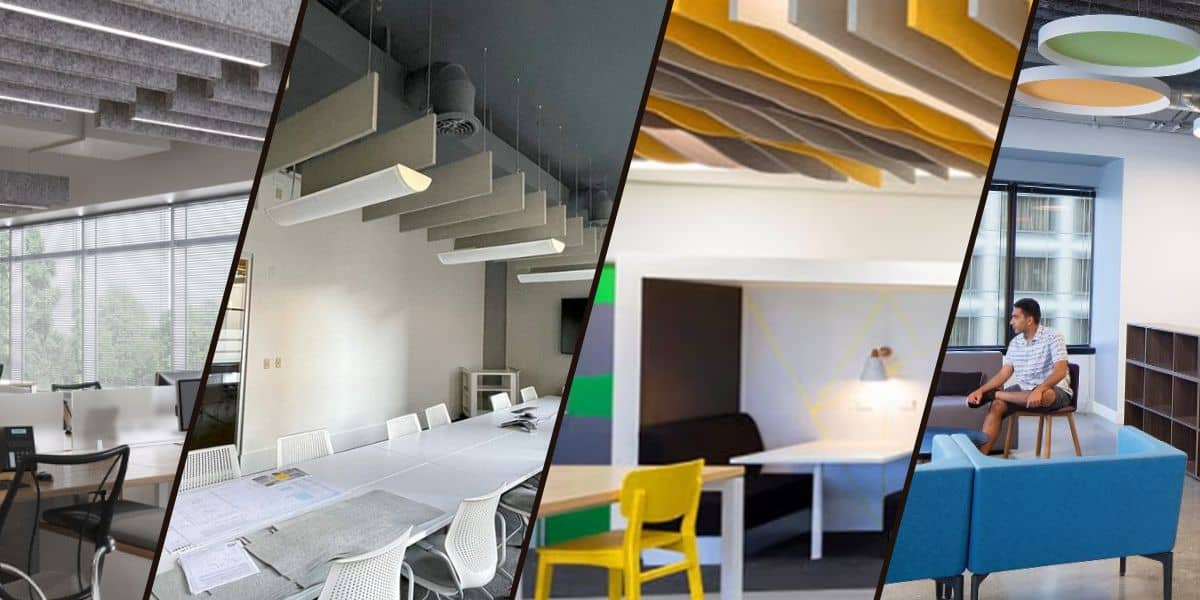
Akustische Beleuchtung ist in Räumen am effektivsten, in denen sowohl die Schallkontrolle als auch die Beleuchtungsqualität von entscheidender Bedeutung sind und wo wandbasierte Lösungen eingeschränkt sind.
Unter Büros und Coworking-Spaces, Akustische Beleuchtung hilft bei der Steuerung von Lärm in offenen Umgebungen. Es reduziert den Nachhall und sorgt gleichzeitig für eine konsistente, aufgabengerechte Beleuchtung. Dies unterstützt den Fokus und reduziert die Ermüdung, ohne den offenen Charakter des Raums zu verändern.
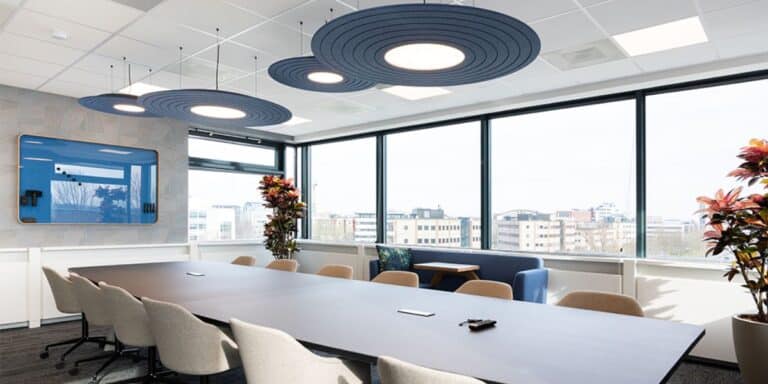
Konferenzräume Profitieren Sie von akustischer Beleuchtung, da Sprachklarheit unerlässlich ist. Die deckenbasierte Absorption in der Nähe des Tisches reduziert Reflexionen, die die Konversation stören, während die integrierte Beleuchtung eine gleichmäßige Sicht für die Teilnehmer gewährleistet.
Bildungsgebäude Oftmals drohen Einschränkungen des Wandraums durch Boards, Displays und Stauraum. Akustische Beleuchtungspaneele Bieten Sie Absorption, ohne mit funktionalen Wandelementen zu konkurrieren, und verbessern Sie die Sprachverständlichkeit in Klassenzimmern und Vorlesungsräumen.
Gesundheitswesen und öffentliche Räume Akustik benötigen, die Ruhe und Privatsphäre unterstützt. Akustische Beleuchtung kann dazu beitragen, Hintergrundgeräusche in Wartebereichen und Korridoren zu reduzieren und gleichzeitig ein sauberes, übersichtliches Deckendesign zu erhalten.
In all diesen Fällen sind akustische Beleuchtungspaneele besonders nützlich, wenn die Wandfläche begrenzt oder optisch sensitiv ist, was die Deckenintegration zum praktischsten Ansatz macht.
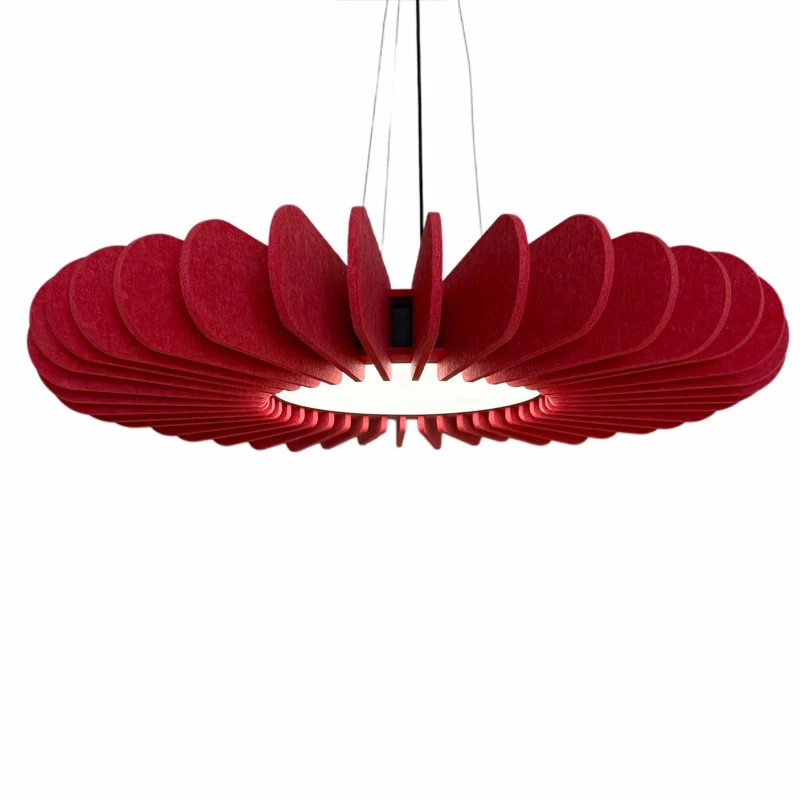
Ultradünne, runde akustische LED-Pendelleuchte
- Eingangsspannung: AC100-277V / AC220-240V,50-60Hz
- Gehäusegröße: 120 mm
- Ausstrahlen: Abwärts
- Größe DH: 50080mm
- CCT: 3000K / 4000K / 6000K
- Leistung: 15W
- Lichtstrom: 100-110lm/W
- CRI:> 90ra
- PF:> 0,90
- Flicker Free: Ja
- Abstrahlwinkel: 120°
- IP-Grad: IP20
- Garantie: 5 Jahre
- Akustikpanel Farboption: Rot / Grün / Blau / Grau Mehr als 48 Farben Option
7 . Häufige Fehler im akustischen Design
Selbst gut gemeinte Projekte bleiben aufgrund vermeidbarer Entwurfsannahmen oftmals knapp.
- Deckenflächen ignorieren
Die Behandlung von nur Wänden lässt eine große Reflexionsebene unberührt, insbesondere in Räumen mit harten Böden. - Verlassen Sie sich auf dekorative Elemente ohne akustische Werte
Nicht alle optisch weichen Materialien absorbieren den Schall effektiv und führen zu minimaler Verbesserung der realen Welt. - Erwarten Sie eine Lösung, um alle Probleme zu lösen
Akustik erfordert einen systembasierten Ansatz, der Absorptions-, Blockierungs- und Layoutstrategien kombiniert. - Schlechte Platzierung von akustischen Elementen
Selbst hochwertige Materialien schneiden ab, wenn sie von wichtigen Reflexionspunkten oder Schallquellen entfernt installiert werden.
8. 2026 Trends in der Bauakustik
Die Gebäudeakustik geht eher in Richtung Integration als auf Zusatzlösungen. Systeme, die Beleuchtung, Absorption und sogar Luftmanagement kombinieren, werden immer häufiger, da Designer Effizienz und visuelle Klarheit suchen.
modular Akustik immer beliebter werden, weil sie sich an wechselnde Layouts anpassen, insbesondere in hybriden Arbeitsumgebungen. Flexibilität ist jetzt eine zentrale Anforderung.
Auch das Wohlbefinden im Fokus wächst. Akustik wird zunehmend als Faktor für psychische Gesundheit, Produktivität und allgemeine Komfort erkannt und beeinflusst die Gestaltung der Räume von den ersten Stadien.
Abschluss
Die Verbesserung der Gebäudeakustik erfordert einen ausgewogenen Ansatz. Effektive Lösungen kombinieren Schallabsorption, intelligente Platzierung und ein Verständnis der Nutzung von Räumen. Wände, Decken, Möbel und Layout tragen zur akustischen Leistung bei.
Integrierte Lösungen wie Akustikbeleuchtung und gut gestaltete Akustikarmaturen ermöglichen eine gleichzeitige Klangsteuerung mit modernen Designanforderungen. Wenn diese Strategien nachdenklich angewendet werden, schaffen sie Räume, die komfortabel, funktional und unterstützend sind, ohne sich auf übermäßige oder aufdringliche Behandlungen zu verlassen.
FAQs
Verwandte Artikel