Deutsch
  English
  简体中文
简体中文  Español
  Français
  Italiano
  日本語
日本語  한국어
한국어  Polski
  Português
  Русский
  Türkçe
  Nederlands
  Tiếng Việt
  ไทย
ไทย 
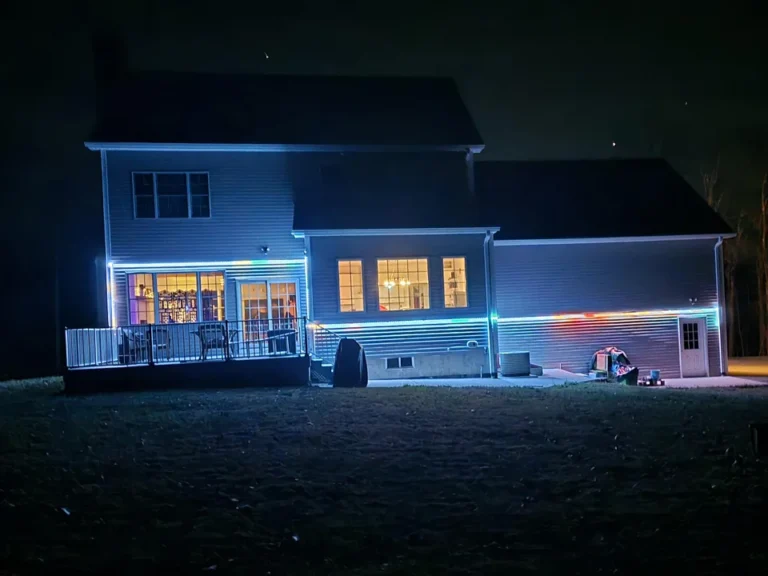
Dimbares LED-Band im Freien wird häufig in architektonischen Umrissen, Landschaftsbeleuchtung und dekorativen Außenanwendungen verwendet, bei denen sowohl die Beleuchtungsleistung als auch die Umweltbeständigkeit von wesentlicher Bedeutung sind. Im Vergleich zu Inneninstallationen stellen Außenprojekte höhere Anforderungen an wasserdichten Schutz, Dimmstabilität und Gesamtsystemkompatibilität. Unterschiedliche Anwendungen können je nach Installationsbedingungen, Steuerungsmethoden und Projektskalierung unterschiedliche Faktoren priorisieren. Dieser Artikel beschreibt einige wichtige Überlegungen bei der Auswahl von dimmbarem LED-Band für den Außenbereich und bietet praktische Referenzpunkte, mit denen Käufer Produkte und Lösungen für ihre spezifischen Anwendungen effektiver bewerten können.
Außenumgebung und wasserdichte Bewertung
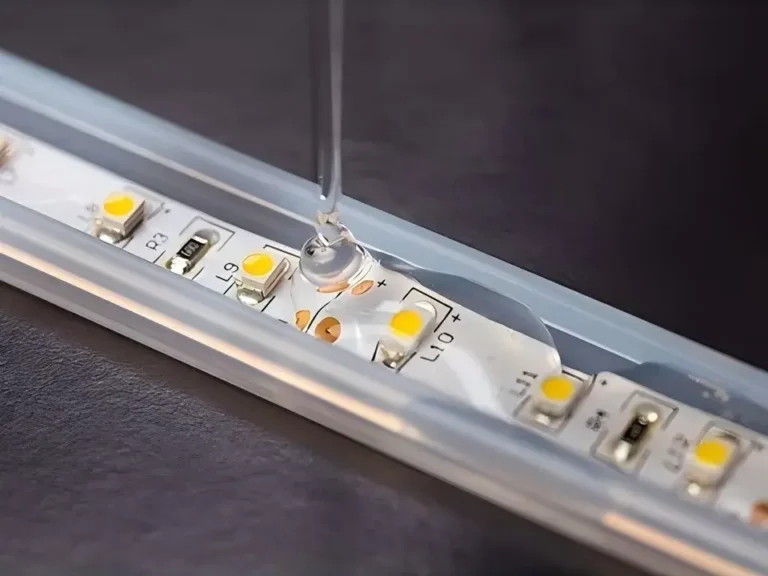
Dimbares LED-Band im Freien ist in einer Vielzahl von wasserdichten Konstruktionen erhältlich, und die Auswahl sollte immer auf der tatsächlichen Installationsumgebung basieren. Zu den gängigen Optionen gehören die IP65-Silikonbeschichtung, die IP65-Silikonröhre, die IP67-Hohlextrusion, die IP68-Silikonfüllung und die IP68-Silikonextrusion. Jede Struktur bietet ein anderes Gleichgewicht zwischen Feuchtigkeitsschutz, Flexibilität, Wärmeableitung und langfristiger Haltbarkeit. Es gibt kein einziges „bestes“ wasserdichtes LED-Band für alle Outdoor-Projekte, die geeignete Wahl hängt von der Expositionsstufe, der Einbaulage und den Umgebungsbedingungen ab.
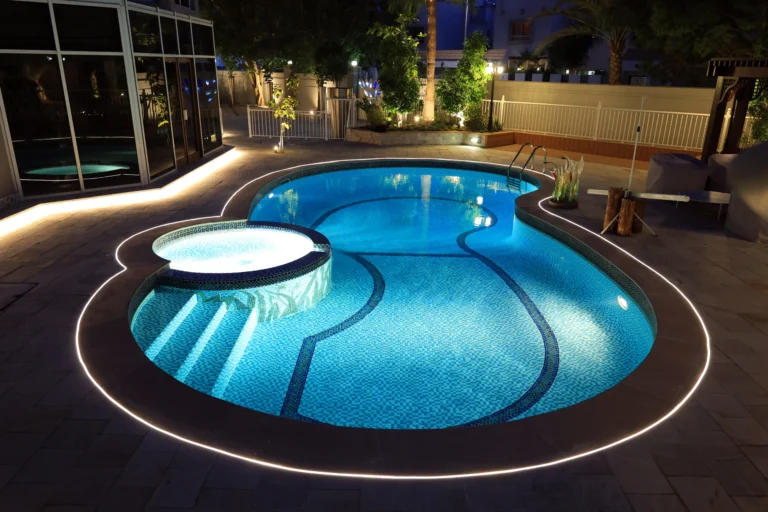
Aus praktischer Sicht definieren IP-Bewertungen Schutzgrenzen und nicht die gesamte Produktqualität. IP65 LED-Band Ist für Umgebungen geeignet, die Regen oder Spritzwasser ausgesetzt sind, aber nicht kontinuierlich Wasserkontakt. IP67-Produkte sind für Orte konzipiert, an denen vorübergehendes Eintauchen von Wasser auftreten kann, z. B. bodennahe Installationen oder Bereiche, die für Wasseransammlungen neigen. IP68 LED-Band ist für langfristiges oder häufiges Eintauchen bestimmt und wird typischerweise in Brunnen, Pools oder Landschaftsmerkmalen mit hoher Feuchtigkeit verwendet.
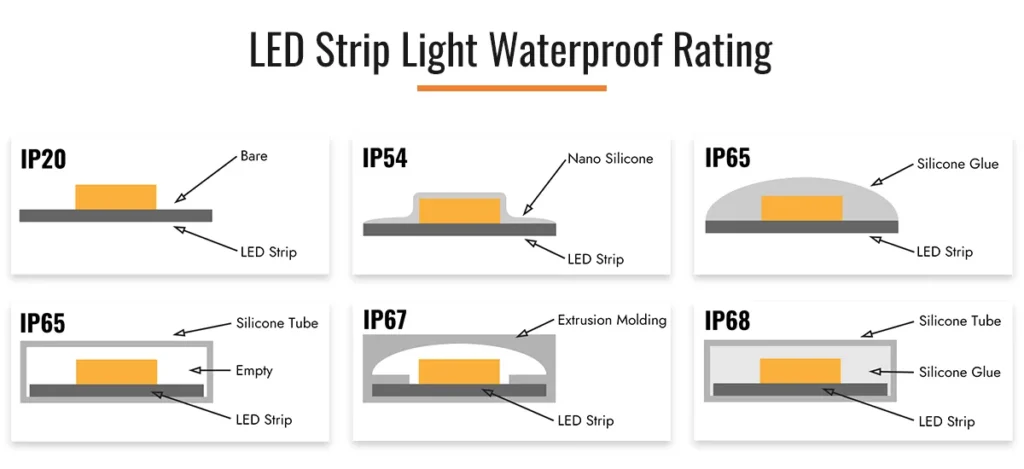
Die folgende Tabelle fasst die empfohlenen wasserdichten Bewertungen für gängige Outdoor-Anwendungen zusammen:
| Anwendungsszenario | Empfohlene IP-Be |
| Gebäudefassadenumrisse | IP65 |
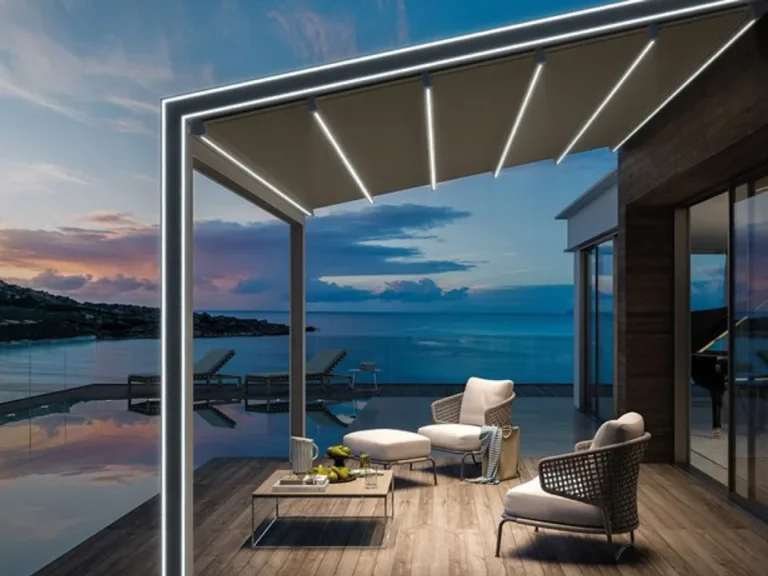
| Traufe und Vordächer | IP65 |
| Balkone und Terrassen | IP65 / IP67 |
| architektonische Linien auf Erdebene | IP67 |
| Garten- und Landschaftsbeleuchtung | IP67 |
| In der Nähe von Schwimmbädern | IP68 |
| Wasserspiele und Brunnen | IP68 |
| Küsteninstallationen an der Küste | IP67 / IP68 |
Zusammenfassend sollte die Auswahl der wasserdichten Bewertung eher von realen Expositionsbedingungen als von Annahmen bestimmt werden. Bei vollständig freiliegenden Außenanlagen wird dringendes LED-Band mit UV-beständigen Materialien empfohlen, um eine Vergilbung und Materialabbau zu verhindern. Für die Küsten- oder Salzwasserumgebung bieten Produkte, die Salzsprühtests bestanden haben, eine verbesserte Zuverlässigkeit und eine längere Lebensdauer.
Dimmmethode und Systemkompatibilität
Bei LED-Bandprojekten im Freien werden häufig mehrere Dimmmethoden verwendet, die jeweils für unterschiedliche Steuerungsanforderungen und Projektskalen geeignet sind. Die am weitesten verbreiteten Methoden umfassen PWM-Dimmen, 0–10 V-Dimmen, DALI, Triac-Dimm (Phasenschnitt) und DMX-Steuerung. Während alle diese Methoden in Außenumgebungen implementiert werden können, hängen ihre Leistung und Praktikabilität weitgehend vom Systemdesign, der Verdrahtungskomplexität und dem erforderlichen Kontrollniveau ab.
Die folgende Tabelle vergleicht diese Dimmmethoden aus Sicht des Außenprojekts:
| Dimmmethode | Vorteile | Beschränkungen | Typische Outdoor-Anwendungen |
| PWM | Einfach, kostengünstig, stabil | Begrenzte zentrale Steuerung | Kleine bis mittelgroße Outdoor-Projekte |
| 0–10v | Reifer Standard, gute Stabilität | Zusätzliche Steuerverkabelung | Kommerzielle Fassaden, Außenschild |
| Dali | Adressierbare, flexible Steuerung | Höhere Systemkosten | Große architektonische Beleuchtungssystem |
| TRIAC | Kompatibel mit Wechselstrom | Begrenztes Dimmen auf niedriger Ebene | Außenbeleuchtung nachrüsten |
| DMX | Präzise Steuerung, dynamische Effekte | Erfordert die korrekte Decoder-Einrichtung | Architektur- und Landschaftsbeleuchtung |
In den meisten Outdoor-Anwendungen ist DC-LED-Band mit allen fünf Dimmmethoden kompatibel, wenn es mit geeigneten Treibern oder Controllern gekoppelt wird. Bei DMX-basierten Projekten ist jedoch die Auswahl des richtigen DMX-Decoders unerlässlich, da die Kanalkonfiguration und der Ausgabetyp die Systemstabilität direkt beeinflussen. Im Gegensatz dazu ist AC-LED-Band in der Regel auf Triac-Dimmen und ausgewählte Phasenschnitt-Steuersysteme beschränkt, was es für einfachere Außeninstallationen besser geeignet macht.
Helligkeit und Lichtgleichmäßigkeit
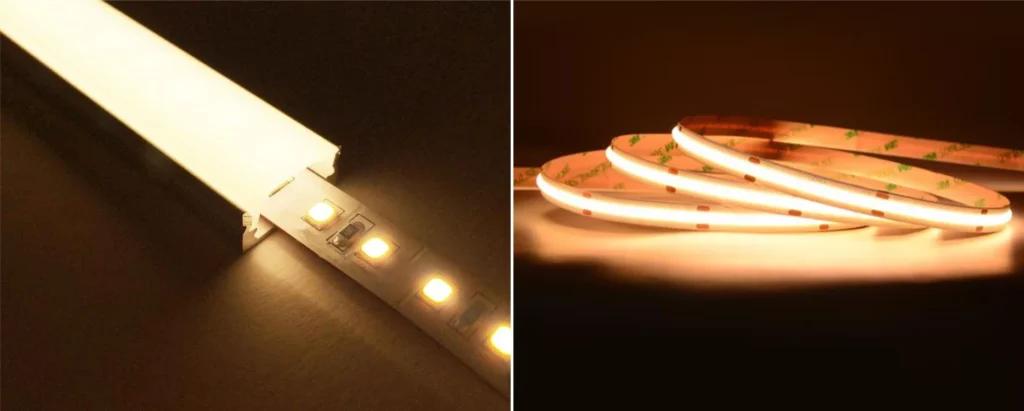
Helligkeit ist häufig eine Hauptüberlegung bei LED-Außenklemmen, insbesondere bei architektonischen Umrissen und funktionaler Außenbeleuchtung. Wenn eine hohe Lichtausbeute und maximale Helligkeit erforderlich ist, ist SMD-LED-Band im Allgemeinen die bevorzugte Option. Hocheffizientes SMD-LED-Band kann eine Lichtausbeute von über 180 lm/W erreichen, während das LED-Band von COB normalerweise bis zu 150 lm/W reicht. Bei Projekten mit dem gleichen Helligkeitsgrad bietet SMD-LED-Band in der Regel eine bessere Energieeffizienz und einen geringeren Stromverbrauch, wodurch es für großflächige Installationen im Freien geeignet ist.
Die Gleichmäßigkeit der Lichtverhältnisse ist ein separater, aber ebenso wichtiger Faktor, insbesondere bei Anwendungen mit sichtbarer linearer Beleuchtung. Wenn ein kontinuierlicher, punktfreier Lichteffekt erforderlich ist, bietet COB LED-Band aufgrund seiner höheren Chipdichte und der eng gepackten Lichtfläche klare Vorteile, was zu einer glatten Beleuchtung ohne dunkle Flecken führt. Alternativ können SMD-LED-Band mit Aluminiumprofilen und Diffusoren auch eine gute Gleichmäßigkeit erreichen und gleichzeitig die Wärmeableitung und den mechanischen Schutz verbessern.
Eingangsspannungsauswahl für dimmbares LED-Außenband
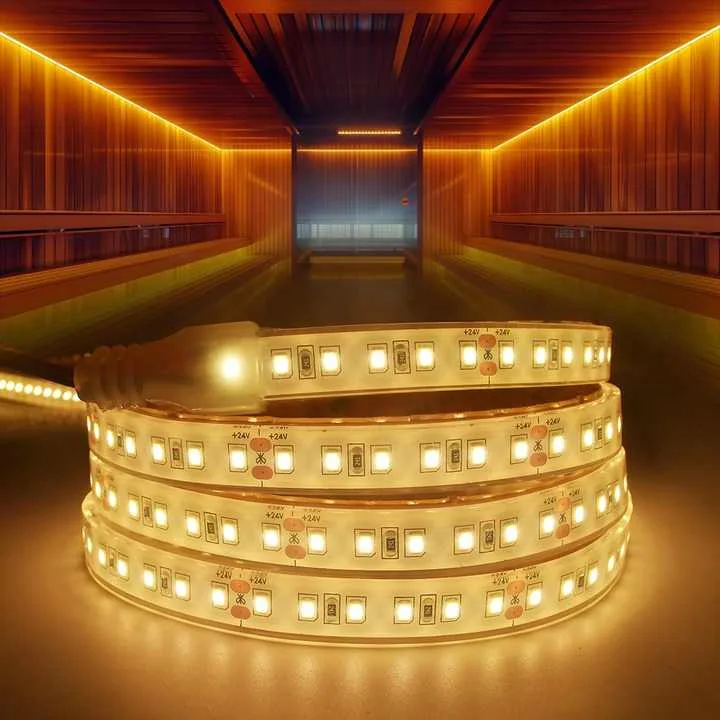
Bei Outdoor-Projekten wird Hochspannungs-LED-Band aufgrund eines erhöhten Stromschlagrisikos und komplexerer Sicherheitsanforderungen in der Regel nicht empfohlen. Infolgedessen wird das LED-Band mit Gleichspannungs-Niederspannung häufiger verwendet, wobei DC12V und DC24V die am weitesten verbreiteten Optionen sind. Bei der Auswahl von dimmbarem LED-Band Spannungsabfall muss sorgfältig überlegt werden, da dies direkt die Helligkeitsgleichmäßigkeit und die Dimmkonsistenz entlang des Laufs beeinflusst.
Bei einem Single-End-Stromeingang sollte das DC12V-LED-Band normalerweise auf 5 Meter begrenzt werden, während das DC24V-LED-Band bis zu 7 Meter lang sein kann. Wenn die zweiseitige Stromaufnahme verwendet wird, können DC12V-Systeme ungefähr 15 Meter und DC24V-Systeme bis zu 20 Meter erreichen. Überschreiten dieser Längen kann zu einer sichtbaren Helligkeitsreduzierung und ungleichmäßigen Dimmleistung führen.
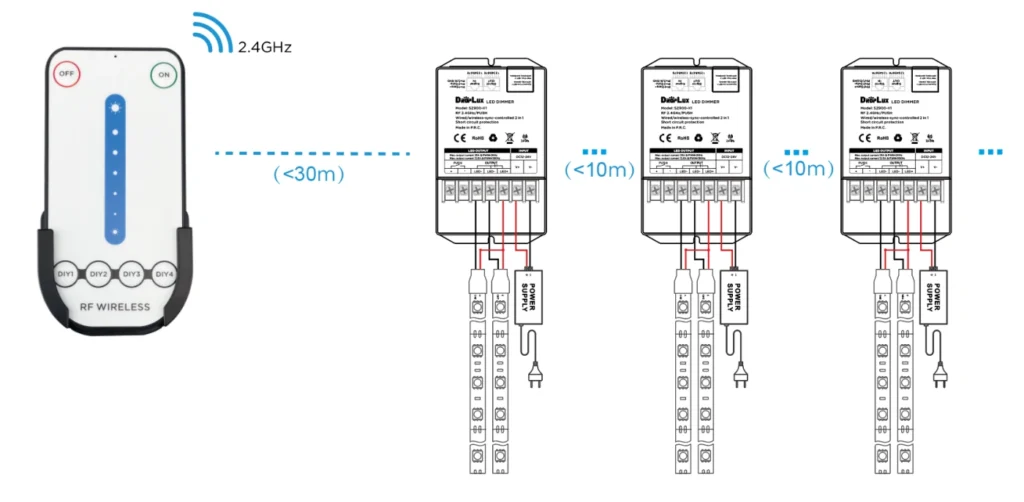
Für Projekte, die lange Dauerläufe erfordern, bietet das LED-DC48V-Band eine praktische Alternative. Es unterstützt bis zu 15 Meter mit Single-End-Eingang und bis zu 40 Meter mit Dual-End-Eingang, vereinfacht die Verdrahtung und reduziert den Spannungsabfall. Die Hauptbeschränkung ist die relativ kleinere Auswahl kompatibler Netzteile. Bei Verwendung von PWM-Dimmen kann die Dimmkonsistenz durch Hinzufügen von Signalverstärkern zwischen LED-Bandabschnitten oder durch die Verwendung von synchronen Reglern, insbesondere in großen Außenanlagen, weiter verbessert werden.
Auswahl des richtigen Lieferanten für mittlere und große Outdoor-Projekte
Bei mittleren bis großen Außenbeleuchtungsprojekten spielt die Lieferantenauswahl eine wichtige Rolle für die Gesamtleistung des Projekts. In den meisten Fällen ist es vorzuziehen, direkt mit einem echten Hersteller zusammenzuarbeiten, um über Online-Marktplätze oder Handelsunternehmen zu beschaffen. Hersteller bieten in der Regel wettbewerbsfähigere Preise, tiefere Produktkompetenz und stärkere technische Unterstützung. Noch wichtiger ist, dass sie besser positioniert sind, um nicht standardmäßige Anpassungen zu ermöglichen, was häufig bei Projekten mit dimmbarem LED-Band im Freien erforderlich ist
Bei der Bewertung der Hersteller sollten auch die Produktkonformität und die Testfunktionen berücksichtigt werden. Relevante Zertifizierungen wie UL, CE und RoHS zeigen die Einhaltung der Vorschriften, während Testberichte - einschließlich IES-Photometrischer Daten, Integration von Kugeltests und Salzsprühtests - zusätzliche Sicherheit für Leistung, Sicherheit und langfristige Zuverlässigkeit in Außenumgebungen bieten.
Andere wichtige Faktoren, die zu berücksichtigen sind
Neben der wasserdichten Bewertung, Dimmmethode, Helligkeit, Auswahl der Spannung und Auswahl des Lieferanten können mehrere zusätzliche Faktoren die langfristige Leistung von dimmbarem LED-Band im Freien beeinflussen. Das Wärmemanagement ist besonders wichtig, da wasserdichte Strukturen die Wärmeableitung einschränken können, und die richtige Installation mit Aluminiumprofilen kann die Zuverlässigkeit erheblich verbessern. Auch die Farbkonsistenz beim Dimmen, insbesondere bei niedrigen Helligkeitsstufen, sollte bei sichtbarer Architekturbeleuchtung bewertet werden. Darüber hinaus spielen Kabelausgangsdesign, Endkappendichtung und Installationsdetails eine Schlüsselrolle beim Verhindern des Eindringens von Feuchtigkeit im Laufe der Zeit. Für raue Umgebungen sorgen UV-Beständigkeit, Korrosionsschutz und verifizierte Prüfdaten für eine weitere Sicherung eines stabilen Langzeitbetriebs.
Mit über zehn Jahren Erfahrung in der Herstellung von LED-Outdoor-LED-Bands unterstützt Signlited eine breite Palette von Außenbeleuchtungsanwendungen. Neben Standardprodukten bieten wir maßgeschneiderte LED-Bandlösungen an, die auf bestimmte Projektanforderungen zugeschnitten sind, einschließlich Schaltungsdesign, Farboptionen und wasserdichte Konstruktion. Um die Systemkompatibilität und die stabile Dimmleistung zu gewährleisten, bieten wir auch komplette unterstützende Lösungen wie Controller, Verstärker, Decoder und Netzteile. Durch die Kombination von Produktanpassungen mit praktischem Systemsupport helfen wir Kunden, dimmbare LED-Bandlösungen im Freien effizienter und zuverlässiger zu implementieren.
Verwandte Artikel