Deutsch
  English
  简体中文
简体中文  Español
  Français
  Italiano
  日本語
日本語  한국어
한국어  Polski
  Português
  Русский
  Türkçe
  Nederlands
  Tiếng Việt
  ไทย
ไทย 
Akustische Beleuchtung ist am besten, wenn sie direkt über den primären Schallbereichen wie Arbeitsplätzen, Konferenztischen, Kollaborationsbereichen und offenen Sitzplätzen installiert wird. Die Platzierung der Decke ist entscheidend, da die Decke als Hauptreflexionsfläche für die Sprache fungiert. Der richtige Abstand, die Höhe und die Verteilung bestimmen, wie effektiv der Fixture den Nachhall reduziert und die Sprachklarheit verbessert.
Dieser Artikel erklärt optimale Platzierungszonen, Höhenüberlegungen, Reflexionssteuerungslogik, raumtypische Strategien und häufige Installationsfehler. Der Fokus liegt ausschließlich auf der Platzierungsleistung, damit Architekten, Designer, akustische Berater und Facility Manager fundierte Installationsentscheidungen treffen können.
Warum die Deckenplatzierung wichtiger ist als die Platzierung der Wand
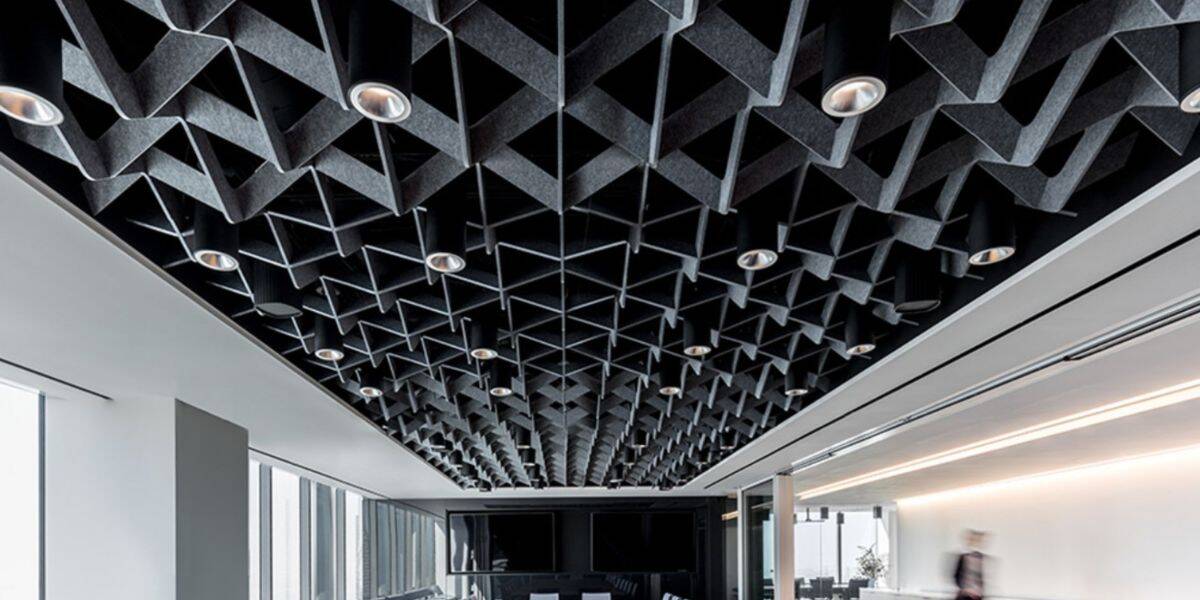
In den meisten kommerziellen Innenräumen bewegt sich die Sprachenergie unmittelbar nach dem Verlassen des Mundes des Sprechers nach oben. Die erste signifikante Reflexion tritt häufig in der Deckenebene auf, bevor sie in die besetzte Zone zurückkehrt. Dies schafft den, was Akustiker als erste Reflexionspfad bezeichnen:
Sprachquelle → Decke → Reflektierte Energie → Zuhörer.
Wenn Decken hart sind, treten reflektierende Oberflächen wie Gipskarton, Sichtbeton oder Metalldecks schnell in den Raum ein, erhöhen die Nachhallzeit und verringern die Klarheit.
Die Wandabsorption hilft, aber sie befasst sich hauptsächlich mit seitlichen Reflexionen. Overhead-Reflexionen sind in offenen und Konferenzumgebungen in der Regel dominanter, weil:
- Die Decke überspannt die gesamte belegte Zone.
- Es reflektiert Energie zurück in das Sprachfeld.
- Es verstärkt den Lärm über große horizontale Bereiche.
Akustikbeleuchtung Unterbricht diese vertikale Reflexionsschleife direkt an der Reflexionsebene. Durch Platzierung von akustischen Vorrichtungen innerhalb des Deckenreflexionswegs wird die Sprachenergie der mittleren Frequenz (typischerweise 500–2000 Hz) absorbiert, bevor sie zu den Bewohnern zurückkehrt.
Die Platzierung der Perimeterwand abfängt diesen frühen vertikalen Sprung nicht. Deckenbasierte Filzleuchten reduzieren die Intensität der ersten Reflexionen effektiver, da sie direkt im Schallweg sitzen.
Insbesondere in offenen Umgebungen liefert die Überkopfabsorption einen höheren akustischen Aufprall pro Quadratmeter als bei der nur perimeterfreien Behandlung.
Kernplatzierungszonen
A: Über Workstations und Desk-Clustern
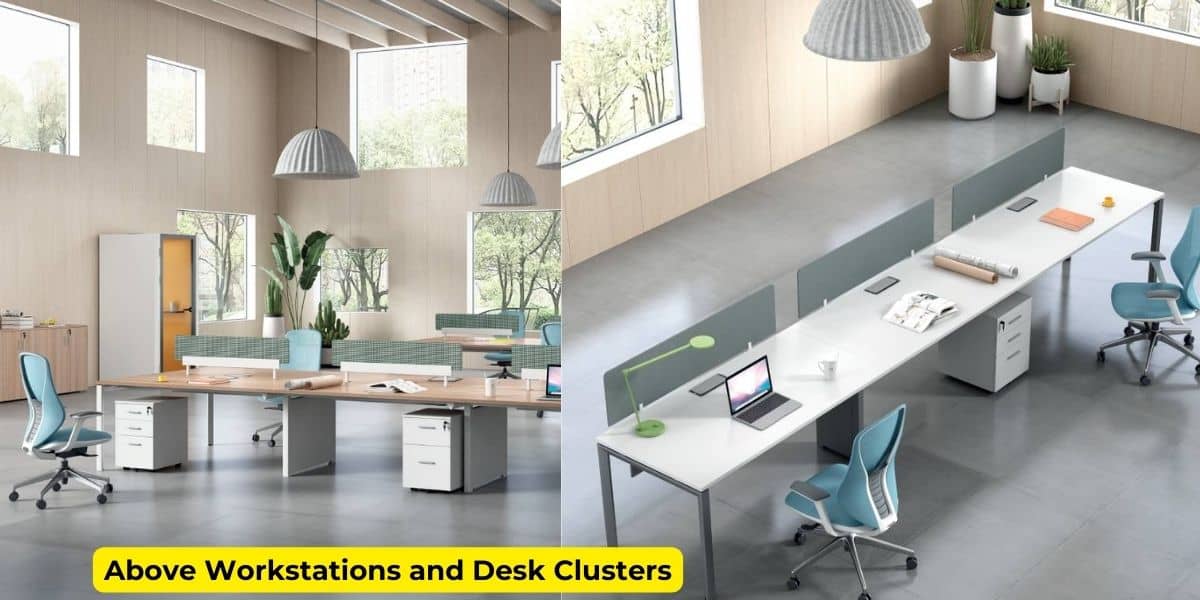
Großraumbüros konzentrieren die Sprache innerhalb der Arbeitsstationsgruppierungen. Gespräche, Videoanrufe und kollaborative Austausche erzeugen eine nachhaltige Schallenergie in der Mitte der Frequenz.
Installieren der Akustikbeleuchtung direkt über Schreibtischclustern:
- Absorbiert die Sprache, bevor sie sich seitlich ausbreitet.
- Reduziert den Aufbau von Hall über Reihen hinweg.
- Begrenzt das Übersprechen zwischen den Teams.
Filzleuchten sind besonders effektiv, da dichter Polyesterfilz die Sprache der mittleren Frequenz absorbiert, wo die meiste Verständlichkeitsenergie liegt.
Die Verteilungslogik zählt. Anstatt Vorrichtungen entlang von Korridoren oder in der Nähe von Wänden zu platzieren, sollten die Befestigungselemente über aktive Schreibtische zentriert sein und sich etwas über den Sitzabdruck hinaus erstrecken. Als Leitfaden:
- Zielen Sie die Deckenabdeckung von 20–35% über dem Schreibtisch mit hoher Aktivität.
- Einhalten von gleichbleibenden Abstand, um unbehandelte reflektierende Lücken zu vermeiden.
- Vermeiden Sie die nur Begrenzungslayouts, die es ermöglichen, dass zentrale Sprachzonen reflektieren.
Underleistungs-Layouts platzieren die Beleuchtung in der Regel dekorativ entlang von Zirkulationspfaden und nicht über Schallquellen.
B: Über Konferenztischen
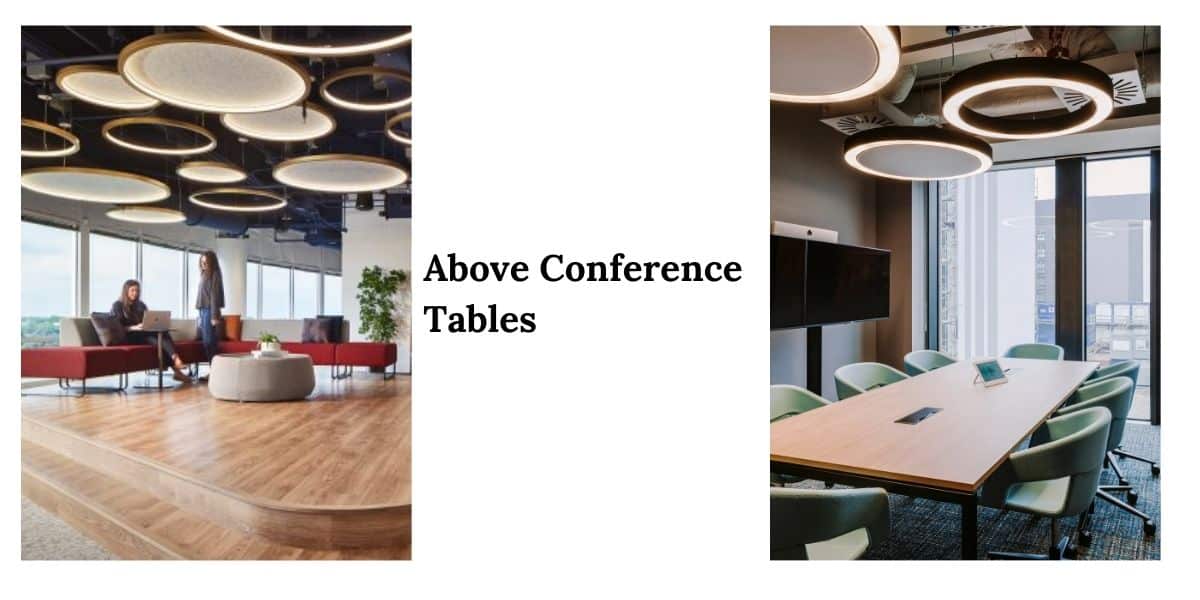
Konferenzräume konzentrieren direkte Sprache in einem festen Bereich. Mehrere Teilnehmer sprechen in Richtung Tischmitte, und der Ton wird vertikal von der Decke reflektiert.
Die optimale Konfiguration:
- Akustische Beleuchtung zentral über dem Tisch installieren.
- Erweitern Sie die Abdeckung um 300–600 mm über die Tischfläche.
- Richten Sie die Befestigungen an der Tischachse aus, um eine gleichmäßige Absorption zu erzielen.
Wenn ein Raum verlängert ist, funktioniert eine lineare Anordnung, die die Tischform widerspiegelt, besser als ein einzelner kompakter Cluster.
Auch die Höhe zählt. In typischen Decken von 2,7–3 m verbessert die Hängevorrichtung von 400–800 mm unter der Platte die Absorptionseffizienz, indem das Material näher an der Reflexionszone platziert wird.
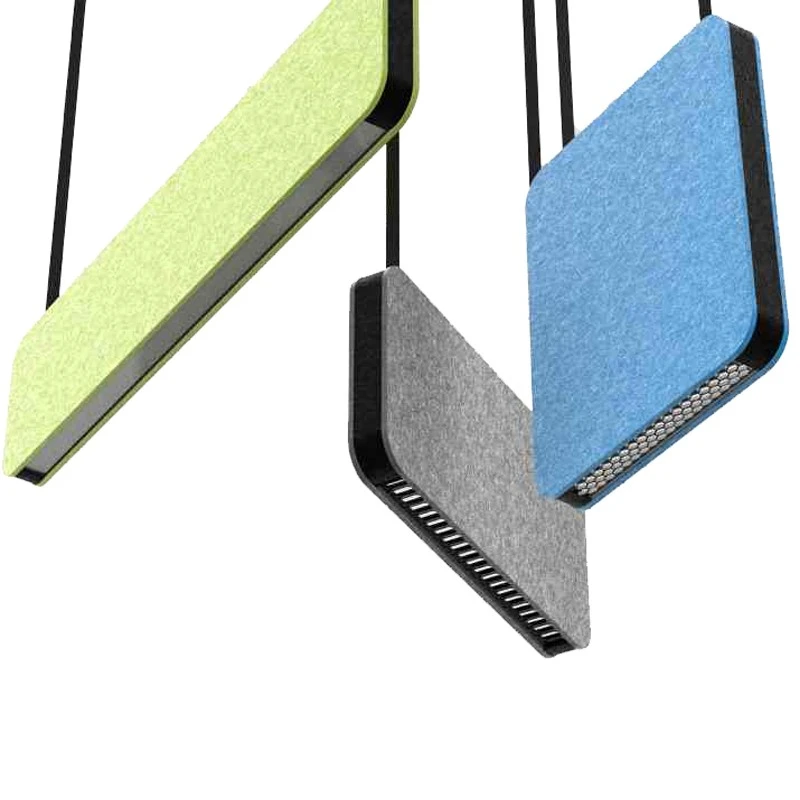
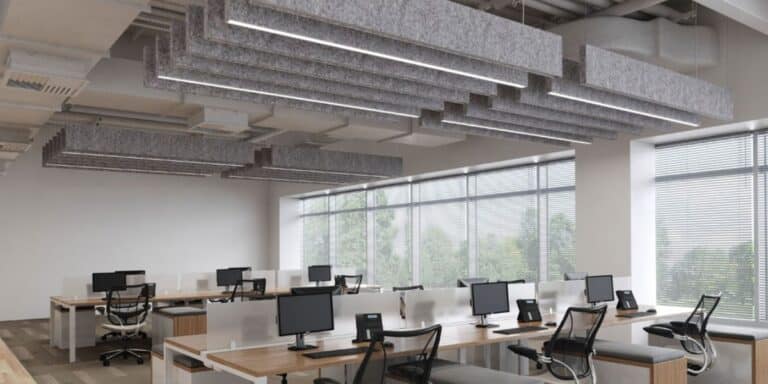
Super Slim Akustisches LED Linearlicht
- Eingangsspannung: AC100-277V / AC220-240V,50-60Hz
- Ausstrahlen: Abwärts
- Größe: 121836400mm
- CCT: 3000K / 4000K / 6000K
- Leistung: 30W
- Lichtstrom: 100-110lm/W
- CRI:> 80ra
- PF:> 0,90
- Flicker Free: Ja
- Abstrahlwinkel: 120°
- IP-Grad: IP20
- Garantie: 5 Jahre
- Filz Akustiktafel Farbe: rot / grün / blau / grau mehr als 48 Farben Option
C: Collaboration Zones & Lounge-Bereiche
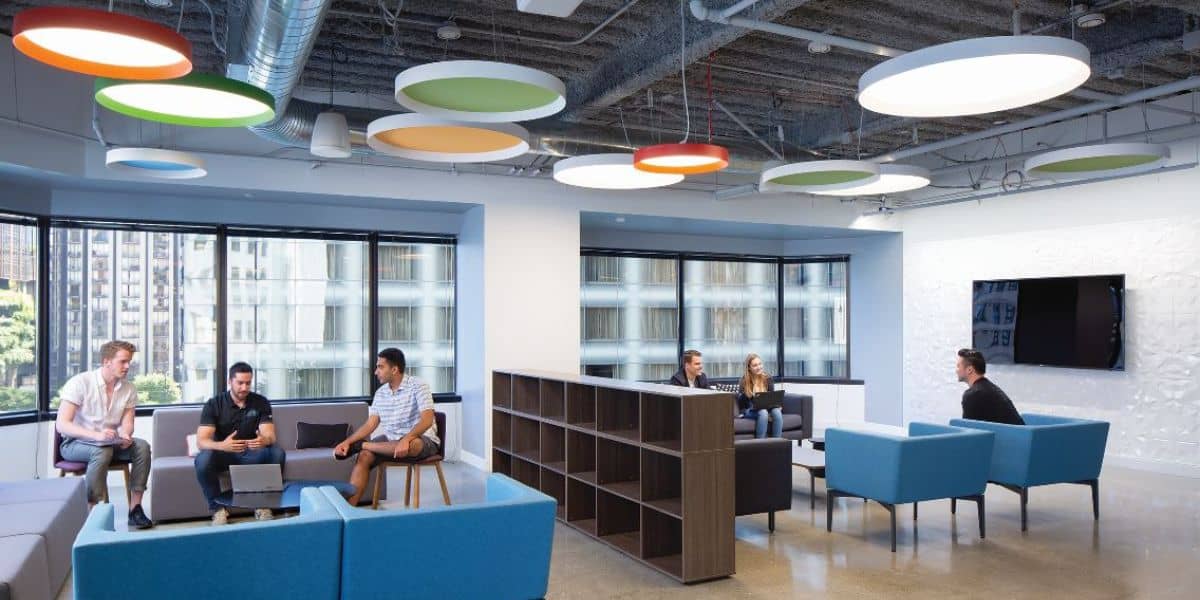
Informelle Zonen erzeugen unvorhersehbare, aber konzentrierte Sprachcluster. Ohne Überkopfabsorption dringt Lärm in die angrenzenden Ruhezonen.
Akustische Beleuchtung installieren oben:
- Soft-Sitzhaufen
- zusammengefasste Räume
- Informelle Meeting-Pods
Erzeugt lokalisierte Absorptionszonen. Dieser enthält Schall in der Nähe seiner Quelle und verhindert eine nachhallende Ansammlung über der Bodenplatte.
Die Platzierungsstrategie sollte die Toneindämmung priorisieren, nicht die visuelle Symmetrie.
Richtlinien für die Installationshöhe und -aufhängung
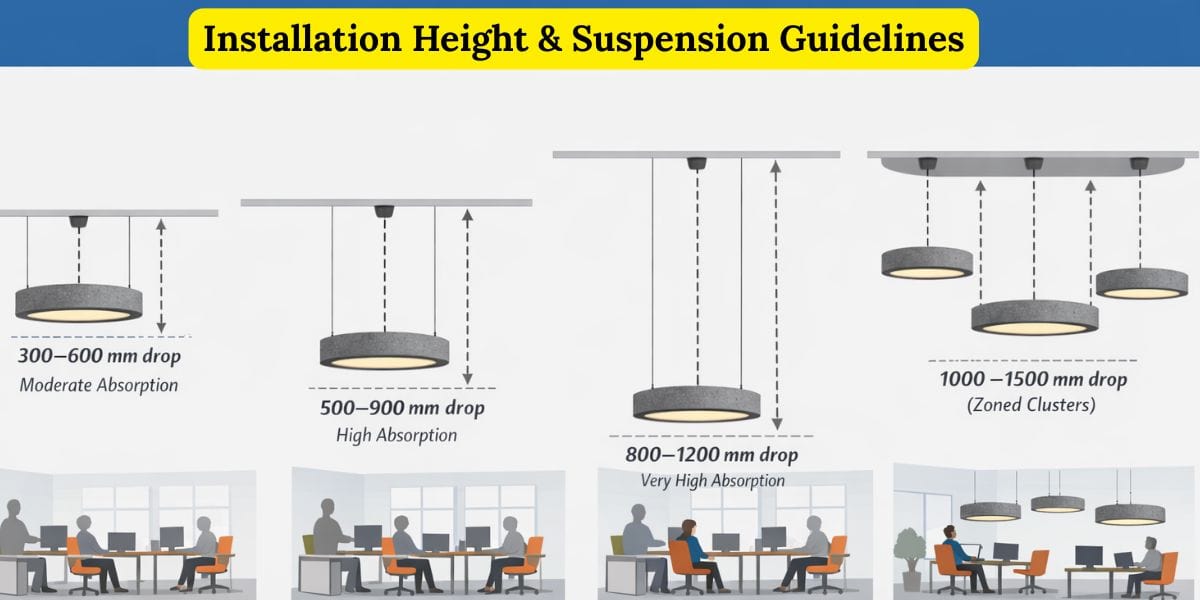
Die Federungstiefe beeinflusst die Leistung erheblich. Das Absenken der akustischen Beleuchtung erhöht die Interaktion mit Schallwellen, indem das Material innerhalb der aktiven Reflexionswege positioniert wird.
Bei freiliegenden Decken oder hohen Platten verbessert die tiefere Aufhängung die akustische Erfassung.
Tabelle 1 – Empfohlene Suspensionsrichtlinien
| Deckenhöhe | Empfohlene Aufhänge | Akustik | Notizen |
| 2,6–2,8 m | 300–600 mm | Mäßig bis hoch | Geeignet für Konferenzräume und Büros |
| 2,8–3,2 m | 500–900 mm | Hoch | Verbessert die Sprachsteuerung im offenen Plan |
| 3,2–4,0 m | 800–1200 mm | Hoch (lokalisierte Zonen) | Unverzichtbar für freiliegende Decken |
| > 4,0 m | 1000–1500 mm (Zonencluster) | gezielt | Kombinieren Sie mit zusätzlichen Akustikarmaturen |
Eine niedrigere Suspension erhöht die effektive Absorption, da das Material vor dem vollständigen Dispergieren auf das Material trifft.
Bei hohen Decken über 3 m sinkt die Montage von plattendichten Befestigungen erheblich. Akustisches Licht nach unten zu bringen verbessert die Interaktion mit Sprachfrequenzen.
Cover & Distribution Strategie
Der Anteil der Abdeckung und das Verteilungsmuster bestimmen die Gesamteffektivität.
Als Faustregel:
- 20–25% Abdeckung in Büros mit mäßigem Lärm.
- 30–40%-Abdeckung in Zonen mit hoher Zusammenarbeit.
- Höhere lokalisierte Dichte über Konferenzbereichen.
Eine gleichmäßige Verteilung über aktive Zonen übertrifft die Clusterbildung aller Geräte in einem Bereich.
Kleine Anhänger können bei richtiger Verteilung genauso gut funktionieren wie große Paneele. Große akustische Beleuchtungspaneele erzeugen breitere Absorptionsfelder, erfordern jedoch eine sorgfältige Ausrichtung auf Aktivitätszonen.
Tabelle 2 – Verteilungsstrategie nach Raumtyp
| Weltraumtyp | Primärplatzierungszone | Verteilungsmuster | Zusätzliche Behandlung erforderlich? |
| Büro | Über Schreibtischclustern | sogar über Arbeitsbereiche gittern | Manchmal Wandakustikarmaturen, wenn stark reflektierend |
| Konferenzraum | Über Tabelle zentriert | Linearer oder rechteckiger Cluster | selten wenn Deckung ausreichend |
| Coworking Space | Mischkollaborationsbereiche | Cluster in Zonen | Oft ja für Glaswände |
| Empfang | Warten auf Sitzzone | Über Sitzen konzentriert | Möglicherweise für hohe Decken |
| Hohe Decke Atrium | Aktivitätstaschen | Suspended Cluster | Ja zur Lautstärkeregelung |
Vermeiden Sie die Platzierung aller akustischen Beleuchtung entlang der Randkanten. Die verteilte Platzierung, die auf die Sprachkonzentration ausgerichtet ist, bietet eine bessere Leistung als die dekorative Gruppierung.
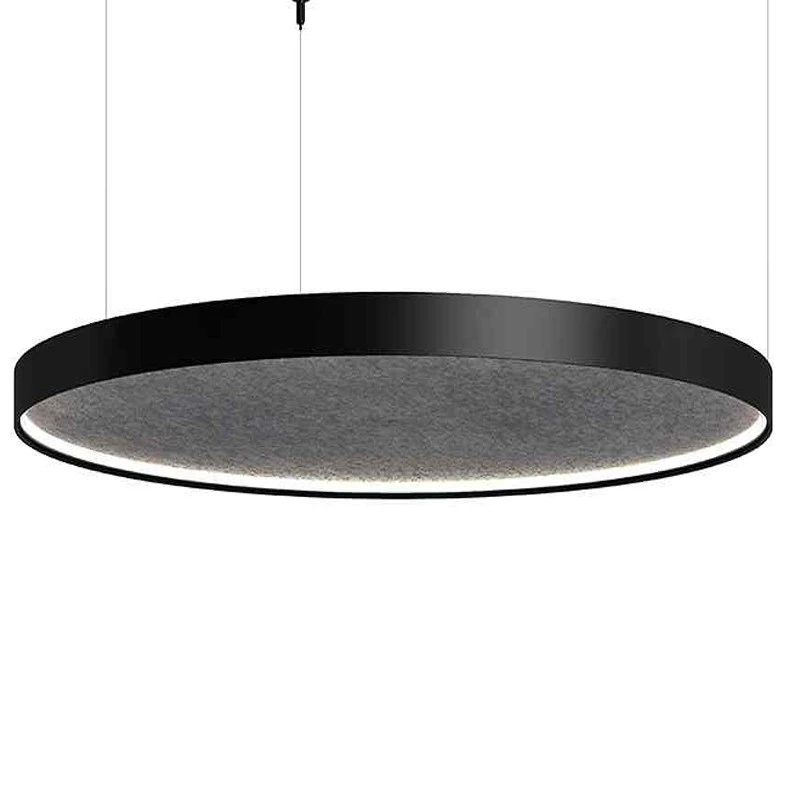
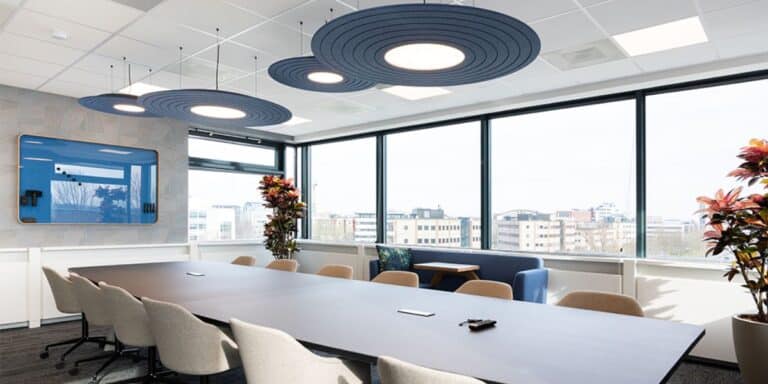
DIRECT CIRCLE AKUSTISCHE LED
- Eingangsspannung: AC100-277V / AC220-240V,50-60Hz
- Höhengröße: H65mm
- Größe D: 600mm / 800mm / 1000mm / 1200mm
- CCT: 3000K / 4000K / 6000K
- Leistung: 40W / 60W / 80W / 96W
- Lichtstrom: 100-110lm/W
- anti -Glanz: ja
- CRI:> 80ra
- PF:> 0,90
- Flicker Free: Ja
- Abstrahlwinkel: 120°
- IP-Grad: IP20
- Garantie: 5 Jahre
- Filz Akustiktafel Farbe: rot / grün / blau / grau mehr als 48 Farben Option
Raumspezifische Installationsführung
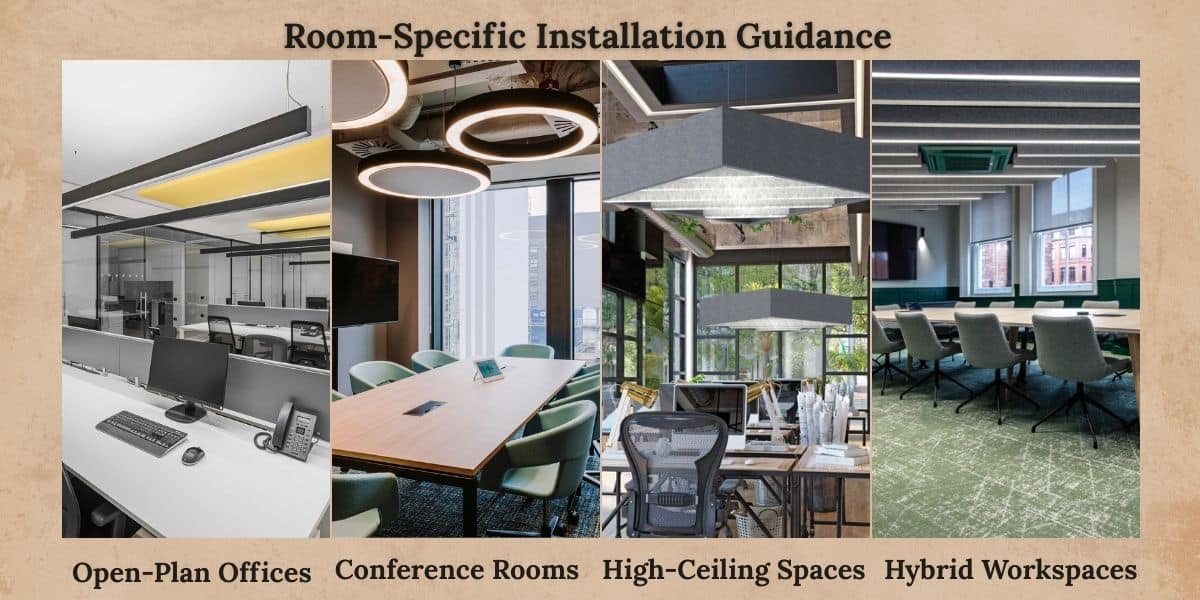
Großraumbüros
Verwenden Sie verteilte Gitter über Schreibtischen, nicht Korridore. Zentrale Layouts nur für Korridore können die Sprache an ihrer Quelle nicht ansprechen.
Wenn die Decken 3 m überschreiten:
- Aufhängungstiefe erhöhen.
- Cluster-Akustik-Geräte direkt über aktiven Schreibtischen.
- Ergänzung mit zusätzlichen Akustikarmaturen, wenn der Nachhall hoch bleibt.
Konferenzräume
Installieren Sie die zentrale akustische Beleuchtung über dem Tisch. Für lange Räume:
- Verwenden Sie lineare Arrays, die der Tabellengeometrie folgen.
- Fügen Sie gegebenenfalls sekundäre Vorrichtungen in der Nähe der Tabellenenden hinzu.
Vermeiden Sie die Montage von Befestigungen in der Nähe von Wänden, es sei denn, die seitlichen Reflexionen sind schwerwiegend
Hochdecken
Hohe Decken erhöhen den Nachhall durch größeres Volumen. In diesen Räumen:
- Setzen Sie die Armaturen tiefer in die belegte Zone ein.
- Cluster über aktiven Sitz- oder Kollaborationsbereichen.
- Kombinieren Sie mit Wandakustikarmaturen, wenn Glasflächen dominieren.
Die Platzierung muss auf Aktivitätsbereiche abzielen, nicht den Leerraum öffnen.
Hybrid-Arbeitsbereiche
Hybridbüros konfigurieren häufig Schreibtisch-Layouts neu. Modulare Akustikbeleuchtungssysteme bieten Flexibilität.
Vermittlungsstrategie:
- Identifizieren Sie wahrscheinliche Sprachcluster.
- Verwenden Sie rekonfigurierbare Federungssysteme.
- Vermeiden Sie feste dekorative Mittelstücke, die sich nicht an Layoutänderungen anpassen.
Die akustische Logik muss auf sich entwickelnde Belegungsmuster ausgerichtet bleiben.
Wenn die akustische Beleuchtung allein nicht ausreicht
Bestimmte Bedingungen schränken die eigenständige Leistung ein:
- Sehr hohe Nachhallzeiten.
- Große Glasfassaden.
- Betonmauern.
- Volumen mit doppelter Höhe.
In diesen Fällen sollte die akustische Beleuchtung als Überkopfabsorption dienen, ergänzt durch vertikale Akustik.
Die Deckenbehandlung unterbricht vertikale Reflexionen, während die Wandbehandlung die seitlichen Reflexionen steuert. Die Kombination erzeugt eine ausgewogene Leistung.
Das Ignorieren der Wandreflexion in hochverglasten Räumen kann Lösungen nur für Decken untergraben.
Häufige Installationsfehler
- Installation nur am Umfang und nicht über den Sprachzonen.
- Akustische Beleuchtung als rein dekorativ behandeln.
- Aufhängungshöhe in hohen Decken ignorieren.
- Überbegrenzung von Geräten, die unbehandelte reflektierende Lücken erzeugen.
- Nur oberhalb der Umlaufbahnen installieren.
- Nicht ausrichten der Platzierung mit den tatsächlichen Sprachmustern.
Die meisten Leistungsprobleme rühren von falsch ausgerichteter Platzierung und nicht unzureichender Anzahl der Fixtures her.
Checkliste für die Platzierungsentscheidung
Tabelle 3 – Checkliste für die Installationsentscheidung
| Bewertungsfaktor | Was zu bewerten | Warum es die Leistung beeinflusst |
| Sprachaktivität Konzentration | Schreibtischdichte, Besprechungszonen | bestimmt, wo die Absorption am höchsten sein muss |
| Deckenhöhe | Maße zu Boden | Beeinflusst die Aufhängetiefe |
| Oberflächenreflexionsvermögen | Glas, Beton, Metall | Höhere Reflexionsfähigkeit erhöht den Bedarf an Abdeckung |
| Raumvolumen | Kubikmeter | Größeres Volumen erhöht den Nachhall |
| Hybrid- oder festes Layout | Rekonfigurationsfrequenz | Auswirkungen auf die modulare Platzierung |
| Bedarf an zusätzlichen akustischen Befestigungen | Schwere der Wandreflexion | sorgt für eine ausgewogene akustische Kontrolle |
Diese Checkliste unterstützt strukturierte Entscheidungen und nicht ästhetisch-gesteuerte Installation.
Praktischer Praktikums
Ein professioneller Vermittlungsprozess folgt in der Regel diesen Schritten:
Schritt 1: Identifizieren Sie sprachlastige Zonen
Ordnen Sie Workstation-Cluster, Besprechungstische und informelle Sitzbereiche.
Schritt 2: Reflexionsflächen abbilden
Bewerten Sie die Deckenreflexion und Raumhöhe.
Schritt 3: Fahrwerksbereich bestimmen
Wählen Sie die Aufhängetiefe basierend auf der Deckenhöhe und der gewünschten Absorptionseffizienz.
Schritt 4: Verteilungsmuster
Wählen Sie Gitter-, Linear- oder Cluster-Layouts aus, die auf Aktivitätszonen ausgerichtet sind.
Schritt 5: Bewerten Sie zusätzliche Behandlung
Beurteilen Sie, ob Wandakustikvorrichtungen für eine ausgewogene Steuerung erforderlich sind.
Dieser Workflow priorisiert die Leistungsausrichtung gegenüber der visuellen Einheitlichkeit.
2026-Placement-Trends
Aufstrebende Trends betonen die Leistungsintegration
- Integrierte Deckensysteme, die Beleuchtung und Absorption kombinieren.
- Modulare Akustikbeleuchtung für hybride Arbeitsumgebungen.
- Flexible Federungssysteme für einstellbare Leistung.
- Akustische Steuerung in Zonen, die die Gitter der Deckenplatte ersetzt.
Akustische Beleuchtung ersetzt zunehmend separate Deckenplatten durch die Kombination von Beleuchtung und gezielter Absorption innerhalb der Reflexionszone.
Abschluss
Akustische Beleuchtung sollte direkt über den primären Schallzonen installiert, strategisch über die Deckenbereiche verteilt und in Höhen aufgehängt werden, die die Absorptionseffizienz maximieren. Die Platzierungslogik ist wichtiger als die Anzahl der Geräte. Bei Ausrichtung auf Sprachmuster und Deckengeometrie verbessert die akustische Beleuchtung den Komfort und die Klarheit erheblich.
FAQs
Verwandte Artikel