Español
  English
  简体中文
简体中文  Deutsch
  Français
  Italiano
  日本語
日本語  한국어
한국어  Polski
  Português
  Русский
  Türkçe
  Nederlands
  Tiếng Việt
  ไทย
ไทย 
En SignLiteled, apoyamos a los compradores profesionales al proporcionar soluciones LED confiables y basadas en aplicaciones.
A medida que la industria global de la iluminación avanza hacia 2026, el rendimiento de los LED ya no está determinado solo por el chip LED. hoy, LED PCB El diseño juega un papel decisivo en la estabilidad térmica, la consistencia del color, la seguridad eléctrica y la vida útil general del sistema. Para fabricantes de iluminación, compradores OEM e ingenieros de proyectos, seleccionando el LED PCB derecho La configuración se ha convertido en una decisión comercial y técnica crítica.
En este blog, explicaremos cómo afectan las potencias de potencia en los LED de PCB. Muestra cómo la temperatura de color correlacionada depende del control y el diseño del calor. También explicaremos cómo Materiales de PCB Influye en la eficiencia, la vida útil y la fiabilidad de la iluminación.
¿Qué es una PCB LED?

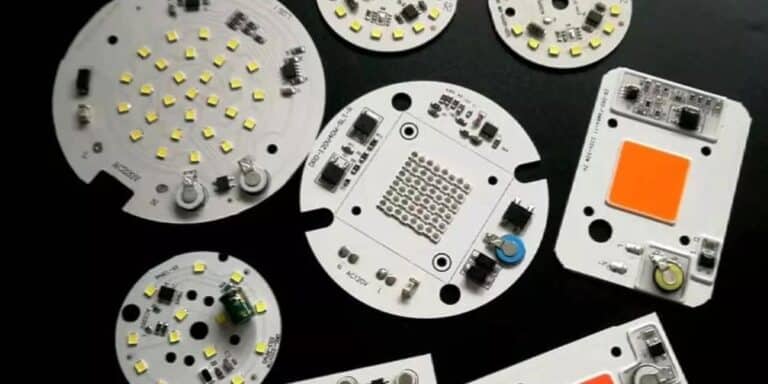
Una PCB LED es una placa de circuito impresa diseñada específicamente para soportar diodos emisores de luz. Proporciona conexiones eléctricas y soporte mecánico mientras gestiona el calor generado durante la operación. propio Diseño de PCB LED Garantiza un rendimiento estable, un brillo constante y una mayor vida útil en aplicaciones de iluminación.
A diferencia de los PCB estándar, los PCB LED se enfocan en gran medida en la gestión térmica y la selección de materiales. A menudo utilizan sustratos de metal o de alta conductividad para disipar el calor de manera eficiente. Esto ayuda a prevenir el sobrecalentamiento, el cambio de color y la falla temprana en el moderno Sistemas de iluminación LED.
Estructura básica de una PCB LED

Los PCB LED son placas multicapa cuidadosamente diseñadas donde cada capa juega un papel único en la entrega de potencia, la gestión del calor y la durabilidad. Su estructura está diseñada no solo para soportar mecánicamente chips LED, sino también para mantener un rendimiento óptimo en condiciones de operación continua de alta potencia.
Material base (sustrato)
El sustrato forma la base de la PCB LED. El aluminio es la opción más común debido a su excelente conductividad térmica, pero los diseños de gama alta pueden usar cobre o cerámica para una transferencia de calor aún mayor. Esta capa garantiza que la placa se mantenga rígida mientras que canaliza el calor de manera eficiente lejos de los LED.
Capa de cobre conductor
La capa de cobre transporta electricidad desde la fuente de energía a los chips LED. Su patrón y espesor son críticos, ya que influyen en la distribución de corriente, la estabilidad del voltaje y la uniformidad de la salida de luz. Además, una red de cobre bien diseñada ayuda a reducir la acumulación térmica y a prevenir los puntos de acceso.
Capa de aislamiento dieléctrico
Situada entre la capa de cobre y la base metálica, la capa dieléctrica actúa como aislante eléctrico y como puente térmico. Permite que el calor fluya hacia abajo mientras mantiene aislados los circuitos eléctricos, garantizando un funcionamiento seguro sin sacrificar la eficiencia térmica.
Máscara de soldadura protectora y acabado superficial
Una máscara de soldadura protectora cubre las trazas de cobre expuestas, protegiéndolas de la corrosión y cortocircuitos accidentales. Mientras tanto, el acabado de la superficie fortalece las juntas de soldadura y mejora la fiabilidad a largo plazo, particularmente bajo ciclos de calentamiento y enfriamiento repetidos.
Optimización de la ruta térmica
Los PCB LED eficientes proporcionan una trayectoria térmica directa desde el chip LED al disipador de calor o accesorio. El calor se mueve secuencialmente a través de la junta de soldadura, circuitos de cobre, capa dieléctrica y sustrato. Una ruta corta de baja resistencia minimiza el aumento de temperatura, prolonga la vida útil del LED y estabiliza la salida de luz con el tiempo.
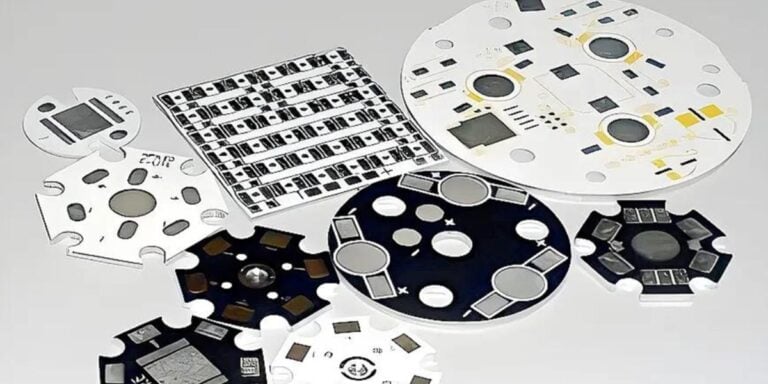
Diferentes tipos de PCB LED por material
Los PCB LED están hechos de varios materiales, cada uno de ellos afectando la disipación del calor, el rendimiento eléctrico y la durabilidad. Elegir el material adecuado garantiza una iluminación duradera y fiable, especialmente para aplicaciones industriales y de alta potencia.
| Tipo de material de PCB | característica clave | beneficio térmico | Aplicación típica |
| FR-4 | bajo costo | calor moderado | LED decorativos |
| Aluminio | Diseño duradero | Alta disipación de calor | Calle y Comercial |
| de cobre | Alta conductividad | Excelente transferencia de calor | LED industriales |
| cerámico | material premium | Resistencia térmica superior | Automoción y aeroespacial |
1: PCB LED FR-4
PCB FR-4 Están compuestos de material de fibra de vidrio estándar con una capa de cobre para circuitos eléctricos. Son asequibles y adecuados para aplicaciones LED de baja potencia con una generación de calor mínima.
Estas placas son ideales para LEDs decorativos o indicadores. Sin embargo, su conductividad térmica limitada restringe el uso en iluminación industrial o de alta potencia, donde la gestión del calor es fundamental para el rendimiento y la longevidad.
2 : PCB LED de aluminio
Los PCB de aluminio utilizan un núcleo de metal para transferir el calor de manera efectiva de los chips LED. Esto permite que los LED de alta potencia funcionen de manera eficiente sin sobrecalentamiento.
Son ampliamente utilizados en alumbrado público, luminarias comerciales y aplicaciones industriales. Los PCB de aluminio ofrecen resistencia mecánica, estabilidad térmica y rendimiento rentable para un funcionamiento continuo.
3: PCB LED de cobre
Los PCB a base de cobre proporcionan la conductividad térmica más alta, lo que permite una disipación de calor extremadamente eficiente. Son adecuados para diseños compactos de LED de alta potencia donde el calor se concentra en áreas pequeñas.
Estos PCB se encuentran comúnmente en sistemas LED industriales, placas de alta densidad y equipos especializados. El mayor costo se compensa con una mayor fiabilidad, una vida útil más larga y una salida de luz estable en funcionamiento continuo.
4: PCB LED de cerámica
Los PCB de cerámica combinan el aislamiento eléctrico con una resistencia térmica excepcional. Mantienen un rendimiento estable bajo un calor extremo y condiciones de operación exigentes, lo que los hace ideales para aplicaciones de precisión.
A menudo se utilizan en iluminación automotriz, aeroespacial y otras aplicaciones especializadas o de alta gama. Los PCB de cerámica admiten LED de alta potencia al mismo tiempo que garantizan la estabilidad del color, la eficiencia y la durabilidad a largo plazo.
¿Cómo elegir el diseño correcto de PCB LED?
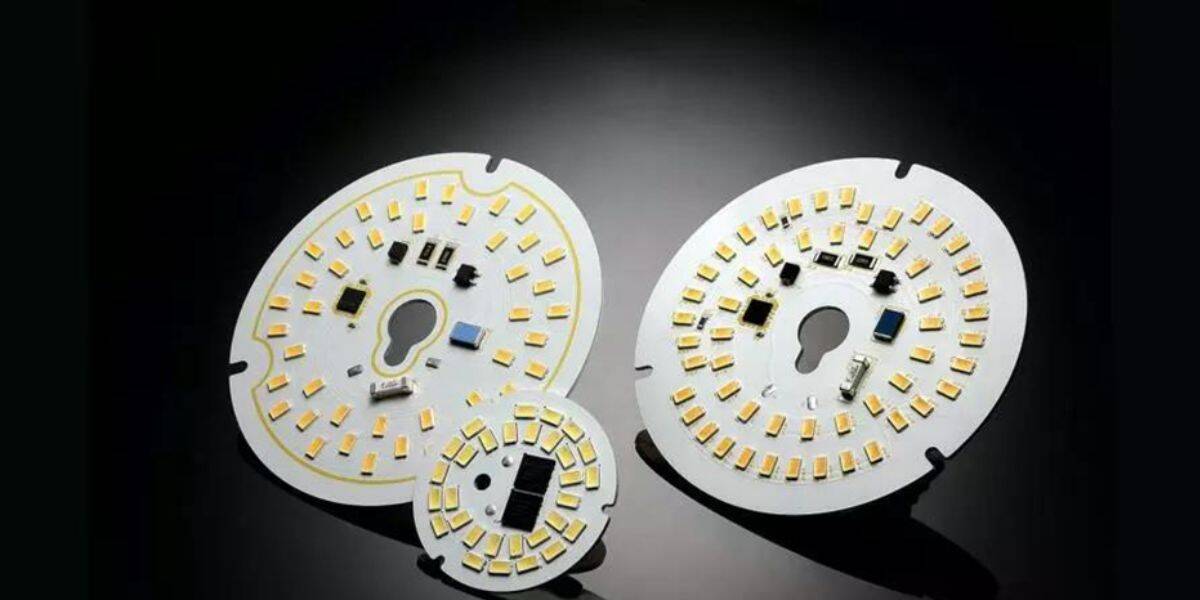
A PCB LED bien diseñado Equilibra la gestión térmica, la estabilidad eléctrica y la calidad de la luz. Estos elementos trabajan juntos para garantizar que los LED permanezcan brillantes, eficientes y confiables durante toda su vida útil.
- Gestión térmica: El calor es el factor principal que limita el rendimiento de los LED. Un buen diseño de PCB canaliza el calor del LED de manera eficiente, reduciendo los puntos de acceso y evitando fallas tempranas, especialmente en aplicaciones de alta potencia.
- Disipadores de calor, vías térmicas y espesor de cobre: Los disipadores de calor liberan calor en el entorno circundante, mientras que las vías térmicas y las capas de cobre más gruesas reparten el calor de manera uniforme en toda la tabla. Esto garantiza temperaturas de unión más bajas y una mayor vida útil del LED.
- Disposición del circuito y balance de corriente: Un diseño de circuito optimizado distribuye la corriente de manera uniforme a cada LED. El flujo de corriente equilibrado evita la atenuación, puntos de acceso o parpadeo, lo que garantiza un brillo constante en todo el tablero.
- Espaciamiento y ubicación de LED: El espaciamiento adecuado entre los LED mejora el flujo de aire y reduce la acumulación de calor localizada. La colocación estratégica también crea una salida de luz más uniforme, eliminando las manchas oscuras y el deslumbramiento.
- Seguridad y aislamiento eléctrico: La PCB debe separar de forma segura el circuito de potencia del núcleo metálico. Un buen aislamiento evita los cortocircuitos, reduce los riesgos eléctricos y mejora la fiabilidad general del sistema.
- Diseño óptico: El diseño de PCB afecta no solo al rendimiento sino también a la distribución de la luz. La colocación, el ángulo y la alineación de LED correctos ayudan a lograr una iluminación suave y uniforme y mantener la consistencia del color.
¿Cómo hacer PCB LED?

En esta sección, explicaremos cómo PCIs LED están diseñados y fabricados. Desde la selección del material adecuado hasta el montaje de chips LED, cada paso garantiza una óptima gestión del calor, rendimiento eléctrico y confiabilidad duradera.
Paso 1: Elige el sustrato
Seleccione un material base adecuado basado en necesidades térmicas y eléctricas. Las opciones incluyen FR-4 para aluminio de baja potencia para alta potencia, cobre para máxima conductividad y cerámica para aplicaciones especializadas. El sustrato determina la disipación del calor y la resistencia mecánica.
Paso 2: Aplicar y grabar capa de cobre
El cobre se aplica sobre el sustrato y se graba con precisión para formar circuitos eléctricos. El diseño controla el flujo de corriente, garantiza la estabilidad del voltaje y ayuda a distribuir el calor de manera uniforme en todos los tableros.
Paso 3: Agregar aislamiento dieléctrico
La capa dieléctrica separa el circuito de cobre de la base metálica. Aísla eléctricamente al tiempo que permite que el calor pase de manera eficiente, manteniendo un funcionamiento seguro y soportando la gestión térmica.
Paso 4: Aplicar máscara de soldadura y acabado superficial
Una máscara de soldadura protectora protege los rastros de oxidación y pantalones cortos. Los acabados superficiales fortalecen las juntas de soldadura, asegurando la fiabilidad durante los ciclos de calor y la operación de LED prolongada.
Paso 5: Montar chips LED y probar
Los chips LED se colocan y se sueldan en la placa. Luego, la PCB se prueba para la eficiencia térmica, el rendimiento eléctrico y la consistencia de la luz, lo que garantiza que cumpla con los requisitos de diseño y aplicación.
Beneficios clave de la PCB LED

Un LED PCB es esencial para la iluminación de alto rendimiento. Combina la gestión del calor, la estabilidad eléctrica y el soporte mecánico. Un bien diseñado Placa de PCB LED Garantiza que los LED funcionen de manera eficiente y confiable. Usando una alta calidad Placa de PCB de luz LED Previene caídas de voltaje y cortocircuitos. propio Diseño de PCB LED Garantiza un flujo de corriente estable. adelantado Diseño de LED PCB Mejora la durabilidad y el rendimiento a largo plazo.
Disipación eficiente del calor
Placa de PCB LED SMD y LED PCB de aluminio redondo Los sustratos transfieren el calor de los chips LED. 2835 SMD Panel de PCB LED Los diseños evitan el sobrecalentamiento. LED para PCB Los arreglos mantienen una temperatura uniforme. Placas de alta potencia como PCB LED de 100 W y PCB de panel LED de 220 V Gestione las corrientes de forma segura. Estos diseños amplían la vida útil del LED y protegen los componentes sensibles.
Salida de luz uniforme
Caminos equilibrados de cobre en un Diseño de PCB de luz LED Asegúrese de que todos los LED brillen uniformemente. uso Luz LED PCB Los tableros eliminan los puntos de acceso y las áreas tenues. PCB con LED Los diseños proporcionan un brillo constante. propio Placa de PCB de tira LED El diseño garantiza una iluminación suave en todas las aplicaciones.
Fiabilidad eléctrica
Materiales de alta calidad de fabricantes de placas de PCB LED de confianza y proveedores de placas de PCB LED mejoran la estabilidad del circuito. El ensamblaje preciso de PCB LED personalizado reduce los cortocircuitos y la pérdida de energía. Las soluciones de tiras LED de PCB admiten diseños de iluminación flexible sin comprometer la seguridad.
Resistencia mecánica y compatibilidad
La placa PCB LED rígida o reforzada sustratos de 18W proporcionan un fuerte soporte. Reducen el daño durante la instalación o la operación a largo plazo. Los diseños de LED 3W de 3W sin PCB y RGB de PCB LED manejan el estrés mecánico. Los PCB avanzados son ideales para LED de alta potencia comercial, industrial y exterior.
Rendimiento óptico mejorado
La colocación cuidadosa de los LED en las placas LED de PCB Philips y PCB OSRAM mejora la distribución de la luz. La selección adecuada del diámetro de la PCB del LED garantiza una temperatura de color uniforme. Los diseños optimizados mejoran la calidad visual y la iluminación suave en todos los espacios.
Aplicaciones comunes de PCB LED

Los PCB LED se utilizan en una amplia gama de sistemas de iluminación. Su eficiencia, gestión del calor y fiabilidad los hacen adecuados tanto para aplicaciones cotidianas como especializadas.
Iluminación residencial
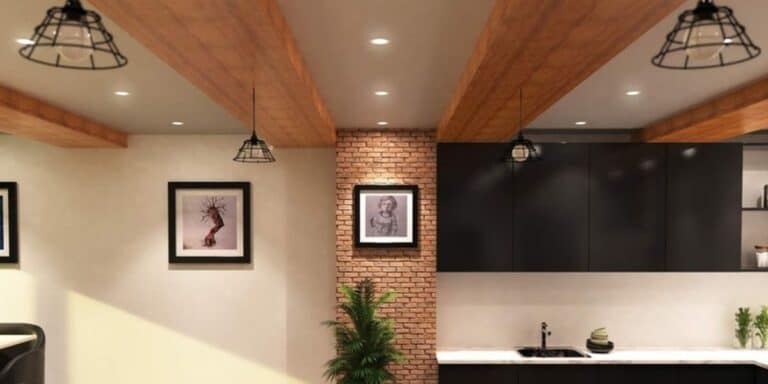
Los PCB LED son ampliamente utilizados en hogares para luces de techo, accesorios decorativos e iluminación debajo del gabinete. Proporcionan una iluminación de bajo consumo con un rendimiento duradero.
Iluminación comercial
Las oficinas, las tiendas minoristas y los restaurantes usan PCB LED en luces de panel, luces descendentes e iluminación de pantallas. Aseguran un brillo constante y reducen los costos de energía.
Iluminación industrial
Las fábricas, almacenes y talleres se basan en PCB LED de alta potencia para focos e iluminación de altas bahías. Su robusto diseño soporta la operación continua en entornos exigentes.
Iluminación de calles y exteriores
Los PCB LED de aluminio y metal con núcleo se utilizan en farolas, estacionamientos y espacios públicos. Manejan alta potencia mientras mantienen un rendimiento confiable en condiciones extremas.
Iluminación del automóvil
Los PCB LED se utilizan en faros, luces traseras y luces interiores de vehículos. Su diseño compacto, gestión del calor y durabilidad soportan aplicaciones automotrices a largo plazo.
Aplicaciones especializadas
Los PCB LED de cerámica y flexibles se utilizan en aeroespaciales, dispositivos médicos y dispositivos electrónicos portátiles. Proporcionan una alta fiabilidad, rendimiento térmico y flexibilidad de diseño.
Guía de compra paso a paso antes de elegir PCB LED

Elegir el PCB LED derecho Es más que elegir una tabla: afecta la eficiencia térmica, la estabilidad eléctrica y la calidad de la iluminación. Esta guía ayuda a los compradores a tomar decisiones informadas para sistemas LED de alto rendimiento y fiables.
Comprenda sus requisitos de energía
Identifique la potencia total y las demandas actuales de su configuración de LED. Los LED de baja potencia pueden utilizar placas FR-4, mientras que los LED de alta potencia o industriales necesitan núcleos de aluminio o cobre para un manejo óptimo del calor.
Priorizar la gestión térmica
Evalúe cuánto calor generará sus LED. Seleccione diseños con vías térmicas, núcleos metálicos o estructuras multicapa para garantizar un funcionamiento estable y evitar fallas prematuras.
Elija el material de PCB óptimo
FR-4 para aplicaciones rentables y de baja potencia, aluminio para iluminación comercial e industrial, cobre para configuraciones de alta densidad o alta corriente, y cerámica para aplicaciones premium o especializadas.
Decidir sobre la estructura de la capa
Las PCB de una sola capa se adaptan a instalaciones simples. Los diseños de capas múltiples o de doble capa mejoran la distribución del calor, reducen las interferencias eléctricas y soportan soluciones de iluminación compactas o inteligentes.
Plano de diseño de circuito y ubicación de LED
Asegúrese de que la corriente fluya de manera uniforme a través de todos los LED. El espaciado y el diseño correctos evitan los puntos de acceso, mejoran el flujo de aire y producen una distribución de luz constante.
Verifique la seguridad eléctrica y el aislamiento
La PCB debe aislar los circuitos eléctricos de la base metálica. El aislamiento adecuado evita los cortocircuitos, aumenta la fiabilidad y garantiza un funcionamiento seguro en todas las condiciones.
Validar con prototipos y pruebas
Simule o prototique su PCB antes de la implementación masiva. Prueba de disipación de calor, estabilidad de voltaje y uniformidad de la luz para confirmar que cumple con los requisitos funcionales y de longevidad.
Considere futuras actualizaciones y escalabilidad
Planifique su elección de PCB con futuras actualizaciones en mente. Los diseños flexibles, las placas multicapa y los diseños modulares permiten una fácil adaptación a los nuevos LED o sistemas de control inteligente.
Conclusión
Elegir el PCB LED adecuado garantiza un control de calor óptimo, estabilidad eléctrica y calidad de luz. El material, el diseño y el diseño adecuados mejoran la eficiencia, la fiabilidad y la vida útil. Para los fabricantes y compradores, la selección de PCB informada genera soluciones de iluminación LED de alto rendimiento, consistentes y duraderas.
Preguntas frecuentes
Publicaciones relacionadas