Español
  English
  简体中文
简体中文  Deutsch
  Français
  Italiano
  日本語
日本語  한국어
한국어  Polski
  Português
  Русский
  Türkçe
  Nederlands
  Tiếng Việt
  ไทย
ไทย 
La iluminación acústica mejora el ambiente de un estudio de grabación al abordar dos requisitos críticos al mismo tiempo: el comportamiento del sonido controlado y la iluminación cómoda y funcional. Al integrar materiales absorbentes de sonido con sistemas de iluminación cuidadosamente diseñados, la iluminación acústica ayuda a reducir la reverberación no deseada, mejora la claridad del habla y la música y crea un entorno visualmente tranquilo que admite sesiones de grabación largas. El resultado no es solo una mejor calidad de sonido, sino una atmósfera de estudio que se siente equilibrada, enfocada y diseñada con un propósito en lugar de improvisada.
¿Qué es la iluminación acústica?
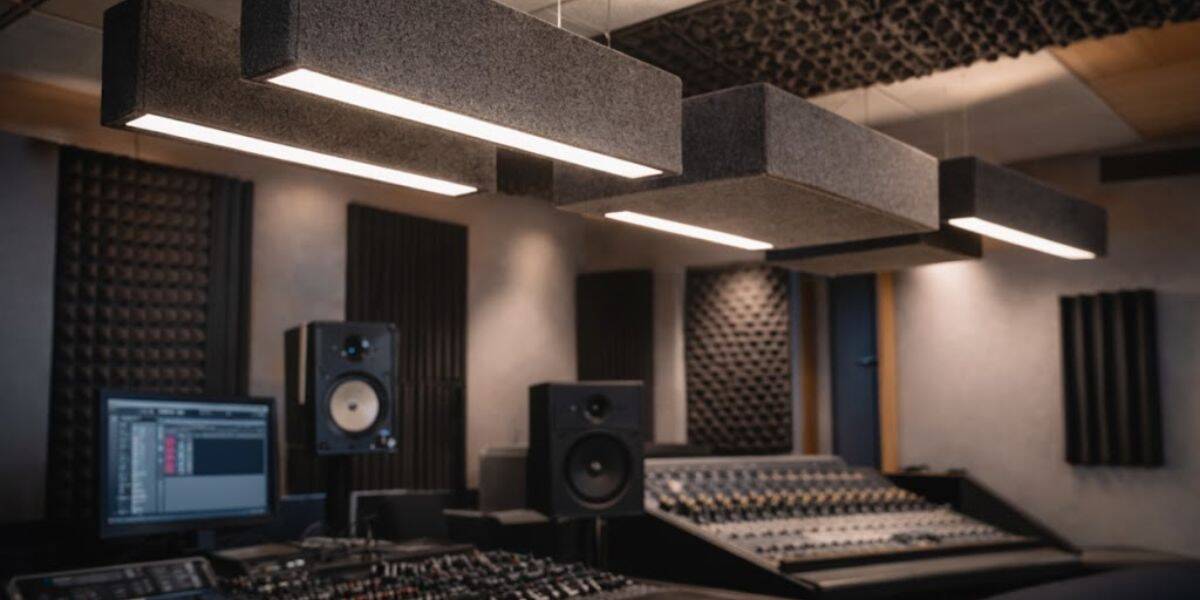
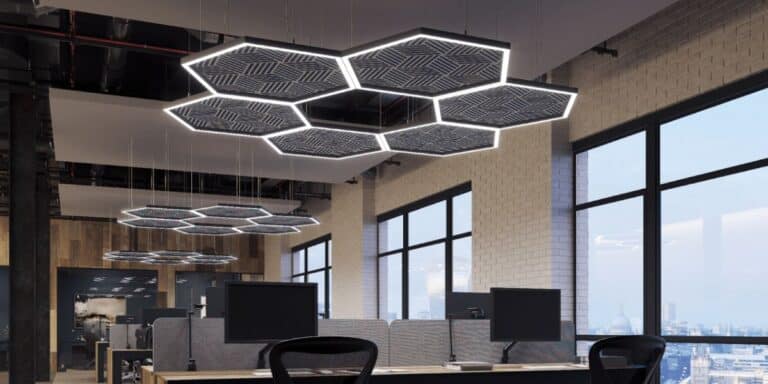
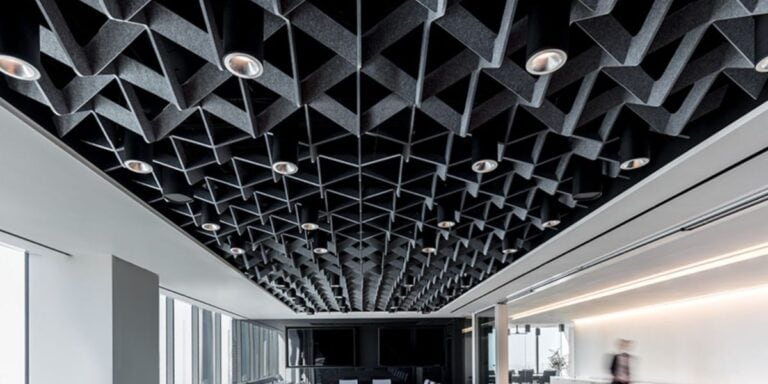
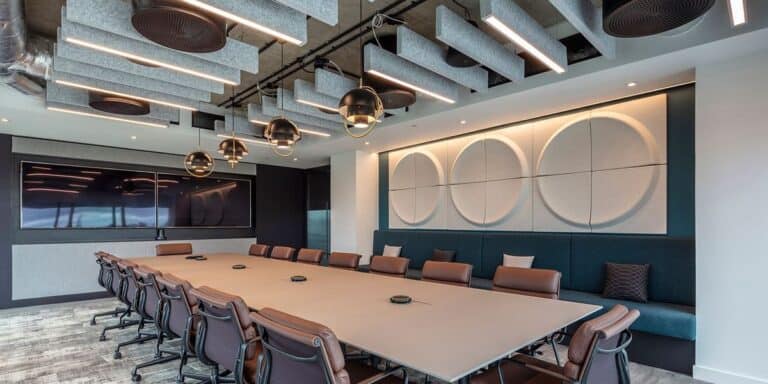
La iluminación acústica es una categoría de accesorios integrados que combinan elementos absorbentes de sonido con componentes de iluminación en un solo sistema. En lugar de tratar la acústica y la iluminación como capas separadas agregadas en diferentes etapas de una construcción de estudio, las soluciones de iluminación acústica combinan estas funciones en un elemento coordinado, más comúnmente instalado en techos o en techo suspendido.
Desde una perspectiva acústica, estos sistemas se basan en materiales porosos que absorben la energía del sonido de frecuencias medias y altas, reduciendo los reflejos que de otro modo rebotarían entre superficies duras. Desde una perspectiva de iluminación, proporcionan una iluminación difusa y controlada por deslumbramiento adecuada para tareas como mezclar, rastrear y largos períodos de escucha enfocada.
En entornos profesionales como los estudios de grabación, donde tanto la precisión del sonido como la comodidad visual afectan directamente al rendimiento, la iluminación acústica cumple un papel funcional más que decorativa.
Por qué los estudios de grabación tienen desafíos acústicos e iluminación únicos
Los estudios de grabación operan bajo restricciones más estrictas que la mayoría de los espacios comerciales o residenciales. El objetivo no es simplemente hacer que una habitación sea más tranquila o brillante, sino crear condiciones predecibles y controladas donde el sonido pueda capturarse y evaluarse con precisión.
Desafíos acústicos específicos de los estudios
Los espacios de grabación deben administrar los reflejos, el eco del aleteo y los tiempos de reverberación desiguales. Las superficies duras como techos, paredes y bastidores de equipos pueden hacer que las ondas de sonido se reflejen en los micrófonos, coloreando grabaciones y reduciendo la claridad. Los estudios pequeños y medianos son especialmente vulnerables a los reflejos del techo debido a las cortas distancias entre las fuentes de sonido y las superficies reflectantes.
Desafíos de iluminación específicos de los estudios
Los estudios también requieren iluminación que evite el deslumbramiento, la fatiga ocular y la distracción visual. La iluminación de fuente puntual severa o el brillo desigual pueden ser incómodos durante las sesiones largas y pueden interferir con la visibilidad de la pantalla en las salas de control. Al mismo tiempo, la iluminación debe ser confiable, de bajo ruido y compatible con diseños de techo llenos de tratamientos acústicos, cableado y ventilación.
La iluminación acústica aborda directamente la superposición entre estas dos áreas problemáticas.
Absorción de sonido frente a insonorización: una distinción crítica
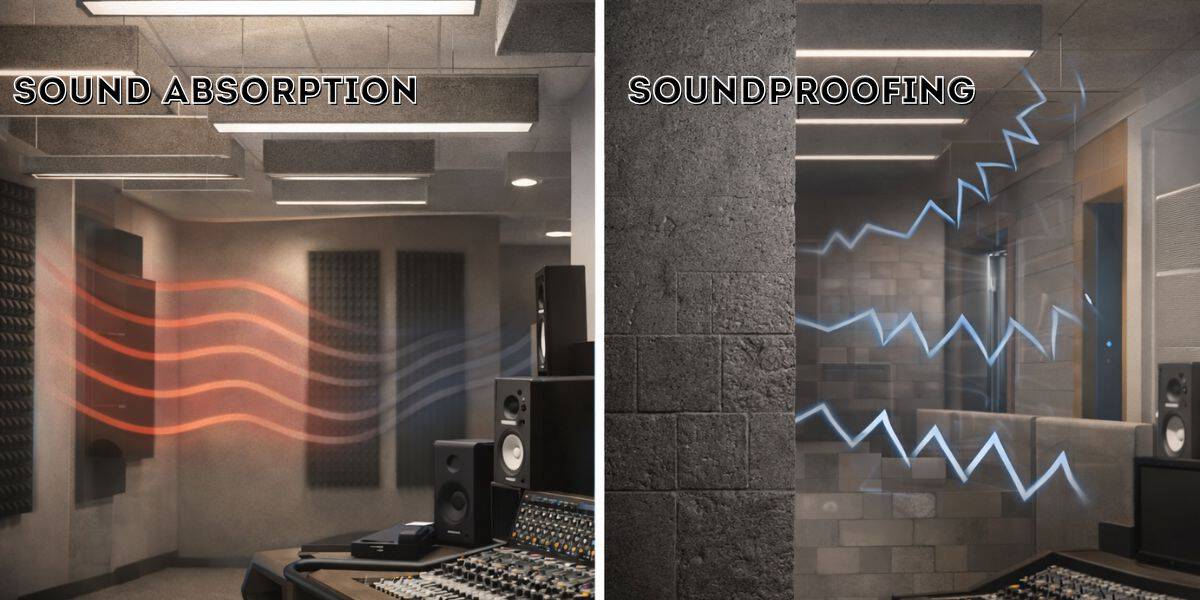
La absorción de sonido y la insonorización a menudo se confunden, pero resuelven problemas muy diferentes. Comprender esta distinción es esencial al evaluar la iluminación acústica.
absorción de sonido
La absorción de sonido reduce los reflejos dentro de una habitación. Los materiales absorbentes convierten una porción de energía sonora en calor, reduciendo el tiempo de reverberación y mejorando la claridad. Las métricas como NRC (coeficiente de reducción de ruido) se usan comúnmente para describir la eficacia con la que un material absorbe el sonido en un rango de frecuencias. En los estudios, la absorción se utiliza para dar forma al campo sonoro interno, no para bloquear el ruido de entrada o salida.
insonorización
La insonorización se centra en el aislamiento. Su objetivo es evitar que el sonido pase por paredes, pisos o techos al agregar masa, amortiguación y construcción hermética. Esta es una preocupación estructural abordada a través de diseños de habitación dentro de una habitación, particiones pesadas y métodos de construcción especializados.
Iluminación acú Contribuye a la absorción de sonido, no a la insonorización. Su valor radica en mejorar el entorno acústico interno, particularmente en el control de los reflejos de los techos.
El papel de los techos en el control acústico de estudio
El techo es una de las superficies más influyentes en un estudio de grabación, pero a menudo se subutiliza. Debido a que se encuentra directamente sobre las fuentes de sonido y las posiciones de escucha, los reflejos del techo pueden llegar a los micrófonos y los oídos muy rápidamente, lo que provoca un filtrado de peines y una pérdida de definición.
Los tratamientos tradicionales de techo incluyen nubes acústicas, paneles y difusores suspendidos sobre el área de escucha. Si bien son efectivos, estos elementos deben competir por el espacio con accesorios de iluminación, componentes HVAC y restricciones estructurales.
La iluminación de techo acústico ayuda a consolidar estas funciones en muchos diseños de estudio. Al combinar la absorción e iluminación en un solo sistema, permite a los diseñadores tratar el techo como un plano acústico integrado en lugar de un mosaico de elementos separados.
Por qué es importante la iluminación acústica de techo integrada
La iluminación de techo acústica integrada importa porque reduce la complejidad y aumenta la consistencia. Cuando las luminarias y los tratamientos acústicos se diseñan por separado, los compromisos son comunes. Los paneles pueden bloquear la distribución de la luz, o los accesorios pueden introducir superficies reflectantes que socavan el rendimiento acústico.
Con sistemas integrados, los componentes acústicos y de iluminación están diseñados para coexistir. La salida de luz tiene forma para evitar el deslumbramiento y los reflejos, mientras que los materiales acústicos se colocan donde son más efectivos. Esta alineación admite un rendimiento de estudio predecible y simplifica la coordinación durante el diseño y la instalación.
En la práctica, esto significa menos conflictos entre disciplinas y un entorno de estudio más cohesivo.
Iluminación tradicional Plus Paneles vs Soluciones de iluminación acústica integrada
Para comprender el impacto práctico, ayuda a comparar los enfoques tradicionales con las soluciones de iluminación acústica integrada.
| Aspecto | Iluminación tradicional + paneles acústicos | Iluminación acústica |
| Coordinación de diseño | Sistemas separados diseñados de forma independiente | Sistema único coordinado |
| desorden de techo | Múltiples elementos suspendidos | Complejidad visual reducida |
| Consistencia acústica | Depende de la colocación alrededor de los accesorios | Absorción e iluminación alineada |
| Calidad de iluminación | Puede verse comprometida por la colocación del panel | Diseñado para la difusión y la comodidad |
| Proceso de instalación | Múltiples operaciones y pasos de montaje | Instalación agilizada |
| Ambiente visual | funcional pero a menudo fragmentado | Aspecto más limpio y más tranquilo en el techo |
Esta comparación destaca por qué muchos diseñadores de estudios ahora consideran la iluminación acústica integrada durante la planificación temprana en lugar de una solución de actualización.
Cómo la iluminación acústica influye en el ambiente del estudio
El ambiente en un estudio de grabación no se trata de decoración. Se trata de cómo se siente y se comporta el espacio durante el uso. La iluminación acústica influye en el ambiente a través de varios factores interconectados.
Estrés auditivo reducido
Al reducir la reverberación y los reflejos excesivos, la iluminación acústica contribuye a un campo de sonido más tranquilo. Los ingenieros e intérpretes pueden experimentar una reducción de la fatiga auditiva, especialmente durante largas sesiones.
Confort visual y enfoque
La iluminación difusa y bien controlada reduce el deslumbramiento y los contrastes agresivos. Esto admite la concentración, mejora la visibilidad de la pantalla y hace que el espacio se sienta intencional en lugar de improvisado.
Profesionalidad percibida
Los estudios que integran la acústica y la iluminación tienden a sentirse más refinados. Esta percepción es importante para la confianza del cliente, incluso cuando las mejoras son sutiles.
Consideraciones sobre materiales y diseños en iluminación acústica
Los sistemas de iluminación acústica suelen utilizar materiales absorbentes de sonido, como paneles de fieltro o base de fibra, combinados con componentes de iluminación LED. Los materiales, acabados y configuraciones exactos varían según el fabricante y la aplicación.
Según la información del producto publicada por SignLiteled, sus sistemas de iluminación acústica LED están diseñados como soluciones integradas que combinan iluminación con tratamiento acústico para entornos comerciales y profesionales. Los valores de rendimiento específicos, como las clasificaciones acústicas o las métricas de vida útil, no se publican universalmente, por lo que deben evaluarse proyecto por proyecto en lugar de asumir.
Para los diseñadores, la consideración clave no es una única especificación, sino cómo el sistema encaja en la estrategia acústica general del estudio.
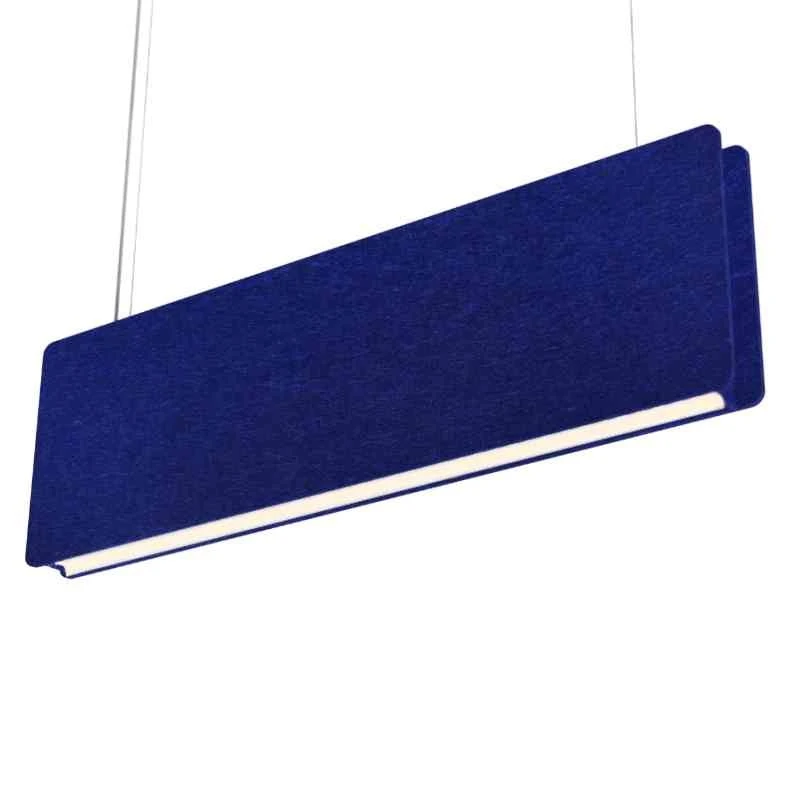
Luz lineal LED acústica de 58 mm de ancho
- Voltaje de entrada: AC110–120V / AC220–240V, 50–60Hz
- Dirección de emisión: hacia abajo
- Opciones de ancho: 58 mm / 80 mm
- Tamaño: 1288 × 58 × 400 mm / 1288 × 80 × 400 mm
- Chip LED: SMD2835
- UGR: < 19
- Factor de potencia (PF): > 0.90
- CRI: > 90 RA
- Eficacia luminosa: 100 lm/p
- Temperatura de color correlacionada (CCT): 3000K / 4000K / 6000K
- Poder: 30 W
- Ángulo del haz: 120°
- Clasificación IP: IP20
- Parpadeo gratis: Sí
- Garantía: 5 años
- Opciones de color del panel acústico: Rojo / Verde / Azul / Gris (más de 48 opciones de color)
Estrategias de colocación en estudios de grabación
Donde se coloca la iluminación acústica importa tanto como qué tipo se utiliza. En los estudios de grabación, las estrategias de colocación comunes incluyen:
Por encima de las posiciones de mezcla en las salas de control, donde los primeros reflejos del techo pueden afectar la imagen estéreo.
Por encima de las áreas de actuación de la sala en vivo, donde el control de los reflejos del techo ayuda a mantener la claridad sin amortiguar el espacio.
En las cabinas vocales, donde la iluminación y la absorción combinadas ayudan a administrar los espacios reducidos de manera eficiente.
El objetivo siempre es apoyar la respuesta acústica prevista de la sala en lugar de aplicar la absorción de manera uniforme sin análisis.
Integración con planes de tratamiento acústico más amplios
La iluminación acústica debe verse como un componente de un plan de tratamiento acústico más grande. Los estudios aún requieren tratamientos de pared, control de graves y geometría de sala adecuada. La iluminación acústica no reemplaza estos elementos, pero los complementa al abordar el techo, una superficie que de otro modo es difícil de tratar sin compromiso visual.
Cuando se integra al principio del proceso de diseño, la iluminación acústica puede reducir la cantidad de nubes o paneles de techo separados necesarios, lo que lleva a un diseño más limpio y resultados más predecibles.
Consideraciones para las nuevas construcciones de reequipamiento frente a nuevas
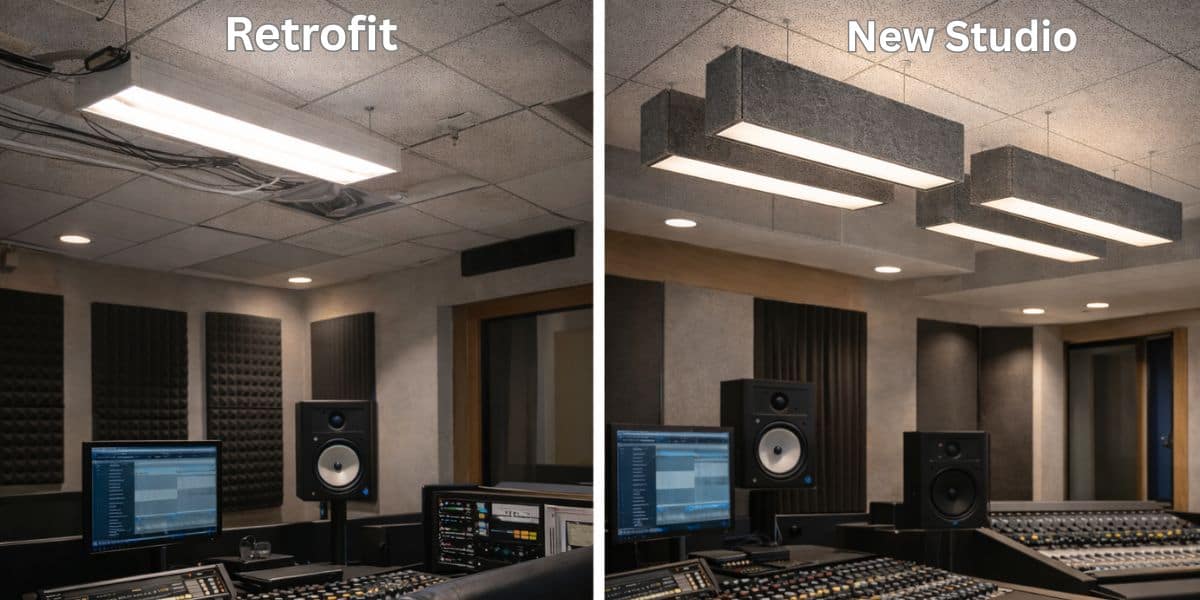
En las nuevas construcciones de estudio, se puede especificar la iluminación acústica desde el principio, lo que permite que las consideraciones estructurales, eléctricas y acústicas se alineen. Esto a menudo resulta en el resultado más fluido.
En proyectos de reequipamiento, la iluminación acústica aún puede ser efectiva, especialmente en espacios donde ya existen accesorios montados en el techo y nubes acústicas. Reemplazar o consolidar estos elementos puede mejorar tanto el rendimiento como la apariencia, aunque es esencial una evaluación cuidadosa de las condiciones existentes.
Relevancia para los flujos de trabajo de estudio modernos
Los estudios de grabación modernos son espacios cada vez más híbridos, que se utilizan para la producción de música, podcasting, postproducción y streaming. Estos flujos de trabajo exigen flexibilidad y largas horas de uso.
La iluminación acústica respalda este cambio al proporcionar condiciones acústicas estables y una iluminación cómoda sin agregar complejidad. Para espacios que cumplen funciones múltiples, esta consistencia se convierte en parte de la usabilidad general del estudio.
Conclusión
La iluminación acústica mejora el ambiente de un estudio de grabación al alinear el control acústico y la comodidad visual en una única solución integrada. Al abordar los reflejos del techo, al tiempo que proporciona una iluminación funcional difusa, admite un sonido más claro, una fatiga auditiva reducida y un entorno de trabajo más enfocado.
Para los diseñadores de estudios, ingenieros de audio y arquitectos, la iluminación acústica integrada representa una opción de diseño estratégico en lugar de una actualización decorativa. Simplifica la coordinación, reduce el desorden del techo y contribuye a un comportamiento acústico predecible sin introducir afirmaciones no admitidas o complejidad innecesaria.
Cuando se aplica de manera cuidadosa y en coordinación con estrategias de tratamiento acústica más amplias, la iluminación acústica se convierte en una herramienta práctica para dar forma a entornos de estudio que suenan precisos, se sienten cómodos y funcionan de manera confiable con el tiempo.
Preguntas frecuentes
Publicaciones relacionadas