Español
  English
  简体中文
简体中文  Deutsch
  Français
  Italiano
  日本語
日本語  한국어
한국어  Polski
  Português
  Русский
  Türkçe
  Nederlands
  Tiếng Việt
  ไทย
ไทย 
Cuando se trata de elegir colores claros de pesca, la primera pregunta que hacen muchos pescadores es: "¿Qué color es el mejor?", pero esta pregunta puede ser engañosa. En realidad, la efectividad de una luz de pesca no depende de un solo "mejor color". Es una decisión del sistema: el color claro debe coincidir con las condiciones del agua, las especies objetivo, el método de pesca y la configuración de la instalación.
Esta guía presenta un marco de decisión claro de cuatro pasos para ayudarlo a seleccionar el más adecuado Colores de luz LED de pesca y configuraciones para escenarios de pesca de agua salada, dulce y comercial. Al comprender la relación entre el agua, la luz y el comportamiento de los peces, puede atraer a sus especies objetivo de manera más consistente y eficiente, reduciendo el ensayo y error y mejorando su éxito de pesca nocturna.
Cómo afectan las condiciones del agua a la pesca de luz de color
Comportamiento de la luz en el agua
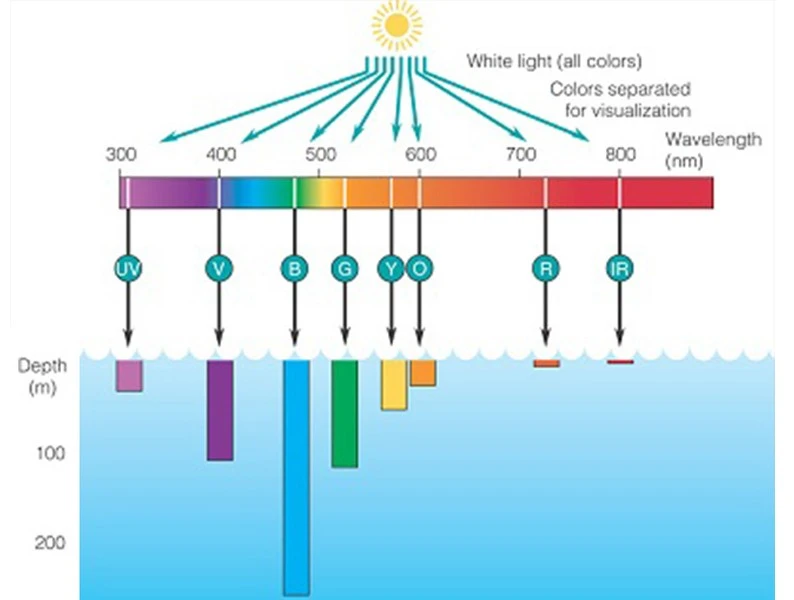
El rendimiento de los colores claros de pesca depende en gran medida de cómo viaja la luz a través del agua. A diferencia del aire, la luz bajo el agua se ve rápidamente afectada por la absorción y la dispersión. Las diferentes longitudes de onda se desvanecen a diferentes velocidades, lo que significa que algunos colores siguen siendo visibles mucho más que otros.
Las longitudes de onda más cortas, como el azul y el verde, generalmente viajan más bajo el agua, mientras que las longitudes de onda más largas disminuyen más rápidamente. Esta diferencia es una razón clave por la que la selección de colores de luz de pesca nunca debe ser aleatoria.
Visibilidad y claridad del agua
La claridad del agua juega un papel importante en la determinación de qué color de luz funciona mejor. En aguas claras, la luz puede viajar más lejos antes de dispersarse, lo que permite que ciertos colores iluminen un área más amplia. En contraste, el agua turbia o rica en plancton absorbe la luz más rápidamente y reduce la visibilidad.
La luz verde se favorece a menudo porque mantiene un equilibrio entre penetración y contraste, permaneciendo visible en condiciones de clara y moderadamente turbia.
Profundidad del agua y luz ambiental en la noche
La profundidad influye aún más en cómo se desempeñan los colores de luz de pesca. A medida que aumenta la profundidad del agua, ciertos colores se absorben más rápido que otros. Un color que funciona bien en agua dulce poco profunda puede perder efectividad en ambientes de agua salada más profundos.
Por la noche, los niveles de luz ambiental disminuyen significativamente. Incluso las luces de pesca de salida moderada pueden crear un fuerte contraste con la oscuridad circundante, lo que hace que la elección del color sea más crítica que el brillo puro.
Por qué no hay un color claro de pesca "mejor" de pesca
Debido a que la claridad del agua, la profundidad y las condiciones de luz ambiental varían mucho, ningún color de luz de pesca solo funciona mejor en cada situación. La selección efectiva de color siempre depende de hacer coincidir la luz con el entorno de pesca específico.
Esta es la razón por la cual las opciones de color de pesca ligeras se discuten normalmente por escenario y no como una solución única para todos.
| Factor | Impacto en el rendimiento del color de la luz |
| Claridad del agua | El agua clara favorece la visibilidad más larga; el agua turbia reduce el alcance |
| profundidad del agua | Mayor profundidad aumenta la absorción de color |
| Longitud de onda | Las longitudes de onda más cortas viajan más bajo el agua |
| Condiciones nocturnas | La luz ambiental baja amplifica el contraste de color |
Los mejores colores de pesca para pesca en agua salada
Los entornos de agua salada presentan desafíos únicos debido a su profundidad y claridad de agua variable. El mejor color claro de pesca para la pesca en agua salada depende de varios factores, incluida la profundidad del agua, la claridad del agua y el tipo de pez al que se dirige. En estas condiciones, algunos colores claros, como el verde, el azul y el cian, ofrecen ventajas sobre otras.
Los entornos de agua salada presentan desafíos únicos debido a la profundidad, la claridad del agua y las condiciones variables. Elegir el color claro de pesca más efectivo depende no solo de las especies objetivo sino también de las características del agua y la profundidad de pesca. En estos entornos, la luz verde, azul, cian, roja e incluso blanca puede ofrecer ventajas en la atracción de peces y cebo.
Descripción general del color de la luz
Luz verde: la opción más utilizada
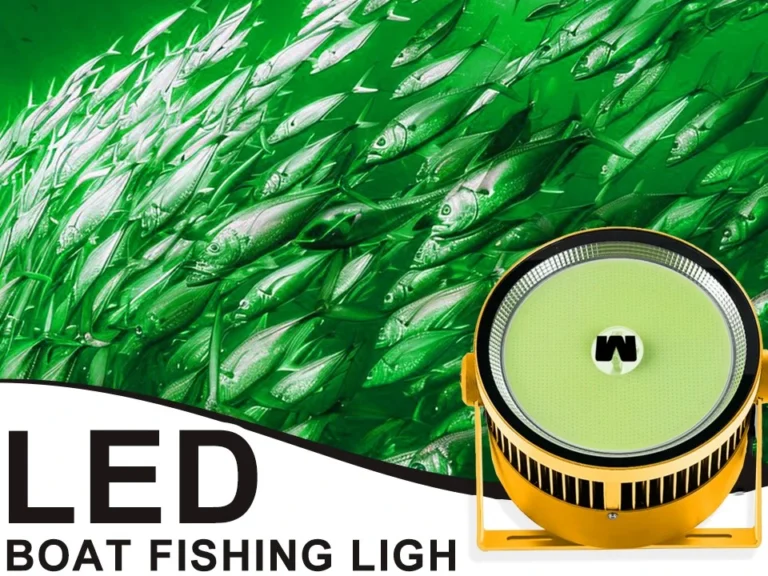
Las luces de pesca verdes son ampliamente utilizadas en la pesca de agua salada porque equilibran la penetración y la visibilidad. La luz verde penetra eficazmente el agua, permanece visible a profundidades moderadas y atrae fuertemente el plancton, que a su vez atrae a los peces carnada y depredadores más grandes.
Luz azul: eficaz en aguas claras y profundas
La luz azul penetra más profundamente que otros colores, por lo que es ideal para la pesca en alta mar o en aguas profundas. Es más eficaz en aguas claras pero menos en condiciones turbias.
Luz cian: penetración equilibrada y contraste
La luz cian (azul-verde) combina la penetración del azul con la visibilidad del verde, funcionando bien en aguas más profundas o ricas en plancton. Crea un buen contraste para que los peces vean y respondan a la luz.
Luz roja: atracción sigilosa
La luz roja es menos visible para la mayoría de los peces, lo que la hace útil en áreas presionadas o en aguas poco profundas donde los peces son sensibles a la luz. Sin embargo, es menos efectivo para atraer plancton.
Luz blanca: amplia iluminación
La luz blanca proporciona una iluminación amplia y uniforme y puede ser útil para la navegación o la visibilidad general. Generalmente es menos efectivo que el verde, el azul o el cian para atraer plancton y peces depredadores.
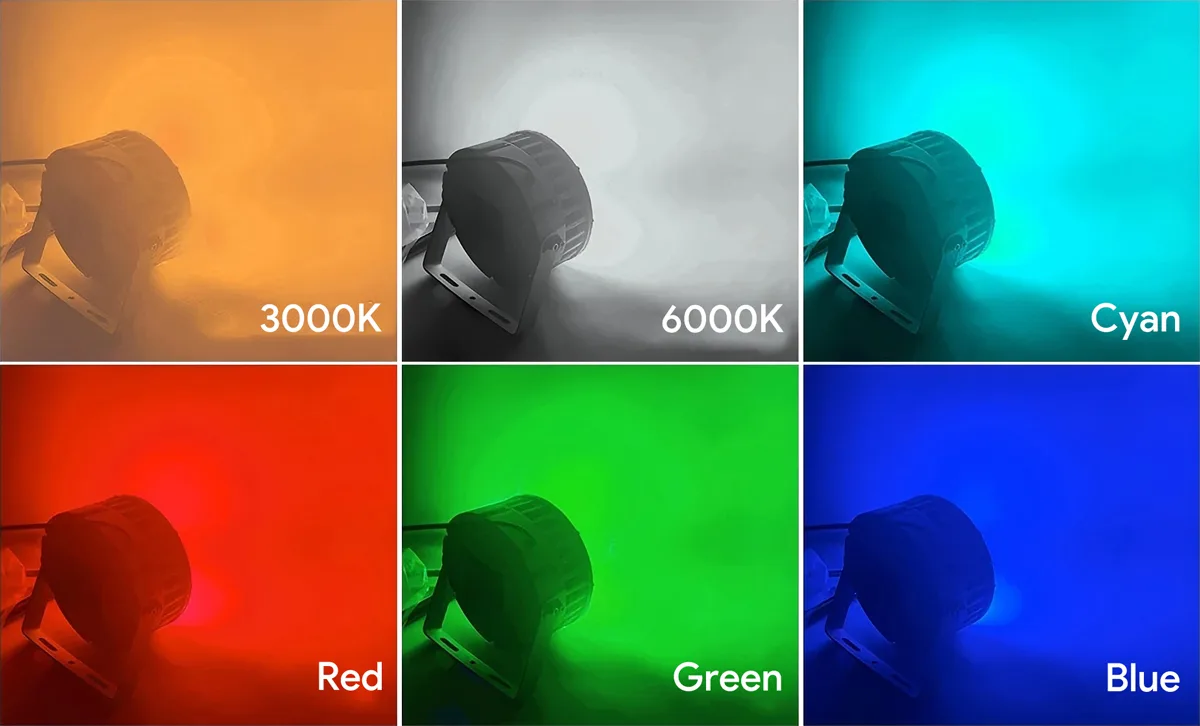
A continuación se muestra una imagen de ejemplo que muestra cómo se comportan los diferentes colores de luz (blanco, verde, azul, rojo) en un entorno de agua salada, con un bote y un plancton flotante. Esta imagen demuestra la penetración, la visibilidad del color y las zonas de atracción para los peces cebo y las especies objetivo.
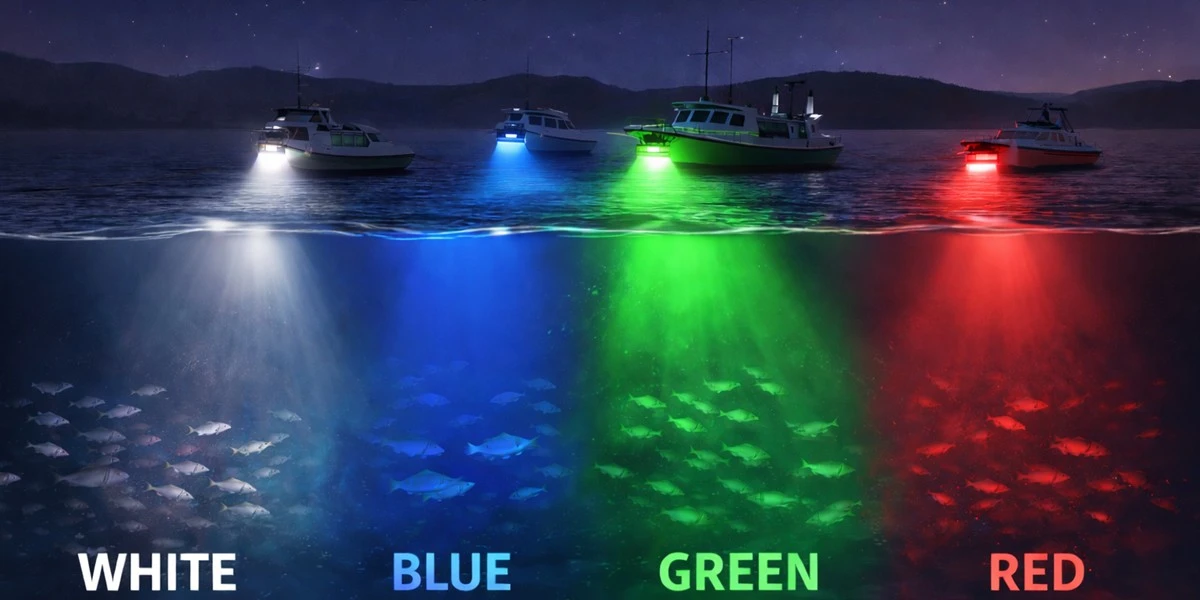
Comparación rápida: colores claros de pesca de agua salada
| color claro | El mejor caso de uso de agua salada | Ventaja clave | limitación |
| Verde | Cerca de la costa y de la costa | Penetración y atracción equilibrada | ---- |
| Azul | Aguas claras y profundas en alta mar | Visibilidad de largo alcance | Menor contraste en agua turbia |
| ciano | Aguas profundas y ricas en plancton | Alta penetración, buen contraste | Puede ser menos eficaz en aguas turbias |
| Rojo | Aguas poco profundas y peces presionados | Menos visible para los peces, sin molestias | Menos efectivo para plancton |
| Blanco | Iluminación general cerca de la costa | Amplia iluminación, buena visibilidad | Menos efectivo para atraer plancton y peces depredadores |
Los mejores colores de pesca para pesca en agua dulce
Lo que funciona mejor en condiciones típicas de agua dulce
En la mayoría de los entornos de agua dulce, como lagos, embalses y ríos que se mueven lentamente, el objetivo no es la penetración extrema, sino la agregación de peces estable.
En comparación con la pesca en alta mar, los peces de agua dulce responden mejor a la luz moderada y uniformemente distribuida en lugar de a las vigas muy intensas o muy enfocadas.
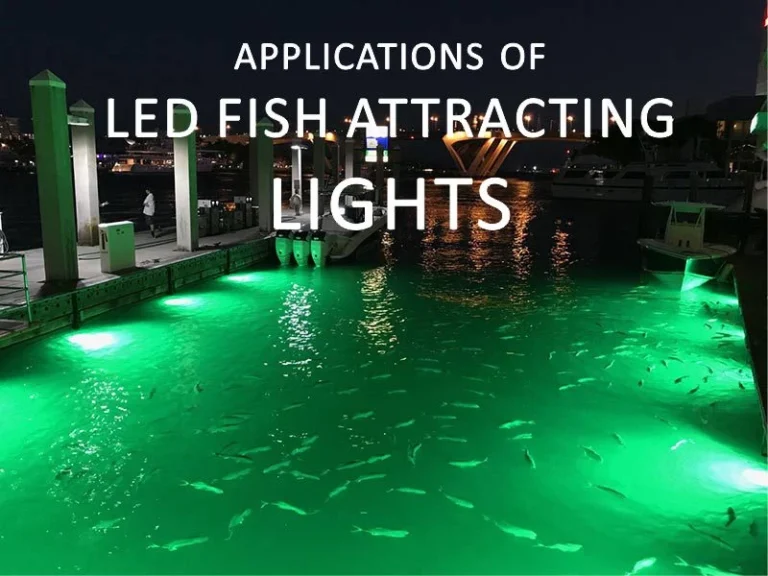
En la práctica, la luz verde y cian se usa ampliamente en la pesca de agua dulce porque crea una zona de atracción visible sin sobreestimular peces.
La luz azul puede ser efectiva en lagos más claros, mientras que la luz roja generalmente se limita a aplicaciones de muy poca profundidad o de corto alcance debido a su rápida atenuación en el agua.
Para facilitar la selección de colores, la siguiente tabla resume cómo se desempeñan los diferentes colores de luz en los entornos típicos de agua dulce.
Comparación de color de luz de pesca de agua dulce
| color claro | Rendimiento típico de agua dulce | Mejores escenarios de uso | notas |
| Verde | Agregación de peces fuerte y estable | Lagos, embalses, ríos lentos | Atracción equilibrada, ampliamente utilizada para la pesca nocturna |
| ciano | Similar al verde con efecto visual más suave | Agua dulce clara, pesca recreativa | Menos agresivo que el verde, bueno para sesiones largas |
| Azul | Atracción moderada en aguas claras | Lagos claros, agua dulce poco profunda | Menos efectivo en agua turbia |
| Blanco | Alta visibilidad, amplia iluminación | Iluminación general, uso de corto alcance | puede atraer insectos; menos selectivo |
| Rojo | Penetración submarina limitada | Agua muy poco profunda, iluminación de superficie | Principalmente por la visibilidad, no a la atracción principal de los peces |
Consejos prácticos para usar luces de pesca en lagos y ríos
Para la pesca de agua dulce, la colocación de la luz y el control de la salida a menudo importan más que el color solo.
Montar la luz sobre el agua y dirigirla hacia abajo permite que el rayo se extienda de forma natural, ayudando a los peces cebo y a los depredadores a reunirse gradualmente.
El uso de menos luces con una salida consistente generalmente ofrece mejores resultados que instalar múltiples lámparas de alta potencia.
En la mayoría de los botes de agua dulce de tamaño pequeño a mediano, las luces de pesca colocadas de una a dos son suficientes para las operaciones nocturnas.
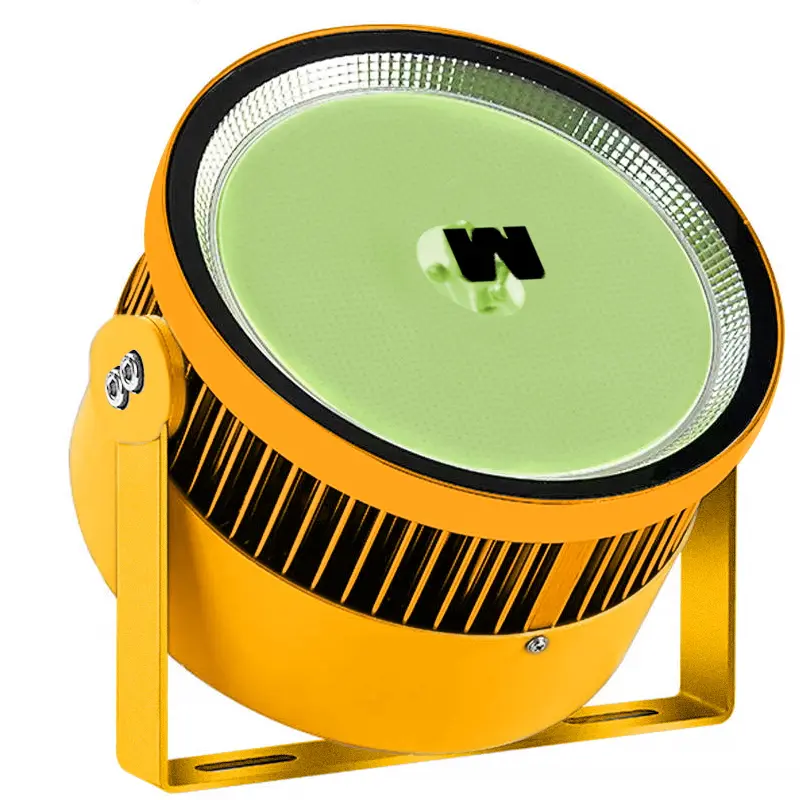
ILUMINACIÓN DE PECES COB DE ALTA POTENCIA
Modelo.: Tipo redondo
Tensión de entrada: AC100-320V
Sobretensión: 10000V
Vatios/unidad: 800W/1000W/1200W
Tipo LED: COB
Tamaño (mm): Φ230 × 140
Color: 3000K / 4000K / 5000K / 6000K/ Rojo / Verde / Azul / Violeta
CRI: >80@3000K / 4000K / 5000K / 6000K/
Lumen: >120lm/w@3000K / 4000K / 5000K / 6000K/
Grado IP: IP67
Cómo construir una configuración de luz de pesca efectiva
En las secciones anteriores, analizamos cómo se comportan los colores claros en diferentes entornos de agua, respuestas de peces a varias longitudes de onda y rendimiento práctico de diferentes colores en agua salada y dulce. Con estos principios en mente, el siguiente paso crucial es traducirlos en un sistema de luz de pesca del mundo real.
Elegir un color de luz de pesca es solo una parte del sistema. Para lograr una atracción de peces estable y eficiente en diversas condiciones de agua, se deben considerar juntos factores como la claridad del agua, la profundidad, las especies objetivo y el método de pesca. Centrarse únicamente en "cuál es el mejor color" a menudo conduce a resultados inconsistentes.
Para que este proceso sea más fácil de seguir, podemos dividirlo en un marco de decisión simple, que lo guía paso a paso desde comprender su entorno de pesca hasta determinar el color, la cantidad de luces y el diseño óptimos.
Flujo de decisión de iluminación de pesca
- Identificar el medio ambiente (agua dulce / agua salada / turbidez)
- Definir el objetivo principal (atraer el pez cebo / depredador objetivo)
- Selecciona colores según las necesidades de profundidad y penetración (verde / azul / cian)
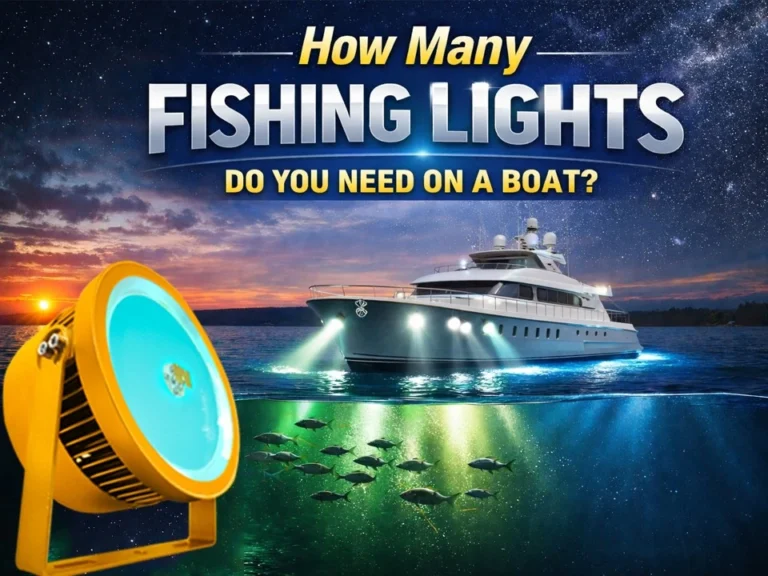
- Determine el número de luces y el diseño según el tamaño del barco
Número recomendado de luces de pesca por tipo de barco
| Tipo de barco / Escenario de pesca | Longitud típica del barco | Cantidad de luz recomendada | Rango de potencia total sugerido | notas |
| Pequeños barcos recreativos | < 6 m | 1-2 unidades | 200-400 W | Adecuado para la pesca tranquila en agua dulce o cerca de la costa; preferido las luces de superficie |
| Pequeños barcos de pesca comercial | 6-10 m | 2-4 unidades | 400–800 W | La distribución uniforme alrededor del barco mejora la estabilidad de la atracción |
| Buques pesqueros en alta mar medianos | 10–20 m | 4–8 unidades | 800-1500 W | Distribución de luz más amplia más importante que las luces de alta potencia |
| Grandes buques pesqueros comerciales | > 20 m | 8+ unidades | 1500 W y superior | Las luces deben estar espaciadas uniformemente para zonas de atracción consistentes |
| Muelle / Plataformas de pesca fijas | Instalación fija | 2–6 unidades | 300-1000 W | Enfoque en la profundidad del agua y el ángulo del haz en lugar del número; Se prefiere la instalación de la superficie |
Configuración óptima de la luz de pesca montada en la superficie
- Mayor seguridad operativa
El montaje sobre el agua reduce el riesgo de entrada de agua, peligros eléctricos y daños por corrientes o residuos en comparación con las configuraciones de iluminación sumergida. - Cobertura de luz amplia
Las luces de superficie correctamente colocadas se reflejan y se refractan en el agua, creando amplias zonas de atracción que reúnen plancton, peces cebo y se dirigen a los depredadores de manera efectiva. - Fácil mantenimiento e inspección
El montaje en superficie de agua permite un fácil acceso para la limpieza, ajuste y mantenimiento de rutina, sin necesidad de quitar las luces del agua. - Opciones de instalación flexibles
Las luces de superficie se pueden montar en rieles, postes o soportes alrededor del bote o plataforma, lo que permite un control preciso sobre los ángulos de haz, superposición y distribución de luz.
Salida y diseño coincidentes
Los operadores experimentados se enfocan en la sinergia del sistema en lugar de solo el color
- Relaciona la potencia total y la distribución de la luz con el escenario:
Offshore / Buques grandes / Alta corriente → Mayor producción total + Cobertura más amplia Calma Agua dulce / Nearshore → Potencia moderada + Iluminación enfocada - La distribución de la luz y la superposición son más importantes que las luces de alta potencia individuales
- Los operadores experimentados se enfocan en la sinergia del sistema en lugar de solo el color
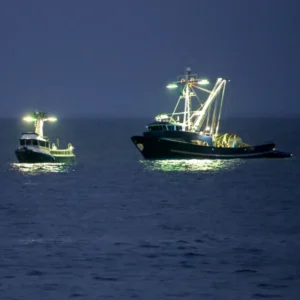
Conclusión
Si bien la pesca de colores claros juega un papel importante en la atraeción de peces, la efectividad real de un sistema de luz de pesca depende de qué tan bien el color, la producción de luz, la cobertura y la instalación funcionen juntos. Diferentes entornos de pesca (agua dulce, agua salada, cerca de la costa o en alta mar) requieren diferentes estrategias de iluminación en lugar de una solución única para todos.
Las luces de pesca verdes son ampliamente utilizadas porque ofrecen una combinación equilibrada de profundidad de penetración, visibilidad y eficiencia energética. Sin embargo, seleccionar el número correcto de luces, ángulos de haz adecuados y la altura de montaje adecuada suele ser más crítico que el color solo cuando se busca obtener resultados de pesca estables y repetibles.
Si está planeando una nueva configuración de luz de pesca o actualizando una existente, Comprender cómo funciona la iluminación en condiciones reales de pescas Puede ayudarle a reducir la prueba y el error y mejorar la eficiencia desde el principio. Para obtener orientación más detallada sobre tipos de luz, métodos de instalación y recomendaciones específicas de la aplicación, puede explorar nuestras guías relacionadas sobre comprensión de luces de pesca, soluciones de iluminación montadas en barco y Aplicaciones prácticas en diferentes escenarios de pesca.
Publicaciones relacionadas