Español
  English
  简体中文
简体中文  Deutsch
  Français
  Italiano
  日本語
日本語  한국어
한국어  Polski
  Português
  Русский
  Türkçe
  Nederlands
  Tiếng Việt
  ไทย
ไทย 
La elección de la hoja de luz LED adecuada para un proyecto de iluminación comercial requiere evaluar criterios técnicos mensurables en lugar de basarse en reclamos de rendimiento general. Los equipos de adquisiciones deben evaluar la producción de lumen por metro cuadrado, niveles de CRI (típicamente ≥80 o ≥90 para el comercio minorista), temperatura de color consistente (estabilidad de Kelvin), compatibilidad de voltaje (sistemas de 24 V comúnmente), uniformidad de brillo máximo a mínimo y estructura de gestión térmica. Espaciado incorrecto de LED, disipación de calor insuficiente o capacidad del conductor que no coinciden pueden resultar en puntos de acceso visibles, caída de voltaje, depreciación prematura de lumen y costosa reelaboración después de la instalación.
Las aplicaciones comerciales también exigen una integración predecible detrás de materiales acrílicos, de tela o arquitectónicos con profundidad limitada. Si la resistencia de la iluminación, la distancia del difusor o la carga de potencia no se calculan correctamente, es posible que el sistema no alcance el brillo uniforme en superficies grandes.
Este artículo explica cómo elegir hojas de luz LED para proyectos de iluminación comercial detallando especificaciones técnicas clave, puntos de referencia de rendimiento, criterios de selección basados en aplicaciones y estándares de evaluación de proveedores requeridos para proyectos B2B profesionales.
Factores técnicos clave a considerar
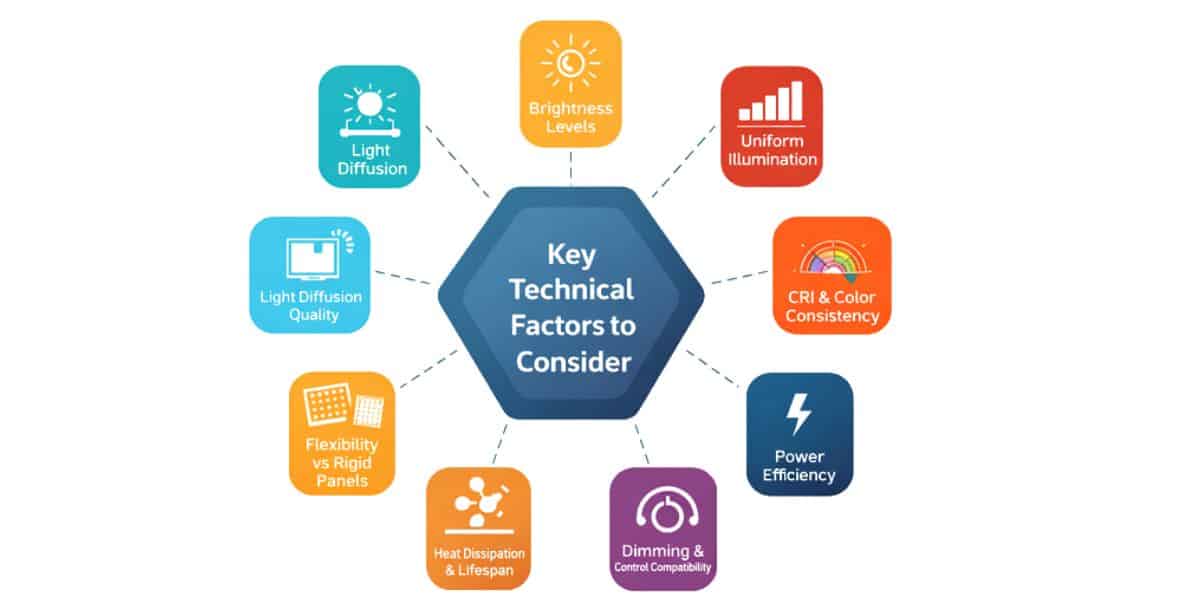
La selección de una hoja de luz LED requiere una revisión estructurada de los criterios de rendimiento medibles, no solo de las reclamaciones de brillo o flexibilidad. En proyectos comerciales, las especificaciones como la salida de lumen por metro cuadrado, la clasificación de CRI, la configuración de voltaje, los límites térmicos y la capacidad de conexión modular determinan directamente si el sistema funcionará de manera confiable durante años de funcionamiento.
Niveles de brillo
Las aplicaciones comerciales a menudo requieren una producción significativamente mayor que los entornos residenciales. Una hoja de luz LED de alto brillo normalmente debe entregar entre 3.000 y 8.000 lúmenes por metro cuadrado, dependiendo de la profundidad de aplicación y el tipo de difusor.
Para cajas de luz poco profundas (menos de 50 mm de profundidad), se requiere una mayor salida para mantener el brillo de la superficie sin puntos LED visibles. Las pantallas de escaparate expuestas a la luz del día pueden requerir una mayor luminancia para competir con los niveles de luz ambiental, mientras que las características arquitectónicas interiores pueden requerir brillo controlado para evitar deslumbramiento o sobreiluminación.
Las especificaciones de salida siempre deben evaluarse después de tener en cuenta la pérdida de luz del difusor, lo que puede reducir el brillo visible en 20–40% dependiendo del grosor del material.
Rendimiento de iluminación uniforme
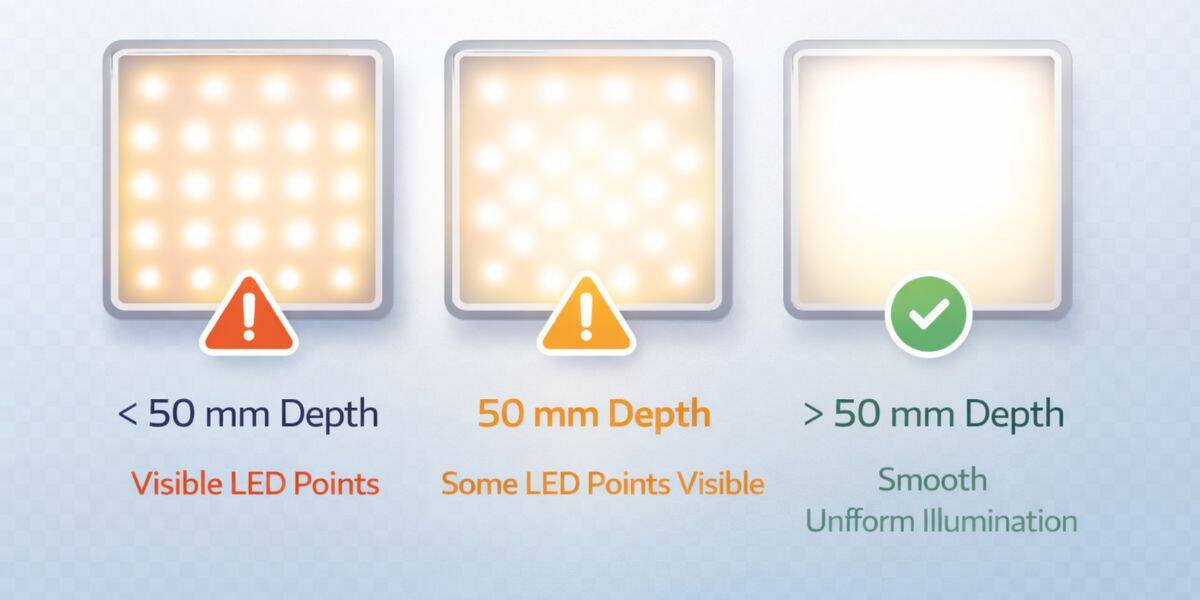
La uniformidad depende de la densidad de espaciamiento de los LED, el diseño óptico y las características reflectantes de la cavidad de montaje. Una hoja de luz LED de iluminación uniforme debe lograr una relación de luminancia de máxima a mínima cercana a 1,2:1 a 1,5:1 para entornos de visualización profesionales.
Al evaluar la uniformidad, evalúe:
• Relación de luminancia de máximo a mínimo en todo el panel
• Distancia de visualización requerida y ángulo de observador
• Compatibilidad con materiales y espesores de difusores específicos
• Profundidad mínima de instalación recomendada desde la hoja hasta el difusor
El mal diseño de espaciamiento puede resultar en puntos de acceso visibles, especialmente a profundidades poco profundas por debajo de 40 mm.
Calidad de difusión de luz
Incluso con suficiente brillo, la dispersión óptica desigual puede causar sombreado o visibilidad de puntos LED. Los sistemas de calidad comercial están diseñados para funcionar de manera efectiva a profundidades de instalación definidas (por ejemplo, una profundidad de cavidad de 30 a 80 mm según la configuración).
Las hojas de especificaciones deben indicar la distancia recomendada del difusor para garantizar un rendimiento uniforme.
Consistencia CRI y color
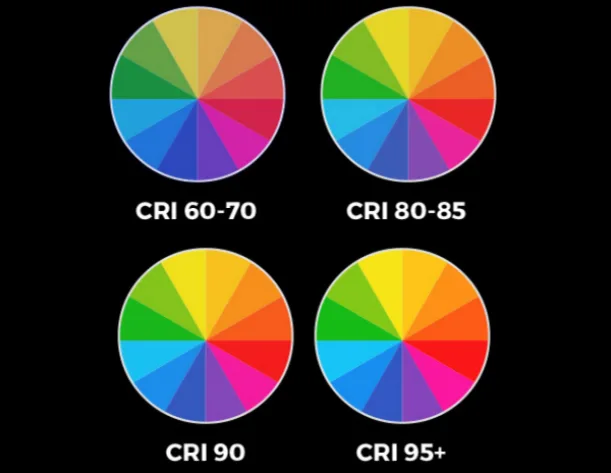
El índice de representación de color (CRI) afecta directamente cómo aparecen los productos, las telas y los gráficos de marca bajo la iluminación. Los entornos minoristas suelen requerir CRI ≥80, mientras que las instalaciones de venta al por menor, cosméticos o arte premium suelen especificar CRI ≥90.
La consistencia de la papelera de color es igualmente crítica. Las hojas de LED utilizadas en múltiples instalaciones deben mantener un control de bin apretado (por ejemplo, dentro de Macadam Elipse de 3 pasos) para evitar la variación de color visible entre lotes.
eficiencia energética
La eficiencia energética debe evaluarse utilizando lúmenes por vatio (LM/W) y eficiencia del conductor a nivel de sistema. Los proyectos comerciales suelen tener como objetivo entre 100 y 150 lm/W dependiendo de la clase y configuración de brillo.
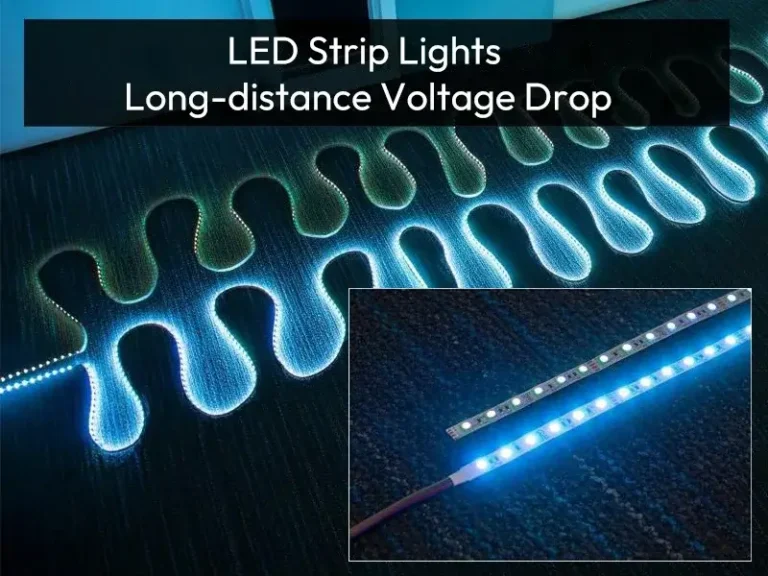
También se debe revisar la eficiencia del controlador, la caída de voltaje en tiradas largas y la compatibilidad de la fuente de alimentación para evitar un brillo desigual en instalaciones más grandes.
Flexibilidad frente a paneles rígidos
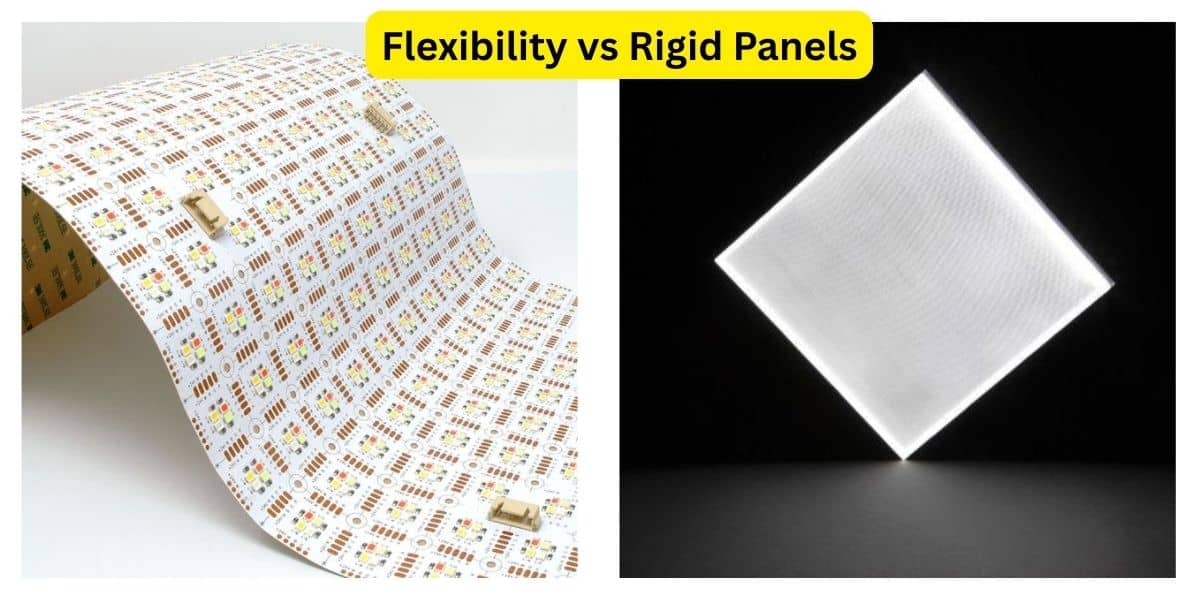
Una lámina de luz LED flexible es adecuada para superficies curvas, columnas cilíndricas y formas arquitectónicas irregulares. Sin embargo, los paneles rígidos pueden ofrecer una mejor estabilidad mecánica para instalaciones grandes planas que excedan de 1 metro de longitud.
La selección debe considerar:
• Estabilidad de la superficie de montaje
• Disponibilidad de soporte estructural
• Radio de curvatura requerido
• Durabilidad mecánica a largo plazo
La flexibilidad no debe comprometer el rendimiento térmico o la fiabilidad eléctrica.
Compatibilidad de atenuación y control
Los proyectos comerciales frecuentemente requieren integración con 0–10 V, PWM, DALI u otros sistemas de control. La hoja de luz LED debe ser compatible con los controladores de voltaje constante que coinciden con el voltaje del sistema (comúnmente 24 V).
La atenuación suave sin parpadeo, particularmente por debajo del brillo 20%, es fundamental en entornos de hospitalidad y arquitectónicos.
Disipación de calor y vida útil
La gestión térmica afecta directamente el mantenimiento y la vida útil de la luz. Los sistemas comerciales deben especificar el rango de temperatura de funcionamiento y el mantenimiento proyectado de la luz (por ejemplo, L70 a 50.000 horas).
Los sustratos de dispersión térmica, las capas de respaldo de aluminio y el espaciado adecuado del flujo de aire reducen la degradación prematura.
Tamaño del panel y escalabilidad modular
Un sistema de panel de láminas de luz LED debe admitir la vinculación modular sin una variación de brillo visible entre las secciones. Los conectores eléctricos sin costura y la distribución constante de la corriente son esenciales para grandes paredes o fondos minoristas.
Un diseño modular deficiente puede causar una caída de voltaje, lo que genera un brillo desigual en las instalaciones extendidas.
Por qué se utilizan hojas de luz LED en proyectos comerciales
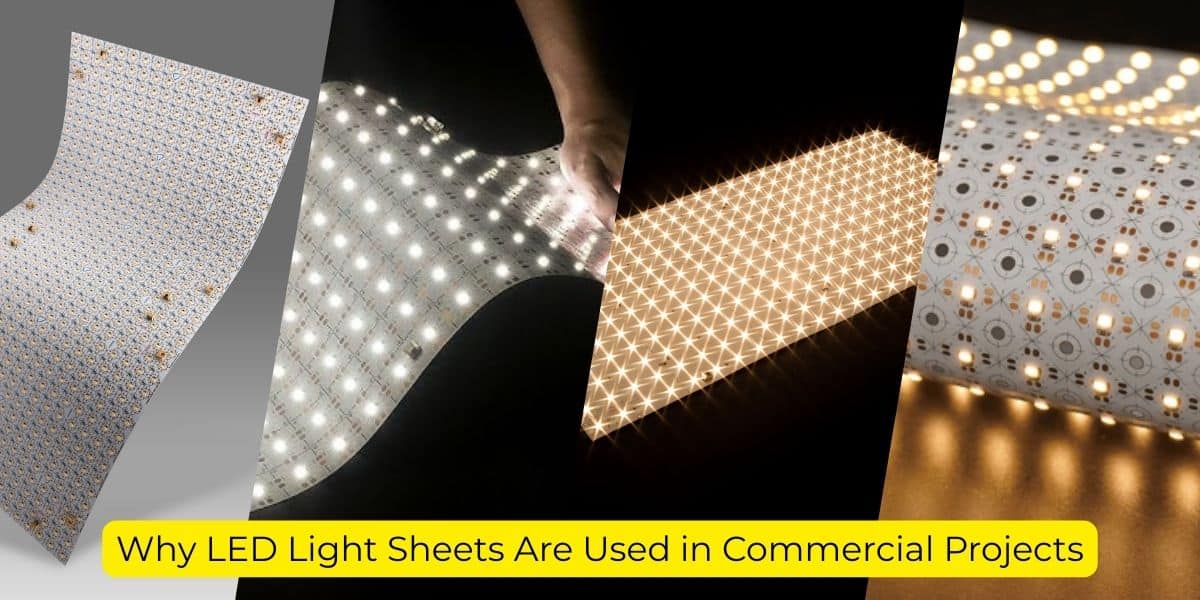
En proyectos de iluminación comercial, las láminas de luz LED no se seleccionan solo por estética, sino por ventajas de rendimiento medibles en entornos de retroiluminación controlados. Su uso está impulsado por tres requisitos operativos: distribución uniforme de luminancia, profundidad de instalación reducida y estabilidad térmica a largo plazo.
Rendimiento de iluminación uniforme
La uniformidad es un requisito técnico en el comercio minorista, la señalización y la retroiluminación arquitectónica. La distribución de luz inconsistente da como resultado puntos de acceso visibles, bandas de sombra y distorsión de color detrás de los difusores de acrílico o de tela. Una hoja de luz LED de iluminación uniforme debidamente diseñada mantiene una variación de luminancia estrecha en toda la superficie, generalmente apuntando a una relación de brillo máximo a min entre 1.3:1 y 1.5:1, dependiendo de la distancia de visualización y el grosor del difusor.
En los sistemas de señalización y visualización comerciales, esto afecta directamente la precisión del color de la marca y la consistencia visual. Incluso se hace visible un desequilibrio menor de luminancia cuando se retroiluminan los gráficos translúcidos, particularmente en instalaciones de gran formato.
Profundidad de construcción y construcción delgada
Las instalaciones comerciales a menudo operan bajo estrictas restricciones de profundidad. Las cajas de luz fluorescentes tradicionales o los paneles LED enmarcados pueden requerir una profundidad de instalación de 50 a 100 mm. En contraste, un panel de láminas de luz LED puede operar de manera efectiva dentro de cavidades significativamente menos profundas, a menudo de menos de 30 mm, dependiendo del nivel de brillo y del tipo de difusor.
Esta profundidad reducida permite:
• Vitrinas más delgadas
• Sistemas de enmarcado de aluminio más ligeros
• Consumo de material reducido
• Mayor flexibilidad arquitectónica
La eficiencia de profundidad se vuelve especialmente crítica en las estanterías minoristas, las ventanas y los sistemas de marca integrados en las paredes.
Gestión térmica y fiabilidad operativa
La acumulación de calor es una de las causas principales de la depreciación del lumen LED y de la falla prematura. comercial Hoja de luz LED Los paneles están diseñados con espaciado LED distribuido y capas de sustrato conductor para reducir la concentración térmica localizada.
Soportes de distribución térmica adecuados:
• Mantenimiento estable del lumen durante horas de funcionamiento prolongadas
• Cambio de color reducido a lo largo del tiempo
• Menor estrés del conductor
• Intervalos de servicio extendidos
En entornos comerciales de alto rendimiento donde los sistemas pueden operar de 10 a 14 horas diarias, la estabilidad térmica influye directamente en el costo del ciclo de vida y la planificación del mantenimiento.
Diferencias funcionales de paneles LED estándar
Los paneles de techo LED estándar se fabrican típicamente en dimensiones fijas y se optimizan para la instalación de techos a base de rejilla. No están diseñados para aplicaciones de retroiluminación de precisión donde:
• Se requieren dimensiones de corte personalizado
• Las formas irregulares deben estar iluminadas
• La profundidad de instalación es limitada
• La luz debe distribuirse uniformemente en las superficies de señalización
Por el contrario, los paneles de láminas de iluminación LED están diseñados para ampliar la expansión modular, adaptarse a la adaptación a tamaño y rendimiento de retroiluminación controlada en entornos comerciales.
Tipos de hojas de luz LED para uso comercial
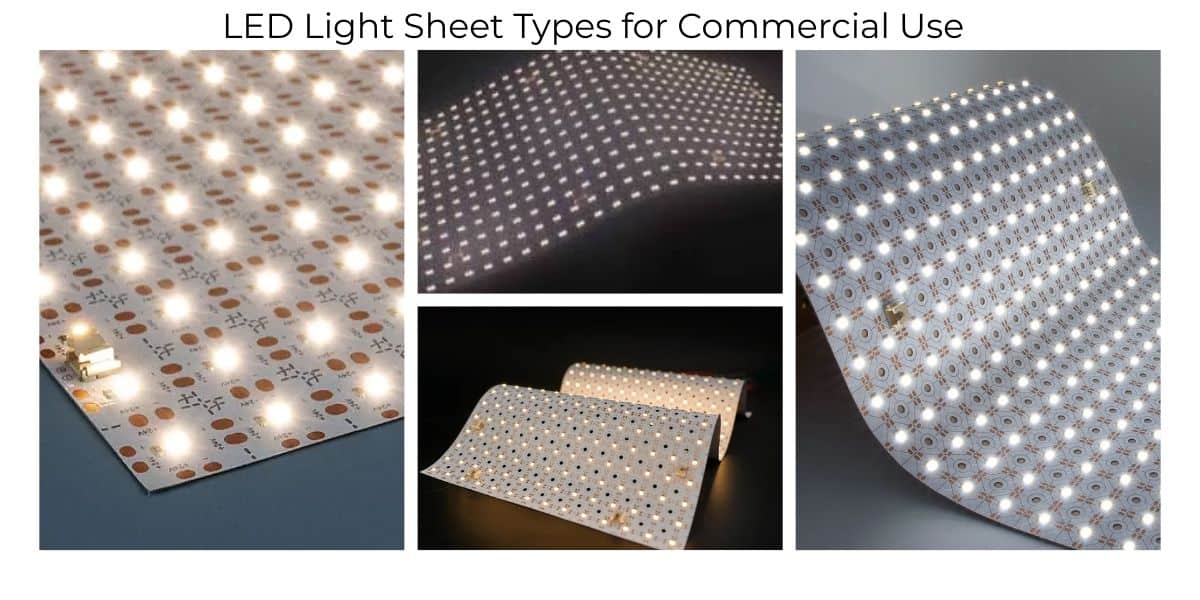
Diferentes Tipos de luces de láminas LED Sirve para diferentes objetivos de rendimiento en entornos comerciales. La selección del tipo correcto depende de los requisitos de la aplicación, las necesidades de control y los objetivos de marca.
Hojas de LED monocromas
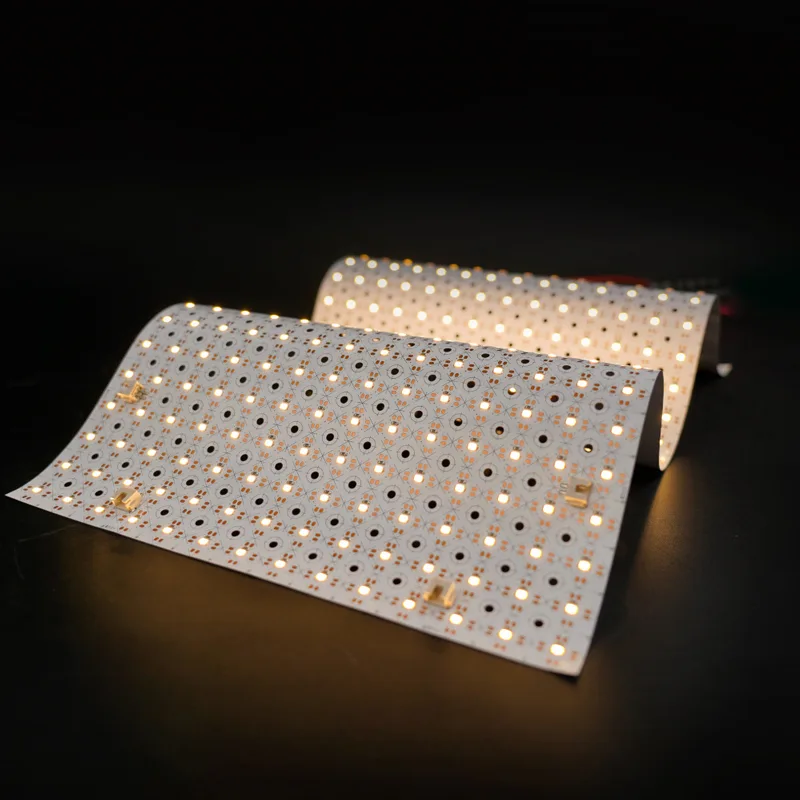
- Modelos principales: PQX4925T242C
- Iype LED: SMD2835
- Qiy LED: 242 piezas/plega
- Voltaje de entrada: 24 V CC
- Poder: 28W/Plecia
- Coios:2700K/3000K/4000K/6000K
- Lúmenes: 2800IM/Plecia
- Crl:80/90
- Tamaño (Lx Ancho):490 mm x 245 mm
- Unidad de corte mínimo: 22,3 mm x 22,3 mm
- Regulable: Sí
- Ángulo de haz:120°
- Clasificación IP: IP20/IP54
- Vida útil:50.000 horas
- Garantía: 3años
- Certificación: CE, RoHS
- La parte trasera tiene cinta adhesiva de doble cara SM
Las hojas de LED monocromas emiten una temperatura de color fija única (por ejemplo, 3000K, 4000K o 6500K). Estos se usan comúnmente en estanterías minoristas, vitrinas y cajas de luz donde se requiere una iluminación blanca constante.
Son típicamente:
• Más rentable
• Más fácil de controlar
• Adecuado para despliegues a gran escala
Los sistemas monocromáticos son ideales cuando la consistencia del color y el control presupuestario son prioridades.
Hojas LED blancas sintonizables
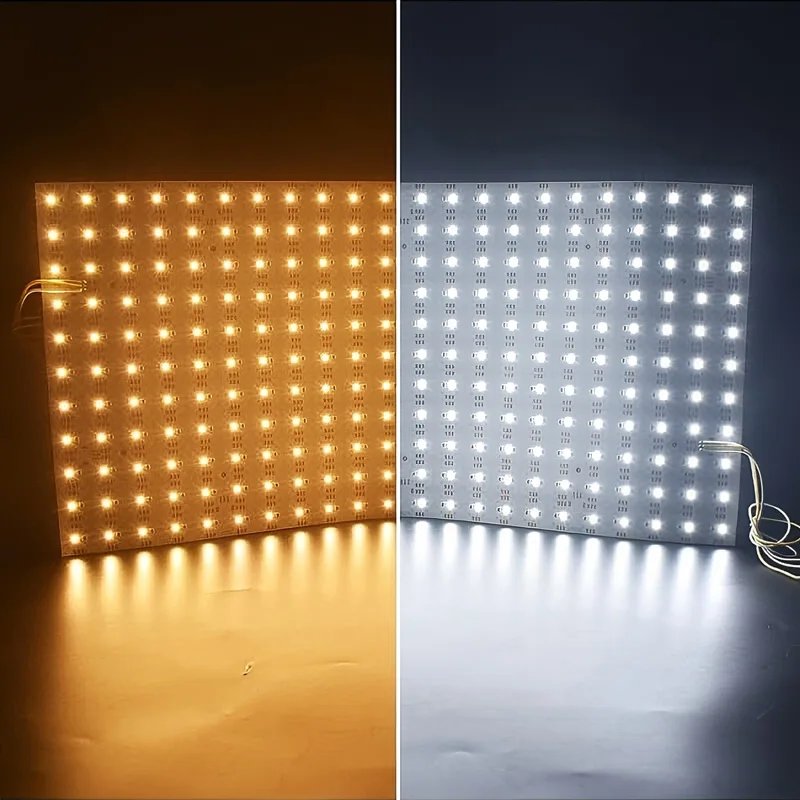
- Tamaño (L x W): 250mmx250 mm/ 490mmx245mm
- Tipo de LED: 2835 SMD
- Cantidad LED: 200 Uds./484 Uds.
- Tensión de trabajo: 24 V CC
- Poder: 16W/40W
- Rango de temperatura ajustable de color: 2700K-6500K
- Flujo luminoso: 1600lm/3800lm
- CRI: >90RA
- Longitud mínima de corte: 25mmx25mm/ 22.3mmx22.3mm
- Regulable: sí
- Ángulo de haz: 120°
- Nivel de impermeabilidad: IP20 no impermeable, IP54 impermeable
- Garantía: 3 años
Las hojas de LED blancos ajustables permiten el ajuste entre tonos blancos cálidos y fríos. Esta flexibilidad soporta entornos donde la atmósfera de iluminación debe adaptarse a lo largo del día.
Se utilizan comúnmente en:
• Salas de exposición
• Espacios de hospitalidad
• Entornos minoristas premium
Los sistemas sintonizables aumentan el costo del proyecto pero proporcionan un mayor control ambiental y personalización de la experiencia del usuario.
Hojas de LED RGB
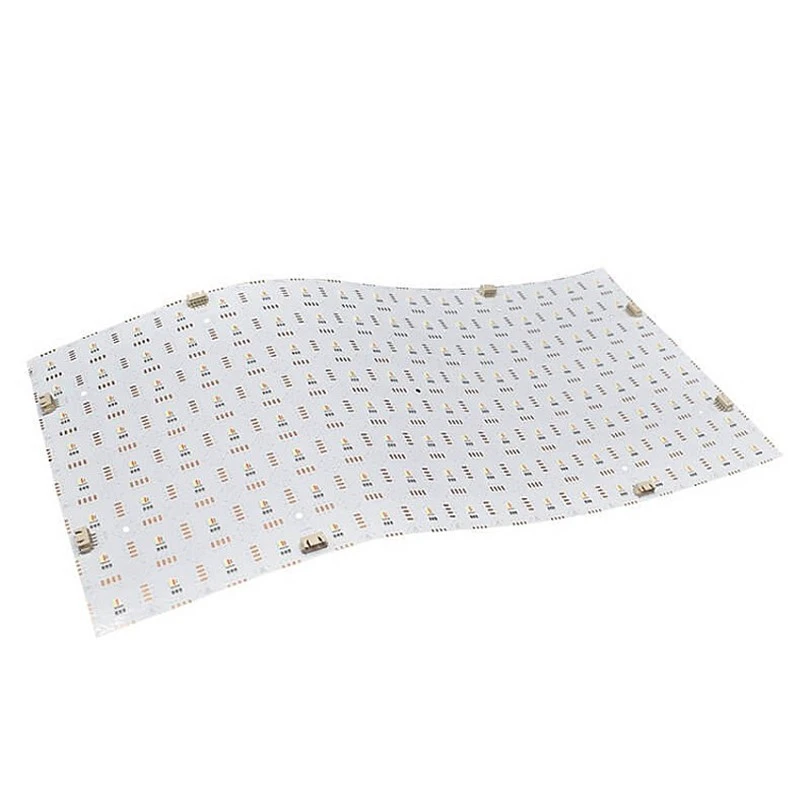
- Tamaño (L x W): 490mmx245 mm
- Tipo de LED: 5050 SMD
- Cantidad LED: 128 piezas
- Tensión de trabajo: 24 V CC
- Poder: 45W
- Color: RGB
- Regulable: sí
- Longitud de corte: 39,6 mm
- Ángulo de haz: 120°
- WashingtonNivel de prueba: IP20 no impermeable, IP54 impermeable
- Vida útil: >35.000 horas
- Garantía: 3 años
Las hojas de LED RGB permiten cambios de color dinámicos para aplicaciones de marca y decorativas. A menudo se seleccionan para el comercio minorista, la señalización y las características arquitectónicas donde se requiere variación de color.
Sin embargo, los sistemas RGB:
• Requerir controladores avanzados
• Necesita una integración de control adecuada
• Demanda una planificación de instalación más precisa
No se utilizan normalmente para proyectos de retroiluminación en blanco estándar.
Hojas de píxeles LED
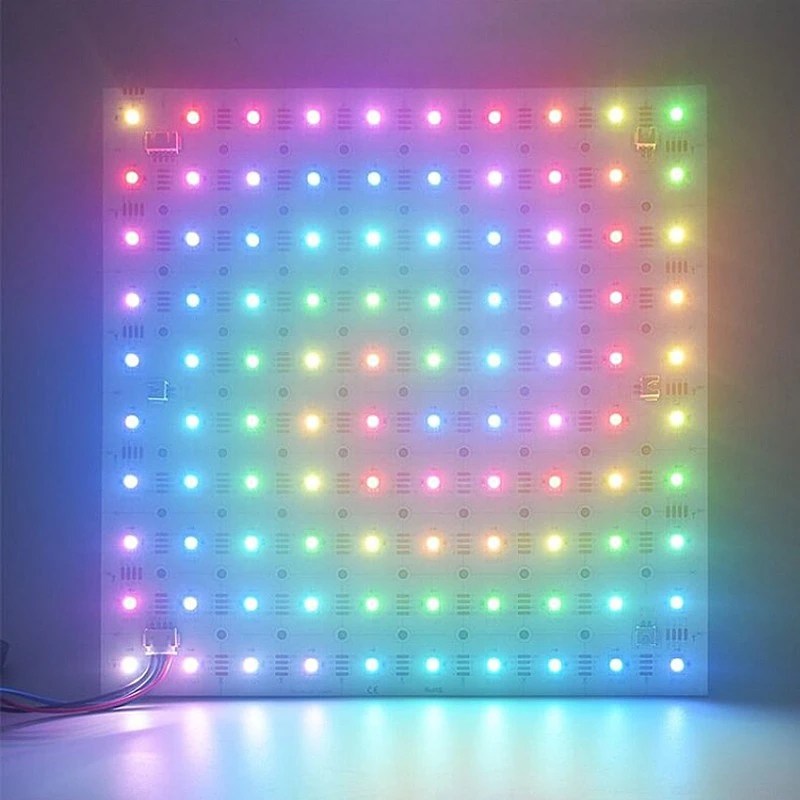
- Tamaño (L x W): 250mmx250mm
- Tipo de LED: 5050 SMD
- Cantidad LED: 100 unidades
- Tipo de circuito integrado: WS2812 incorporado
- Cantidad de IC: 100 unidades
- Color: RGBIC
- Tensión de trabajo: CC 12V
- actual: 1.08a
- Poder: 13W
- Flujo luminoso: 20lm/led
- Ángulo de haz: 120°
- Nivel de impermeabilidad: IP20 no impermeable, IP54 impermeable
- Vida útil: >35.000 horas
- Garantía: 3 años
Las hojas de píxeles LED permiten el control individual de LED para animaciones o efectos dinámicos. Estos se utilizan en paredes de visualización digital, instalaciones interactivas y aplicaciones de marca avanzada.
Los sistemas de píxeles requieren:
• Controladores dedicados
• Soporte de programación
• Mayor integración técnica
Se seleccionan cuando el impacto visual es más importante que la iluminación básica.
Guía de selección basada en aplicaciones
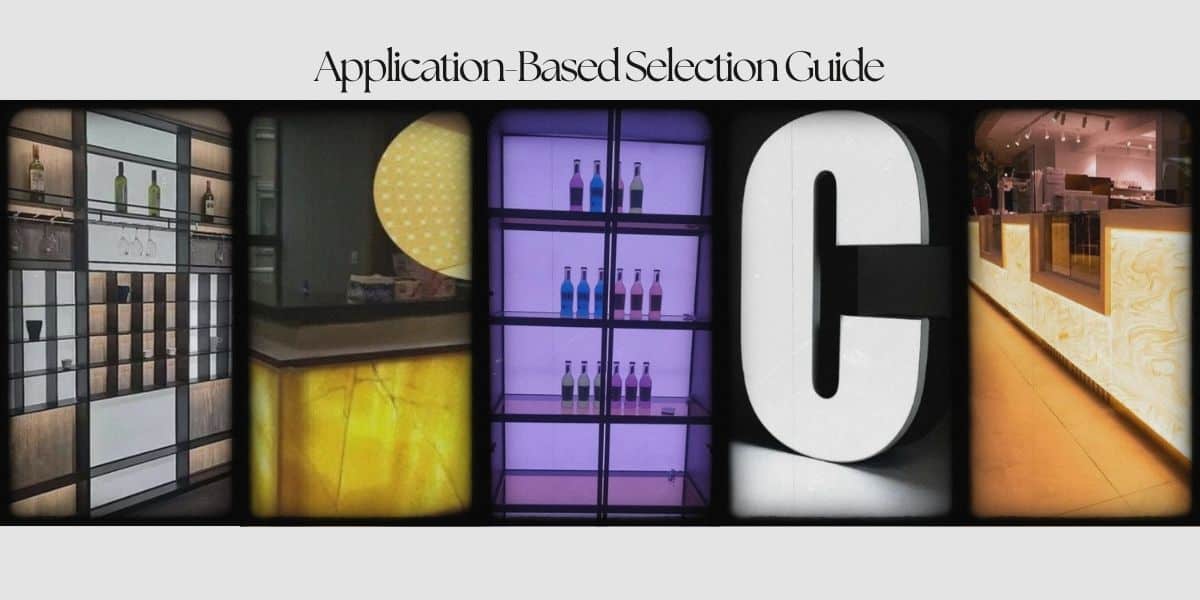
Los requisitos de iluminación varían según la aplicación. Una especificación estandarizada rara vez se adapta a todos los entornos.
Pantallas minoristas
Los entornos minoristas priorizan el alto brillo y la excelente reproducción del color. un Hoja de luz LED de alto brillo Garantiza la visibilidad del producto bajo la iluminación ambiental. La uniformidad es fundamental para evitar que se sombreen los estantes.
escaparates
Los escaparates de las tiendas se enfrentan a la competencia de luz natural Es esencial una mayor salida y control de deslumbramiento. La estabilidad térmica también es importante debido a la exposición directa al sol.
vitrinas
Las vitrinas requieren un brillo moderado y una excelente uniformidad. El espacio interno limitado hace delgado Iluminación de láminas LED soluciones ventajosas.
Señalización y marca
Las aplicaciones de señalización exigen un brillo constante en las superficies gráficas. un Hoja de luz LED de iluminación uniforme Previene puntos de acceso que distorsionan los elementos de marca.
Iluminación de características ar
Las aplicaciones arquitectónicas pueden requerir una integración curva, haciendo una Hoja de luz LED flexible más apropiado. La continuidad estética y el control de atenuación se convierten en preocupaciones primordiales.
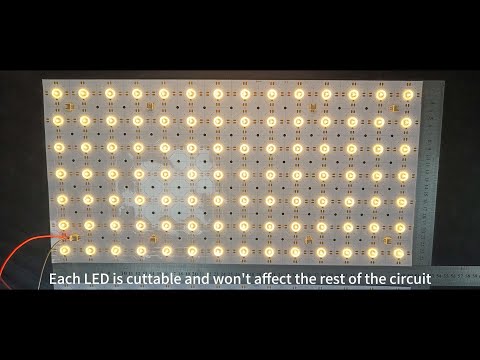
Para una comprensión más clara de la distancia, las zonas de corte y la profundidad de colocación en instalaciones reales, el siguiente ejemplo de video muestra cómo se organizan las hojas de luces LED detrás de paneles translúcidos en proyectos de retroiluminación comercial
Cómo evaluar la calidad de la hoja de luz LED
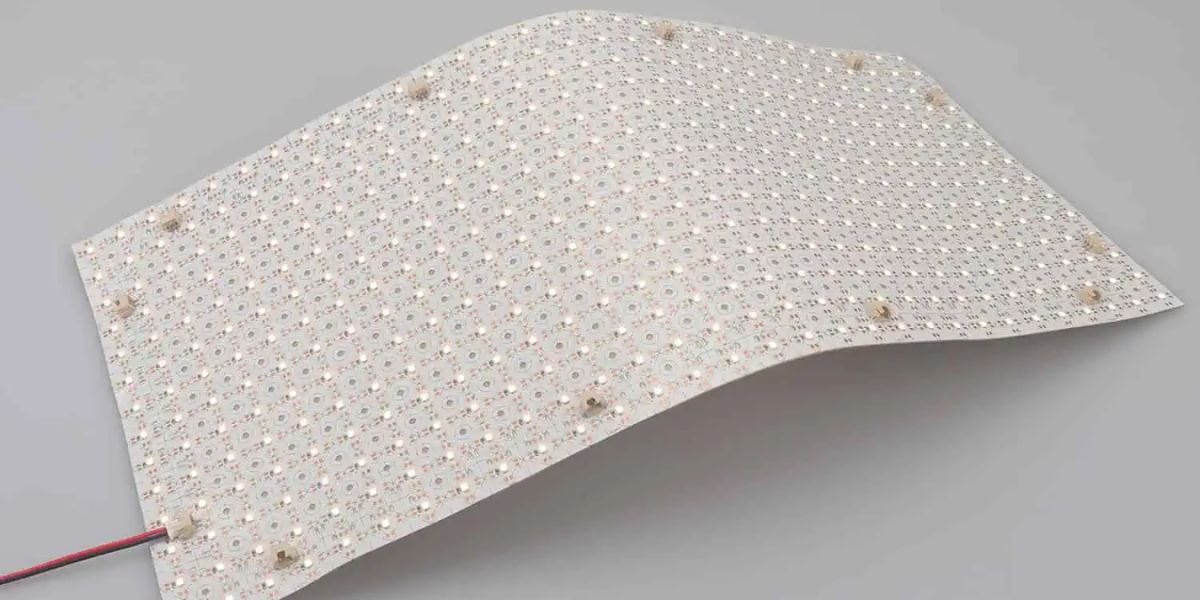
La evaluación de la calidad se extiende más allá del brillo.
La calidad del material afecta la durabilidad y la conducción del calor. La estabilidad del sustrato evita que se deforma con el tiempo.
La consistencia del chip LED determina la uniformidad del color. La mala gestión de los contenedores puede crear una variación visible en múltiples Paneles de hojas de luz LED.
La compatibilidad del difusor influye en la uniformidad percibida. Las pruebas deben incluir condiciones de profundidad de instalación del mundo real.
Las pruebas de fiabilidad a largo plazo deberían simular horas operativas ampliadas. Las pruebas de estrés térmico y la evaluación del mantenimiento del lumen brindan información sobre la vida útil.
La consistencia de la producción garantiza que los pedidos repetidos coincidan con las muestras iniciales, lo que es esencial para los proyectos comerciales de varias fases.
Evaluación de proveedores para proyectos comerciales
Elegir un proveedor implica una evaluación estructurada.
Las pruebas de muestra permiten la evaluación del brillo, la uniformidad y el comportamiento de atenuación. Las maquetas de instalación reales proporcionan una visión precisa.
La consistencia de los lotes debe verificarse a través de procesos de control de calidad documentados. La variación entre los envíos puede interrumpir la consistencia de la marca.
La capacidad de personalización es importante para dimensiones no estándar o ajuste de brillo. Un proveedor debe demostrar apoyo de ingeniería para adaptar Iluminación de láminas LED a las necesidades del proyecto.
La escalabilidad de producción garantiza la capacidad de grandes despliegues comerciales sin comprometer la calidad.
La documentación técnica, incluidos los datos fotométricos y los informes de rendimiento térmico, admite el cumplimiento y la validación del diseño.
Cuando la personalización importa
La personalización se hace necesaria cuando:
- La profundidad de instalación es limitada
- Las formas son irregulares
- El brillo debe ajustarse a los requisitos de marca específicos
- La integración con elementos arquitectónicos exige un tamaño preciso
un sastre Panel de hoja de luz LED La configuración garantiza la alineación con las restricciones estructurales y la intención de diseño. Para formas curvas o complejas, una Hoja de luz LED flexible Puede ser esencial para lograr una integración perfecta.
Conclusión
seleccionando la derecha Hoja de luz LED Requiere equilibrio, uniformidad, eficiencia energética, gestión térmica, flexibilidad y escalabilidad. Los proyectos comerciales exigen un rendimiento predecible sobre ciclos de vida operacionales extendidos.
La toma de decisiones debe seguir un proceso de evaluación estructurado: definir las necesidades de la aplicación, evaluar las especificaciones técnicas, validar la uniformidad y el brillo, confirmar la compatibilidad con los sistemas de control y revisar la coherencia del proveedor.
Una solución debidamente especificada mejora la calidad visual, reduce el riesgo de mantenimiento y soporta el desempeño del proyecto a largo plazo. En entornos comerciales donde la iluminación influye directamente en la percepción de la marca y la eficiencia operativa, la selección cuidadosa no es opcional. es fundamental.
Preguntas frecuentes
Publicaciones relacionadas