Español
  English
  简体中文
简体中文  Deutsch
  Français
  Italiano
  日本語
日本語  한국어
한국어  Polski
  Português
  Русский
  Türkçe
  Nederlands
  Tiếng Việt
  ไทย
ไทย 
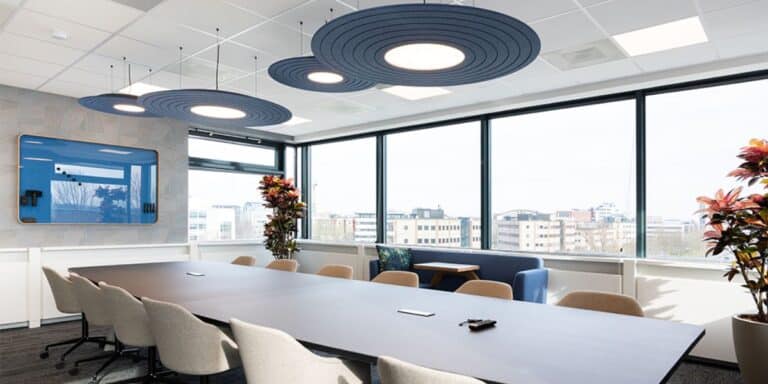
Mejorar la acústica de la construcción significa controlar cómo se comporta el sonido dentro de un espacio, por lo que apoya la comodidad, la comunicación y el uso diario en lugar de trabajar en contra. La buena acústica reduce el ruido no deseado, limita el eco y la reverberación, y ayuda al habla a permanecer clara e inteligible. Cuando la acústica es mala, las personas experimentan fatiga, distracción, estrés y menor productividad. Esto es cierto en oficinas y espacios de coworking, pero también en hogares, escuelas, hospitales y edificios públicos donde el bienestar y la claridad importan tanto como la estética.
Mejorar la acústica no se trata de eliminar el sonido por completo. Se trata de administrar el sonido de una manera que se ajuste a la función del espacio.
Este artículo explica formas prácticas de mejorar la acústica de edificios, cubriendo las opciones de materiales, las estrategias de diseño y las soluciones acústicas modernas utilizadas en proyectos reales.
1. ¿Qué significa “buena acústica de construcción”?
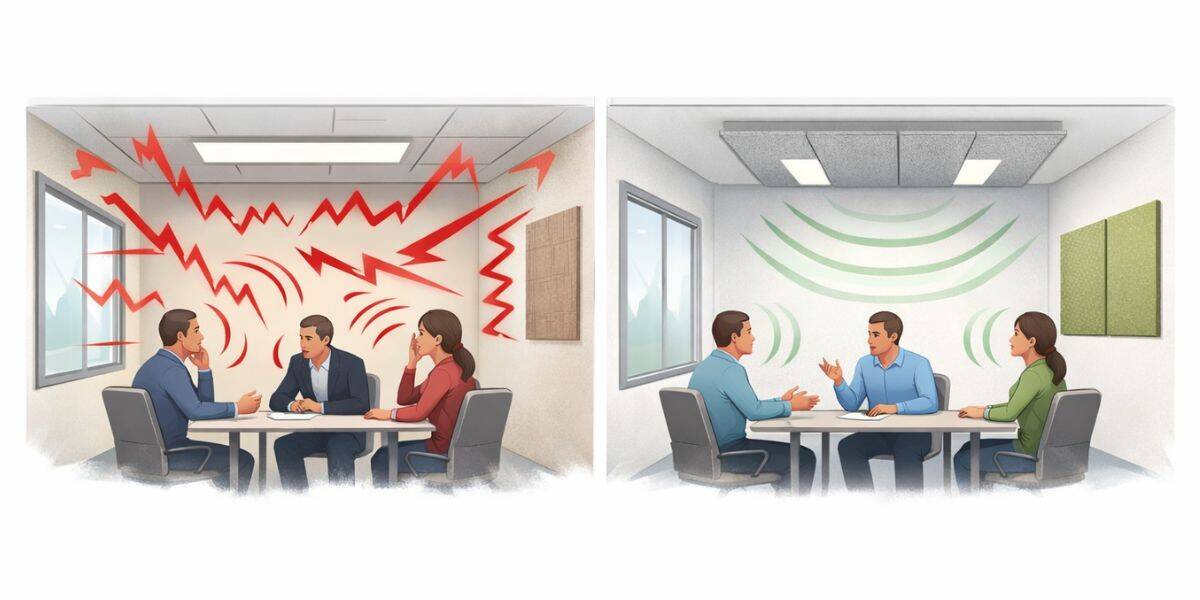
La buena acústica de construcción se refiere a la eficacia con la que un espacio controla el sonido para que coincida con su uso previsto. Esto implica más que reducir los niveles de ruido. Requiere comprender cómo viaja, refleja y percibe el sonido como los ocupantes.
Una distinción importante es entre la absorción de sonido, el bloqueo del sonido y el enmascaramiento del sonido. La absorción del sonido reduce el eco y la reverberación al capturar la energía del sonido en lugar de reflejarla. Los materiales como paneles acústicos, sistemas de techo y productos de fieltro absorben ondas sonoras y evitan que reboten alrededor de una habitación. El bloqueo del sonido, por el contrario, se enfoca en evitar que el sonido pase por paredes, pisos o techos. Esto generalmente se logra a través de la masa, la construcción hermética y la separación estructural. El enmascaramiento de sonido no reduce el ruido directamente. En cambio, introduce un sonido de fondo controlado que hace que el ruido disruptivo sea menos notable, lo cual es común en las oficinas de planta abierta.
La acústica a menudo se trata erróneamente como un sinónimo de reducción de ruido, pero esa vista es demasiado estrecha. Un espacio puede ser silencioso y aún tener una acústica deficiente si el habla no parece clara o si la habitación se siente incómoda de usar. En las oficinas, la acústica deficiente reduce el enfoque y aumenta la carga cognitiva. En los edificios residenciales, afectan la privacidad y la calidad del sueño. En las escuelas, la acústica influye en los resultados del aprendizaje y la comprensión del habla. En los hospitales, afectan la recuperación del paciente y el desempeño del personal. En los espacios comerciales, dan forma a la experiencia del cliente y el tiempo que pasa en el entorno.
Una buena acústica de construcción equilibra las decisiones de absorción, bloqueo y diseño para apoyar la forma en que las personas realmente usan el espacio.
2. Problemas acústicos comunes en edificios
Varios problemas acústicos recurrentes aparecen en los edificios modernos, especialmente donde el diseño prioriza la apertura y los acabados duros.
- Eco y reverberación excesiva
El sonido que se refleja repetidamente de las superficies sin tratar hace que el ruido permanezca, haciendo que los espacios se sientan más fuertes y caóticos de lo que realmente son. - Problemas de inteligibilidad del habla
El sonido reflejado interfiere con el habla directa, reduciendo la claridad en las salas de reuniones, aulas y oficinas abiertas y aumentando la fatiga auditiva. - Transferencia de ruido entre habitaciones
El sonido viaja a través de paredes, techos, pisos y sistemas de construcción compartido, afectando la privacidad en entornos residenciales, de oficinas y de atención médica. - Uso excesivo de superficies duras
Los materiales como el vidrio, el hormigón, el panel de yeso, la piedra y el metal reflejan el sonido de manera eficiente y contribuyen poco al control acústico cuando se usan sin compensación. - Techos altos y diseños abiertos
Grandes volúmenes y superficies ininterrumpidas aumentan los caminos de reflexión, lo que amplifica la reverberación a menos que se agregue estratégicamente la absorción.
3. Formas prácticas de mejorar la acústica de edificios
Mejorar la acústica no requiere una sola solución. Los resultados efectivos provienen de la combinación de materiales, colocación y estrategias de diseño que abordan cómo se comporta el sonido en el espacio.
Absorción superficial en paredes y techos
Agregar absorción a las superficies de las habitaciones es una de las formas más efectivas de reducir el eco y mejorar la claridad. Los paneles acústicos montados en la pared se usan comúnmente, pero los techos a menudo se subutilizan a pesar de su impacto. El sonido viaja naturalmente hacia arriba y se refleja en las superficies del techo, lo que las convierte en un área crítica para el tratamiento.
Las superficies de absorción deben colocarse donde la energía del sonido sea más alta, como cerca de áreas de asientos, estaciones de trabajo y posiciones de habla. El objetivo no es cubrir todas las superficies, sino interrumpir los caminos de reflexión y controlar el tiempo de reverberación.
Por qué los techos son importantes en el diseño acústico
Los techos influyen en la acústica más de lo que mucha gente cree. En los espacios abiertos, los reflejos del techo contribuyen en gran medida a los niveles generales de ruido. El tratamiento de los techos permite a los diseñadores controlar el sonido sin sacrificar el espacio de la pared que puede ser necesario para el almacenamiento, las pantallas o el acristalamiento.
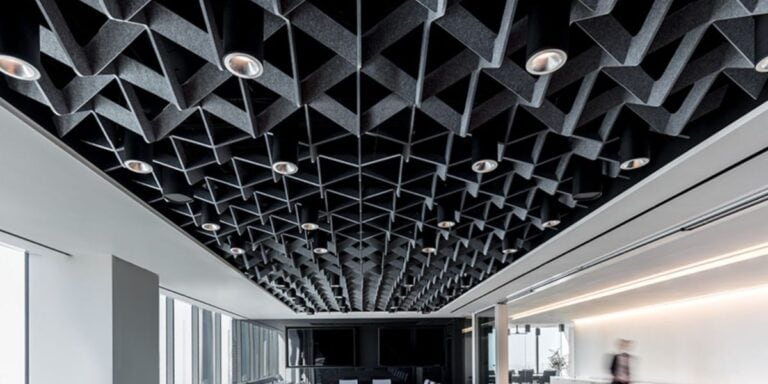
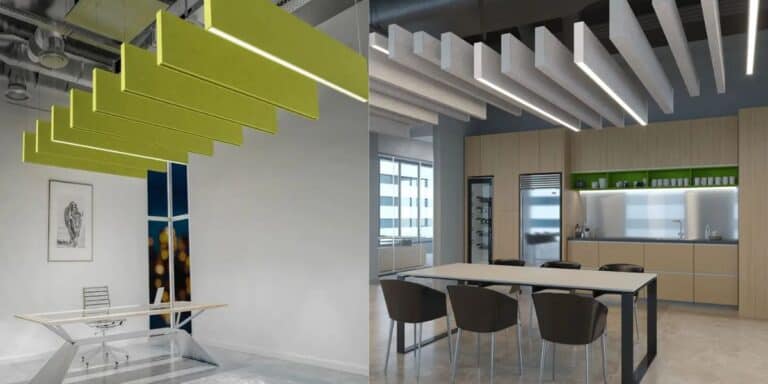
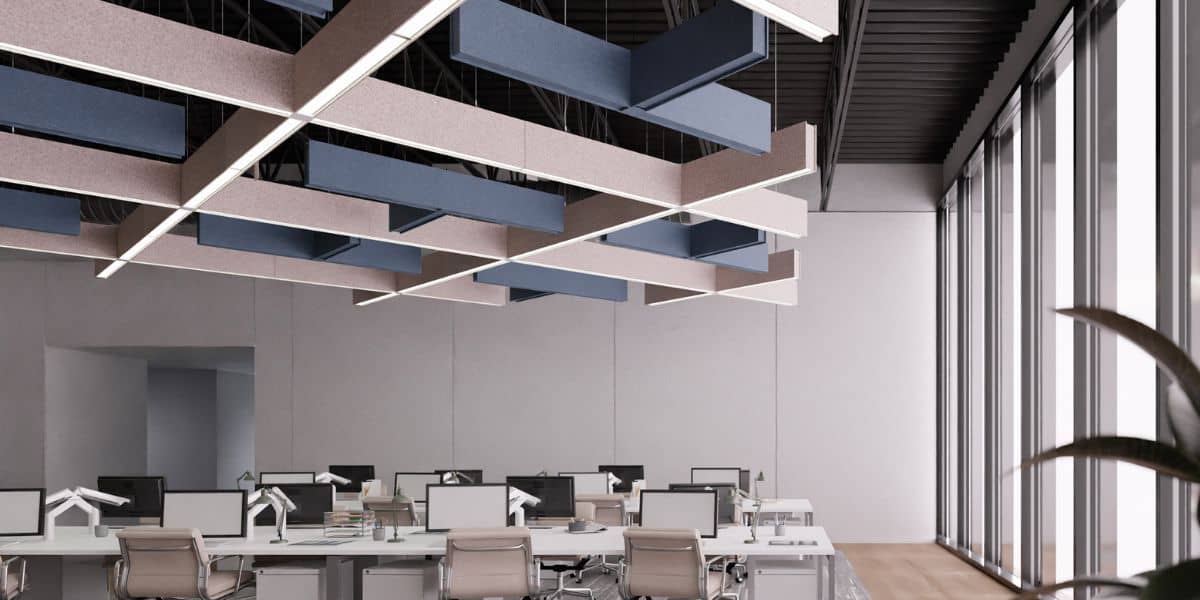
Las soluciones basadas en el techo incluyen tejas acústicas, deflectores y nubes. Estos sistemas son particularmente útiles en espacios con techos altos o área de pared limitada. Al colocar la absorción sobre los ocupantes, el sonido se controla más cerca de su fuente.
El papel de los accesorios acústicos en los edificios modernos
Los interiores modernos a menudo exigen elementos multifuncionales que sirven tanto a fines técnicos como estéticos. Aquí es donde los accesorios acústicos juegan un papel cada vez más importante. Estos elementos combinan la absorción del sonido con otras funciones, como la iluminación o la definición espacial.
Los accesorios acústicos son especialmente valiosos en oficinas y espacios públicos contemporáneos donde el diseño limpio y la flexibilidad son prioridades. Permiten integrar el tratamiento acústico en el diseño general en lugar de agregarlo como una ocurrencia tardía.
Cómo la iluminación acústica mejora la acústica sin sacrificar el diseño
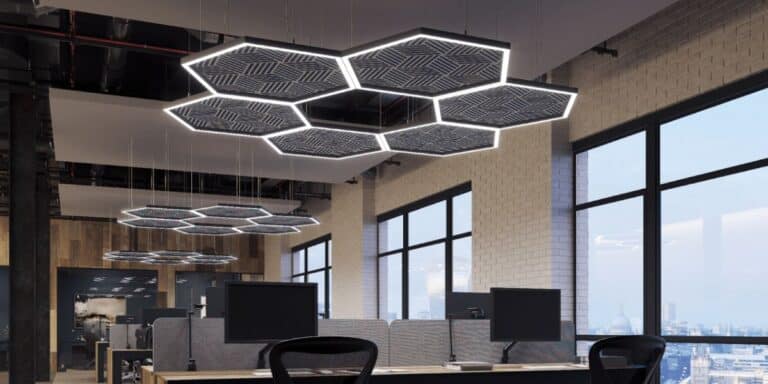
Iluminación acú Combina materiales absorbentes de sonido con iluminación integrada. Este enfoque aborda dos sistemas de construcción esenciales a la vez: iluminación y control acústico. En lugar de agregar paneles y accesorios de iluminación separados, los diseñadores pueden reducir el desorden visual y mejorar el rendimiento.
Usada correctamente, la iluminación acústica ayuda a gestionar la reverberación en oficinas abiertas, salas de conferencias y espacios compartidos. Los productos diseñados para este propósito suelen adoptar la forma de paneles o accesorios suspendidos que absorben el sonido y proporcionan luz funcional. Cuando se especifica de manera reflexiva, la iluminación acústica se convierte en parte del lenguaje arquitectónico del espacio más que de una intervención puramente técnica. Se pueden encontrar ejemplos de tales soluciones integradas en los modernos sistemas de iluminación acústica diseñados específicamente para interiores comerciales.
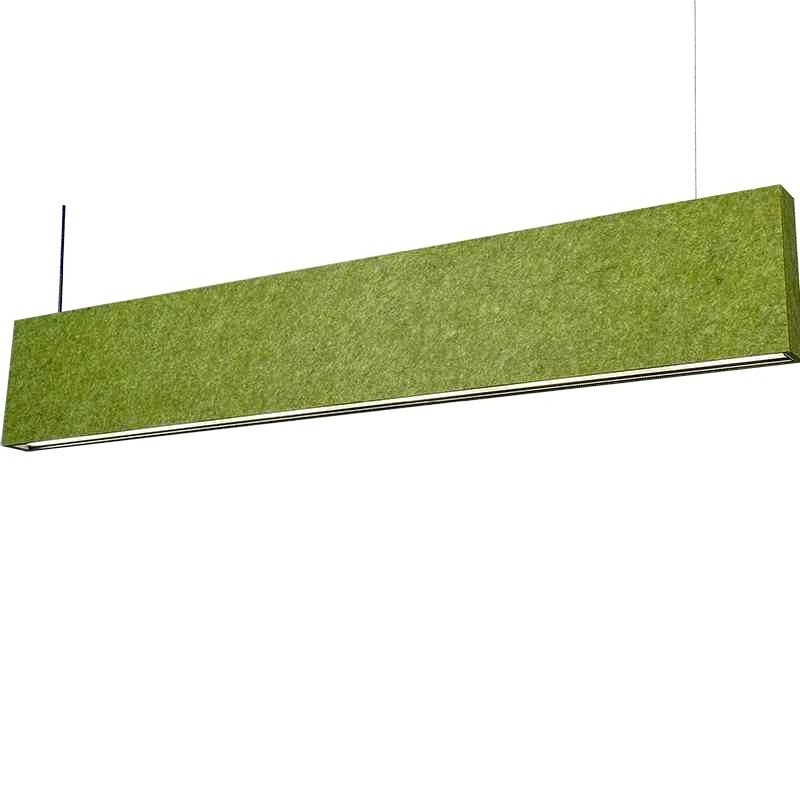
Luz lineal LED acústica antirreflejo
- Voltaje de entrada: AC100-277V / AC220-240V,50-60Hz
- Tamaño de la carcasa: W58*H200 mm/ W58*H300mm
- Dirección de emisión: hacia abajo
- Opción de longitud: 1218 mm / 1220 mm / 1288 mm
- CCT: 3000K / 4000K / 6000K
- Potencia: 30W / 32W
- Flujo luminoso: 100-110lm/W
- CRI: >90RA
- PF: >0.90
- Parpadeo gratis: Sí
- Ángulo de haz: 36°
- Grado IP: IP20
- Garantía: 5 años
- Color de la placa acústica de fieltro: rojo / verde / azul / gris más de 48 colores opción
Iluminación de fieltro y accesorios en interiores contemporáneos
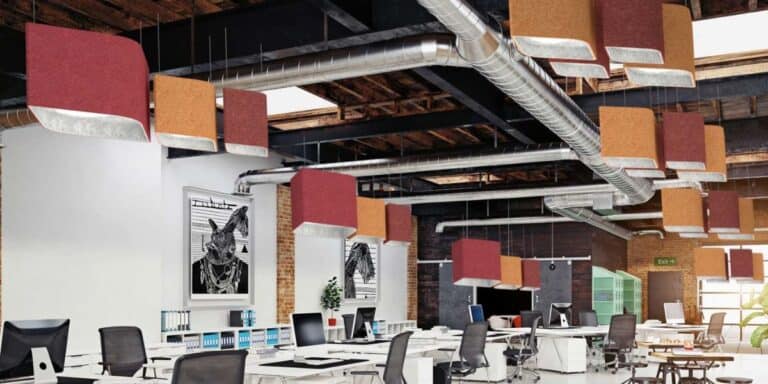
Los materiales basados en fieltro se utilizan cada vez más en aplicaciones acústicas debido a sus propiedades de absorción y flexibilidad de diseño. La iluminación y los accesorios de fieltro suavizan el carácter tanto del sonido como del visual, lo que los hace adecuados para espacios de colaboración, salones y entornos creativos.
Estas soluciones funcionan bien en espacios donde se desea una estética más cálida y menos técnica. Las luminarias acústicas basadas en fieltro pueden reducir la reverberación de frecuencias altas y medias y contribuyen a una atmósfera más cómoda.
4. Consejos de diseño que mejoran la acústica
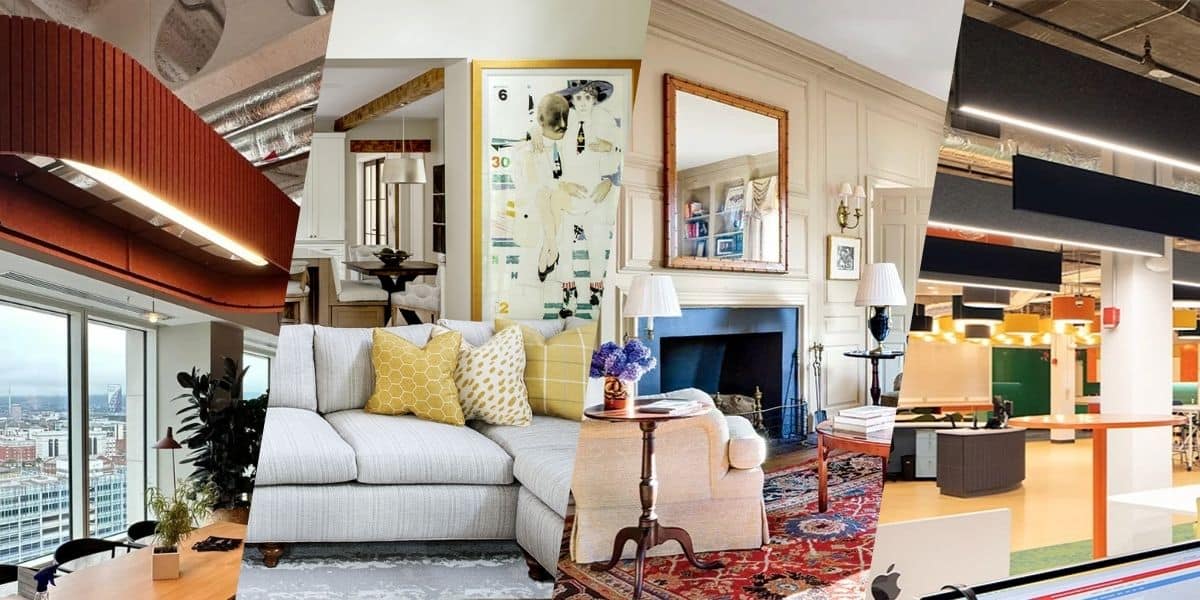
Se pueden lograr muchas mejoras acústicas a través de opciones de diseño y diseño sin alterar la estructura del edificio.
- Estrategias de zonificación
Separe las actividades ruidosas de las tranquilas planificando los diseños intencionalmente, como alejar las áreas de reunión de las zonas de trabajo enfocadas. - Colocación de muebles
Asientos tapizados, estanterías, particiones y unidades de almacenamiento ayudan a absorber y difundir el sonido cuando se colocan a lo largo de caminos de reflexión. - Uso de materiales blandos y acabados
Las alfombras, alfombras, cortinas y muebles cubiertos de tela reducen el sonido reflejado, particularmente en espacios residenciales y de uso mixto. - Priorización de colocación sobre cantidad
Un número menor de elementos absorbentes bien colocados a menudo funciona mejor que el tratamiento excesivo instalado sin lógica acústica.
5. Materiales y soluciones acústicas comparados
| Tipo de solución | Función principal | Mejor caso de uso | notas |
| Paneles de pared acústicos | absorción | Oficinas, pasillos | Reduce el eco y mejora la claridad |
| Deflectores de techo o nubes | absorción | espacios abiertos | Controla la reverberación desde arriba |
| Paneles de iluminación acústica | Luz y absorción | Oficinas, espacios de coworking | Solución de doble propósito |
| Accesorios de iluminación de fieltro | Absorción y diseño | Interiores modernos | Equilibrio visual y acús |
| Sistemas de enmascaramiento de sonido | control de distracción | oficinas abiertas | Apoya las estrategias de absorción |
Esta comparación destaca que ninguna solución única aborda todos los desafíos acústicos. Cada opción cumple un papel específico dentro de una estrategia acústica más amplia.
6. donde la iluminación acústica encaja mejor en el diseño de edificios
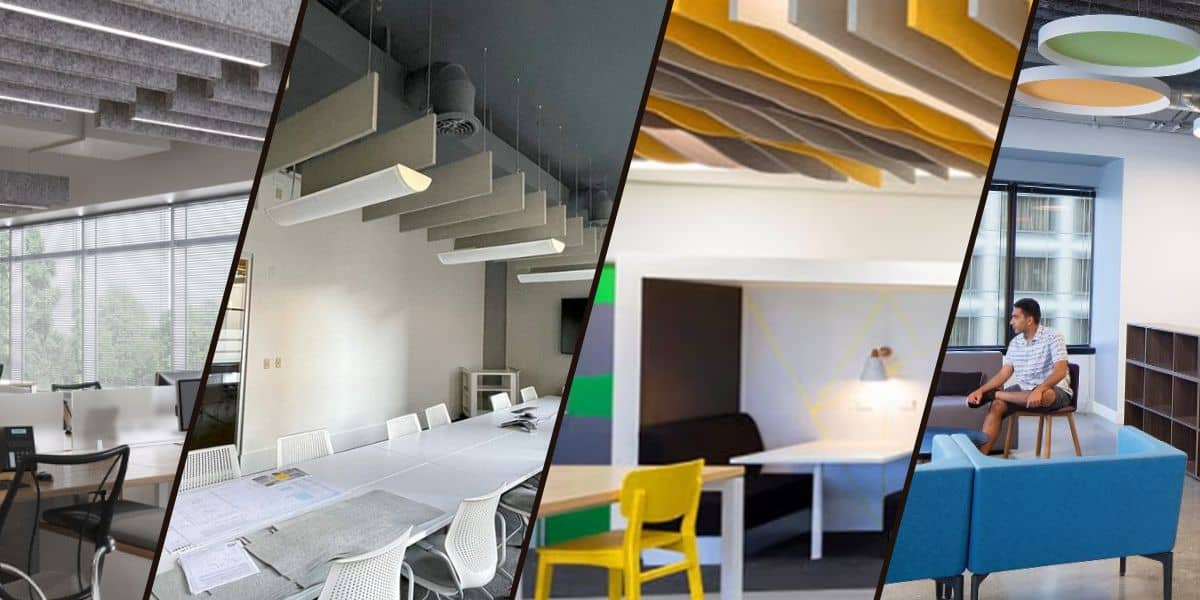
La iluminación acústica es más efectiva en espacios donde tanto el control de sonido como la calidad de la iluminación son críticos y donde las soluciones de pared son limitadas.
En Oficinas y espacios de coworking, La iluminación acústica ayuda a gestionar el ruido en entornos de planta abierta. Reduce la reverberación y proporciona una iluminación consistente y apropiada para la tarea. Esto apoya el enfoque y reduce la fatiga sin alterar el carácter abierto del espacio.
Salas de conferencias Benefíciese de la iluminación acústica porque la claridad del habla es esencial. La absorción basada en el techo cerca de la mesa reduce los reflejos que interfieren con la conversación, mientras que la iluminación integrada garantiza una visibilidad uniforme para los participantes.
Edificios educativos A menudo enfrentan las restricciones en el espacio de la pared debido a las tablas, las pantallas y el almacenamiento. Paneles de iluminación acústica Proporcionar absorción sin competir con elementos de pared funcionales, mejorando la inteligibilidad del habla en las aulas y espacios de conferencias.
Atención sanitaria y espacios públicos Requieren acústica que apoye la calma y la privacidad. La iluminación acústica puede ayudar a reducir el ruido de fondo en las áreas de espera y los pasillos, manteniendo un diseño de techo limpio y despejado.
En todos estos casos, los paneles de iluminación acústica son particularmente útiles cuando el espacio de pared es limitado o visualmente sensible, lo que hace que la integración del techo sea el enfoque más práctico.
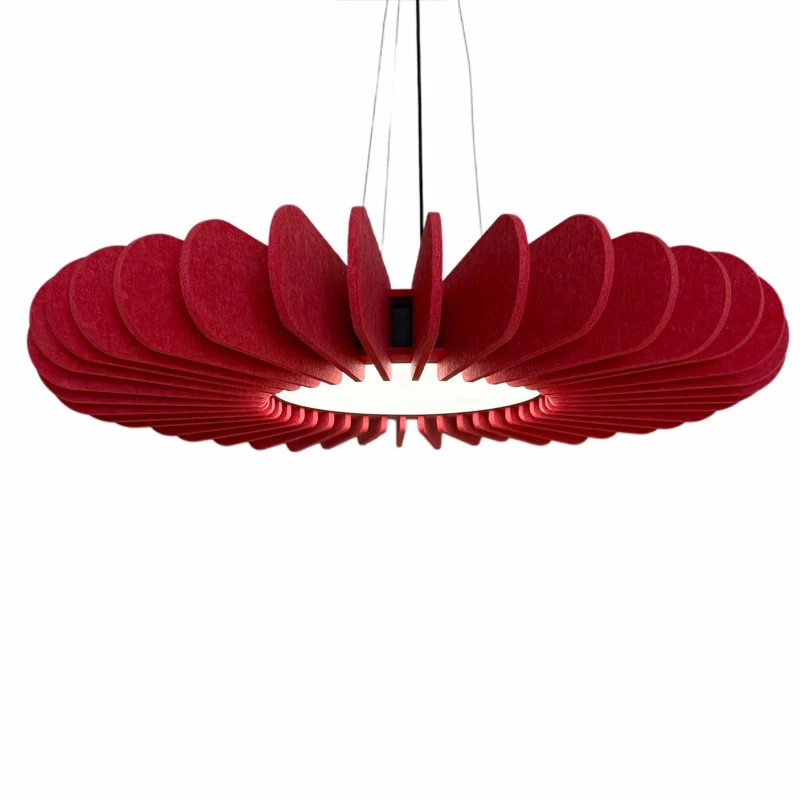
Lámpara colgante LED acústica redonda delgada ultrafina
- Voltaje de entrada: AC100-277V / AC220-240V,50-60Hz
- Tamaño de la carcasa: 120 mm
- Dirección de emisión: hacia abajo
- Tamaño DH: 50080mm
- CCT: 3000K / 4000K / 6000K
- Potencia: 15W
- Flujo luminoso: 100-110lm/W
- CRI: >90RA
- PF: >0.90
- Flicker gratis: si
- Ángulo del haz: 120
- Grado IP: IP20
- Garantía: 5 años
- Opción de color del panel acústico: rojo / verde / azul / gris más de 48 colores opción
7 Errores comunes en el diseño acústico
Incluso los proyectos bien intencionados a menudo se quedan cortos debido a las suposiciones de diseño evitables.
- Ignorar las superficies del techo
Tratar solo las paredes deja intacto un gran plano de reflexión, especialmente en habitaciones con pisos duros. - Dependiendo de elementos decorativos sin valor acústico
No todos los materiales visualmente suaves absorben el sonido de manera efectiva, lo que lleva a una mejora mínima del mundo real. - Esperando una solución para resolver todos los problemas
La acústica requiere un enfoque basado en el sistema que combina estrategias de absorción, bloqueo y diseño. - Pobre colocación de elementos acústicos
Incluso los materiales de alta calidad funcionan bajos cuando se instalan lejos de puntos de reflexión clave o fuentes de sonido.
8. 2026 Tendencias en la construcción de acústica
La construcción de la acústica se está moviendo hacia la integración en lugar de soluciones adicionales. Los sistemas que combinan iluminación, absorción e incluso la gestión del aire son cada vez más comunes a medida que los diseñadores buscan eficiencia y claridad visual.
modular Accesorios acústicos Están ganando popularidad porque se adaptan a los diseños cambiantes, especialmente en entornos de trabajo híbridos. La flexibilidad es ahora un requisito fundamental.
También hay un enfoque creciente en el bienestar. La acústica se reconoce cada vez más como un factor en la salud mental, la productividad y la comodidad general, que influyen en cómo se diseñan los espacios desde las primeras etapas.
Conclusión
Mejorar la acústica de edificios requiere un enfoque equilibrado. Las soluciones efectivas combinan la absorción de sonido, la colocación inteligente y la comprensión de cómo se utilizan los espacios. Las paredes, los techos, los muebles y el diseño contribuyen al rendimiento acústico.
Las soluciones integradas como la iluminación acústica y los accesorios acústicos bien diseñados permiten coexistir el control del sonido con los requisitos de diseño modernos. Cuando se aplican detenidamente, estas estrategias crean espacios cómodos, funcionales y de apoyo al bienestar sin depender de tratamientos excesivos o intrusivos.
Preguntas frecuentes
Publicaciones relacionadas