Español
  English
  简体中文
简体中文  Deutsch
  Français
  Italiano
  日本語
日本語  한국어
한국어  Polski
  Português
  Русский
  Türkçe
  Nederlands
  Tiếng Việt
  ไทย
ไทย 
La iluminación de láminas LED se ha convertido en una solución práctica para vitrinas y escaparates porque ofrece una iluminación uniforme, requiere una profundidad mínima, se adapta a diseños flexibles y permite un control preciso del brillo. En entornos minoristas donde la presentación visual influye directamente en la percepción del cliente, la iluminación desigual, los puntos de acceso visibles o los accesorios voluminosos pueden socavar el impacto del producto. Un sistema de láminas de luz LED debidamente diseñado aborda estos problemas distribuyendo la luz uniformemente a través de las superficies manteniendo un perfil delgado que se adapta al interior de armarios poco profundos y conjuntos de ventanas estrechos.
Este artículo explica cómo la iluminación de hojas LED mejora el rendimiento de la comercialización visual específicamente en vitrinas y escaparates. Cubre los beneficios medibles de la retroiluminación uniforme, las estrategias para la planificación de diseño en gabinetes de profundidad restringida, lógica de selección de difusores, cálculo de densidad de brillo, control de deslumbramiento para ventanas que dan a la calle, planificación de la instalación y optimización del rendimiento. El enfoque permanece estrictamente en las aplicaciones de gabinetes y ventanas, con un razonamiento técnico detrás de cada decisión de diseño.
Beneficios clave de la iluminación de láminas LED para pantallas minoristas
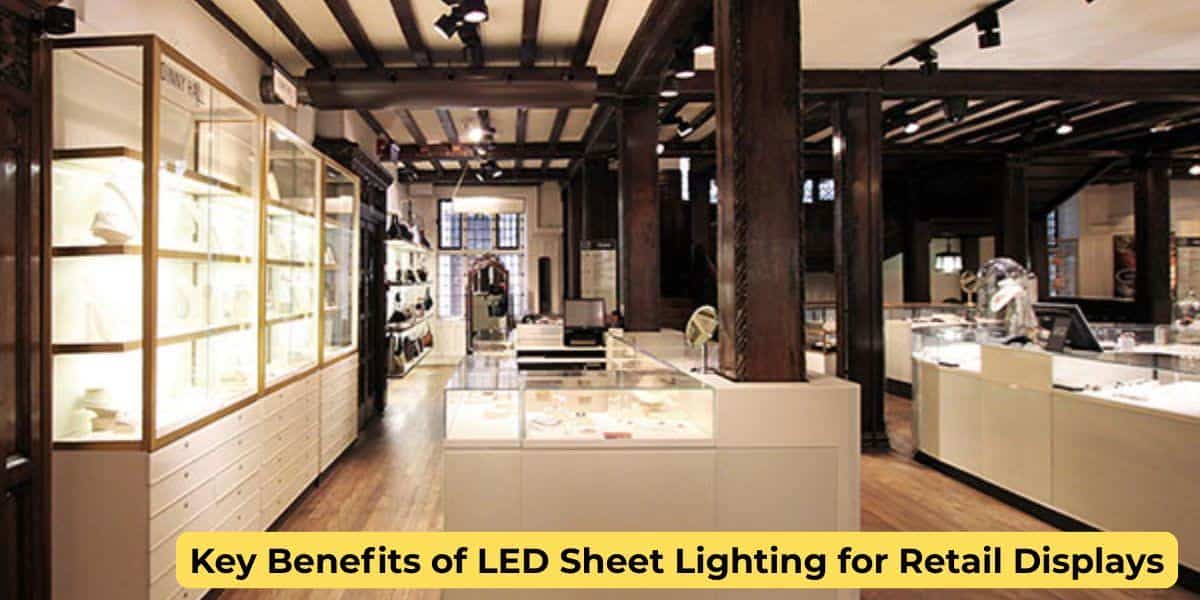
- Retroiluminación uniforme sin puntos de acceso
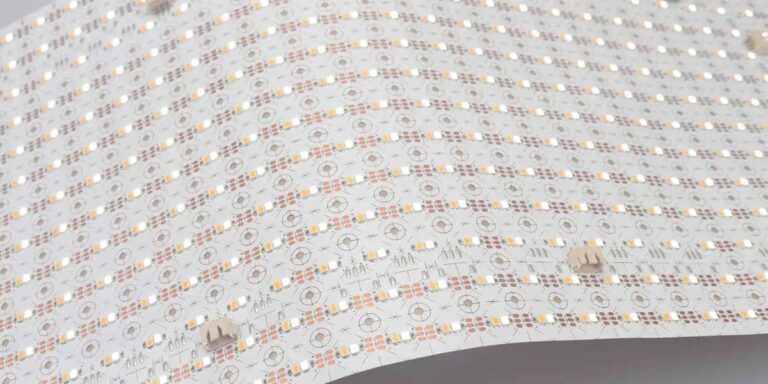
La iluminación de hojas LED distribuye diodos a través de una superficie plana en lugar de a lo largo de un solo camino lineal. Cuando se combina con una hoja difusora de luz LED adecuada, este diseño produce una luminancia uniforme en las paredes del gabinete y los gráficos de las ventanas. El resultado es una reducción de los gradientes de sombras, la eliminación de nodos brillantes y una presentación visual consistente. - Integración ultrafina
A Hoja de luz LED Por lo general, tiene solo unos pocos milímetros de espesor, lo que permite la instalación dentro de las vitrinas poco profundas sin alterar la profundidad estructural. Esto lo hace adecuado para gabinetes ajustados donde el espacio es limitado después de tener en cuenta el vidrio, el hardware de estantería y el marco de soporte. - Eficiencia energética para horarios comerciales extendidos
Debido a que los paneles de hojas de iluminación LED iluminan una superficie de manera uniforme, a menudo requieren menos fuentes de luz superpuestas en comparación con los diseños basados en tiras. Esto mejora la eficiencia de la cobertura de área y reduce el consumo general de potencia durante largas horas de operación minorista. - Mejora de la visibilidad del producto
Incluso la iluminación de fondo mejora los bordes, colores y texturas del producto. Al reducir la acumulación de sombras y los parches de brillo desigual, los productos aparecen más claramente definidos tanto en los gabinetes como en los escaparates. - menor potencia de calor
La configuración de diodos distribuidos reduce la concentración de calor localizada. En comparación con la retroiluminación fluorescente o los focos de alta intensidad, los sistemas de LED de hojas de hoja generan un calor radiante más bajo, lo que es beneficioso para los gabinetes cerrados y la mercancía sensible a la temperatura. - Adaptación de diseño flexible
Muchos sistemas de láminas de luces LED se pueden cortar, lo que permite la personalización para adaptarse a formas irregulares de gabinetes o formatos de visualización de ventanas. Esta flexibilidad permite la integración en superficies curvas y espacios de instalación reducidos sin comprometer la uniformidad.
Aplicaciones en vitrinas
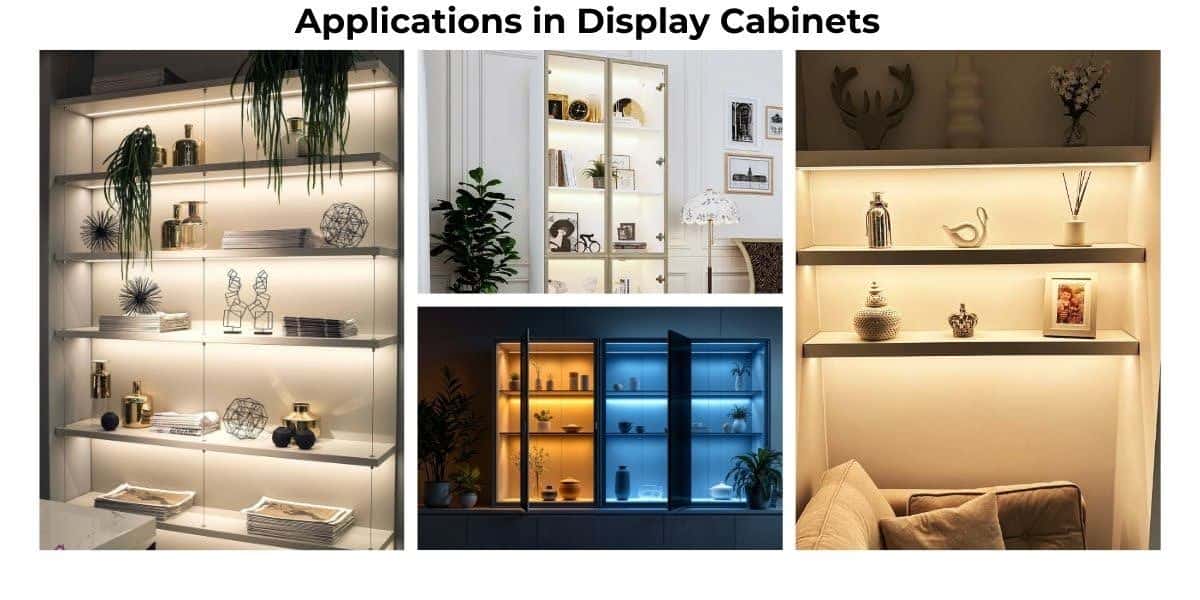
Los vitrinas presentan desafíos de iluminación únicos debido a la poca profundidad, las superficies de vidrio reflectantes y la variedad de productos. La iluminación de láminas LED aborda estas limitaciones cuando se aplica estratégicamente.
Retroiluminación de estante
La retroiluminación de estante implica colocar una hoja de luz LED detrás de un panel trasero vertical para crear un fondo iluminado. Esta técnica mejora las siluetas de los productos y evita la acumulación de sombras. Para armarios con una profundidad inferior a 80 mm, la densidad del diodo debe ser suficiente para garantizar un brillo uniforme dentro de una distancia corta de difusor.
La hoja de acrílico para la iluminación LED a menudo se selecciona en tales configuraciones porque ofrece una fuerte claridad óptica y una buena difusión de luz en conjuntos poco profundos. Los difusores acrílicos son adecuados cuando la distancia entre la hoja de luz LED y la superficie del difusor se limita a 10 a 20 mm.
Resplandor debajo de la estantería
La iluminación debajo del estante mejora las capas de productos y evita que se sombreen en los estantes superiores. En este caso, se pueden montar horizontalmente secciones más pequeñas de láminas de paneles de luz LED debajo de cada estante. Una fina lámina de difusor para iluminación LED suaviza la emisión directa y evita el deslumbramiento cuando los clientes ven los productos a la altura de los ojos.
La planificación de la densidad de brillo es importante aquí. Si los diodos están espaciados demasiado, pueden verse puntos individuales. Si es demasiado denso, el uso de energía aumenta innecesariamente. En configuraciones de bajo estante bajo estantería, el espaciado más cercano del diodo garantiza una dispersión uniforme de la luz.
Iluminación completa de la pared del gabinete
Algunos conceptos minoristas requieren que toda la pared trasera de un gabinete brille de manera uniforme. Este enfoque es común en cosméticos, joyas y pantallas de electrónica de alta gama. Se puede seleccionar una lámina difusora de luz LED de policarbonato en lugar de acrílico en entornos que requieren una mayor resistencia al impacto, especialmente en entornos minoristas de alto tráfico.
Los difusores de policarbonato proporcionan durabilidad y características de transmisión de luz ligeramente diferentes. Cuando se combina con una hoja reflectora de luz LED colocada detrás de la superficie LED, la eficiencia de la luz delantera mejora, reduciendo la luz desperdiciada dentro de la cavidad del gabinete.
Destacar zonas de productos premium
La zonificación selectiva del brillo se puede lograr variando la segmentación de la hoja o utilizando canales de atenuación independientes. Por ejemplo, una zona de productos Premium central puede operar a un 20-30 por ciento más de brillo en comparación con las áreas circundantes. Este método guía la atención del cliente sin utilizar focos que crean contrastes severos.
Restricciones de profundidad y planificación de diseño
La profundidad influye directamente en la selección del difusor y la densidad del diodo. En gabinetes con menos de 50 mm de profundidad de cavidad disponible, la iluminación de láminas LED de alta densidad combinada con una hoja de acrílico de alta difusión para la iluminación LED evita la visibilidad de los puntos. En armarios más profundos que superan los 80 mm, las láminas de menor densidad aún pueden lograr uniformidad porque la luz tiene más espacio para extenderse.
Las láminas de sobreespacio en una pared grande de un gabinete crean bandas de brillo desiguales. En su lugar, se deben instalar paneles de hojas de iluminación LED continuas con espacios mínimos para mantener la consistencia de la luminancia.
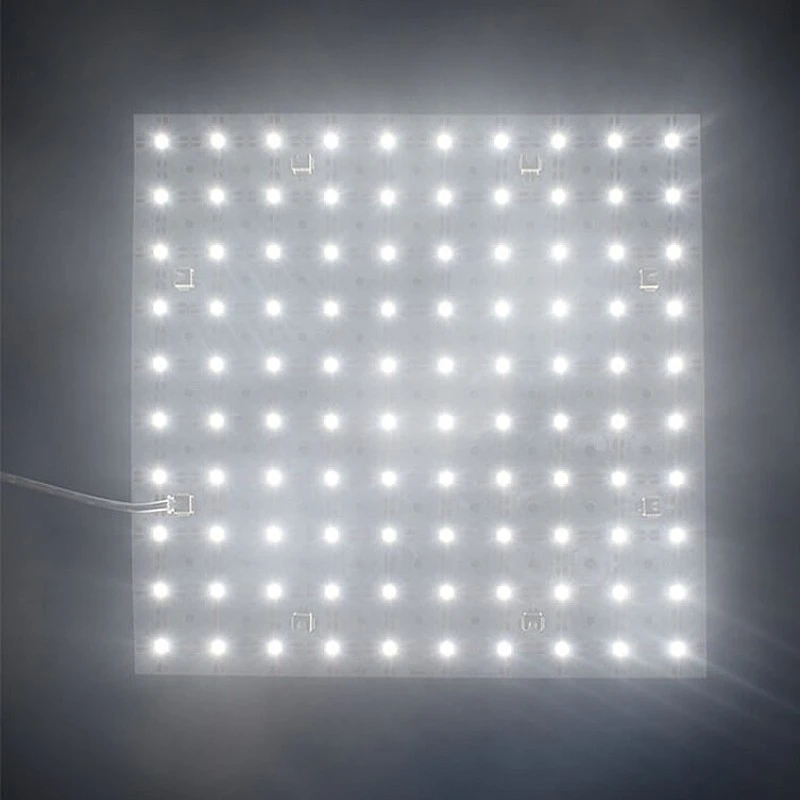
Hojas LED de un solo color
- Tamaño (L x W): 250mm x 250mm/ 490mmx245mm
- Tipo de LED: 2835 SMD
- Cantidad LED: 100 Uds./ 242 Uds.
- Tensión de trabajo: 24 V CC
- Poder: 12W/28W
- CCT: 2700K/ 3000K/ 4000K/ 6000K/ 6500K
- Flujo luminoso: 1200lm/ 2800lm
- CRI: >80RA
- Longitud mínima de corte: 25mmx25mm/ 22.3mmx22.3mm
- Regulable: sí
- Ángulo de haz: 120°
- Nivel de impermeabilidad: IP20 no impermeable, IP54 impermeable
- Garantía: 3 años
Aplicaciones en escaparates
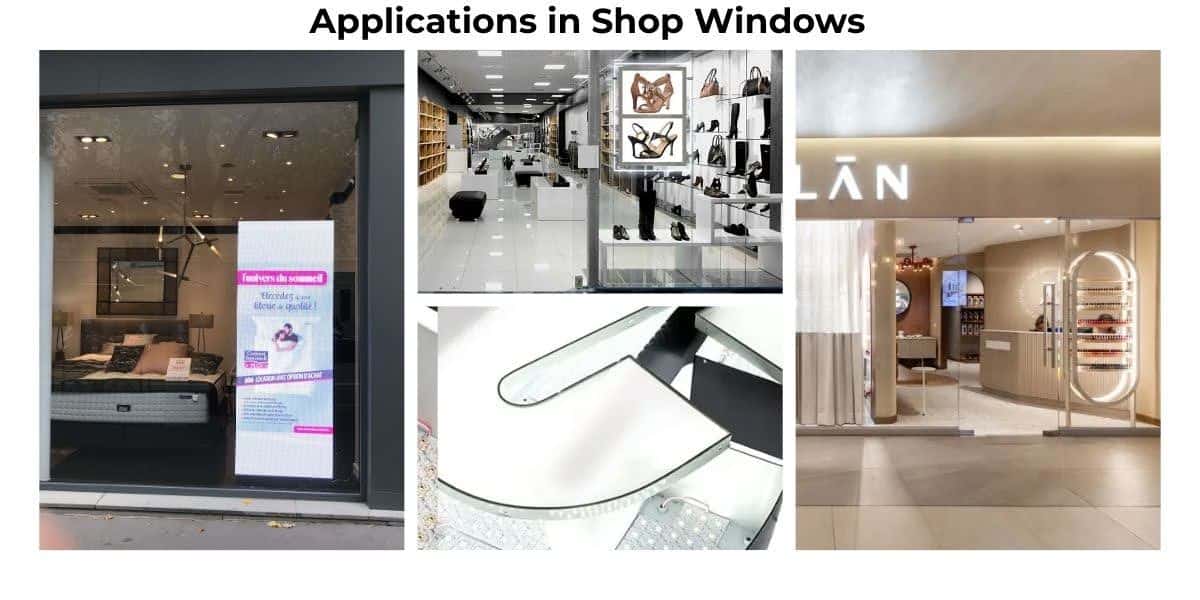
Los escaparates difieren de los vitrinas porque compiten con la luz ambiental y los reflejos de la calle. La intensidad de la iluminación y el manejo del deslumbramiento se vuelven críticos.
Iluminación de ventana de gran formato
Los gráficos de ventanas grandes generalmente usan una hoja de luz LED instalada detrás de un panel translúcido impreso para crear una superficie de visualización uniformemente iluminada. Debido a que los diodos se distribuyen en todo el área del panel, la salida de luz permanece constante en todo el gráfico, lo que reduce los parches desiguales y la variación de brillo.
En las instalaciones orientadas hacia la calle, a menudo se requiere una iluminación de láminas LED de mayor brillo para competir con la luz del día. Las pantallas de ventanas expuestas a la luz solar directa deben diseñarse con suficiente luminancia para evitar que el gráfico parezca descolorido o descolorido.
La planificación del brillo debe basarse en los niveles de luz ambiental esperados. Si el escaparate recibe una fuerte luz natural, la luminancia de la pantalla debe exceder el brillo ambiental circundante para mantener la claridad visual y la definición del color. La selección adecuada de densidad de lumen, combinada con una hoja reflectora de luz LED colocada detrás de la capa de iluminación, puede mejorar la eficiencia de la luz hacia adelante sin aumentar innecesariamente el consumo total de energía.
Iluminación del logotipo de la marca
Los logotipos incrustados en las pantallas de las ventanas se pueden iluminar utilizando segmentos más pequeños de hoja de panel de luz LED colocadas detrás de formas de acrílico recortadas. Una hoja de difusor para iluminación LED garantiza un brillo uniforme del logotipo sin patrones de diodos visibles.
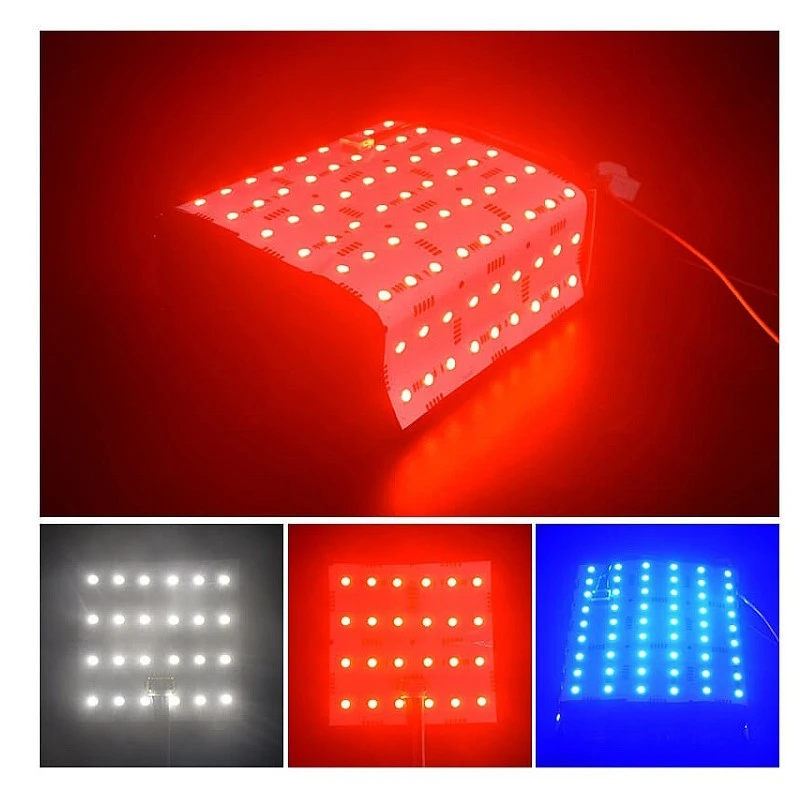
Hojas de LED RGBW
- Tamaño (L x W): 250mmx250mm/490mmx250mm
- Tipo de LED: 5050 RGBW 4 en 1 SMD
- Cantidad LED: 150 Uds/288 Uds.
- Tensión de trabajo: 24 V CC
- Poder: 24W/48W
- Color emisor: RGB+3000K, RGB+4000K, RGB+6500K
- Eficiencia de la luz: 90 lm/w
- Longitud mínima de corte: 50mmx50mm/ 20.4mmx122.5mm
- Ángulo de haz: 120°
- Regulable: sí
- Nivel de impermeabilidad: IP20 no impermeable, IP54 impermeable
- Garantía: 3 años
Paneles promocionales de temporada
Las ventanas minoristas cambian con frecuencia el contenido promocional. Los paneles de hojas de iluminación LED modulares permiten un reemplazo gráfico rápido mientras mantienen una geometría de iluminación constante. Las conexiones de energía deben permanecer fijas mientras se intercambian las capas gráficas.
Estrategias de competición de
La luz del sol introduce deslumbramiento y reflejo. Al posicionar una hoja de reflector de luz LED detrás de la superficie LED aumenta la salida hacia adelante y reduce la pérdida de luz hacia atrás. Esto aumenta la luminancia efectiva sin aumentar el consumo de energía en exceso.
Reflexión y gestión del deslumbramiento
Los reflejos de vidrio pueden distorsionar el brillo percibido. El grosor del difusor y el acabado de la superficie deben elegirse con cuidado. Las láminas difusores de luz LED de policarbonato de acabado mate pueden reducir la reflexión del deslumbramiento en comparación con las superficies de alto brillo.
Cuando los clientes se acercan desde diferentes ángulos, la luminancia uniforme reduce la tensión ocular y mejora la claridad gráfica.
Estrategia de difusión y capa óptica
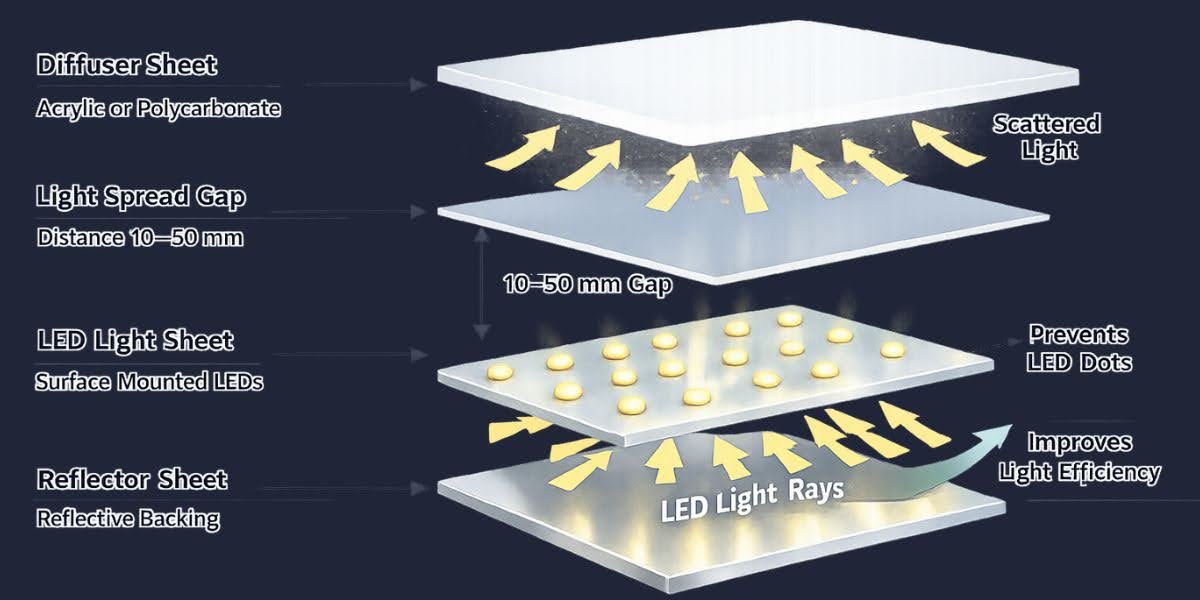
La hoja de difusor de luz LED juega un papel central en el logro de una iluminación uniforme. Sin una difusión adecuada, los puntos de diodo individuales se hacen visibles, especialmente a distancias cortas.
Papel de los difusores
Difusores dispersa emitido luz para crear una superficie luminosa continua. La cantidad de dispersión depende de la composición y del grosor del material. Una hoja de difusor para iluminación LED debe equilibrar la eficiencia y la opacidad de la transmisión.
Acrílico vs policarbonato
Una hoja de acrílico para iluminación LED generalmente ofrece una mayor transmisión de luz y una buena claridad óptica. Funciona bien en armarios interiores controlados donde la resistencia al impacto no es una preocupación importante.
Una hoja de difusor de luz LED de policarbonato ofrece una mayor resistencia mecánica y una mayor resistencia a la temperatura. A menudo se elige para escaparates donde la durabilidad y la exposición pública son factores.
Distancia de extensión de luz
El espacio entre la hoja de luz LED y el difusor afecta la uniformidad. Una brecha más pequeña requiere una mayor densidad de diodos para evitar los puntos de acceso. Las brechas más grandes permiten que la luz se extienda de forma natural, pero requieren un espacio de gabinete más profundo.
Prevención de la visibilidad de puntos LED
La visibilidad de puntos se produce cuando el espaciado de diodos excede la capacidad de difusión. El aumento del grosor del difusor o la reducción del espaciado entre los LED resuelve este problema. La uniformidad debe ser probada visualmente a distancias de visualización típicas.
Papel de las hojas reflectoras
Una hoja reflectora de luz LED instalada detrás de la superficie LED mejora la eficiencia hacia adelante al reflejar la luz emitida hacia atrás. Esto aumenta el brillo percibido sin aumentar el vataje. Los materiales reflectores deben tener alta reflectancia y mínima absorción.
Estrategia de instalación para armarios y ventanas
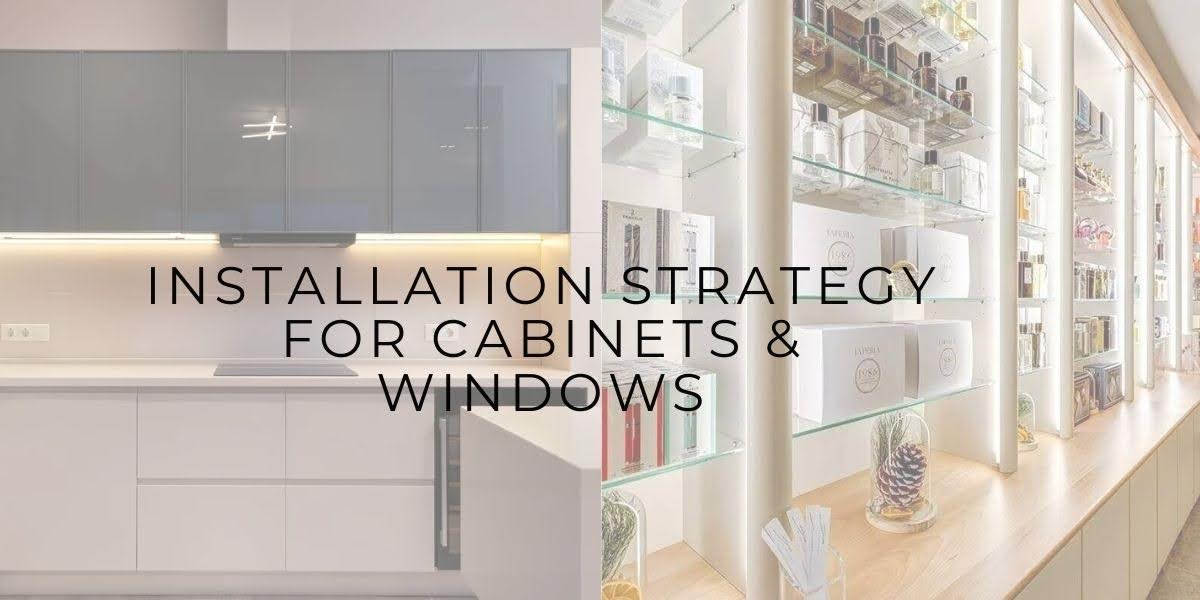
- Asegúrese de que las superficies de montaje estén limpias, planas y libres de polvo para evitar una adhesión desigual y una distorsión de la luz.
- Mantenga el espacio adecuado entre la hoja de luz LED y el Hoja difusora de luz LED Basado en la densidad del diodo y la profundidad del gabinete.
- Coloque las fuentes de alimentación fuera de las cavidades de los gabinetes cerradas cuando sea posible para reducir la acumulación de calor interna.
- Dirija los cables a lo largo de los bordes ocultos de los gabinetes para evitar líneas de sombra o cableado visible a través de paneles de vidrio.
- Proporcione una ventilación mínima pero efectiva en armarios cerrados para evitar la acumulación de calor, especialmente en aplicaciones de ventanas de alto brillo.
- Confirme la compatibilidad del atenuador con el tipo de controlador específico para evitar que parpadee o desigualmente transiciones de brillo.
Optimización del diseño para el merchandising visual
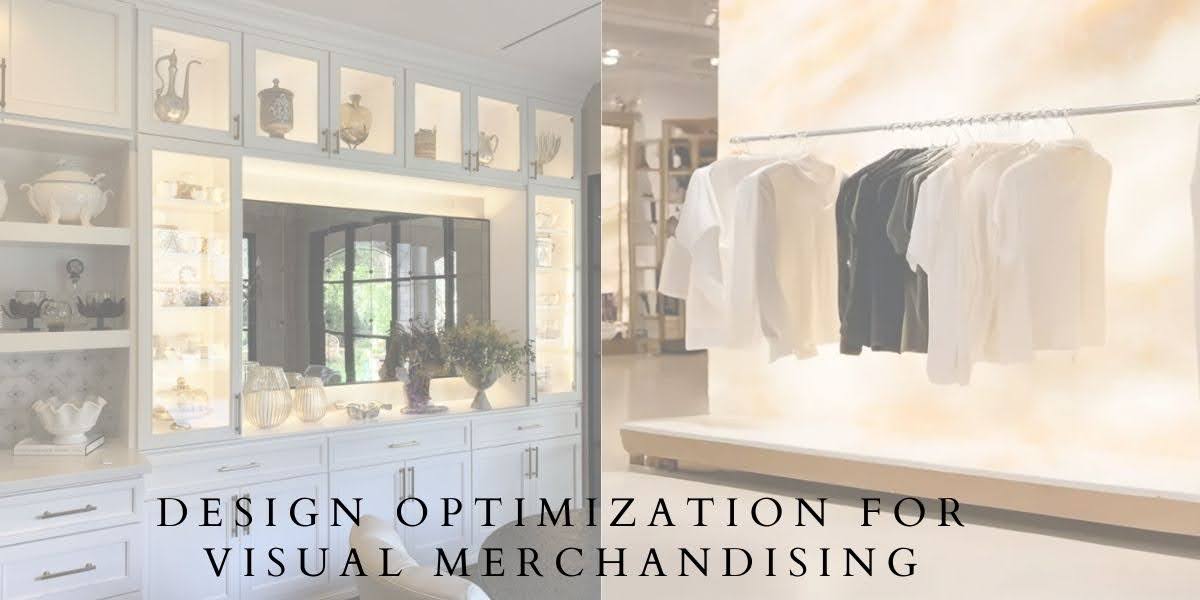
- Use iluminación en capas combinando el fondo Iluminación de láminas LED Con iluminación de acento enfocada para crear jerarquía visual.
- Integre una hoja de panel de luz LED detrás de los gráficos de marca mientras agrega acentos de borde sutiles para enmarcar el área de visualización.
- Controle las relaciones de contraste para que los productos resaltados parezcan más brillantes que los elementos circundantes sin causar deslumbramiento.
- Aplique atenuación dinámica en los escaparates para adaptar el brillo desde el día hasta las condiciones nocturnas.
- Haga coincidir los niveles de luminancia con el tipo de producto, utilizando una iluminación más suave para artículos reflectantes y mayor brillo para mercancía opaca.
Tabla de comparación de rendimiento
| Factor | Iluminación de láminas LED | Tiras LED tradicionales | Iluminación de fondo fluorescente |
| espesor | Muy delgado, típicamente unos pocos mm | Moderado, requiere canal | Profundidad de la luminaria voluminosa |
| Uniformidad | Alto con difusor | A menudo desigual, el riesgo de punto de acceso | Moderado, sombreado de tubo |
| Eficiencia energética | Alta eficiencia de área | Moderado | Menor en comparación con LED |
| Producción de calor | Calor distribuido bajo | Puntos de calor localizados | Mayor generación de calor |
| calidad visual | Superficie luminosa lisa | Posibilidad de líneas de tira visible | Parpadeo y envejecimiento desigual |
| Flexibilidad de integración | Cortable, adaptable a la forma | Solo lineal | Longitud de tubo fijo |
Errores comunes en instalaciones de láminas LED minoristas
Un error frecuente es la planificación de densidad de lumen insuficiente. La instalación de un sistema de iluminación de hojas LED de baja densidad en un gabinete poco profundo a menudo da como resultado patrones de diodos visibles. El brillo debe alinearse con el espaciado del difusor y la distancia de visualización.
La mala selección del difusor también afecta el rendimiento. Es posible que el uso de un difusor delgado en un gabinete de profundidad corta no dispersa adecuadamente la luz, mientras que los materiales demasiado opacos pueden reducir el brillo en exceso.
Ignorar las condiciones de luz del día en los escaparates de las tiendas conduce a pantallas con poca potencia. Las instalaciones de calle, requieren cálculos de brillo basados en los niveles de lux ambiental.
Las hojas de espacio excesivo en paneles grandes crean gradientes de brillo. La cobertura continua garantiza una luminancia uniforme.
Finalmente, el desprecio de la integración de atenuación evita el control de brillo adaptativo. Los entornos minoristas se benefician de ajustar la luminancia en función de la hora del día y los cambios estacionales.
Conclusión
La iluminación de láminas LED mejora significativamente la calidad de presentación en vitrinas y escaparates al ofrecer una iluminación uniforme, minimizando la profundidad estructural y permitiendo una integración de diseño flexible. Su configuración de diodo distribuido admite una retroiluminación suave sin puntos de acceso, mientras que el brillo controlado y la integración del reflector mejoran la eficiencia.
La implementación exitosa depende de seleccionar el material difusor adecuado, calcular la densidad de brillo en función de la profundidad del gabinete y la exposición a la luz del día, y aplicar la lógica de instalación adecuada. Cuando estos factores técnicos se abordan con cuidado, la iluminación de hojas LED mejora la claridad visual, el enfoque del producto y la eficiencia energética en entornos minoristas.
Preguntas frecuentes
Publicaciones relacionadas