Español
  English
  简体中文
简体中文  Deutsch
  Français
  Italiano
  日本語
日本語  한국어
한국어  Polski
  Português
  Русский
  Türkçe
  Nederlands
  Tiếng Việt
  ไทย
ไทย 
En el diseño de espacios comerciales modernos, los problemas de ruido y reverberación son cada vez más prominentes, particularmente en entornos como oficinas de planta abierta y salas de conferencias. Los niveles de ruido excesivos afectan severamente la eficiencia del trabajo y la experiencia del cliente. El reflejo del ruido y la reverberación no solo hacen que los espacios se sientan ruidosos, sino que también disminuyen la comunicación y la concentración.
Los accesorios de iluminación acústica ofrecen una solución innovadora, que proporciona una iluminación de alta calidad y, al mismo tiempo, absorbe y reduce el ruido para mejorar los entornos acústicos. Estos accesorios integran materiales acústicos con funcionalidad de iluminación, proporcionando dobles beneficios para espacios comerciales, particularmente en el control del ruido.
Al seleccionar la iluminación LED acústica, el coeficiente de reducción de ruido (NRC) sirve como una métrica clave para evaluar el rendimiento acústico. La clasificación de NRC cuantifica la capacidad de absorción de sonido de un dispositivo, ayudando a los consumidores a elegir los productos más adecuados para optimizar el diseño acústico de un espacio.
Comprensión de la importancia de las clasificaciones de NRC para las luces LED acústicas
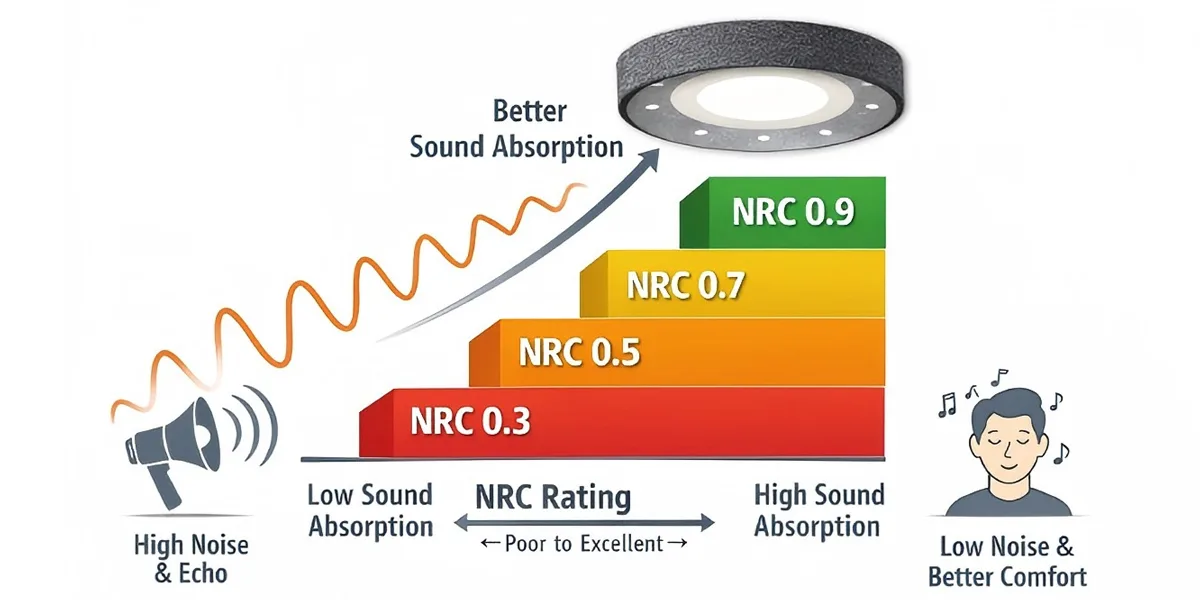
Al seleccionar Luces LED acústicas, la calificación de NRC sirve como un indicador crucial para evaluar sus capacidades de absorción de sonido. La escala de NRC varía de 0 a 1, con puntajes más altos que indican propiedades de absorción de sonido superiores. Una luz absorbente de sonido con una alta clasificación NRC puede reducir significativamente los ecos y el ruido dentro de un espacio, mejorando así su calidad y comodidad acústica. Esto es particularmente crucial en entornos de oficina modernos, salas de conferencias, hospitales y entornos similares.
La clasificación NRC no solo refleja la capacidad de absorción de sonido de un material, sino que también afecta la comodidad acústica general del entorno. Comprender esto ayuda a los consumidores a seleccionar la luz LED absorbente de sonido más adecuada en función de sus necesidades específicas.
¿Qué clasificación NRC es adecuada para la iluminación acústica?
Antes de discutir “lo que constituye un NRC apropiado”, es esencial aclarar primero la definición de NRC y su importancia en la iluminación acústica.
¿Qué es NRC (coeficiente de reducción de ruido)?
NRC (Coeficiente de reducción de ruido) es una métrica numérica estandarizada que se utiliza en la acústica para medir el rendimiento de absorción de sonido de un material. Se calcula midiendo los coeficientes de absorción acústica en cuatro frecuencias centrales (250 Hz, 500 Hz, 1000 Hz y 2000 Hz), tomando su media aritmética y redondeando al más cercano 0,05.
Rango de valores: 0.00–1.00
Significado fundamental: desde una perspectiva acústica, un valor más alto indica una mayor capacidad de absorción de sonido, mientras que un valor más bajo significa una reflexión sonora más pronunciada.
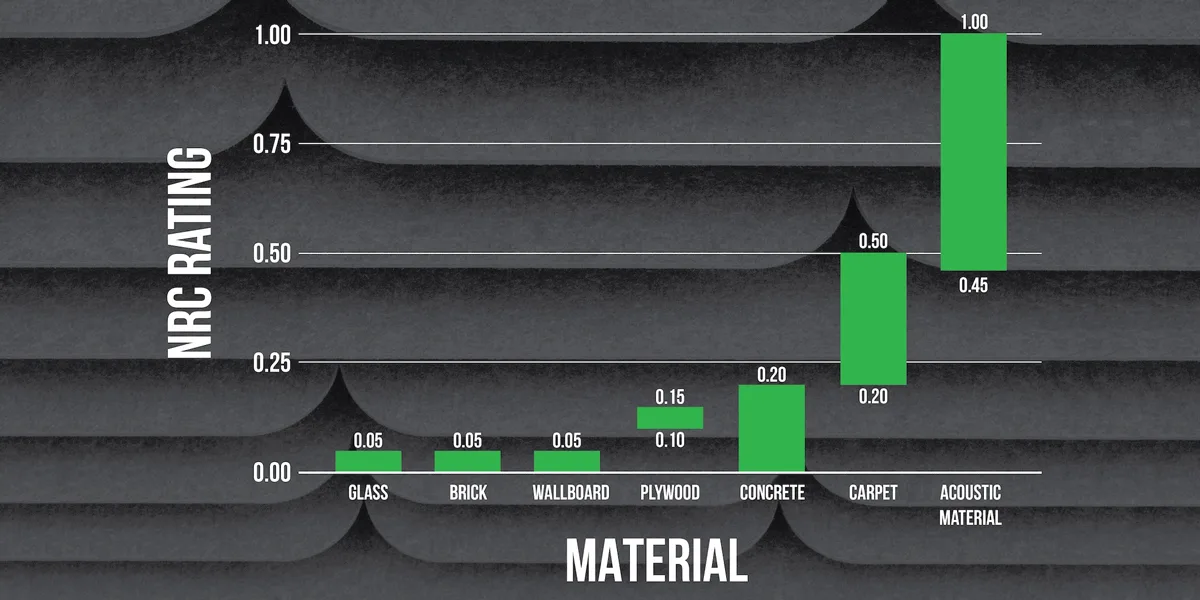
- NRC < 0,20: Típicamente clasificados como materiales reflectantes
- NRC ≥ 0,20: Puede ser reconocido como materiales absorbentes de sonido
- NRC ≥ 0,80: Pertenece a materiales absorbentes de sonido altamente eficientes, adecuados para espacios con altos requisitos acústicos
¿Cómo afecta la calificación de NRC el rendimiento de la iluminación acústica?
En los sistemas de iluminación acústica, NRC determina directamente la capacidad de un dispositivo para reducir la reverberación y controlar el ruido ambiental. Dado que las luces LED acústicas se instalan típicamente en techos o áreas elevadas, su absorción de sonido Las propiedades influyen significativamente en el entorno acústico general de un espacio. Los valores más altos de NRC minimizan los ecos y los reflejos del ruido, mejorando la inteligibilidad del habla y la comodidad auditiva, lo que resulta en un entorno acústico más estable y controlable.
¿Cuál es la calificación de NRC apropiada para diferentes escenarios de aplicación?
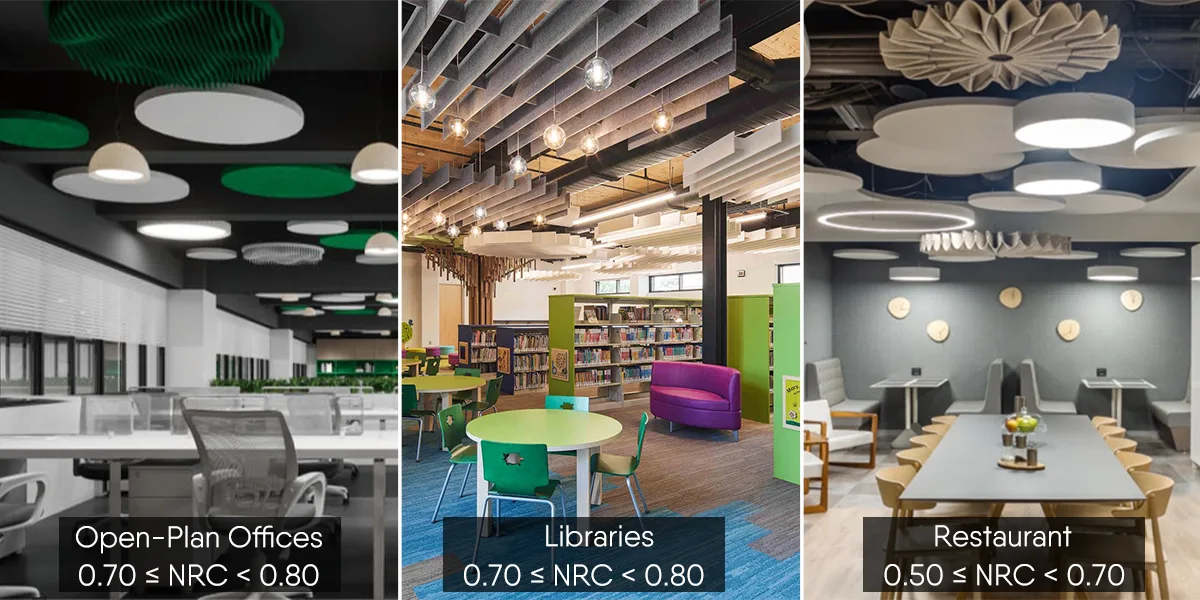
Los requisitos de iluminación acústica para NRC varían según los diferentes entornos de uso. La selección debe considerar la funcionalidad del espacio, el presupuesto y las especificaciones de diseño. Para la iluminación LED acústica, se recomiendan productos con NRC ≥ 0,70 para lograr un rendimiento acústico óptimo. Consulte las siguientes normas de clasificación de NRC y la tabla de aplicación para obtener orientación:
Normas y aplicaciones de calificación de NRC
| Rango de NRC | Clase de rendimiento acústico | Aplicación recomendada | Función central |
| NRC ≥ 0,80 | Material de absorción de sonido de alta eficiencia | Material de absorción de sonido de alta eficiencia | Logra un control acústico óptimo, reduce significativamente la reverberación, mejora la claridad del habla y la pureza del audio. |
| 0,70 ≤ NRC < 0,80 | Excelente material absorbente de sonido | Oficinas de planta abierta, aulas, bibliotecas, hospitales, salas de reuniones | Reduce eficazmente el ruido de fondo y la reverberación, mejora la eficiencia de la comunicación y la comodidad espacial. |
| 0,50 ≤ NRC < 0,70 | Material absorbente de sonido moderado | Espacios residenciales ordinarios, tiendas, pasillos, zonas de descanso público | Mejora significativamente el ruido ambiental, equilibra el costo y la flexibilidad de diseño, adecuado para necesidades acústicas moderadas. |
| 0,20 ≤ NRC < 0,50 | Material básico absorbente de sonido | Almacenes, Estacionamientos, Plantas industriales | Proporciona una función básica de absorción de sonido, reduce algunos sonidos reflejados. |
| NRC < 0,20 | Material reflectante de sonido | Cualquier entorno acústico que requiera una reflexión sonora (por ejemplo, escenarios, plataformas musicales) | Refleja principalmente el sonido, no apto para escenarios que requieren absorción de sonido. |
¿Por qué NRC es particularmente adecuado para evaluar la iluminación acústica?
NRC es ampliamente utilizado para evaluar el rendimiento de materiales acústicos arquitectónicos como paneles de techo y de pared. La iluminación acústica combina inherentemente “sistemas de iluminación con soluciones de techo acústico”.
Por lo tanto, usar NRC como métrica central para medir el rendimiento acústico de las luces LED absorbentes de sonido no solo es profesional sino también intuitiva, facilitando la comparación y la selección de diseñadores, contratistas y compradores. Para la mayoría de los espacios comerciales, una calificación NRC entre 0,6 y 0,9 se considera una iluminación acústica ideal, ya que proporciona una absorción de sonido efectiva y mantiene la flexibilidad de diseño y el rendimiento de la iluminación.
Cómo las luces LED acústicas mejoran el control de sonido en los espacios modernos
Los edificios modernos, en particular las oficinas de planta abierta, a menudo sufren de niveles excesivos de ruido. Las luces LED acústicas abordan esto mediante la integración de materiales o estructuras que absorben el sonido. Proporcionan iluminación mientras absorben las ondas sonoras y reducen los ecos, mejorando significativamente la claridad y comodidad del sonido dentro del espacio. Su diseño combina fuentes de luz con materiales acústicos, no solo resolviendo problemas de ruido, sino también mejorando el atractivo estético general del medio ambiente.
A través de la configuración científica, estas luces ayudan a que los espacios modernos alcancen un rendimiento acústico óptimo, al mismo tiempo que cumplen con los requisitos estéticos e de iluminación, transformando el ruido ambiental de una distracción en un elemento discreto.
El papel de las luces LED acústicas en la mejora de los entornos de oficina y residencial
En los lugares de trabajo y hogares contemporáneos, la interferencia del sonido con frecuencia compromete la eficiencia y la comodidad. Las luces LED acústicas, como una fusión innovadora de la acústica y la iluminación, están optimizando silenciosamente la experiencia acústica en estos espacios.
- Configuración de oficina : Si bien los diseños abiertos fomentan la colaboración, también entretejen los zumbidos de la impresora y los clics del teclado en un ruido de fondo constante. La sala de reuniones hace eco de otras discusiones confusas. Las luces LED absorbentes de sonido incorporan materiales porosos que absorben las ondas sonoras y reducen los reflejos, lo que facilita las reuniones. Simultáneamente, la temperatura de color ajustable (de blanco frío a amarillo cálido) se adapta a diferentes momentos del día, reduciendo la fatiga visual y fomentando una atmósfera enfocada. Este diseño de "sinergia de luz de sonido" transforma espacios ruidosos en refugios eficientes.
- Entorno residencial: El clamor urbano, como el ruido del tráfico y las actividades de vecindad, a menudo se entromete en la tranquilidad del hogar. Las luces LED absorbentes de sonido absorben el ruido de alta frecuencia, construyendo una "barrera acústica" en interiores. Utilizado en salones o dormitorios, los residentes disfrutan de momentos más tranquilos para descansar o leer. La eficiencia energética del LED y su larga vida útil se alinean aún más con las necesidades de vida sostenible.
Desde salas de conferencias hasta dormitorios, luces LED absorbentes de sonido redefinen científicamente la calidad espacial, mejorando silenciosamente la vida y el trabajo.
Interpretación de las clasificaciones de NRC: por qué son críticas para la acústica Rendimiento de iluminación
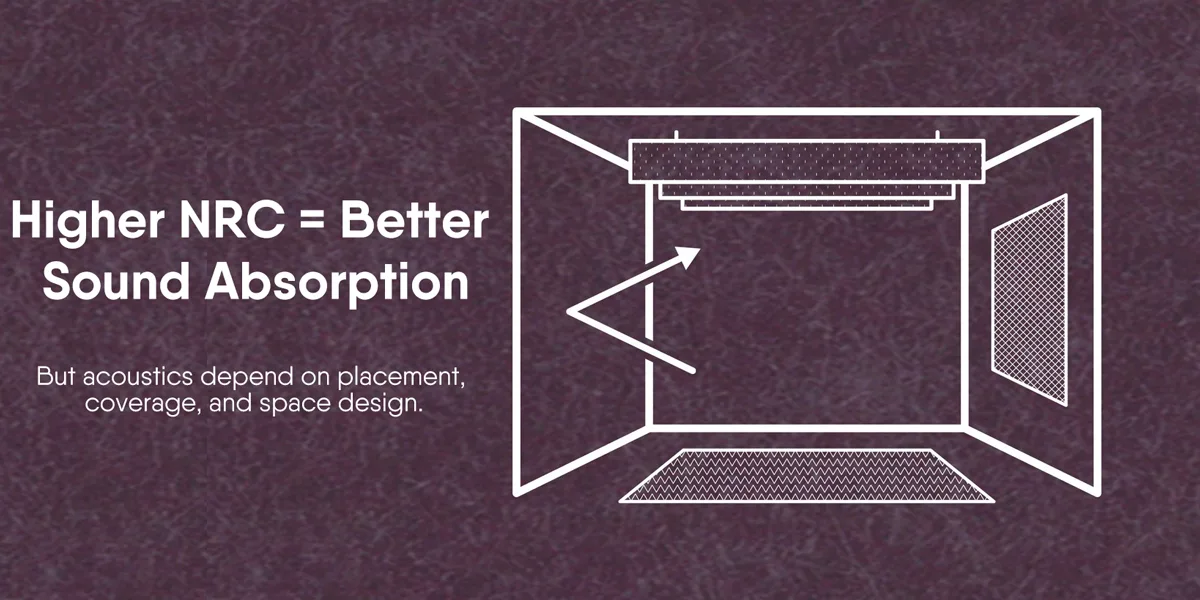
La clasificación de NRC sirve como una métrica central para evaluar el rendimiento acústico de la iluminación acústica, con su significado en su influencia directa en los entornos de sonido interior.
La iluminación acústica logra la conversión de energía del sonido a través de materiales porosos integrados (como fibra de poliéster, paneles de aluminio perforado y algodón acústico). Su valor NRC determina directamente:
- Tiempo de reverberación reducido: En una sala de conferencias de 50㎡, los accesorios con NRC ≥ 0,7 reducen el tiempo de reverberación de 2,1 segundos a 1,3 segundos, mejorando significativamente la inteligibilidad del habla.
- Índice de transmisión de voz mejorado (STI): La ITS medida aumenta de 0,62 a 0,78, aumentando notablemente la eficiencia de la comunicación y el enfoque.
- Supresión de interferencias de ruido: Absorbe eficazmente los ecos de voz humana y del equipo, creando una oficina tranquila y de baja distracción o ambiente de reunión.
Normas y reglamentos de la industria actuales
- internacional: ASTM C423 sirve como el estándar autorizado para las pruebas de NRC.
- Sin regulaciones obligatorias: Actualmente, no existe un estándar de industria dedicado para la "iluminación LED acústica", y NRC sirve solo como referencia funcional.
- Tendencia de diseño colaborativo: Los estándares de iluminación como ISO/CIE 8995-1:2025 enfatizan la sinergia entre "confort visual" y "confort acústico", propulsando la iluminación que absorbe el sonido como una característica estándar en espacios inteligentes.
Valor de la aplicación del mundo real
Los comentarios de los usuarios de las instalaciones reales indican que después de instalar luces LED que absorben el sonido de alta NRC, las salas de conferencias no experimentan más eco al hablar, y "no se reduce significativamente el ruido del aire acondicionado" y "enfoque mejorado". Su valor se extiende más allá de la reducción del ruido para remodelar la percepción espacial, donde la luz y el sonido sirven conjuntamente a la eficiencia cognitiva y al confort psicológico.
Una excelente clasificación NRC no solo reduce de manera efectiva el ruido, sino que también evita su propagación dentro de los espacios, lo que garantiza que la calidad del sonido permanezca consistentemente dentro de los niveles cómodos.
Cómo seleccionar la luz LED acústica óptima para una mayor absorción del sonido
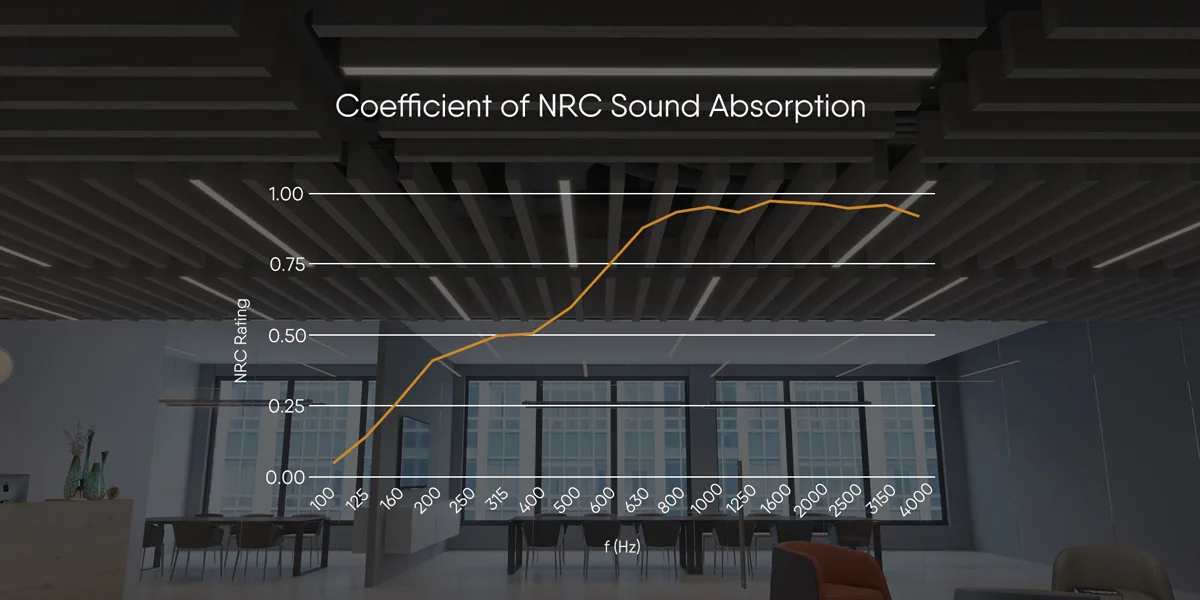
cuando Elegir luces LED acústicas adecuadas, priorice la calificación de NRC. Los accesorios de alta calificación son ideales para espacios con requisitos de control de ruido estrictos. Además, considere el tipo y la calidad de los materiales acústicos para garantizar que brinden un rendimiento de absorción de sonido esperado en el uso del mundo real. Al mismo tiempo, el diseño de las luminarias y la eficacia luminosa son factores críticos que influyen directamente en la experiencia espacial general.
- Escenarios de coincidencia de valores de NRC:
a) Los espacios pequeños (por ejemplo, las oficinas en casa) pueden optar por NRC 0.6 o NRC 0.5-0.7. Esta gama absorbe eficazmente el ruido cotidiano (como los sonidos de la televisión o los niños que juegan) mientras evita la absorción excesiva que crea un espacio anormalmente silencioso.
b) Se recomiendan espacios grandes (por ejemplo, salas de conferencias) para NRC 0.7-0.9. Los valores más altos de NRC reducen los ecos en las salas de conferencias, mejoran la calidad de las videollamadas y minimizan la interferencia de ruido de fondo en las oficinas de planta abierta.
c) Los valores de NRC superiores a 0.8 son adecuados para entornos profesionales como estudios de grabación, pero los espacios residenciales/oficina requieren equilibrar la absorción del sonido con la funcionalidad de iluminación.
- Durabilidad del material: Priorice los materiales acústicos resistentes al fuego y a la humedad (por ejemplo, espuma de clase A ignífuga) para evitar una absorción acústica reducida debido a la humedad ambiental.
- Parámetros de: La temperatura de color (2700K-4000K) y el índice de reproducción del color (CRI>90) deben alinearse con los requisitos espaciales, por ejemplo, la luz neutra de 4000 K aumenta el enfoque en las oficinas.
- Cumplimiento de la certificación: Seleccionar marcas con certificaciones de prueba rigurosas para garantizar que las luminarias cumplan con los estándares de rendimiento acústico.
Iluminación acústica de Signliteled Prioriza tanto el rendimiento acústico como el diseño estético. La lámpara ilustrada con estructura de panal logra UGR<19, entrega un NRC de 0,75 e incorpora características de prevención de deslumbramiento, lo que la hace ideal para salas de estar residenciales.
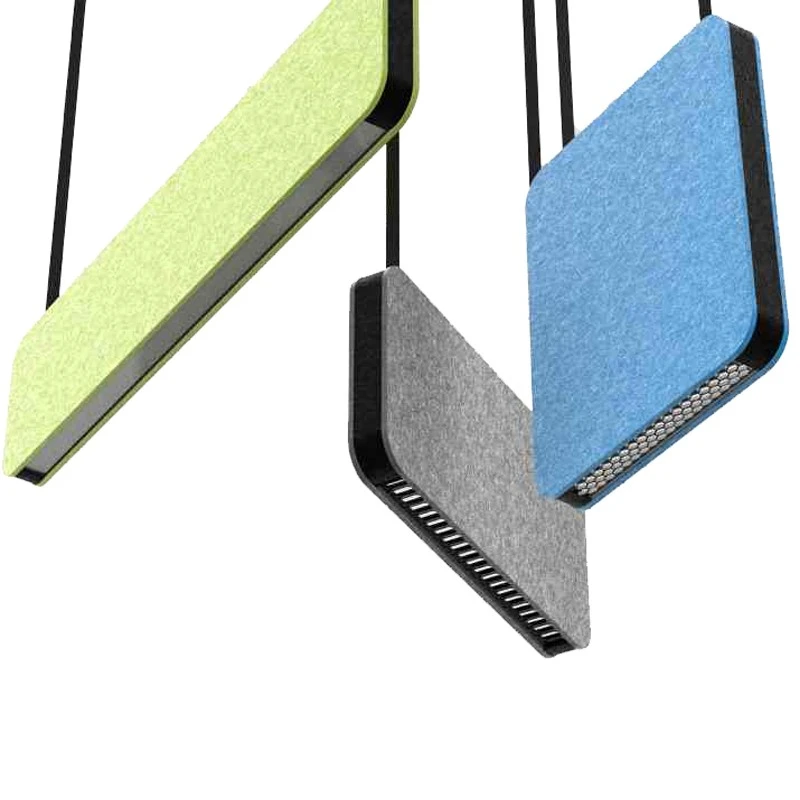
Luz lineal LED acústica super delgada
Voltaje de entrada: AC100-277V / AC220-240V, 50-60Hz
Dirección de emisión: hacia abajo
Tamaño: 1218 *36*400mm
CCT: 3000K / 4000K / 6000K
Poder: 30W
Flujo luminoso: 100-110 lm/W
CRI: >80RA
PF: >0.90
Flicker gratis: Sí
Ángulo del haz: 120°
Grado IP: IP20
Garantía: 5 años
Color de la placa acústica de fieltro: Rojo / Verde / Azul / Gris más de 48 colores Opción
¿Cómo logran las luminarias acústicas tanto la iluminación como la reducción de ruido simultáneamente?
Los consumidores modernos favorecen cada vez más los productos de iluminación que combinan un excelente rendimiento acústico con estética espacial. A través de un diseño ingenioso, la iluminación LED acústica combina a la perfección la funcionalidad con el arte, convirtiéndolo en un elemento indispensable en los espacios contemporáneos.
Los accesorios acústicos integran la funcionalidad a través de los siguientes elementos de diseño:
- Capas de material: La superficie de la lámpara utiliza espuma porosa o tejidos fibrosos (por ejemplo, fibra de poliéster), permitiendo que las ondas de sonido entren y se conviertan en calor a través de la fricción mientras se mantiene la transmisión de la luz.
- Diseño estructural: La pantalla incorpora estructuras de algodón o de panal que absorben el sonido para maximizar los trayectos de reflexión de ondas sonoras. La fuente de luz LED está integrada dentro de la capa absorbente de sonido, asegurando una distribución uniforme de la luz.
Conclusión
Como innovador Solución de iluminación acús, los accesorios LED absorbentes de sonido se están volviendo cada vez más estándar en la arquitectura moderna y el diseño espacial debido a sus excelentes clasificaciones de NRC y su rendimiento acústico.
Desde entornos de oficina hasta espacios residenciales, lugares comerciales hasta instituciones educativas, la iluminación LED acústica juega un papel vital en la mejora de la comodidad acústica espacial. Al seleccionar las clasificaciones y accesorios de NRC apropiados, los consumidores pueden crear entornos más silenciosos y cómodos, elevando la calidad de vida y el trabajo.
Preguntas frecuentes
Publicaciones relacionadas