Español
  English
  简体中文
简体中文  Deutsch
  Français
  Italiano
  日本語
日本語  한국어
한국어  Polski
  Português
  Русский
  Türkçe
  Nederlands
  Tiếng Việt
  ไทย
ไทย 
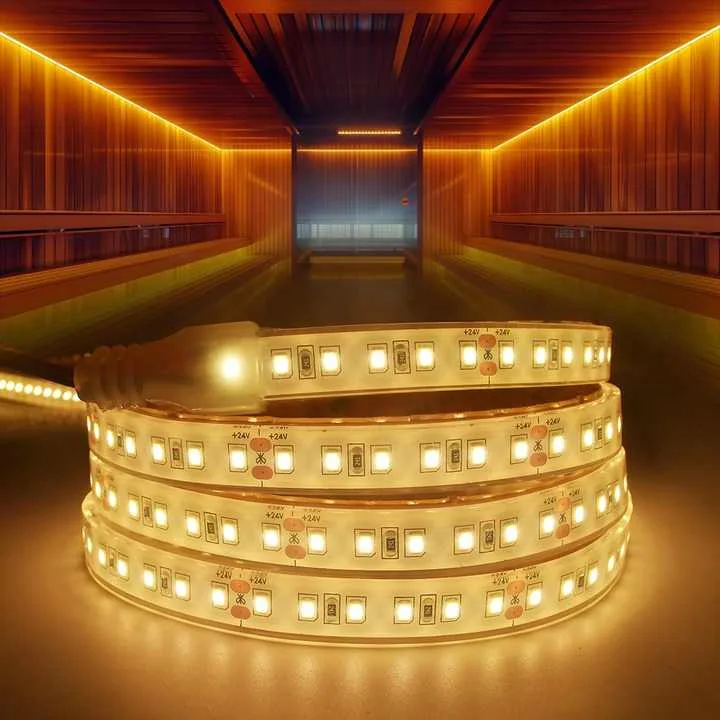
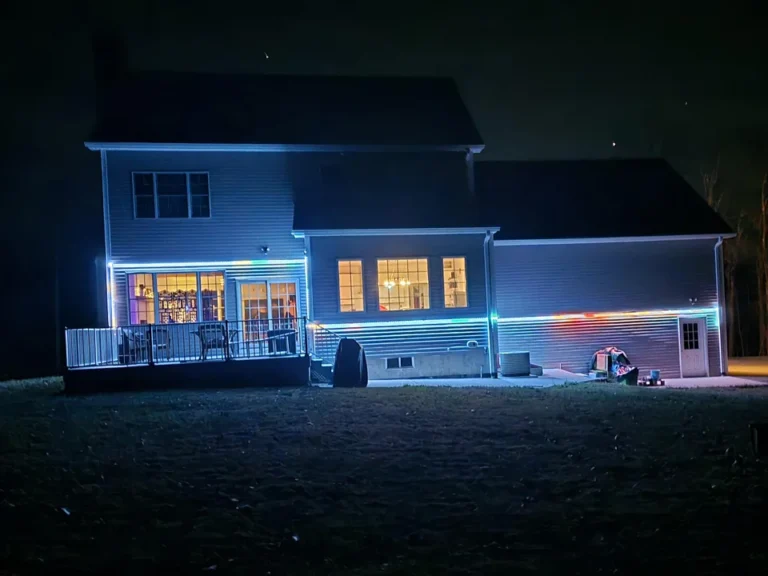
La cinta LED regulable para exteriores se usa ampliamente en contornos arquitectónicos, iluminación de paisaje y aplicaciones decorativas exteriores, donde tanto el rendimiento de la iluminación como la durabilidad del medio ambiente son esenciales. En comparación con las instalaciones en interiores, los proyectos al aire libre imponen mayores demandas de protección impermeable, estabilidad de atenuación y compatibilidad general del sistema. Diferentes aplicaciones pueden priorizar diferentes factores dependiendo de las condiciones de instalación, los métodos de control y la escala del proyecto. Este artículo describe varias consideraciones clave al seleccionar cinta LED regulable para uso en exteriores, proporcionando puntos de referencia prácticos para ayudar a los compradores a evaluar productos y soluciones de manera más efectiva para sus aplicaciones específicas.
Ambiente al aire libre y clasificación de impermea
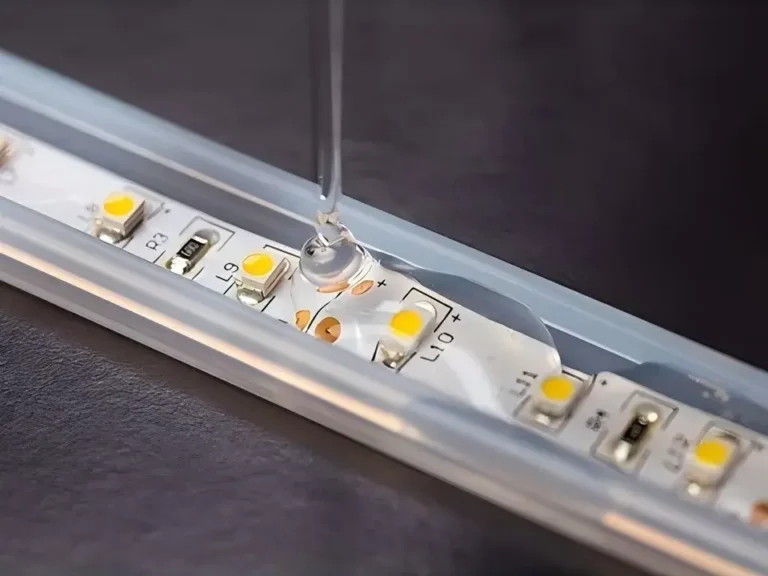
La cinta LED regulable para exteriores está disponible en una variedad de construcciones impermeables, y la selección siempre debe basarse en el entorno de instalación real. Las opciones comunes incluyen recubrimiento de silicona IP65, tubo de silicona IP65, extrusión hueca IP67, relleno de silicona IP68 y extrusión de silicona IP68. Cada estructura ofrece un equilibrio diferente entre la protección contra la humedad, la flexibilidad, la disipación del calor y la durabilidad a largo plazo. No existe una sola cinta LED impermeable para todos los proyectos al aire libre; la elección adecuada depende del nivel de exposición, la posición de montaje y las condiciones ambientales.
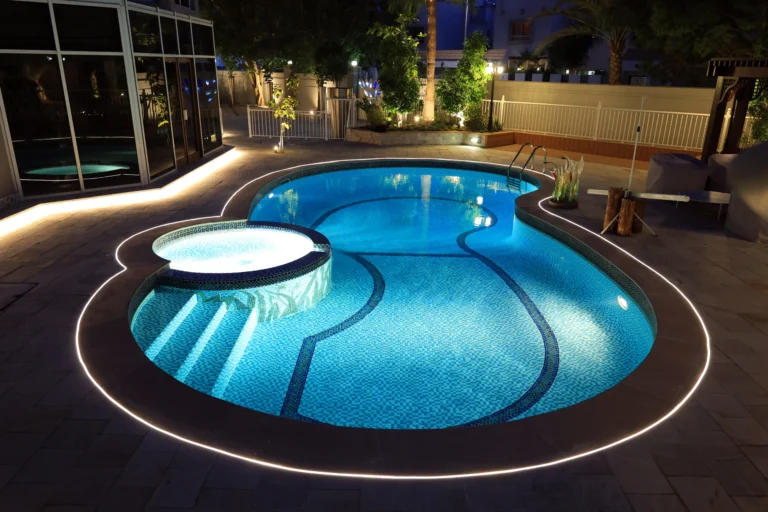
Desde una perspectiva práctica, las clasificaciones de IP definen los límites de protección en lugar de la calidad general del producto. IP65 cinta LED Es adecuado para ambientes expuestos a lluvia o salpicaduras de agua pero no en contacto con el agua continuo. Los productos IP67 están diseñados para lugares donde se puede producir una inmersión en agua temporal, como instalaciones a nivel del suelo o áreas propensas a la acumulación de agua. La cinta LED IP68 está diseñada para inmersión a largo plazo o frecuente y se utiliza típicamente en fuentes, piscinas o características de paisaje de alta humedad.
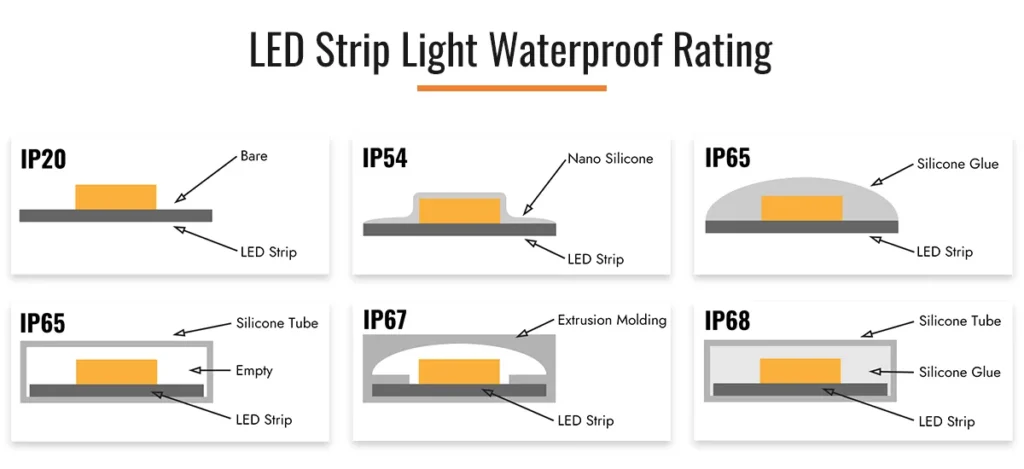
La siguiente tabla resume las clasificaciones de impermeabilidad recomendadas para aplicaciones comunes en exteriores:
| Escenario de aplicación | Clasificación IP recomendada |
| Contorno de fachada de construcción | IP65 |
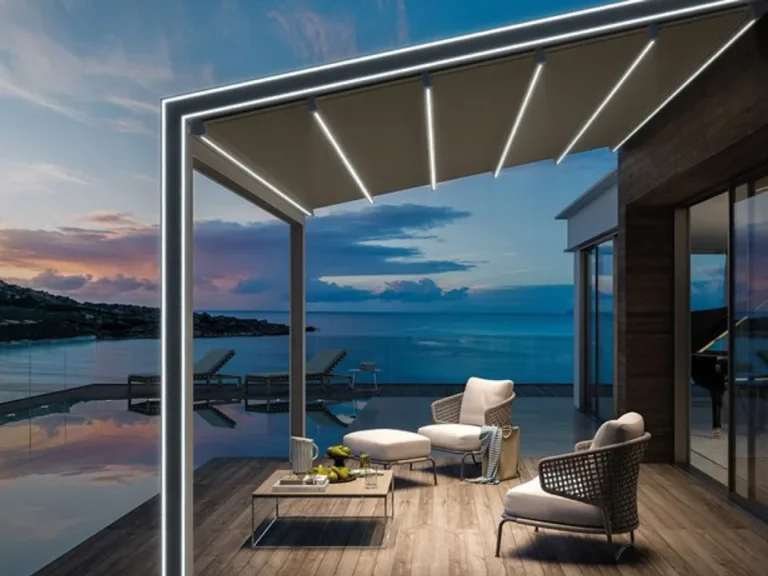
| Aleros y marquesinas | IP65 |
| Balcones y terrazas | IP65 / IP67 |
| Líneas arquitectónicas a nivel del | IP67 |
| Iluminación de jardines y paisajes | IP67 |
| Cerca de piscinas | IP68 |
| Características y fuentes del agua | IP68 |
| Instalaciones costeras al aire libre | IP67 / IP68 |
En resumen, la selección de clasificación de impermeabilidad debe estar impulsada por condiciones reales de exposición en lugar de suposiciones. Para instalaciones exteriores completamente expuestas, se recomienda encarecidamente la cinta LED con materiales resistentes a los rayos UV para evitar el amarilleo y la degradación del material. Para entornos costeros o de alta salinidad, los productos que han pasado pruebas de pulverización salina brindan una mayor fiabilidad y una vida útil más larga.
Método de atenuación y compatibilidad del sistema
Se utilizan comúnmente varios métodos de atenuación en proyectos de cintas LED para exteriores, cada uno de ellos adecuado para diferentes requisitos de control y escalas de proyectos. Los métodos más ampliamente aplicados incluyen atenuación PWM, atenuación de 0 a 10 V, atenuación de DALI, triac (corte de fase) y control DMX. Si bien todos estos métodos se pueden implementar en entornos exteriores, su rendimiento y practicidad dependen en gran medida del diseño del sistema, la complejidad del cableado y el nivel de control requerido.
La siguiente tabla compara estos métodos de atenuación desde una perspectiva de proyecto al aire libre:
| Método de atenuación | Ventajas | Limitaciones | Aplicaciones típicas al aire libre |
| PWM | Simple, rentable, estable | Control centralizado limitado | Proyectos al aire libre de pequeño a mediano |
| 0-10v | Estándar maduro, buena estabilidad | Cableado de control adicional | Fachadas comerciales, señalización exterior |
| dalí | Control direccionable y flexible | Mayor costo del sistema | Grandes sistemas de iluminación arquitect |
| tríaco | Compatible con alimentación de CA | Atenuación limitada de bajo nivel | Iluminación exterior de reequipamiento |
| DMX | Control preciso, efectos dinámicos | Requiere una configuración de decodificador correcta | Iluminación arquitectónica |
En la mayoría de las aplicaciones al aire libre, la cinta LED de CC es compatible con los cinco métodos de atenuación cuando se combina con controladores o controladores apropiados. Sin embargo, para proyectos basados en DMX, es esencial seleccionar el decodificador DMX correcto, ya que la configuración del canal y el tipo de salida afectan directamente la estabilidad del sistema. Por el contrario, la cinta LED de CA se limita típicamente a la atenuación de triac y a los sistemas de control de corte de fase seleccionados, lo que la hace más adecuada para instalaciones exteriores más simples.
Brillo y uniformidad de la luz
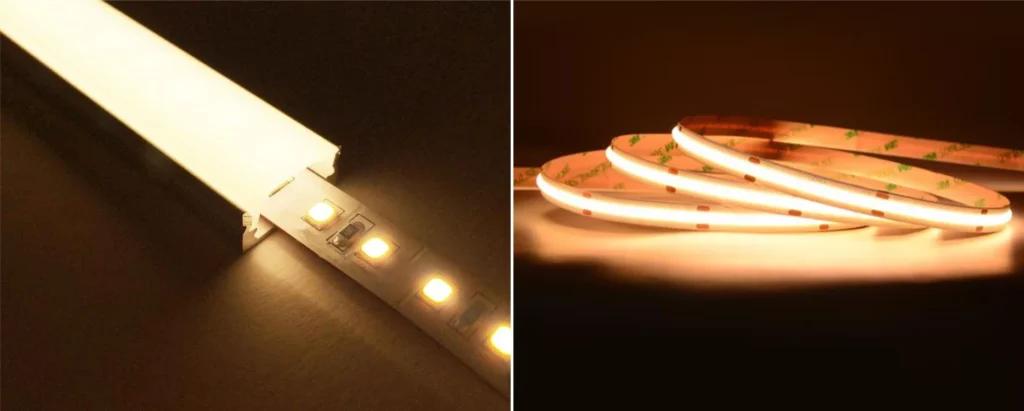
El brillo suele ser una consideración principal en las aplicaciones de cintas LED para exteriores, particularmente para contornos arquitectónicos e iluminación exterior funcional. Cuando se requiere una alta eficacia luminosa y un brillo máximo, la cinta LED SMD es generalmente la opción preferida. La cinta LED SMD de alta eficiencia puede lograr una eficacia luminosa por encima de 180 lm/W, mientras que la cinta LED COB suele alcanzar hasta alrededor de 150 lm/W. Para proyectos que tienen como objetivo el mismo nivel de brillo, la cinta SMD LED suele ofrecer una mejor eficiencia energética y un menor consumo de energía, lo que la hace adecuada para instalaciones exteriores a gran escala.
La uniformidad de la luz es un factor separado pero igualmente importante, especialmente en aplicaciones de iluminación lineal visible. Cuando se requiere un efecto de iluminación continuo sin puntos, la cinta LED COB ofrece ventajas claras debido a su mayor densidad de virutas y a la superficie emisora de luz estrechamente empaquetada, lo que da como resultado una iluminación suave sin manchas oscuras. Alternativamente, la cinta SMD LED combinada con perfiles de aluminio y difusores también puede lograr una buena uniformidad al tiempo que mejora la disipación de calor y la protección mecánica.
Selección de voltaje de entrada para cinta LED regulable para exteriores
Para proyectos en exteriores, generalmente no se recomienda la cinta LED de alto voltaje debido al mayor riesgo de descarga eléctrica y a los requisitos de seguridad más complejos. Como resultado, la cinta LED de bajo voltaje de CC se usa más comúnmente, siendo DC12V y DC24V las opciones más aplicadas. Sin embargo, al seleccionar cinta LED regulable, caída de tensión Debe ser considerado cuidadosamente, ya que afecta directamente a la uniformidad del brillo y la consistencia de atenuación a lo largo de la carrera.
Con la entrada de alimentación de un solo extremo, la cinta LED DC12V normalmente debe limitarse a 5 metros, mientras que la cinta LED DC24V puede extenderse hasta 7 metros. Cuando se utiliza la entrada de potencia de doble extremo, los sistemas DC12V pueden alcanzar aproximadamente 15 metros y los sistemas DC24V hasta 20 metros. Exceder estas longitudes puede resultar en una reducción de brillo visible y un rendimiento de atenuación desigual.
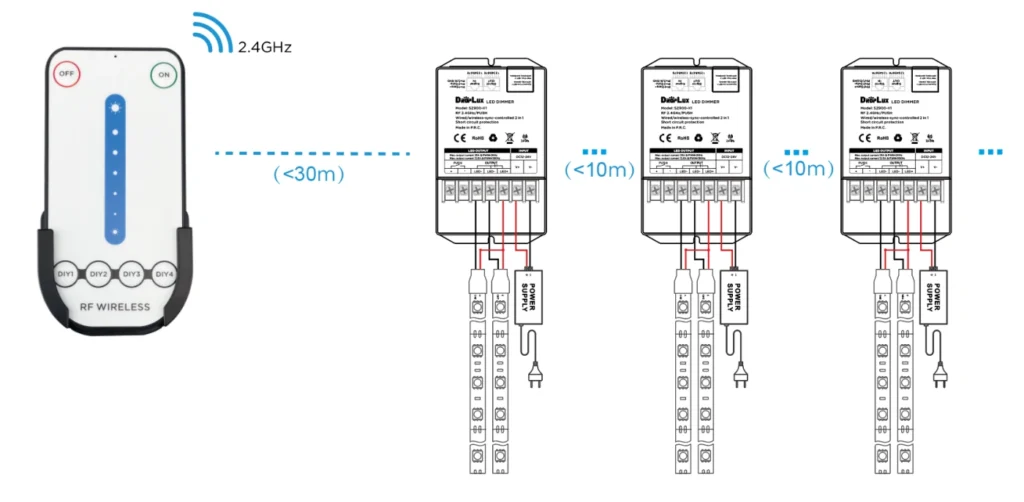
Para proyectos que requieren largas tiradas continuas, la cinta LED DC48V proporciona una alternativa práctica. Soporta hasta 15 metros con entrada de un solo extremo y hasta 40 metros con entrada de doble extremo, simplificando el cableado y reduciendo la caída de voltaje. La principal limitación es la selección relativamente más pequeña de fuentes de alimentación compatibles. Cuando se utiliza la atenuación de PWM, se puede mejorar la consistencia de la atenuación agregando amplificadores de señal entre secciones de cinta LED o adoptando controladores síncronos, particularmente en instalaciones grandes al aire libre.
Elegir el proveedor adecuado para proyectos al aire libre medianos y grandes
Para proyectos de iluminación exterior mediano a grande, la selección de proveedores juega un papel importante en el desempeño general del proyecto. En la mayoría de los casos, es preferible trabajar directamente con un fabricante genuino que buscar a través de mercados en línea o empresas comerciales. Los fabricantes suelen ofrecer precios más competitivos, una experiencia más profunda de productos y un soporte técnico más sólido. Más importante aún, están mejor posicionados para proporcionar una personalización no estándar, que a menudo se requiere en proyectos de cintas LED regulables en exteriores.
Al evaluar a los fabricantes, también se debe considerar la conformidad del producto y las capacidades de prueba. Las certificaciones relevantes como UL, CE y RoHS demuestran el cumplimiento de la normativa, mientras que los informes de prueba, incluidos los datos fotométricos de IES, las pruebas de esfera y las pruebas de salocho de sal, ofrecen una garantía adicional de rendimiento, seguridad y fiabilidad a largo plazo en entornos exteriores.
Otros factores importantes a tener en cuenta
Más allá de la clasificación de impermeabilidad, el método de atenuación, el brillo, la selección de voltaje y la elección del proveedor, varios factores adicionales pueden influir en el rendimiento a largo plazo de la cinta LED regulable para exteriores. La gestión térmica es particularmente importante, ya que las estructuras impermeables pueden restringir la disipación del calor; la instalación adecuada utilizando perfiles de aluminio puede mejorar significativamente la fiabilidad. La consistencia del color durante la atenuación, especialmente a bajos niveles de brillo, también debe evaluarse en iluminación arquitectónica visible. Además, el diseño de la salida del cable, el sellado de la tapa de extremo y los detalles de instalación juegan un papel clave en la prevención de la entrada de humedad con el tiempo. Para entornos hostiles, la resistencia a los rayos UV, la protección contra la corrosión y los datos de prueba verificados proporcionan una mayor garantía de una operación estable a largo plazo.
Con más de diez años de experiencia en la fabricación de cinta LED para exteriores, Signliteled soporta una amplia gama de aplicaciones de iluminación exterior. Además de los productos estándar, ofrecemos soluciones de cinta LED personalizadas adaptadas a los requisitos específicos del proyecto, incluido el diseño de circuitos, las opciones de color y la construcción impermeable. Para garantizar la compatibilidad del sistema y el rendimiento de atenuación estable, también ofrecemos soluciones de soporte completas, como controladores, amplificadores, decodificadores y fuentes de alimentación. Al combinar la personalización del producto con el soporte práctico del sistema, ayudamos a los clientes a implementar soluciones de cinta LED regulables para exteriores de manera más eficiente y confiable.
Publicaciones relacionadas