Français
  English
  简体中文
简体中文  Deutsch
  Español
  Italiano
  日本語
日本語  한국어
한국어  Polski
  Português
  Русский
  Türkçe
  Nederlands
  Tiếng Việt
  ไทย
ไทย 
oui, Appareils acoustiques Peut réduire l'écho dans les salles de conférence. Ils fonctionnent en absorbant l'énergie sonore réfléchie, ce qui réduit la réverbération et rend la parole plus facile à comprendre avec moins de réflexions gênantes.
Cet article explique comment les appareils acoustiques réduisent l'écho et les meilleures stratégies de placement pour améliorer la clarté de la parole dans les salles de conférence.
Concrètement, les plus grandes améliorations sont généralement le cas en plaçant l'absorption là où les réflexions de la parole sont les plus fortes : Au-dessus de la table de réunion et le long de la Principaux chemins de réflexion entre les intervenants et les auditeurs.
Pourquoi les salles de conférence ont souvent de l'écho
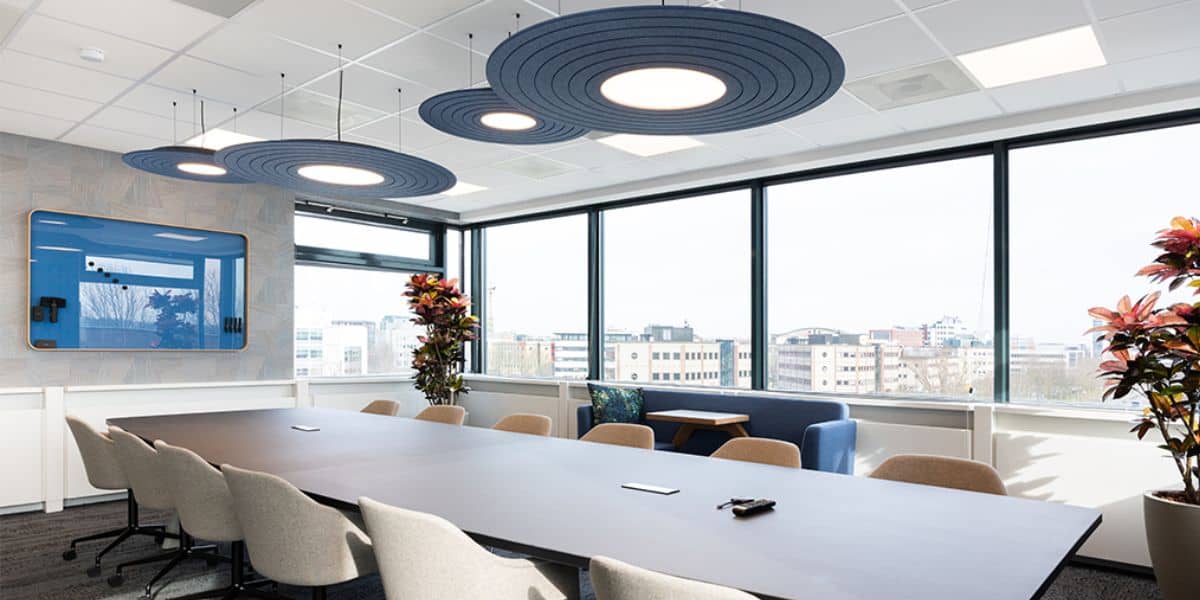
Les sons d'écho et de « spacieux » sont courants dans les espaces de réunion, car les salles de conférence privilégient souvent les surfaces propres, la durabilité et les aménagements ouverts. Ces mêmes choix de conception augmentent la réflexion sonore.
Les causes typiques comprennent :
- surfaces dures (verre, béton, cloisons sèches peintes, tables en stratifié)
- Parallèles Ce son rebondissant d'avant en arrière
- Hauts plafonds Avec de longs chemins de réflexion
- Matériaux doux et minimalistes (quelques rideaux, tapis ou articles rembourrés)
- Réflexions vocales et « frottis de discours » (Les réflexions arrivent légèrement après la voix directe, réduisant la clarté)
Dans une salle de conférence, Echo n'est pas seulement un problème de « confort acoustique ». Cela affecte directement la communication : les gens parlent plus fort, se répètent et les microphones à distance captent davantage le son de la pièce que la voix.
Comment les luminaires acoustiques réduisent l'écho
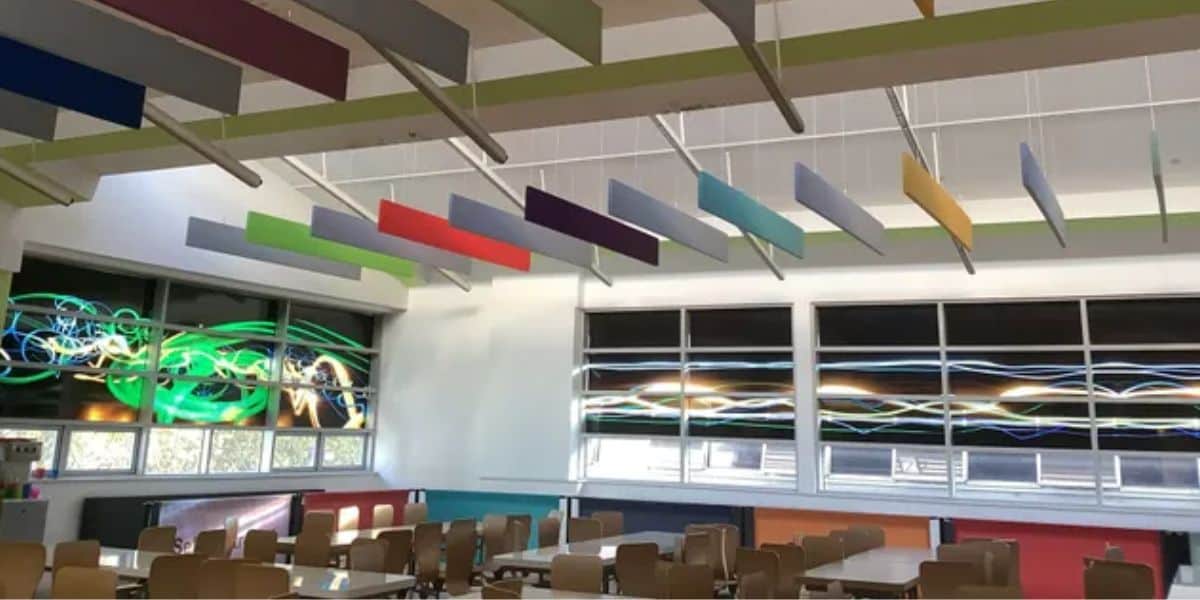
Les problèmes acoustiques dans les salles de conférence sont principalement causés par son réfléchi, pas la voix directe. Lorsqu'une personne parle, le son se déplace vers l'extérieur, frappe les surfaces et rebondit dans la pièce. Si suffisamment de réflexions restent fortes, la pièce semble « live » et la parole devient moins claire.
Absorption acoustique vs réflexion
- Surfaces réfléchissantes Retour sonore (verre, béton, plafonds durs)
- Surfaces absorbantes Convertir une partie de l'énergie sonore en chaleur par friction à l'intérieur de matériaux poreux (feutre, laine minérale, PET, systèmes à base de mousse)
Appareils acoustiques aider par Réduire la force des réflexions, en particulier ceux qui arrivent peu de temps après la voix directe.
Réduire le temps de réverbération
Les salles de conférence peuvent souffrir lorsque le son persiste trop longtemps après chaque parole. Les appareils acoustiques réduisent la durée de la durée de son persiste dans la pièce (souvent décrite comme la réduction de la "queue de réverbération" de la pièce). Vous n'avez pas besoin de le calculer pour comprendre l'impact : Une réverbération plus courte rend la parole plus distincte.
Amélioration de l'intelligibilité de la
La clarté de la parole s'améliore lorsque l'auditeur reçoit :
- un fort son direct de l'orateur, et
- moins/plus doux Premières réflexions Ces consonnes floues
Les luminaires acoustiques réduisent la « superposition » des réflexions qui rendent les voix étalées ou fatigantes à suivre.
Pourquoi l'absorption à mi-fréquence est-elle importante pour la parole
L'intelligibilité de la parole humaine est fortement influencée par les fréquences moyennes (où vivent de nombreuses consonnes et syllabes). Dans les salles de réunion, il ne suffit pas d'absorber les très hautes fréquences. Les luminaires acoustiques pratiques sont utiles car ils ciblent souvent les Gamme pertinente pour la parole, ce qui rend les réunions plus claires plutôt que simplement « ternes ».
Types de clés mentionnés dans les recherches réelles

Les personnes recherchant l'acoustique des salles de conférence rencontrent souvent quelques termes courants. Ce ne sont pas des « solutions magiques » distinctes, mais elles décrivent différentes façons dont l'absorption est intégrée dans une pièce.
Appareils acoustiques
Appareils acoustiques sont des éléments de construction fonctionnels qui fournissent également une absorption acoustique. Dans les salles de réunion, ils sont souvent suspendus, montés au plafond ou muraux.
Comment ils aident :
- absorber l'énergie sonore réfléchie
- Réduire l'écho et la "vivance" excessive de la pièce
- Améliorez la clarté à la table et dans la pièce
Où utilisé :
- Sur les tables de conférence
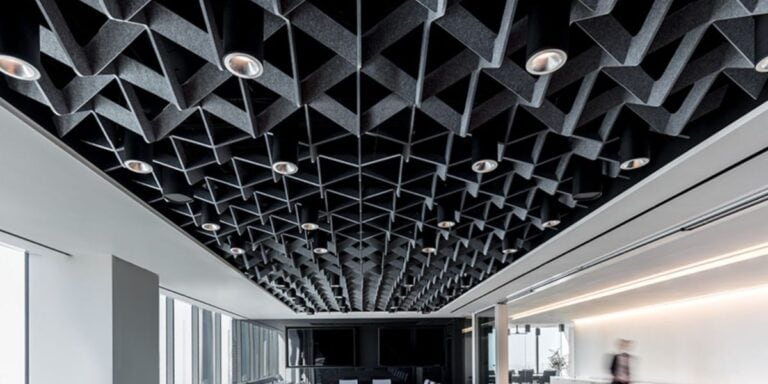
- Dans les grilles de plafond ou les plafonds ouverts
- Sur les zones de murs clés qui provoquent des réflexions fortes
Éclairage acoustique
Éclairage acoustique Combine l'éclairage avec des matériaux absorbants. Le principal avantage est qu'il utilise efficacement les immeubles de plafond, ce qui est souvent le domaine le plus important pour contrôler les réflexions dans les salles de réunion.
Pourquoi l'emplacement du plafond est important :
- Le plafond est une surface de réflexion majeure pour les voix
- Le rebond de table à plafond est un chemin de réflexion commun
- Le placement aérien peut traiter la zone de parole sans utiliser d'espace mural

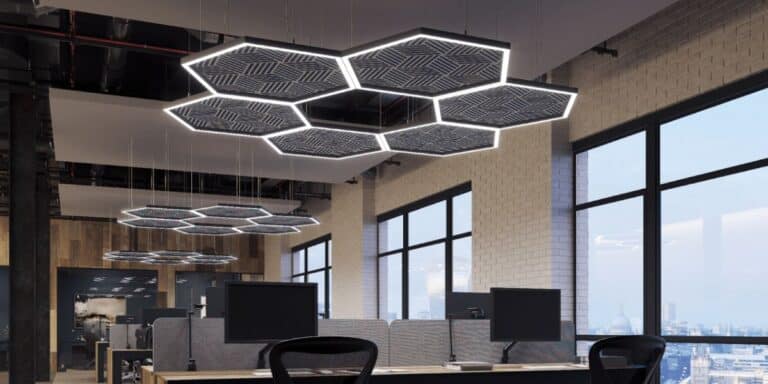
Lampe à suspension LED en cercle avec un cercle acoustique direct
- Tension d'entrée: AC100-277V / AC220-240V,50-60Hz
- Taille de hauteur : H65mm
- Taille D : 600 mm / 800 mm / 1000 mm / 1200 mm
- CCT : 3000K/4000K/6000K
- Puissance : 40W/60W/80W/96W
- Flux lumineux : 100-110lm/W
- contre -éblouissement : oui
- CRI : > 80 ra
- PF : > 0,90
- Fllicker gratuit : oui
- Angle du faisceau : 120°.
- Classe IP : IP20
- Garantie : 5 ans
- Couleur de la planche acoustique en feutre : rouge / vert / bleu / gris plus de 48 couleurs
Panneau d'éclairage acoustique
Un Panneau d'éclairage acoustique est généralement un absorbeur de style panneau qui peut être intégré à l'éclairage ou monté à proximité des zones d'éclairage.
Comment ça s'utilise :
- Plafond monté au-dessus de la zone de réunion
- Parfois installé sur les murs si les options de plafond sont limitées
Pourquoi c'est important :
- Les formulaires de panneaux peuvent couvrir de plus grandes surfaces
- Ils sont plus faciles à positionner sur la zone de réflexion de la table
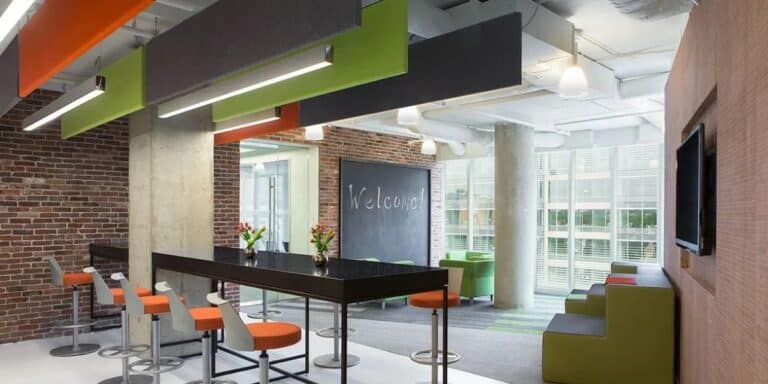
Éclairage et luminaires en feutre
Éclairage et luminaires en feutre Reportez-vous à l'éclairage ou aux éléments de plafond décoratifs en feutre ou en matériaux d'absorption en feutre.
Pourquoi sont-ils courants dans les bureaux modernes :
- Les matériaux à base de feutre sont faciles à façonner en déflecteurs, stores et panneaux
- Ils s'adaptent aux styles d'intérieur minimalistes
- Ils ajoutent une absorption sans avoir l'air d'une "insonorisation"
Le point clé : ces termes décrivent Comment l'absorption est emballée, pas si cela fonctionne. La performance dépend fortement Placement et couverture.
Meilleures stratégies de placement pour un discours clair

Un bon placement est ce qui transforme les luminaires acoustiques de "Nice Décor" en un contrôle d'écho significatif. L'objectif est de traiter les surfaces qui créent les réflexions les plus fortes et les plus dommageables pour la parole.
Cibler les premiers points de réflexion
Les premiers reflets sont les premiers rebonds forts qui atteignent les auditeurs peu de temps après la voix directe. Ils sont particulièrement nuisibles car ils interfèrent avec la clarté de la parole sans ressembler à un écho distinct.
Dans les salles de conférence, les premiers chemins de réflexion communs comprennent :
- Intervenant → classement → plafond → auditeurs
- Intervenant → parois latérales → auditeurs
- Intervenant → mur de verre → auditeurs
- Intervenant → mur arrière → Auditeurs (souvent entendus comme slap-back)
Une façon simple d'y penser :
- Si une surface « voit » à la fois le haut-parleur et l'auditeur, cela peut créer une réflexion forte.
- Si cette réflexion arrive rapidement, elle brouille la parole.
La meilleure stratégie de placement consiste à absorber le son là où ces premières réflexions se produisent, en commençant par la zone de plafond au-dessus de la table.
Placement au plafond
Le placement au plafond est souvent le mouvement le plus élevé car il cible la plus grande surface de réflexion et la zone de discours principale.
Placez les luminaires au-dessus de la table de réunion
Montez les luminaires acoustiques directement sur la zone de la table, car c'est là que :
- La plupart des voix proviennent
- La plupart des auditeurs sont assis
- Les boucles de réflexion les plus fortes se produisent
Ceci est particulièrement important pour les chambres avec :
- Plafonds durs (cloisons sèches, béton)
- Texture de plafond minimale
- Plafonds ouverts avec terrasse réfléchissante

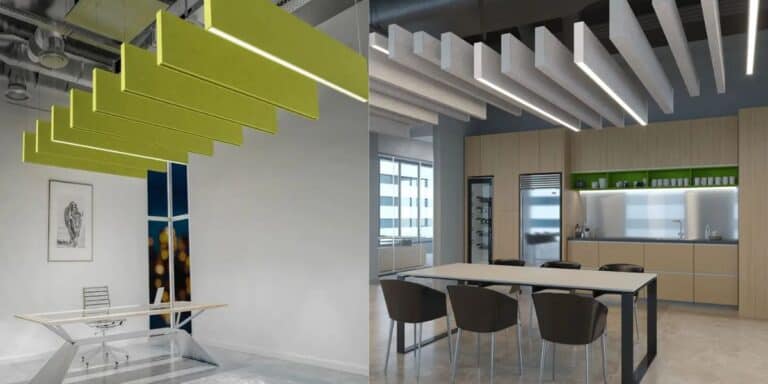
Lumière linéaire LED super mince
- Tension d'entrée: AC100-277V / AC220-240V,50-60Hz
- Direction émettrice : vers le bas
- Taille: 1218*3640mm
- CCT : 3000K/4000K/6000K
- Puissance : 30W
- Flux lumineux : 100-110lm/W
- CRI : > 80 ra
- PF : > 0,90
- Flicker sans scintillement : oui
- Angle du faisceau : 120°.
- Classe IP : IP20
- Garantie : 5 ans
- Couleur de la planche acoustique en feutre : rouge / vert / bleu / gris plus de 48 couleurs
Réduire le "rebond de plafond"
Dans de nombreuses pièces, le plafond agit comme un miroir pour le son. Les voix rebondissent, se répandent et retournent dans la zone de la table. Les appareils acoustiques interrompent cette boucle en absorbant l'énergie avant son retour.
Cela aide :
- Auditeurs en personne (moins de diffamation sur les sièges)
- Réunions hybrides (les micros capturent moins de sons de la pièce)
- Les gens au fond de la table (percuteurs plus clairs)
Pourquoi le placement central est important
Une erreur courante consiste à mettre l'absorption sur les bords de la pièce tout en laissant la zone de la table non traitée. Dans les salles de conférence, la priorité acoustique n'est pas « même une couverture partout ». c'est Clarté de la parole à la table.
Le placement central fonctionne car :
- Il traite la principale zone de source de discours
- Il réduit les réflexions qui traversent la table
- Il améliore la clarté pour la majorité des positions assises
placement des murs
Le traitement au plafond offre souvent la première grande amélioration, mais le placement des murs est ce qui rend les résultats cohérents dans la pièce, en particulier dans les espaces moyens à grands.
Parois latérales : contrôle des réflexions latérales
Les réflexions sur les parois latérales peuvent être très dommageables car elles arrivent de gauche à droite, créant un «lavage» de discours réfléchi qui rend plus difficile la concentration.
Les appareils acoustiques muraux peuvent vous aider :
- Réduire les réflexions latérales sévères
- Améliorer la clarté des auditeurs le long de la table
- Réduire le sentiment de « cris » dans la pièce
Paroi arrière : Réduisez les claques dans les grandes pièces
Les réflexions sur les parois arrière créent souvent un rebond différé distinct, surtout lorsque quelqu'un parle vers l'extrémité de la pièce. C'est l'une des réflexions que les gens remarquent le plus.
L'absorption de la paroi arrière est utile lorsque :
- La pièce est plus longue que large
- Le mur du fond est dur et plat
- Les voix sonnent comme si elles "rebondaient" dans la pièce
Pourquoi le plafond uniquement ne suffit parfois pas
L'absorption du plafond réduit la plus grande surface de réflexion, mais les murs créent toujours :
- Réflexions latérales
- Arrière-par-plaque
- Réflexions des cloisons en verre
Si les gens se plaignent encore de la clarté après le traitement du plafond, les murs sont la prochaine étape logique.
Évitez les erreurs de placement courantes
La plupart des problèmes d'écho persistent car l'absorption est installée dans des endroits qui semblent équilibrés, mais ne traitent pas les chemins de réflexion réels.
Les erreurs courantes comprennent :
- Placer uniquement à une extrémité de la pièce et laissant la zone de table réfléchie
- Laissant de grandes zones réfléchissantes non traitées, en particulier la surface de plafond au-dessus de la table
- Traiter les coins uniquement Mais ignorer les principaux chemins de réflexion entre les locuteurs et les auditeurs
Les coins et les zones périmétriques peuvent aider à soutenir le traitement, mais ils résolvent rarement eux-mêmes la clarté des discours des salles de conférence.
Tableau de comparaison rapide
Options de placement des luminaires acoustiques pour les salles de conférence
| zone de placement | Ce que ça réduit | Meilleur pour | faute courante |
| Plafond au-dessus de la table | Réflexions fortes + écho | clarté de la | Montage trop loin de la table |
| parois latérales | Réflexions latérales | dialogue plus clair | Ne traiter qu'un seul mur |
| mur arrière | Écho « slap-back » | Grandes pièces | Ignorer complètement le mur arrière |
| Coins/périmètre | Accumulation de réflexions | Soutenir le contrôle | Utiliser uniquement les coins comme solution principale |
Ce tableau montre pourquoi le placement au plafond au-dessus de la table est généralement la première priorité : il cible les chemins de réflexion les plus forts dans les salles de conférence typiques.
Les traitements de mur et de périmètre sont toujours précieux, mais ils fonctionnent mieux comme Couches de soutien Une fois la zone principale de discours abordée.
Conseils pratiques pièce par pièce
Vous n'avez pas besoin d'un plan acoustique complexe pour prendre de bonnes décisions. Une approche pratique consiste à prioriser la zone de parole en premier, puis à ajouter un traitement de soutien lorsque les réflexions restent perceptibles.
Petites salles de réunion
Problème typique : Les réflexions fortes dans un espace compact font que les voix semblent dures et étroites.
Commande prioritaire :
- Appareils acoustiques Au-dessus du tableau
- un ou deux parois latérales Zones si la pièce semble toujours nettes
- Paroi arrière uniquement si le relâchement est perceptible
Dans les petites pièces, le placement au plafond résout souvent la plupart du problème rapidement.
Salles de conférence moyennes
Problème typique : les reflets de la paroi latérale du plafond et du mur latéral réduisent la clarté sur plusieurs sièges.
Commande prioritaire :
- Absorption au centré sur la table
- parois latérales Traitement des deux côtés (couverture équilibrée)
- Support de mur arrière si la pièce est longue ou a une surface arrière dure
Les pièces moyennes bénéficient de la combinaison de plafonds et de murs afin que la parole reste dégagée sur toute la longueur de la table.
Grandes salles de réunion
Problème typique : les réflexions s'accumulent à distance et le retour de claque de mur arrière devient plus évident.
Commande prioritaire :
- Traitement de plafond solide sur la zone des sièges principaux
- Absorption de la paroi arrière pour contrôler les réflexions retardées
- Support de paroi latérale pour réduire le lavage latéral
- Prise en charge du périmètre/coin uniquement après le contrôle des principaux chemins de réflexion
Dans les grandes pièces, le traitement d'une seule surface conduit généralement à des résultats inégaux. La pièce peut sembler mieux dans certains sièges mais pas dans d'autres.
Conseils supplémentaires qui améliorent les résultats
Ces ajustements pratiques peuvent améliorer les résultats même lorsque la couverture des luminaires est limitée.
- Combinez le plafond + l'absorption des murs en cas de besoin
Le traitement du plafond réduit les reflets les plus importants, tandis que les murs améliorent la cohérence et réduisent les frottis latéral. - Conserver la priorité de la zone de discours (zone de tableau)
Concentrez-vous sur l'endroit où les gens parlent et écoutent L'absorption décorative loin de la table a souvent moins d'impact. - Réduire le désordre dur réfléchissant si possible
De grandes surfaces de verre, des murs nus et des tables hautement réfléchissantes augmentent l'écho. Même de petits changements peuvent réduire la force de réflexion. - L'intégration acoustique + éclairage aide lorsque l'espace au plafond est limité
L'éclairage acoustique peut faciliter l'ajout d'une absorption dans l'emplacement le plus élevé sans concurrence avec d'autres services de plafond.
Note de tendance 2026
En 2026, de nombreux bureaux se dirigent vers Éclairage acoustique et d'autres éléments de plafond intégrés pour soutenir les réunions hybrides. Les solutions de plafond modulaires sont également de plus en plus courantes, en particulier lorsque les espaces doivent s'adapter. L'accent est généralement mis sur l'équilibre entre le confort et la clarté de la parole sans modifier la disposition de la pièce.
Conclusion
oui, Appareils acoustiques Réduisez l'écho dans les salles de conférence en absorbant le son réfléchi et en réduisant la quantité de réverbération qui interfère avec la parole. Les meilleurs résultats proviennent d'un bon placement, en particulier Au plafond au-dessus de la table de réunion, où les premières réflexions sont les plus fortes. Pour une parole plus claire sur tous les sièges, le traitement du plafond fonctionne souvent mieux lorsqu'il est pris en charge par parois latérales Et parfois mur arrière Absorption. L'objectif est simple : moins de réflexions fortes et une clarté de conversation plus cohérente.
FAQ
Articles Similaires