Français
  English
  简体中文
简体中文  Deutsch
  Español
  Italiano
  日本語
日本語  한국어
한국어  Polski
  Português
  Русский
  Türkçe
  Nederlands
  Tiếng Việt
  ไทย
ไทย 
Améliorer l'acoustique des bâtiments signifie contrôler le comportement du son à l'intérieur d'un espace afin qu'il favorise le confort, la communication et l'utilisation quotidienne plutôt que de travailler contre lui. Une bonne acoustique réduit le bruit indésirable, limite l'écho et la réverbération, et aide à la parole reste claire et intelligible. Lorsque l'acoustique est faible, les gens ressentent de la fatigue, des distractions, du stress et une productivité réduite. Cela est vrai dans les bureaux et les espaces de coworking, mais aussi dans les maisons, les écoles, les hôpitaux et les bâtiments publics où le bien-être et la clarté sont tout autant que l'esthétique.
L'amélioration de l'acoustique ne consiste pas à éliminer complètement le son. Il s'agit de gérer le son d'une manière qui correspond à la fonction de l'espace.
Cet article explique des moyens pratiques d'améliorer l'acoustique des bâtiments, de couvrir les choix de matériaux, les stratégies de mise en page et les solutions acoustiques modernes utilisées dans des projets réels.
1. Que signifie « bonne acoustique de construction » ?
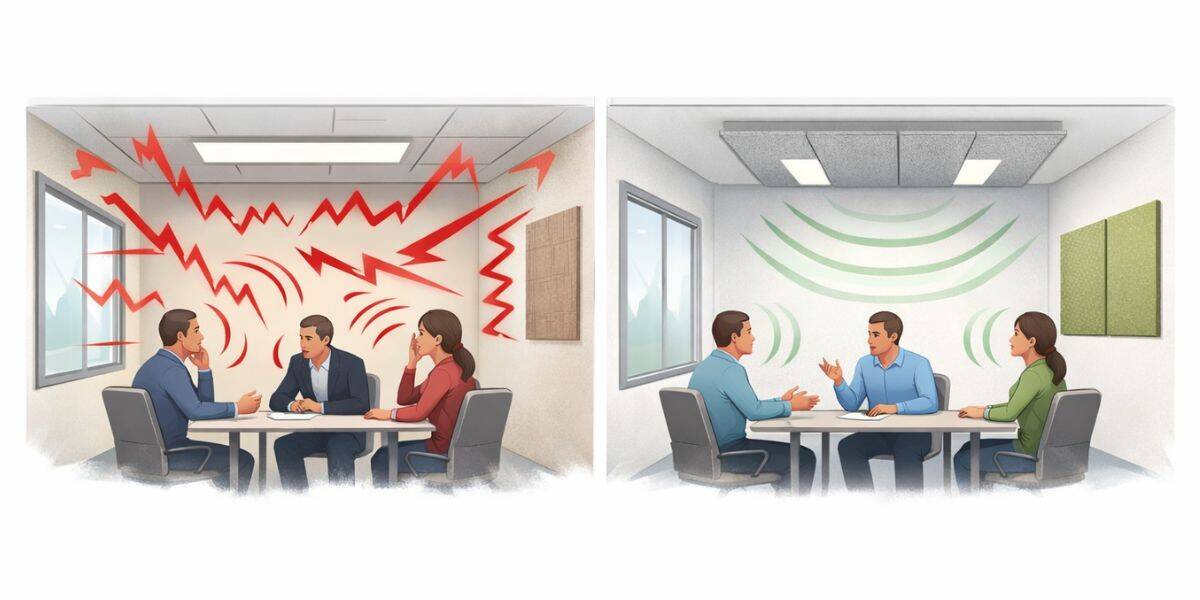
Une bonne acoustique de construction fait référence à l'efficacité avec laquelle un espace contrôle le son pour qu'il corresponde à son utilisation prévue. Cela implique plus que de réduire les niveaux de bruit. Cela nécessite de comprendre comment le son voyage, reflète et est perçu par les occupants.
Une distinction importante est entre l'absorption du son, le blocage du son et le masquage sonore. L'absorption acoustique réduit l'écho et la réverbération en capturant l'énergie sonore plutôt qu'en la réfléchissant. Les matériaux tels que les panneaux acoustiques, les systèmes de plafond et les produits à base de feutre absorbent les ondes sonores et les empêchent de rebondir dans une pièce. Le blocage du son, en revanche, vise à empêcher le son de traverser les murs, les sols ou les plafonds. Ceci est généralement réalisé par la masse, la construction hermétique et la séparation structurelle. Le masquage sonore ne réduit pas le bruit directement. Au lieu de cela, il introduit un son de fond contrôlé qui rend les bruits perturbateurs moins visibles, ce qui est courant dans les bureaux à aire ouverte.
L'acoustique est souvent traitée par erreur comme un synonyme de réduction du bruit, mais cette vue est trop étroite. Un espace peut être calme et avoir une mauvaise acoustique si la parole semble peu claire ou si la pièce semble inconfortable à utiliser. Dans les bureaux, une mauvaise acoustique réduit la concentration et augmente la charge cognitive. Dans les bâtiments résidentiels, ils affectent la vie privée et la qualité du sommeil. Dans les écoles, l'acoustique influence les résultats d'apprentissage et la compréhension de la parole. Dans les hôpitaux, ils ont un impact sur le rétablissement des patients et le rendement du personnel. Dans les espaces commerciaux, ils façonnent l'expérience client et le temps passé dans l'environnement.
Une bonne acoustique de construction équilibre les décisions d'absorption, de blocage et de mise en page pour soutenir la façon dont les gens utilisent réellement l'espace.
2. Problèmes acoustiques courants dans les bâtiments
Plusieurs problèmes acoustiques récurrents apparaissent dans les bâtiments modernes, en particulier lorsque le design privilégie l'ouverture et les finitions dures.
- Echo et réverbération excessive
Le son qui réfléchit à plusieurs reprises sur les surfaces non traitées provoque un bruit persistant, ce qui rend les espaces plus forts et plus chaotiques qu'ils ne le sont en réalité. - Problèmes d'intelligibilité de la parole
Le son réfléchi interfère avec la parole directe, réduisant la clarté des salles de réunion, des salles de classe et des bureaux ouverts et une fatigue d'écoute accrue. - Transfert de bruit entre les chambres
Le son traverse les murs, les plafonds, les sols et les systèmes de bâtiments partagés, affectant la confidentialité dans les environnements résidentiels, de bureaux et de santé. - Surutilisation des surfaces dures
Les matériaux tels que le verre, le béton, les cloisons sèches, la pierre et le métal reflètent efficacement le son et contribuent peu au contrôle acoustique lorsqu'ils sont utilisés sans compensation. - Hauts plafonds et aménagements ouverts
De grands volumes et des surfaces ininterrompues augmentent les trajectoires de réflexion, amplifiant la réverbération à moins que l'absorption ne soit ajoutée de manière stratégique.
3. Façons pratiques d'améliorer l'acoustique des bâtiments
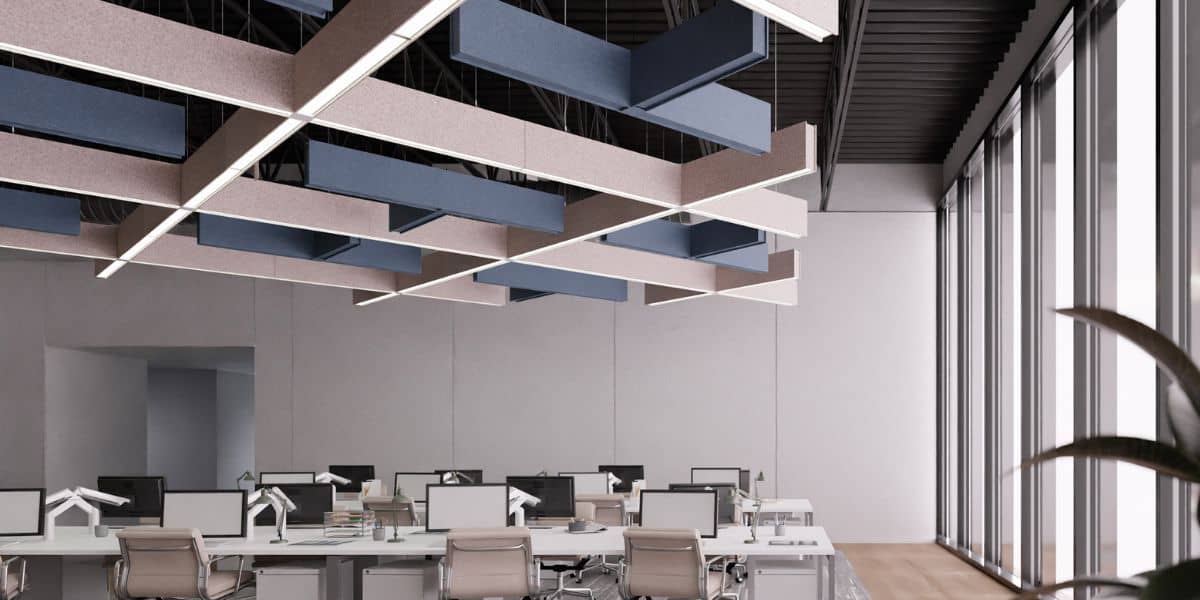
L'amélioration de l'acoustique ne nécessite pas une seule solution. Les résultats efficaces proviennent de la combinaison de matériaux, de placement et de stratégies de conception qui traitent du comportement sonore dans l'espace.
Absorption de surface sur les murs et les plafonds
L'ajout d'absorption sur les surfaces de la pièce est l'un des moyens les plus efficaces de réduire l'écho et d'améliorer la clarté. Les panneaux acoustiques muraux sont couramment utilisés, mais les plafonds sont souvent sous-utilisés malgré leur impact. Le son se déplace naturellement vers le haut et se reflète sur les surfaces du plafond, ce qui en fait un domaine critique pour le traitement.
Les surfaces d'absorption doivent être placées là où l'énergie acoustique est la plus élevée, comme les zones de sièges, les postes de travail et les positions de parole. Le but n'est pas de couvrir toutes les surfaces, mais d'interrompre les trajectoires de réflexion et de contrôler le temps de réverbération.
Pourquoi les plafonds sont-ils importants dans la conception acoustique
Les plafonds influencent l'acoustique plus que beaucoup de gens ne le pensent. Dans les espaces ouverts, les réflexions du plafond contribuent fortement aux niveaux sonores globaux. Le traitement des plafonds permet aux concepteurs de contrôler le son sans sacrifier l'espace mural qui peut être nécessaire pour le stockage, les écrans ou les vitrages.
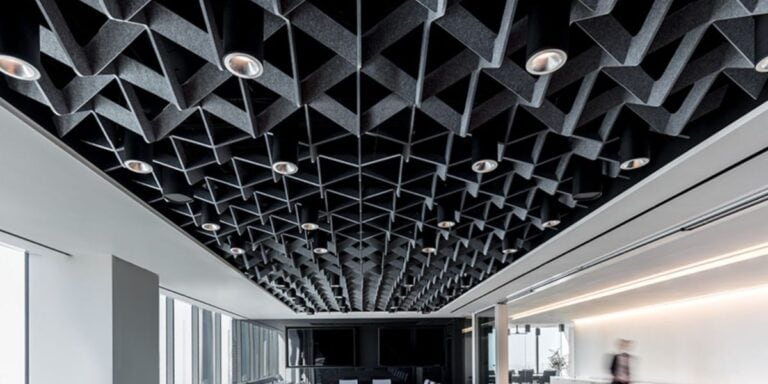
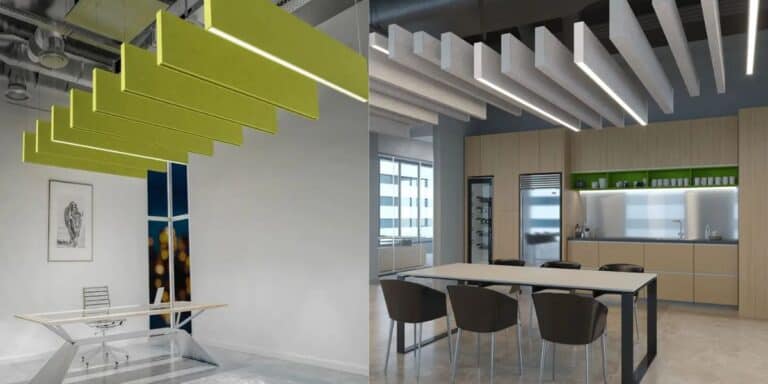
Les solutions de plafond comprennent les carreaux acoustiques, les déflecteurs et les nuages. Ces systèmes sont particulièrement utiles dans les espaces avec de hauts plafonds ou une zone de mur limitée. En plaçant l'absorption au-dessus des occupants, le son est contrôlé plus près de sa source.
Le rôle des luminaires acoustiques dans les bâtiments modernes
Les intérieurs modernes exigent souvent des éléments multifonctionnels qui servent à la fois à des fins techniques et esthétiques. C'est là que les appareils acoustiques jouent un rôle de plus en plus important. Ces éléments combinent l'absorption acoustique avec d'autres fonctions, telles que l'éclairage ou la définition spatiale.
Les luminaires acoustiques sont particulièrement précieux dans les bureaux et les espaces publics contemporains où la conception et la flexibilité propres sont des priorités. Ils permettent d'intégrer le traitement acoustique dans la conception globale plutôt qu'à ajouter après coup.
Comment l'éclairage acoustique améliore l'acoustique sans sacrifier la conception
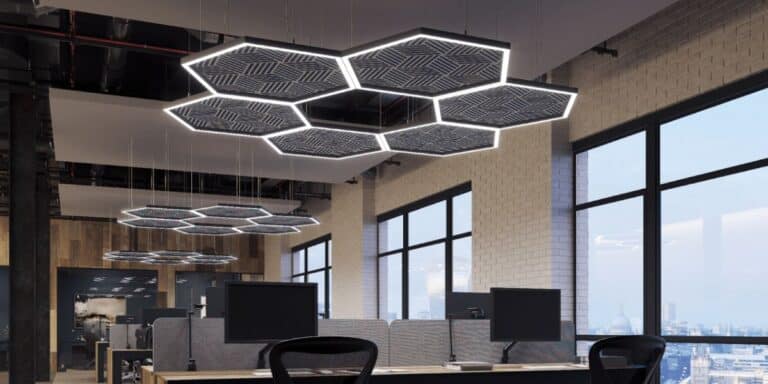
Éclairage acoustique Combine des matériaux absorbant le son avec un éclairage intégré. Cette approche aborde deux systèmes de construction essentiels à la fois : l'éclairage et le contrôle acoustique. Au lieu d'ajouter des panneaux et des luminaires séparés, les concepteurs peuvent réduire l'encombrement visuel tout en améliorant les performances.
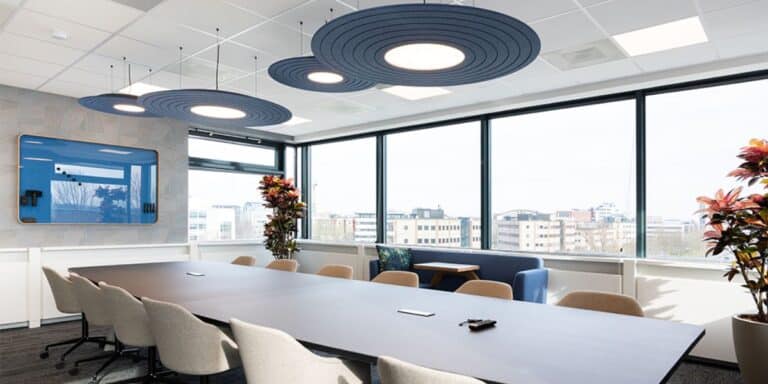
Utilisé correctement, l'éclairage acoustique permet de gérer la réverbération dans les bureaux ouverts, les salles de conférence et les espaces partagés. Les produits conçus à cet effet prennent souvent la forme de panneaux ou d'appareils suspendus qui absorbent le son tout en fournissant une lumière fonctionnelle. Lorsqu'il est spécifié de manière réfléchie, l'éclairage acoustique devient une partie du langage architectural de l'espace plutôt qu'une intervention purement technique. Des exemples de telles solutions intégrées peuvent être trouvés dans les systèmes d'éclairage acoustique modernes conçus spécifiquement pour les intérieurs commerciaux.
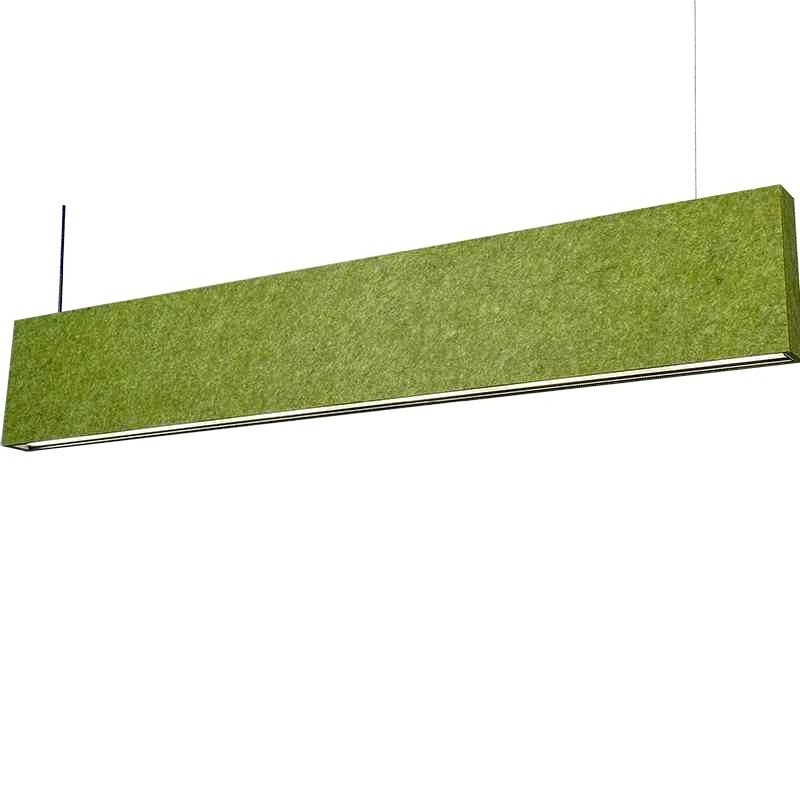
Lampe à LED acoustique fine anti-éblouissante
- Tension d'entrée: AC100-277V / AC220-240V,50-60Hz
- Taille du boîtier: W58*H200 mm/ W58*H300mm
- Direction émettrice : vers le bas
- Option de longueur : 1218mm/1220mm/1288mm
- CCT : 3000K/4000K/6000K
- Puissance : 30 W / 32 W
- Flux lumineux : 100-110lm/W
- CRI : > 90 ra
- PF : > 0,90
- Flicker sans scintillement : oui
- Angle de faisceau : 36°
- Classe IP : IP20
- Garantie : 5 ans
- Couleur de la planche acoustique en feutre : rouge / vert / bleu / gris plus de 48 couleurs
Éclairage et luminaires en feutre dans des intérieurs contemporains
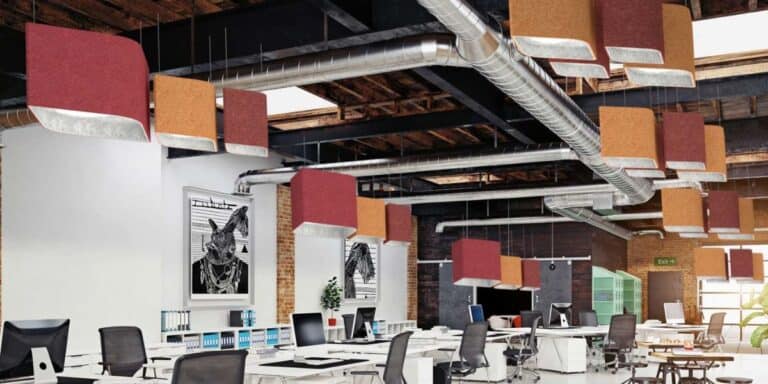
Les matériaux à base de feutre sont de plus en plus utilisés dans les applications acoustiques en raison de leurs propriétés d'absorption et de leur flexibilité de conception. Les éclairages et les luminaires en feutre adoucissent à la fois le caractère sonore et visuel, ce qui les rend adaptés aux espaces collaboratifs, aux salons et aux environnements créatifs.
Ces solutions fonctionnent bien dans les espaces où une esthétique plus chaleureuse et moins technique est souhaitée. Les appareils acoustiques à base de feutre peuvent réduire la réverbération à moyenne et haute fréquence tout en contribuant à une atmosphère plus confortable.
4. Conseils de conception qui améliorent l'acoustique
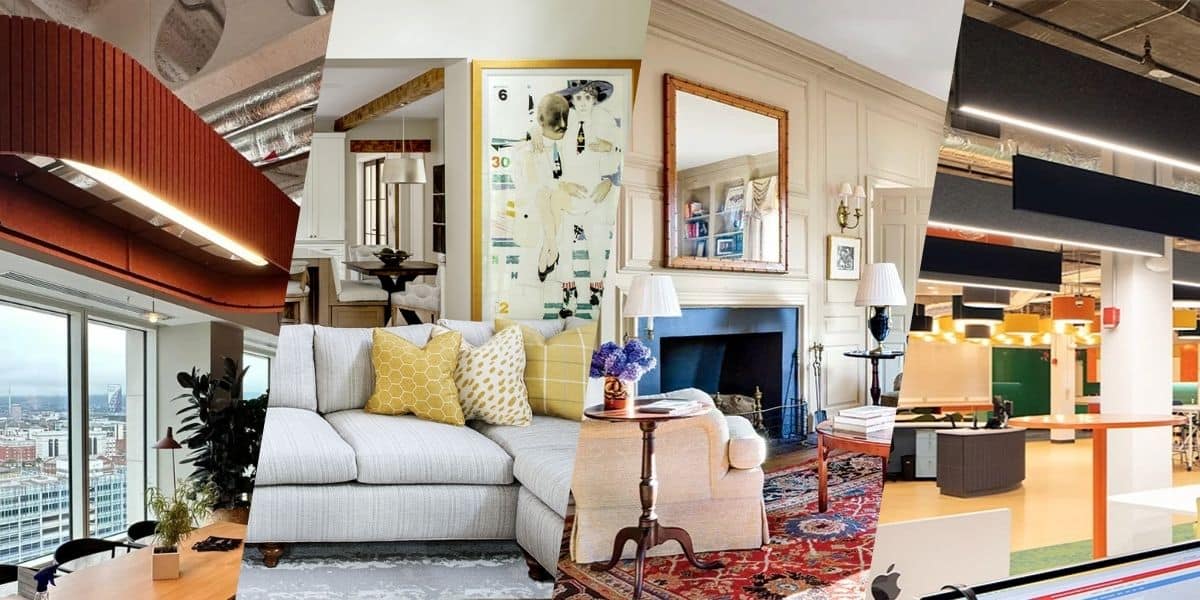
De nombreuses améliorations acoustiques peuvent être obtenues grâce à des choix de conception et de mise en page sans modifier la structure du bâtiment.
- Stratégies de zonage
Séparez les activités bruyantes des calmes en planifiant intentionnellement les mises en page, comme en éloignant les zones de réunion des zones de travail ciblées. - Placement des meubles
Les sièges rembourrés, les étagères, les cloisons et les unités de rangement aident à absorber et diffusent le son lorsqu'il est positionné le long des chemins de réflexion. - Utilisation de matériaux et de finitions souples
Les tapis, tapis, rideaux et meubles recouverts de tissu réduisent le son réfléchi, en particulier dans les espaces résidentiels et à usage mixte. - Priorisation du placement par rapport à la quantité
Un plus petit nombre d'éléments d'absorption bien placés sont souvent plus performants que les traitements excessifs installés sans logique acoustique.
5. Matériaux et solutions acoustiques
| Type de solution | Fonction principale | Meilleur cas d'utilisation | notes |
| Panneaux muraux acoustiques | absorption | Bureaux, couloirs | Réduit l'écho et améliore la clarté |
| Baffles ou nuages de plafond | absorption | Espaces ouverts | Contrôle la réverbération par le haut |
| Panneaux d'éclairage acoustique | Lumière et absorption | Bureaux, espaces de coworking | Solution à double usage |
| Luminaires en feutre | Absorption et conception | Intérieurs modernes | Équilibre visuel et acoustique |
| Systèmes de masquage sonore | contrôle de la distraction | bureaux ouverts | Prend en charge les stratégies d |
Cette comparaison met en évidence qu'aucune solution unique ne répond à tous les défis acoustiques. Chaque option joue un rôle spécifique dans une stratégie acoustique plus large.
6. Où l'éclairage acoustique s'adapte le mieux à la conception de bâtiments
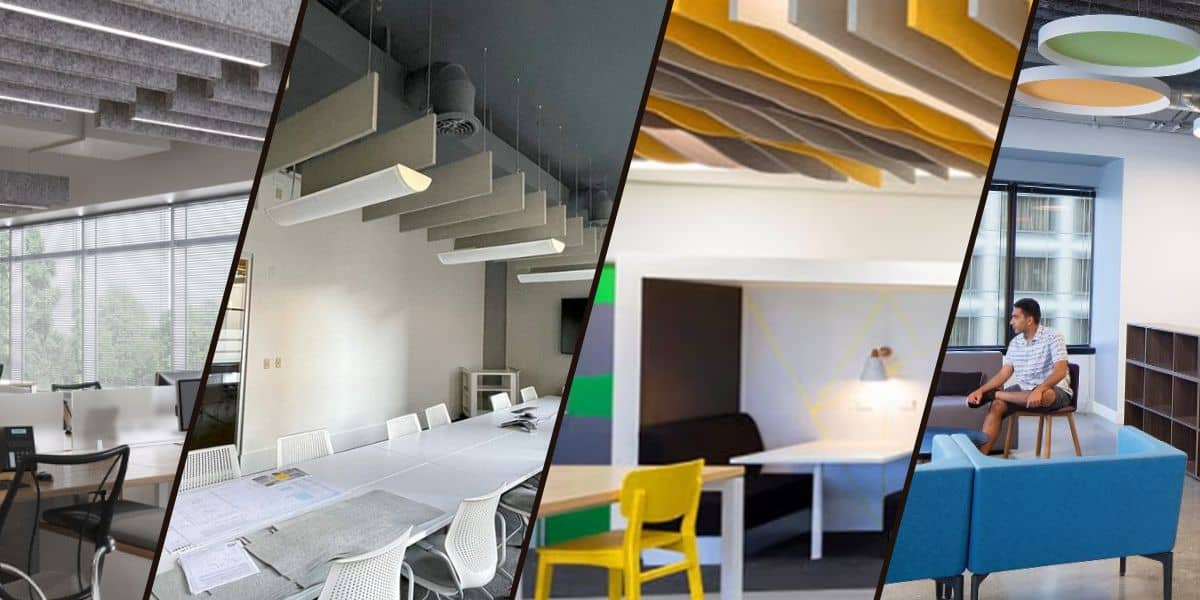
L'éclairage acoustique est le plus efficace dans les espaces où le contrôle du son et la qualité de l'éclairage sont essentiels, et où les solutions murales sont limitées.
En Bureaux et espaces de coworking, L'éclairage acoustique permet de gérer le bruit dans les environnements ouverts. Il réduit la réverbération tout en fournissant un éclairage cohérent et adapté à la tâche. Cela soutient la mise au point et réduit la fatigue sans altérer le caractère ouvert de l'espace.
Salles de conférence Bénéficiez d'un éclairage acoustique car la clarté de la parole est L'absorption au plafond près de la table réduit les réflexions qui interfèrent avec la conversation, tandis que l'éclairage intégré assure une visibilité uniforme pour les participants.
Bâtiments éducatif Les contraintes de l'espace mural sont souvent dues aux planches, aux présentoirs et au stockage. Panneaux d'éclairage acoustique Fournir une absorption sans concurrence avec les éléments de mur fonctionnels, améliorer l'intelligibilité de la parole dans les salles de classe et les espaces de conférence.
Santé et espaces publics Nécessite une acoustique qui favorise le calme et l'intimité. L'éclairage acoustique peut aider à réduire le bruit de fond dans les zones d'attente et les couloirs tout en conservant une conception de plafond propre et épurée.
Dans tous ces cas, les panneaux d'éclairage acoustique sont particulièrement utiles lorsque l'espace mural est limité ou sensible à la visibilité, ce qui rend l'intégration de plafond l'approche la plus pratique.
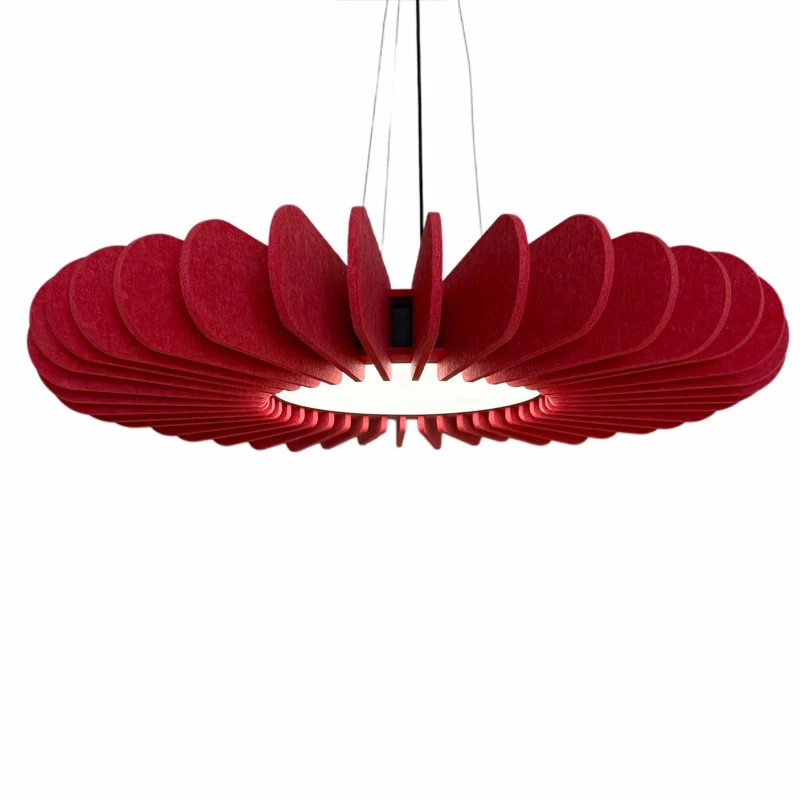
Suspension LED ultrafine et fine acoustique ronde
- Tension d'entrée: AC100-277V / AC220-240V,50-60Hz
- Taille du boîtier : 120 mm
- Direction émettrice : vers le bas
- Taille DH : 50080mm
- CCT : 3000K/4000K/6000K
- Puissance : 15 W
- Flux lumineux : 100-110lm/W
- CRI : > 90 ra
- PF : > 0,90
- Fllicker gratuit : oui
- Angle du faisceau : 120°.
- Classe IP : IP20
- Garantie : 5 ans
- Option de couleur de panneau acoustique : rouge / vert / bleu / gris plus de 48 couleurs
7 Erreurs courantes dans la conception acoustique
Même les projets bien intentionnés échouent souvent en raison des hypothèses de conception évitables.
- Ignorer les surfaces du plafond
Le traitement des murs laisse un avion de réflexion majeur intact, en particulier dans les pièces avec un sol dur. - Se fier à des éléments décoratifs sans valeur acoustique
Tous les matériaux visuellement mous n'absorbent pas efficacement le son, ce qui entraîne une amélioration minimale du monde réel. - Attendre une solution pour résoudre tous les problèmes
L'acoustique nécessite une approche systémique combinant des stratégies d'absorption, de blocage et de mise en page. - Mauvais placement des éléments acoustiques
Même les matériaux de haute qualité sont moins performants lorsqu'ils sont installés à l'écart des points de réflexion ou des sources sonores clés.
8. 2026 Tendances en matière d'acoustique des bâtiments
L'acoustique des bâtiments s'oriente vers l'intégration plutôt que vers des solutions complémentaires. Les systèmes qui combinent l'éclairage, l'absorption et même la gestion de l'air sont de plus en plus courants à mesure que les concepteurs recherchent l'efficacité et la clarté visuelle.
modulaire Appareils acoustiques gagnent en popularité car ils s'adaptent à l'évolution des mises en page, en particulier dans les environnements de travail hybrides. La flexibilité est désormais une exigence essentielle.
Il y a aussi une attention croissante au bien-être. L'acoustique est de plus en plus reconnue comme un facteur de santé mentale, de productivité et de confort général, influençant la façon dont les espaces sont conçus dès les premiers stades.
Conclusion
L'amélioration de l'acoustique des bâtiments nécessite une approche équilibrée. Des solutions efficaces combinent une absorption acoustique, un placement intelligent et une compréhension de la façon dont les espaces sont utilisés. Les murs, plafonds, meubles et aménagements contribuent tous à la performance acoustique.
Des solutions intégrées telles que l'éclairage acoustique et des appareils acoustiques bien conçus permettent au contrôle du son de coexister avec les exigences de conception modernes. Lorsqu'elles sont appliquées de manière réfléchie, ces stratégies créent des espaces confortables, fonctionnels et favorisant le bien-être sans se fier à des traitements excessifs ou intrusifs.
FAQ
Articles Similaires