Français
  English
  简体中文
简体中文  Deutsch
  Español
  Italiano
  日本語
日本語  한국어
한국어  Polski
  Português
  Русский
  Türkçe
  Nederlands
  Tiếng Việt
  ไทย
ไทย 
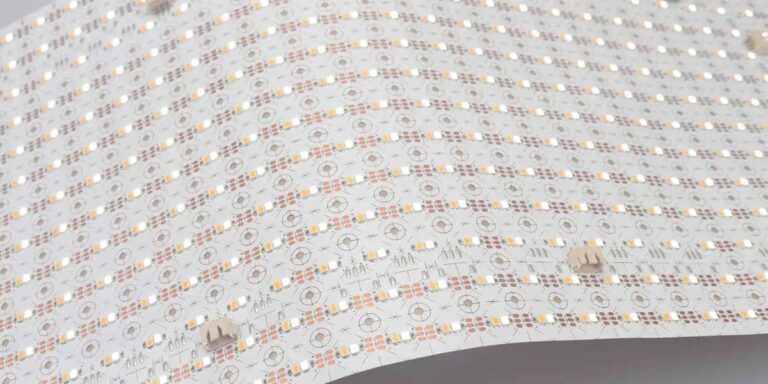
L'éclairage à LED est devenu une solution pratique pour les vitrines et les vitrines car il offre un éclairage uniforme, nécessite une profondeur minimale, s'adapte à des dispositions flexibles et permet un contrôle précis de la luminosité. Dans les environnements de vente au détail, la présentation visuelle influence directement la perception des clients, un éclairage irrégulier, des points d'accès visibles ou des luminaires encombrants peuvent nuire à l'impact du produit. Un système de nappe de lumière LED correctement conçu répond à ces problèmes en distribuant la lumière uniformément sur les surfaces tout en conservant un profil mince qui s'adapte à l'intérieur des armoires peu profondes et des assemblages de fenêtres étroits.
Cet article explique comment l'éclairage à LED améliore les performances de merchandising visuel en particulier dans les vitrines et les vitrines. Il couvre les avantages mesurables du rétroéclairage uniforme, les stratégies de planification de la mise en page dans les armoires à contrainte en profondeur, la logique de sélection des diffuseurs, le calcul de la densité de luminosité, le contrôle de l'éblouissement pour les fenêtres orientées vers la rue, la planification de l'installation et l'optimisation des performances. L'accent reste strictement mis sur les applications des armoires et des fenêtres, avec un raisonnement technique derrière chaque décision de conception.
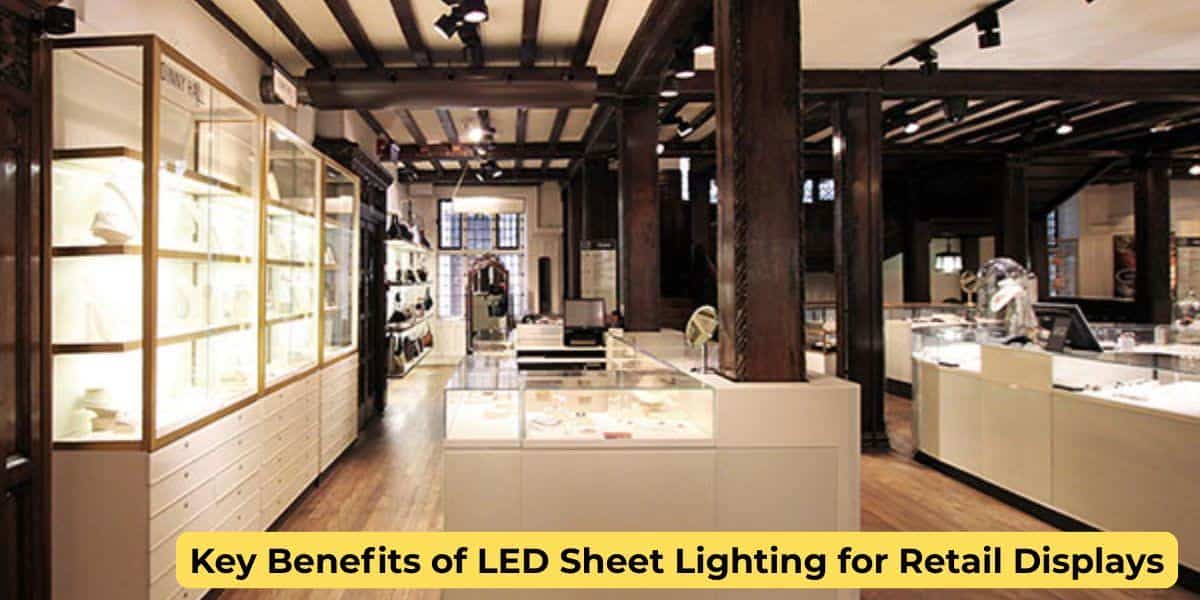
Principaux avantages de l'éclairage de la feuille de LED pour les présentoirs
- Rétroéclairage uniforme sans points chauds
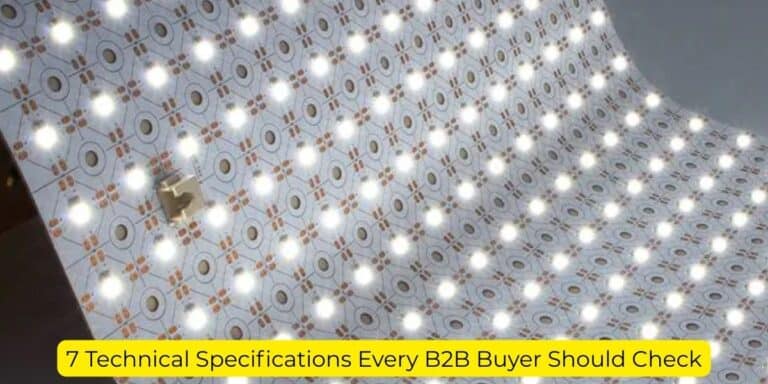
L'éclairage à LED en feuilles répartit les diodes sur une surface plane plutôt que le long d'un seul chemin linéaire. Lorsqu'elle est associée à une feuille de diffuseur de lumière LED appropriée, cette disposition produit une luminance uniforme sur les murs des armoires et les graphiques de fenêtres. Le résultat est une réduction des gradients d'ombre, l'élimination des nœuds brillants et une présentation visuelle cohérente. - Intégration ultra-fine
A Feuille de lumière LED Il n'a généralement que quelques millimètres d'épaisseur, permettant une installation à l'intérieur des vitrines peu profondes sans altérer la profondeur de structure. Cela le rend adapté aux armoires étanches où l'espace est limité après la prise en compte du verre, de la quincaillerie d'étagères et du cadrage de support. - Efficacité énergétique pour des heures de vente prolongées
Étant donné que les panneaux de feuille d'éclairage LED éclairent une surface uniformément, ils nécessitent souvent moins de sources lumineuses qui se chevauchent que les dispositions à base de bandes. Cela améliore l'efficacité de la couverture de la zone et réduit la consommation globale de puissance pendant les longues heures de vente au détail. - Visibilité améliorée des produits
Même l'éclairage de fond améliore les bords, les couleurs et les textures des produits. En réduisant l'accumulation d'ombres et les patchs de luminosité inégales, les produits apparaissent plus clairement définis dans les armoires et les vitrines. - Réduction de la chaleur
La configuration de la diode distribuée réduit la concentration de chaleur localisée. Par rapport au rétroéclairage fluorescent ou aux projecteurs à haute intensité, les systèmes de LED en feuilles génèrent une chaleur rayonnante plus faible, ce qui est bénéfique pour les armoires fermées et les marchandises sensibles à la température. - Adaptation flexible de la mise en
De nombreux systèmes de feuilles de lumière LED sont découpables, ce qui permet de personnaliser les formes d'armoires irrégulières ou les formats d'affichage de fenêtre. Cette flexibilité favorise l'intégration dans les surfaces courbes et les espaces d'installation étroits sans compromettre l'uniformité.
Applications dans les vitrines
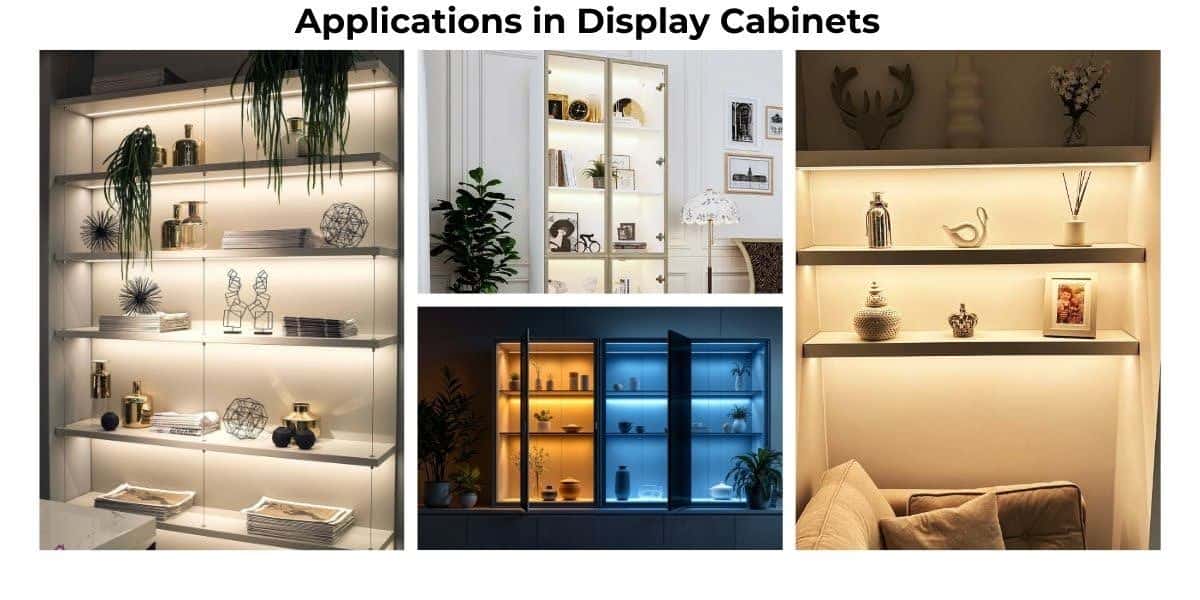
Les vitrines présentent des défis d'éclairage uniques en raison de la faible profondeur, des surfaces en verre réfléchissantes et de la variété des produits. L'éclairage à LED de feuilles répond à ces contraintes lorsqu'il est appliqué de manière stratégique.
Rétroéclairage des étagères
Le rétroéclairage des étagères consiste à placer une feuille de lumière LED derrière un panneau arrière vertical pour créer un arrière-plan illuminé. Cette technique améliore les silhouettes des produits et empêche l'accumulation d'ombres. Pour les armoires de profondeur inférieure à 80 mm, la densité de diodes doit être suffisante pour assurer une luminosité uniforme à une courte distance de diffuseur.
La feuille acrylique pour l'éclairage LED est souvent sélectionnée dans de telles configurations car elle offre une forte clarté optique et une bonne diffusion de la lumière dans les assemblages peu profonds. Les diffuseurs en acrylique conviennent lorsque la distance entre la feuille de lumière LED et la surface du diffuseur est limitée à 10 à 20 mm.
Lueur sous-étagère
Un éclairage sous la étagère améliore la superposition des produits et empêche l'ombrage des étagères supérieures. Dans ce cas, de plus petites sections de la feuille de panneau lumineux LED peuvent être montées horizontalement sous chaque étagère. Une fine feuille de diffuseur pour l'éclairage LED adoucit l'émission directe et empêche l'éblouissement lorsque les clients voient les produits au niveau des yeux.
La planification de la densité de luminosité est importante ici. Si les diodes sont trop espacées, des points individuels peuvent devenir visibles. Si trop dense, la consommation d'énergie augmente inutilement. Dans les configurations sous-étagères peu profondes, un espacement plus étroit des diodes assure une propagation uniforme de la lumière.
Éclairage mural complet de l'armoire
Certains concepts de vente au détail nécessitent que l'ensemble du mur arrière d'une armoire brille de manière uniforme. Cette approche est courante dans les cosmétiques, les bijoux et les écrans électroniques haut de gamme. Une feuille de diffuseur de lumière LED en polycarbonate peut être sélectionnée au lieu de l'acrylique dans des environnements nécessitant une résistance aux chocs plus élevée, en particulier dans les environnements de vente au détail à fort trafic.
Les diffuseurs en polycarbonate offrent une durabilité et des caractéristiques de transmission légères légèrement différentes. Lorsqu'il est associé à une feuille de réflecteur de lumière LED positionnée derrière la surface de la LED, l'efficacité de la lumière vers l'avant s'améliore, réduisant la lumière gaspillée à l'intérieur de la cavité de l'armoire.
Mise en avant des zones de produits haut de gamme
Le zonage sélectif de luminosité peut être obtenu en faisant varier la segmentation des feuilles ou en utilisant des canaux de gradation indépendants. Par exemple, une zone centrale de produits premium peut fonctionner avec une luminosité supérieure de 20 à 30 % par rapport aux zones environnantes. Cette méthode guide l'attention des clients sans utiliser de projecteurs qui créent des contrastes durs.
Contraintes de profondeur et planification de la mise en page
La profondeur influence directement la sélection des diffuseurs et la densité de diodes. Dans les armoires avec une profondeur de cavité de moins de 50 mm disponibles, l'éclairage de feuille de LED haute densité combiné à une feuille acrylique à haute diffusion pour l'éclairage LED empêche la visibilité des points. Dans les armoires plus profondes, dépassant 80 mm, les feuilles de densité inférieure peuvent encore atteindre l'uniformité car la lumière a plus d'espace à étaler.
Les feuilles de sur-espacement sur un grand mur d'armoire créent des bandes de luminosité inégales. Au lieu de cela, des panneaux de feuille d'éclairage LED continus doivent être installés avec des écarts minimes pour maintenir la cohérence de la luminance.
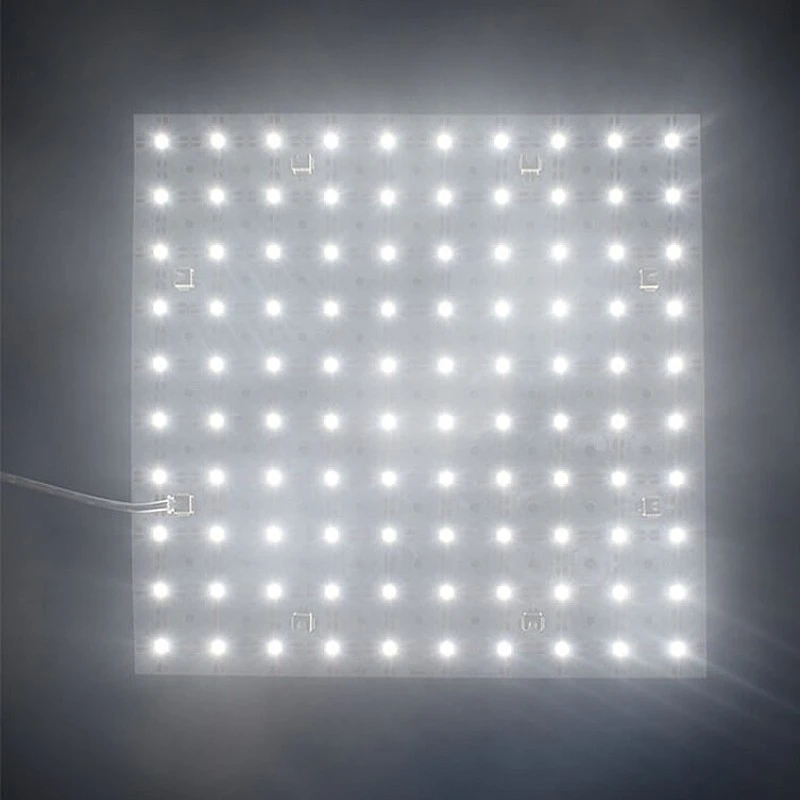
Feuilles de LED monochromes
- Taille (L x l ): 250mmx250mm/490mmx245mm
- Type de LED : 2835 SMD
- Quantité LED : 100 pièces/242pcs
- Tension de fonctionnement : DC24V
- Puissance : 12W/ 28W
- CCT : 2700K/ 3000K/4000K/6000K/6500K
- Flux lumineux : 1200lm/ 2800lm
- IRC : >80Ra
- Longueur de coupe minimale : 25mmx25mm/22.3mmx22.3mm
- Dimmable : oui
- Angle de faisceau : 120°
- Niveau imperméable : IP20 non étanche, IP54 étanche
- Garantie: 3 ans
Applications dans les vitrines
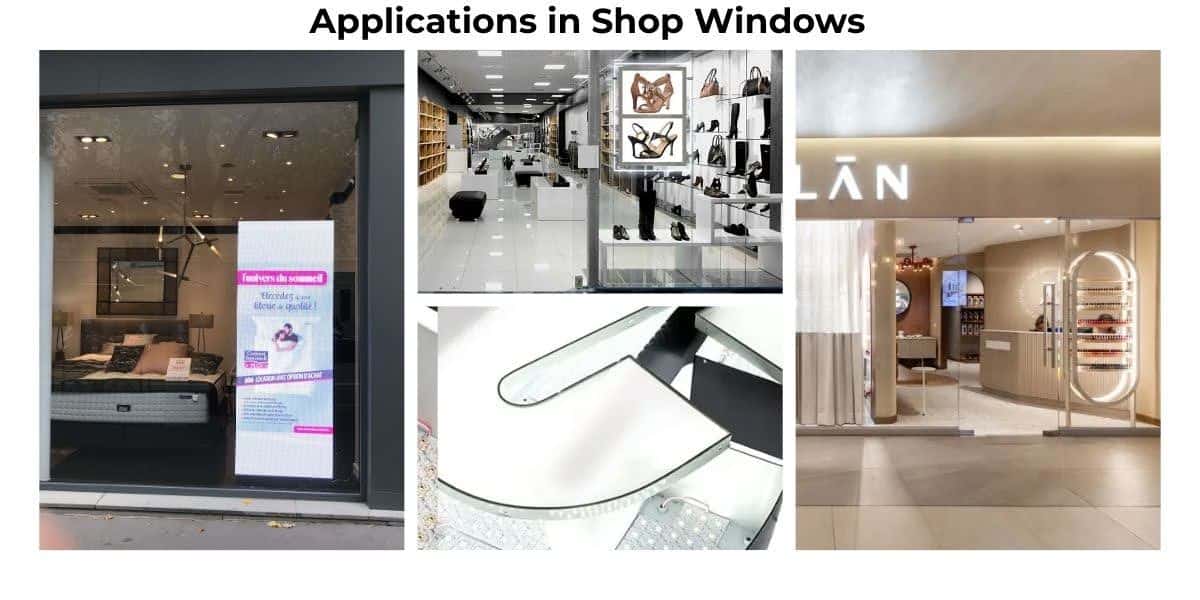
Les vitrines diffèrent des vitrines car elles sont en concurrence avec la lumière du jour et les reflets de rue. L'intensité de l'éclairage et la gestion des reflets deviennent critiques.
Éclairage d'affichage de fenêtre grand format
Les grandes fenêtres graphiques utilisent généralement une feuille lumineuse LED installée derrière un panneau translucide imprimé pour créer une surface d'affichage uniformément éclairée. Étant donné que les diodes sont réparties sur la zone du panneau, la sortie lumineuse reste cohérente sur l'ensemble du graphique, réduisant les patchs et la variation de luminosité inégales.
Dans les installations orientées vers la rue, un éclairage LED à plus de luminosité est souvent nécessaire pour rivaliser avec la lumière du jour. Les vitrines exposées au soleil doivent être conçues avec une luminosité suffisante pour éviter que le graphique n'apparaisse ou ne soit délavé.
La planification de la luminosité doit être basée sur les niveaux de lumière ambiante attendus. Si la vitrine reçoit une forte lumière naturelle, la luminance de l'écran doit dépasser la luminosité ambiante environnante pour maintenir la clarté visuelle et la définition des couleurs. Une sélection appropriée de la densité de lumière, combinée à une feuille de réflecteur de lumière LED positionnée derrière la couche d'éclairage, peut améliorer l'efficacité de la lumière vers l'avant sans augmenter inutilement la consommation d'énergie totale.
Éclairage du logo de la marque
Les logos intégrés dans les écrans de fenêtre peuvent être éclairés à l'aide de petits segments de la feuille de panneau lumineux LED placés derrière des formulaires acryliques découpés. Une feuille de diffuseur pour l'éclairage LED garantit une brillance uniforme du logo sans motifs de diodes visibles.
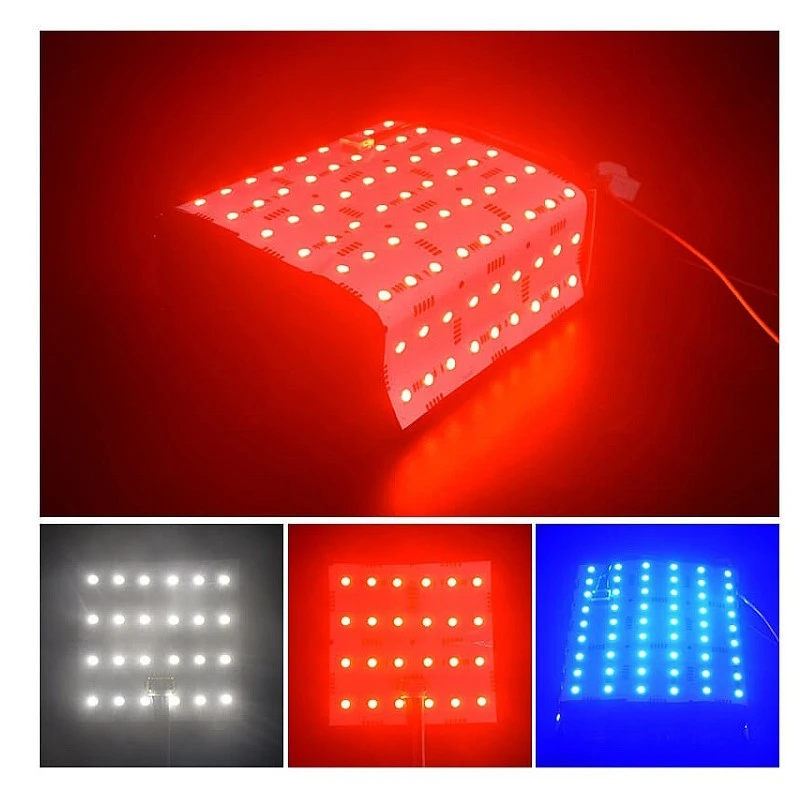
Feuilles LED RGBW
- Taille (L x L ) : 250mmx250mm/490mmx250mm
- Type de LED : 5050 RGBW 4 en 1 SMD
- Quantité LED : 150 pièces/288 pièces
- Tension de fonctionnement : DC 24V
- Puissance : 24W/ 48W
- Émettant de la couleur : RGB+3000K, RGB+4000K, RGB+6500K
- Efficacité légère : 90lm/w
- Longueur de coupe minimale : 50mmx50mm/20.4mmx122.5mm
- Angle de faisceau : 120°
- Dimmable : oui
- Niveau imperméable : IP20 non étanche, IP54 étanche
- Garantie: 3 ans
Panneaux promotionnels saisonniers
Les fenêtres de vente au détail changent fréquemment de contenu promotionnel. Les panneaux d'éclairage LED modulaires permettent un remplacement graphique rapide tout en conservant une géométrie d'éclairage cohérente. Les connexions électriques doivent rester fixes pendant que les couches graphiques sont échangées.
Stratégies de compétition de jour
La lumière du soleil introduit l'éblouissement et la réflexion. Le positionnement d'une feuille de réflecteur de lumière LED derrière la surface LED augmente la sortie vers l'avant et réduit la perte de lumière vers l'arrière. Cela augmente la luminance efficace sans augmenter la consommation d'énergie de manière excessive.
Gestion de la réflexion et des éblouissements
Les reflets du verre peuvent déformer la luminosité perçue. L'épaisseur du diffuseur et la finition de surface doivent être choisies avec soin. Les feuilles de diffuseur de lumière LED en polycarbonate à finition mate peuvent réduire la réflexion de l'éblouissement par rapport aux surfaces très brillantes.
Lorsque les clients s'approchent sous différents angles, la luminance uniforme réduit la fatigue oculaire et améliore la clarté graphique.
Stratégie de diffusion et de couche optique
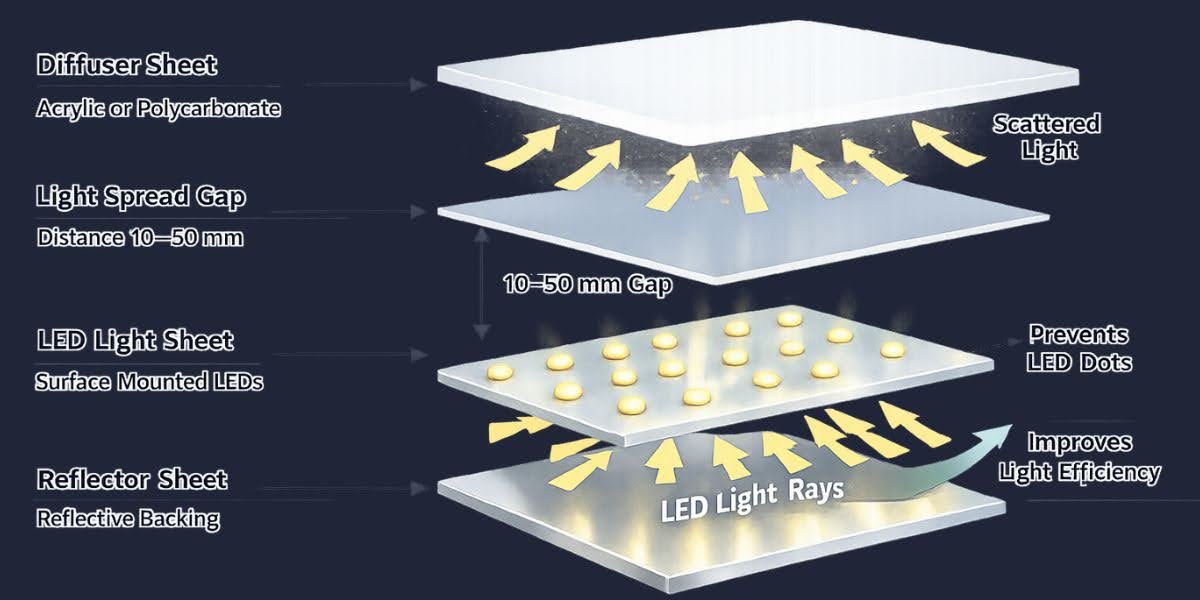
La feuille de diffuseur de lumière LED joue un rôle central dans l'obtention d'un éclairage uniforme. Sans diffusion appropriée, les points de diode individuels deviennent visibles, surtout à courte distance.
Rôle des diffuseurs
Les diffuseurs dispersent la lumière pour créer une surface lumineuse continue. La quantité de diffusion dépend de la composition et de l'épaisseur des matériaux. Une feuille de diffuseur pour l'éclairage LED doit équilibrer l'efficacité et l'opacité de la transmission.
Acrylique vs polycarbonate
Une feuille acrylique pour l'éclairage LED offre généralement une transmission de la lumière plus élevée et une bonne clarté optique. Il fonctionne bien dans les armoires d'intérieur contrôlées où la résistance aux chocs n'est pas une préoccupation majeure.
Une feuille de diffuseur de lumière LED en polycarbonate offre une plus grande résistance mécanique et une résistance à la température plus élevée. Il est souvent choisi pour les vitrines où la durabilité et l'exposition du public sont des facteurs.
Distance de propagation
L'écart entre la feuille de lumière LED et le diffuseur affecte l'uniformité. Un espace plus petit nécessite une densité de diodes plus élevée pour éviter les points chauds. Les espaces plus grands permettent à la lumière de se propager naturellement mais nécessitent un espace de rangement plus profond.
Empêcher la visibilité des points LED
La visibilité des points se produit lorsque l'espacement des diodes dépasse la capacité de diffusion. L'augmentation de l'épaisseur du diffuseur ou la réduction de l'espacement entre les LED résout ce problème. L'uniformité doit être testée visuellement à des distances de visualisation typiques.
Rôle des feuilles de réflecteurs
Une feuille de réflecteur de lumière LED installée derrière la surface de la LED améliore l'efficacité vers l'avant en réfléchissant la lumière émise vers l'arrière. Cela augmente la luminosité perçue sans augmenter la puissance. Les matériaux réflecteurs doivent avoir une réflectance élevée et une absorption minimale.
Stratégie d'installation pour les armoires et les fenêtres
- Assurez-vous que les surfaces de montage sont propres, plates et exemptes de poussière pour éviter une adhérence inégale et une distorsion légère.
- Maintenez un espacement approprié entre la feuille de lumière LED et le Feuille de diffuseur de lumière LED Basé sur la densité de diodes et la profondeur de l'armoire.
- Positionner les alimentations hors des cavités de l'armoire fermée lorsque cela est possible pour réduire l'accumulation de chaleur interne.
- Acheminez les câbles le long des bords cachés des armoires pour éviter les lignes d'ombre ou le câblage visible à travers les panneaux de verre.
- Fournir une ventilation minimale mais efficace dans les armoires fermées pour éviter l'accumulation de chaleur, en particulier dans les applications de fenêtres à haute luminosité.
- Confirmez la compatibilité avec le type de pilote spécifique pour éviter les transitions de luminosité scintillantes ou irrégulières.
Optimisation de la conception pour le merchandising visuel
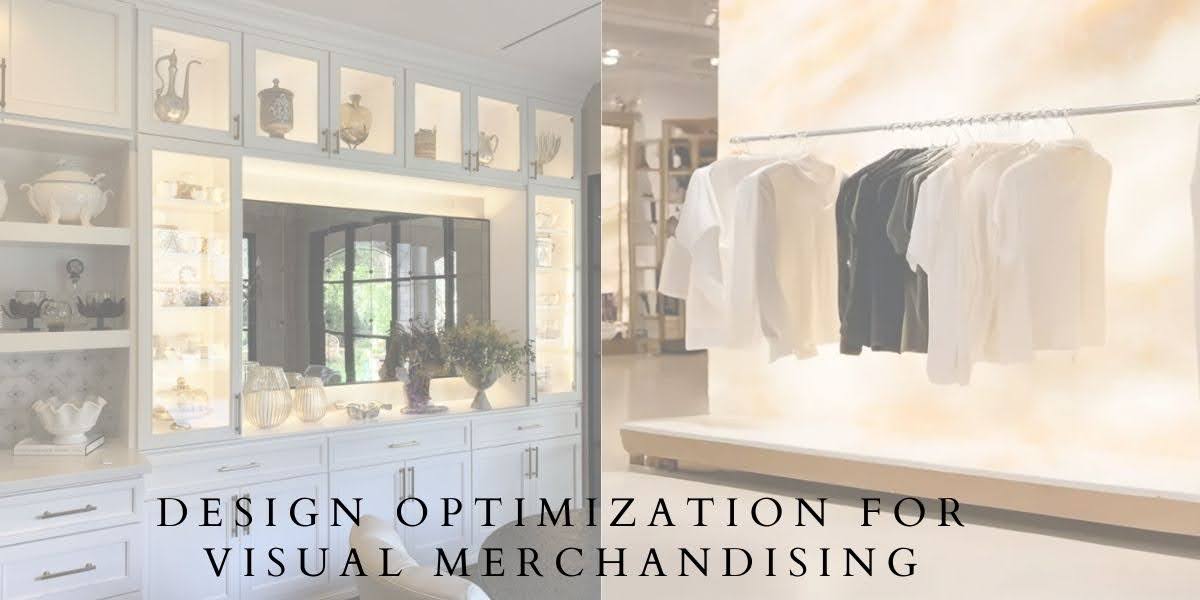
- Utilisez l'éclairage en couches en combinant l'arrière-plan Éclairage de feuille LED Avec un éclairage d'accentuation ciblé pour créer une hiérarchie visuelle.
- Intégrez une feuille de panneau lumineux LED derrière les graphiques de marque tout en ajoutant des accents de bord subtils pour encadrer la zone d'affichage.
- Contrôlez les rapports de contraste afin que les produits mis en évidence semblent plus brillants que les éléments environnants sans provoquer d'éblouissement.
- Appliquez la variation dynamique dans les vitrines pour adapter la luminosité des conditions de jour à la soirée.
- Faites correspondre les niveaux de luminance au type de produit, en utilisant un éclairage plus doux pour les articles réfléchissants et une luminosité plus élevée pour les marchandises opaques.
Tableau de comparaison des performances
| Facteur | Éclairage de feuille LED | Bandes LED traditionnelles | Rétroéclairage fluorescent |
| épaisseur | Très fin, généralement quelques mm | Modéré, nécessite un canal | Profondeur de montage encombrante |
| Uniformité | Haut avec diffuseur | Risque souvent irrégulier, point d'accès | Modéré, ombrage des tubes |
| Efficacité énergétique | Haute efficacité de la zone | Modéré | Plus bas par rapport à la LED |
| Puissance calorifique | Faible chaleur distribuée | Points de chaleur localisés | Génération de chaleur plus élevée |
| qualité visuelle | Surface lumineuse lisse | Lignes de bande visibles possibles | scintillement et vieillissement irrégulier |
| Flexibilité d'intégration | Découpable, forme adaptable | Seulement linéaire | Longueur de tube fixe |
Erreurs courantes dans les installations de feuilles de détail
Une erreur fréquente est la planification de la densité de lumière insuffisante. L'installation d'un système d'éclairage à feuille à LED à faible densité dans une armoire peu profonde entraîne souvent des modèles de diodes visibles. La luminosité doit s'aligner sur l'espacement et la distance de visualisation du diffuseur.
Une mauvaise sélection du diffuseur affecte également les performances. L'utilisation d'un diffuseur mince dans une armoire à courte profondeur peut ne pas diffuser de manière adéquate la lumière, tandis que les matériaux trop opaques peuvent réduire la luminosité excessivement.
Ignorer les conditions de lumière du jour dans les vitrines des magasins entraîne des écrans sous-alimentés. Les installations orientées vers la rue nécessitent des calculs de luminosité en fonction des niveaux de lux ambiants.
Le sur-espacement des feuilles sur de grands panneaux crée des gradients de luminosité. Une couverture continue assure une luminance uniforme.
Enfin, la négligence de l'intégration de la gradation empêche le contrôle adaptatif de la luminosité. Les environnements de vente au détail bénéficient de l'ajustement de la luminance en fonction de l'heure de la journée et des changements saisonniers.
Conclusion
L'éclairage à LED améliore considérablement la qualité de présentation dans les vitrines et les vitrines en assurant un éclairage uniforme, en minimisant la profondeur de structure et en permettant une intégration flexible de la mise en page. Sa configuration de diodes distribuées prend en charge un rétroéclairage fluide sans points chauds, tandis que la luminosité contrôlée et l'intégration du réflecteur améliorent l'efficacité.
Une mise en œuvre réussie dépend de la sélection du matériau de diffuseur approprié, du calcul de la densité de luminosité en fonction de la profondeur de l'armoire et de l'exposition à la lumière du jour, et de l'application d'une logique d'installation appropriée. Lorsque ces facteurs techniques sont abordés avec soin, l'éclairage de la feuille LED améliore la clarté visuelle, l'orientation du produit et l'efficacité énergétique dans les environnements de vente au détail.
FAQ
Articles Similaires