Français
  English
  简体中文
简体中文  Deutsch
  Español
  Italiano
  日本語
日本語  한국어
한국어  Polski
  Português
  Русский
  Türkçe
  Nederlands
  Tiếng Việt
  ไทย
ไทย 
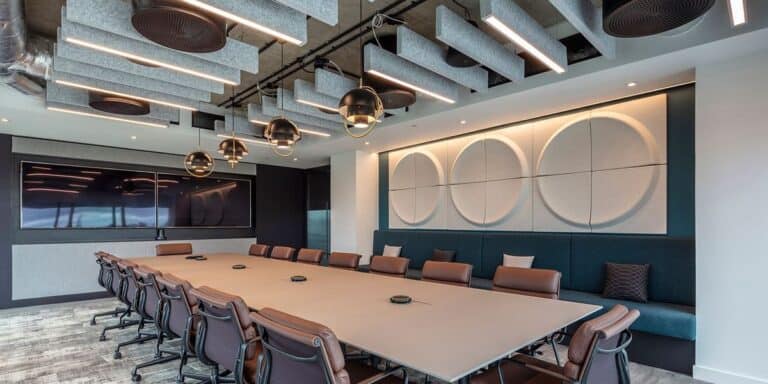
La sélection de l'éclairage acoustique se résume à l'équilibre entre le contrôle du son, la qualité de l'éclairage, les performances des matériaux et la façon dont le système s'intègre dans un véritable espace commercial. L'éclairage acoustique allie l'éclairage à l'absorption acoustique, afin que le bon choix puisse réduire l'écho, améliorer la clarté de la parole et favoriser le confort visuel dans les bureaux, les intérieurs publics et les environnements partagés. Pour les architectes, les concepteurs et les gestionnaires d'installations, la décision a une incidence directe sur la convivialité, la conformité et les coûts d'exploitation à long terme.
Cet article explique les principaux facteurs techniques, acoustiques et de conception à prendre en compte lors de la sélection d'un éclairage acoustique pour les environnements commerciaux.
Comment fonctionne l'éclairage acoustique dans un système de bâtiment
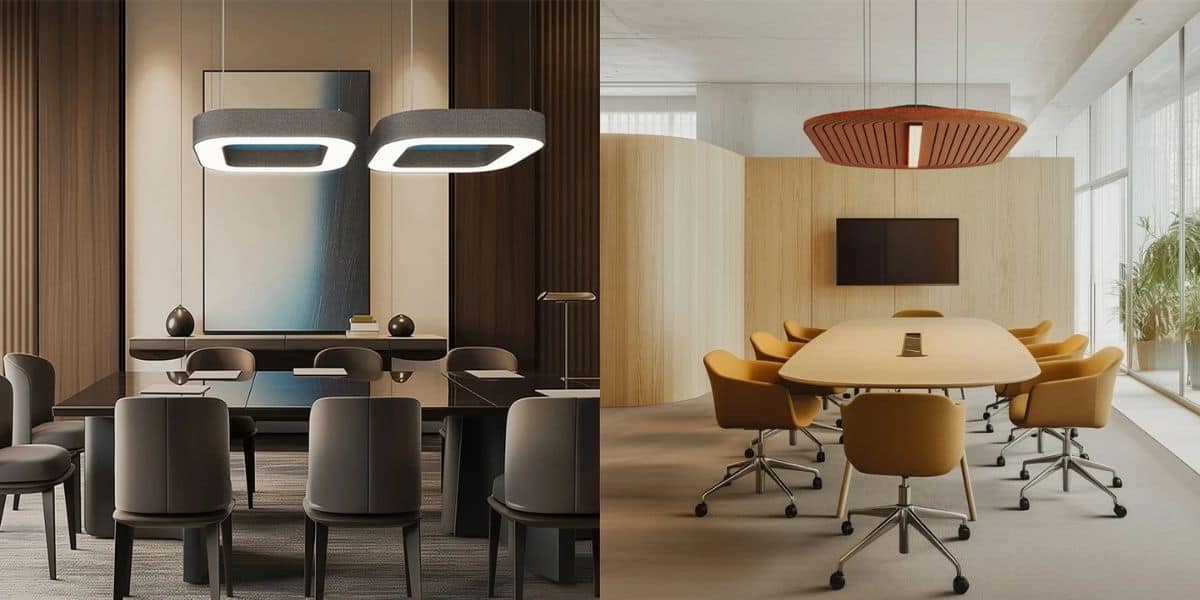
Éclairage acoustique Ne doit pas être compris comme un simple luminaire recouvert de feutre. Dans les environnements commerciaux, il fonctionne dans le cadre de la stratégie globale acoustique et d'éclairage du bâtiment.
Dans la plupart des intérieurs modernes, les plafonds représentent la plus grande surface réfléchissante ininterrompue. Lorsque la parole et le son ambiant augmentent, ils se reflètent dans les plafonds et se répandent dans la pièce. Les luminaires traditionnels installés sur des plafonds durs contribuent peu au contrôle du son et peuvent même augmenter les modèles de réflexion.
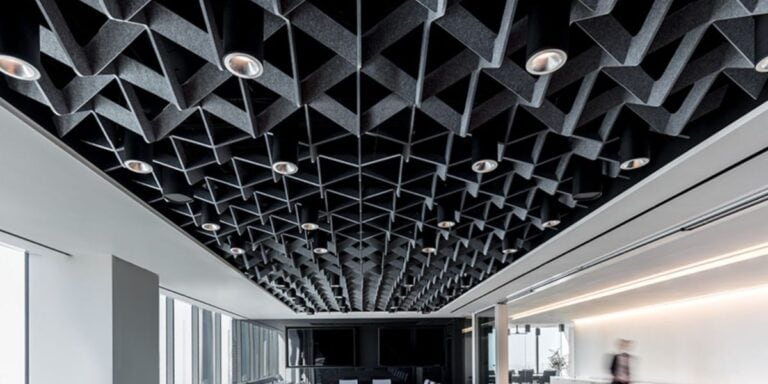
L'éclairage acoustique change cette dynamique en introduisant une masse d'absorption directement dans le plan du plafond. Au lieu de laisser l'énergie sonore se refléter librement, le corps acoustique intégré capture et dissipe les ondes sonores à moyenne et haute fréquence. Cela réduit le temps de réverbération et limite la diffusion de la parole dans les zones ouvertes.
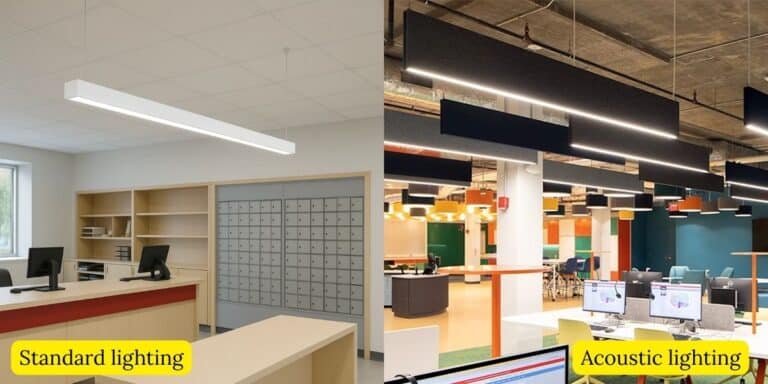
Contrairement aux panneaux acoustiques et aux luminaires séparés, l'éclairage acoustique regroupe deux systèmes en un seul élément architectural. Le composant d'éclairage fournit un éclairage en fonction des niveaux de lux requis et des normes de confort visuel, tandis que la structure acoustique modifie la façon dont le son se comporte dans la même zone.
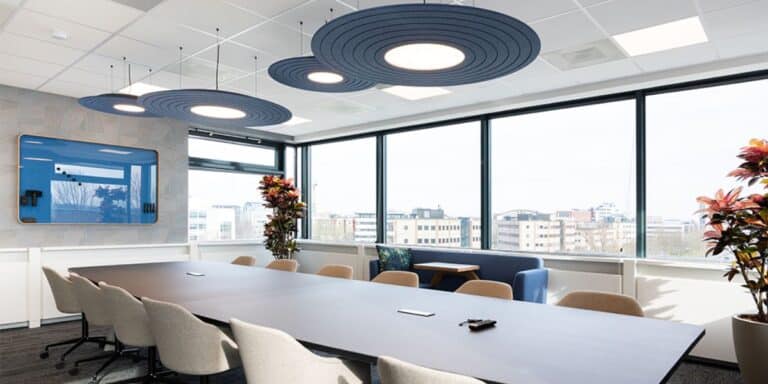
Cette approche à double fonction compte le plus dans les environnements où l'espace au plafond est limité ou sensible à la visibilité. Dans les bureaux ouverts, les zones de collaboration et les salles de conférence, l'éclairage acoustique permet aux concepteurs de contrôler la réverbération sans couvrir tout le plafond de panneaux.
Du point de vue des performances du bâtiment, l'éclairage acoustique doit être évalué en fonction de :
- Comment cela modifie les chemins de réflexion dans la pièce
- Est-ce que cela contribue de manière significative au contrôle de la réverbération
- Comment une couverture acoustique uniforme est répartie sur le plafond
- Que le composant d'éclairage maintienne les normes de confort visuel
Lorsqu'il est spécifié correctement, l'éclairage acoustique devient une partie structurelle de la performance spatiale plutôt qu'un ajout décoratif.
Facteurs clés à prendre en compte lors de la sélection de l'éclairage acoustique
Performance acoustique

La performance acoustique est la principale raison pour laquelle ces systèmes existent, mais c'est souvent le moins compris.
Le coefficient de réduction du bruit (NRC) est la mesure la plus courante utilisée pour décrire la quantité de sons absorbée par un matériau. En termes simples, le CNRC indique la quantité d'énergie sonore absorbée plutôt que réfléchie dans un espace. Pour les intérieurs commerciaux, les valeurs du NRC de moyenne à haute hauteur sont particulièrement importantes car la parole humaine, les appels téléphoniques et le bruit de collaboration se situent généralement dans la plage de fréquence moyenne.
L'absorption à mi-fréquence compte plus que de nombreux acheteurs ne le pensent. Un agencement qui ne fonctionne bien qu'à des fréquences élevées peut ne pas améliorer de manière significative la clarté de la parole dans les bureaux ou les salles de réunion. L'examen des données de performances spécifiques à la fréquence, et pas seulement un seul numéro NRC, permet d'éviter ce problème.
Le placement affecte également les performances. L'éclairage acoustique fonctionne mieux lorsqu'il est placé là où s'accumule l'énergie sonore, comme les postes de travail au-dessus, les zones de collaboration ou les tables de conférence. Même performant Appareils acoustiques Peut sous-distribuer s'ils sont mal distribués ou traités comme des éléments de plafond purement décoratifs.
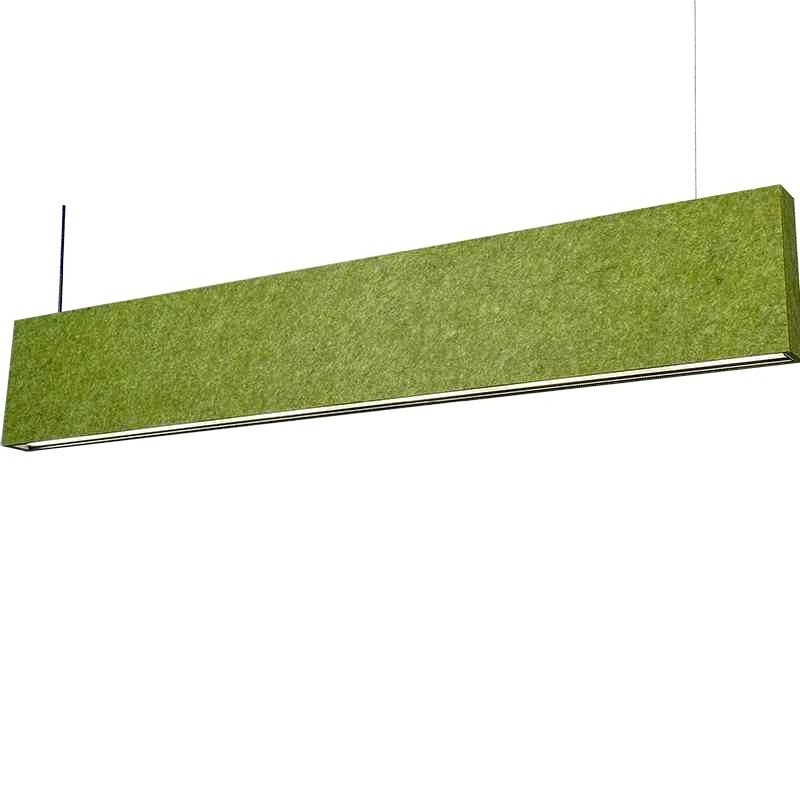
Lampe à LED acoustique fine anti-éblouissante
- Tension d'entrée: AC100-277V / AC220-240V,50-60Hz
- Taille du boîtier: W58*H200 mm/ W58*H300mm
- Direction émettrice : vers le bas
- Option de longueur : 1218mm/1220mm/1288mm
- CCT : 3000K/4000K/6000K
- Puissance : 30 W / 32 W
- Flux lumineux : 100-110lm/W
- CRI : > 90 ra
- PF : > 0,90
- Flicker sans scintillement : oui
- Angle de faisceau : 36°
- Classe IP : IP20
- Garantie : 5 ans
- Couleur de la planche acoustique en feutre : rouge / vert / bleu / gris plus de 48 couleurs
qualité des matériaux
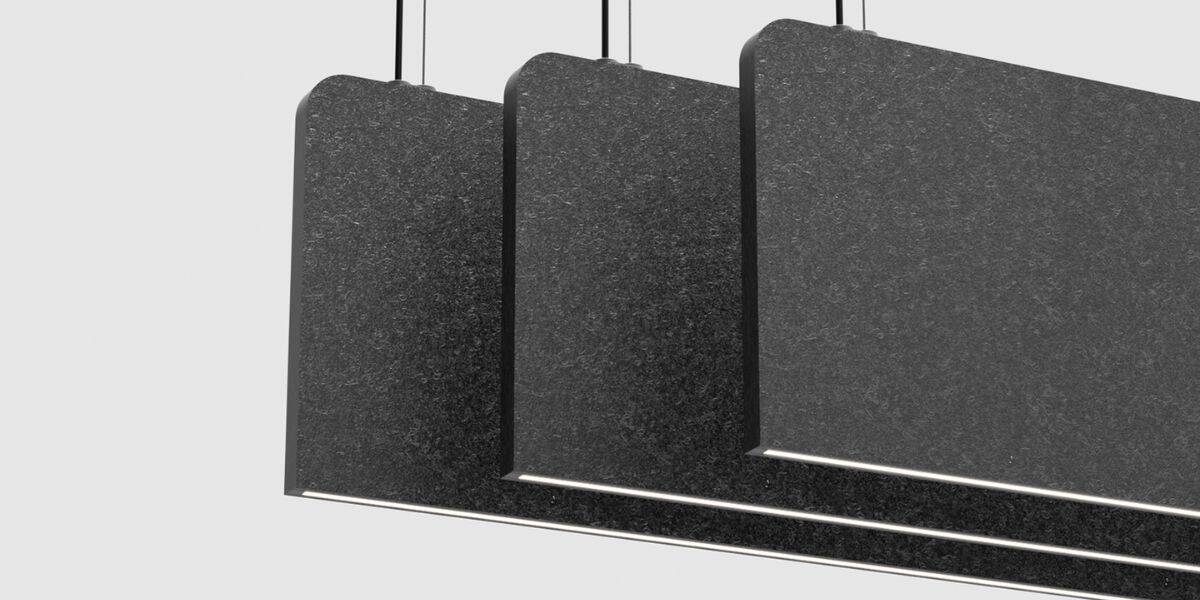
La sélection des matériaux détermine en grande partie si l'éclairage acoustique fonctionne de manière cohérente au fil du temps.
Le feutre PET est le matériau le plus courant dans l'éclairage acoustique de qualité commerciale, car il offre un comportement acoustique prévisible, une stabilité dimensionnelle et des performances au feu. Les matériaux en feutre ou en relief faiblement homogènes peuvent sembler similaires au départ, mais ont tendance à s'affaisser, à se décolorer ou à perdre leur efficacité à mesure qu'ils vieillissent.
La densité, l'épaisseur et la couche influencent directement l'absorption. Les panneaux plus épais et plus denses fonctionnent généralement mieux aux fréquences inférieures et moyennes. Les constructions en couches peuvent améliorer les performances sans augmenter considérablement le volume visuel.
La cote de tir n'est pas négociable dans les projets commerciaux. L'éclairage acoustique doit répondre aux normes de sécurité incendie pertinentes pour les produits montés au plafond, en particulier dans les bureaux, l'hôtellerie et les intérieurs publics.
La durabilité et le vieillissement sont souvent négligés. Les matériaux de haute qualité résistent à l'accumulation de poussière, maintiennent la stabilité des couleurs et conservent leurs propriétés acoustiques au fil des ans, ce qui réduit les cycles de remplacement.
Performances d'
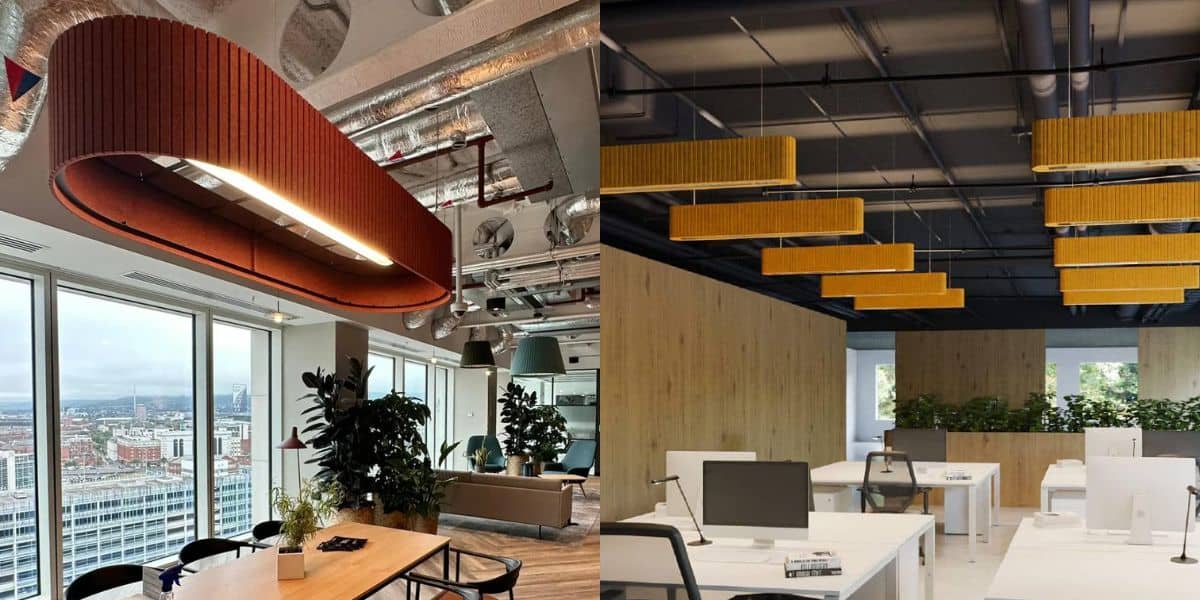
Les avantages acoustiques ne doivent jamais compromettre la qualité de l'éclairage.
La distribution de la lumière doit convenir à la tâche. Les bureaux et les salles de réunion nécessitent un éclairage contrôlé, voire sans points d'accès difficiles. Une conception optique médiocre peut entraîner une luminosité irrégulière qui sape la convivialité.
Le contrôle de l'éblouissement est essentiel, en particulier dans les environnements à forte intensité de crible. L'éclairage acoustique se trouve souvent directement au-dessus des occupants, de sorte que les diffuseurs, les blindages et les angles optiques sont plus importants que dans les pendentifs décoratifs standard.
La stabilité de la température de couleur affecte le confort visuel et la cohérence dans un espace. Les luminaires avec CCT instable peuvent créer des zones d'éclairage incompatibles au fil du temps.
La qualité et la durée de vie du conducteur influencent les cycles de maintenance et le coût total de possession. Les projets commerciaux bénéficient de moteurs fiables avec des performances prévisibles plutôt que des gains d'efficacité à court terme.

Lumière linéaire LED acoustique de 58 mm de largeur
- Tension d'entrée: AC110-120V / AC220-240V,50-60Hz
- Largeur : 58 mm
- Taille: 1288*58*400mm/1288*80*400mm
- Puce LED : SMD2835
- UGR : <19
- PF : > 0,90
- CRI : > 90 ra
- Flux lumineux : 100lm/W
- CCT : 3000K/4000K/6000K
- Puissance : 30W
- Classe IP : IP20
- Garantie : 5 ans
- Option de couleur de panneau acoustique : rouge / vert / bleu / gris plus de 48 couleurs
Conception et intégration
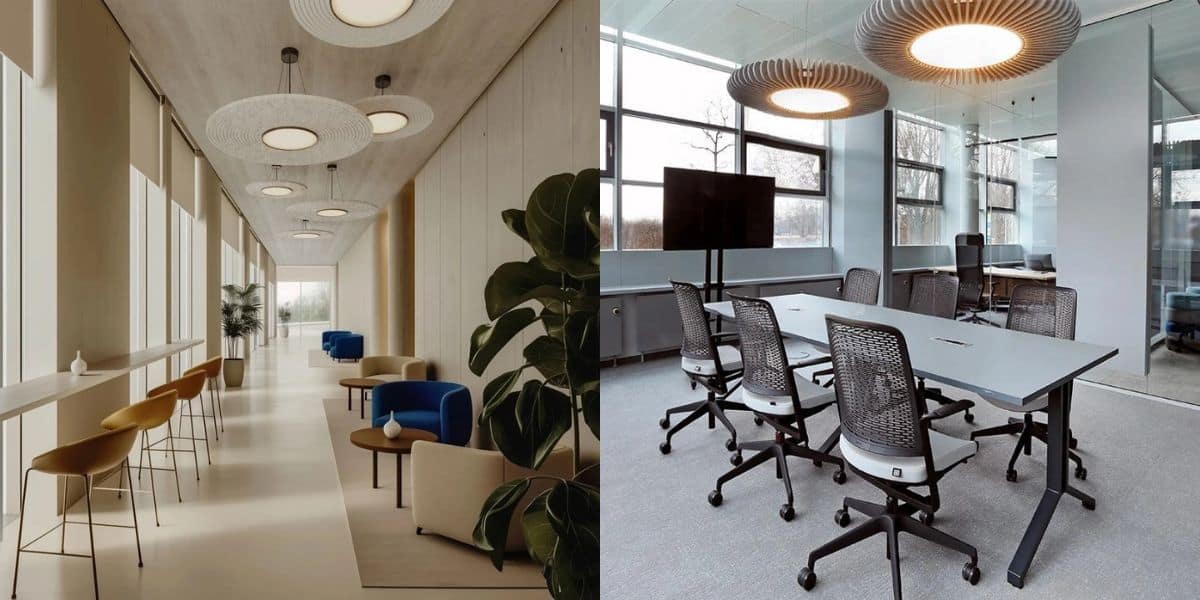
L'éclairage acoustique doit s'intégrer à la fois dans le plan du plafond et dans le concept intérieur global.
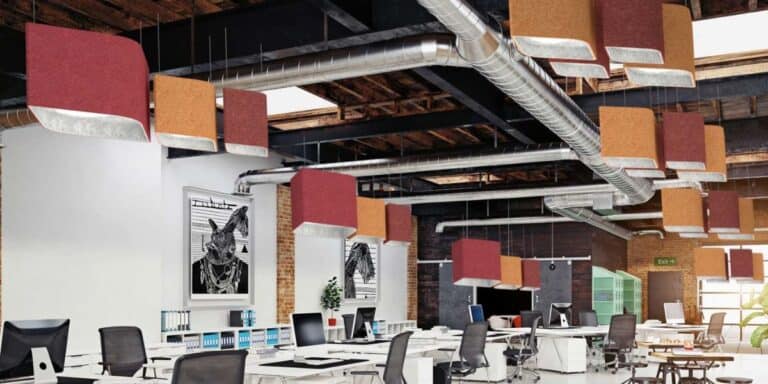
L'immobilier de plafond est limité dans de nombreux projets commerciaux. La combinaison de l'acoustique et de l'éclairage dans un système unique peut libérer de l'espace autrement occupé par des panneaux et des luminaires séparés.
Visuellement, l'éclairage acoustique adoucit les intérieurs dominés par des surfaces dures comme le verre, le béton et le métal. Le but n'est pas la décoration, mais l'équilibre visuel qui favorise le confort.
La compatibilité avec les intérieurs modernes est importante. Les formes neutres, les géométries évolutives et les configurations adaptables permettent à l'éclairage acoustique de fonctionner dans les bureaux, l'accueil et les espaces publics sans enfermer la conception dans une tendance spécifique.
Installation et maintenance
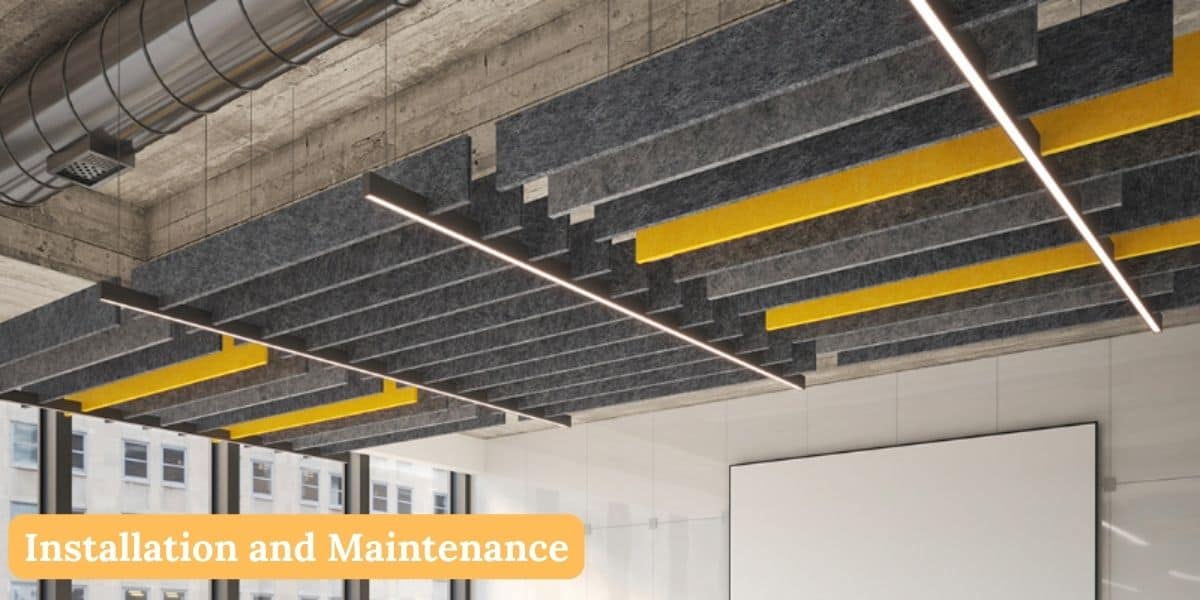
La méthode d'installation affecte la flexibilité et la convivialité à long terme.
Les systèmes suspendus sont courants car ils rapprochent l'absorption des sources sonores et permettent un positionnement réglable. Les options montées en surface peuvent fonctionner lorsque la hauteur du plafond est limitée, mais peut réduire l'efficacité acoustique.
Le nettoyage et l'entretien doivent être simples. Les matériaux qui emprisonnent la poussière ou nécessitent un nettoyage spécialisé augmentent les frais généraux opérationnels. Les pilotes accessibles et les composants modulaires simplifient l'entretien à long terme.
Des attentes claires concernant les intervalles de maintenance aident les gestionnaires d'installation à planifier plus précisément les coûts pendant la durée de vie de l'appareil.
Durabilité et conformité
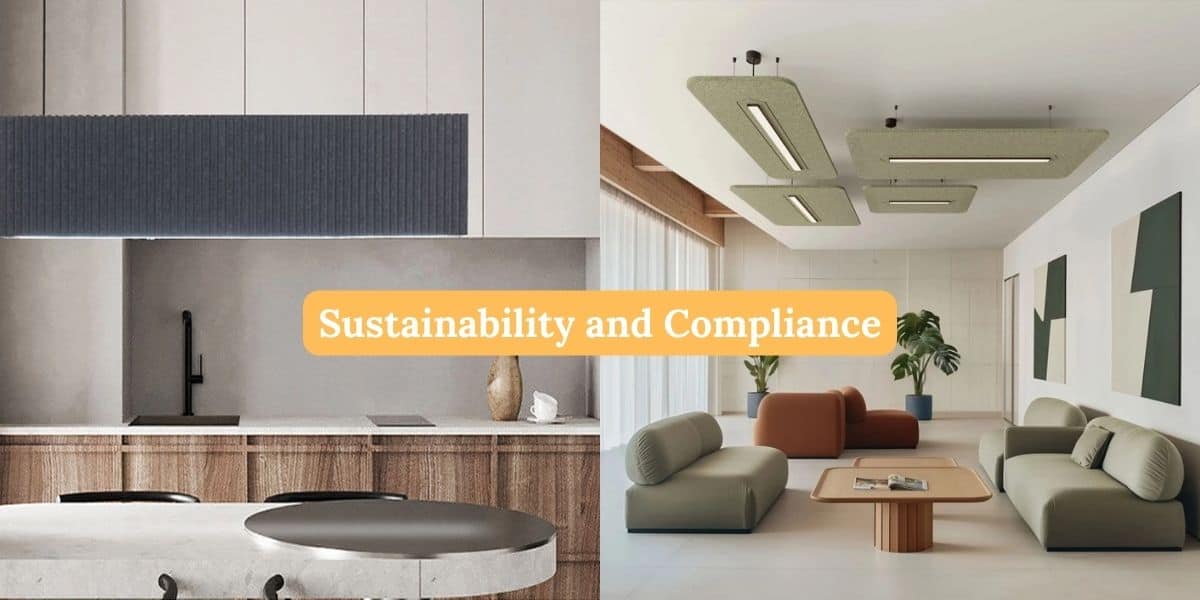
La durabilité est désormais une exigence de base pour de nombreux acheteurs commerciaux.
Contenu recyclé, notamment dans feutre pour animaux de compagnie, réduit l'impact environnemental sans sacrifier les performances. De nombreux systèmes utilisent désormais des pourcentages élevés de matériaux recyclés post-consommation.
Les certifications environnementales et le respect des normes de construction appuient les approbations de projets et les objectifs de durabilité. Pour les acheteurs B2B, cela est souvent lié aux engagements ESG des entreprises plutôt qu'à l'esthétique.
L'approvisionnement responsable et la longue durée de vie contribuent également à la durabilité en réduisant la fréquence de remplacement et les déchets.
Comparaison rapide pour les acheteurs B2B
| Facteur de sélection | Quoi vérifier | Pourquoi c'est important |
| Performance acoustique | Plage du CNRC, zone de couverture | Détermine le contrôle de l'écho et de la |
| matériau en feutre | Densité des animaux de compagnie, indice de feu | Sécurité, durabilité, cohérence |
| qualité d'éclairage | Contrôle de l'éblouissement, stabilité du CCT | Confort visuel et convivialité |
| Conception de luminaires | Panneau, Pendentif, Système intégré | Intégration et flexibilité au plafond |
| Maintenance | Méthode de nettoyage, accès aux composants | Coût et fiabilité à long terme |
Où l'éclairage acoustique est le plus logique
L'éclairage acoustique est le plus efficace dans les environnements où le contrôle sonore et le confort visuel sont tout aussi critiques.
Dans les bureaux et les espaces de coworking, il prend en charge la mise au point et la clarté de la parole dans les mises en page ouvertes sans ajouter de fouillis visuel. Les salles de conférence bénéficient d'une meilleure intelligibilité lors des réunions et des appels vidéo. Les espaces d'accueil utilisent un éclairage acoustique pour gérer le bruit ambiant tout en conservant une atmosphère raffinée. Les intérieurs publics, tels que les bibliothèques ou les établissements d'enseignement, s'appuient sur lui pour équilibrer l'ouverture et le contrôle acoustique.
La décision doit toujours être déterminée par la façon dont l'espace est utilisé, et non par l'apparence du luminaire.
erreurs courantes que font les acheteurs
Une erreur fréquente consiste à choisir un éclairage acoustique uniquement basé sur l'apparence, en supposant que tous les luminaires à base de feutre offrent une absorption significative. Un autre est d'ignorer les spécifications des matériaux et les données acoustiques, ce qui entraîne une sous-performance dans les espaces réels.
Certains acheteurs supposent que le placement n'a pas d'importance, en installant des appareils là où ils sont plus beaux plutôt que là où ils absorbent efficacement le son. D'autres sous-estiment les besoins de maintenance, en sélectionnant des matériaux qui se dégradent rapidement dans des environnements à usage intensif.
Éviter ces erreurs nécessite de traiter l'éclairage acoustique comme un système de construction fonctionnel, et non comme un accessoire décoratif.
Tendances de sélection de l'éclairage acoustique pour 2026
Les tendances actuelles mettent l'accent sur l'éclairage et l'acoustique intégrés plutôt que sur les solutions complémentaires. Les systèmes modulaires qui s'adaptent à l'évolution des agencements gagnent du terrain, en particulier dans les environnements de travail hybrides. L'accent est également mis sur le bien-être, la conception axée sur les performances étant prioritaire sur les caractéristiques purement décoratives.
Conclusion
Les facteurs clés à prendre en compte lors de la sélection de l'éclairage acoustique sont les performances acoustiques, la qualité des matériaux, la fiabilité de l'éclairage et la pertinence de l'espace prévu. Pour les projets commerciaux, le bon choix dépend de données de performance vérifiées, de matériaux durables et d'une intégration réfléchie, et non d'une esthétique. L'éclairage acoustique est une décision de conception fonctionnelle qui influence le confort, la productivité et la valeur à long terme.
FAQ
Articles Similaires