Français
  English
  简体中文
简体中文  Deutsch
  Español
  Italiano
  日本語
日本語  한국어
한국어  Polski
  Português
  Русский
  Türkçe
  Nederlands
  Tiếng Việt
  ไทย
ไทย 
Dans la conception des espaces commerciaux modernes, les problèmes de bruit et de réverbération sont de plus en plus importants, en particulier dans des environnements tels que les bureaux et les salles de conférence. Les niveaux de bruit excessifs ont un impact considérable sur l'efficacité du travail et l'expérience client. La réflexion et la réverbération du bruit font non seulement des espaces bruyants mais aussi une diminution de la communication et de la concentration.
Les luminaires acoustiques offrent une solution innovante, offrant un éclairage de haute qualité tout en absorbant et réduisant efficacement le bruit pour améliorer les environnements acoustiques. Ces luminaires intègrent des matériaux acoustiques avec une fonctionnalité d'éclairage, offrant un double avantage pour les espaces commerciaux, en particulier dans le contrôle du bruit.
Lors de la sélection de l'éclairage LED acoustique, la cote de réduction du bruit (NRC) sert de mesure clé pour évaluer les performances acoustiques. La cote NRC quantifie la capacité d'absorption du son d'un luminaire, aidant les consommateurs à choisir les produits les plus appropriés pour optimiser la conception acoustique d'un espace.
Comprendre l'importance des cotes NRC pour les lampes LED acoustiques
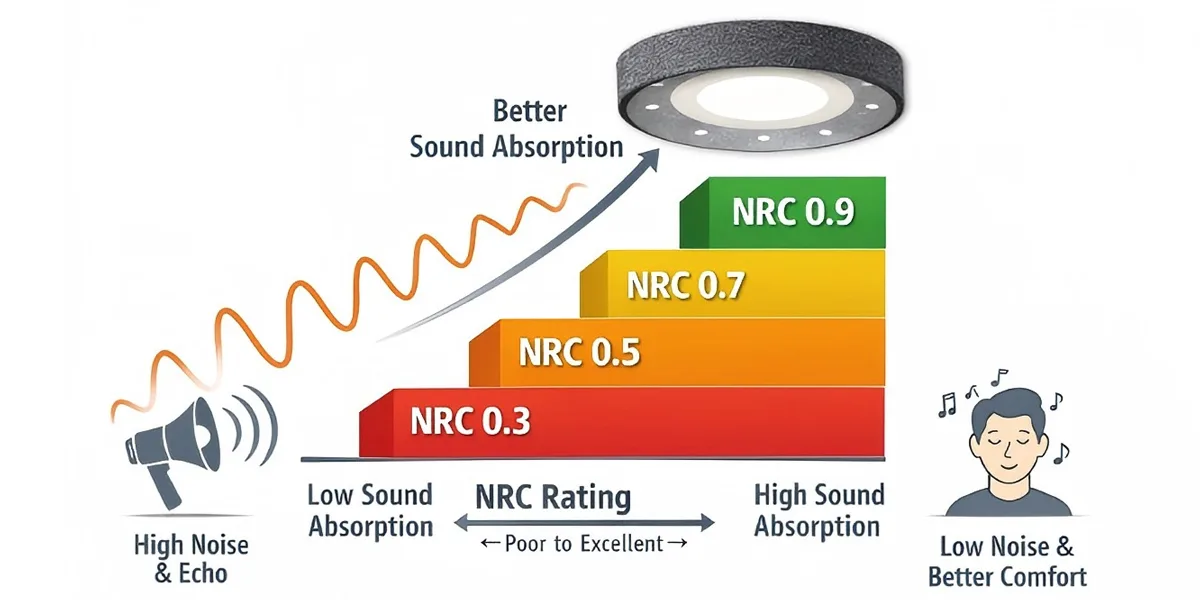
Lorsque l'on sélectionne Lumières LED acoustiques, la cote NRC est un indicateur crucial pour évaluer leurs capacités d'absorption acoustique. L'échelle NRC varie de 0 à 1, les scores les plus élevés indiquant des propriétés d'absorption acoustique supérieures. Une lampe insonorisante avec une cote NRC élevée peut réduire considérablement les échos et le bruit dans un espace, améliorant ainsi sa qualité acoustique et son confort. Ceci est particulièrement crucial dans les environnements de bureau modernes, les salles de conférence, les hôpitaux et les environnements similaires.
La cote NRC reflète non seulement la capacité d'absorption acoustique d'un matériau, mais a également un impact sur le confort acoustique global de l'environnement. La compréhension de cela aide les consommateurs à sélectionner la lumière LED insonorisante la plus appropriée en fonction de leurs besoins spécifiques.
Quelle cote NRC convient à l'éclairage acoustique ?
Avant de discuter de « ce qui constitue un CNRC approprié », il est essentiel de clarifier d'abord la définition du NRC et son importance dans l'éclairage acoustique.
Qu'est-ce que le NRC (coefficient de réduction du bruit) ?
Le NRC (coefficient de réduction du bruit) est une mesure numérique normalisée utilisée en acoustique pour mesurer les performances d'absorption acoustique d'un matériau. Il est calculé en mesurant les coefficients d'absorption acoustique à quatre fréquences centrales (250 Hz, 500 Hz, 1 000 Hz et 2 000 Hz), en prenant leur moyenne arithmétique et en arrondissant à la valeur de 0,05.
Plage de valeurs : 0,00 à 1,00
Sens fondamental : Du point de vue acoustique, une valeur plus élevée indique une capacité d'absorption acoustique plus forte, tandis qu'une valeur plus faible signifie une réflexion sonore plus prononcée.
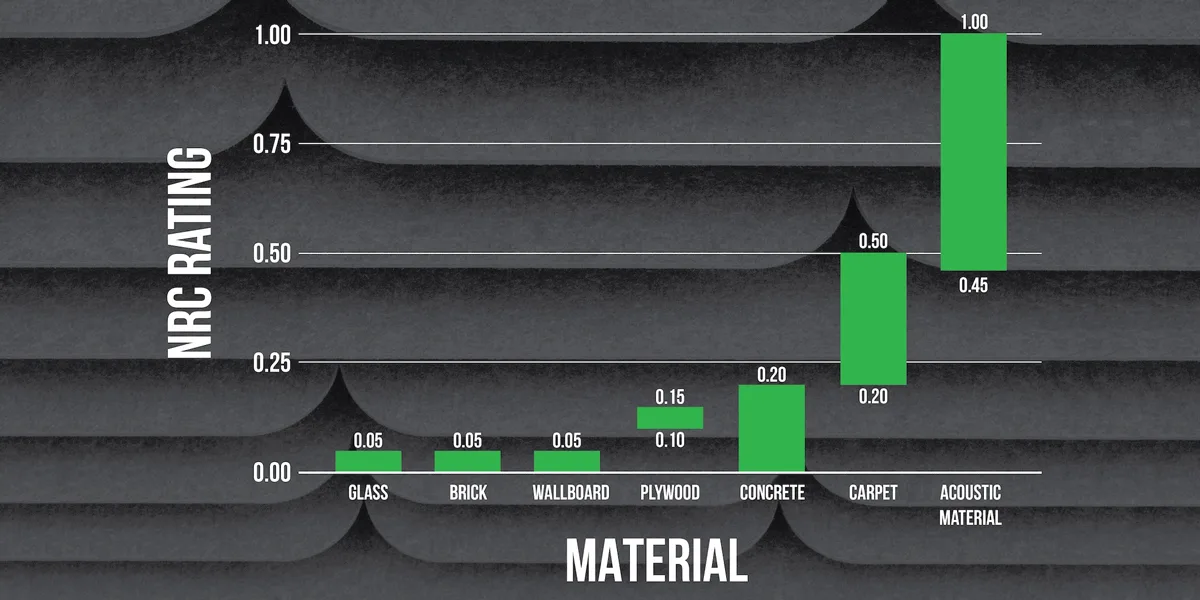
- CNRC < 0,20: généralement classé comme matériaux réfléchissants
- CNRC ≥ 0,20: Peut être reconnu comme des matériaux absorbant le son
- CNRC ≥ 0,80: Appartient à des matériaux insonorisants très efficaces, adaptés aux espaces avec des exigences acoustiques élevées
Quel est l'impact de la notation NRC sur les performances de l'éclairage acoustique ?
Dans les systèmes d'éclairage acoustique, le NRC détermine directement la capacité d'un luminaire à réduire la réverbération et à contrôler le bruit environnemental. Étant donné que les lampes à LED acoustiques sont généralement installées dans des plafonds ou des zones surélevées, leur absorption acoustique Les propriétés influencent considérablement l'environnement acoustique global d'un espace. Des valeurs NRC plus élevées minimisent les échos et les réflexions sur le bruit, améliorant l'intelligibilité de la parole et le confort auditif, ce qui entraîne un environnement acoustique plus stable et contrôlable.
Quelle est la cote NRC appropriée pour différents scénarios d'application ?
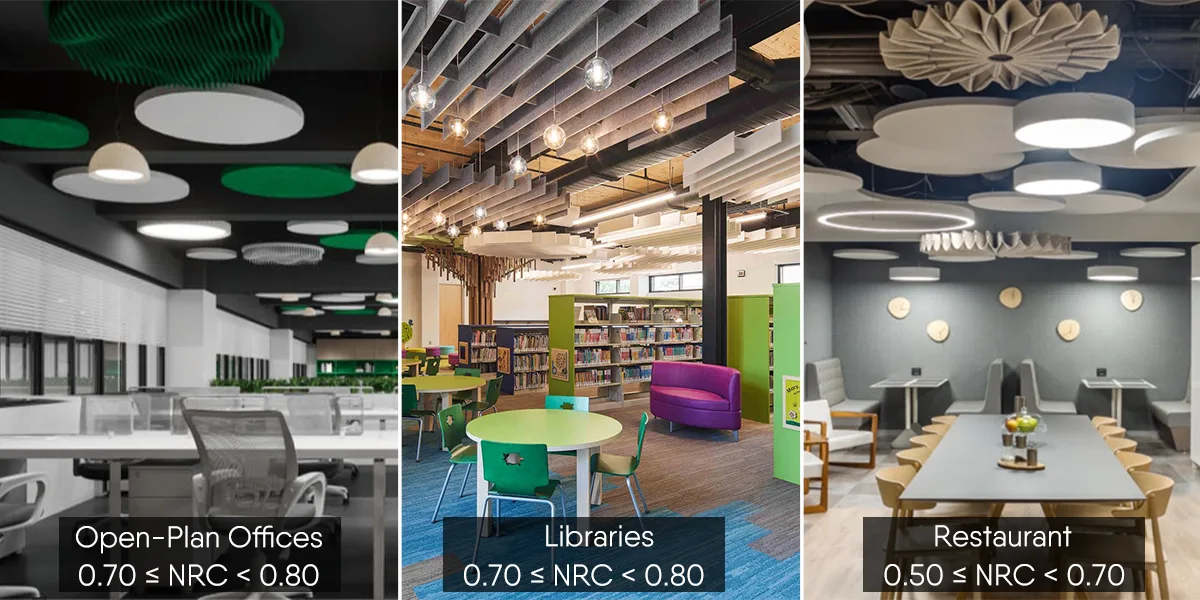
Les exigences d'éclairage acoustique pour le NRC varient selon les environnements d'utilisation. La sélection doit tenir compte des fonctionnalités de l'espace, du budget et des spécifications de conception. Pour l'éclairage LED acoustique, les produits avec NRC ≥ 0,70 sont recommandés pour obtenir des performances acoustiques optimales. Pour plus d'informations, reportez-vous aux normes de notation du CNRC et aux tableaux d'application suivants :
Normes et applications de notation du CNRC
| Gamme NRC | Classe de performance acoustique | Application recommandée | Fonction principale |
| CNRC ≥ 0,80 | Matériau insonorisant à haute efficacité | Matériau insonorisant à haute efficacité | Atteint un contrôle acoustique optimal, réduit considérablement la réverbération, améliore la clarté de la parole et la pureté audio. |
| 0,70 ≤ NRC < 0,80 | Excellent matériau absorbant le son | Bureaux, salles de classe, bibliothèques, hôpitaux, salles de réunion | Réduit efficacement le bruit de fond et la réverbération, améliore l'efficacité de la communication et le confort spatial. |
| 0,50 ≤ NRC < 0,70 | Matériau absorbant le son | Espaces résidentiels ordinaires, magasins, couloirs, aires de repos publiques | Améliore considérablement le bruit environnemental, équilibre la flexibilité des coûts et de la conception, adapté aux besoins acoustiques modérés. |
| 0,20 ≤ NRC < 0,50 | Matériau de base absorbant le son | Entrepôts, parkings, usines industrielles | Fournit une fonction d'absorption acoustique de base, réduit certains sons réfléchis. |
| CNRC < 0,20 | Matériau réfléchissant le son | Tout environnement acoustique nécessitant une réflexion sonore (par exemple, scènes, plateformes musicales) | Réfléchit principalement au son, non adapté aux scénarios nécessitant une absorption acoustique. |
Pourquoi le NRC est-il particulièrement adapté à l'évaluation de l'éclairage acoustique ?
Le NRC est largement utilisé pour évaluer les performances des matériaux acoustiques architecturaux tels que les plafonds et les panneaux muraux. L'éclairage acoustique combine par nature « les systèmes d'éclairage avec les solutions de plafond acoustique ».
Par conséquent, utiliser NRC comme métrique de base pour mesurer les performances acoustiques des lampes LED absorbant le son est non seulement professionnel mais également intuitif, facilitant la comparaison et la sélection par les concepteurs, les entrepreneurs et les acheteurs. Pour la plupart des espaces commerciaux, une cote NRC comprise entre 0,6 et 0,9 est considérée comme un éclairage acoustique idéal, car elle permet une absorption acoustique efficace tout en conservant la flexibilité de conception et les performances d'éclairage.
Comment les lumières LED acoustiques améliorent le contrôle du son dans les espaces modernes
Les bâtiments modernes, en particulier les bureaux à aire ouverte, souffrent souvent de niveaux de bruit excessifs. Les lampes LED acoustiques abordent ce problème en intégrant des matériaux ou des structures insonorisants. Ils fournissent un éclairage tout en absorbant les ondes sonores et en réduisant les échos, améliorant ainsi considérablement la clarté et le confort du son dans l'espace. Leur conception combine des sources lumineuses avec des matériaux acoustiques, non seulement pour résoudre les problèmes de bruit, mais également améliorer l'attrait esthétique de l'environnement.
Grâce à la configuration scientifique, ces lumières aident les espaces modernes à obtenir des performances acoustiques optimales tout en répondant aux exigences esthétiques et d'éclairage, transformant le bruit environnemental d'une distraction en un élément discret.
Le rôle des lumières LED acoustiques dans l'amélioration des environnements de bureau et résidentiels
Dans les lieux de travail et les maisons contemporains, les interférences sonores compromet souvent l'efficacité et le confort. Les éclairages LED acoustiques, en tant que fusion innovante de l'acoustique et de l'éclairage, optimisent tranquillement l'expérience acoustique dans ces espaces.
- Paramètres du bureau : Alors que les mises en page ouvertes favorisent la collaboration, elles tissent également des bourdonnements d'imprimante et des clics de clavier dans un bruit de fond constant. La salle de réunion fait écho à d'autres discussions confuses. Les lampes LED absorbant le son incorporent des matériaux poreux qui absorbent les ondes sonores et réduisent les réflexions, ce qui rend les réunions plus claires. Simultanément, la température de couleur réglable (du blanc froid au jaune chaud) s'adapte à différents moments de la journée, réduisant la fatigue oculaire et favorisant une atmosphère concentrée. Cette conception de « synergie de la lumière sonore » transforme les espaces bruyants en des paradis efficaces.
- milieux résidentiels : Les clameurs urbaines, telles que le bruit de la circulation et les activités de voisinage, s'immiscent souvent dans la tranquillité des foyers. Les lampes LED absorbant le bruit absorbent les bruits à haute fréquence, construisant une «barrière acoustique» à l'intérieur. Utilisé dans les salons ou les chambres, les résidents profitent de moments plus calmes pour se reposer ou lire. L'efficacité énergétique et la longue durée de vie de la LED s'alignent davantage sur les besoins de vie durables.
Des salles de conférence aux chambres, des lumières LED absorbant le son scientifiquement redéfinissent la qualité spatiale, améliorant silencieusement la vie et le travail.
Interprétation des cotes NRC : pourquoi elles sont essentielles pour l'acoustique Performances d'
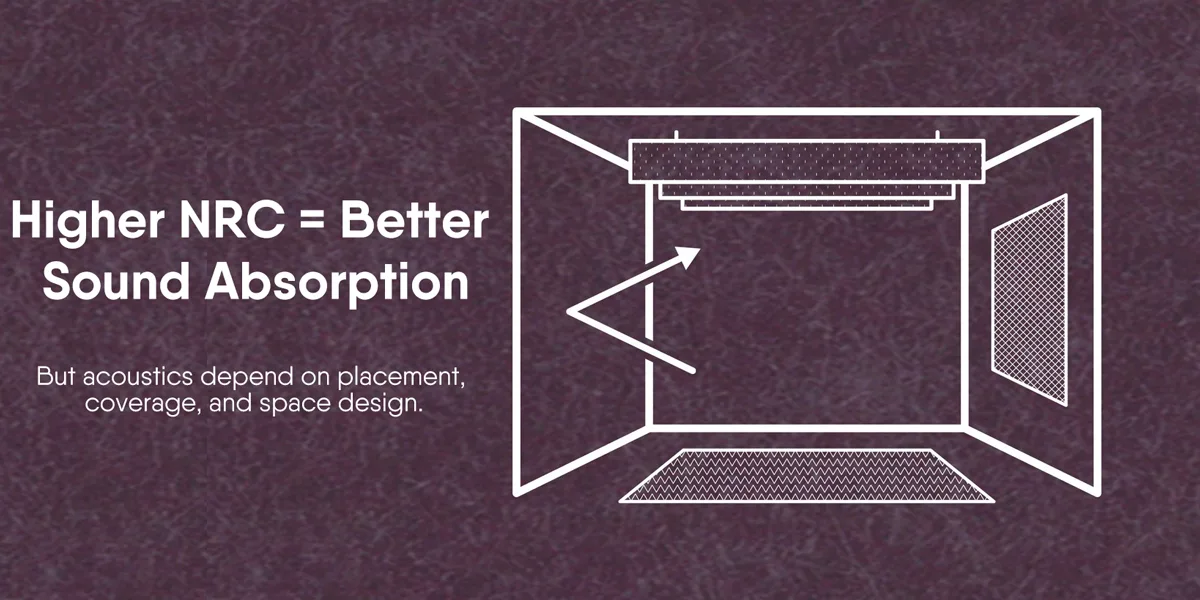
La cote NRC sert de métrique de base pour évaluer les performances acoustiques de l'éclairage acoustique, son importance étant directement influencée par les environnements sonores intérieurs.
L'éclairage acoustique permet de convertir l'énergie acoustique grâce à des matériaux poreux intégrés (tels que la fibre de polyester, les panneaux en aluminium perforé et le coton acoustique). Sa valeur NRC détermine directement :
- Réduction du temps de réverbération: Dans une salle de conférence de 50 ㎡, les appareils avec NRC ≥ 0,7 réduisent le temps de réverbération de 2,1 secondes à 1,3 seconde, améliorant ainsi considérablement l'intelligibilité de la parole.
- Amélioration de l'indice de transmission de la parole (STI): Les ITS mesurées augmentent de 0,62 à 0,78, augmentant considérablement l'efficacité et la mise au point de la communication.
- Suppression des interférences de bruit: absorbe efficacement les bourdonnements de l'équipement et la voix humaine, créant un environnement de bureau ou de réunion silencieux et à faible distraction.
Normes et réglementations actuelles de l'industrie
- international: ASTM C423 sert de norme faisant autorité pour les tests NRC.
- Pas de règlement obligatoire: Actuellement, il n'existe pas de norme de l'industrie dédiée à l'« éclairage LED acoustique », avec NRC qui ne sert qu'à titre de référence fonctionnelle.
- Tendance de conception collaborative: Des normes d'éclairage comme la norme ISO/CIE 8995-1:2025 mettent l'accent sur la synergie entre le « confort visuel » et le « confort acoustique », propulsant l'éclairage insonorisant en tant que caractéristique standard dans les espaces intelligents.
Valeur d'application dans le monde réel
Les commentaires des utilisateurs provenant d'installations réelles indiquent qu'après l'installation de lampes LED à haute absorption du bruit, les salles de conférence ne connaissent plus de "bruit de la climatisation" et de "focalisation améliorée" considérablement réduite. Sa valeur va au-delà de la réduction du bruit pour remodeler la perception spatiale, où la lumière et le son servent conjointement à l'efficacité cognitive et au confort psychologique.
Une excellente cote NRC réduit non seulement efficacement le bruit, mais empêche également sa propagation dans les espaces, garantissant ainsi une qualité sonore constante dans des niveaux confortables.
Comment sélectionner la lumière LED acoustique optimale pour une meilleure absorption acoustique
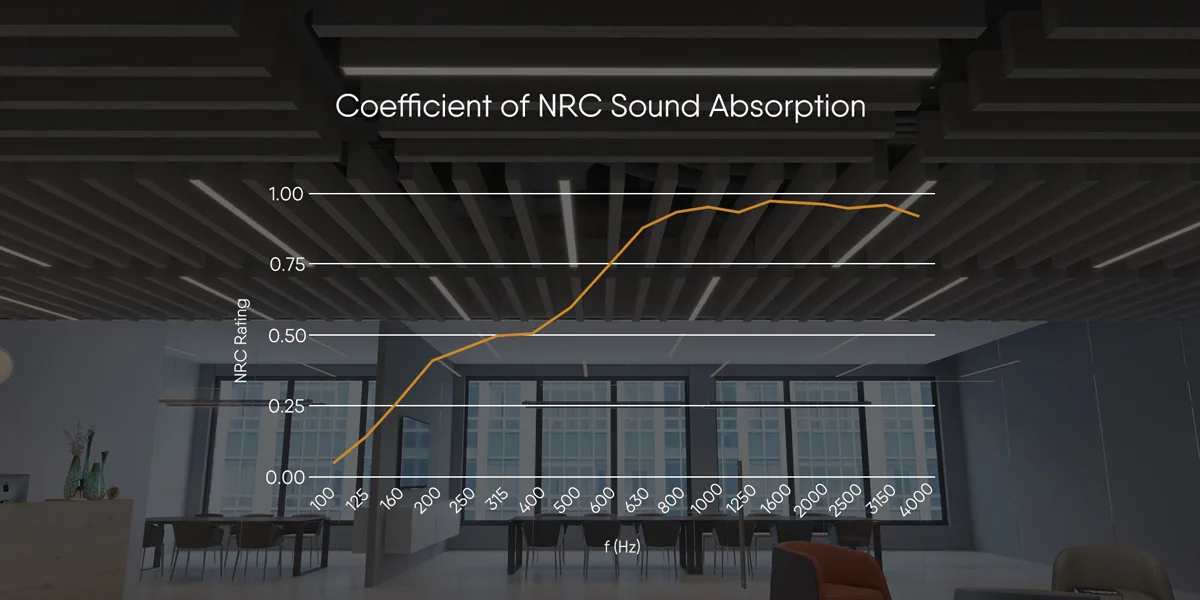
alors que Choisir des lumières LED acoustiques appropriées, priorisez la note NRC. Les appareils de fixation à haute cotation sont idéaux pour les espaces avec des exigences strictes en matière de contrôle du bruit. De plus, tenez compte du type et de la qualité des matériaux acoustiques pour garantir qu'ils offrent des performances d'absorption acoustique attendues dans le monde réel. Parallèlement, la conception des luminaires et l'efficacité lumineuse sont des facteurs critiques qui influencent directement l'expérience spatiale globale.
- Scénarios de correspondance de valeur NRC:
a) Les petits espaces (par exemple, les bureaux à domicile) peuvent opter pour le NRC 0,6 ou le NRC 0,5-0,7. Cette gamme absorbe efficacement le bruit quotidien (comme les sons de télévision ou les enfants qui jouent) tout en évitant une absorption excessive qui crée un espace anormalement calme.
b) Les grands espaces (par exemple, les salles de conférence) sont recommandés pour le CNRC 0,7-0,9. Les valeurs NRC plus élevées réduisent les échos dans les salles de conférence, améliorent la qualité des appels vidéo et minimisent les interférences de bruit de fond dans les bureaux ouverts.
c) Les valeurs NRC supérieures à 0,8 conviennent aux environnements professionnels comme les studios d'enregistrement, mais les espaces résidentiels/bureaux nécessitent une absorption acoustique avec la fonctionnalité d'éclairage.
- Durabilité des matériaux: Priorisez les matériaux acoustiques résistants au feu et à l'humidité (p. ex., mousse de classe A coupe-feu) pour éviter une réduction de l'absorption acoustique due à l'humidité de l'environnement.
- Paramètres d'éclairage: La température de couleur (2700K-4000K) et l'indice de rendu des couleurs (CRI>90) doivent s'aligner sur les exigences spatiales, par exemple, 4 000 000 000 000 000 000 K de lumière neutre augmentent la concentration dans les bureaux.
- Conformité aux certifications: Sélectionnez des marques avec des certifications de test rigoureuses pour garantir que les luminaires répondent aux normes de performance acoustique.
Éclairage acoustique de Signiteled Priorité à la fois les performances acoustiques et la conception esthétique. La lampe à structure en nid d'abeille illustrée atteint l'UGR<19, délivre un NRC de 0,75 et intègre des fonctions de prévention des reflets, ce qui en fait un endroit idéal pour les salons résidentiels.
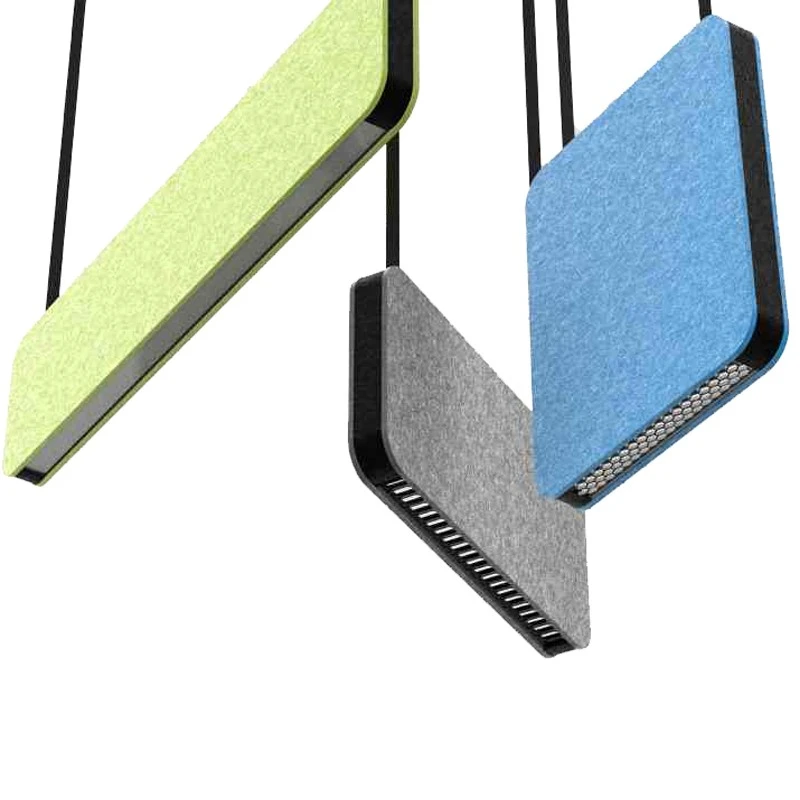
Lumière linéaire LED super mince
Tension d'entrée : AC100-277V / AC220-240V, 50-60Hz
Direction émettrice : vers le bas
Taille : 1218 *36*400mm
CCT : 3000K / 4000K / 6000K
Puissance : 30w
Flux lumineux : 100-110 lm/w
IRC : >80Ra
PF : >0.90
Fllicker gratuit : Oui
Angle du faisceau : 120°
Classe IP : IP20
Garantie: 5 ans
Couleur de la planche acoustique en feutre : Rouge / Vert / Bleu / Gris Plus de 48 couleurs Option
Comment les luminaires acoustiques réalisent-ils simultanément l'éclairage et la réduction du bruit ?
Les consommateurs modernes privilégient de plus en plus les produits d'éclairage qui combinent d'excellentes performances acoustiques et une esthétique spatiale Grâce à un design ingénieux, l'éclairage LED acoustique fusionne de manière transparente la fonctionnalité et l'art, ce qui en fait un élément indispensable dans les espaces contemporains.
Les appareils acoustiques intègrent la fonctionnalité à travers les éléments de conception suivants :
- Couches de matériaux: La surface de la lampe utilise de la mousse poreuse ou des tissus fibreux (par exemple, une fibre de polyester), permettant aux ondes sonores d'entrer et de se convertir en chaleur par la friction tout en maintenant la transmission de la lumière.
- conception structurelle: L'abat-jour intègre des structures en coton ou en nid d'abeilles insonorisantes en interne pour maximiser les trajectoires de réflexion des ondes sonores. La source de lumière LED est intégrée dans la couche absorbant le son, assurant une répartition uniforme de la lumière.
Conclusion
En tant qu'innovant Solution d'éclairage acoustique, les luminaires à LED insonorisants sont de plus en plus standard dans l'architecture moderne et la conception spatiale en raison de leurs cotes NRC et de leurs performances acoustiques exceptionnelles.
Des environnements de bureau aux espaces résidentiels, des sites commerciaux aux établissements d'enseignement, l'éclairage LED acoustique joue un rôle essentiel dans l'amélioration du confort acoustique spatial. En sélectionnant les cotes et les luminaires appropriés du CNRC, les consommateurs peuvent créer des environnements plus silencieux et plus confortables, améliorant ainsi la qualité de vie et le travail.
FAQ
Articles Similaires