Français
  English
  简体中文
简体中文  Deutsch
  Español
  Italiano
  日本語
日本語  한국어
한국어  Polski
  Português
  Русский
  Türkçe
  Nederlands
  Tiếng Việt
  ไทย
ไทย 
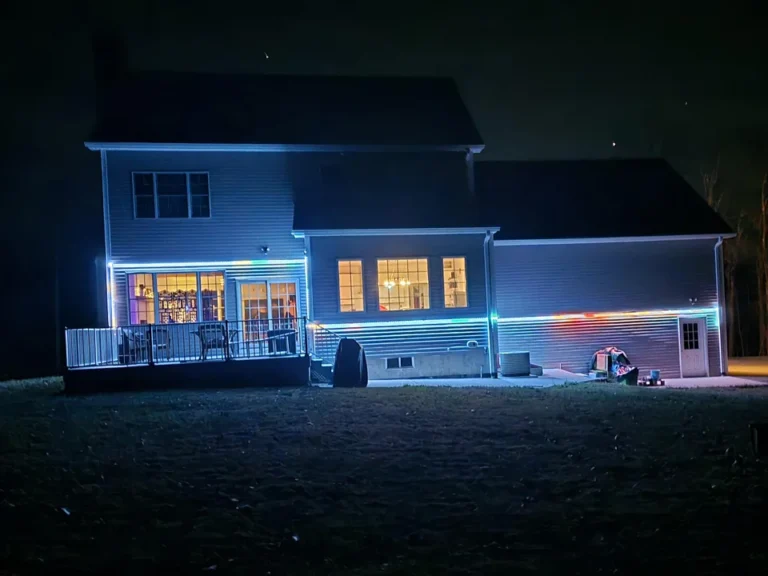
Le ruban LED extérieur est largement utilisé dans les contours architecturaux, l'éclairage de paysage et les applications décoratives extérieures, où les performances d'éclairage et la durabilité environnementale sont essentielles. Par rapport aux installations intérieures, les projets extérieurs exigent une plus grande protection en matière de protection imperméable, de stabilité de la variation et de compatibilité globale du système. Différentes applications peuvent donner la priorité à différents facteurs en fonction des conditions d'installation, des méthodes de contrôle et de l'échelle du projet. Cet article décrit plusieurs considérations clés lors de la sélection de la bande LED à intensité variable pour une utilisation en extérieur, en fournissant des points de référence pratiques pour aider les acheteurs à évaluer les produits et les solutions plus efficacement pour leurs applications spécifiques.
Environnement extérieur et cote d'étanchéité
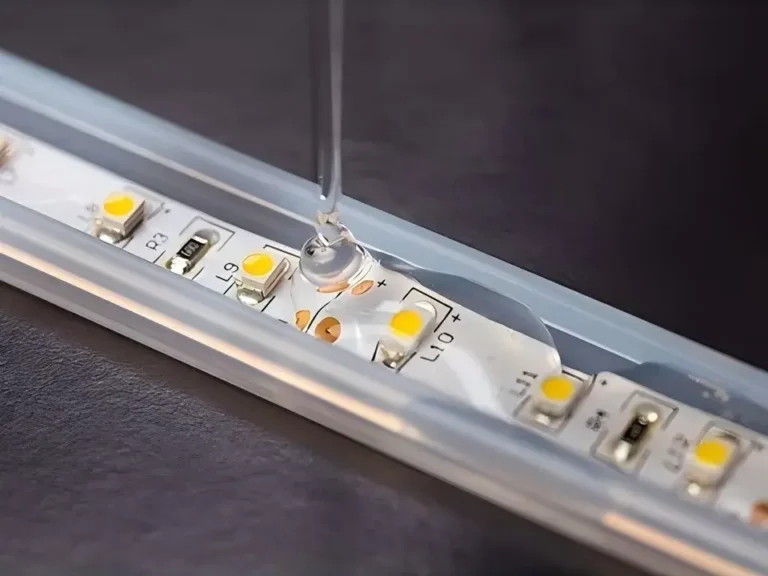
Le ruban LED extérieur est disponible dans une variété de constructions étanches, et la sélection doit toujours être basée sur l'environnement d'installation réel. Les options courantes incluent le revêtement en silicone IP65, le tube en silicone IP65, l'extrusion creuse IP67, le remplissage en silicone IP68 et l'extrusion de silicone IP68. Chaque structure offre un équilibre différent entre la protection de l'humidité, la flexibilité, la dissipation thermique et la durabilité à long terme. Il n'y a pas de «meilleure» bande LED étanche pour tous les projets extérieurs; le choix approprié dépend du niveau d'exposition, de la position de montage et des conditions environnementales.
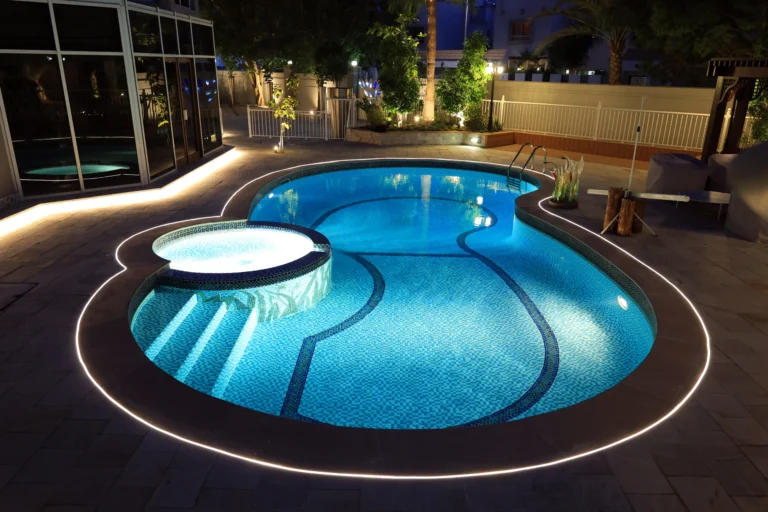
D'un point de vue pratique, les cotes IP définissent les limites de la protection plutôt que la qualité globale du produit. IP65 Bande LED Convient aux environnements exposés à la pluie ou aux éclaboussures d'eau mais pas en contact continu. Les produits IP67 sont conçus pour les endroits où une immersion temporaire d'eau peut se produire, comme les installations au niveau du sol ou les zones sujettes à l'accumulation d'eau. Le ruban LED IP68 est destiné à une immersion à long terme ou fréquente et est généralement utilisé dans les fontaines, les piscines ou les éléments de paysage à haute humidité.
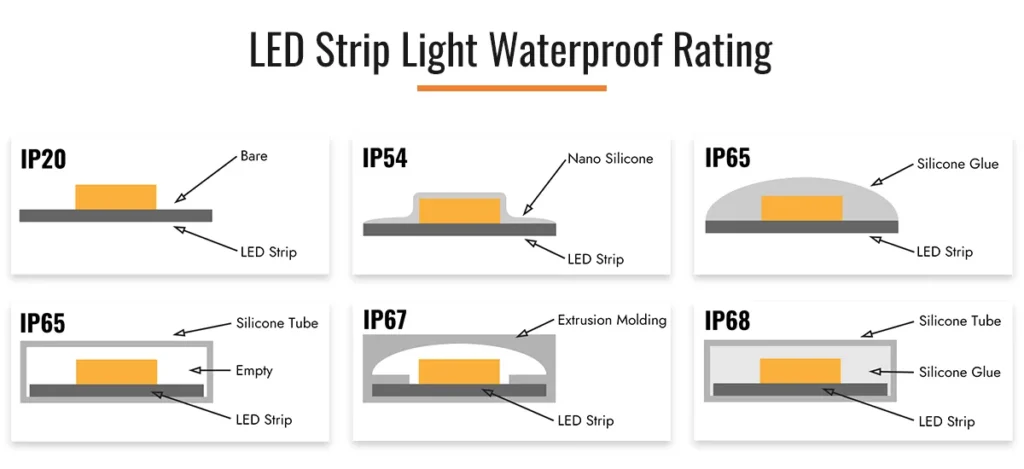
Le tableau ci-dessous résume les cotes d'étanchéité recommandées pour les applications extérieures courantes :
| Scénario d'application | Indice IP recommandé |
| Contours de façade de bâtiments | IP65 |
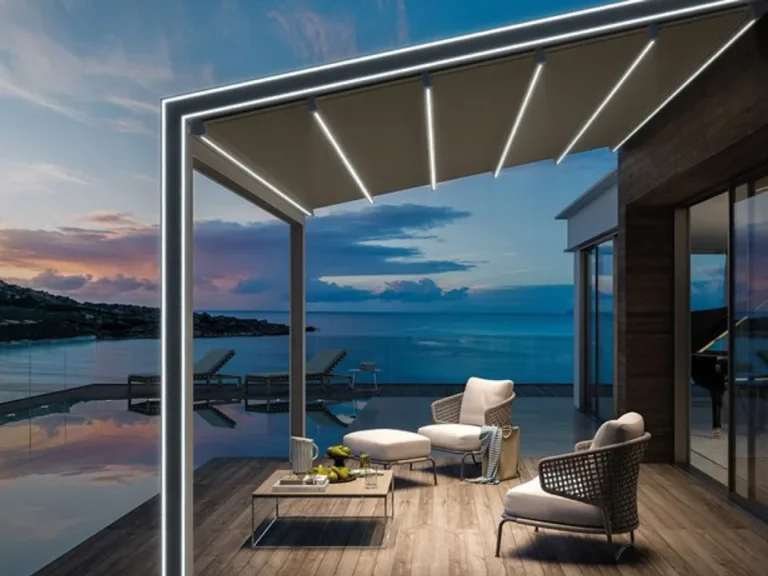
| Eavettes et auvents | IP65 |
| Balcons et terrasses | IP65 / IP67 |
| Lignes architecturales au niveau du sol | IP67 |
| Éclairage de jardin et de paysage | IP67 |
| Près des piscines | IP68 |
| Caractéristiques de l'eau et fontaines | IP68 |
| Installations extérieures côtières | IP67 / IP68 |
En résumé, la sélection de la cote étanche doit être motivée par des conditions d'exposition réelles plutôt que par des hypothèses. Pour les installations extérieures entièrement exposées, le ruban LED avec des matériaux résistants aux UV est fortement recommandé pour éviter le jaunissement et la dégradation des matériaux. Pour les environnements côtiers ou à haute salinité, les produits qui ont passé les tests de pulvérisation saline offrent une fiabilité et une durée de vie plus longues.
Méthode de variation et compatibilité du système
Plusieurs méthodes de gradation sont couramment utilisées dans les projets de bandes LED extérieures, chacune adaptée à différentes exigences de contrôle et à l'échelle du projet. Les méthodes les plus largement appliquées comprennent la gradation PWM, la gradation 0 à 10 V, le DALI, la gradation par phase (découpe) et le contrôle DMX. Bien que toutes ces méthodes puissent être mises en œuvre dans des environnements extérieurs, leurs performances et leur fonctionnalité dépendent en grande partie de la conception du système, de la complexité du câblage et du niveau de contrôle requis.
Le tableau ci-dessous compare ces méthodes de variation du point de vue du projet extérieur :
| Méthode de gradation | Avantages | Limites | Applications extérieures typiques |
| MLI | Simple, rentable, stable | Contrôle centralisé limité | Projets extérieurs de petite à moyenne taille |
| 0–10V | Standard mature, bonne stabilité | Câblage de commande supplémentaire | Façades commerciales, Signalisation extérieure |
| dali | Contrôle adressable et flexible | Coût du système plus élevé | Grands systèmes d'éclairage architectur |
| triac | Compatible avec la puissance CA | Variation de bas niveau limitée | Éclairage extérieur de rénovation |
| DMX | Contrôle précis, effets dynamiques | Nécessite une configuration correcte du décodeur | Éclairage architectural et |
Dans la plupart des applications extérieures, la bande LED DC est compatible avec les cinq méthodes de gradation lorsqu'elles sont associées à des pilotes ou des contrôleurs appropriés. Pour les projets basés sur DMX, il est cependant essentiel de sélectionner le bon décodeur DMX, car la configuration du canal et le type de sortie affectent directement la stabilité du système. En revanche, la bande LED AC est généralement limitée à la gradation du triac et à certains systèmes de contrôle de phase, ce qui le rend plus adapté aux installations extérieures plus simples.
Luminosité et uniformité de la lumière
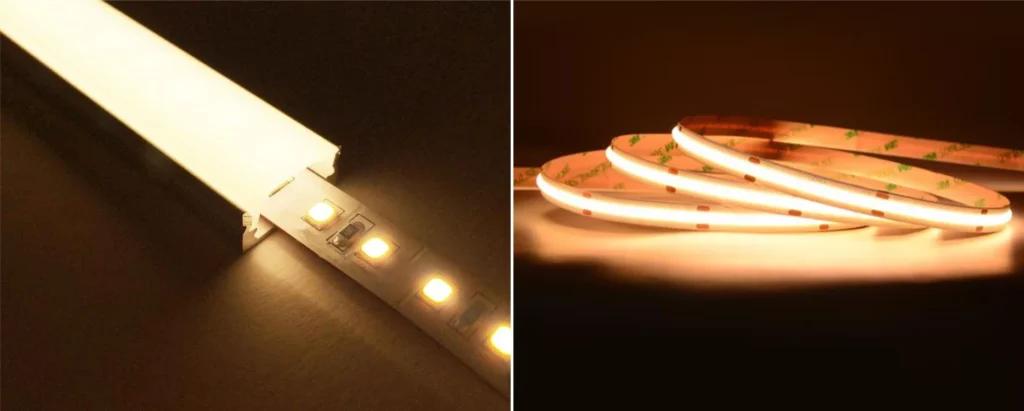
La luminosité est souvent une considération primordiale dans les applications de rubans LED extérieurs, en particulier pour les contours architecturaux et l'éclairage extérieur fonctionnel. Lorsqu'une efficacité lumineuse élevée et une luminosité maximale sont requises, la bande LED SMD est généralement l'option préférée. Le ruban LED SMD à haut rendement peut atteindre une efficacité lumineuse supérieure à 180 lm/W, tandis que le ruban LED COB atteint généralement environ 150 lm/W. Pour les projets ciblant le même niveau de luminosité, le ruban LED SMD offre généralement une meilleure efficacité énergétique et une consommation d'énergie réduite, ce qui le rend adapté aux installations extérieures à grande échelle.
L'uniformité de la lumière est un facteur distinct mais tout aussi important, en particulier dans les applications d'éclairage linéaire visible. Lorsqu'un effet d'éclairage continu et sans points est requis, COB LED Tape offre des avantages évidents en raison de sa densité de copeaux plus élevée et de sa surface d'émission de lumière étroitement emballée, ce qui entraîne un éclairage lisse sans taches sombres. Alternativement, le ruban LED SMD combiné avec des profilés en aluminium et des diffuseurs peut également obtenir une bonne uniformité tout en améliorant la dissipation thermique et la protection mécanique.
Sélection de la tension d'entrée pour le ruban LED extérieur à intensité variable
Pour les projets extérieurs, le ruban LED haute tension n'est généralement pas recommandé en raison de l'augmentation du risque de choc électrique et des exigences de sécurité plus complexes. En conséquence, la bande LED basse tension DC est plus couramment utilisée, les DC12V et DC24V étant les options les plus largement appliquées. Cependant, lors de la sélection de la bande LED à intensité variable, chute de tension Doit être soigneusement pris en compte, car cela affecte directement l'uniformité de la luminosité et la consistance de la gradation tout au long de la course.
Avec une entrée d'alimentation à une extrémité, la bande LED DC12V doit généralement être limitée à 5 mètres, tandis que la bande LED DC24V peut s'étendre jusqu'à 7 mètres. Lorsque l'entrée d'alimentation à double extrémité est utilisée, les systèmes DC12V peuvent atteindre environ 15 mètres et les systèmes DC24V jusqu'à 20 mètres. Le dépassement de ces longueurs peut entraîner une réduction de la luminosité visible et des performances de variation irrégulières.
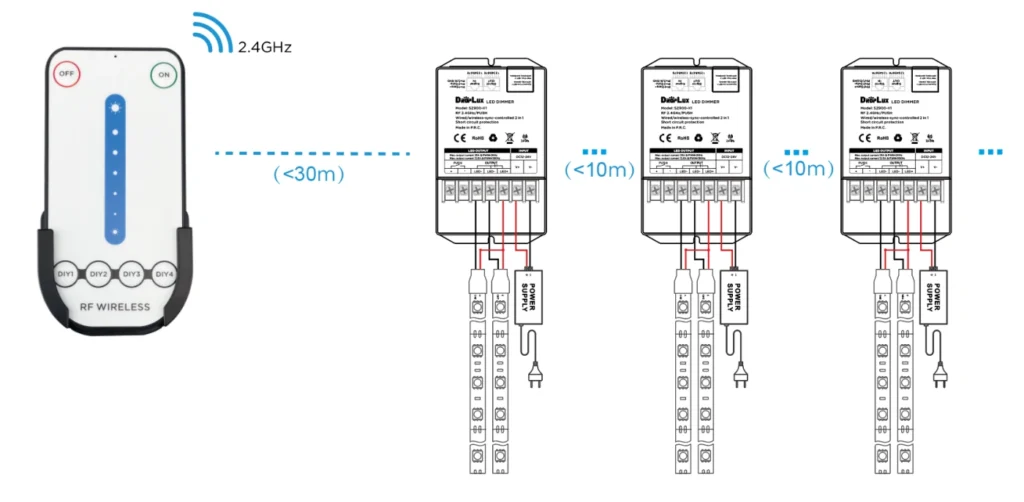
Pour les projets nécessitant de longues courses continues, la bande LED DC48V offre une alternative pratique. Il prend en charge jusqu'à 15 mètres avec entrée simple et jusqu'à 40 mètres avec entrée double extrémité, simplifiant le câblage et réduisant les chutes de tension. La principale limitation est la sélection relativement plus petite des alimentations compatibles. Lorsque la variation de la variation PWM est utilisée, la cohérence de la variation peut être encore améliorée en ajoutant des amplificateurs de signaux entre des sections de bande LED ou en adoptant des contrôleurs synchrones, en particulier dans les grandes installations extérieures.
Choisir le bon fournisseur pour les projets de plein air de moyenne et grande taille
Pour les projets d'éclairage extérieur de taille moyenne à grande, la sélection des fournisseurs joue un rôle important dans la performance globale du projet. Dans la plupart des cas, travailler directement avec un fabricant authentique est préférable à l'approvisionnement sur des marchés en ligne ou des sociétés commerciales. Les fabricants offrent généralement des prix plus compétitifs, une expertise produit plus approfondie et un soutien technique plus solide. Plus important encore, ils sont mieux placés pour fournir une personnalisation non standard, ce qui est souvent requis dans les projets de bandes LED à intensité variable extérieure.
Lors de l'évaluation des fabricants, la conformité des produits et les capacités de test doivent également être prises en compte. Les certifications pertinentes telles que UL, CE et ROHS démontrent la conformité réglementaire, tandis que les rapports de tests, y compris les données photométriques IES, les tests de sphère et les tests de pulvérisation saline, offrent une assurance supplémentaire de performances, de sécurité et de fiabilité à long terme dans les environnements extérieurs.
Autres facteurs importants à prendre en compte
Au-delà de la cote d'étanchéité, de la méthode de gradation, de la luminosité, de la sélection de tension et du choix du fournisseur, plusieurs facteurs supplémentaires peuvent influencer les performances à long terme du ruban LED à intensité variable. La gestion thermique est particulièrement importante, car les structures imperméables peuvent restreindre la dissipation thermique ; une installation appropriée à l'aide de profilés en aluminium peut considérablement améliorer la fiabilité. La cohérence des couleurs lors de la gradation, en particulier à des niveaux de luminosité faible, doit également être évaluée dans l'éclairage architectural visible. De plus, la conception de la sortie du câble, l'étanchéité du capuchon et les détails de l'installation jouent un rôle clé dans la prévention de la pénétration d'humidité au fil du temps. Pour les environnements difficiles, la résistance aux UV, la protection contre la corrosion et les données de test vérifiées garantissent une opération à long terme stable.
Avec plus de dix ans d'expérience dans la fabrication de rubans LED d'extérieur, SignLiteled prend en charge une large gamme d'applications d'éclairage extérieur. En plus des produits standard, nous proposons des solutions de bandes LED personnalisées adaptées aux exigences spécifiques du projet, notamment la conception de circuits, les options de couleur et la construction imperméable. Pour garantir la compatibilité avec le système et des performances de gradation stables, nous proposons également des solutions complètes de support telles que des contrôleurs, des amplificateurs, des décodeurs et des alimentations électriques. En combinant la personnalisation des produits avec un support pratique du système, nous aidons les clients à mettre en œuvre des solutions de bandes LED à intensité variable en plein air de manière plus efficace et plus fiable.
Articles Similaires