Italiano
  English
  简体中文
简体中文  Deutsch
  Español
  Français
  日本語
日本語  한국어
한국어  Polski
  Português
  Русский
  Türkçe
  Nederlands
  Tiếng Việt
  ไทย
ไทย 
Sì, infissi acustici può ridurre l'eco nelle sale conferenze. Funzionano assorbendo l'energia sonora riflessa, che riduce il riverbero e rende più facile la comprensione del parlato con meno riflessi che distraggono.
Questo articolo spiegherà come i dispositivi acustici riducono l'eco e le migliori strategie di posizionamento per migliorare la chiarezza del parlato nelle sale conferenze.
In termini pratici, i maggiori miglioramenti di solito derivano dal posizionamento dell'assorbimento in cui i riflessi del parlato sono più forti: Sopra il tavolo delle riunioni e lungo il Principali percorsi di riflessione tra oratori e ascoltatori.
Perché le sale conferenze hanno spesso l'eco
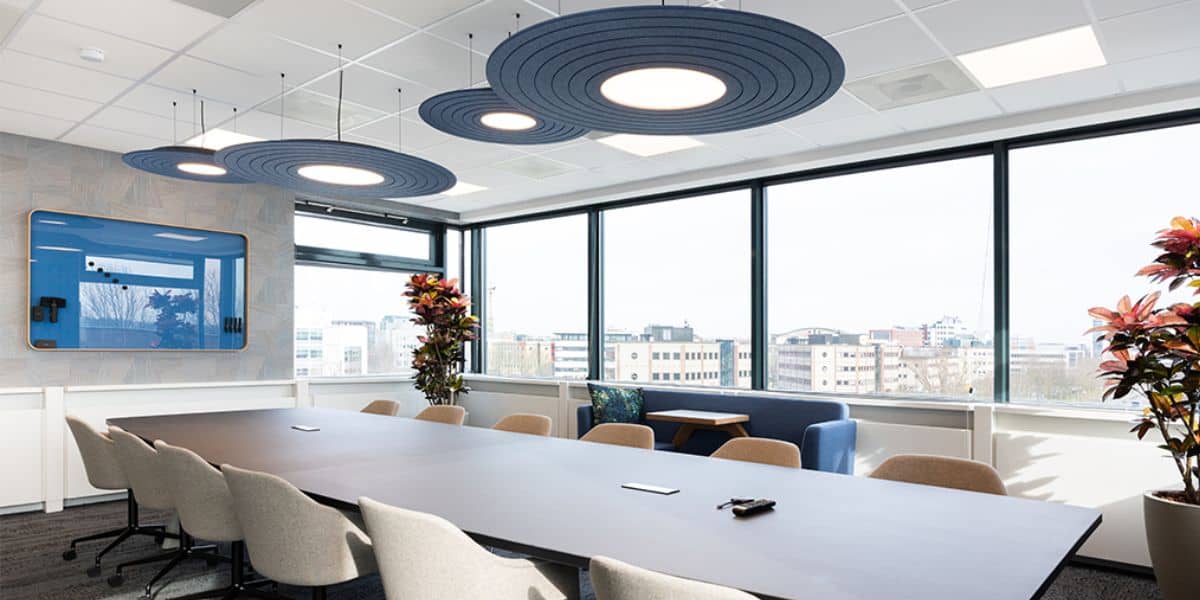
Echo e "roomy" sono comuni negli spazi per riunioni perché le sale conferenze spesso danno priorità a superfici pulite, durata e layout aperti. Quelle stesse scelte di design aumentano la riflessione del suono.
Le cause tipiche includono:
- Superfici dure (vetro, cemento, cartongesso verniciato, tavoli in laminato)
- Pareti parallele Quel suono di rimbalzo avanti e indietro
- Soffitti alti con lunghi percorsi di riflessione
- Materiali morbidi minimi (poche tende, tappeti o oggetti imbottiti)
- Riflessioni vocali e “Sparolo vocale” (Le riflessioni arrivano leggermente dopo la voce diretta, riducendo la chiarezza)
In una sala conferenze, Echo non è solo un problema di "comfort acustico". Influisce direttamente sulla comunicazione: le persone parlano più forte, si ripetono e i microfoni di chiamata remota raccolgono più suono della stanza che voce.
Come gli apparecchi acustici riducono l'eco
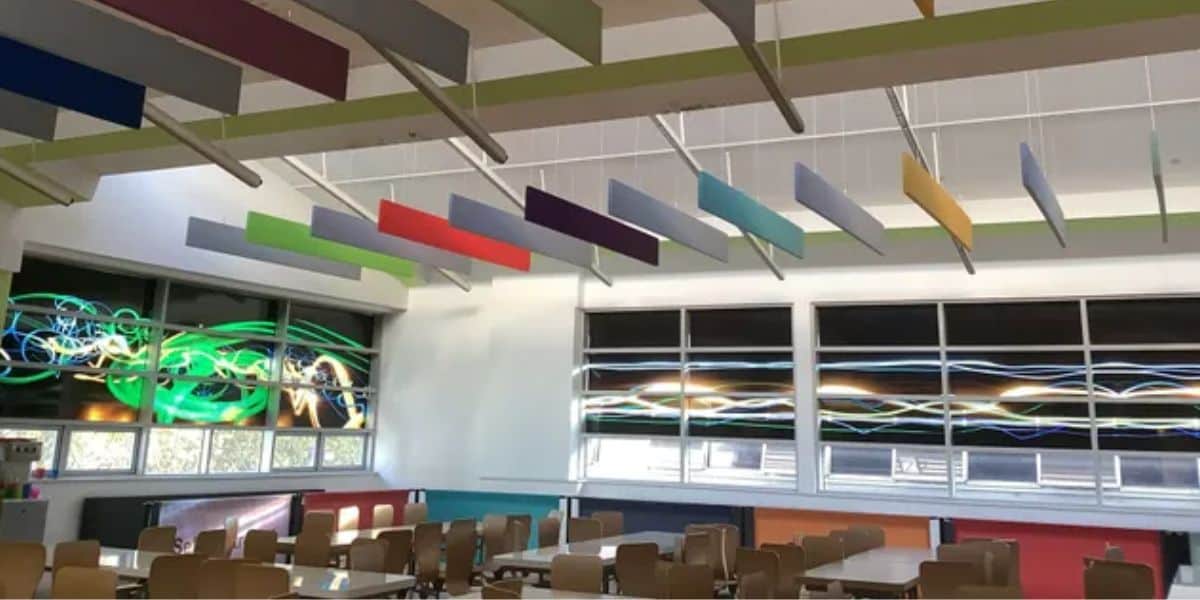
I problemi acustici nelle sale conferenze sono principalmente causati da suono riflesso, non la voce diretta. Quando una persona parla, il suono viaggia verso l'esterno, colpisce le superfici e rimbalza nella stanza. Se rimangono forti riflessi, la stanza suona "dal vivo" e la parola diventa meno chiara.
Assorbimento acustico vs riflessione
- Superfici riflettenti Rimbalzo del suono (vetro, cemento, soffitti duri)
- Superfici assorbenti Convertire parte dell'energia sonora in calore attraverso l'attrito all'interno di materiali porosi (sistemi in feltro, lana minerale, PET, schiuma)
infissi acustici aiutare Ridurre la forza delle riflessioni, soprattutto quelli che arrivano subito dopo la voce diretta.
Ridurre i tempi di riverbero
Le sale conferenze possono soffrire quando il suono indugia troppo a lungo dopo ogni parola pronunciata. Gli apparecchi acustici riducono la durata del suono nella stanza (spesso descritto come una riduzione della "coda di riverbero") della stanza). Non è necessario calcolarlo per capire l'impatto: Il riverbero più breve rende il discorso più distinto.
Migliorare l'intelligibilità del parlato
La chiarezza del parlato migliora quando l'ascoltatore riceve:
- un forte suono diretto dall'oratore, e
- Meno/più morbido Primi riflessi che consonanti di sfocatura
Gli apparecchi acustici riducono la "sovrapposizione" di riflessi che fanno sentire le voci imbrattate o faticose da seguire.
Perché l'assorbimento delle medie frequenze è importante per il discorso
L'intelligibilità del linguaggio umano è fortemente influenzata dalle frequenze di fascia media (dove vivono molte consonanti e segnali di sillaba). Nelle sale riunioni, non è sufficiente assorbire solo frequenze molto alte. Gli apparecchi acustici pratici sono utili perché spesso prendono di mira il Intervallo di rilevanza vocale, che è ciò che rende le riunioni più chiare piuttosto che semplicemente "ottuse".
Tipi di chiavi menzionati nelle ricerche reali

Le persone che cercano l'acustica della sala conferenze spesso incontrano alcuni termini comuni. Queste non sono "soluzioni magiche" separate, ma descrivono diversi modi in cui l'assorbimento è integrato in una stanza.
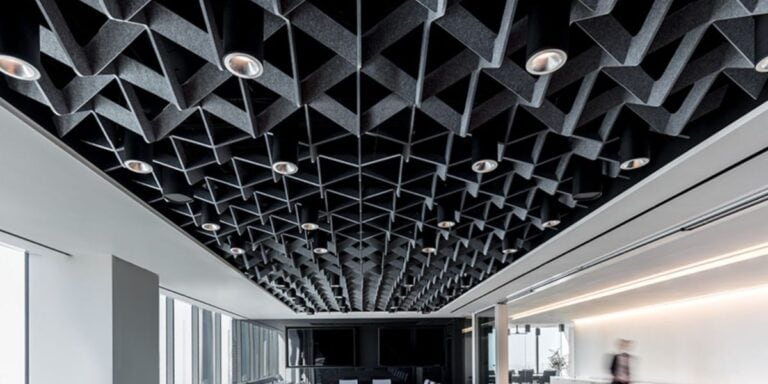
infissi acustici
infissi acustici sono elementi costruttivi funzionali che forniscono anche assorbimento acustico. Nelle sale riunioni, sono spesso sospese, montate a soffitto o montate a parete.
Come aiutano:
- assorbire l'energia sonora riflessa
- Ridurre l'eco e l'eccesso di "vivacità"
- Migliora la chiarezza a tavola e attraverso la stanza
Dove usato:
- Oltre i tavoli per conferenze
- nelle griglie a soffitto o nei soffitti aperti
- Su zone di pareti chiave che causano forti riflessi
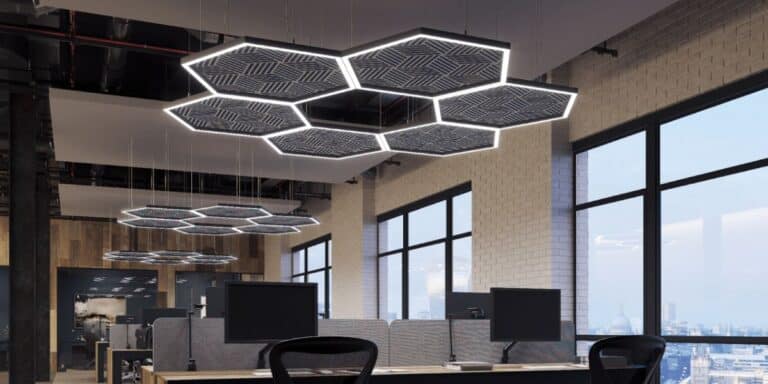
Illuminazione acu
Illuminazione acu Combina l'illuminazione con materiali assorbenti. Il vantaggio principale è che utilizza il tetto del soffitto in modo efficiente, che spesso è l'area più importante per controllare le riflessioni nelle sale riunioni.
Perché la posizione del soffitto è importante:
- Il soffitto è una delle principali superfici di riflessione per le voci
- Il rimbalzo da tavolo a soffitto è un percorso di riflessione comune
- Il posizionamento sopraelevato può trattare la zona del parlato senza utilizzare lo spazio sulla parete

Lampada a sospensione a LED acustica a cerchio diretto
- Tensione di ingresso: AC100-277V / AC220-240V,50-60Hz
- Altezza Dimensioni: H65mm
- Taglia D: 600 mm / 800 mm / 1000 mm / 1200 mm
- CCT: 3000K / 4000K / 6000K
- Potenza: 40W / 60W / 80W / 96W
- Flusso luminoso: 100-110lm/W
- contestatario -Glare: Sì
- CRI: >80RA
- PF: >0.90
- Flicker gratuito: sì
- Angolo del fascio di luce: 120°
- Grado IP: IP20
- Garanzia: 5 anni
- Colore del pannello acustico in feltro: rosso / verde / blu / grigio Più di 48 colori
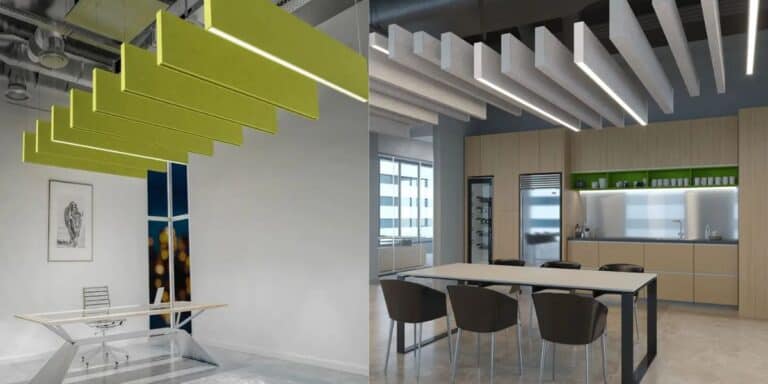
Pannello per illuminazione acustica
Un Pannello per illuminazione acustica è tipicamente un assorbitore a pannello che può essere integrato con l'illuminazione o montato nelle zone di illuminazione.
Come si usa:
- Soffitto sopra l'area meeting
- A volte installato sulle pareti se le opzioni del soffitto sono limitate
Perché è importante:
- I moduli del pannello possono coprire aree più grandi in modo pulito
- Sono più facili da posizionare sopra la zona di riflessione del tavolo
Illuminazione e apparecchi in feltro
Illuminazione e apparecchi in feltro Fare riferimento a elementi di illuminazione o soffitto decorativi realizzati con materiali assorbenti in feltro o feltro.
Perché sono comuni negli uffici moderni:
- I materiali a base di feltro sono facili da modellare in deflettori, sfumature e pannelli
- Si adattano a stili interni minimalisti
- Aggiungono assorbimento senza sembrare "insonorizzazione"
Il punto chiave: questi termini descrivono Come viene confezionato l'assorbimento, non se funziona. Le prestazioni dipendono fortemente da Posizionamento e copertura.
Le migliori strategie di posizionamento per un discorso chiaro

Un buon posizionamento è ciò che trasforma i dispositivi acustici da "bel decoro" a un controllo eco significativo. L'obiettivo è trattare le superfici che creano i riflessi più forti e dannosi per il discorso.
Puntare i primi punti di riflessione
I primi riflessi sono i primi forti rimbalzi che raggiungono gli ascoltatori poco dopo la voce diretta. Sono particolarmente dannosi perché interferiscono con la chiarezza del linguaggio senza sembrare un'eco distinta.
Nelle sale conferenze, i percorsi comuni di prima riflessione includono:
- Altoparlante �� tabella → tetto → ascoltatori
- Altoparlante �� muro di cinta → ascoltatori
- Altoparlante �� parete di vetro → ascoltatori
- Altoparlante �� muro di fondo → ascoltatori (spesso ascoltato come schiaffo)
Modo semplice per pensarci:
- Se una superficie "vede" sia l'altoparlante che l'ascoltatore, può creare un forte riflesso.
- Se quel riflesso arriva rapidamente, sfoca il discorso.
La migliore strategia di posizionamento consiste nell'assorbire il suono dove si verificano questi primi riflessi, a cominciare dalla zona del soffitto sopra il tavolo.
Posizionamento del soffitto
Il posizionamento del soffitto è spesso la mossa ad alto impatto perché mira alla più grande superficie di riflessione e alla zona del parlato principale.
Posiziona gli infissi sopra il tavolo delle riunioni
Montare gli apparecchi acustici direttamente sull'area del tavolo perché è lì che:
- La maggior parte delle voci ha origine
- La maggior parte degli ascoltatori è seduta
- I circuiti di riflessione più forti si verificano
Questo è particolarmente importante per le camere con:
- Soffitti duri (muro a secco, cemento)
- Texture minimal soffitto
- Soffitti aperti con decking riflettente

Luce lineare a LED acustica super sottile
- Tensione di ingresso: AC100-277V / AC220-240V,50-60Hz
- Direzione emettendo: verso il basso
- Dimensioni: 1218 * 3640 mm
- CCT: 3000K / 4000K / 6000K
- Potenza: 30W
- Flusso luminoso: 100-110lm/W
- CRI: >80RA
- PF: >0.90
- sfarfallio gratuito: sì
- Angolo del fascio di luce: 120°
- Grado IP: IP20
- Garanzia: 5 anni
- Colore del pannello acustico in feltro: rosso / verde / blu / grigio Più di 48 colori
Riduci il "rimbalzo del soffitto"
In molte stanze, il soffitto si comporta come uno specchio per il suono. Le voci rimbalzano, si allargano e tornano all'area del tavolo. Gli apparecchi acustici interrompono questo ciclo assorbendo energia prima che ritorni.
Questo aiuta:
- ascoltatori di persona (meno macchia sui sedili)
- Riunioni ibride (microfoni catturano meno audio della stanza)
- Persone all'estremità del tavolo (Taker più chiari)
Perché il posizionamento centrale è importante
Un errore comune è mettere l'assorbimento attorno ai bordi della stanza lasciando la zona del tavolo non trattata. Nelle sale conferenze, la priorità acustica non è "anche la copertura ovunque". È Chiarezza del discorso al tavolo.
Il posizionamento centrale funziona perché:
- tratta l'area principale della fonte del parlato
- riduce i riflessi che viaggiano attraverso il tavolo
- Migliora la chiarezza per la maggior parte delle posizioni di seduta
inserimento di pareti
Il trattamento a soffitto spesso offre il primo grande miglioramento, ma il posizionamento delle pareti è ciò che rende i risultati coerenti in tutta la stanza, specialmente in spazi medio-grandi.
Pareti laterali: controllo dei riflessi laterali
I riflessi delle pareti laterali possono essere molto dannosi perché arrivano da sinistra e da destra, creando un "lavaggio" di linguaggio riflesso che rende più difficile la messa a fuoco.
Gli apparecchi acustici a parete possono aiutare:
- Ridurre i riflessi aspri del lato
- Migliorare la chiarezza per gli ascoltatori lungo il tavolo
- Abbassare il senso di "grido" nella stanza
Parete posteriore: ridurre lo schiaffo nelle stanze più grandi
I riflessi della parete posteriore spesso creano un distinto rimbalzo ritardato, specialmente quando qualcuno parla verso l'estremità più lontana della stanza. Questa è una delle riflessioni che le persone notano di più.
L'assorbimento della parete posteriore è utile quando:
- La stanza è più lunga di quanto sia ampia
- la parete più lontana è dura e piatta
- Le voci suonano come se "rimbalzassero" nella stanza
Perché il solo soffitto a volte non è sufficiente
L'assorbimento del soffitto riduce la superficie di riflessione più grande, ma le pareti creano ancora:
- Riflessioni laterali
- Schiaffo posteriore
- Riflessi da pareti divisorie in vetro
Se le persone si lamentano ancora della chiarezza dopo il trattamento del soffitto, le pareti sono il prossimo passo logico.
Evita gli errori di collocamento comuni
La maggior parte dei problemi di eco persistono perché l'assorbimento viene installato in luoghi che sembrano equilibrati, ma non trattano i percorsi di riflessione effettivi.
Gli errori comuni includono:
- Posizionando solo a un'estremità della stanza e lasciando la zona riflettente
- lasciando grandi zone riflettenti non trattate, in particolare la zona del soffitto sopra il tavolo
- Solo per il trattamento degli angoli ma ignorando i principali percorsi di riflessione tra oratori e ascoltatori
Angoli e aree perimetrali possono aiutare come trattamento di supporto, ma raramente risolvono la chiarezza del linguaggio da sala conferenze da soli.
Tabella di confronto veloce
Opzioni di posizionamento degli apparecchi acustici per sale conferenze
| Area di collocamento | Cosa riduce | Il migliore per | errore comune |
| Soffitto sopra il tavolo | Riflessioni forti + eco | Chiarezza del linguaggio | Montaggio troppo lontano dalla tabella |
| pareti laterali | Riflessioni laterali | Dialogo più chiaro | Trattando solo un muro |
| muro di fondo | Eco "Schiavo" | Stanze più grandi | ignorando completamente la parete posteriore |
| Angoli/Perimetro | Accumulo di riflessioni | Controllo di supporto | Usando gli angoli solo come soluzione principale |
Questa tabella mostra perché il posizionamento del soffitto sopra il tavolo è solitamente la prima priorità: punta i percorsi di riflessione più forti nelle tipiche sale conferenze.
I trattamenti perimetrali e perimetrali sono ancora preziosi, ma funzionano meglio come Strati di supporto Una volta che la zona del parlato principale è stata affrontata.
Guida pratica camera per camera
Non hai bisogno di un piano acustico complesso per prendere buone decisioni. Un approccio pratico consiste nel dare la priorità alla zona del parlato, quindi aggiungere un trattamento di supporto in cui le riflessioni rimangono evidenti.
Piccole sale riunioni
Problema tipico: i forti riflessi in uno spazio compatto rendono le voci dure e vicine.
Ordine prioritario:
- infissi acustici Sopra la tavola
- uno o due muro di cinta zone se la stanza è ancora acuta
- Parete posteriore solo se si nota lo schiaffo
Nelle piccole stanze, il posizionamento del soffitto spesso risolve rapidamente la maggior parte del problema.
Sale conferenze medie
Problema tipico: il rimbalzo del soffitto più i riflessi delle pareti laterali riducono la chiarezza su più sedili.
Ordine prioritario:
- assorbimento a soffitto centrato sul tavolo
- muro di cinta Trattamento da entrambe le parti (copertura equilibrata)
- Supporto per parete posteriore se la stanza è lunga o ha una superficie posteriore dura
Le camere medie beneficiano della combinazione di soffitto + pareti in modo che il parlato rimanga chiaro su tutta la lunghezza del tavolo.
Grandi sale riunioni
Problema tipico: i riflessi si accumulano attraverso la distanza e lo schiaffo della parete posteriore diventa più evidente.
Ordine prioritario:
- Trattamento a soffitto forte sopra l'area salotto principale
- Assorbimento della parete posteriore per controllare i riflessi ritardati
- Supporto per parete laterale per ridurre il lavaggio laterale
- Supporto perimetro/angolo solo dopo che i percorsi di riflessione principali sono stati controllati
In stanze più grandi, il trattamento di una sola superficie di solito porta a risultati irregolari. La stanza può suonare meglio in alcuni posti ma non in altri.
Ulteriori suggerimenti che migliorano i risultati
Questi aggiustamenti pratici possono migliorare i risultati anche quando la copertura dell'apparecchio è limitata.
- Combina soffitto + assorbimento da parete quando necessario
Il trattamento del soffitto riduce i più grandi riflessi, mentre le pareti migliorano la consistenza e riducono lo striscio laterale. - Mantieni la priorità della zona di parlato (area della tabella)
Concentrati su dove le persone parlano e ascoltano. L'assorbimento decorativo lontano dalla tavola ha spesso un impatto minore. - Riduci il disordine riflettente duro, se possibile
Grandi superfici in vetro, pareti nude e tavoli altamente riflettenti aumentano l'eco. Anche i piccoli cambiamenti possono ridurre la forza di riflessione. - L'integrazione acustica + illuminazione aiuta quando lo spazio sul soffitto è limitato
L'illuminazione acustica può facilitare l'aggiunta di assorbimento nella posizione ad alto impatto senza competere con altri servizi a soffitto.
Nota di tendenza 2026
Nel 2026, molti uffici si stanno muovendo verso Illuminazione acu e altri elementi del soffitto integrati per supportare le riunioni ibride. Anche le soluzioni modulari per soffitto stanno diventando sempre più comuni, soprattutto dove gli spazi devono adattarsi. L'attenzione si concentra in genere sul bilanciamento del comfort e della chiarezza del parlato senza modificare la disposizione della stanza.
Conclusione
Sì, infissi acustici Riduci l'eco nelle sale conferenze assorbendo il suono riflesso e abbassando la quantità di riverbero che interferisce con la parola. I migliori risultati provengono dal corretto posizionamento, in particolare Sul soffitto sopra il tavolo da riunione, dove le prime riflessioni sono più forti. Per un discorso più chiaro su tutti i sedili, il trattamento del soffitto spesso funziona meglio se supportato da muro di cinta E a volte muro di fondo assorbimento. L'obiettivo è semplice: meno riflessioni forti e chiarezza di conversazione più coerente.
Domande frequenti
Post correlati