Italiano
  English
  简体中文
简体中文  Deutsch
  Español
  Français
  日本語
日本語  한국어
한국어  Polski
  Português
  Русский
  Türkçe
  Nederlands
  Tiếng Việt
  ไทย
ไทย 
L'illuminazione a strisce a LED è diventata una soluzione standard per progetti architettonici, commerciali e residenziali. Tuttavia, anche con strisce LED di alta qualità e canali in alluminio, molte installazioni soffrono ancora di punti luminosi visibili, abbagliamento o illuminazione irregolare. Nella maggior parte dei casi, la causa principale non è la striscia LED stessa, ma il coperchio del diffusore.
Un coperchio del diffusore a LED non è semplicemente un accessorio estetico. È un componente ottico critico che influisce direttamente sull'uniformità della luce, sul comfort visivo, sull'efficienza e sull'aspetto professionale generale di un sistema di illuminazione. Mentre i canali LED in alluminio funzionano principalmente come dissipatori di calore per proteggere la durata della vita dei LED, il diffusore determina la percezione della luce.
Questa guida si concentra sulle tre opzioni di diffusori più comuni utilizzate nei canali delle strisce LED: coperture trasparenti, lattiginose e nere. Comprendendo le loro differenze, i materiali, i compromessi delle prestazioni e le considerazioni sull'installazione, puoi prendere decisioni informate in linea con i requisiti tecnici e le aspettative visive.
Che cos'è un diffusore di canale LED e perché è importante
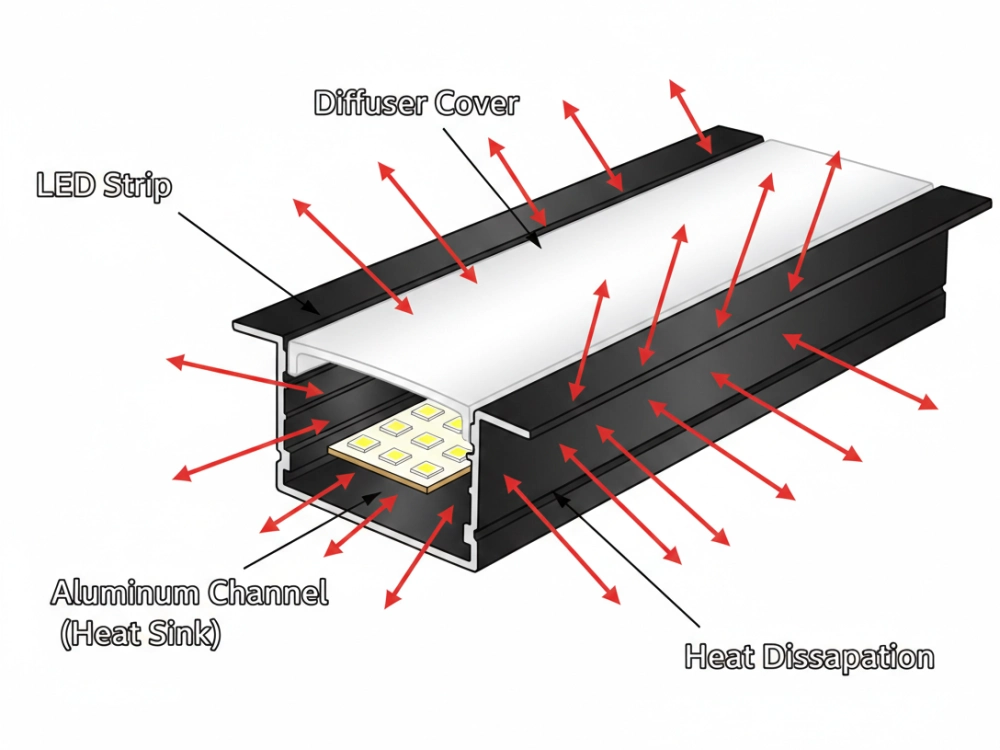
Un diffusore a canale LED (noto anche come copertura o obiettivo) è il componente in policarbonato o PMMA che si aggancia a un profilo LED in alluminio. Il suo scopo principale è quello di disperdere la luce dalle strisce LED per eliminare gli hotspot, proteggere i LED da polvere e contatto fisico e controllare l'angolo del fascio per una finitura professionale.
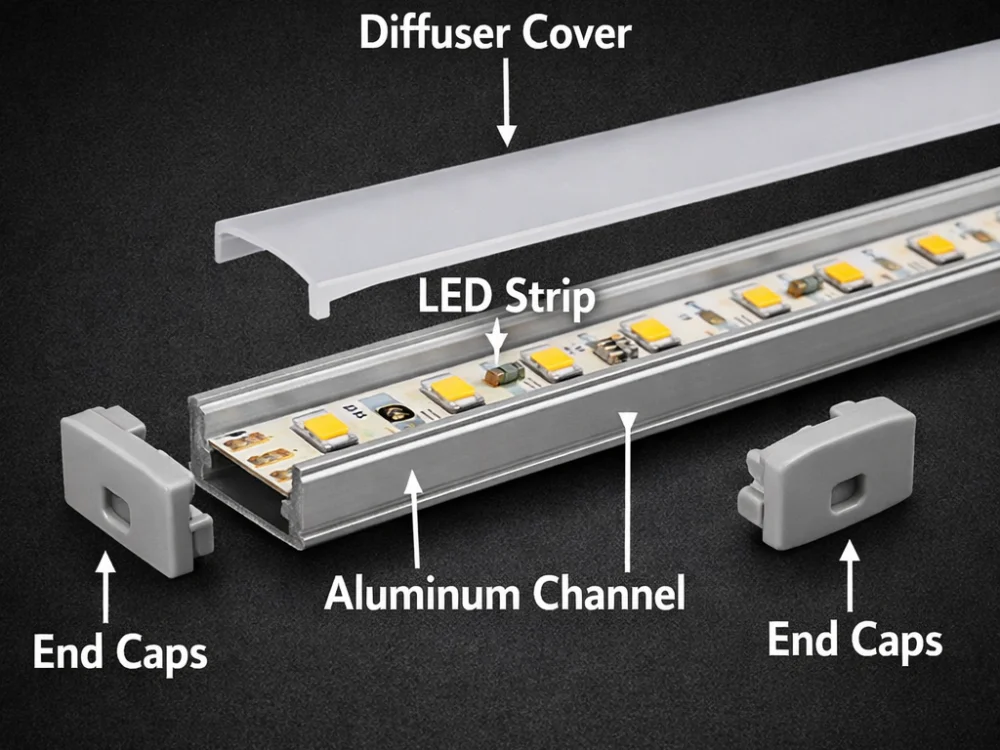
In un sistema completo di canali a strisce LED, il profilo in alluminio e il diffusore a strisce LED lavorano insieme. Il canale in alluminio dissipa il calore, stabilizzando la temperatura di giunzione a LED e prolungando la durata della vita. Il diffusore, invece, gestisce la distribuzione della luce e il controllo dell'abbagliamento. Trascurare uno degli elementi spesso si traduce in una scarsa qualità dell'illuminazione o in un guasto prematuro.
Dal punto di vista ottico, il diffusore influenza tre fattori fondamentali:
- Uniformità leggera e visibilità del punto
- Riduzione abbagliamento e comfort visivo
- Aspetto estetico quando la luce è accesa e spenta
La comprensione della selezione del diffusore è quindi essenziale sia per i lighting designer che per gli acquirenti di progetti.
Questioni di materiale: PMMA vs policarbonato vs PVC
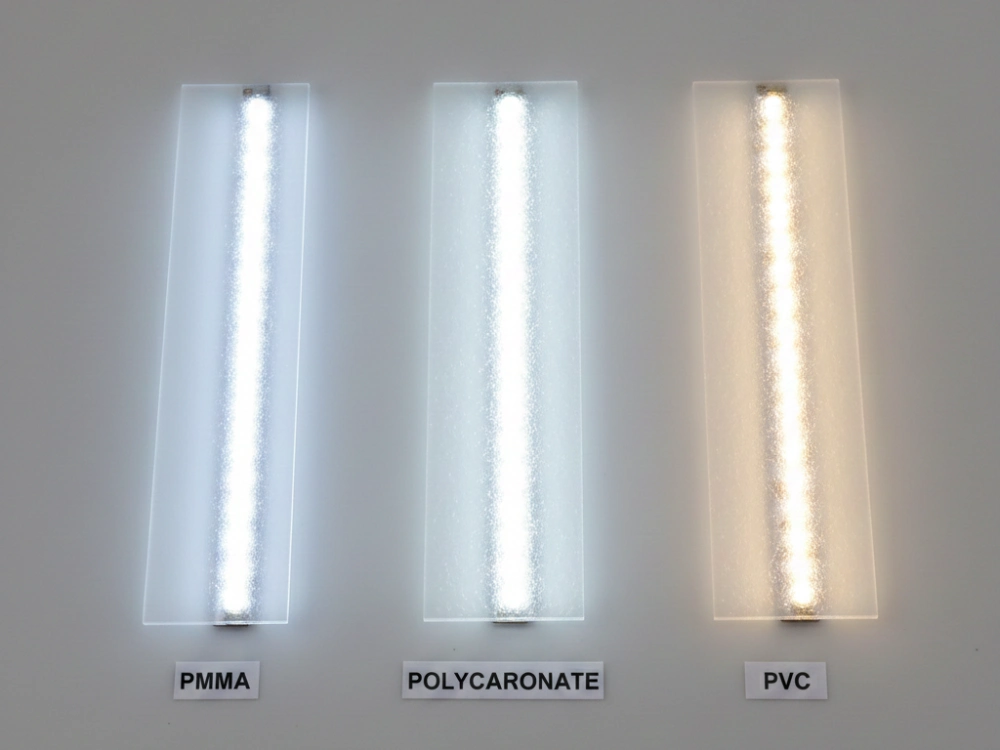
Le prestazioni di un diffusore di canale LED dipendono fortemente dal materiale utilizzato. Mentre molti diffusori sembrano a prima vista simili, il loro comportamento a lungo termine può differire in modo significativo.
Matrice di confronto delle prestazioni dei materiali
| caratteristica materiale | PMMA (acrilico) | Policarbonato (PC) | PVC (standard) |
| trasmissione di luce | Alto (~92%) | Alto (~88%) | Medio (~80%) |
| Resistenza ai raggi UV | Ottimo (non ingiallito) | Buono (stabilizzatori necessari) | Povero (giallo in 1-2 anni) |
| resistenza agli urti | Medio | estremamente alto | Basso |
| Migliore applicazione | Architettonico/vendita | Spazi pubblici / Outdoor | Budget / Temporaneo |
Il PMMA, comunemente noto come acrilico, è ampiamente considerato il miglior materiale per la chiarezza ottica. Offre un'eccellente trasmissione della luce e una forte resistenza all'ingiallimento indotto dai raggi UV, il che lo rende ideale per l'illuminazione architettonica e al dettaglio dove la consistenza visiva conta nel tempo.
Il policarbonato offre una resistenza agli urti superiore ed è spesso scelto per spazi pubblici o installazioni in cui la durata meccanica è fondamentale. Tuttavia, il PC in genere richiede stabilizzatori UV per uso esterno e ha una nitidezza ottica leggermente inferiore rispetto al PMMA.
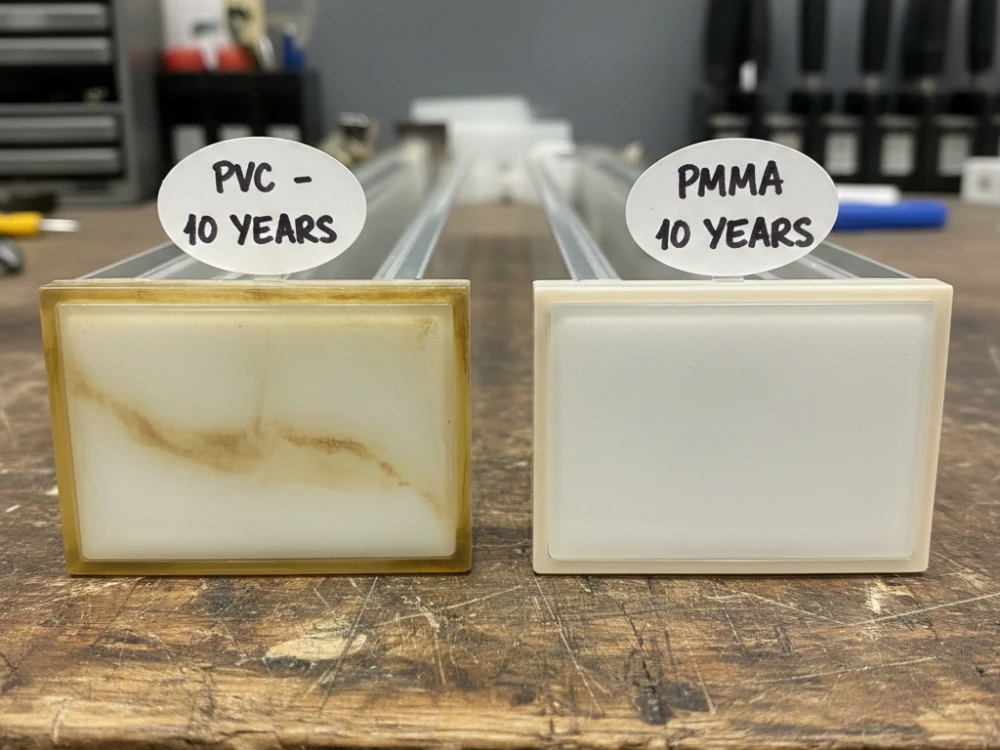
I diffusori in PVC sono principalmente soluzioni basate sui costi. Sebbene accettabile per progetti temporanei o a basso budget, il PVC non trattato tende a degradarsi sotto l'esposizione ai raggi UV, con conseguente ingiallimento visibile e ridotta qualità della luce.
Secondo i dati della ricerca del settore della plastica, il PMMA può mantenere la chiarezza ottica per oltre dieci anni, mentre il PVC non trattato può mostrare un significativo scolorimento entro due anni dall'esposizione ai raggi UV.
Coperture per diffusori trasparenti: massima luminosità, punti luminosi visibili
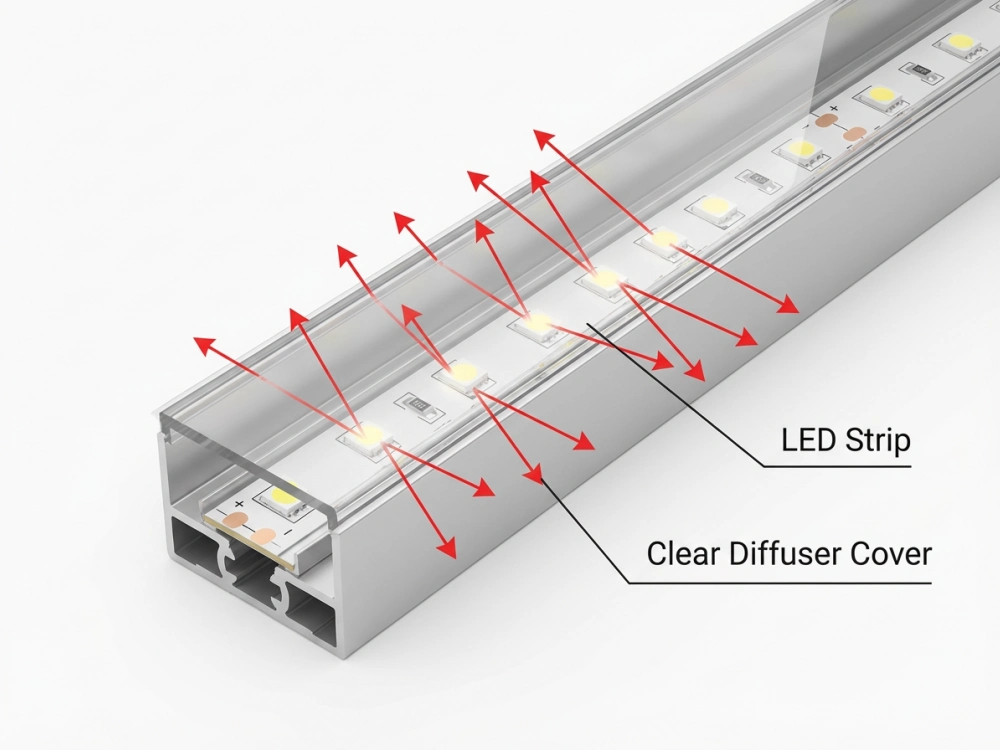
I coperchi trasparenti del diffusore LED sono progettati per preservare il più possibile l'emissione luminosa. Introducono interferenze ottiche minime e vengono spesso selezionate quando la luminosità è l'obiettivo primario.
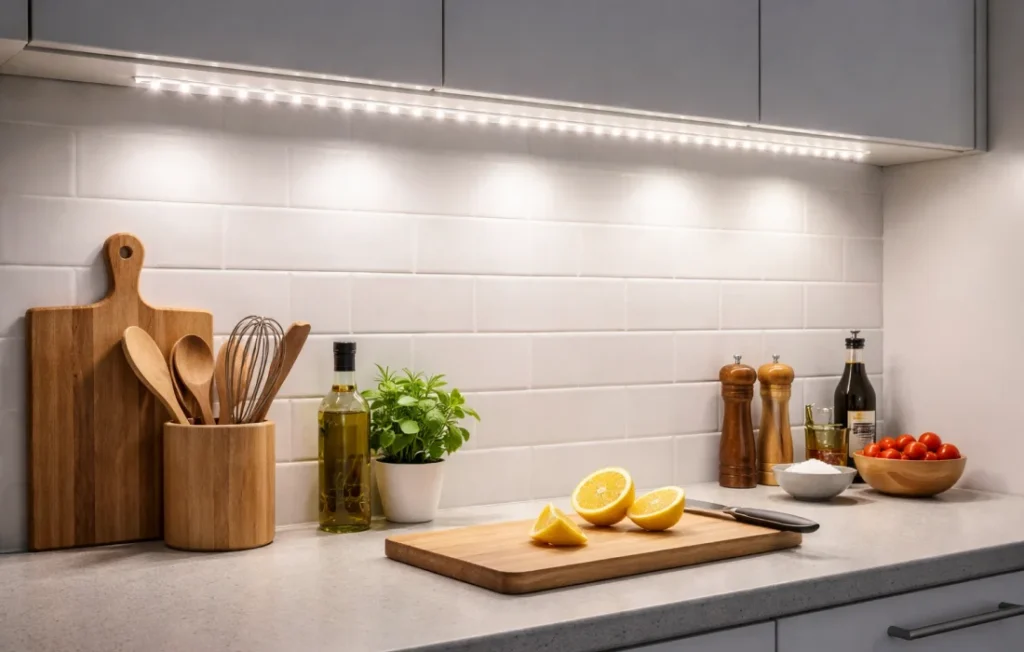
Quando utilizzare Clear LED Striscia diffusori
I diffusori trasparenti sono più adatti per applicazioni in cui l'efficienza della luce supera la morbidezza visiva. I casi d'uso tipici includono l'illuminazione funzionale, l'illuminazione delle attività e l'illuminazione del display in cui i punti LED sono accettabili o addirittura desiderabili.
Con una perdita di luce stimata inferiore al dieci percento, le coperture trasparenti forniscono la massima produzione di lumen tra tutti i tipi di diffusori.
Pro e contro delle coperture del diffusore trasparenti
I vantaggi includono alta efficienza, illuminazione nitida e perdita minima di trasmissione. Tuttavia, i diffusori trasparenti non fanno poco per mascherare i singoli punti LED, specialmente se utilizzati con strisce LED a bassa densità o canali poco profondi. L'abbagliamento può anche diventare un problema nelle installazioni di visualizzazione diretta.
Gli standard di illuminazione Le organizzazioni sottolineano che la perdita di trasmissione è un fattore critico nella progettazione dell'illuminazione, il che spiega perché i diffusori chiari sono preferiti quando l'uscita del lume grezzo ha la priorità.
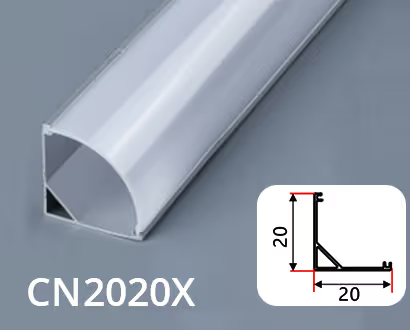
Profili angolari in alluminio
Peso: 0,087KG
Spessore: 0,8 mm
Colore del PC: chiaro
Dimensioni: L1000*W20*H20mm
Tappi terminali/Clip: 1 coppia/m
Colore alluminio: argento/nero
Per un'illuminazione di attività sotto il mobile, dove la luminosità è fondamentale, utilizzare un diffusore trasparente con il nostro Canali ad angolo V per dirigere la luce esattamente dove lavori.
Coperture per diffusori lattiginose: la scelta migliore per l'illuminazione senza punti
I diffusori di luci a strisce a LED lattiginose sono l'opzione più comunemente utilizzata per i canali delle strisce LED, in particolare nell'illuminazione architettonica e decorativa. Il loro vantaggio principale risiede nella loro capacità di disperdere la luce e ridurre gli hotspot visibili.
Perché Milky LED Dincolto Covers sono preferiti per i canali delle strisce LED
Lattea copre bilancia la diffusione della luce e l'efficienza. Disperdendo la luce all'interno della cavità del canale, ammorbidiscono il raggio e riducono significativamente la visibilità del punto. Questo li rende ideali per l'illuminazione indiretta, le calette, i soffitti e le applicazioni architettoniche lineari.
Tuttavia, il diffusore da solo non garantisce un aspetto immacolato. La profondità del canale e la densità dei LED svolgono ruoli altrettanto importanti.
Il segreto immacolato: il rapporto tra profondità e densità LED
L'illuminazione senza punti dipende dalla relazione tra la pece della striscia LED e la distanza di diffusione. Maggiore è la distanza tra la sorgente LED e la superficie del diffusore, più la luce uniforme può diffondersi.
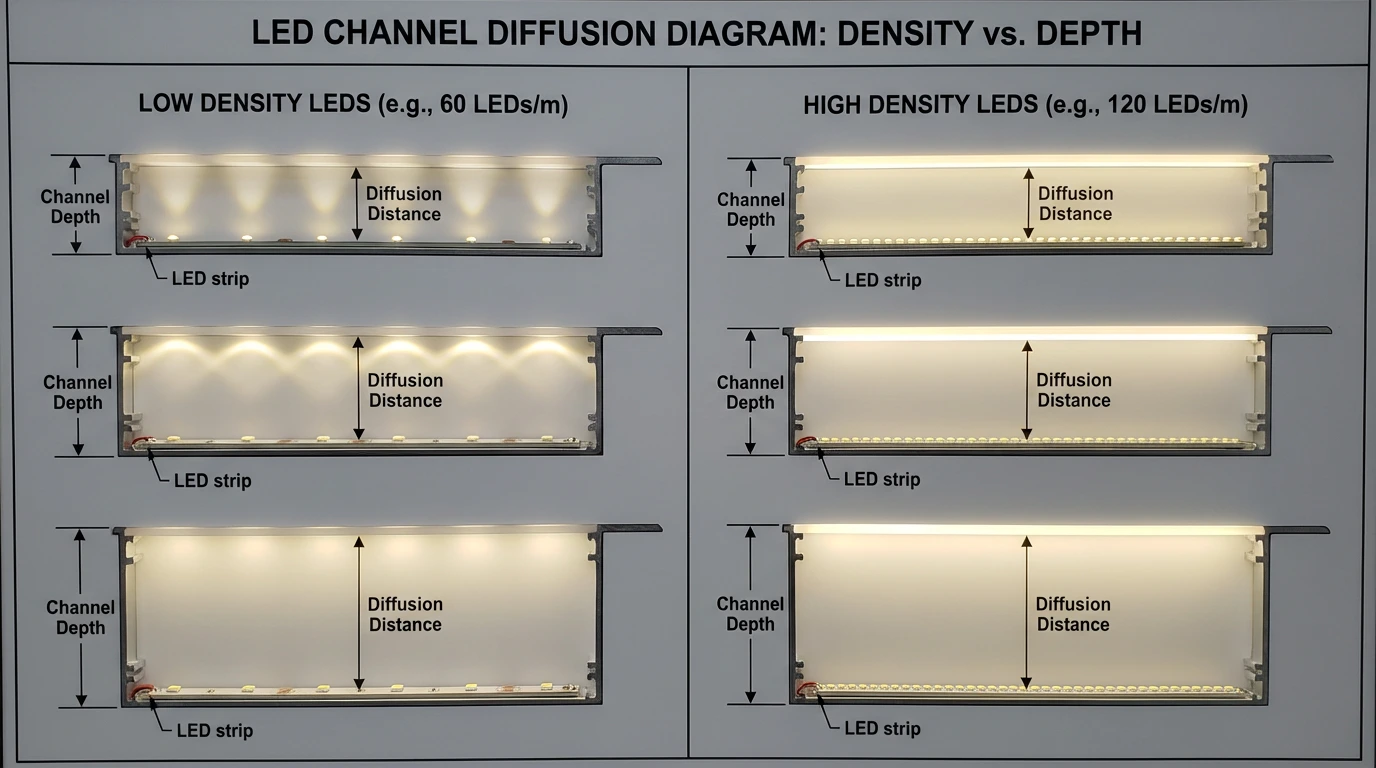
Tabella di riferimento per la distanza immacolata
| Densità striscia LED | Tipo | min. Profondità del canale per effetto immacolato (copertura lattiginosa) |
| 30 LED/m | SMD standard | > 20 mm (incasso profondo) |
| 60 LED/m | SMD standard | > 12–15 mm |
| 120 LED/m | SMD ad alta densità | > 7–10 mm |
| Striscia LED COB | chip-on-board | > 3–5 mm |
Questo tavolo mette in evidenza il motivo per cui le strisce LED COB sono sempre più popolari nell'illuminazione lineare. La loro densità LED estremamente elevata consente un'illuminazione uniforme anche in canali ultrasottili.
Diffusore lattiginoso e strisce LED COB: una combinazione ideale
Se abbinati a strisce LED COB, i diffusori lattiginosi possono ottenere una linea di luce continua simile al neon con una profondità del canale minima. Questa combinazione è ampiamente utilizzata in progetti residenziali, ospitali e commerciali di fascia alta in cui il comfort visivo è fondamentale.
Coperture per diffusori neri: quando l'estetica conta più della luminosità
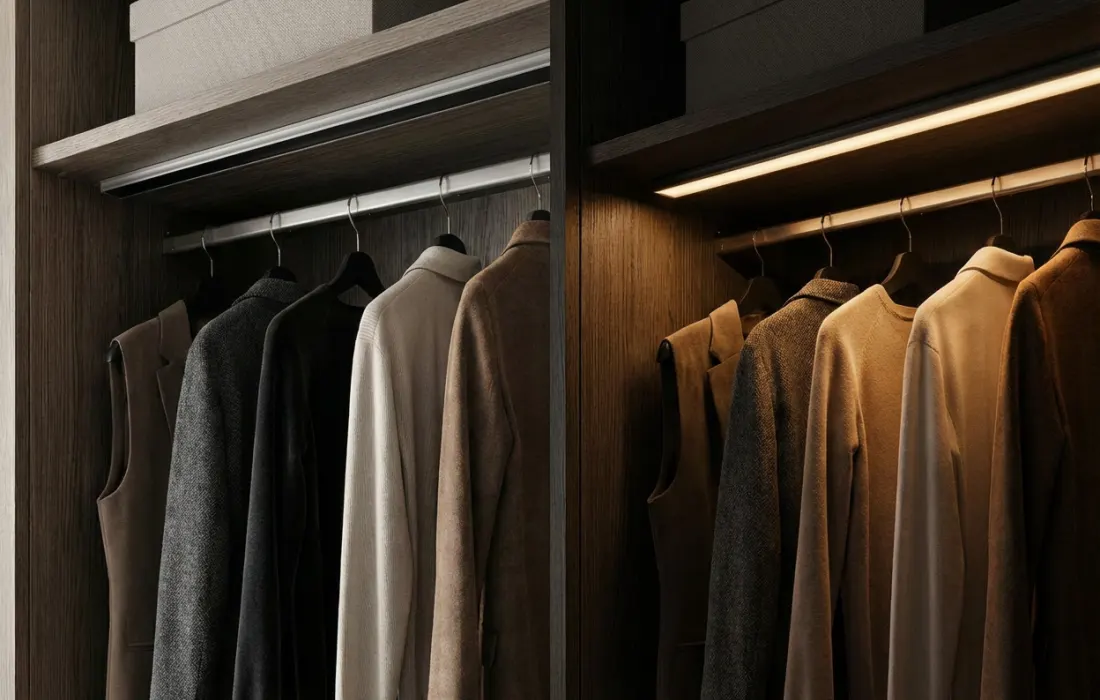
Le coperture del diffusore nero hanno uno scopo completamente diverso. Piuttosto che massimizzare l'emissione di luce, si concentrano sull'integrazione visiva e sull'atmosfera.
Cos'è un LED nero Leggero Copertura del diffusore
I diffusori neri appaiono scuri o opachi quando la luce è spenta, consentendo al canale di fondersi perfettamente con soffitti o pareti. Quando sono illuminati, emettono un bagliore morbido e controllato piuttosto che un raggio lineare luminoso.
Applicazioni di diffusori neri nell'illuminazione architettonica
Le coperture nere sono comunemente utilizzate in hotel, negozi di lusso, bar e interni residenziali moderni. Sono ideali per l'illuminazione d'atmosfera, l'illuminazione d'accento e gli spazi in cui gli infissi dovrebbero rimanere visivamente discreti.
Mentre la perdita di luce può raggiungere il 600000, questo compromesso è intenzionale e si allinea con gli obiettivi di illuminazione ambientale.
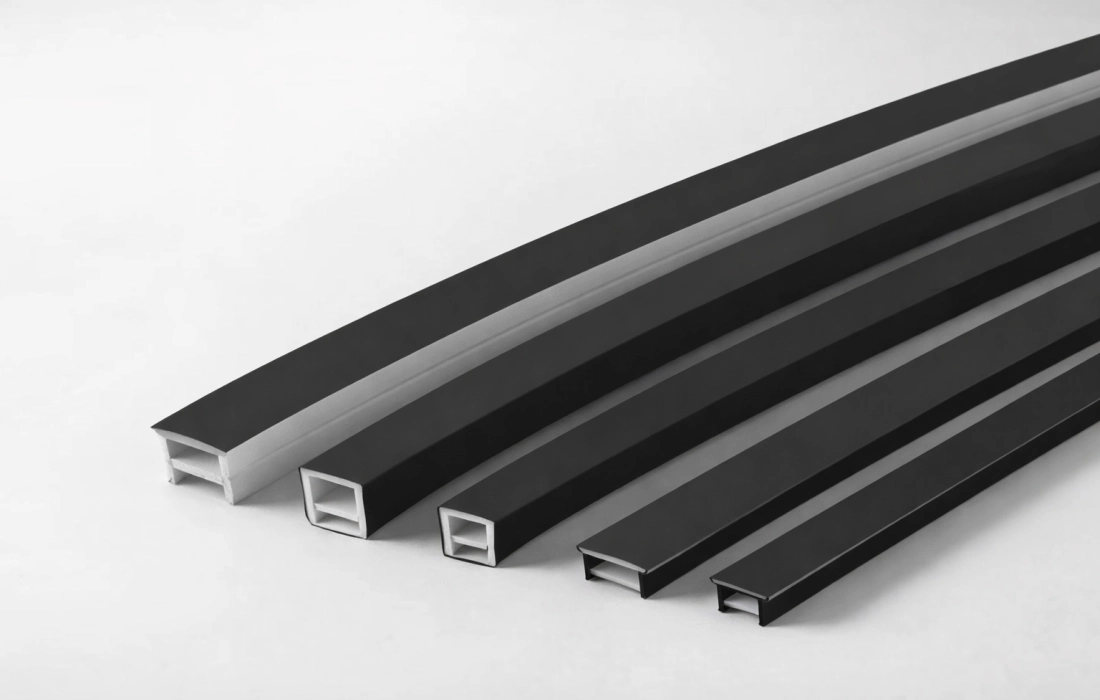
Canale per strisce LED flessibili da incasso
Lunghezza totale: 1m/3m/5m
Direzione luminosa: Luce frontale
Numero di LED: 30LEDs/m e oltre
Colore: nero
Dimensioni della sezione: T1212/T1616/T2010/T2014/T2020/T2520
Larghezza PCB: 7 mm – 20 mm
Angolo del fascio: 120 gradi
Materiale: Silicone
Impermeabile: IP65/IP67/IP68
Sorgente luminosa: SMD2835/5050, striscia COB LED
Per le sale cinematografiche o gli interni a tema scuro, i canali d'argento standard possono distrarre. i nostri Profili in edizione nera scomparire in background quando spento.
Diffusori trasparenti vs latte vs: confronto affiancato
la matrice di confronto definitiva
La scelta della copertura giusta è un compromesso tra l'output del lume (luminosità) e la diffusione della luce (lucibilità). Usa questa tabella per trovare il tuo saldo:
| Caratteristica | diffusore trasparente (trasparente) | diffusore lattiginoso (opale/gelido) | diffusore nero (fumato) |
| trasmissione di luce | 90% – 95% | 70% – 85% | 30% – 40% |
| Visibilità del punto | Alto (chip LED completamente visibili) | Basso a Nessuno (a seconda della profondità) | Zero (completamente nascosto) |
| Spostamento della temperatura del colore | Nessuno (CCT originale) | Lieve riscaldamento (da -100K a -200K) | oscuramento significativo |
| controllo dei riflessi | minimo | Eccellente (ammorbidisce la luce) | Alto (illuminazione dell'umore) |
| Estetica (Stato Off) | Striscia interna visibile | superficie bianca pulita | Finitura nera furtiva |
| Migliore applicazione | Sotto mobile, illuminazione a baia, utilità indiretta | Linee architettoniche, visione diretta, ufficio | Cinema, bar, arredamento a tema scuro |
Analisi degli effetti visivi
Copertine chiare (The Efficiency King): meglio per Applicazioni di illuminazione indiretta dove la sorgente luminosa è nascosta, come all'interno di una baia o sopra un armadio. Dal momento che non vedi direttamente l'apparecchio, la pixelizzazione non ha importanza e ottieni livelli massimi di Lux.
Copertine lattee (lo standard universale): queste sono un omogeneizzatore leggero. Disperdendo il raggio di luce, aumentano l'angolo del raggio (spesso fino a 120 gradi) e riducono l'affaticamento degli occhi. Questo è lo standard per gli apparecchi di illuminazione lineare in cui il canale è esposto.
Copertine nere (a scelta del designer): mentre riducono significativamente l'efficacia luminosa in modo significativo, non hanno eguali per contrasto e stile. Perfetto per l'estetica "Light Out" in cui il canale deve fondersi in soffitti o pareti scure.
Tipi di installazione: diffusori a scatto vs
Prima di acquistare, devi considerare cui stai installando il canale. Il tipo di copertura sbagliato può rendere impossibile l'installazione.
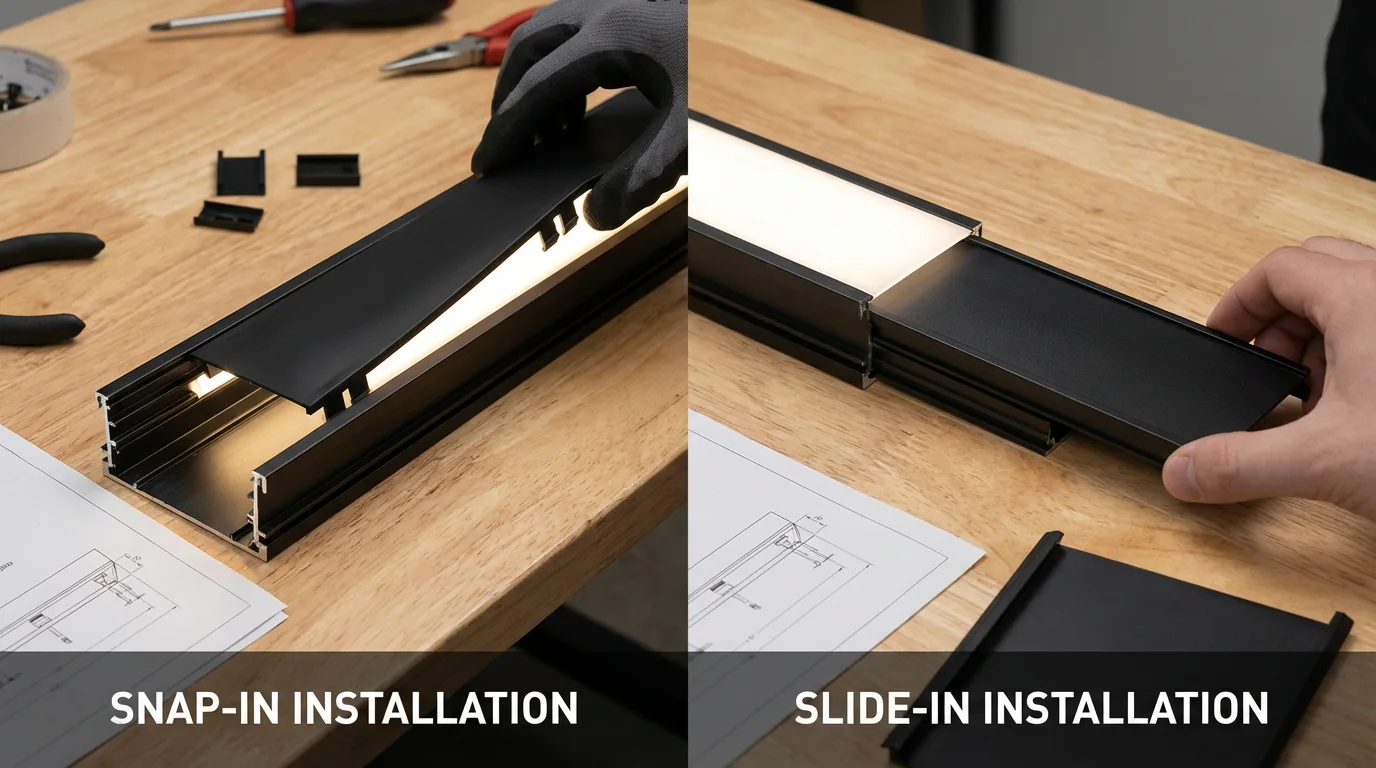
Diffusori a scatto (click-on): la scelta facile da usare
Conosciuti anche come coperture a pressione, queste sono progettate per essere pressate sul canale in alluminio dalla parte anteriore.
- Ideale per: impianti incassati o scanalature (come negli armadi o nel muro a secco) in cui le estremità del canale sono bloccate.
- Pro: Facilità di manutenzione. Se una striscia LED si guasta, puoi semplicemente staccare il coperchio senza rimuovere l'intero apparecchio.
- Meccanismo: utilizza piccole creste per "clic" in modo sicuro nei bordi del profilo.
Diffusori a scorrimento: la presa sicura
Questi devono essere inseriti dall'estremità aperta del profilo in alluminio e fatti scorrere lungo l'intera lunghezza.
- Ideale per: illuminazione sospesa o aree con vibrazioni elevate. La struttura è spesso più stretta e più resistente allo sbuffo.
- Il fermo: hai bisogno di spazio di spazio alle estremità. Non utilizzare coperture a scorrimento per slot da parete a parete, o non sarai mai in grado di inserire l'obiettivo!

Come scegliere il diffusore giusto per il tuo canale a LED
a Scegli il diffusore giusto per i canali LED, segui questi cinque passaggi:
- Controlla la densità del LED e il tipo di striscia. Le strisce ad alta densità o pannocchia si abbinano meglio a diffusori lattiginosi.
- Definisci il tuo obiettivo visivo. Scegliere Clear per la luminosità, lattiginoso per l'uniformità o il nero per l'atmosfera.
- Misura la profondità del canale. I canali più profondi migliorano la diffusione e riducono gli hotspot.
- Seleziona il materiale giusto. Il PMMA offre longevità, il PC offre durata e il PVC dovrebbe essere evitato per progetti a lungo termine.
- decidere il tipo di installazione. Le coperture a scatto semplificano la manutenzione, mentre le lenti a scorrimento offrono una finitura più pulita.
Diffusori per esterni e impermeabili: considerazioni speciali
Le installazioni esterne di canali a strisce LED richiedono molto di più della semplice scelta di un diffusore con buone prestazioni ottiche, ma richiedono anche un'attenta considerazione della protezione ambientale, delle valutazioni impermeabili e dei tipi di strisce LED abbinati. Un diffusore a LED ben selezionato aiuterà a mitigare l'abbagliamento e gli hotspot, ma in ambienti esterni o umidi, il grado di protezione IP del sistema di illuminazione e il tipo di striscia LED che si abbina ad esso sono ugualmente fondamentali per l'affidabilità a lungo termine.
Quando si pianifica una configurazione del canale LED esterno, assicurarsi innanzitutto che la striscia LED stessa sia adatta per le condizioni esterne. Diversi tipi di strisce LED hanno vari gradi di impermeabilizzazione e resistenza ambientale e la scelta di quella giusta proteggerà sia le prestazioni che la durata della vita. Puoi rivedere le differenze tra le varianti di striscia LED e il modo in cui si riferiscono agli scenari di utilizzo in questo Quali sono i tipi di strisce LED pagina di riferimento.
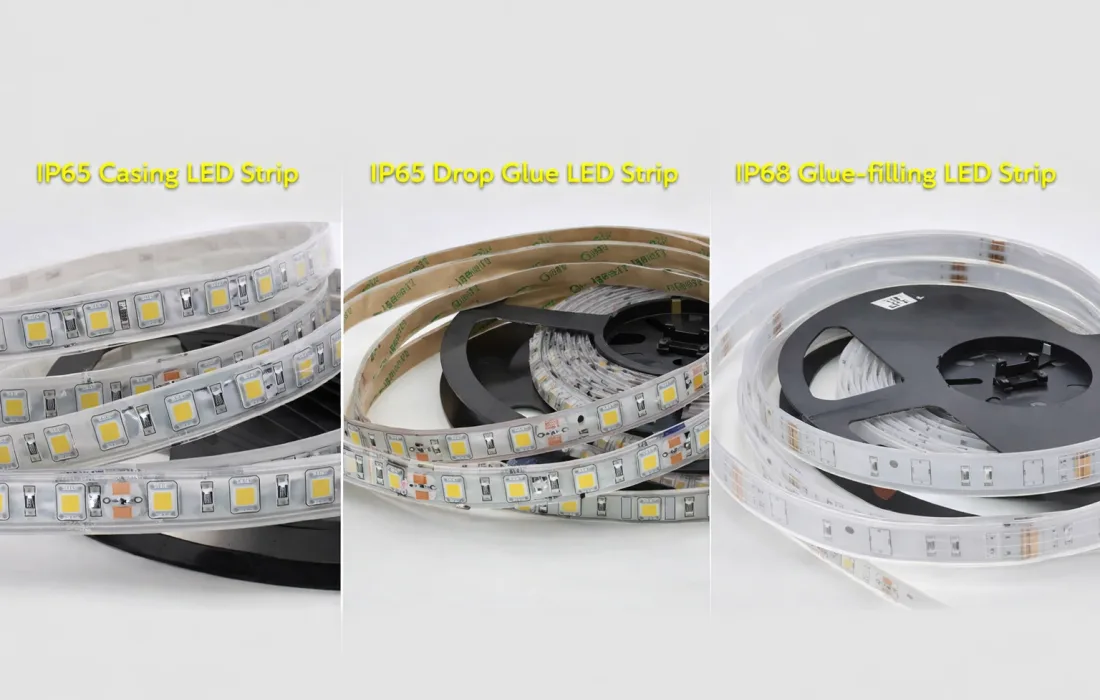
In termini di protezione da acqua e polvere, le strisce LED e i diffusori dovrebbero soddisfare idealmente IP65 o superiori. Secondo il Guida alla classificazione IP impermeabile delle strisce LED, I valori IP65 proteggono da getti d'acqua a bassa pressione e da pioggia leggera, idonee per decorazioni outdoor generali e installazioni semiessposte; IP67 offre protezione contro immersione fino a 1 metro per brevi periodi; e le classificazioni IP68 supportano un uso subacqueo prolungato, ad esempio in piscine o fontane.
Per i diffusori a canale e le strisce LED che lavorano insieme all'aperto, sii consapevole di come la sigillatura influisca sulla dissipazione del calore. Un sistema impermeabile completamente chiuso può impedire la fuga di calore, che a sua volta influisce sulla temperatura di giunzione a LED e sulla longevità generale. L'integrazione di canali in alluminio con appropriati diffusori impermeabili aiuta a bilanciare la protezione e la gestione termica.
In pratica, considera la combinazione di strisce LED impermeabili con diffusori robusti e canali classificati per condizioni esterne. L'abbinamento di strisce per esterni con diffusori IP65+ all'interno di canali in alluminio adeguatamente sigillati non solo previene l'ingresso di umidità, ma supporta anche prestazioni costanti in condizioni climatiche in evoluzione.
Errori comuni quando si sceglie il diffusore a LED calotta
Errore #1: la trappola “Hotspot” (profondità bassa + bassa densità)
L'utilizzo di un profilo superficiale poco profondo (ad es. 6 mm di altezza) con una striscia standard da 60 LED/M garantirà punti visibili, anche con una copertura lattiginosa.
FISSARE: Utilizzare strisce LED COB o un profilo profondo (profondità minima di 15 mm) per garantire che i raggi di luce si sovrappongano prima di colpire l'obiettivo.
Errore #2: ignorare la degradazione UV (effetto “ingiallimento”)
L'acquisto del diffusore più economico di solito significa che è realizzato in plastica generica senza stabilizzatori UV. All'interno vicino a finestre o all'aperto, questi diventeranno fragili e gialli entro pochi mesi.
FISSARE: Specifica sempre le coperture in PMMA (acrilico) o in policarbonato stabilizzate ai raggi UV per la longevità.
Errore #3: dimenticare le tolleranze del cappuccio finale
I diffusori possono espandersi e contrarsi con il calore (espansione termica). Tagliare il diffusore alla stessa lunghezza del canale in alluminio può talvolta causare l'instabilità.
FISSARE: Lascia uno spazio di 1-2 mm o assicurati che i cappucci terminali siano progettati per contenere il diffusore in modo specifico.
Opzioni di diffusore personalizzate per canali a strisce LED in alluminio
Le lunghezze standard di 1 metro o 2 metri non sono sempre sufficienti per i progetti professionali. È qui che la collaborazione con un produttore specializzato come SignLiteled aggiunge valore.
Offriamo soluzioni su misura per esigenze di illuminazione commerciale e architettonica:
- Lunghezze personalizzate: hai bisogno di una corsa continua di 3 metri o più senza cuciture? SignLiteled può estrudere lunghezze personalizzate per ridurre al minimo le perdite di luce e i punti di connessione.
- Opacità su misura: per i progetti OEM, possiamo regolare la miscela di diffusione delle nostre coperture in PMMA, creando il perfetto equilibrio tra nascondere i punti LED e massimizzare la trasmissione della luce per la tua striscia LED specifica.
- Selezione del materiale: scegli tra il policarbonato ad alto impatto (PC) per le passerelle pubbliche o il PMMA di grado ottico per una chiarezza di qualità museale.
- Corrispondenza completa del sistema: non indovinare se la copertina si adatta. SignLiteled fornisce sistemi completamente integrati, assicurando che il dissipatore di calore in alluminio, l'obiettivo del diffusore e gli accessori di montaggio funzionino in perfetta armonia.
Domande frequenti
Pensieri finali
La selezione del diffusore è uno degli aspetti più sottovalutati del design delluminotecnico a strisce a LED. Comprendendo le differenze tra le copertine trasparenti, lattine e nere, insieme alla scienza dei materiali, alla profondità del canale e ai metodi di installazione, è possibile ottenere risultati di illuminazione che siano visivamente raffinati e tecnicamente validi.
Un diffusore ben scelto trasforma un canale a strisce LED da semplice alloggiamento in una soluzione di illuminazione professionale che soddisfa gli standard architettonici moderni.
Post correlati