Italiano
  English
  简体中文
简体中文  Deutsch
  Español
  Français
  日本語
日本語  한국어
한국어  Polski
  Português
  Русский
  Türkçe
  Nederlands
  Tiếng Việt
  ไทย
ไทย 
L'illuminazione acustica si comporta al meglio se installata direttamente sopra le zone di attività del suono primarie come workstation, tavoli da conferenza, aree di collaborazione e posti a sedere a pianta aperta. Il posizionamento del soffitto è fondamentale perché il soffitto funge da superficie di riflessione principale per il parlato. La corretta spaziatura, altezza e distribuzione determinano l'efficacia dell'apparecchio riduce il riverbero e migliora la chiarezza del parlato.
Questo articolo spiega le zone di posizionamento ottimali, le considerazioni sull'altezza, la logica di controllo della riflessione, le strategie di tipo ambiente e gli errori di installazione comuni. L'attenzione si concentra rigorosamente sulle prestazioni di posizionamento in modo che architetti, designer, consulenti acustici e facility manager possano prendere decisioni informate sull'installazione.
Perché il posizionamento del soffitto è più importante del posizionamento delle pareti
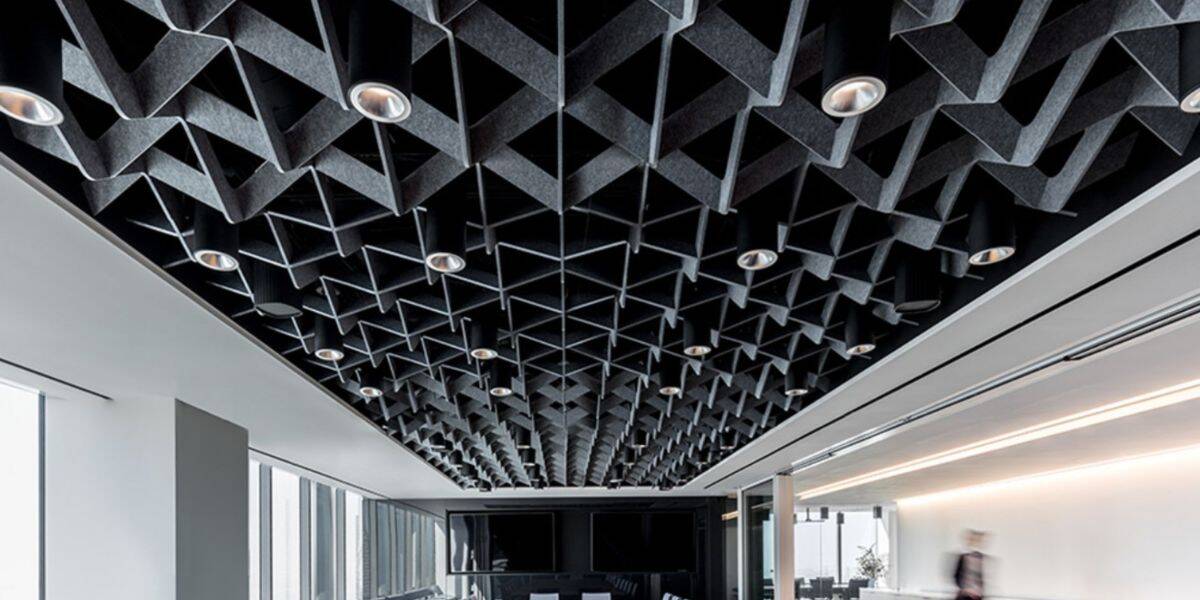
Nella maggior parte degli interni commerciali, l'energia del parlato viaggia verso l'alto immediatamente dopo aver lasciato la bocca dell'oratore. Il primo riflesso significativo si verifica spesso sul piano del soffitto prima di tornare verso il basso nella zona occupata. Questo crea quello che l'acustica chiama un primo percorso di riflessione:
Sorgente del parlato → Soffitto → Energia riflessa → Ascoltatori.
Quando i soffitti sono duri, superfici riflettenti come il cartongesso, il calcestruzzo a vista o il piano di calpestio metallico, l'energia del parlato riflessa rientra rapidamente nella stanza, aumentando i tempi di riverbero e riducendo la chiarezza.
L'assorbimento a parete aiuta, ma affronta principalmente i riflessi laterali. Le riflessioni dall'alto sono in genere più dominanti negli ambienti open space e conferenze perché:
- Il soffitto attraversa l'intera zona occupata.
- Riflette l'energia nel campo del parlato.
- Rafforza il rumore su vaste aree orizzontali.
Illuminazione acu interrompe questo anello di riflessione verticale direttamente sul piano di riflessione. Posizionando gli apparecchi acustici all'interno del percorso di riflessione del soffitto, l'energia del parlato a frequenza media (tipicamente 500–2000 Hz) viene assorbita prima di tornare agli occupanti.
Il posizionamento del muro perimetrale non intercetta questo primo rimbalzo verticale. Gli apparecchi di illuminazione in feltro a soffitto riducono l'intensità dei primi riflessi in modo più efficace perché si trovano direttamente nel percorso del suono.
In particolare in ambienti aperti, l'assorbimento di testamento acustico offre un maggiore impatto acustico per metro quadrato rispetto al trattamento perimetrale.
Zone di posizionamento core
A: Sopra le workstation e i cluster da scrivania
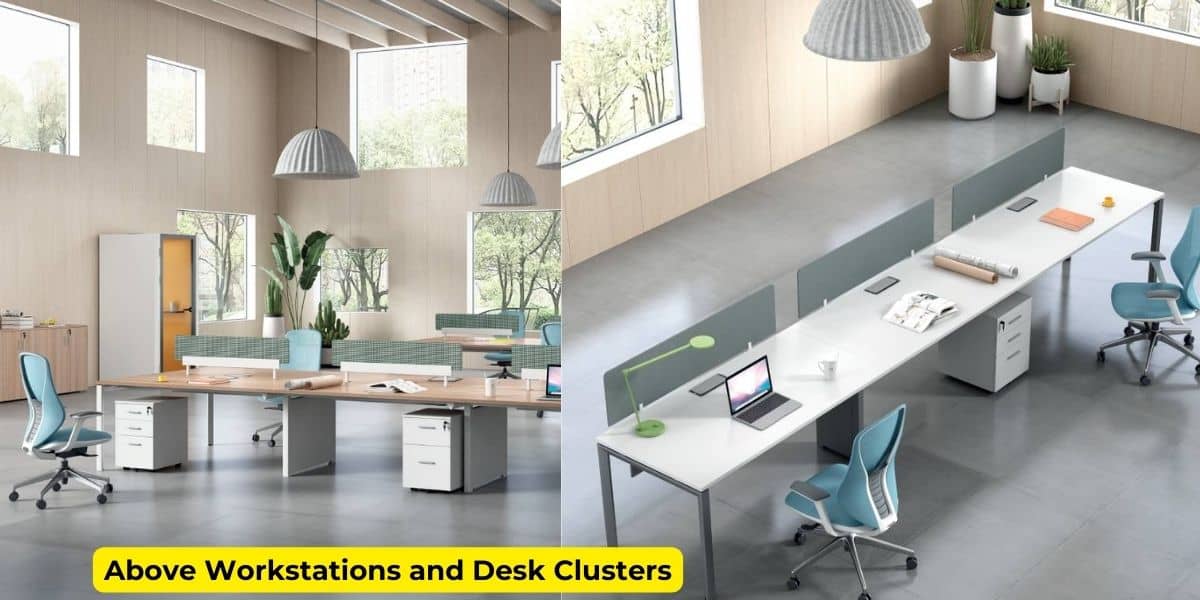
Gli uffici a pianta aperta concentrano il discorso all'interno dei raggruppamenti di workstation. Conversazioni, videochiamate e scambi collaborativi generano energia sonora sostenuta a media frequenza.
Installazione dell'illuminazione acustica direttamente sopra i cluster da scrivania:
- assorbe il linguaggio prima che si diffonda lateralmente.
- Riduce l'accumulo di riverbero tra le righe.
- Limita il cros-talk tra le squadre.
Apparecchi di illuminazione in feltro sono particolarmente efficaci perché il feltro di poliestere denso assorbe il linguaggio a media frequenza dove risiede la maggior parte dell'energia di intelligibilità.
La logica di distribuzione è importante. Invece di posizionare gli infissi lungo i corridoi o vicino alle pareti, gli infissi dovrebbero essere centrati sopra le scrivanie attive e estendersi leggermente oltre l'impronta di seduta. Come linea guida:
- Obiettivo 20–35% Copertura del soffitto sopra le zone desk ad alta attività.
- Mantenere una spaziatura costante per evitare lacune riflettenti non trattate.
- Evitare i layout di solo perimetro, che consentono alle zone centrali del parlato di rimanere riflessive.
I layout sottoperformanti in genere posizionano l'illuminazione in modo decorativo lungo i percorsi di circolazione piuttosto che le sorgenti sonore al di sopra.
B: sopra i tavoli per conferenze
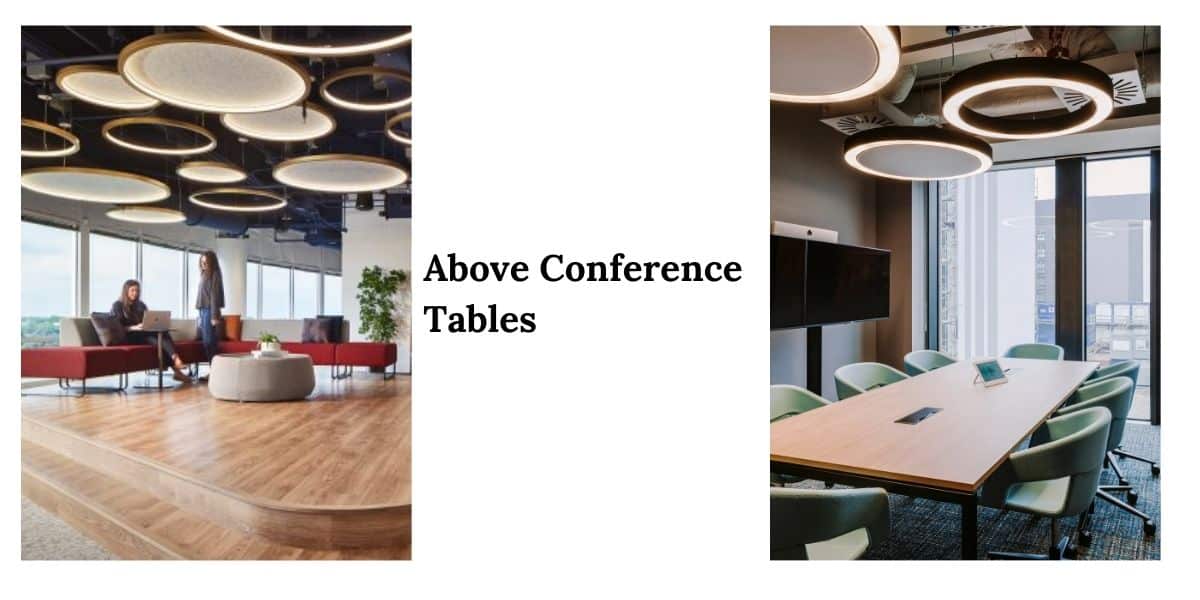
Le sale conferenze concentrano il discorso diretto in un'area fissa. Più partecipanti parlano verso il centro del tavolo e il suono si riflette verticalmente fuori dal soffitto.
La configurazione ottimale:
- Installare l'illuminazione acustica centralmente sopra il tavolo.
- Estendi la copertura di 300–600 mm oltre l'ingombro del tavolo.
- Allineare gli infissi con l'asse della tavola per un assorbimento uniforme.
Se una stanza è allungata, una disposizione lineare che rispecchia la forma del tavolo funziona meglio di un singolo cluster compatto.
Anche l'altezza conta. Nei tipici soffitti di 2,7–3 m, la sospensione di infissi di 400–800 mm sotto la soletta migliora l'efficienza di assorbimento posizionando il materiale più vicino alla zona di riflessione.
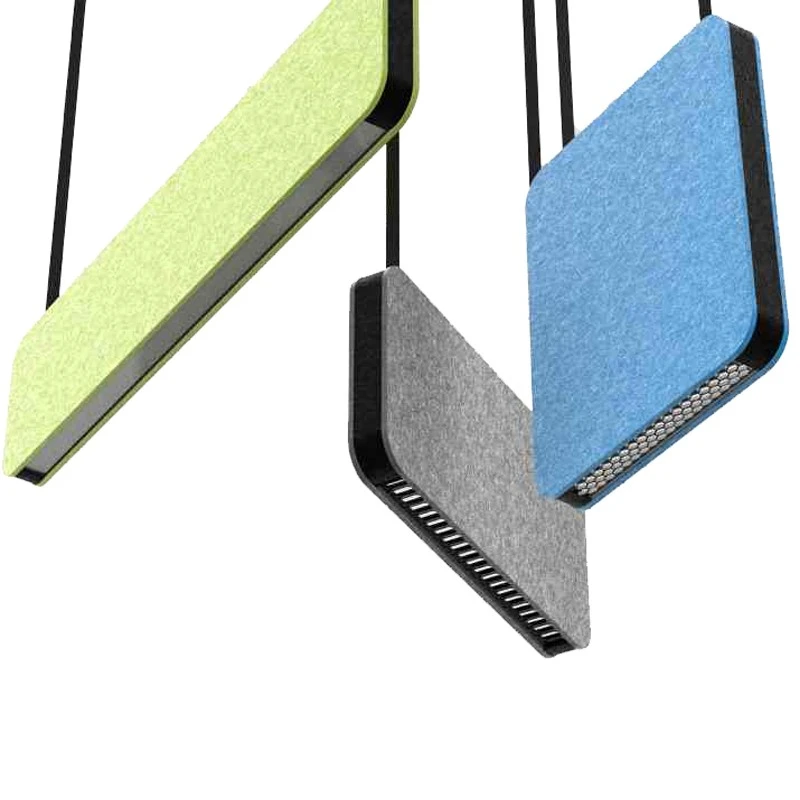
Luce lineare a LED acustica super sottile
- Tensione di ingresso: AC100-277V / AC220-240V,50-60Hz
- Direzione emettendo: verso il basso
- Dimensioni: 121836400 mm
- CCT: 3000K / 4000K / 6000K
- Potenza: 30W
- Flusso luminoso: 100-110lm/W
- CRI: >80RA
- PF: >0.90
- Flicker gratuito: sì
- Angolo del fascio di luce: 120°
- Grado IP: IP20
- Garanzia: 5 anni
- Colore del pannello acustico in feltro: rosso / verde / blu / grigio Più di 48 colori
C: zone di collaborazione e aree lounge
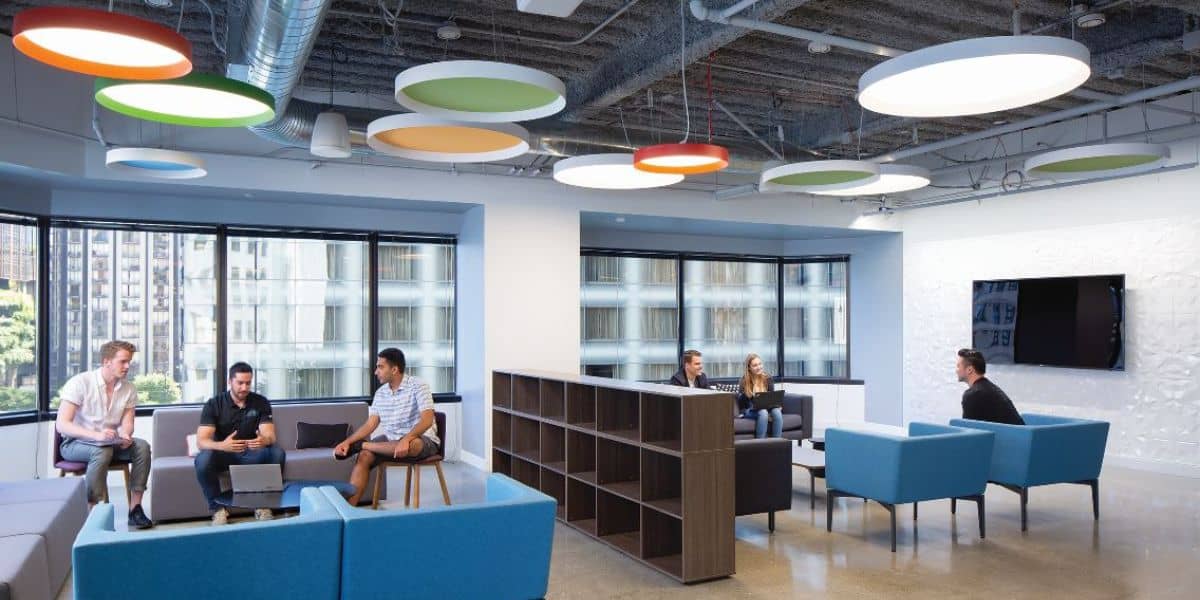
Le zone informali generano cluster vocali imprevedibili ma concentrati. Senza assorbimento dall'alto, il rumore si riversa nelle zone silenziose adiacenti.
Installazione dell'illuminazione acustica sopra:
- Quadri di seduta morbidi
- Spazi di huddle
- Pod di incontro informale
Crea zone di assorbimento localizzate. Questo contiene il suono vicino alla sua fonte e impedisce l'accumulo di riverbero attraverso la piastra del pavimento.
La strategia di posizionamento dovrebbe dare la priorità al contenimento del suono, non alla simmetria visiva.
Linee guida per l'altezza di installazione e le so
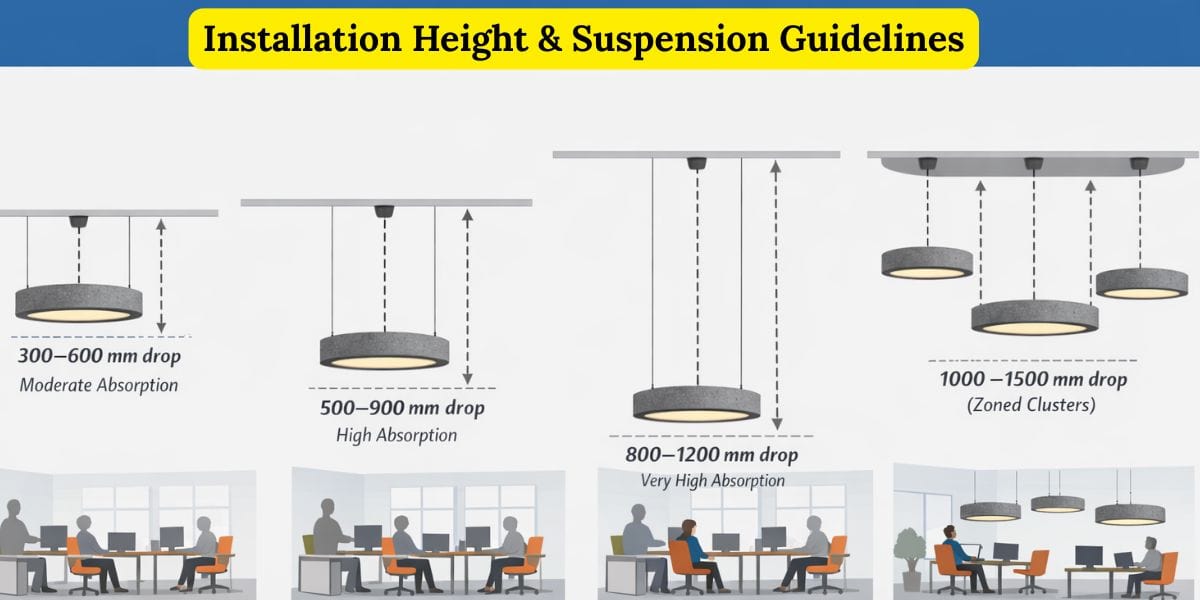
La profondità della sospensione influenza in modo significativo le prestazioni. Abbassando l'illuminazione acustica aumenta la sua interazione con le onde sonore posizionando il materiale all'interno di percorsi di riflessione attivi.
Per soffitti a vista o lastre alte, le sospensioni più profonde migliorano la cattura acustica.
Tabella 1 – Linee guida per le sospensioni raccomandate
| altezza del soffitto | Profondità di sospensione consigliata | Impatto acustico | banconote |
| 2,6–2,8 m | 300–600 mm | Da moderato a elevato | Adatto per sale conferenze e uffici |
| 2,8–3,2 m | 500–900 mm | Alto | Migliora il controllo vocale in open space |
| 3,2–4,0 m | 800–1200 mm | Alto (zone localizzate) | Indispensabile per i soffitti a vista |
| >4,0 m | 1000–1500 mm (cluster a zone) | mirato | si combinano con dispositivi acustici aggiuntivi |
La sospensione inferiore aumenta l'assorbimento efficace perché il suono incontra il materiale prima di disperdersi completamente.
In soffitti alti sopra i 3 m, l'installazione di dispositivi stretti alla lastra riduce significativamente le prestazioni. Portare verso il basso l'illuminazione acustica migliora l'interazione con le frequenze vocali.
Copertura e strategia di distribuzione
La percentuale di copertura e il modello di distribuzione determinano l'efficacia complessiva.
Di norma:
- 20–25% Copertura in uffici moderati.
- Copertura 30–40% in zone di collaborazione elevata.
- Densità localizzata superiore sopra le aree della conferenza.
Anche la distribuzione tra le zone attive supera le prestazioni del raggruppamento di tutti gli infissi in un'area.
I piccoli pendenti distanziati in modo uniforme possono funzionare come pannelli di grandi dimensioni se distribuiti correttamente. I grandi pannelli di illuminazione acustica creano campi di assorbimento più ampi ma richiedono un attento allineamento con le zone di attività.
Tabella 2 – Strategia di distribuzione per tipo di spazio
| Tipo di spazio | Zona di collocamento primario | modello di distribuzione | trattamento aggiuntivo necessario? |
| ufficio di casa | Sopra i cluster di scrivania | Anche griglia sulle aree di lavoro | A volte apparecchi acustici a parete se altamente riflettenti |
| sala conferenze | centrato sopra il tavolo | cluster lineare o rettangolare | Raramente se copertura adeguata |
| Spazio di coworking | Aree di collaborazione mista | cluster suddivisi in zone | Spesso sì per pareti di vetro |
| ricezione | Zona di seduta in attesa | concentrato sui posti a sedere | Possibilmente per soffitti alti |
| atrio a soffitto alto | Tasche per attività | Cluster sospesi | Sì per il controllo del volume |
Evitare di posizionare tutta l'illuminazione acustica lungo i bordi perimetrali. Il posizionamento distribuito allineato con la concentrazione del parlato produce prestazioni migliori rispetto al raggruppamento decorativo.
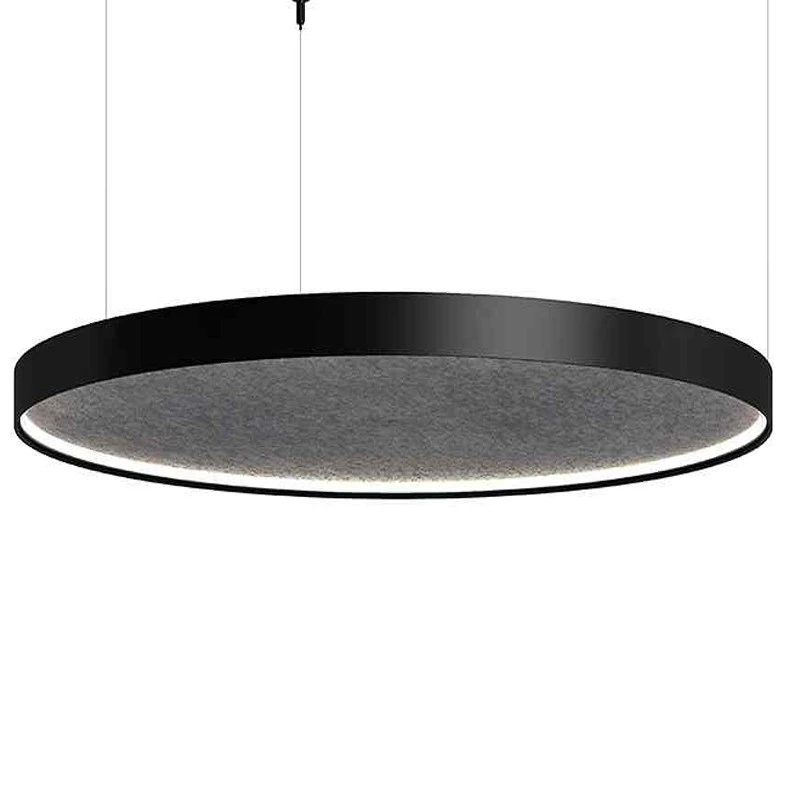
Lampada a sospensione a LED acustica a cerchio diretto
- Tensione di ingresso: AC100-277V / AC220-240V,50-60Hz
- Altezza Dimensioni: H65mm
- Taglia D: 600 mm / 800 mm / 1000 mm / 1200 mm
- CCT: 3000K / 4000K / 6000K
- Potenza: 40W / 60W / 80W / 96W
- Flusso luminoso: 100-110lm/W
- contestatario -Glare: Sì
- CRI: >80RA
- PF: >0.90
- Flicker gratuito: sì
- Angolo del fascio di luce: 120°
- Grado IP: IP20
- Garanzia: 5 anni
- Colore del pannello acustico in feltro: rosso / verde / blu / grigio Più di 48 colori
Guida all'installazione specifica per la stanza
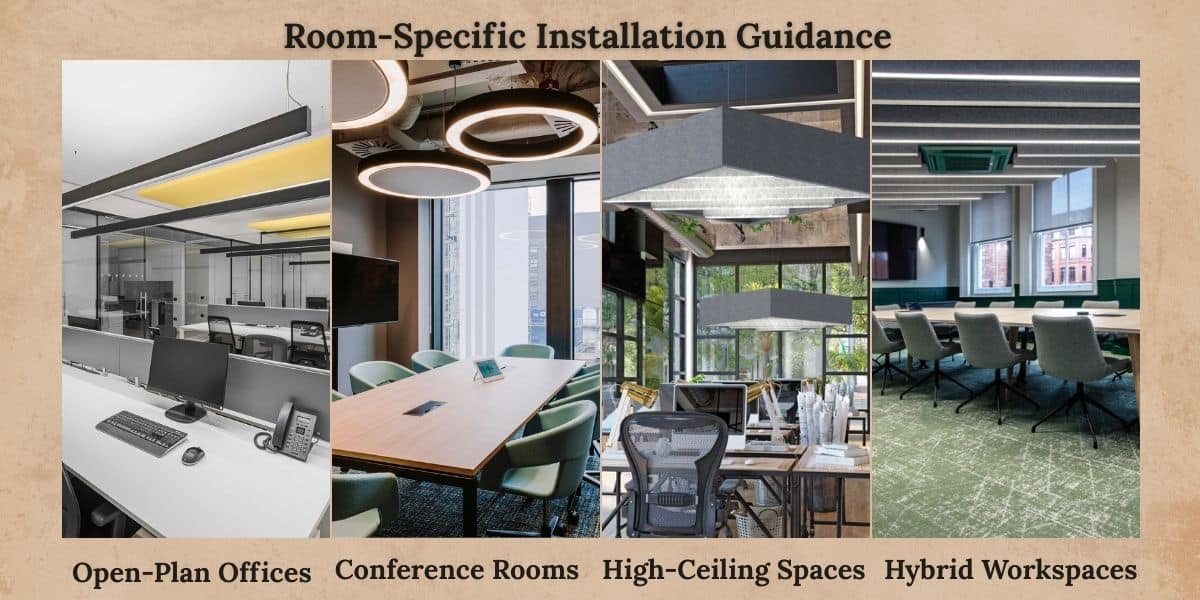
Uffici a pianta aperta
Usa griglie distribuite sopra i banchi, non i corridoi. I layout centralizzati solo per corridoi non riescono ad affrontare il parlato alla sua origine.
Se i soffitti superano i 3 m:
- Aumenta la profondità della sospensione.
- Cluster acustici direttamente sopra le scrivanie attive.
- Supplemento con dispositivi acustici aggiuntivi se il riverbero rimane alto.
sale conferenze
Installare l'illuminazione acustica centrale sopra il tavolo. Per stanze lunghe:
- Utilizzare array lineari che seguono la geometria della tabella.
- Se necessario, aggiungere i dispositivi secondari vicino alle estremità della tabella.
Evitare di posizionare gli infissi vicino alle pareti a meno che i riflessi laterali non siano gravi.
Spazi a soffitto alto
I soffitti alti aumentano il riverbero a causa del volume maggiore. In questi spazi:
- Sospendere gli infissi più in basso nella zona occupata.
- cluster sopra aree di seduta o collaborazione attive.
- Combinate con apparecchi acustici a parete se le superfici in vetro dominano.
Il posizionamento deve indirizzare le aree di attività, non lo spazio vuoto aperto.
Aree di lavoro ibride
Gli uffici ibridi riconfigurano spesso i layout dei tavoli. I sistemi di illuminazione acustica modulari offrono flessibilità.
Strategia di posizionamento:
- identificare probabili cluster vocali.
- Utilizzare sistemi di sospensione riconfigurabili.
- Evita i centrotavola decorativi fissi che non si adattano alle modifiche al layout.
La logica acustica deve rimanere allineata con i modelli di occupazione in evoluzione.
Quando l'illuminazione acustica da sola non è sufficiente
Alcune condizioni limitano le prestazioni autonome:
- Tempi di riverbero molto alti.
- Grandi facciate in vetro.
- Muri in cemento.
- volumi a doppia altezza.
In questi casi, l'illuminazione acustica dovrebbe servire come assorbimento dell'alto, integrato da verticale infissi acustici.
Il trattamento del soffitto intercetta i riflessi verticali, mentre il trattamento delle pareti controlla i riflessi laterali. La combinazione produce prestazioni equilibrate.
Ignorando la riflettività della parete in spazi altamente vetrati può minare le soluzioni a soffitto.
Errori di installazione comuni
- Installazione solo al perimetro anziché alle zone di discorso sopra.
- Trattare l'illuminazione acustica come puramente decorativa.
- ignorando l'altezza della sospensione nei soffitti alti.
- Apparecchi di interspazio, creando spazi riflettenti non trattati.
- Installazione solo sopra i percorsi di circolazione.
- Non riuscire ad allineare il posizionamento con i modelli di linguaggio effettivi.
La maggior parte dei problemi di prestazioni deriva dal posizionamento disallineato, non dal conteggio degli apparecchi insufficienti.
Lista di controllo per le decisioni di posizionamento
Tabella 3 – Lista di controllo per le decisioni di installazione
| fattore di valutazione | Cosa valutare | Perché influisce sulle prestazioni |
| Concentrazione dell'attività vocale | Densità desk, zone di incontro | Determina dove l'assorbimento deve essere più alto |
| altezza del soffitto | Dimensione lastra a pavimento | Influenza la profondità di sospensione |
| Riflettività superficiale | vetro, cemento, metallo | Una maggiore riflettività aumenta la necessità di copertura |
| volume della stanza | metri cubi | Riverbero di volume maggiore |
| Layout ibrido vs | Frequenza di riconfigurazione | Impatti Necessità di posizionamento modulare |
| Necessità di ulteriori infissi acustici | Severità di riflessione della parete | Garantisce un controllo acustico equilibrato |
Questa lista di controllo supporta il processo decisionale strutturato piuttosto che l'installazione guidata dall'estetica.
Flusso di lavoro pratico di posizionamento
Un processo di collocamento professionale in genere segue questi passaggi:
Passaggio 1: identificare le zone pesanti
Mappa cluster di workstation, tavoli riunioni e posti a sedere informali.
Passaggio 2: mappa le superfici di riflessione
Valuta la riflettività del soffitto e l'altezza della stanza.
Passaggio 3: determinare l'intervallo di sospensione
Selezionare la profondità di sospensione in base all'altezza del soffitto e all'efficienza di assorbimento desiderata.
Passaggio 4: modello di distribuzione del piano
Scegli i layout a griglia, lineare o cluster allineati alle zone di attività.
Passaggio 5: valutare un trattamento aggiuntivo
Valutare se i dispositivi acustici a parete sono necessari per un controllo equilibrato.
Questo flusso di lavoro dà la priorità all'allineamento delle prestazioni rispetto all'uniformità visiva.
Tendenze di posizionamento 2026
Le tendenze emergenti enfatizzano l'integrazione delle prestazioni:
- Sistemi a soffitto integrati che combinano illuminazione e assorbimento.
- Illuminazione acustica modulare per ambienti di lavoro ibridi.
- Sistemi di sospensione flessibili per prestazioni regolabili.
- Controllo acustico a zone Sostituzione delle griglie a pannello a soffitto completo.
Sempre più spesso, l'illuminazione acustica sostituisce i pannelli del soffitto separati combinando l'illuminazione e l'assorbimento mirato all'interno della zona di riflessione.
Conclusione
L'illuminazione acustica dovrebbe essere installata direttamente sopra le zone audio primarie, distribuita strategicamente sulle aree del soffitto e sospesa ad altezze che massimizzano l'efficienza di assorbimento. La logica del posizionamento conta più del conteggio degli infissi. Quando si allinea con i modelli di linguaggio e la geometria del soffitto, l'illuminazione acustica migliora significativamente il comfort e la chiarezza.
Domande frequenti
Post correlati