2011年からの看板とLEDストリップ照明工場

2011年からの看板とLEDストリップ照明工場

釣りの明るさの色の選び方: 海水、淡水、商業漁業に関する体系的なガイド

When it comes to choosing fishing light colors, the first question many anglers ask is, “Which color is the best?” — but this question can be misleading. In reality, the effectiveness of a fishing light doesn’t depend on a single “best color.” It’s a system decision: the light color must match water conditions, target species, fishing method, and installation setup.

This guide introduces a clear four-step decision framework to help you select the most suitable LED fishing light colors and setups for saltwater, freshwater, and commercial fishing scenarios. By understanding the relationship between water, light, and fish behavior, you can attract your target species more consistently and efficiently, reducing trial-and-error and improving your night fishing success.

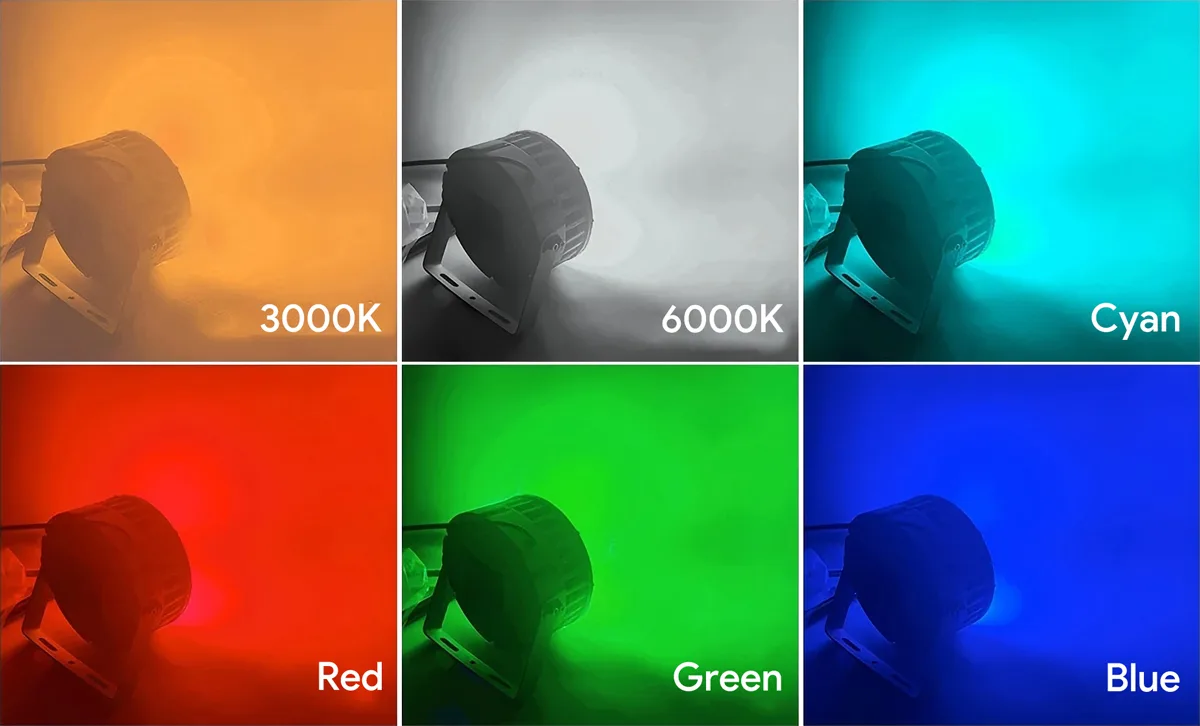
LED 魚の引き寄せライト_複数の明るい色のオプション

How Water Conditions Affect Fishing Light Color Performance

Light Behavior in Water

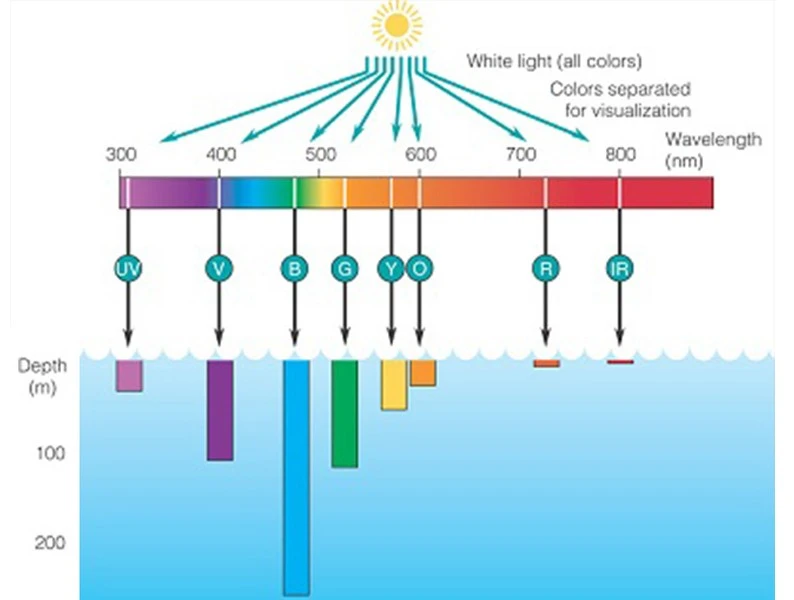
The performance of fishing light colors depends heavily on how light travels through water. Unlike in air, light underwater is quickly affected by absorption and scattering. Different wavelengths fade at different rates, which means some colors remain visible much farther than others.

Shorter wavelengths such as blue and green generally travel farther underwater, while longer wavelengths diminish more rapidly. This difference is a key reason why fishing light color selection should never be random.

fishing-light-color-water-penetration

Water Clarity and Visibility

Water clarity plays a major role in determining which light color performs best. In clear water, light can travel farther before scattering, allowing certain colors to illuminate a wider area. In contrast, murky or plankton-rich water absorbs light more quickly and reduces visibility.

Green light is often favored because it maintains a balance between penetration and contrast, remaining visible in both clear and moderately turbid conditions.

Water Depth and Ambient Light at Night

Depth further influences how fishing light colors perform. As water depth increases, certain colors are absorbed faster than others. A color that works well in shallow freshwater may lose effectiveness in deeper saltwater environments.

At night, ambient light levels drop significantly. Even moderate-output fishing lights can create strong contrast against the surrounding darkness, making color choice more critical than sheer brightness.

Why There Is No Universal “Best” Fishing Light Color

Because water clarity, depth, and ambient light conditions vary so widely, no single fishing light color performs best in every situation. Effective color selection always depends on matching the light to the specific fishing environment.

This is why fishing light color choices are typically discussed by scenario rather than as a one-size-fits-all solution.

ファクターImpact on Light Color Performance
Water ClarityClear water favors longer visibility; murky water reduces range
Water DepthGreater depth increases color absorption
波長Shorter wavelengths travel farther underwater
Night ConditionsLow ambient light amplifies color contrast

Best Fishing Light Colors for Saltwater Fishing

Saltwater environments present unique challenges due to their depth and varying water clarity. The best fishing light color for saltwater fishing depends on several factors, including the depth of the water, the clarity of the water, and the type of fish you are targeting. In these conditions, some light colors, such as green, blue, and cyan, offer advantages over others.

Saltwater environments present unique challenges due to depth, water clarity, and variable conditions. Choosing the most effective fishing light color depends not only on the target species but also on water characteristics and fishing depth. In these environments, green, blue, cyan, red, and even white light can offer advantages in attracting fish and bait.

Light Color Overview

Green Light: The Most Widely Used Choice

Green fishing lights are widely used in saltwater fishing because they balance penetration and visibility. Green light penetrates water effectively, remains visible at moderate depths, and strongly attracts plankton, which in turn draws baitfish and larger predators.

Blue Light: Effective in Clear and Deep Waters

Blue light penetrates deeper than other colors, making it ideal for offshore or deepwater fishing. It is most effective in clear water but less so in murky conditions.

Cyan Light: Balanced Penetration and Contrast

Cyan (blue-green) light combines the penetration of blue with the visibility of green, performing well in deeper or plankton-rich waters. It creates good contrast for fish to see and respond to the light.

Red Light: Stealthy Attraction

Red light is less visible to most fish, making it useful in pressured areas or shallow waters where fish are sensitive to light. However, it is less effective at attracting plankton.

White Light: Broad Illumination

White light provides broad, uniform illumination and can be useful for navigation or general visibility. It is generally less effective than green, blue, or cyan for attracting plankton and predatory fish.

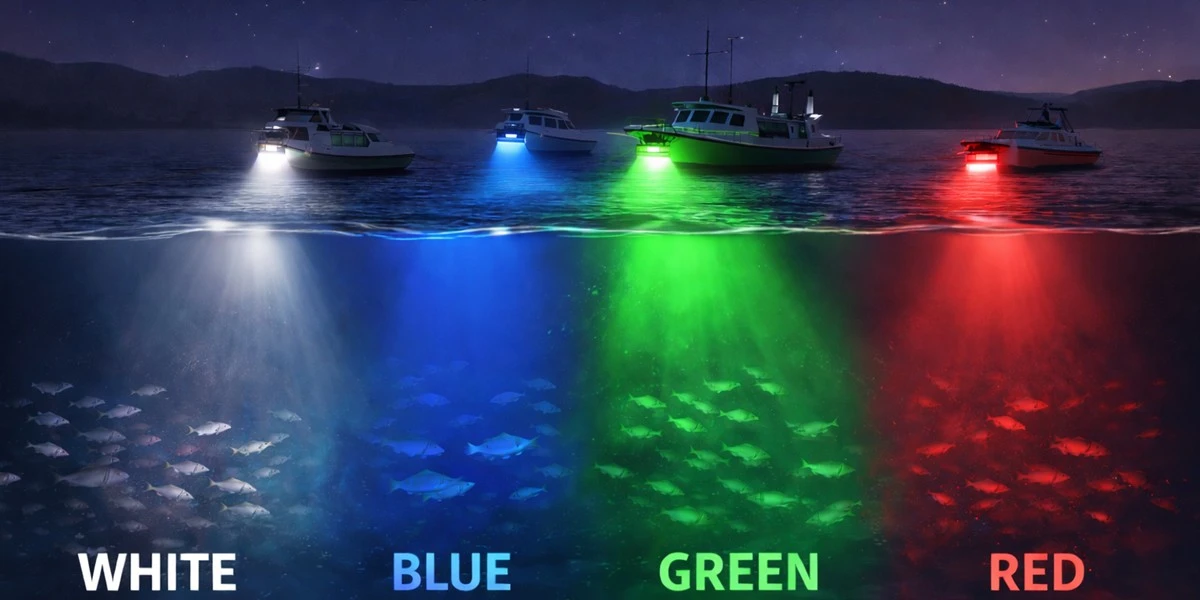
Below is an example image showing how different light colors (white, green, blue, red) behave in a saltwater environment, with a boat and floating plankton. This visual demonstrates penetration, color visibility, and attraction zones for baitfish and target species.

釣りの光の色の波長の比較

Quick Comparison: Saltwater Fishing Light Colors

明るい色Best Saltwater Use CaseKey AdvantageLimitation
グリーンNearshore & offshoreBalanced penetration & attraction — ね
ブルーClear, deep offshore waterLong-range visibilityLower contrast in murky water
シアンDeep, plankton-rich watersHigh penetration, good contrastCan be less effective in turbid waters
レッドShallow waters & pressured fishLess visible to fish, no disturbance Less effective for plankton
ホワイトNearshore, general illuminationBroad illumination, good visibilityLess effective for attracting plankton & predatory fish

Best Fishing Light Colors for Freshwater Fishing

What Works Best in Typical Freshwater Conditions

In most freshwater environments—such as lakes, reservoirs, and slow-moving rivers—the goal is not extreme penetration, but stable fish aggregation.

Compared with offshore fishing, freshwater fish respond better to moderate, evenly distributed light rather than very intense or sharply focused beams.

In practice, green and cyan light are widely used in freshwater fishing because they create a visible attraction zone without overstimulating fish.

Blue light can be effective in clearer lakes, while red light is usually limited to very shallow or short-range applications due to its fast attenuation in water.

To make color selection easier, the table below summarizes how different light colors perform in typical freshwater environments.

Freshwater Fishing Light Color Comparison

明るい色Typical Freshwater PerformanceBest Use Scenarios注意事項
グリーンStrong and stable fish aggregationLakes, reservoirs, slow riversBalanced attraction, widely used for night fishing
シアンSimilar to green with softer visual effectClear freshwater, recreational fishingLess aggressive than green, good for long sessions
ブルーModerate attraction in clear waterClear lakes, shallow freshwaterLess effective in turbid water
ホワイトHigh visibility, broad illuminationGeneral lighting, short-range useCan attract insects; less selective
レッドLimited underwater penetrationVery shallow water, surface lightingMainly for visibility, not primary fish attraction

Practical Tips for Using Fishing Lights in Lakes & Rivers

For freshwater fishing, light placement and output control often matter more than color alone.

Mounting the light above water and directing it downward allows the beam to spread naturally, helping baitfish and predators gather gradually.

Using fewer lights with consistent output usually delivers better results than installing multiple high-power lamps.

In most small- to mid-sized freshwater boats, one to two properly positioned fishing lights are sufficient for night operations.

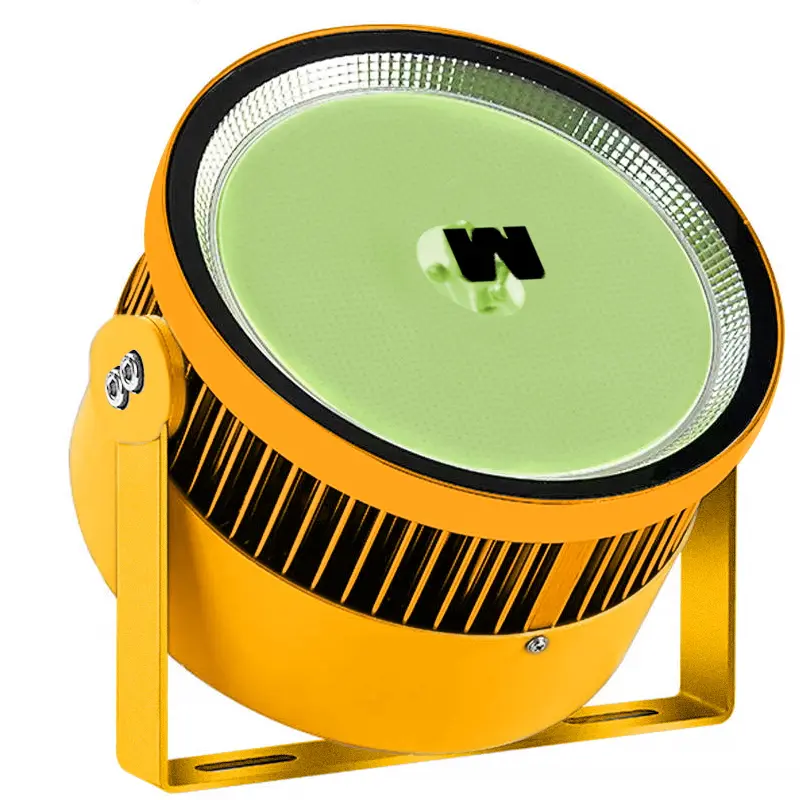
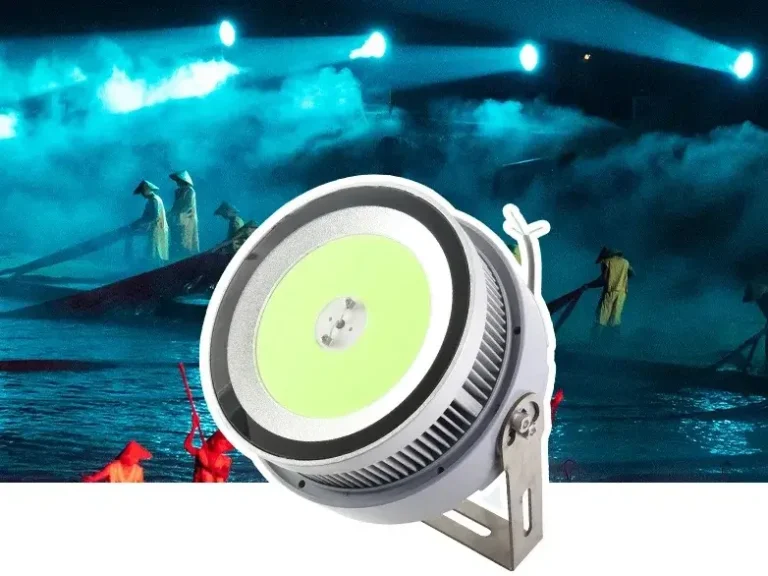
業務用釣り灯

ハイパワーコブフィッシュライティング

モデル番号.: 丸型
入力電圧: AC100-320V
サージ: 10000V
ワット/PC: 800W/1000W/1200W
LEDタイプ: 穂軸
サイズ (mm): φ230×140
カラー: 3000k / 4000k / 5000k / 6000k/ 赤/緑/青/紫
クリ: >80@3000k / 4000k / 5000k / 6000k/
ルーメン: >120lm/w@3000k / 4000k / 5000k / 6000k/
IPグレード:IP67

How to Build an Effective Fishing Light Setup

In the previous sections, we analyzed how light colors behave in different water environments, fish responses to various wavelengths, and practical performance of different colors in saltwater and freshwater. With these principles in mind, the next crucial step is translating them into a real-world fishing light system.

Choosing a fishing light color is only one part of the system. To achieve stable and efficient fish attraction in various water conditions, factors such as water clarity, depth, target species, and fishing method must be considered together. Focusing solely on “which color is best” often leads to inconsistent results.

To make this process easier to follow, we can break it down into a simple decision framework, which guides you step by step from understanding your fishing environment to determining the optimal color, number of lights, and layout.

Fishing Lighting Decision Flow

  1. Identify the environment (freshwater / saltwater / turbidity)
  2. Define the primary goal (attract baitfish / target predators)
  3. Select colors based on depth and penetration needs (green / blue / cyan)
  4. Determine the number of lights and layout according to boat size

Recommended Number of Fishing Lights by Boat Type

Boat Type / Fishing ScenarioTypical Boat LengthRecommended Light QuantitySuggested Total Power Range注意事項
Small recreational boats< 6 m1–2 units200–400 WSuitable for calm freshwater or nearshore fishing; surface-mounted lights preferred
Small commercial fishing boats6–10 m2–4 units400–800 WEven distribution around the boat improves attraction stability
Medium offshore fishing vessels10–20 m4–8 units800–1500 WWider light distribution more important than single high-power lights
Large commercial fishing vessels> 20 m8+ units1500 W and aboveLights should be evenly spaced for consistent attraction zones
Dock / Fixed fishing platforms固定設置2–6 units300–1000 WFocus on water depth and beam angle rather than number; surface installation preferred

Optimal Surface-Mounted Fishing Light Setup

  1. Enhanced operational safety
    Above-water mounting reduces risk of water ingress, electrical hazards, and damage from currents or debris compared to submerged lighting setups.
  2. Wide light coverage
    Properly positioned surface lights reflect and refract into the water, creating broad attraction zones that gather plankton, baitfish, and target predators effectively.
  3. Easy maintenance and inspection
    Water-surface mounting allows easy access for cleaning, adjustment, and routine maintenance, without needing to remove lights from the water.
  4. Flexible installation options
    Surface lights can be mounted on rails, poles, or brackets around the boat or platform, allowing precise control over beam angles, overlap, and light distribution.


Matching Output and Layout

Experienced operators focus on system synergy rather than just color

  1. Match total power and light distribution to scenario:
    Offshore / Large vessels / High current → higher total output + broader coverage Calm freshwater / Nearshore → moderate power + focused illumination
  2. Light distribution and overlap are more important than single high-power lights
  3. Experienced operators focus on system synergy rather than just color

結論

While fishing light color plays an important role in attracting fish, the real effectiveness of a fishing light system depends on how well color, light output, coverage, and installation work together. Different fishing environments—freshwater, saltwater, nearshore, or offshore—require different lighting strategies rather than a one-size-fits-all solution.

Green fishing lights are widely used because they offer a balanced combination of penetration depth, visibility, and energy efficiency. However, selecting the right number of lights, suitable beam angles, and proper mounting height is often more critical than color alone when aiming for stable and repeatable fishing results.

If you are planning a new fishing light setup or upgrading an existing one, understanding how lighting works in real fishing conditions can help you reduce trial-and-error and improve efficiency from the start. For more detailed guidance on light types, installation methods, and application-specific recommendations, you may explore our related guides on fishing light understanding, boat-mounted lighting solutions, and practical applications across different fishing scenarios.

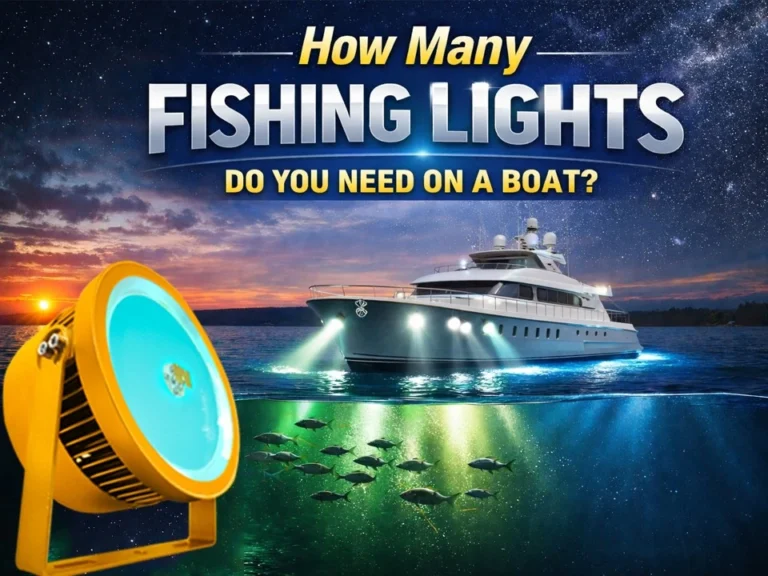
ボートで何回釣りライトが必要ですかボートで何回釣りライトが必要ですか
ボートには何本の釣り灯が必要ですか?
釣り灯は夜釣りで重要な役割を果たし、釣り人が魚を引き付け、視認性を向上させるのに役立ちます。 釣りランプの適切な数と配置は、漁獲物を最適化するための鍵です。 魚は自然に光に惹きつけられ、適切な照明設定が成功を大きくすることができます。 特に緑のライトは...
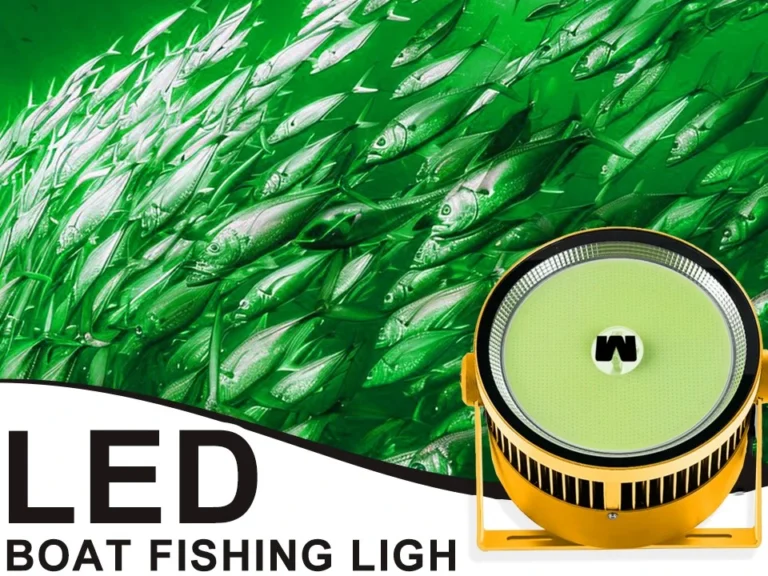
緑の LED 魚の魅力的な光の夜のシーン緑の LED 魚の魅力的な光の夜のシーン
青信号は魚の魅力に優れていますか?
緑の釣り灯は、小型のレクリエーション ボートから大型の商業船まで、夜釣りで広く使用されています。 多くの漁師は、緑の光が他の色よりも多くの魚を引き付けると信じていますが、これは常に真実ですか? この記事では、特に緑の釣り灯に焦点を当て、より効果的かどうかを調べます...
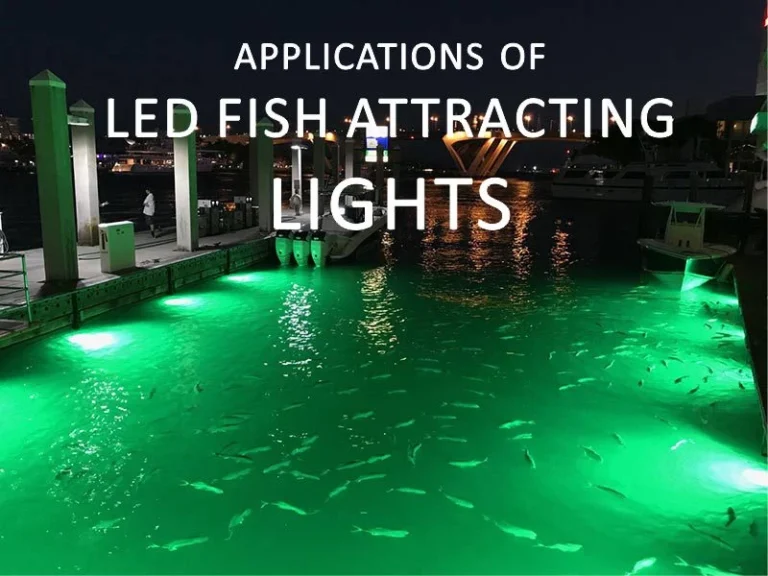
LED 魚の主な用途 ライトを引き付ける: ボート、ドック、池、オフショア プロジェクト
光を引き寄せる LED 魚は、特定の波長 (主に緑と青) を使用してプランクトンと小さなベイトフィッシュを光に引き寄せ、より大きな魚を引き寄せます。 この単純だが効果的な生物連鎖反応により、商業漁業とレクリエーション漁師の両方に人気のツールになります。 魚のライトの詳細については...
LED ストリップ ライトの寿命 - どれくらい持続しますか、なぜ持続するのですかLED ストリップ ライトの寿命 - どれくらい持続しますか、なぜ持続するのですか
LED ストリップ ライトの寿命: どのくらいの期間、なぜ持続しますか?
LED ストリップ ライトは、装飾照明と機能照明の両方でますます人気が高まっています。 商業プロジェクト、建築造園照明、または長期固定設備の場合、LED ストリップ ライトの寿命は技術仕様であるだけでなく、設置後のメンテナンス費用、エネルギー効率、および全体的な投資収益率にも直接影響します。 そこで、...
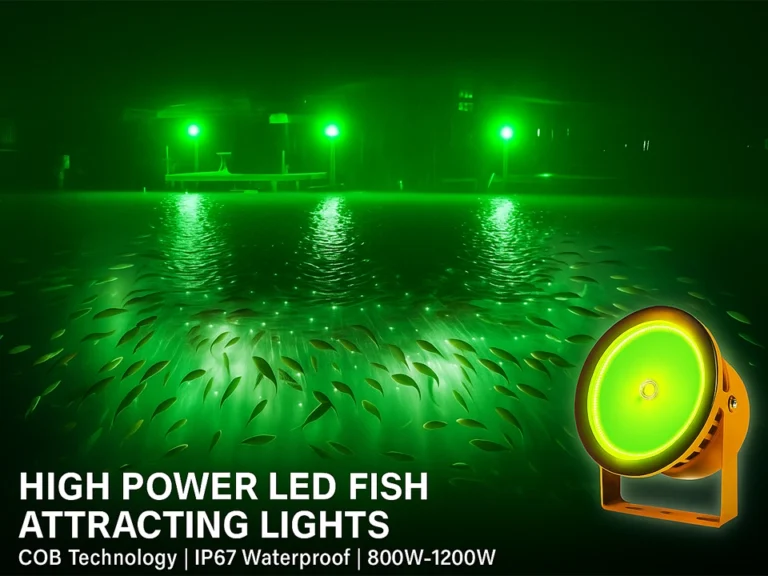
高出力の LED 魚を引き付けるライト高出力の LED 魚を引き付けるライト
中国のトップ ボートに取り付けられた LED 釣り用ライト メーカー (2025 年ガイド)
ボート用のトップ LED 釣りライト – 2025 メーカー ガイド 高出力のボートに取り付けられた LED 魚を引き付ける 商用釣りライトとしても知られている - イカのジギングやマグロの釣りには、海洋釣りや深海のトロール漁から、川のイルミネーションまで、オフショア フィギングやマグロ釣りには不可欠になっています。 2025 年も、海洋グレードの LED 釣りライトの需要は増加し続けています...
LED 魚の引き寄せるライトの技術と選択のガイドLED 魚の引き寄せるライトの技術と選択のガイド
LED 魚の引き寄せライトのガイド: テクノロジーと選択
漁師がボートで魚を引き寄せるライトを使っているのを見たことがありますか? これらの魔法の電球は照明用ではありません。魚を引き付けるためのものです。 魚の引き寄せるライトは、魚の光線を利用して、漁師が魚を捕まえやすくします。 魚を引き寄せるライトは、釣りをより効率的にするだけでなく、保護も強化します。

共有:

フェイスブック
ツイッター
ピンタレスト
リンクトイン
購読する
通知する
ゲスト
0 コメント
最古
最新 最も投票された
インラインフィードバック
すべてのコメントを表示

SignliteLEDブログを検索

カテゴリー

トップへ

今すぐ見積もりを取る