2011年からの看板とLEDストリップ照明工場

2011年からの看板とLEDストリップ照明工場

最高のパフォーマンスを得るには、音響照明をどこに設置する必要がありますか?

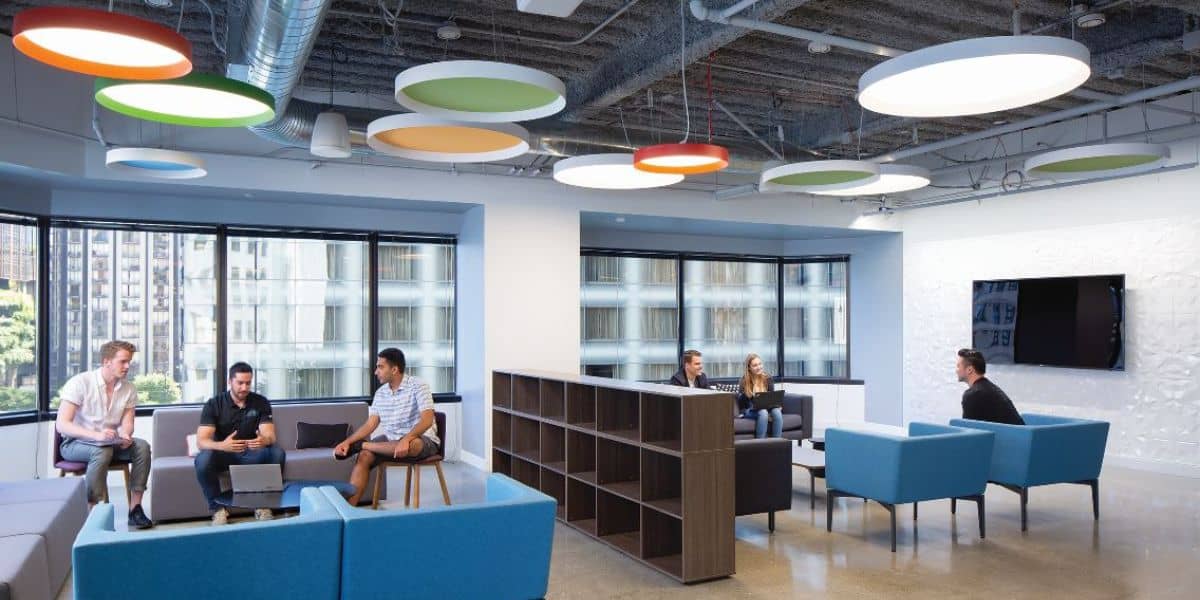
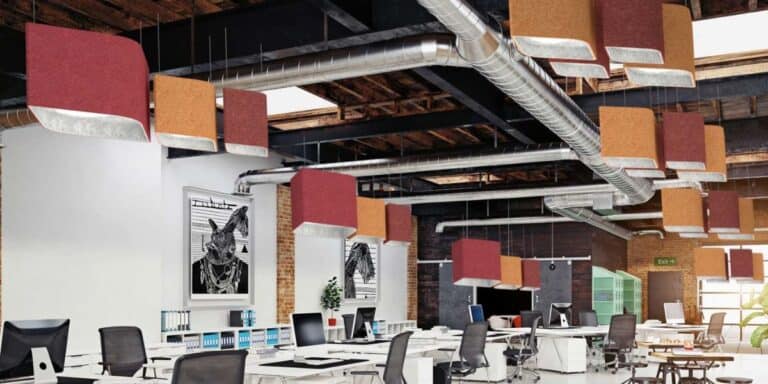
Acoustic lighting performs best when installed directly above primary sound activity zones such as workstations, conference tables, collaboration areas, and open-plan seating. Ceiling placement is critical because the ceiling acts as a major reflection surface for speech. Proper spacing, height, and distribution determine how effectively the fixture reduces reverberation and improves speech clarity.

This article explains optimal placement zones, height considerations, reflection control logic, room-type strategies, and common installation mistakes. The focus is strictly on placement performance so architects, designers, acoustic consultants, and facility managers can make informed installation decisions.

Why Ceiling Placement Matters More Than Wall Placement

音響照明

In most commercial interiors, speech energy travels upward immediately after leaving the speaker’s mouth. The first significant reflection often occurs at the ceiling plane before returning downward into the occupied zone. This creates what acousticians refer to as a first reflection path:

Speech source → ceiling → reflected energy → listeners.

When ceilings are hard, reflective surfaces such as gypsum board, exposed concrete, or metal decking, reflected speech energy re-enters the room quickly, increasing reverberation time and reducing clarity.

Wall-mounted absorption helps, but it primarily addresses lateral reflections. Overhead reflections are typically more dominant in open-plan and conference environments because:

  • The ceiling spans the entire occupied zone.
  • It reflects energy back into the speech field.
  • It reinforces noise across large horizontal areas.

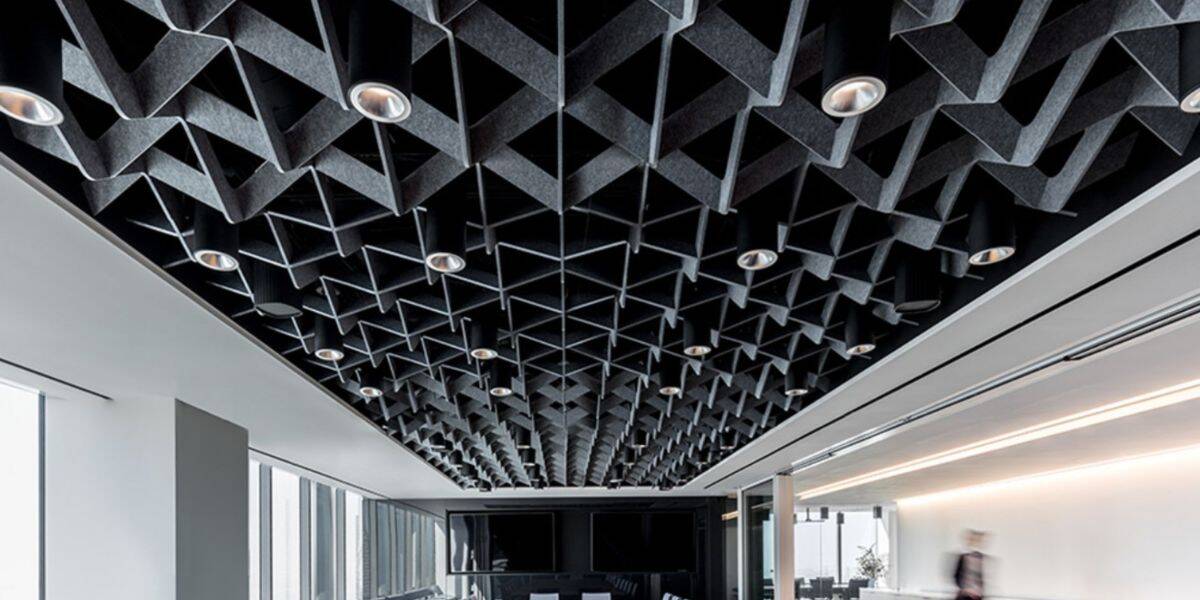
音響照明 interrupts this vertical reflection loop directly at the reflection plane. By placing acoustic fixtures within the ceiling reflection path, mid-frequency speech energy (typically 500–2000 Hz) is absorbed before it returns to occupants.

Perimeter wall placement does not intercept this early vertical bounce. Ceiling-based felt lighting fixtures reduce the intensity of first reflections more effectively because they sit directly in the sound path.

In open environments especially, overhead absorption delivers higher acoustic impact per square meter compared to perimeter-only treatment.

Core Placement Zones 

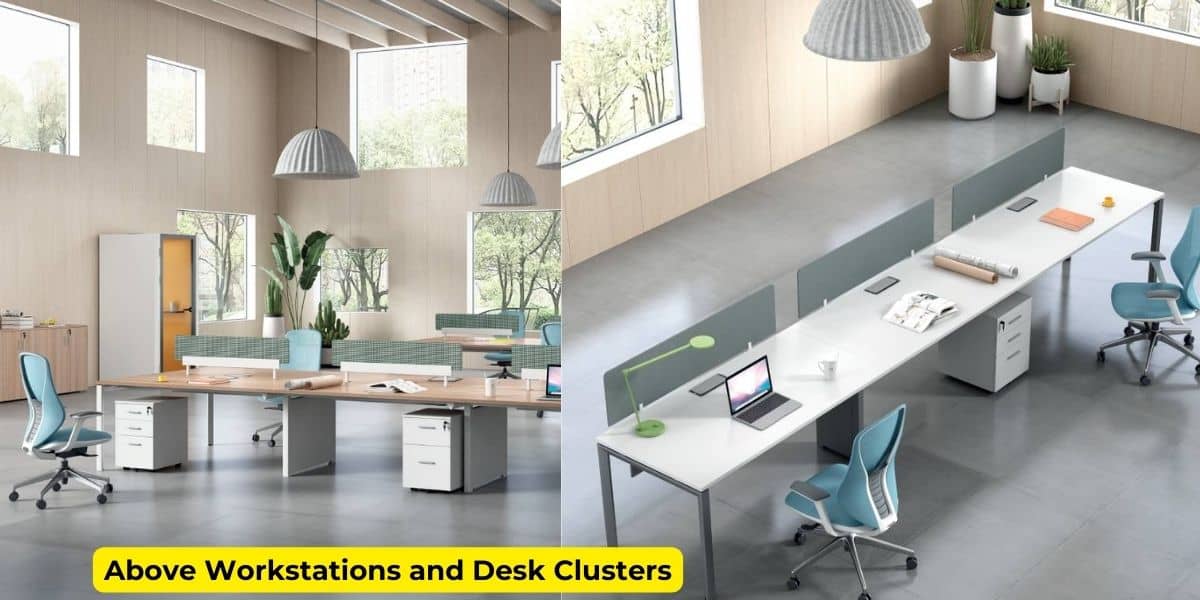
A:  Above Workstations and Desk Clusters

音響照明

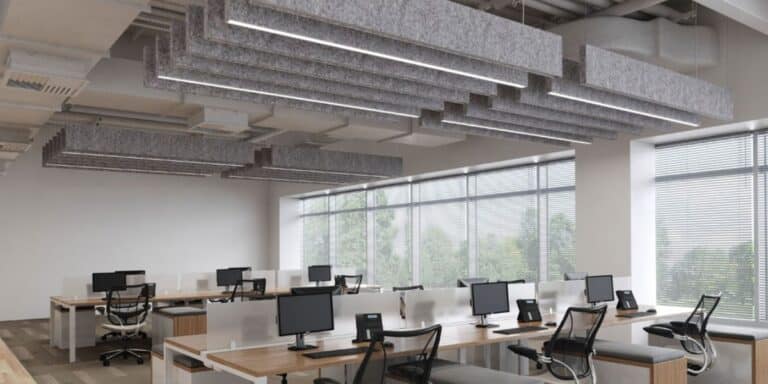
Open-plan offices concentrate speech within workstation groupings. Conversations, video calls, and collaborative exchanges generate sustained mid-frequency sound energy.

Installing acoustic lighting directly above desk clusters:

  • Absorbs speech before it spreads laterally.
  • Reduces reverberant buildup across rows.
  • Limits cross-talk between teams.

フェルト照明器具 are particularly effective because dense polyester felt absorbs mid-frequency speech where most intelligibility energy lies.

Distribution logic matters. Rather than placing fixtures along corridors or near walls, fixtures should be centered above active desks and extend slightly beyond the seating footprint. As a guideline:

  • Target 20–35% ceiling coverage above high-activity desk zones.
  • Maintain consistent spacing to avoid untreated reflective gaps.
  • Avoid perimeter-only layouts, which allow central speech zones to remain reflective.

Underperforming layouts typically place lighting decoratively along circulation paths rather than above sound sources.

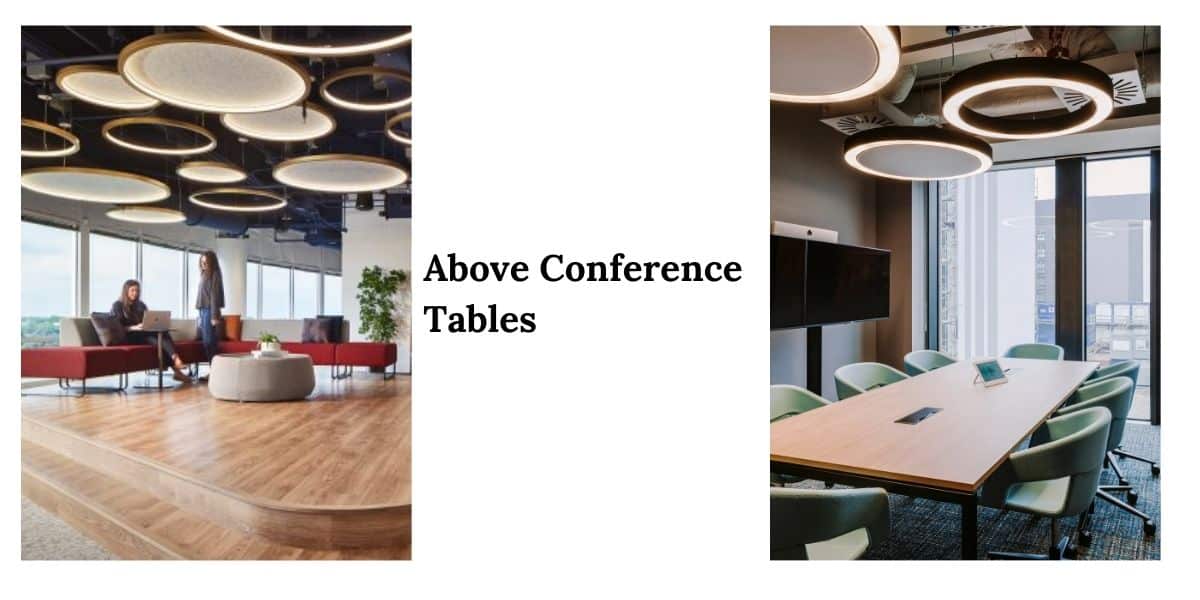
B:  Above Conference Tables

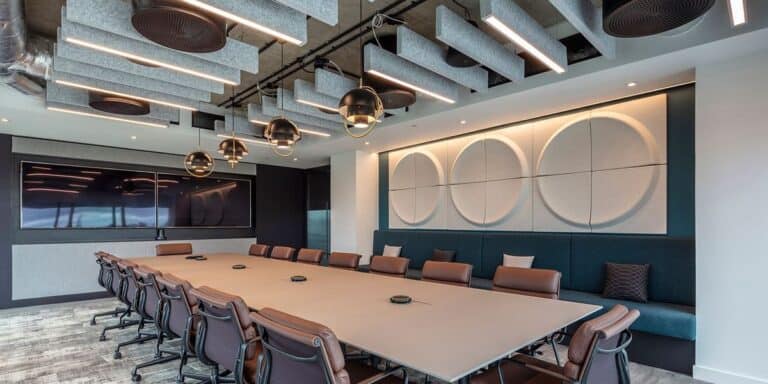
音響照明

Conference rooms concentrate direct speech in a fixed area. Multiple participants speak toward the center of the table, and sound reflects vertically off the ceiling.

The optimal configuration:

  • Install acoustic lighting centrally above the table.
  • Extend coverage 300–600 mm beyond the table footprint.
  • Align fixtures with the table axis for even absorption.

If a room is elongated, a linear arrangement that mirrors the table shape performs better than a single compact cluster.

Height also matters. In typical 2.7–3 m ceilings, suspending fixtures 400–800 mm below the slab improves absorption efficiency by placing material closer to the reflection zone.

音響照明

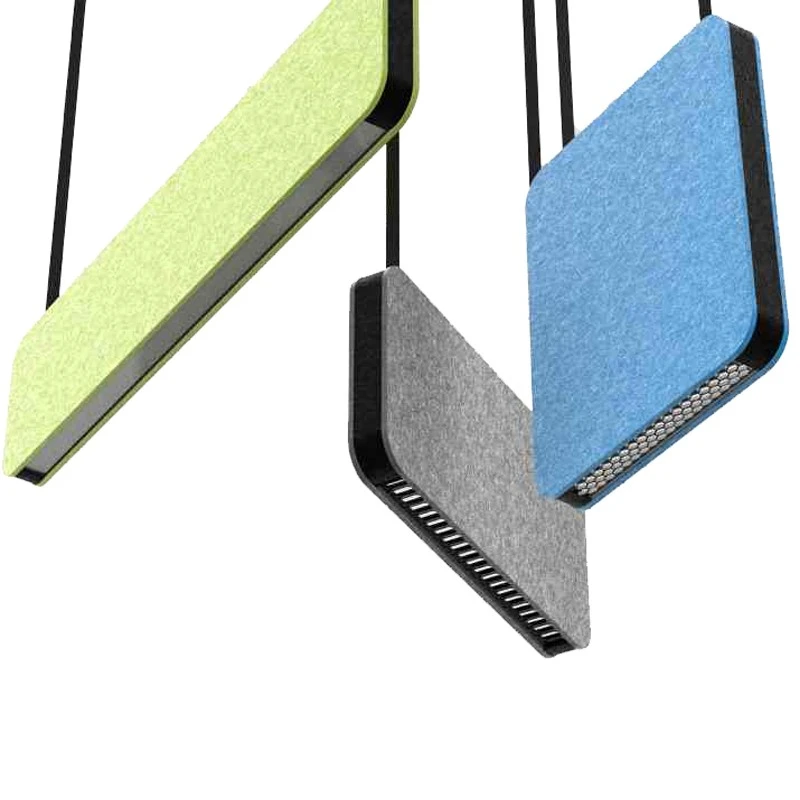
超スリムな音響 LED 線形ライト

  • 入力電圧: AC100-277V / AC220-240V,50-60Hz
  • 放出方向: 下向き
  • Size: 121836400mm
  • CCT: 3000k / 4000k / 6000k
  • 電源: 30W
  • 光束: 100-110lm/w
  • CRI: >80ra
  • PF: >0.90
  • フリッカーフリー: はい
  • ビーム角:120
  • IP等級:IP20
  • 保証期間: 5 年
  • フェルト アコースティック ボードの色: 赤/緑/青/グレー 48 色以上オプション

C: Collaboration Zones & Lounge Areas

音響照明

Informal zones generate unpredictable but concentrated speech clusters. Without overhead absorption, noise spills into adjacent quiet zones.

Installing acoustic lighting above:

  • Soft seating clusters
  • Huddle spaces
  • Informal meeting pods

creates localized absorption zones. This contains sound near its source and prevents reverberant buildup across the floorplate.

Placement strategy should prioritize sound containment, not visual symmetry.

Installation Height & Suspension Guidelines

音響照明

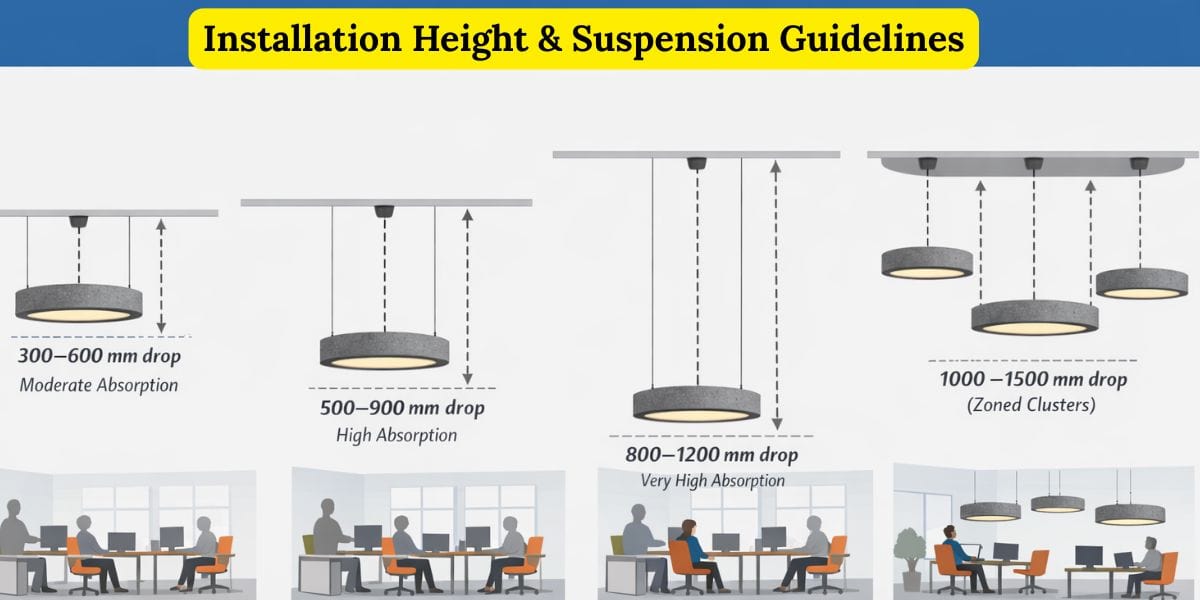
Suspension depth significantly influences performance. Lowering acoustic lighting increases its interaction with sound waves by positioning material within active reflection paths.

For exposed ceilings or high slabs, deeper suspension improves acoustic capture.

天井高Suggested Suspension DepthAcoustic Impact注意事項
2.6–2.8 m300–600 mm中~高Suitable for conference rooms and offices
2.8–3.2 m500–900 mm高いImproves speech control in open-plan
3.2–4.0 m800–1200 mmHigh (localized zones)Essential for exposed ceilings
>4.0 m1000–1500 mm (zoned clusters)TargetedCombine with additional acoustic fixtures

Lower suspension increases effective absorption because sound encounters the material before fully dispersing.

In high ceilings above 3 m, installing fixtures tight to the slab reduces performance significantly. Bringing acoustic lighting downward improves interaction with speech frequencies.

Coverage & Distribution Strategy

Coverage percentage and distribution pattern determine overall effectiveness.

As a rule of thumb:

  • 20–25% coverage in moderate noise offices.
  • 30–40% coverage in high collaboration zones.
  • Higher localized density above conference areas.

Even distribution across active zones outperforms clustering all fixtures in one area.

Small pendants spaced evenly can perform as well as large panels if distributed correctly. Large acoustic lighting panels create broader absorption fields but require careful alignment with activity zones.

Table 2 – Distribution Strategy by Space Type

スペースタイプPrimary Placement ZoneDistribution PatternAdditional Treatment Needed?
Open officeAbove desk clustersEven grid over work areasSometimes wall acoustic fixtures if highly reflective
会議室Centered above tableLinear or rectangular clusterRarely if coverage adequate
Coworking spaceMixed collaboration areasZoned clustersOften yes for glass walls
ReceptionWaiting seating zoneConcentrated over seatingPossibly for high ceilings
High ceiling atriumActivity pocketsSuspended clustersYes for volume control

Avoid placing all acoustic lighting along perimeter edges. Distributed placement aligned with speech concentration yields better performance than decorative grouping.

音響照明

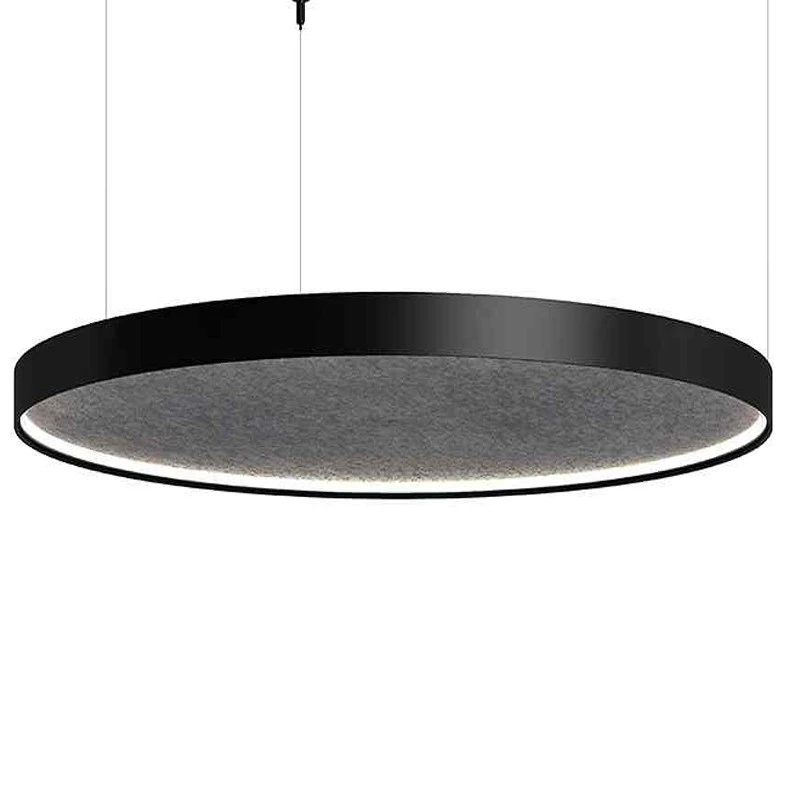
ダイレクトサークル音響 LED ペンダントライト

  • 入力電圧: AC100-277V / AC220-240V,50-60Hz
  • 高さのサイズ: H65mm
  • サイズ D: 600mm / 800mm / 1000mm / 1200mm
  • CCT: 3000k / 4000k / 6000k
  • 電源: 40W / 60W / 80W / 96W
  • 光束: 100-110lm/w
  • アンチ -グレア: はい
  • CRI: >80ra
  • PF: >0.90
  • フリッカーフリー: はい
  • ビーム角:120
  • IP等級:IP20
  • 保証期間:5年
  • フェルト アコースティック ボードの色: 赤/緑/青/グレー 48 色以上オプション

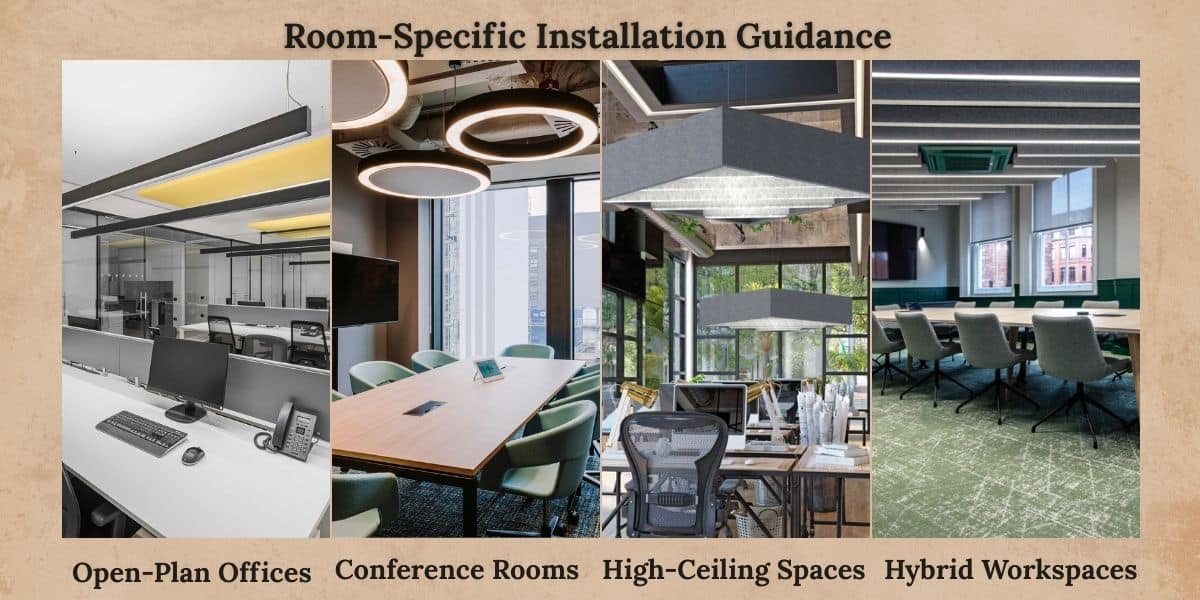
Room-Specific Installation Guidance

音響照明

Open-Plan Offices

Use distributed grids above desks, not corridors. Centralized corridor-only layouts fail to address speech at its source.

If ceilings exceed 3 m:

  • Increase suspension depth.
  • Cluster acoustic fixtures directly above active desks.
  • Supplement with additional acoustic fixtures if reverberation remains high.

Conference Rooms

Install central acoustic lighting above the table. For long rooms:

  • Use linear arrays that follow table geometry.
  • Add secondary fixtures near table ends if necessary.

Avoid placing fixtures near walls unless lateral reflections are severe.

High-Ceiling Spaces

High ceilings increase reverberation due to larger volume. In these spaces:

  • Suspend fixtures lower into the occupied zone.
  • Cluster above active seating or collaboration areas.
  • Combine with wall acoustic fixtures if glass surfaces dominate.

Placement must target activity areas, not open void space.

Hybrid Workspaces

Hybrid offices frequently reconfigure desk layouts. Modular acoustic lighting systems offer flexibility.

Placement strategy:

  • Identify likely speech clusters.
  • Use reconfigurable suspension systems.
  • Avoid fixed decorative centerpieces that do not adapt to layout changes.

Acoustic logic must remain aligned with evolving occupancy patterns.

When Acoustic Lighting Alone Is Not Enough

Certain conditions limit standalone performance:

  • Very high reverberation times.
  • Large glass façades.
  • Concrete walls.
  • Double-height volumes.

In these cases, acoustic lighting should serve as overhead absorption, supplemented by vertical アコースティックフィクスチャ.

Ceiling treatment intercepts vertical reflections, while wall treatment controls lateral reflections. The combination produces balanced performance.

Ignoring wall reflectivity in highly glazed spaces can undermine ceiling-only solutions.

Common Installation Mistakes

  1. Installing only at the perimeter rather than above speech zones.
  2. Treating acoustic lighting as purely decorative.
  3. Ignoring suspension height in high ceilings.
  4. Over-spacing fixtures, creating untreated reflective gaps.
  5. Installing above circulation paths only.
  6. Failing to align placement with actual speech patterns.

Most performance issues stem from misaligned placement, not insufficient fixture count.

Placement Decision Checklist

Table 3 – Installation Decision Checklist

評価係数What to AssessWhy It Affects Performance
Speech activity concentrationDesk density, meeting zonesDetermines where absorption must be highest
Ceiling heightSlab-to-floor dimensionInfluences suspension depth
Surface reflectivityGlass, concrete, metalHigher reflectivity increases need for coverage
Room volumeCubic metersLarger volume increases reverberation
Hybrid vs fixed layoutReconfiguration frequencyImpacts need for modular placement
Need for additional acoustic fixturesWall reflection severityEnsures balanced acoustic control

This checklist supports structured decision-making rather than aesthetic-driven installation.

Practical Placement Workflow

A professional placement process typically follows these steps:

Step 1: Identify Speech-Heavy Zones
Map workstation clusters, meeting tables, and informal seating areas.

Step 2: Map Reflection Surfaces
Evaluate ceiling reflectivity and room height.

Step 3: Determine Suspension Range
Select suspension depth based on ceiling height and desired absorption efficiency.

Step 4: Plan Distribution Pattern
Choose grid, linear, or clustered layouts aligned with activity zones.

Step 5: Evaluate Additional Treatment
Assess whether wall acoustic fixtures are required for balanced control.

This workflow prioritizes performance alignment over visual uniformity.

Emerging trends emphasize performance integration:

  • Integrated ceiling systems combining lighting and absorption.
  • Modular acoustic lighting for hybrid work environments.
  • Flexible suspension systems for adjustable performance.
  • Zoned acoustic control replacing full-ceiling panel grids.

Increasingly, acoustic lighting replaces separate ceiling panels by combining illumination and targeted absorption within the reflection zone.

結論

Acoustic lighting should be installed directly above primary sound zones, distributed strategically across ceiling areas, and suspended at heights that maximize absorption efficiency. Placement logic matters more than fixture count. When aligned with speech patterns and ceiling geometry, acoustic lighting significantly improves comfort and clarity.

よくある質問

音響照明音響照明
音響照明を選択する際に考慮すべき重要な要素は何ですか?
アコースティック ライティングを選択することは、サウンド コントロール、照明品質、素材のパフォーマンス、およびシステムが実際の商用スペースにどのように適合するかというバランスにかかっています。 アコースティック ライティングは照明と音響を組み合わせるため、エコーを減らし、音声の明瞭度を向上させ、オフィス、パブリック インテリア、共有の視覚的な快適さをサポートします。
フェルト照明器具フェルト照明器具
建物の音響を改善する方法: 実用的なソリューションと設計のヒント
音響を改善するということは、音が空間内でどのように振る舞うかを制御することで、それに逆らうのではなく、快適さ、コミュニケーション、日常の使用をサポートします。 音響が良いと、不要なノイズを減らし、エコーと残響を制限し、スピーチを明確かつ理解できるようにします。 音響が悪いと、人は疲労、気晴らし、ストレスなどを経験します...
音響照明音響照明
コワーキング スペースに最適なノイズ リダクション ソリューション | アコースティックな快適さと生産性を向上させるための推奨製品
コワーキング スペースは、エコー コントロール (吸収)、サウンド ブロッキング (ゾーニング/プライバシー)、サウンド マスキング (バックグラウンド ノイズ コントロール) を組み合わせることで、ノイズを最もよく低減します。 この 3 つの戦略を重ねると、より集中力が高まり、気を散らすことが少なくなり、スペース全体でより明確な通話ができます。 この記事では、コワーキング スペースに最適なノイズ リダクション ソリューションについて説明します。
音響照明音響照明
音響照明と標準照明: 違いは何ですか? | 健全な管理、雰囲気、および設計上の利点について説明
アコースティック ライティングは、照明と吸音を組み合わせて、エコーを減らし、忙しい商業インテリアでの音声の明瞭度を向上させるので、標準的な照明とは異なります。 標準照明は、部屋での音の動作を変えることなく、照明のパフォーマンスと視覚的な快適さだけに焦点を当てています。 実用的には、音響照明は両方の照明デザインをサポートしています...
音響 LED 照明費用音響 LED 照明費用
音響照明のコストに影響するものは何ですか?
音響照明の価格が予想よりも異なる理由 商業用インテリアの音響照明を評価するとき、多くのバイヤーは、似たような外観の製品の価格が大きく異なる可能性があることに気づきました。 アコースティック ペンダント ライトまたはアコースティック シーリング ライトは、比較できるように見える場合がありますが、各製品のコストは非常に異なることがよくあります。 よくある...
音響照明音響照明
吸音に最適な音響照明器具は何ですか?
吸音に最適な音響照明器具は、高性能で微小孔のある音響吸収材 (通常はクラス A 吸収) を高品質の低輝度 LED 照明とシームレスに統合したハイブリッド システムで、現代空間でのノイズ制御と視覚的な快適さを同時に解決するように設計されています。 モダンなインテリアはすっきりと印象的ですが、本物のインテリアが付いています。

共有:

フェイスブック
ツイッター
ピンタレスト
リンクトイン
購読する
通知する
ゲスト
0 コメント
最古
最新 最も投票された
インラインフィードバック
すべてのコメントを表示

SignliteLEDブログを検索

カテゴリー

トップへ

今すぐ見積もりを取る