Polski
  English
  简体中文
简体中文  Deutsch
  Español
  Français
  Italiano
  日本語
日本語  한국어
한국어  Português
  Русский
  Türkçe
  Nederlands
  Tiếng Việt
  ไทย
ไทย 
Dlaczego wybór oświetlenia akustycznego ma większe znaczenie niż kiedykolwiek?
Oświetlenie akustyczne Stało się niezbędnym rozwiązaniem w nowoczesnych przestrzeniach handlowych i architektonicznych, gdzie jakość oświetlenia i kontrola dźwięku muszą współpracować ze sobą, a nie osobno. Od otwartych biur i sal konferencyjnych po edukację i przestrzenie publiczne, światła akustyczne są coraz częściej wykorzystywane do poprawy przejrzystości mowy, komfortu wizualnego i ogólnego doświadczenia przestrzennego.
Jednak wybór odpowiedniej oprawy akustycznej jest często bardziej złożony niż wybór standardowej oprawy. Oświetlenie panelu akustycznego, akustyczne oświetlenie sufitowe i lampki wiszące akustyczne obejmują wiele zmiennych — grubość filcu, wydajność akustyczną, strukturę oprawy, metodę instalacji i specyfikacje oświetlenia. W wielu projektach projektanci albo przesadzają, albo zbytnio skupiają się na wyglądzie, co prowadzi do wyższych kosztów bez proporcjonalnych wzrostów wydajności.
W tym artykule przedstawiono praktyczny przewodnik wyboru rozwiązań oświetlenia akustycznego, pomagając projektantom i zespołom projektowym wybrać odpowiednie oprawy akustyczne w oparciu o rzeczywiste potrzeby aplikacji. Przyglądając się razem formom produktów, kluczowym specyfikacjom i rozważaniom dotyczącym instalacji, możesz osiągnąć zrównoważoną wydajność akustyczną i oświetleniową, która jest wydajna, skalowalna i odpowiednia dla projektów komercyjnych oraz dostosowywania OEM/ODM.

Dopasuj przestrzeń: Wybór odpowiedniego oświetlenia akustycznego według aplikacji
Przy wyborze rozwiązań oświetlenia akustycznego najczęstszym błędem jest zaczynanie od kształtu lub ceny produktu.
W praktyce typ przestrzeni, zachowanie szumów i funkcja oświetlenia powinny zawsze być na pierwszym miejscu.
Oświetlenie akustyczne nie jest produktem uniwersalnym. Różne środowiska — otwarte biura, sale konferencyjne, sale lekcyjne lub miejsca publiczne — wymagają różnych akustycznych opraw oświetleniowych, zakresów grubości filcu i strategii instalacji, aby osiągnąć zrównoważoną pochłanianie dźwięku i efektywne oświetlenie.
otwarte biura
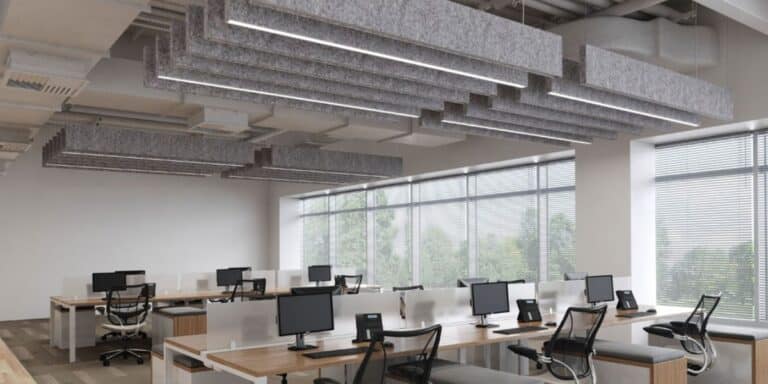
Biura na planie otwartym to jeden z najczęstszych scenariuszy zastosowań akustycznego oświetlenia sufitowego i akustycznego oświetlenia liniowego.
Te przestrzenie zazwyczaj cierpią z powodu ciągłego szumu tła spowodowanego rozmowami, dźwiękami klawiatury i systemami HVAC, a nie ostrymi, odizolowanymi źródłami szumu.
W tym rodzaju środowisku dobrze sprawdzają się oświetlenie liniowe akustyczne o długim kształcie lub podwieszane lampy sufitowe, ponieważ zapewniają:
- Szerokie pochłanianie dźwięku
- Jednolity rozkład oświetlenia
- Porządek wizualny w dużych rozpiętościach sufitów

Typowe specyfikacje w otwartych biurach są zwykle umiarkowane, a nie ekstremalne.
- Grubość filcu PET: 9-12 mm lub niestandardowy rozmiar
- Cel NRC: ~0,6–0,75
- Montaż: podwieszany lub zintegrowany z sufitem
- Filcowy kolor płyty akustycznej: czerwony/zielony/niebieski/szary lub więcej kolorów opcja
Sale konferencyjne i przestrzenie do współpracy
Sale konferencyjne stawiają większe wymagania dotyczące przejrzystości mowy i kontroli dźwięku w określonej strefie.
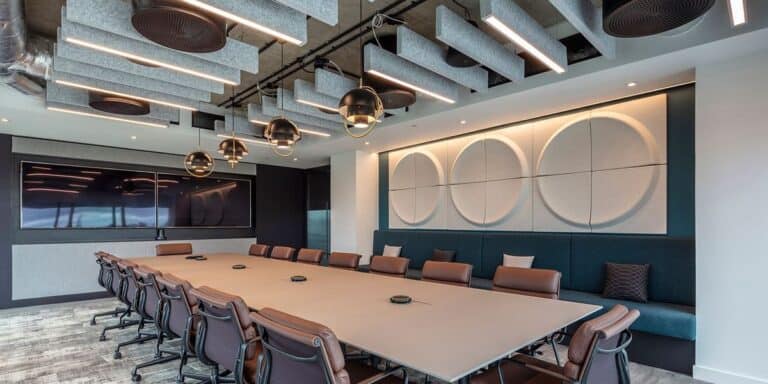
W przeciwieństwie do otwartych biur, źródła dźwięku są bardziej skoncentrowane – zazwyczaj wokół stołu spotkań – co sprawia, że projekty lamp wiszących akustyczne są praktycznym wyborem.
Kompaktowe lampy wiszące akustyczne lub zgrupowane oprawy akustyczne umieszczone nad stołem pomagają pochłaniać odbicia od głosów, zachowując skupione oświetlenie zadań.
- pochłanianie dźwięku w pobliżu źródła
- Skupione oświetlenie bez przelewania
- Łatwa integracja z estetyką projektu
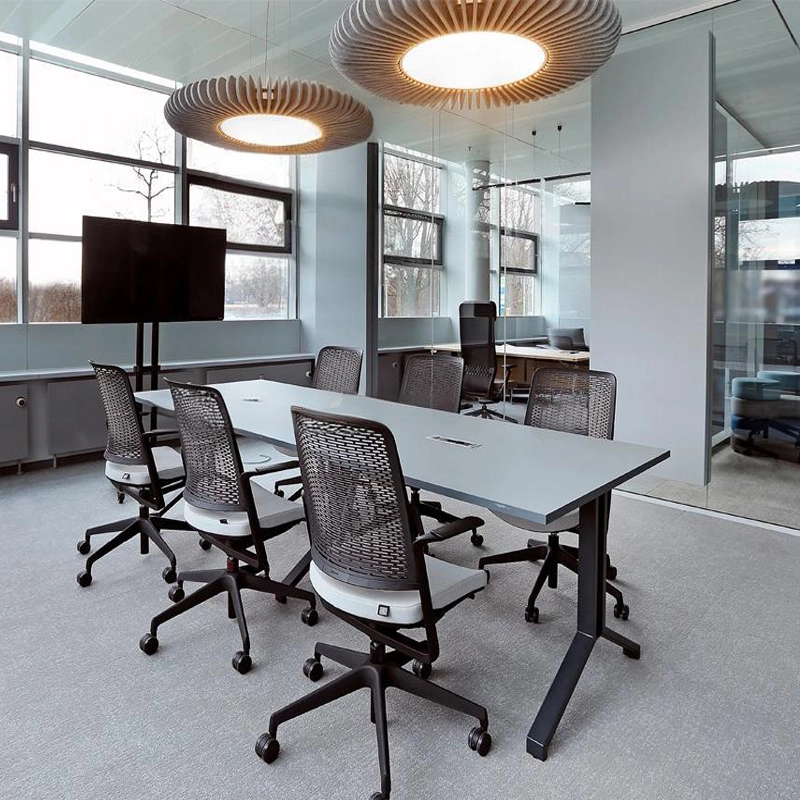
Typowe specyfikacje w salach konferencyjnych:
- Grubość filcu PET: 12–15 mm lub niestandardowy rozmiar
- Skoncentrowany obszar absorpcji, a nie pełne pokrycie
- Mniej opraw, ale wyższa absorpcja na jednostkę
- Filcowy kolor płyty akustycznej: czerwony/zielony/niebieski/szary lub więcej kolorów opcja
Sale i sale szkoleniowe
W salach lekcyjnych i salach szkoleniowych kontrolowanie pogłosu jest niezbędne dla zrozumiałości mowy.
Przestrzenie te często wymagają akustycznego oświetlenia sufitowego lub akustycznych opraw sufitowych, które łączą oświetlenie z pochłanianiem dźwięku w dużej powierzchni.
Zamiast form dekoracyjnych dominuje praktyczność: jednolite układy sufitów, stabilna wydajność akustyczna i łatwa konserwacja to kluczowe kwestie.
Kluczowe względy w tych przestrzeniach:
- Większa powierzchnia absorpcji nad estety
- większy nacisk na spójność i trwałość niż na ekstremalne parametry
- Łatwy w utrzymaniu w czasie
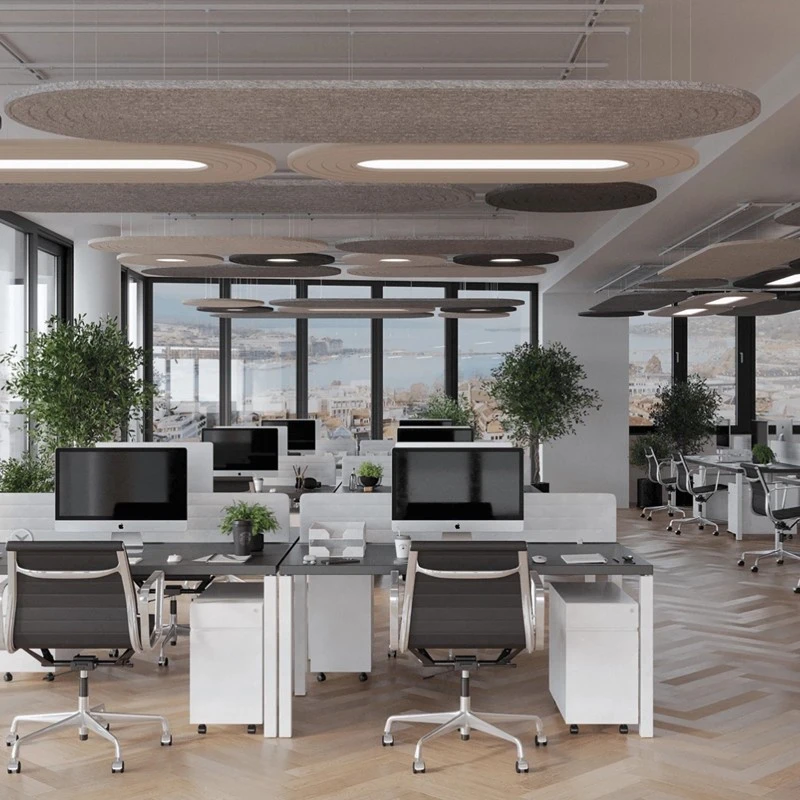
Typowe specyfikacje w salach konferencyjnych:
- Grubość filcu PET: 12–18 mm lub niestandardowy rozmiar
- Skoncentruj się na pokryciu i ogólnej wydajności akustycznej
- Przeznaczony do standardowego montażu i długotrwałego użytkowania
- Filcowy kolor płyty akustycznej: czerwony/zielony/niebieski/szary lub więcej kolorów opcja
Obszary publiczne i kreatywne
W przestrzeniach publicznych, takich jak lobby, salony lub strefy kreatywne, oświetlenie paneli akustycznych i projekty oświetlenia filcowego często pełnią zarówno rolę funkcjonalną, jak i wizualną.
Tutaj oświetlenie akustyczne staje się częścią języka architektonicznego. Kolor, kształt i układ — takie jak jasnoniebieski filc, jasnoszary filc lub niestandardowe odcienie — są często używane do wzmocnienia marki lub tożsamości przestrzennej.
Priorytet projektu w tych obszarach:
- Równowaga między wydajnością akustyczną a projektem wizualnym
- Parametry akustyczne są mniej krytyczne, z większym naciskiem na integrację estetyczną
- Dopasowanie koloru i materiału do tożsamości przestrzennej

Typowe specyfikacje w obszarach kreatywnych:
- Grubość filcu PET: 9–12 mm, 12–18 mm lub niestandardowy rozmiar
- Elastyczne wybory w zależności od kształtu i instalacji
- nacisk na ogólny efekt, a nie pojedyncze parametry
- Filcowy kolor płyty akustycznej: czerwony/zielony/niebieski/szary lub więcej kolorów opcja
W różnych zastosowaniach odpowiedni wybór oświetlenia akustycznego jest zawsze równowagą między potrzebami pochłaniania dźwięku, funkcją oświetlenia i zamiarem projektowania przestrzennego.
Zrozumienie, gdzie i jak wykorzystana jest przestrzeń, sprawia, że wybór odpowiednich opraw oświetleniowych akustycznych jest o wiele bardziej efektywny niż zaczynanie od samych specyfikacji produktu.
Kluczowe parametry: wybór tego, co jest wystarczające, nie nadmierne
Grubość filcu: jak grubość wystarcza do oświetlenia akustycznego?
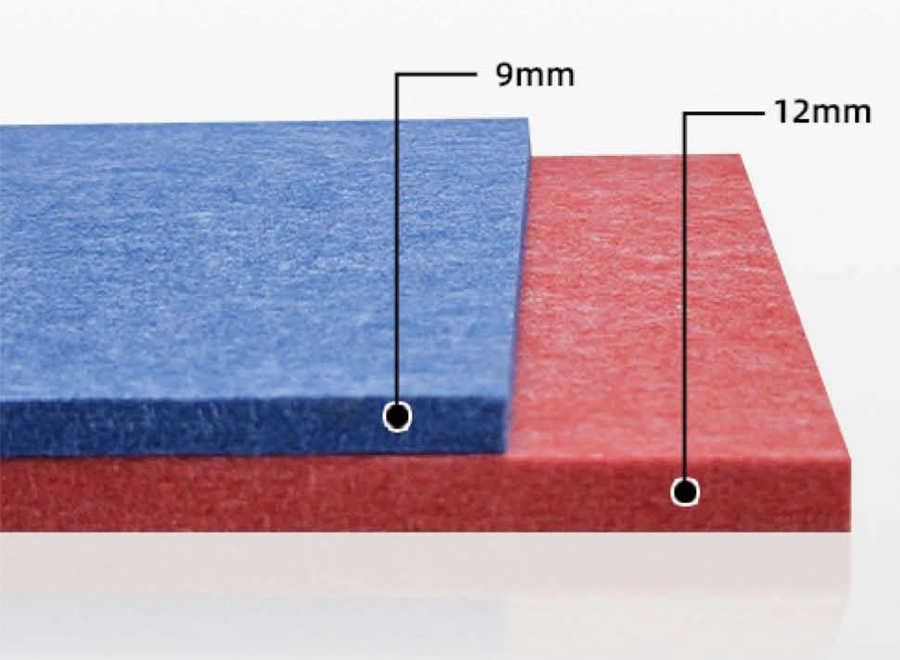
W przypadku oświetlenia akustycznego zazwyczaj zaleca się grubość filcu 9–12 mm w większości zastosowań komercyjnych, zapewniając praktyczną równowagę między pochłanianiem dźwięku, ciężarem oprawy i wykonalnością instalacji.
Ten zakres grubości jest szeroko stosowany w nowoczesnych systemach oświetlenia akustycznego z wykorzystaniem Oświetlenie akustyczne dla zwierząt domowych materiały, w których wymagana jest zarówno wydajność akustyczna, jak i elastyczność projektowa.
W przypadku większości komercyjnych projektów oświetlenia akustycznego wystarcza filc 9-12 mm.
W przypadku przestrzeni o wyższym poziomie hałasu mowy lub większej objętości pomieszczenia, zwykle bardziej odpowiedni jest filc 12-18 mm.
Grubszy filc ogólnie poprawia pochłanianie dźwięku, ale również zwiększa wagę oprawy i nakłada surowsze wymagania dotyczące systemów zawieszenia i metod instalacji. W rezultacie grubość filcu powinna być dobrana zarówno na podstawie celów akustycznych, jak i praktycznych ograniczeń instalacyjnych, a nie samej wydajności absorpcji.
W praktycznych zastosowaniach:
- Filc 9-12 mm jest szeroko stosowany w lampach wiszących i akustycznych panelach do biur, sal konferencyjnych i przestrzeni roboczych na otwartym planie, zapewniając zrównoważoną kombinację kontroli akustycznej, lekkości wizualnej i efektywności kosztowej.
- Filc 12-18 mm lepiej nadaje się do sal lekcyjnych, sal szkoleniowych i większych przestrzeni konferencyjnych, gdzie zrozumiałość mowy i kontrola pogłosu stają się bardziej krytyczne.
- Filc 18-27 mm jest zazwyczaj zarezerwowany dla wymagających akustycznie środowisk lub wielkoformatowych paneli akustycznych, gdzie kontrola dźwięku ma pierwszeństwo przed grubością oprawy, waga i minimalistycznym wyglądem.
Wartości NRC: Jaki NRC jest zalecany do oświetlenia akustycznego?
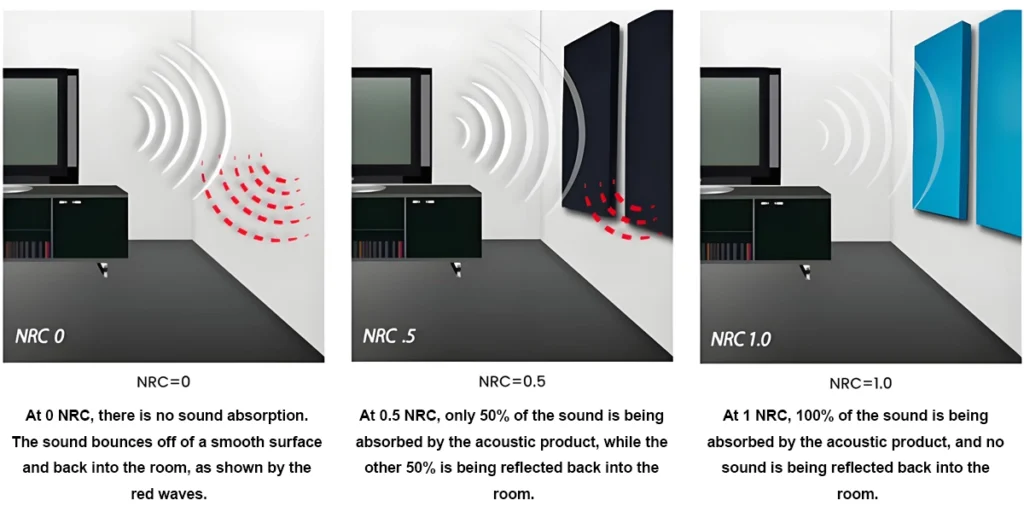
W przypadku większości komercyjnych zastosowań oświetlenia akustycznego zakres NRC 0,7–0,8 jest na ogół wystarczający do osiągnięcia zauważalnej poprawy komfortu dźwięku.
NRC jest szeroko stosowany do opisu wydajności akustycznej, ale często jest źle rozumiany podczas wyboru produktu. W praktycznych projektach oświetlenia akustycznego bardzo wysokie wartości NRC nie zawsze prowadzą do proporcjonalnej poprawy postrzeganego komfortu dźwięku – zwłaszcza gdy oświetlenie akustyczne jest tylko jednym z elementów szerszej strategii akustycznej.
Jak pokazano na obrazku porównawczym (NRC = 0 / 0,5 / 1), NRC reprezentuje raczej różne poziomy pochłaniania dźwięku niż prostą skalę „dobre lub złe”. Wybór odpowiedniego poziomu NRC zależy od tego, jak duży wkład akustyczny jest realistycznie wymagany od samego oświetlenia.
Typowe zakresy referencyjne obejmują:
- NRC 0,6–0,7 dla otwartych biur i przestrzeni publicznych z ciągłym hałasem tła, gdzie umiarkowane pochłanianie pomaga zmniejszyć ogólne gromadzenie się dźwięku.
- NRC 0,7–0,8 dla sal konferencyjnych, sal lekcyjnych i przestrzeni współpracy, w których klarowność mowy i kontrola pogłosu są bardziej krytyczne.
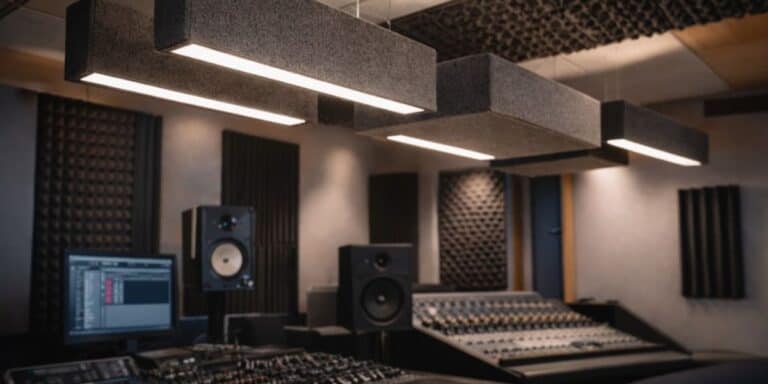
- NRC ≥ 0,9 dla pracowni, audytorów lub środowisk wrażliwych akustycznie, gdzie oświetlenie akustyczne zwykle odgrywa rolę wspierającą obok dedykowanych zabiegów akustycznych.
Wysokość instalacji: krytyczny, ale często pomijany czynnik
Wysokość montażu często ma większy wpływ na wydajność akustyczną niż zwiększanie grubości filcu.
Oprawy oświetleniowe akustyczne wymagają wystarczającego prześwitu od sufitu, aby skutecznie współdziałać z falami dźwiękowymi. Gdy lampy wiszące akustyczne lub oświetlenie sufitowe są zainstalowane zbyt blisko sufitu, ich wydajność absorpcji jest znacznie zmniejszona.
W większości standardowych przestrzeni handlowych:
- Zawieszenie oświetlenia akustycznego 300–600 mm poniżej sufitu poprawia efektywność absorpcji.
- W środowiskach o wysokim sufitu zwiększanie ilości opraw lub stosowanie układów warstwowych jest często bardziej skuteczne niż określanie grubszego filcu.
- Wysokość instalacji należy zawsze oceniać wraz z konstrukcją sufitu, nośnością i prowadzeniem kabli.
Tabela: Typowy wybór parametrów według typu aplikacji
| Typ aplikacji | Zalecana grubość filcu | Zalecany zakres NRC | Typowa wysokość montażu | Sugerowana metoda kontroli |
| Biuro na planie otwartym | 9–12 mm | ≥ 0,65 | 2,8–3,2 m | Włączanie/wyłączanie lub 0–10V |
| sala konferencyj | 12–18 mm | ≥ 0,75 | 2,6–3,0 m | 0–10V / DALI opcjonalnie |
| Przestrzenie edukacyjne | 18–24 mm | ≥ 0,80 | 3,0–3,5 m | Polecane przez Dali |
| Gościnność / Lobby | 9–12 mm | ≥ 0,60 | ≥ 3,2 m | Opcjonalne sterowanie sceną |
Specyfikacje oświetlenia, które mają znaczenie w projektach akustycznych
UGR: Komfort wizualny staje się bardziej czuły w oświetleniu akustycznym
W projektowaniu oświetlenia akustycznego komfort wizualny wymaga większej uwagi niż w konwencjonalnych oprawach. Ponieważ oprawy akustyczne są często większe, bardziej miękkie w formie i instalowane na niższych wysokościach, problemy z odblaskami mogą stać się bardziej zauważalne, jeśli UGR nie jest odpowiednio kontrolowany.
W przeciwieństwie do standardowych świateł panelowych, oświetlenie akustyczne często wchodzi w bezpośrednie pole widzenia użytkownika, zwłaszcza w biurach, salach lekcyjnych i przestrzeniach konferencyjnych. W efekcie, warżar Należy traktować jako wizualny czynnik kontroli ryzyka, zapewniając, że poprawa wydajności akustycznej nie odbywa się kosztem komfortu oświetlenia.
Właściwe zarządzanie UGR pomaga oświetleniu akustycznym zapewnić zrównoważoną wydajność — wspierając zarówno pochłanianie dźwięku, jak i komfortowe warunki wizualne w zajętych przestrzeniach.
Wybór CCT: różnica funkcjonalna między przestrzeniami konferencyjnymi a biurowymi
W projektowaniu oświetlenia akustycznego, Wybór CCT jest ściśle związany z tym, jak wykorzystana jest przestrzeń, a nie sama preferencja estetyczna. Sale konferencyjne i przestrzenie zorientowane na ostrość zazwyczaj korzystają z neutralnego białego światła około 4000 tys., co zapewnia czujność, przejrzystą komunikację i przejrzystość wizualną podczas dyskusji lub prezentacji.
W przeciwieństwie do otwartych biur i długotrwałych przestrzeni roboczych często przyjmują nieco cieplejsze tony, takie jak 3000K–3500K. W połączeniu z akustycznym oświetleniem sufitowym lub akustycznym panelem, cieplejsze CCT pomagają zmniejszyć zmęczenie wzroku i stworzyć bardziej zrelaksowaną atmosferę, szczególnie w środowiskach, w których zabieg akustyczny już mięknie wizualnie.
Oświetlenie bezpośrednie a bezpośrednie/pośrednie: jak dystrybucja kształtuje przestrzeń
Rozkład światła ma bezpośredni wpływ na sposób interakcji oświetlenia akustycznego zarówno z sufitem, jak i strefą okupowaną. Oświetlenie tylko bezpośrednie skupia się w dół, dzięki czemu nadaje się do obszarów zorientowanych na zadania, takich jak biurka, stoły do spotkań i sale lekcyjne, w których wymagana jest kontrolowana jasność i czysta widoczność.
Oświetlenie bezpośrednie/pośrednie (dwukierunkowe) zwiększa oświetlenie sufitu, pomagając zrównoważyć ogólną jasność i zmniejszyć kontrast między powierzchniami. W rozwiązaniach oświetleniowych akustycznych takie podejście jest często stosowane w biurach na planie otwartym, dużych salach konferencyjnych oraz przestrzeniach architektonicznych, w których równie ważna jest otwartość wizualna i komfort otoczenia.
Gdy parametry oświetlenia nie muszą być dalej przesuwane
Nie każda aplikacja oświetlenia akustycznego wymaga najniższego możliwego UGR lub najbardziej złożonego rozsyłu światła. W obszarach obiegu, nieformalne strefy współpracy lub dekoracyjne instalacje akustyczne, doprowadzenie do granic możliwości oświetlenia często przynosi ograniczone korzyści funkcjonalne, przy jednoczesnym zwiększaniu kosztów i złożoności systemu.
W takich przypadkach priorytetowe traktowanie spójności wizualnej, łatwość instalacji i integracja z elementami akustycznym zwykle prowadzi do bardziej praktycznego wyniku. Dopasowanie specyfikacji oświetlenia do rzeczywistych zachowań użytkowników — a nie teoretycznych celów wydajnościowych — pomaga utrzymać efektywność, sterowanie i skalowawość projektów oświetlenia akustycznego.
Standardowe oprawy a niestandardowe oświetlenie akustyczne
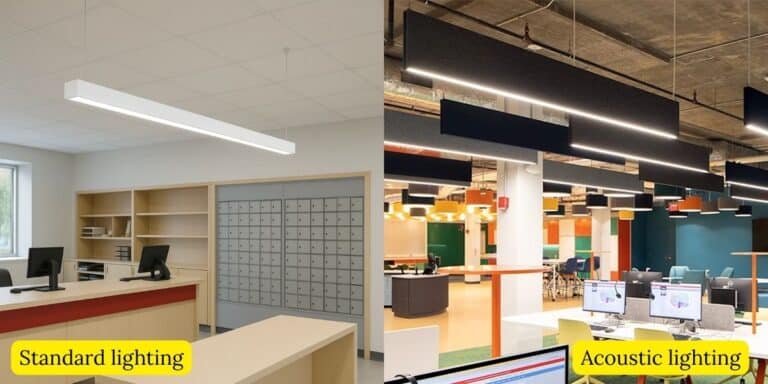
W projektach oświetlenia akustycznego jedną z najczęstszych decyzji, przed którymi stoją projektanci i kupujący, jest wybór standardowego oprawy, czy zainwestowanie w niestandardowe rozwiązanie oświetlenia akustycznego. Chociaż standardowe produkty na pierwszy rzut oka mogą wydawać się prostsze, niestandardowe oświetlenie akustyczne często zapewnia lepszą wydajność, integrację i długoterminową wartość – zwłaszcza w projektach komercyjnych i architektonicznych.
Gdy działa standardowe oświetlenie akustyczne
Standardowe oprawy akustyczne są zazwyczaj odpowiednie do:
- Małe biura lub sale konferencyjne
- Projekty z ustalonymi wysokościami sufitów i prostymi układami
- Krótkie wymagania dotyczące czasu realizacji
- Ograniczone potrzeby personalizacji
Produkty te zwykle mają wstępnie zdefiniowane rozmiary, ustaloną grubość filcu i ograniczone opcje kolorystyczne. W przypadku podstawowych potrzeb akustycznych oświetlenia sufitowego mogą być praktycznym i opłacalnym rozwiązaniem.
Dlaczego niestandardowe oświetlenie akustyczne jest preferowane w projektach komercyjnych
W rzeczywistych projektach oświetlenie akustyczne musi być zintegrowane z architekturą, systemami MEP i koncepcjami wnętrz. Niestandardowe oświetlenie akustyczne pozwala projektantom kontrolować proporcje, wydajność i metody instalacji od samego początku.
Niestandardowe rozwiązania są szczególnie powszechne w:
- Biura i miejsca pracy na otwartym planie
- Centra konferencyjne i siedziba firmy
- Przestrzenie edukacyjne i biblioteki
- Gościnność i wnętrza publiczne
W takich środowiskach lampy wiszące akustyczne, akustyczne oświetlenie liniowe i akustyczne panele sufitowe z oświetleniem są często dopasowane do przestrzeni, a nie zmuszają przestrzeni do dopasowania produktu.
Co można dostosować w oświetleniu akustycznym
Niestandardowe oświetlenie akustyczne nie ogranicza się do samego kształtu. Większość projektów obejmuje wiele regulowanych parametrów, aby zrównoważyć wydajność akustyczną, funkcję oświetlenia i projekt wizualny.
Poniżej znajdują się najpopularniejsze opcje dostosowywania:
| Niestandardowy przedmiot | Typowe opcje |
| filcowa grub | 9 mm / 12 mm / 18 mm / 24 mm / 27 mm |
| Filcowy kolor i wykończenie | Szeroka paleta kolorów, tekstury filcu, niestandardowe kolory |
| Rozmiar oprawy | Długość, szerokość, średnica, kombinacje modułowe |
| Kierunek oświetlenia | Downlight / pośredni / bezpośredni / pośredni |
| Ściemnianie i kontrola | On-Off, 0–10V, DALI, przestrajalny biały |
| Metoda montażu | Sufit podwieszany, natynkowy, zintegrowany sufit |
| Cel akustyczny | Zorientowany na NRC lub zrównoważony projekt akustyczny |
Różnica w kosztach: standardowe i niestandardowe oświetlenie akustyczne
Standardowe produkty korzystają z produkcji skali i ustalonych specyfikacji, co skutkuje niższymi kosztami jednostkowymi. Niestandardowe oświetlenie akustyczne odzwierciedla jednak dodatkowe wydatki w:
- Zużycie materiału (grubszy filc, większe rozmiary)
- Metody oprzyrządowania lub formowania
- Wsparcie inżynieryjne i rysunkowe
- Weryfikacja wydajności akustycznej i oświetleniowej
To powiedziawszy, niestandardowe rozwiązania często obniżają ukryte koszty podczas instalacji i późniejszych korekt, co czyni je bardziej opłacalnymi na poziomie projektu.
OEM i ODM: Dlaczego dostosowywanie nie jest tak złożone, jak się wydaje
Dla doświadczonych producentów oświetlenie akustyczne OEM i ODM jest procesem ustandaryzowanym, a nie eksperymentalnym. Gdy kluczowe parametry — takie jak grubość filcu, rozmiar oprawy i wymagania dotyczące sterowania — zostaną zdefiniowane, większość niestandardowych rozwiązań oświetlenia akustycznego może być opracowana wydajnie i wielokrotnie.
Dla projektantów i właścicieli projektów oznacza to:
- Przewidywalne czasy realizacji
- Kontrolowane zakresy kosztów
- Stała jakość w różnych partach
- Lepsze dopasowanie do celów akustycznych i oświetleniowych
Typowe błędy selekcji popełniane przez projektantów
W rzeczywistych projektach oświetlenia akustycznego problemy z wydajnością rzadko wynikają z wad produktu. Częściej są one spowodowane niedopasowaniami wyboru — wybierając specyfikacje, które dobrze wyglądają na papierze, ale nie są zgodne z rzeczywistą przestrzenią, strukturą lub scenariuszem użytkowania.
W projektowaniu oświetlenia akustycznego unikanie złego wyboru jest często ważniejsze niż dążenie do „najlepszych” parametrów.
Poniżej znajdują się trzy typowe błędy, które wielokrotnie widzimy w komercyjnych projektach oświetlenia akustycznego.
Błąd 1 Wybieranie filcu, który jest zbyt cienki
Wielu projektantów wybiera grubość filcu głównie w oparciu o wygląd lub budżet, zakładając, że „każdy filc akustyczny będzie działał”. W praktyce grubość filcu bezpośrednio wpływa na zakres pochłaniania dźwięku, sztywność strukturalną i długoterminową stabilność akustycznych opraw oświetleniowych.
Na przykład cienkie panele filcowe (takie jak 9 mm) dobrze sprawdzają się przy średnich częstotliwościach i są idealne do termicznych lub owiniętych lamp wiszących. Jednak w większych otwartych biurach, salach konferencyjnych lub przestrzeniach z gromadzeniem się hałasu o niskiej częstotliwości, grubsze opcje (18–24 mm) zapewniają zauważalnie lepszy balans akustyczny.
Klucz na wynos: Grubość filcu powinna odpowiadać rozmiarowi przestrzeni, profilowi hałasu i formie oprawy, a nie tylko projektowi wizualnemu.
Błąd 2|Pierorytyzujący kształt nad funkcją akustyczną
Nowoczesne oświetlenie akustyczne oferuje uderzające formy — pierścienie, zakręty, przegrody i rzeźbiarskie akustyczne lampy sufitowe. Chociaż te projekty zwiększają wpływ wizualny, problemy pojawiają się, gdy kształt staje się jedynym kryterium wyboru.
Na przykład duże światło akustyczne w kształcie pierścienia może wyglądać imponująco, ale zapewnia ograniczoną efektywną powierzchnię absorpcji, jeśli zostanie zainstalowane zbyt wysoko lub używane w izolacji. W przeciwieństwie do tego, liniowe oświetlenie akustyczne lub akustyczne oświetlenie przegrody ułożone w sekwencje może zapewnić znacznie bardziej spójną kontrolę dźwięku.
Kluczowe na wynos: Oprawy oświetleniowe akustyczne powinny być oceniane jako część systemu, a nie tylko jako samodzielne elementy wizualne.
Błąd 3|ignorowanie konstrukcji instalacji i warunków sufitowych
Innym powszechnym nadzorem jest wybór akustycznego oświetlenia sufitowego bez pełnego uwzględnienia typu sufitu, wysokości zawieszenia, ładowności lub prowadzenia kabli. Często prowadzi to do przeprojektowania w ostatniej chwili, dodatkowych kosztów lub skompromitowanej wydajności.
Na przykład niektóre lampki akustyczne są określone bez potwierdzenia, czy sufit może podtrzymywać instalację podwieszaną lub czy montaż wpuszczany jest w ogóle możliwy. W niektórych przypadkach przejście z oświetlenia tylko bezpośredniego na oświetlenie bezpośrednie-pośrednie staje się trudne ze względu na zbyt późno wykryte ograniczenia konstrukcyjne.
Kluczowe na wynos: Metoda instalacji powinna zostać potwierdzona przed sfinalizowaniem specyfikacji oświetlenia akustycznego.
Ostatnia myśl dla projektantów
Udane projektowanie oświetlenia akustycznego nie polega na unikaniu ambicji – chodzi o dostosowanie wydajności akustycznej, funkcji oświetlenia, struktury i budżetu. Dzięki omijaniu tych typowych błędów projektanci mogą dostarczać rozwiązania oświetlenia akustycznego, które są zarówno atrakcyjne wizualnie, jak i technicznie sprawne.
Wniosek
Wybór odpowiedniego oświetlenia akustycznego nie polega na osiągnięciu najwyższych specyfikacji akustycznych lub oświetleniowych. W prawdziwych projektach komercyjnych sukces wynika z dopasowania wydajności do rzeczywistych warunków przestrzennych – w tym sposobu wykorzystania przestrzeni, gdzie jest generowany hałas i sposobu zainstalowania systemu oświetlenia.
Rozpoczynając od scenariuszy aplikacji, a następnie oceniając grubość filcu, cele NRC, wysokość instalacji i kontrolę oświetlenia, projektanci mogą uniknąć przesadnej specyfikacji, jednocześnie zapewniając efektywny komfort akustyczny i wizualny. W wielu przypadkach wybieranie parametrów, które asygnować aniżeli największy Prowadzi do lepszej kontroli kosztów, prostszej instalacji i bardziej przewidywalnych wyników projektu.
Niezależnie od tego, czy używasz standardowych opraw, czy też rozwijasz niestandardowe oświetlenie akustyczne za pomocą procesów OEM / ODM, przejrzysta logika wyboru pomaga zapewnić płynne integrację oświetlenia akustycznego z architekturą, systemami MEP i projektowaniem wnętrz - zamiast stać się odizolowanym lub nadmiernie zaprojektowanym elementem.
FAQ
Powiązane posty