Polski
  English
  简体中文
简体中文  Deutsch
  Español
  Français
  Italiano
  日本語
日本語  한국어
한국어  Português
  Русский
  Türkçe
  Nederlands
  Tiếng Việt
  ไทย
ไทย 
LED linear modules and LED strip lights are two common types of linear LED lighting systems. LED linear modules use rigid printed circuit boards (PCBs) designed for stable commercial lighting installations, while LED strip lights use flexible circuit boards intended for decorative or adaptable lighting applications.
Although both products provide linear illumination, their structural design, installation methods, and performance characteristics are different. LED linear modules are typically used in commercial lighting systems where mechanical stability and heat dissipation are important, while LED strip lights are widely used in decorative lighting projects where flexibility and simple installation are required.
This article explains the structural differences, advantages, limitations, and typical applications of LED linear modules and LED strip lights, followed by a detailed comparison to help determine which option is more suitable for different lighting scenarios. If you are also comparing different types of linear LED lighting products, you may find our guide on Taśma neonowa LED a taśma świetlna LED: Który z nich najlepiej pasuje do Twojego projektu? helpful for understanding how these lighting technologies differ in structure and application.
What Is an LED Linear Module
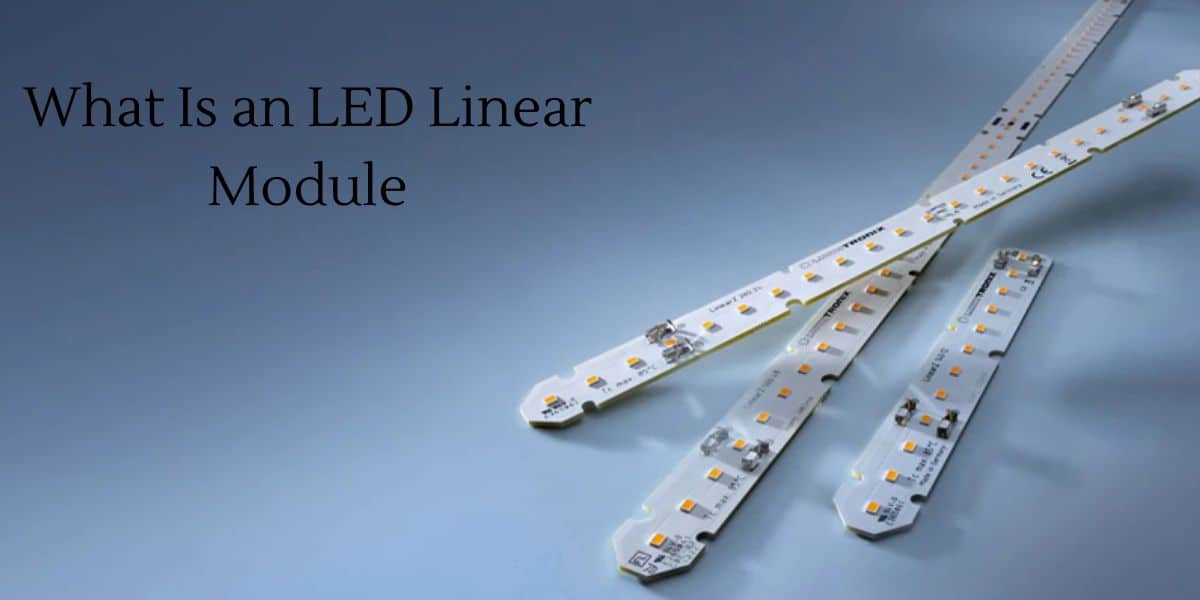
An LED linear module is a rigid lighting component built on a solid printed circuit board (PCB) that contains multiple LEDs arranged in a straight configuration. These modules are designed to function as part of modular lighting systems, where multiple modules can be connected to create continuous lighting lines in commercial or architectural applications.
Most LED linear modules operate using 12V or 24V constant voltage systems, although some industrial modules use constant-current drivers. The rigid PCB structure allows the module to maintain consistent LED spacing and stable electrical connections. Because of this structure, linear modules are frequently installed inside aluminum profiles or metal housings that improve thermal management.
LED linear modules are commonly used in commercial lighting systems, including retail display lighting, architectural coves, signage lighting, and cabinet lighting. Their design allows controlled spacing between LEDs and more predictable light output compared with flexible LED lighting solutions. For a more detailed explanation of structure, components, and applications, you can also read our Complete guide to LED Linear Modules.
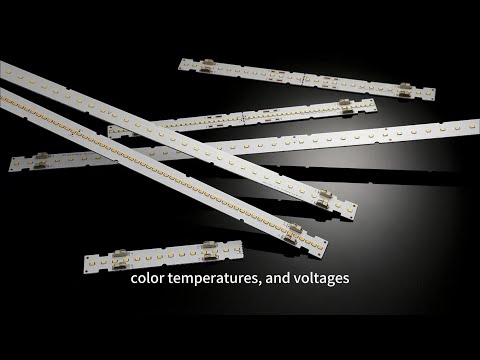
The following video shows an example of a high-efficiency LED linear module structure and how these modules are typically arranged in commercial lighting systems.
Advantages of LED Linear Modules
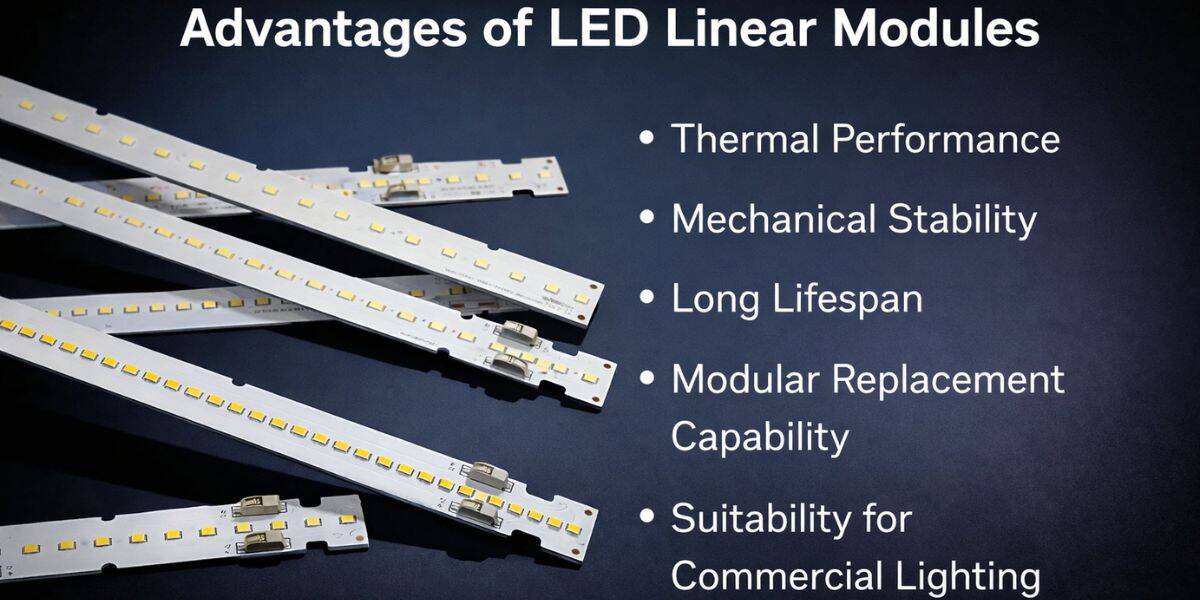
LED linear modules are designed for environments where stability, consistent light output, and controlled installation conditions are important. Their structural characteristics make them suitable for commercial and professional lighting installations.
Wydajność term
LED linear modules typically use rigid PCBs that can be mounted directly onto aluminum channels or metal housings. This configuration improves heat transfer away from the LEDs.
Effective thermal management helps maintain LED junction temperatures within safe operating ranges. In many commercial installations, linear modules maintain stable temperatures even when operating at 10–20 watts per meter, which helps preserve light output and reduce long-term degradation.
Stabilność mechaniczna
The rigid construction of LED linear modules provides mechanical stability during installation and operation. Unlike flexible lighting products, the PCB structure prevents bending or twisting that could damage solder joints or electrical traces.
This structural stability is particularly important in fixed lighting systems such as shelving displays, signage frames, and architectural light boxes where the lighting components must maintain consistent alignment.
Długa żywotność
Moduły liniowe LED generally achieve longer operational lifespans than flexible LED strips because their rigid structure supports better heat dissipation and electrical stability.
In typical commercial environments, LED linear modules often operate for 3–5 years of continuous daily use before noticeable lumen depreciation or component degradation occurs. Proper heat management and driver compatibility play significant roles in achieving this lifespan.
Modular Replacement Capability
LED linear modules are typically installed as individual lighting units connected in sequence. If one module fails, it can usually be replaced without removing the entire lighting system.
This modular design simplifies maintenance in commercial lighting installations where downtime or large-scale component replacement would otherwise increase maintenance costs.
Suitability for Commercial Lighting
Linear modules are widely used in applications where lighting needs to be uniform, reliable, and structurally integrated into fixtures or architectural elements.
Common installations include retail shelf lighting, signage light boxes, architectural linear fixtures, and under-cabinet lighting systems where consistent LED spacing and mechanical stability are required.
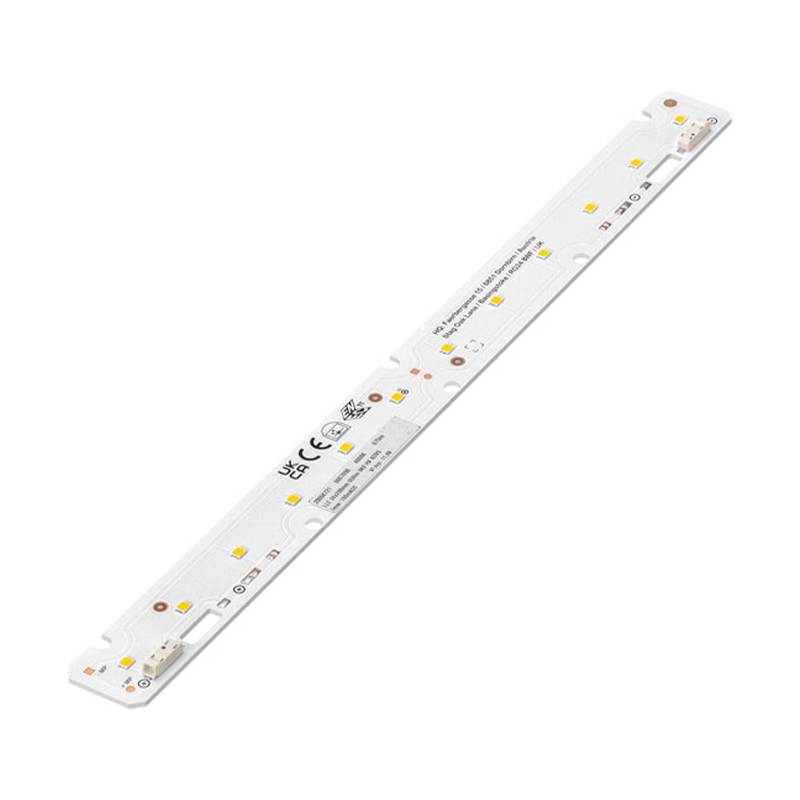
Moduł oświetlenia LED 280x24mm 1100lm
- Model: ROX24T024E-280mm/RQX24T024E-280mm
- Napięcie wejściowe: 20,9-22,7VDC
- Prąd wejściowy: 275mA
- Wat wejściowy: 6,1W
- lumeny: 1098-1241 lm
- Skuteczność świetlna: 183-205 lm/w
- Typy LED: SMD3030/SMD2835
- Chip LED: Samsung/Osram/LumiLeds/BridgeLux/Seul
- LED QTY: 24szt
- Temperatura barwowa: 2700K/3000K/4000K/5000K/6500K
- Wskaźnik oddawania barw: 80/90
- Wymiar: 279×23,6×1,6 mm
- Materiał PCB: Aluminium/FR-4
- Certyfikacja: CE, RoHS
- Gwarancja: 5 lat
Disadvantages of LED Linear Modules
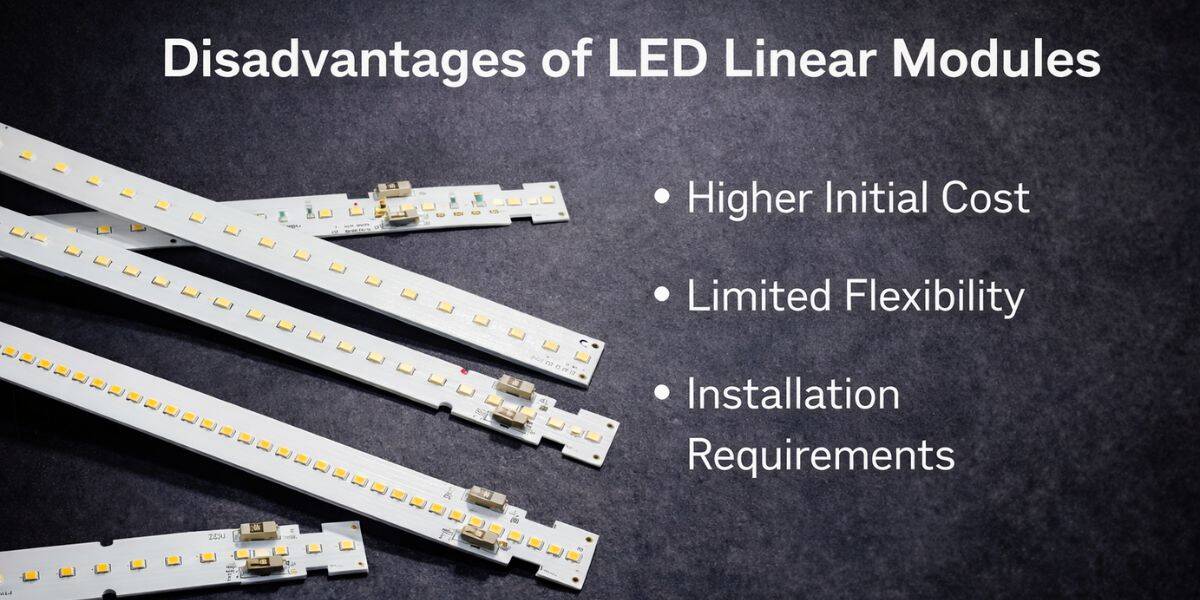
Although LED linear modules provide stable lighting performance, they also have limitations that affect installation flexibility and project costs.
Higher Initial Cost
LED linear modules usually cost more than flexible LED strips because they use rigid PCBs, stronger solder connections, and often require aluminum channels or mounting hardware.
Typical market pricing for LED linear modules ranges between $1 and $5 per meter depending on LED type, power rating, and module structure, depending on LED density, power rating, and thermal design. Additional costs may also include mounting hardware and compatible drivers.
Limited Flexibility
The rigid PCB structure prevents LED linear modules from bending or adapting to curved surfaces. This limitation restricts their use in installations requiring flexible lighting paths.
Applications involving curved architecture, rounded furniture edges, or irregular decorative lighting designs may require flexible lighting products instead.
Wymagania instalacyjne
Installing LED linear modules typically requires mechanical mounting systems such as screws, brackets, or aluminum extrusion profiles.
These additional installation steps increase the time required for setup compared with adhesive-backed lighting products that can be installed directly onto surfaces.
What Is LED Strip Light
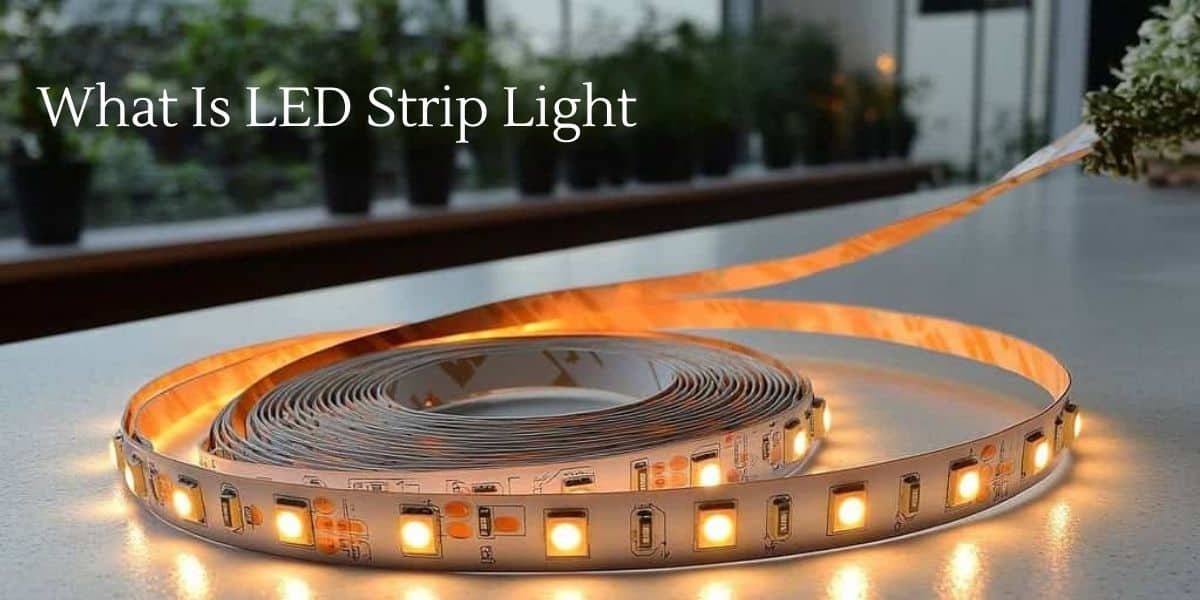
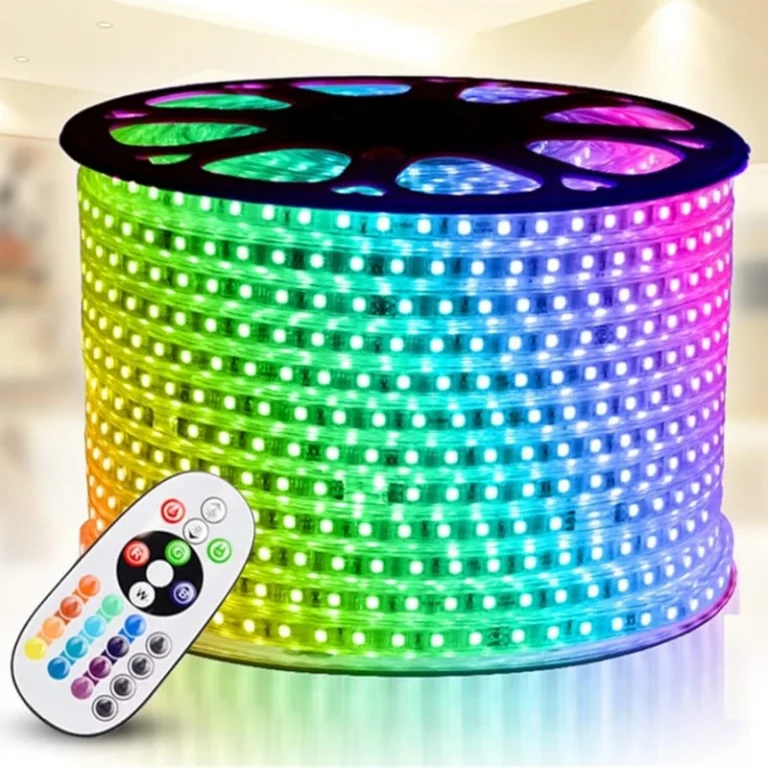
An LED strip light is a flexible lighting product built on a thin flexible printed circuit board (FPCB) that contains multiple surface-mounted LEDs arranged in a continuous line. The flexible PCB allows the strip to bend around curves or corners, making it suitable for decorative or architectural lighting applications.
Most LED strip lights operate on 12V or 24V constant voltage systems and are supplied in reels typically ranging from 5 meters to 10 meters in length. The strips usually include adhesive backing, which allows them to be attached directly to surfaces such as cabinets, ceilings, or furniture edges.
LED strip lights are commonly used in decorative lighting applications, including accent lighting, indirect ceiling lighting, display illumination, and interior design projects. Their flexible design allows them to follow curved surfaces or irregular shapes that rigid lighting modules cannot accommodate. If you want to learn more about how LED strip lights work, their structure, and common applications, you can also read our Kompletny przewodnik po taśmach LED.
Advantages of LED Strip Light
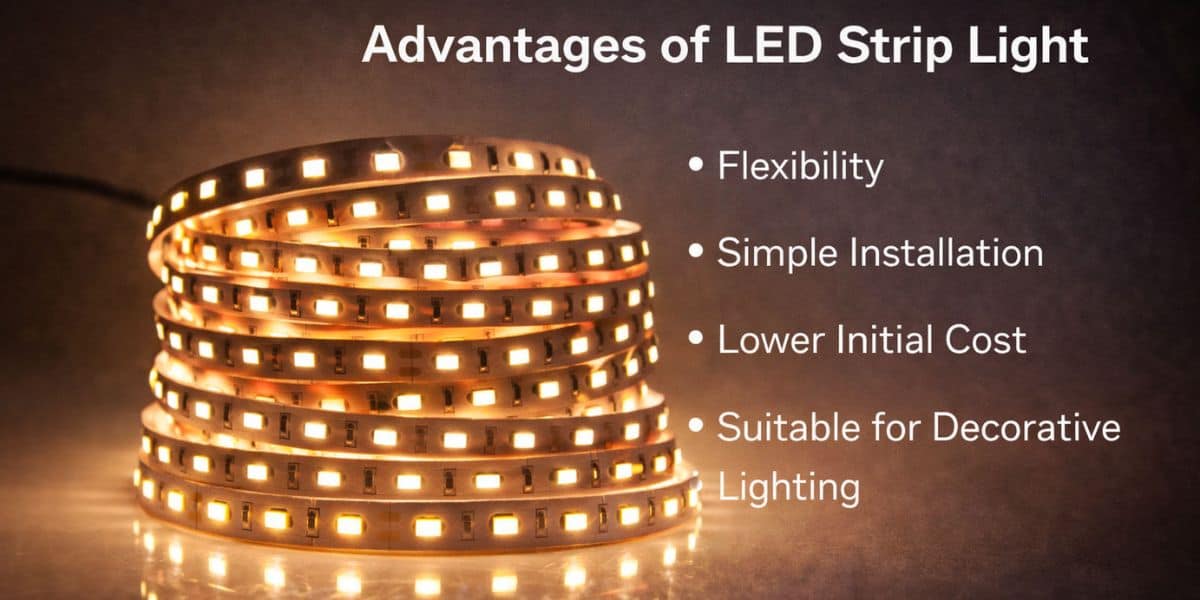
LED strip lights are widely used in residential, commercial, and decorative lighting projects because of their flexible design and relatively simple installation process.
Elastyczność
The flexible PCB structure allows LED strip lights to bend around corners, curved surfaces, and irregular shapes. This capability makes them suitable for architectural details, decorative lighting outlines, and indirect lighting installations.
Flexible strips can often bend to radii of 20–30 millimeters, allowing them to adapt to many interior design applications.
Prosta instalacja
Most LED strip lights include adhesive backing that allows them to be mounted directly onto surfaces without additional mounting hardware.
This installation method significantly reduces installation time, especially for residential or decorative lighting projects where mechanical mounting systems may not be practical.
Lower Initial Cost
LED strip lights are generally less expensive than LED linear modules due to their simpler structure and lower material usage.
Typical pricing ranges from $3 to $12 per meter, depending on LED density, brightness level, and PCB thickness. Because installation hardware is usually not required, overall installation costs can also be lower.
Suitable for Decorative Lighting
LED strip lights are widely used in decorative lighting systems where flexibility and design freedom are important.
Examples include indirect ceiling lighting, under-cabinet kitchen lighting, retail display accents, and furniture lighting where smooth curves or concealed installations are desired.
Disadvantages of LED Strip Light
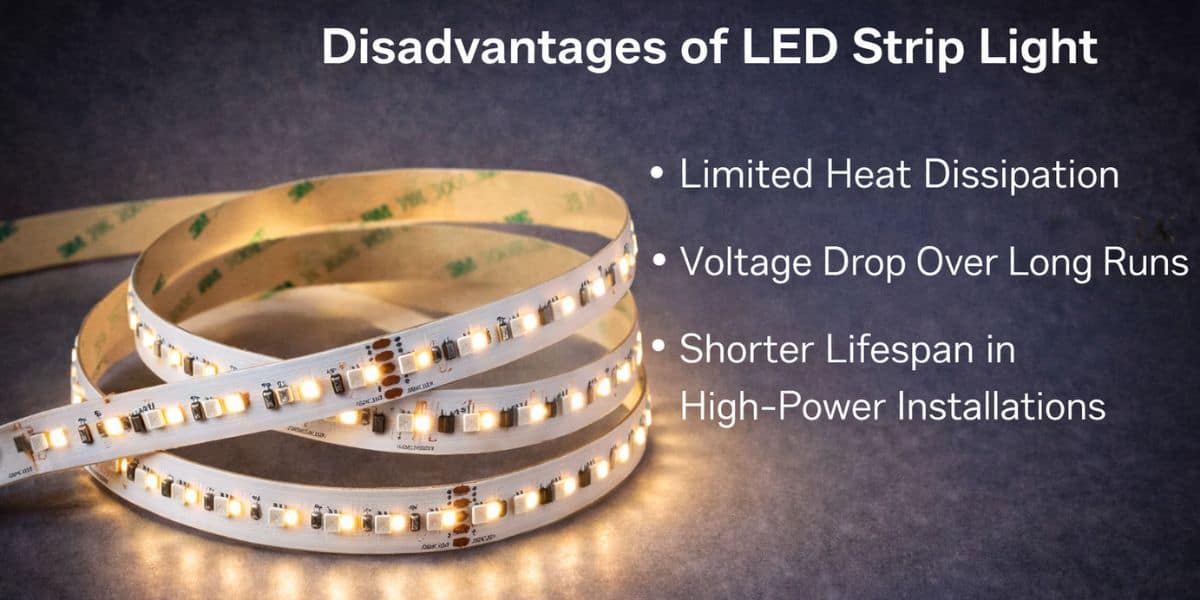
While LED strip lights provide installation flexibility, their design can introduce limitations in performance and long-term durability.
Limited Heat Dissipation
Flexible PCBs used in LED strip lights are thin and typically lack integrated heat-dissipation structures.
When installed without aluminum channels or heat sinks, LED strip lights may operate at higher temperatures, which can accelerate LED degradation and reduce long-term performance.
Voltage Drop Over Long Runs
Voltage drop is a common issue in long LED strip installations. As electrical current travels through the thin copper traces on the flexible PCB, resistance can reduce the voltage reaching LEDs farther from the power source.
For many Paski LED 24V, recommended continuous runs are typically 5 metrów, after which additional power injection may be required to maintain consistent brightness.
Shorter Lifespan in High-Power Installations
Because of limited heat dissipation and flexible construction, LED strip lights may experience faster lumen degradation in high-power installations.
In many commercial installations, LED strip lights typically operate for 2-4 lata before noticeable brightness reduction occurs, particularly if thermal management is limited.
What is the Difference Between LED Strip and LED Linear Module?
The main difference between LED strip lights and LED linear modules lies in their structure, installation method, and typical applications. LED strip lights are built on flexible printed circuit boards (FPCBs), which allow the lighting strip to bend around curves, corners, and irregular surfaces. This flexibility makes LED strips suitable for decorative lighting, indirect illumination, and interior design applications where adaptable lighting layouts are required.
LED linear modules, on the other hand, are built on rigid printed circuit boards designed for stable and structured lighting installations. Their rigid construction allows better heat dissipation and mechanical stability, especially when mounted on aluminum profiles or metal housings. Because of this design, LED linear modules are commonly used in commercial lighting systems such as retail displays, signage light boxes, architectural fixtures, and cabinet lighting.
In general, LED strip lights are preferred for flexible decorative lighting installations, while LED linear modules are more suitable for structured commercial lighting systems that require stable mounting, predictable light distribution, and improved thermal management.
LED Linear Module vs LED Strip Light: A Comparison
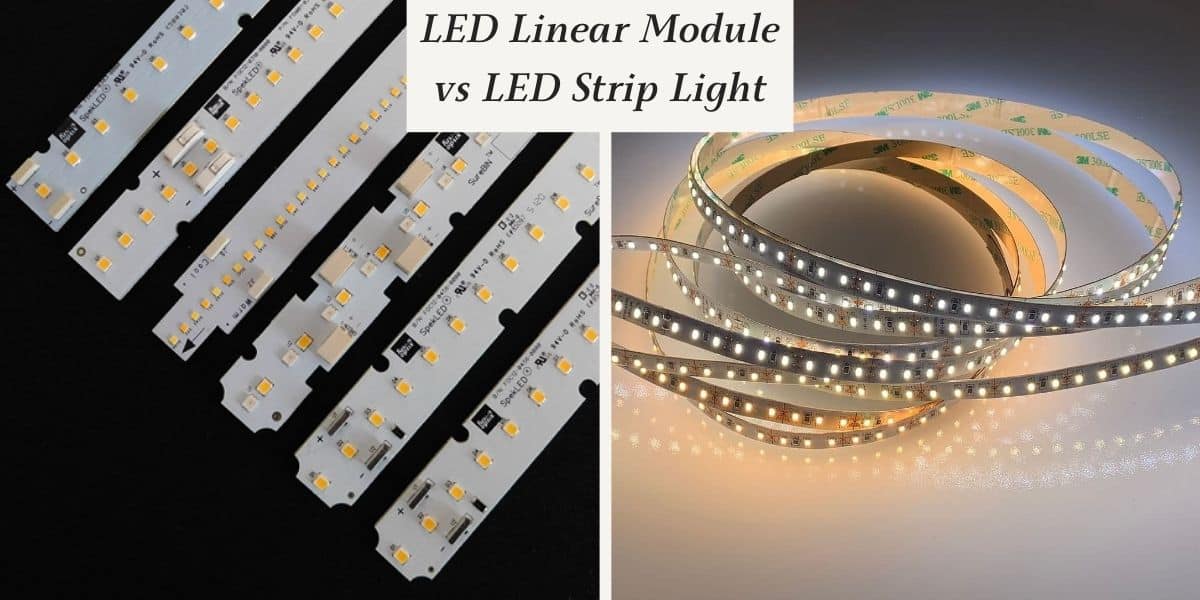
Both lighting solutions serve similar general purposes but differ in structure, installation methods, and long-term performance characteristics. The following comparison highlights the main technical and installation differences between LED Linear modules and LED strip lights.
Brightness and Light Output
LED brightness depends on LED density, power consumption, and optical design. Linear modules often use higher-power LEDs mounted on rigid PCBs, allowing them to produce stronger light output per unit length.
| Parametr | Moduł liniowy LED | Taśma LED |
| Typical brightness | 800 – 2000 lumens/m | 400 – 1500 lumens/m |
| Zakres mocy | 10 – 20 W/m | 5 – 14 W/m |
| Gęstość diod LED | 20 – 60 LEDs/m | 60 – 240 LEDs/m |
Overall, LED linear modules are capable of producing higher brightness per meter because their rigid PCB structure allows higher power capacity and better heat dissipation compared with flexible LED strip lights.
Zużycie energii
Energy efficiency is influenced by LED chip efficiency, thermal management, and electrical design. Well-cooled linear modules may maintain higher efficiency over time.
| Parametr | Moduł liniowy LED | Taśma LED |
| Typical efficiency | 100 – 140 lm/W | 80 – 120 lm/W |
| Zasilanie | 12V / 24V | 12V / 24V |
| Moc na metr | 10 – 20 W | 5 – 14 W |
In many commercial installations, LED linear modules can maintain higher efficiency over time because improved thermal management helps LEDs operate within optimal temperature ranges.
Rozpraszanie ciepła
Heat management directly affects LED reliability and lifespan. Linear modules often include metal mounting surfaces that help transfer heat away from the LEDs.
| Parametr | Moduł liniowy LED | Taśma LED |
| Typ płytki drukowanej | Rigid PCB | Elastyczna płytka drukowana |
| Rozpraszanie ciepła | Efficient when mounted on aluminum profile | Limited without aluminum channel |
| Typical operating temperature | 45 – 65°C | 55 – 75°C |
Because of their rigid PCB construction and compatibility with aluminum mounting profiles, LED linear modules typically manage heat more effectively than flexible LED strip lights.
Metoda instalacji
Installation requirements vary depending on structural design and mounting methods.
| Parametr | Moduł liniowy LED | Taśma LED |
| Metoda montażu | Screws / brackets | Adhesive backing |
| Installation time | Umiarkowany | Fast |
| Required hardware | Aluminum channel or frame | Optional aluminum profile |
As a result, LED strip lights are usually faster to install in decorative or residential projects, while LED linear modules are more suitable for structured lighting fixtures that require stable mounting.
Elastyczność
Flexibility determines whether the lighting system can follow curved or irregular shapes.
| Parametr | Moduł liniowy LED | Taśma LED |
| PCB structure | niepodatny | Elastyczność |
| Ability to bend | Nie | Tak |
| Suitable surfaces | Flat surfaces | Flat or curved surfaces |
This structural difference explains why LED strip lights are commonly used in curved or irregular lighting designs, while LED linear modules are installed in straight, fixed lighting systems.
Długość życia
Operational lifespan depends on thermal management, electrical stability, and installation conditions.
| Parametr | Moduł liniowy LED | Taśma LED |
| Typowa długość życia | 3 – 5 years | 2 – 4 years |
| Heat tolerance | Wyższy | Umiarkowany |
| Częstotliwość konserwacji | Niższy | Wyższy |
Improved heat dissipation and electrical stability allow LED linear modules to maintain more consistent performance over time compared with flexible LED strip lighting systems.
Continuous Run Length
The maximum continuous run length determines how long a lighting system can operate without additional power injection.
| Parametr | Moduł liniowy LED | Taśma LED |
| Typical continuous run | 5 – 10 m | 3 – 5 m |
| Czułość spadku napięcia | Umiarkowany | Wyższy |
| Częstotliwość wtrysku mocy | Niższy | Wyższy |
In general, LED linear modules support longer continuous runs because their rigid PCB structure and thicker copper traces reduce voltage drop compared with flexible LED strip lights.
Konserwacja
Maintenance requirements depend on how easily lighting components can be replaced or repaired.
| Parametr | Moduł liniowy LED | Taśma LED |
| Replaceable segments | Individual modules | Section cuts |
| Repair method | Replace individual module | Replace strip section |
| System downtime | Niższy | Umiarkowany |
The modular design of linear modules simplifies maintenance in commercial lighting systems, as individual modules can often be replaced without removing the entire lighting assembly.
Typowe zastosowania
Application scenarios often determine which lighting product is more suitable.
| Parametr | Moduł liniowy LED | Taśma LED |
| Commercial displays | Widely used | Occasionally used |
| Oświetlenie architektoniczne | Widely used | Widely used |
| Oświetlenie dekoracyjne | Limited use | Widely used |
| Oświetlenie meblowe | Umiarkowany | Very common |
For this reason, LED linear modules are frequently used in commercial lighting fixtures and signage systems, while LED strip lights are widely applied in decorative and architectural lighting designs.
Price Comparison
Cost differences reflect material construction, PCB structure, and installation hardware requirements.
| Typ produktu | Typical Price Range (per meter) |
| Moduł liniowy LED | $1 – $5 |
| Taśma LED | $0.5 – $2 |
Linear modules typically cost more due to rigid PCB construction and mounting systems. LED strip lights use thinner materials and simpler manufacturing processes, which reduces overall cost.
Overall, LED linear modules provide stronger mechanical stability, improved heat dissipation, and more predictable lighting performance for structured commercial installations. In contrast, LED strip lights offer greater flexibility, easier installation, and lower initial cost, making them suitable for decorative or adaptable lighting designs.
Which One Should You Choose
The choice between LED linear modules and LED strip lights depends on the installation environment, lighting design requirements, and long-term performance expectations. While both technologies can provide linear illumination, their structural characteristics make them suitable for different types of projects.
For Commercial Lighting Projects
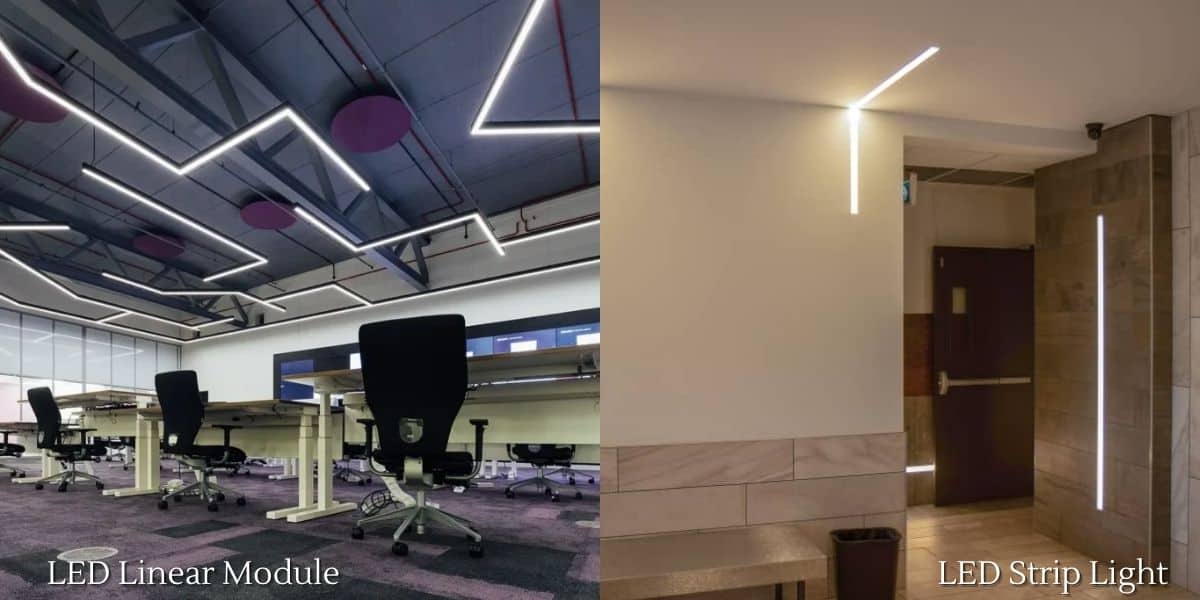
In commercial lighting environments such as retail displays, signage frames, and light boxes, LED linear modules are often the preferred option. Their rigid PCB structure allows stable mounting and better heat dissipation when installed on aluminum channels or metal housings. This stability helps maintain consistent brightness and reliable operation over long daily operating hours.
For Architectural Lighting Systems
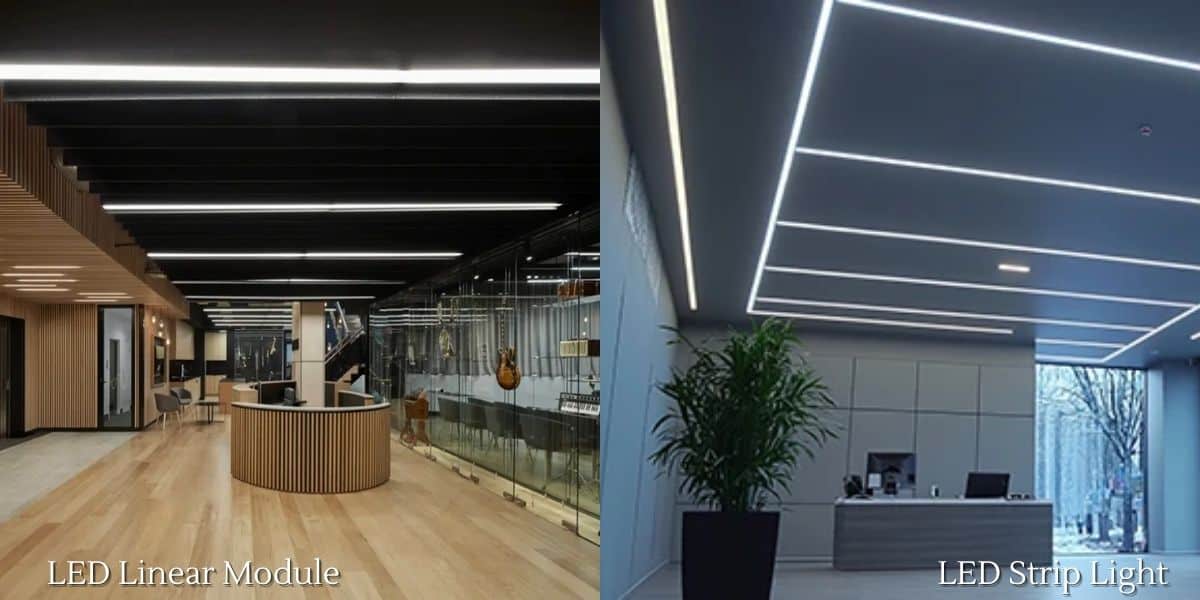
In architectural lighting systems, both LED linear modules and LED strip lights may be used depending on the fixture design. Linear modules are commonly integrated into structured fixtures or aluminum profiles where precise LED spacing and mechanical stability are required. LED strip lights, on the other hand, are often used in concealed architectural lighting such as ceiling coves or indirect lighting channels where flexibility helps follow long lighting paths.
For Decorative Lighting
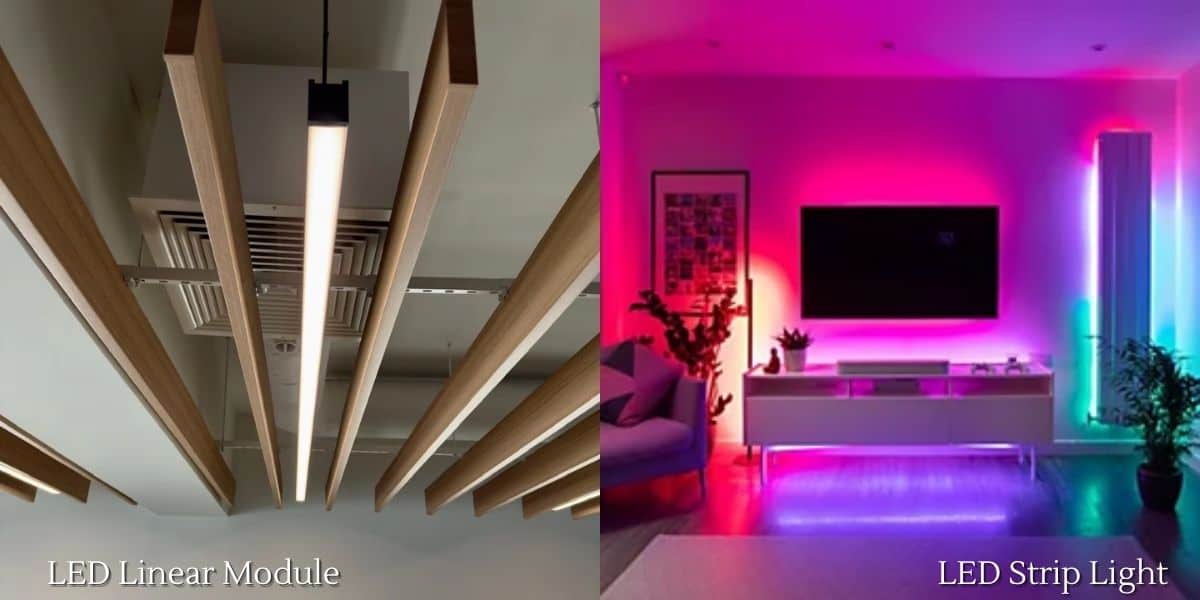
For decorative lighting installations, LED strip lights are generally the more practical solution. Their flexible PCB structure allows the lighting to bend around corners, curves, and irregular surfaces. This flexibility makes them suitable for furniture lighting, interior accent lighting, under-cabinet illumination, and decorative outlines where rigid modules cannot easily adapt to the shape of the installation.
Budget Considerations
Budget can also influence the selection. LED strip lights typically have lower initial costs because they use flexible PCBs and simpler manufacturing structures. LED linear modules may involve slightly higher initial costs due to rigid PCBs, mounting systems, and installation hardware, but they can provide more stable long-term performance in structured lighting systems.
Final Decision: In general, LED linear modules are preferred for structured commercial lighting systems where mechanical stability, controlled thermal management, and predictable lighting performance are required. LED strip lights are typically chosen for decorative or architectural lighting installations where flexibility, quick installation, and adaptable lighting paths are more important.
Wniosek
LED linear modules and LED strip lights are both widely used lighting technologies, but they serve different installation and performance requirements.
LED linear modules provide structural stability, improved heat dissipation, and modular maintenance capabilities, making them suitable for commercial and architectural lighting systems. LED strip lights offer flexibility, easier installation, and lower initial cost, which makes them well suited for decorative and residential lighting applications.
Selecting the appropriate lighting type requires evaluating installation conditions, expected lifespan, thermal management, and budget constraints.
For projects that require stable mounting, controlled thermal management, and consistent commercial lighting performance, LED linear modules are generally the more suitable solution. For flexible decorative lighting installations or projects with curved surfaces, LED strip lights are often the more practical choice.
Najczęstsze pytania
Powiązane posty