Polski
  English
  简体中文
简体中文  Deutsch
  Español
  Français
  Italiano
  日本語
日本語  한국어
한국어  Português
  Русский
  Türkçe
  Nederlands
  Tiếng Việt
  ไทย
ไทย 
LED linear lighting has become one of the most widely used lighting solutions in modern commercial and architectural projects. From office environments and retail stores to large-scale buildings, linear lighting systems are replacing traditional fluorescent and panel lighting due to their ability to deliver uniform illumination, flexible layouts, and clean architectural integration.
Unlike conventional lighting, which is based on point sources, LED linear lighting is designed as a continuous system. This allows designers to create seamless lighting lines that improve both visual comfort and spatial perception. In commercial environments, this directly impacts productivity, customer experience, and operational efficiency.
However, selecting the right LED linear lighting system is not straightforward. Factors such as glare control, color temperature, illuminance levels, installation methods, and control systems all play a critical role in overall performance.
This guide provides a complete, structured understanding of LED linear lighting systems, including types, components, performance standards, applications, and how to choose the right solution for commercial and architectural projects.
szybka odpowiedź
LED linear lighting is a continuous lighting system that uses LED strips or modules integrated into aluminum profiles with diffusers and drivers to deliver uniform, glare-controlled illumination for commercial and architectural environments.
Kluczowe na wynos
- LED linear lighting provides continuous and uniform illumination across large spaces.
- It is widely used in offices, retail environments, and architectural lighting projects.
- Low glare (UGR <19) is essential for visual comfort in commercial spaces.
- System performance depends on LED quality, diffuser design, and layout planning.
- Proper installation and control systems improve efficiency and long-term reliability.
What Is LED Linear Lighting?
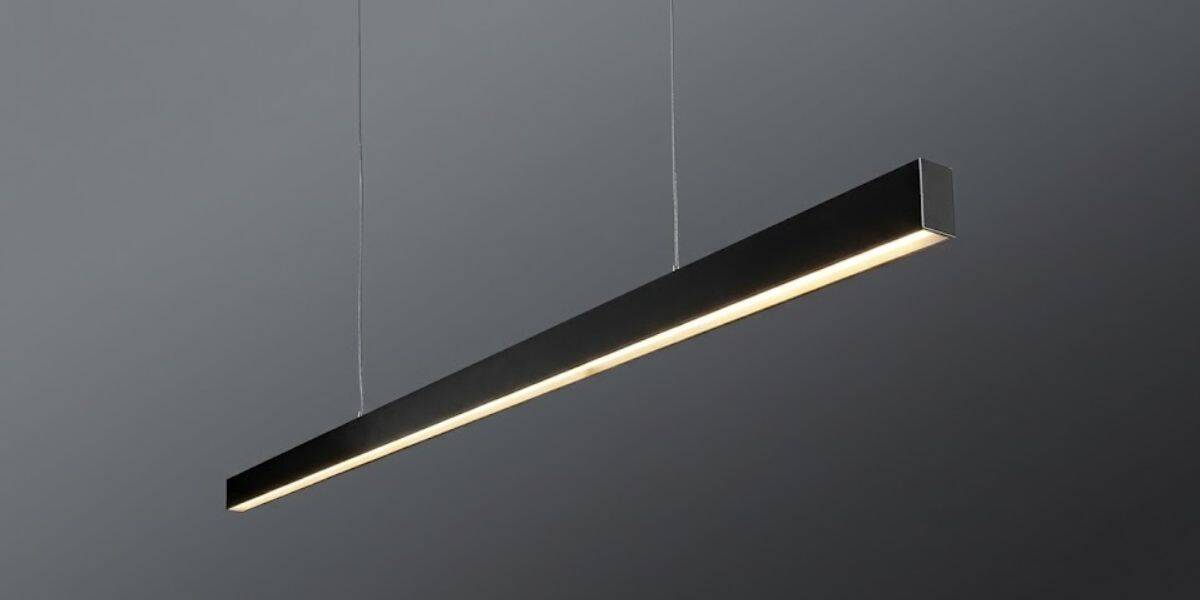
LED linear lighting refers to lighting fixtures designed in long, continuous forms rather than individual point sources such as bulbs or downlights. These systems are engineered to create seamless lines of light that improve brightness consistency and reduce shadows.
A complete LED linear lighting system is made up of several integrated components that work together to determine performance.
| składnik | Typical Specification | Funkcja |
| LED strip / module | 8–20W/m, 120–240 LEDs/m | Light generation |
| Taśma LED COB | 10–15W/m, >480 chips/m | Dot-free illumination |
| Profil aluminiowy | 6063-T5 alloy | Rozpraszanie ciepła |
| dyfuzor | Opal / PMMA (70–90% transmission) | Light distribution |
| Sterownik LED | PF >0.9, flicker-free | Power stability |
Each component directly affects the final output. For example, a high-density LED strip combined with a quality diffuser produces a smooth, continuous light line, while poor components result in visible dots and uneven illumination.
To understand real-world applications of LED linear lighting systems, see LED linear lighting applications in commercial and architectural projects
For a detailed breakdown of system types, refer to LED linear lighting types and applications for modern architecture projects
LED Linear Lighting Chart
This simplified chart is widely used by designers for quick selection based on application.
| Typ oświetlenia | Typowe wyjście | Najlepsze zastosowanie |
| 2700K–3000K warm linear | 400–800 lm/m | Hospitality, residential |
| 4000K neutral linear | 600–1200 lm/m | Offices, retail |
| 5000K–6500K cool linear | 800–1800 lm/m | Industrial, outdoor |
This type of chart is important because it aligns lighting selection directly with application needs rather than guesswork.
Why LED Linear Lighting Is Popular in Modern Architecture

LED linear lighting has become a core element in architectural design because it combines functionality with aesthetics.
The ability to create continuous lighting lines allows architects to integrate lighting directly into ceilings, walls, and structural elements. This results in cleaner visual designs and improved spatial perception.
Another key advantage is flexibility. Linear lighting systems can be recessed, surface-mounted, or suspended, making them adaptable to different environments and construction conditions.
Energy efficiency also plays a major role. With luminous efficacy typically ranging from 100–160 lm/W, LED linear lighting significantly reduces power consumption compared to traditional systems.
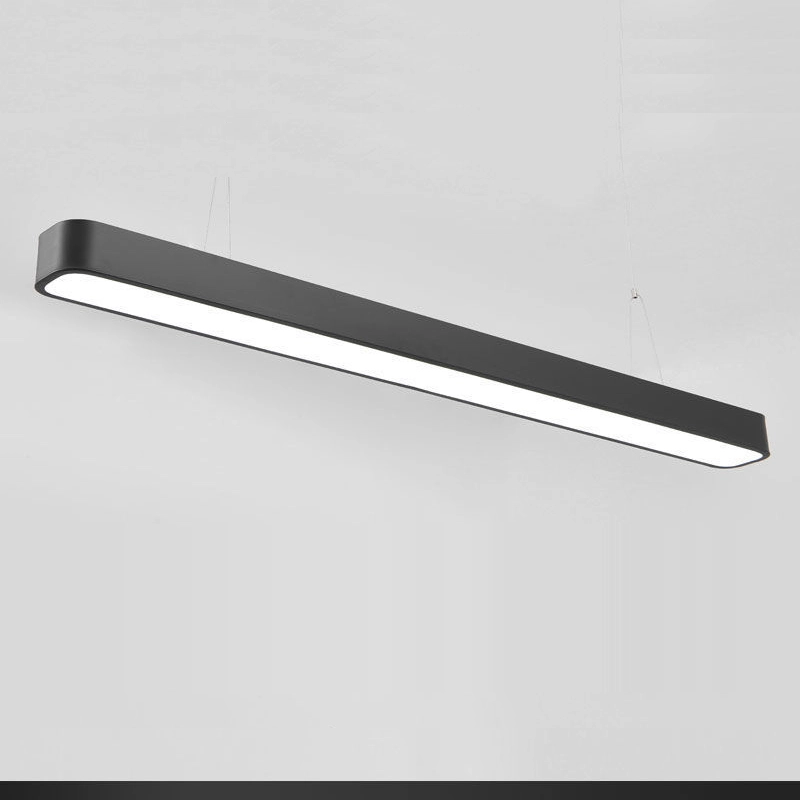
W60xH80mm okrągły profil narożny LED światło liniowe LED
- Napięcie wejściowe: AC100-277V/AC220-240V, 50/60Hz
- Rozmiar profilu: W60 * H80mm
- Długość: 600mm/1200mm/1500mm/1800mm/2400mm
- Strumień świetlny: 100-110lm/w
- Watt: 20W/40W/60W/80W
- Temperatura barwowa: 3000K/4000K/6000K
- Kąt wiązki: 120°
- Chip LED: SMD2835
- Materiał: 6063 Profil aluminium + dyfuzor opalowy
- Opcja koloru wykończenia: Czarny/biały/srebrny
- Opcja funkcji: Nieściemnianie/ściemnianie 0-10V/ściemnianie Dali
- Opcja instalacji: Mocowanie zawieszenia/Uchwyt sufitowy
- PF: >0.95
- Wskaźnik oddawania barw: >82
- Stopień ochrony IP: IP20
Types of LED Linear Lighting Systems
LED linear lighting systems are categorized based on installation and design requirements. Each type offers specific advantages depending on the project.
Each type of LED linear lighting is selected based on architectural design intent, ceiling structure, and lighting performance requirements. In commercial projects, the choice of installation method directly affects glare control, maintenance accessibility, and overall lighting uniformity.
| Typ | Metoda instalacji | Typowe zastosowania |
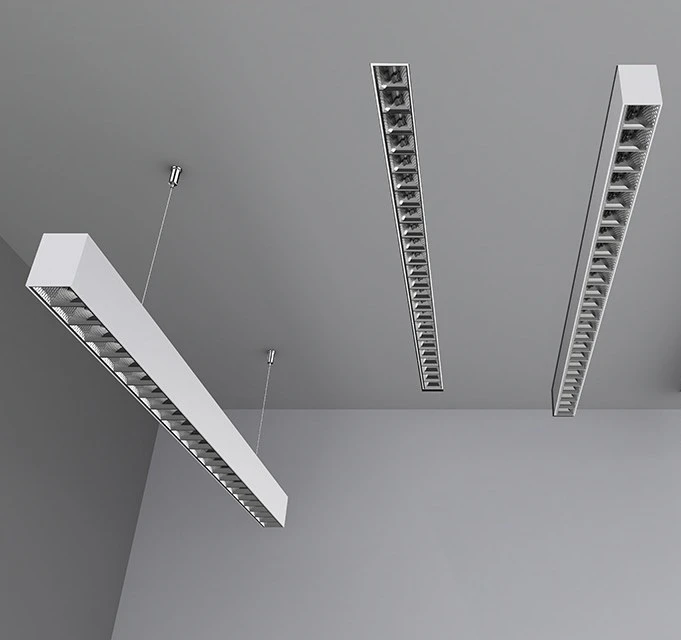
| Recessed linear | Built into ceiling/wall | Offices, hotels |
| natynkowy | Direct installation | Renovation projects |
| zawieszony liniowy | Hanging systems | otwarte biura |
| Curved / custom | Flexible profiles | Architectural design |
Recessed Linear Lighting
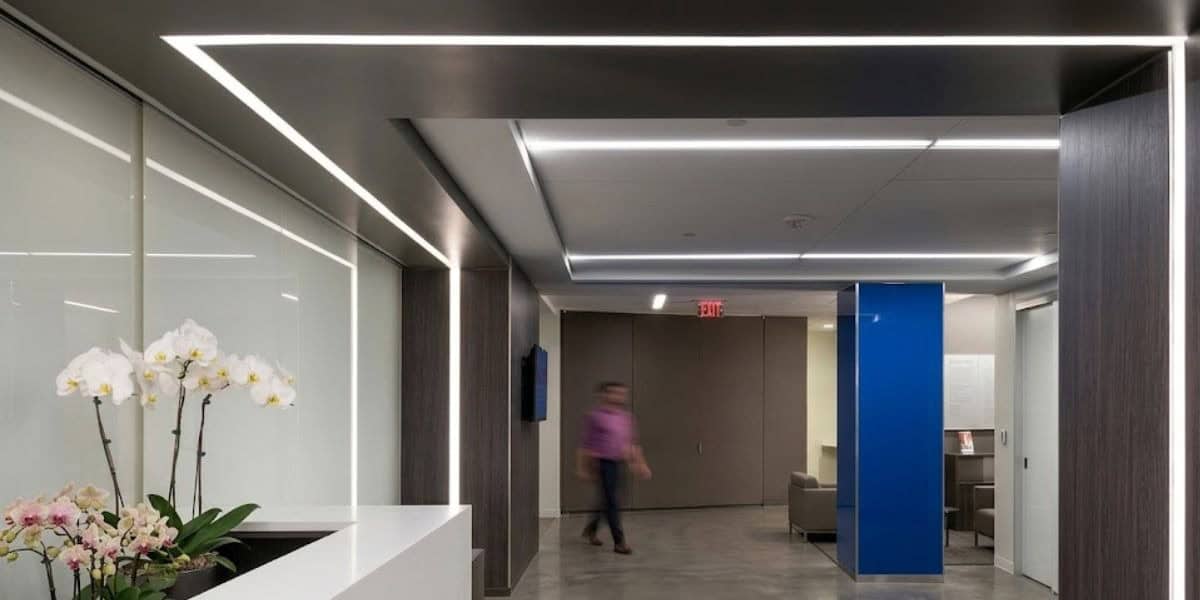
Recessed linear lighting is integrated into ceilings or walls, creating a clean and minimal appearance where only the light output is visible. This reduces visual clutter and improves glare control.
It is widely used in offices and high-end commercial environments where design consistency is critical.
For design integration techniques, see Hidden architectural lighting using linear lighting systems
Suspended Linear Lighting
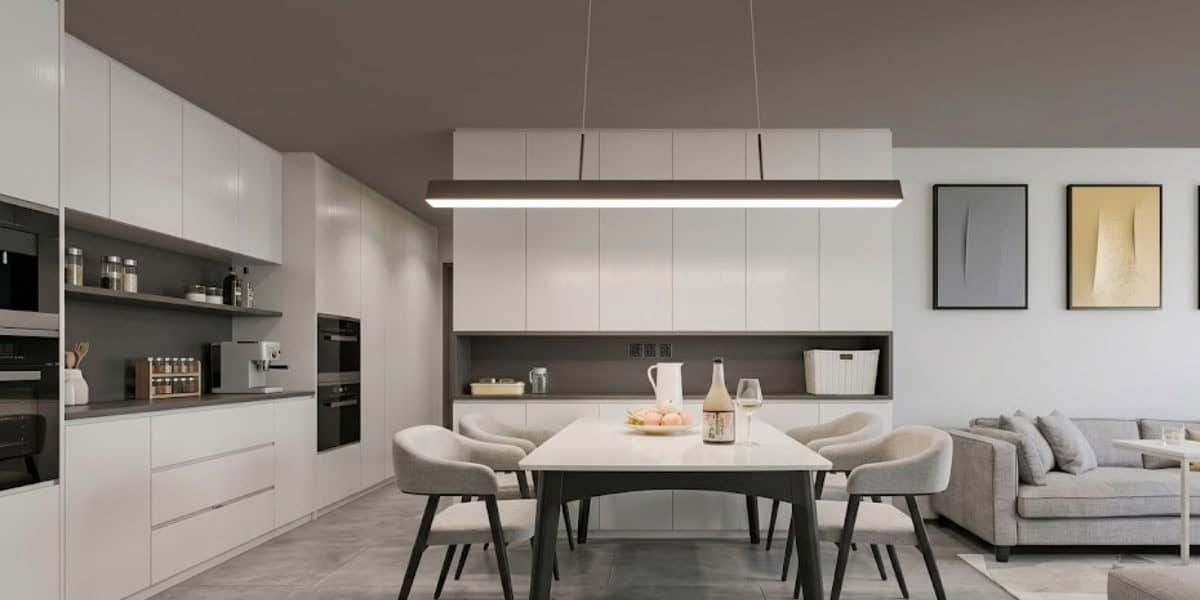
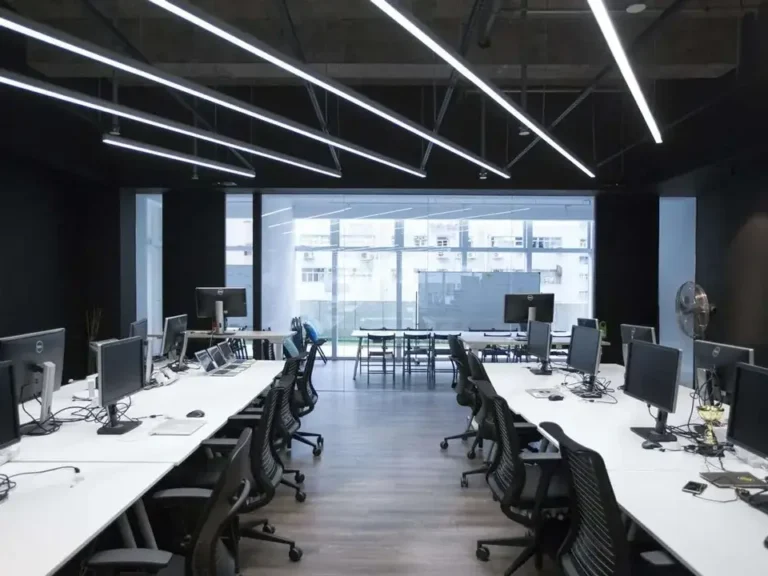
Suspended systems hang from ceilings and act as both functional lighting and design elements. They are commonly used in open offices and commercial spaces with higher ceilings.
They can provide direct and indirect lighting, improving brightness balance.
For advanced office solutions, explore acoustic LED linear pendant lighting for modern office environments
Surface Mounted Linear Lighting
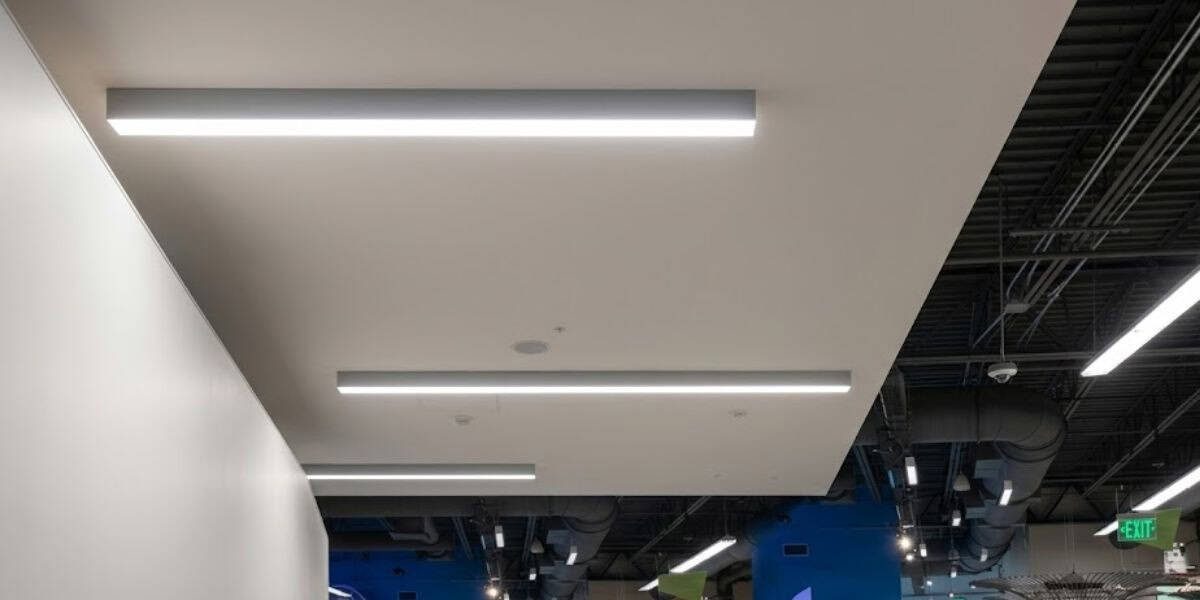
Surface-mounted fixtures are installed directly onto ceilings or walls. They are ideal for retrofit or renovation projects where recessed installation is not possible.
They offer easy installation but are more visible compared to recessed systems.
For detailed comparison of installation types, see: Recessed vs suspended vs surface mounted LED linear lighting for commercial projects
Curved and Custom Linear Lighting
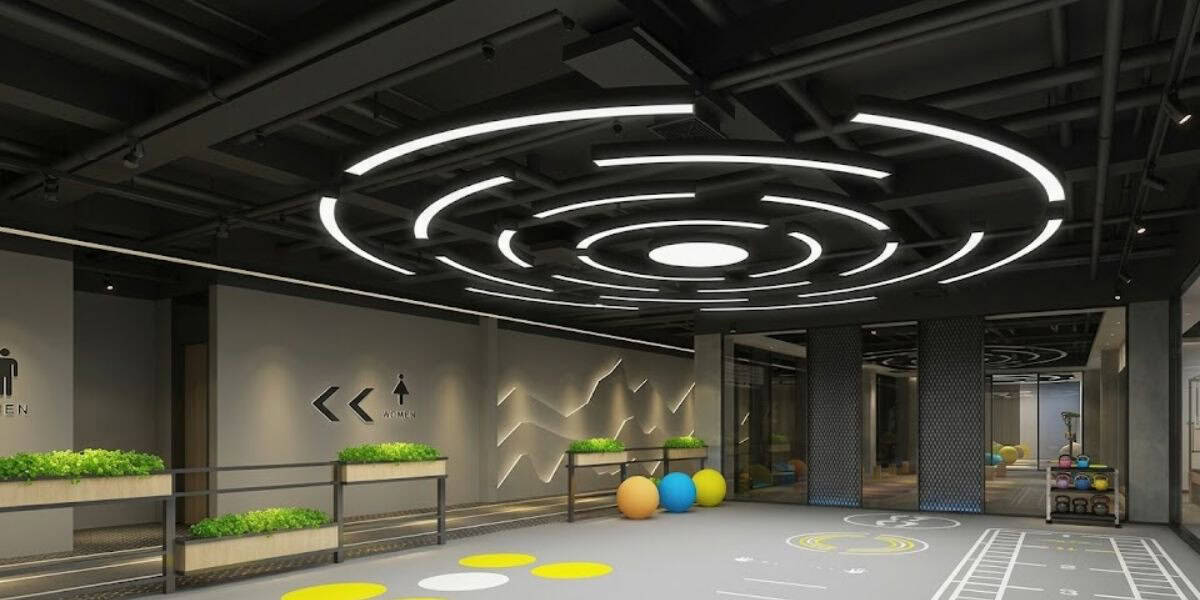
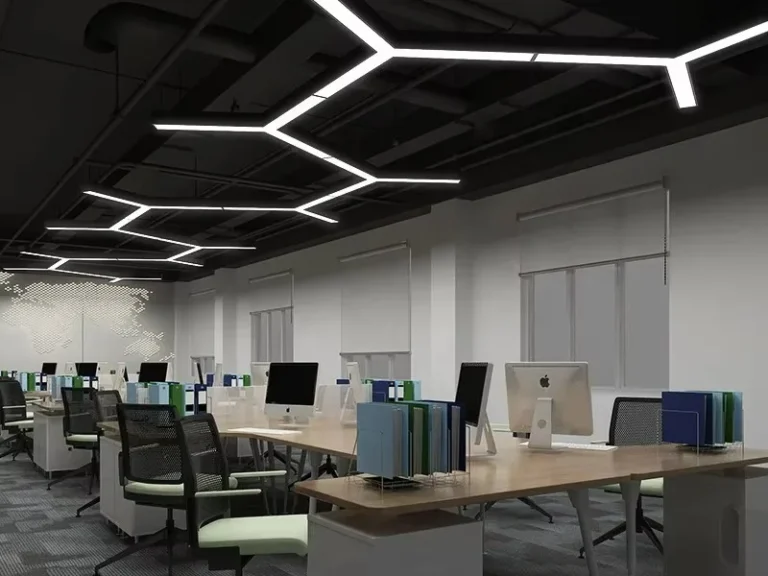
Curved linear lighting uses flexible profiles to follow architectural shapes such as curves, circles, or custom designs.
This type is increasingly used in modern architecture to create unique visual effects.
For flexible design applications, read Bendable LED linear lighting systems for curved architectural designs
To explore custom shapes, see LED profile lighting for linear and curved custom lighting designs
Lighting Performance Requirements (Critical for Commercial Projects)
In commercial lighting, performance is defined by measurable parameters rather than visual perception alone. Unlike residential lighting, commercial and architectural projects require precise control over glare, brightness, color accuracy, and energy efficiency to ensure both functionality and long-term reliability.
Each parameter directly affects user experience, compliance with lighting standards, and operational performance.
| Parametr | Zalecana wartość | pienny | ściskać |
| warżar | <19 (office) | EN 12464-1 | Reduces glare |
| CRI | ≥80 (standard), ≥90 (retail) | Lighting spec | Product visibility |
| oświetlenie | 300–500 lux (office) | Lighting standards | Task clarity |
| CCT | 3000K–5000K | Application-based | Comfort + focus |
| Wydajność | 100–160 lm/W | LED systems | Energy saving |
| Migotanie | <5% | IEEE standard | Eye comfort |
Key Performance Factors Explained
UGR (Unified Glare Rating)
UGR is one of the most critical factors in office and commercial lighting. A value below 19 ensures that light does not cause discomfort or eye strain during prolonged use. Poor glare control can reduce productivity and lead to visual fatigue, especially in work environments.
CRI (wskaźnik oddawania barw)
CRI determines how accurately colors appear under artificial lighting. In retail environments, a higher CRI (≥90) is essential to ensure products look natural and appealing. In offices, CRI ≥80 is generally sufficient for daily tasks.
Illuminance (Lux Levels)
Illuminance defines how much light is available on a working surface. Insufficient lux levels reduce visibility and efficiency, while excessive brightness can create discomfort. Proper lux balance is essential for task performance and compliance with lighting standards.
CCT (Color Temperature)
Color temperature affects both visual comfort and task performance. Neutral white (around 4000K) is widely used in offices because it provides balanced brightness, while cooler temperatures are used in high-visibility environments.
Energy Efficiency (lm/W)
Higher luminous efficacy means more light output with lower power consumption. In large commercial projects, efficient systems significantly reduce operational costs over time.
Flicker Control
Low flicker (<5%) is essential for eye comfort and long-term health. Poor-quality drivers can introduce flicker, which may not always be visible but can still cause fatigue and headaches.
For detailed performance standards and implementation, refer to:
UGR requirements for LED linear lighting systems in commercial environments
Anti-glare low UGR LED linear lighting solutions for office applications
Tunable white LED linear lighting systems for dynamic commercial spaces
Modular Linear Lighting Systems
Modular linear lighting systems are widely used in commercial projects due to their flexibility, scalability, and ease of maintenance.
Unlike traditional fixtures, modular systems allow individual components to be replaced without removing the entire fixture.
| Cecha | benefis |
| Replaceable modules | Easy maintenance |
| Scalable design | Flexible layouts |
| długa żywotność | Reduced cost |
| Upgrade capability | Future-proof system |
For modular solutions, refer to:
How to replace LED linear modules for old fixtures
Scalable customized LED linear modules
Linear Lighting Layout Design
Proper layout design ensures uniform illumination and reduces glare in commercial environments.
| Czynnik | Wpływ projektu |
| Fixture spacing | Uniform lighting |
| Mounting height | Light distribution |
| kąt śrutowania | Pokrycie |
| Alignment | Task efficiency |
For layout strategies, see:
LED linear lighting layout design for optimal office illumination
Linear Light Manufacturers
Choosing the right LED linear lighting manufacturer is critical for ensuring product quality, performance consistency, and long-term reliability in commercial and architectural projects.
Unlike standard lighting products, linear lighting systems often require customization, precise optical engineering, and project-specific configurations. This makes supplier selection a key factor in overall project success.
Manufacturer Evaluation Criteria
| Czynnik | Co sprawdzić | Dlaczego to ma znaczenie |
| Optical design capability | Lens quality, diffuser type, glare control (UGR) | Ensures visual comfort and lighting performance |
| Customization ability | Length, shape, color temperature (CCT), control options | Supports project-specific design requirements |
| Certyfikaty | CE, RoHS, UL, LM80 | Ensures compliance with international standards |
| Project experience | Office, retail, commercial lighting projects | Indicates reliability and real-world performance |
| Production capacity | Lead time, scalability, OEM/ODM support | Ensures smooth project delivery |
A professional LED linear lighting manufacturer not only supplies products but also provides technical support, lighting design assistance, and customized solutions based on project requirements.
To explore supplier comparisons and selection criteria in detail, refer to Top LED linear lighting manufacturers for commercial projects.
Custom Linear Lighting Solutions
Modern commercial and architectural projects often require lighting systems that go beyond standard fixtures. Custom LED linear lighting allows designers and engineers to achieve precise integration, performance control, and architectural alignment.
In large-scale projects, customization is not optional. It ensures that lighting systems match building geometry, meet performance requirements, and support advanced control systems.
Key Customization Options in LED Linear Lighting
| Custom Feature | What It Includes | Project Benefit |
| Length customization | Exact fixture sizing based on layout | Seamless installation and continuous lighting lines |
| Custom shapes | Curved, angled, circular, or geometric designs | Matches architectural intent and enhances aesthetics |
| CCT tuning | 2700K–6500K or tunable white options | Improves comfort and application-specific performance |
| Optical control | Diffusers, beam angles, anti-glare design | Better visual comfort and reduced glare |
| Smart control integration | DALI, sensors, dimming systems | Energy efficiency and intelligent lighting control |
Custom LED linear lighting is widely used in offices, retail environments, hospitality projects, and architectural lighting where standard products cannot meet design or performance requirements.
For tailored project solutions, explore custom suspended LED linear ceiling lighting solutions
LED Linear Lighting Design Guidelines
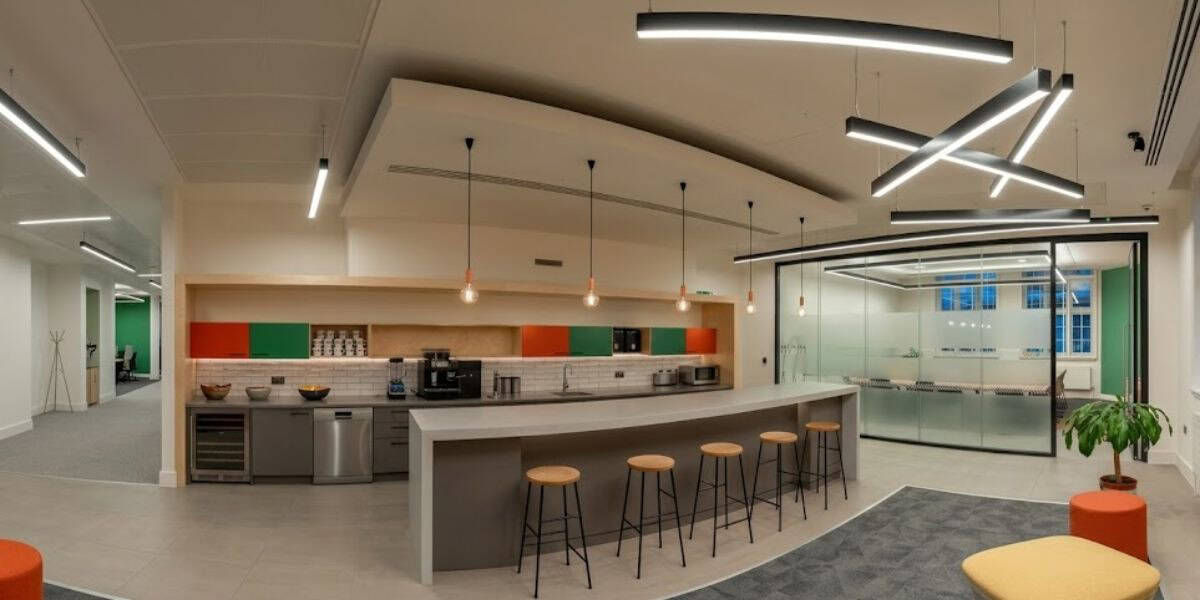
Designing a linear lighting system requires balancing technical performance with visual comfort.
Key Design Factors
- High-density LED strips (120–240 LEDs/m) ensure uniform lighting
- Diffusers with 70–90% transmission improve softness
- Deep profiles (60–100mm) reduce glare
- Proper spacing ensures consistent brightness
Illuminance Reference Table
| Przestrzeń | Polecany Lux |
| Office workspace | 300-500 luksów |
| Sprzedaż detaliczna | 500-1000 luksów |
| sala konferencyj | 300-500 luksów |
| Corridor | 100-200 luksów |
| Warehouse | 200–300 luksów |
These values ensure that lighting matches the functional requirements of each environment.
Smart Lighting and Control Systems
Modern LED linear lighting systems increasingly integrate smart control technologies to improve energy efficiency, user comfort, and system flexibility. In commercial and architectural projects, lighting is no longer static. Instead, it is dynamically controlled based on occupancy, daylight availability, and user preferences.
Smart lighting systems enable centralized management, automation, and real-time adjustments, making them essential for modern offices, retail environments, and large-scale buildings.
| System | Funkcja | benefis |
| dali | Centralized control | Automation |
| Tunable White | Adjustable CCT | Comfort |
| Sensors | Motion / daylight sensing | Energy saving |
Key Smart Lighting Technologies Explained
DALI (Digital Addressable Lighting Interface)
DALI is one of the most widely used lighting control protocols in commercial buildings. It allows individual control of each luminaire, enabling features such as dimming, scheduling, and zoning. This improves energy efficiency and allows facility managers to control large lighting systems from a central interface.
For system integration, see:
DALI controlled LED linear lighting systems for modern office spaces
Tunable White Lighting
Tunable white systems allow dynamic adjustment of color temperature throughout the day, typically ranging from warm white (2700K–3000K) to cool white (5000K–6500K). This supports circadian lighting strategies, helping improve occupant comfort, focus, and well-being in office environments.
Sensors (Occupancy & Daylight Control)
Sensors automatically adjust lighting based on real-time conditions. Motion sensors turn lights on or off depending on occupancy, while daylight sensors reduce artificial lighting when natural light is sufficient. This significantly reduces energy consumption and extends system lifespan.
Why Smart Lighting Matters in Commercial Projects
In large-scale commercial environments, smart lighting systems are not optional. They directly impact operational efficiency, maintenance costs, and user experience.
Główne zalety to:
- Reduced energy consumption through automation
- Improved visual comfort with adaptive lighting
- Centralized control for large installations
- Integration with building management systems (BMS)
By combining LED linear lighting with intelligent control systems, designers can create lighting environments that are both efficient and responsive to user needs.
Applications of LED Linear Lighting
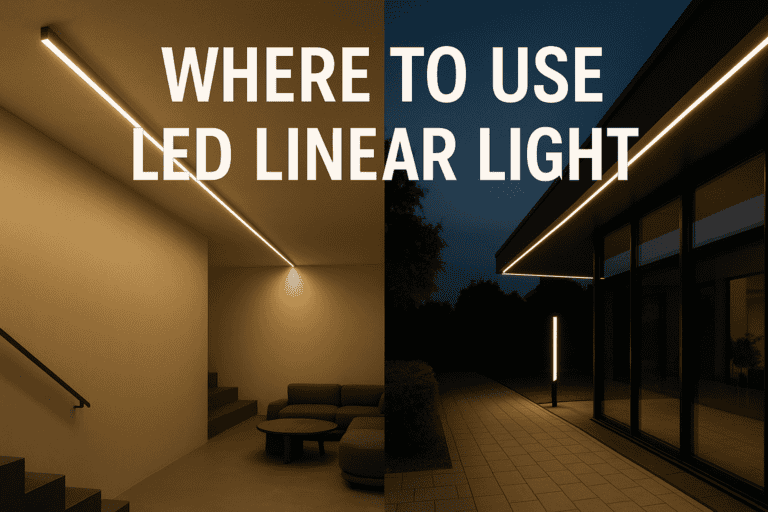
LED linear lighting is widely used across multiple commercial and architectural environments due to its ability to provide continuous, uniform illumination.
In office environments, it improves task visibility while maintaining low glare levels, directly impacting productivity.
In retail spaces, it enhances product visibility and creates structured lighting layouts that guide customer attention.
In architectural applications, linear lighting is used to highlight structural elements and create clean visual lines.
| Zastosowanie | Cel |
| Oświetlenie biurowe | Productivity & comfort |
| Oświetlenie detaliczne | Product visibility |
| Supermarkets | Large area illumination |
| Oświetlenie architektoniczne | Design integration |
For real-world applications, see:
LED linear lighting for modern office environments
Acoustic LED linear pendant lighting for office spaces
Where to use LED linear lighting in commercial projects
How to Choose LED Linear Lighting (Step-by-Step)
Selecting the right LED linear lighting system requires a structured, project-based approach.
Step 1: Define the Application
Identify whether the project is office, retail, industrial, or architectural. Each application has different requirements for brightness, glare, and color temperature.
Step 2: Select Color Temperature (CCT)
- 3000K → Warm environments (hospitality, retail ambiance)
- 4000K → Balanced lighting (offices, commercial spaces)
- 5000K+ → High visibility (industrial, task areas)
Step 3: Evaluate Lighting Performance
- UGR <19 for office environments
- CRI ≥80 (≥90 for retail)
- Lux levels based on application
Step 4: Choose Installation Type
- Recessed → Clean architectural integration
- Suspended → Open ceiling environments
- Surface-mounted → Retrofit projects
Step 5: Consider Smart Control Systems
- DALI for centralized control
- Tunable white for dynamic lighting
- Sensors for energy efficiency
Step 6: Check System Scalability & Maintenance
Choose modular systems that allow easy replacement and upgrades.
This structured selection approach ensures that LED linear lighting systems are optimized for both performance and long-term operational efficiency in commercial and architectural projects.
For modular system design, see LED linear module solutions for architectural lighting projects
Project-Based Selection Table
| Typ projektu | Zalecane CCT | warżar | Instalacja | Key Focus |
| Biuro | 4000K | <19 | Podwieszane / wpuszczane | Komfort wizualny |
| Sprzedaż detaliczna | 3000K–4000K | <22 | Track / Linear | Product visibility |
| przemysłowy | 5000K+ | <25 | natynkowy | Wysoka jasność |
| architektoniczny | 3000K–4000K | Controlled | Custom / Curved | Design integration |
LED Linear Lighting Knowledge Hub
This guide is part of a structured LED linear lighting knowledge system covering applications, system design, performance, and commercial lighting solutions.
- LED linear lighting for modern office environments
- Where to use LED linear lighting in commercial projects
- Acoustic LED linear lighting for office spaces
- LED linear lighting types and applications for modern architecture projects
- Recessed vs suspended vs surface mounted LED linear lighting
- Bendable LED linear lighting systems
- LED profile lighting systems for custom shapes
- UGR requirements for LED linear lighting systems
- Anti-glare LED linear lighting solutions
- Tunable white LED linear lighting systems
- LED linear module solutions for architectural lighting
- How to replace LED linear modules in existing fixtures
- Scalable customized LED linear modules
- LED linear lighting layout design for office environments
- DALI controlled LED linear lighting systems
- Top LED linear lighting manufacturers for commercial projects
CTA
If you are planning a commercial or architectural lighting project, choosing the right LED linear lighting system is critical for achieving both performance and design goals.
SignliteLED provides customized LED linear lighting solutions tailored to modern projects, including flexible configurations, consistent output, and advanced control systems.
Our team supports OEM and ODM customization for large-scale commercial and architectural lighting projects.
Explore customized LED linear lighting solutions
Szybkie podsum
2700K–3000K → Best for hospitality and comfort-focused environments
4000K → Ideal for offices and commercial spaces requiring clarity
5000K–6500K → Used in industrial and high-visibility environments
LED linear lighting systems provide uniform illumination, flexible installation, and better glare control compared to traditional lighting.
Wniosek
LED linear lighting has become a fundamental solution for modern commercial and architectural lighting. It combines uniform illumination, flexible design integration, and high energy efficiency.
By understanding system components, performance standards, and layout principles, designers and engineers can create lighting systems that deliver both functional performance and visual impact.
FAQ
Powiązane posty