Polski
  English
  简体中文
简体中文  Deutsch
  Español
  Français
  Italiano
  日本語
日本語  한국어
한국어  Português
  Русский
  Türkçe
  Nederlands
  Tiếng Việt
  ไทย
ไทย 
High-quality felt lighting fixtures are typically sourced through manufacturer websites, specialized architectural lighting brands, OEM/ODM lighting manufacturers, I professional B2B sourcing platforms that focus on commercial lighting rather than consumer décor.
For commercial and architectural projects, manufacturer-direct sourcing is the most reliable approach. It provides access to verified material specifications, consistent production standards, acoustic testing data, and controlled LED integration. Brand-only resellers and consumer marketplaces often prioritize appearance over performance, which makes them less suitable for projects where lighting quality, acoustic behavior, and compliance standards matter.
This article explains where to source high-quality felt lighting fixtures, how to evaluate manufacturers, key materials, quality indicators, and sourcing considerations for commercial projects.
What Are Felt Lighting Fixtures?

Felt lighting fixtures are luminaires that use engineered felt materials as part of the fixture body, shade, or acoustic housing. The felt is not decorative fabric. It is typically a dense, engineered material designed to manage sound while supporting integrated lighting components.
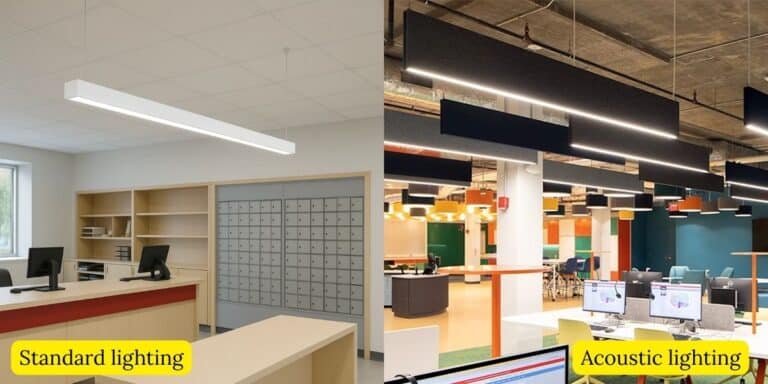
Felt is used in lighting because it combines light diffusion, acoustic absorption, I visual softness in a single fixture. In commercial interiors, this dual function reduces the need for separate lighting and sound-control systems.
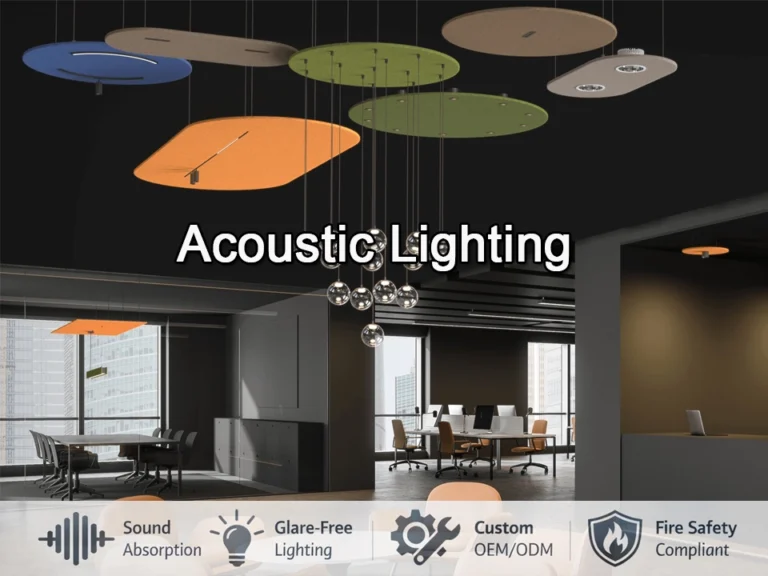
There is an important distinction between decorative felt lamps and acoustic felt lighting. Decorative felt lamps focus on appearance and are often thin, lightweight, and non-tested acoustically. Acoustic felt lighting, by contrast, is designed as part of a broader acoustic strategy. These fixtures function as Oprawy akustyczne that absorb mid- and high-frequency noise while delivering controlled illumination.
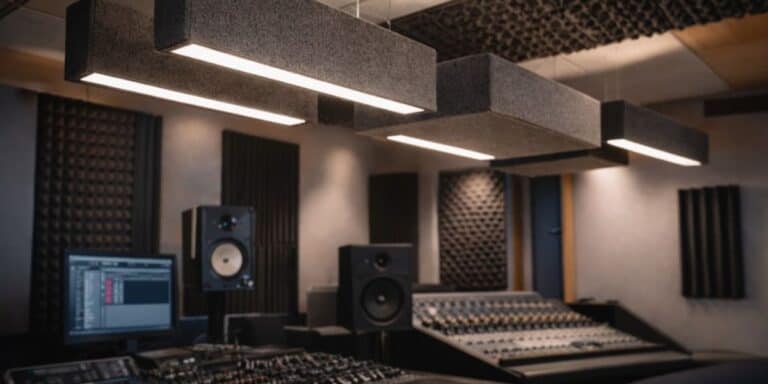
When the felt component is engineered for sound control and integrated with professional LED systems, the result is acoustic lighting suitable for offices, meeting rooms, hospitality spaces, and public interiors.
Key Materials Used in High-Quality Felt Lighting
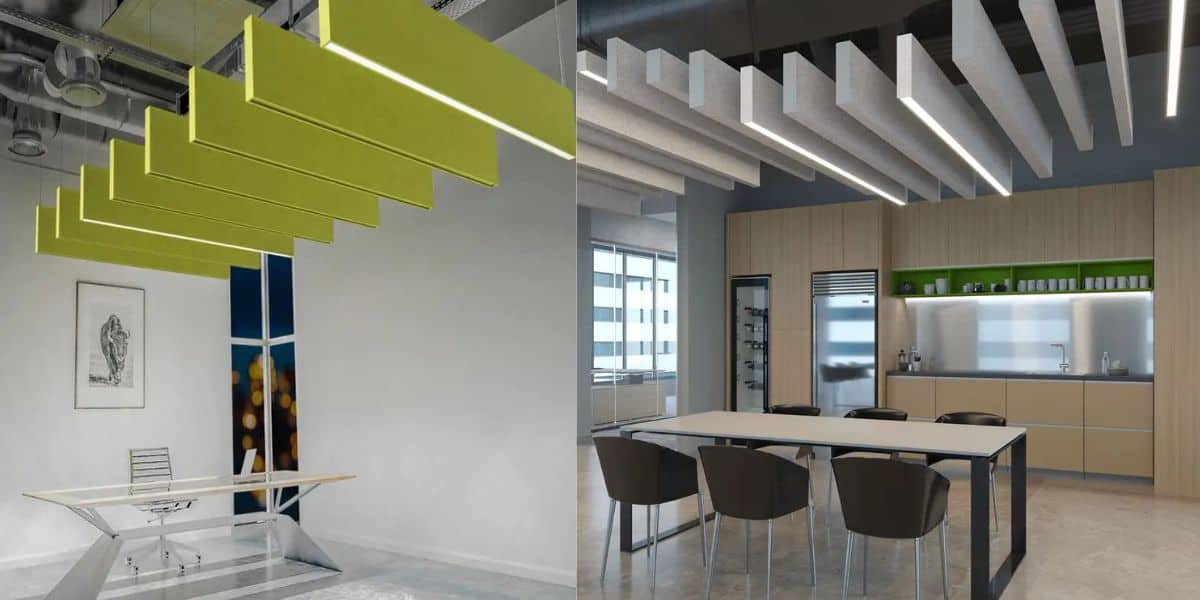
The quality of felt lighting fixtures is determined primarily by material composition and processing, not by shape or color.
PET felt is the most common material in high-quality Oświetlenie akustyczne. It is produced from recycled polyester fibers and compressed to a defined density. Higher-density PET felt offers better acoustic absorption, improved durability, and structural stability for larger fixtures.
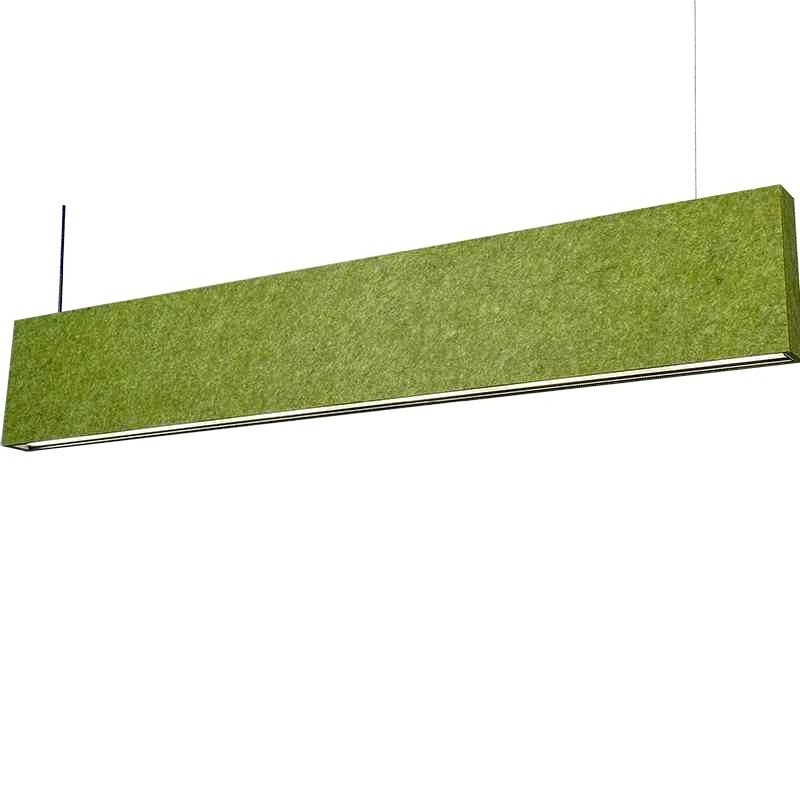
Smukłe, anty-oślepiające liniowe światło LED
- Napięcie wejściowe: AC100-277V / AC220-240V,50-60Hz
- Rozmiar obudowy: W58H200 mm / W58H300mm
- Kierunek emitowania: w dół
- Opcja długości: 1218mm / 1220mm / 1288mm
- CCT: 3000K/4000K/6000K
- Moc: 30 W / 32 W
- Strumień świetlny: 100-110lm/w
- CRI: >90ra
- PF: >0,90
- Bez migotania: tak
- Kąt wiązki: 36°
- Stopień ochrony IP: IP20
- Gwarancja: 5 lat
- Filcowa płyta akustyczna Kolor: czerwony/zielony/niebieski/szary Ponad 48 kolorów opcja
Thickness and layering are critical. Acoustic performance increases with material thickness and multi-layer construction. Thin felt panels used for décor provide limited sound absorption and should not be confused with acoustic-grade felt.
Fire rating considerations are essential for commercial projects. High-quality felt lighting fixtures typically use felt materials that meet recognized fire standards suitable for public interiors.
Color stability and surface finish also matter. Poor-quality felt fades, pills, or shows uneven texture over time. Consistent fiber bonding and controlled coloring processes are indicators of professional manufacturing.
Sustainability is another quality marker. Recycled content percentages, low-emission production, and material certifications are often available directly from manufacturers that specialize in acoustic lighting.
Where Quality Differences Come From

Quality differences in felt lighting fixtures usually originate at the manufacturing level rather than at the design stage.
OEM and ODM manufacturers control tooling, felt forming, LED integration, and final assembly. This allows tighter tolerances, repeatable density control, and consistent acoustic behavior across production batches.
Brand-only resellers often rely on third-party factories and focus on visual design. In these cases, felt density, internal construction, and LED thermal management may vary between production runs.
LED integration quality is another differentiator. Professional acoustic lighting requires careful heat dissipation to prevent degradation of both LEDs and felt material. Manufacturers with in-house engineering teams can optimize LED placement, drivers, and thermal paths.
Acoustic performance consistency depends on felt compression, thickness uniformity, and fixture geometry. Without production control, two fixtures that look identical can perform very differently in real-world spaces.
Supplier / Source Classification
| Source Type | Poziom jakości | Personalizacja | Typowy przypadek użycia | Key Notes |
| Architectural lighting brands | Wysoki | ograniczony | Design-driven projects | Strong design control, less flexible for specs |
| OEM/ODM manufacturers | High (varies) | Wysoki | Commercial and large-scale projects | Best option for B2B sourcing and consistency |
| B2B sourcing platforms | średnio-wysoki | Średni | Procurement comparison | Quality depends on manufacturer transparency |
| Online marketplaces | Low–Medium | Niski | Small decorative use | Inconsistent materials and performance |
This classification helps distinguish between appearance-focused products and performance-driven felt lighting fixtures.
How to Evaluate a High-Quality Felt Lighting Manufacturer
Evaluating a manufacturer starts with material transparency. Reliable suppliers clearly specify felt composition, thickness, density, and fire performance. Vague descriptions such as “eco felt” without data are a warning sign.
Acoustic performance indicators are equally important. Manufacturers should be able to explain how their fixtures contribute to sound absorption and in which frequency ranges they are effective. While not every project requires lab reports, acoustic intent should be evident in the design.
Lighting performance should be evaluated beyond lumen output. Consistent color temperature, low glare, proper diffusion, and stable LED drivers are all critical for commercial use. Poor LED integration leads to uneven lighting and shortened lifespan.
Customization capability matters for B2B projects. This includes size adjustments, mounting options, color selection, and LED specification changes. Manufacturers that support OEM or ODM production are typically better equipped for these requirements.
Finally, project experience provides context. Suppliers with experience in offices, hospitality, or public interiors understand compliance expectations and installation realities better than décor-focused vendors.
Felt Lighting vs Standard Acoustic Fixtures

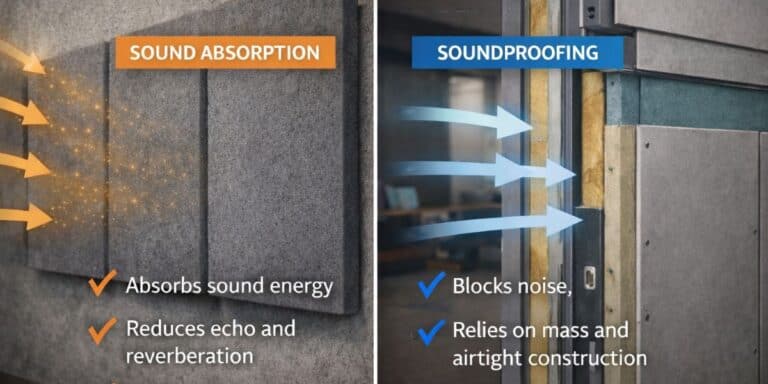
Standard acoustic fixtures are designed primarily for sound absorption and may not include integrated lighting. They are effective for dedicated acoustic treatment but require separate luminaires.
Felt lighting fixtures combine illumination and acoustic function in a single element. This reduces ceiling clutter and simplifies coordination between lighting and acoustic planning.
Felt lighting is particularly effective in spaces where ceiling real estate is limited or where visual simplicity is required. However, in environments with severe acoustic challenges, dedicated acoustic panels may still be necessary alongside lighting.
Understanding whether the goal is sound improvement, lighting, or both determines which solution is more appropriate.
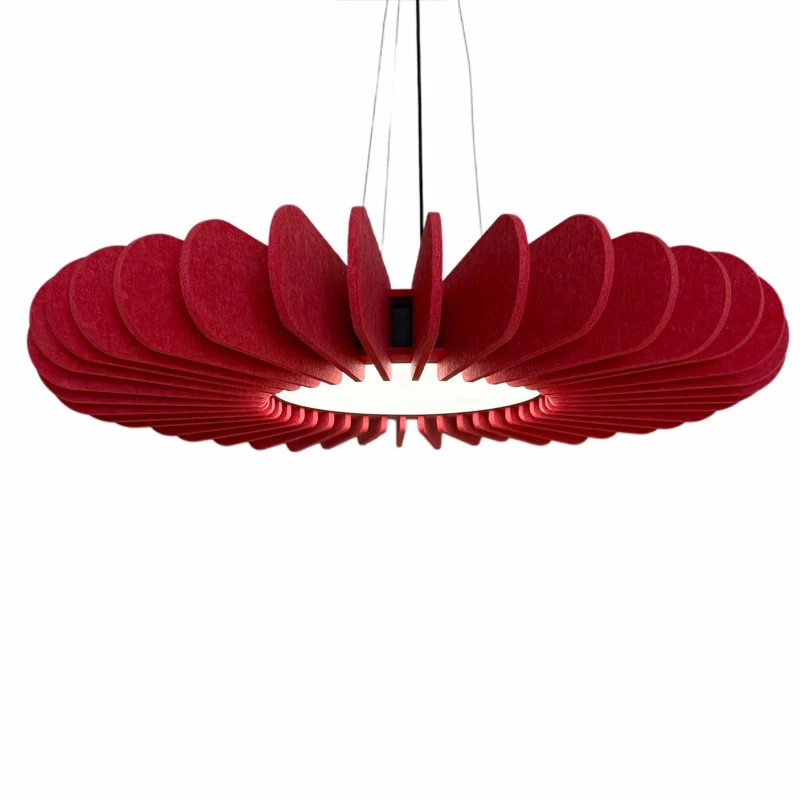
Ultracienkie smukłe okrągłe akustyczne lampki wiszące LED
- Napięcie wejściowe: AC100-277V / AC220-240V,50-60Hz
- Rozmiar obudowy: 120 mm
- Kierunek emitowania: w dół
- Rozmiar DH: 50080mm
- CCT: 3000K/4000K/6000K
- Moc: 15 W
- Strumień świetlny: 100-110lm/w
- CRI: >90ra
- PF: >0,90
- fllicker za darmo: tak
- Kąt wiązki: 120°
- Stopień ochrony IP: IP20
- Gwarancja: 5 lat
- Opcja koloru panelu akustycznego: Czerwony/Zielony/Niebieski/Szszary Ponad 48 kolorów Opcja
Quality & Technical Evaluation Factors
| Evaluation Factor | What to Check | Dlaczego to ma znaczenie |
| Felt material | PET density, fire rating | Acoustic effectiveness and safety |
| LED system | Efficiency, thermal control | Lifespan and performance stability |
| Acoustic role | Noise absorption intent | User comfort and space usability |
| Manufacturing | OEM control | Consistency and repeatability |
| Personalizacja | Size and spec flexibility | Project-specific requirements |
This table highlights the core criteria procurement teams use when assessing felt lighting fixtures.
Role of Acoustic Lighting in Commercial Spaces

Acoustic lighting plays a functional role in modern commercial interiors where open layouts and hard surfaces increase noise levels.
In offices and coworking spaces, felt lighting fixtures help reduce reverberation while providing uniform task and ambient lighting. In conference rooms, they improve speech clarity without adding visible acoustic panels.
Hospitality environments use acoustic lighting to soften sound while maintaining a refined visual atmosphere. Restaurants, hotels, and lounges benefit from reduced noise without compromising design intent.
Public interiors such as libraries, lobbies, and educational spaces use acoustic fixtures to balance durability, performance, and visual integration. In these contexts, acoustic lighting offers both functional and spatial efficiency.
Common Sourcing Mistakes
One common mistake is selecting décor-oriented felt lamps that are not designed for acoustic performance. These products often look similar but lack the density and construction required for sound absorption.
Ignoring material specifications is another issue. Without understanding felt density, thickness, and fire behavior, buyers risk installing fixtures that do not meet project requirements.
Some buyers purchase felt lighting without a clear acoustic intent, assuming all felt products perform acoustically. In reality, acoustic effectiveness varies widely.
Over-reliance on catalog images can also be misleading. Visuals rarely communicate internal construction quality, LED integration, or acoustic behavior. Direct manufacturer communication is essential.
Wniosek
High-quality felt lighting fixtures are best sourced directly from manufacturers, specialized architectural lighting suppliers, and OEM or ODM producers focused on commercial applications. Manufacturer-level evaluation is critical because material quality, acoustic performance, and lighting integration are determined during production.
Felt lighting is not just a design choice. When engineered correctly, it functions as both a lighting solution and an acoustic fixture, supporting comfort and usability in modern commercial spaces. Understanding sourcing channels and evaluation criteria ensures consistent performance and long-term value.
Najczęściej zadawane pytania
Powiązane posty