Polski
  English
  简体中文
简体中文  Deutsch
  Español
  Français
  Italiano
  日本語
日本語  한국어
한국어  Português
  Русский
  Türkçe
  Nederlands
  Tiếng Việt
  ไทย
ไทย 
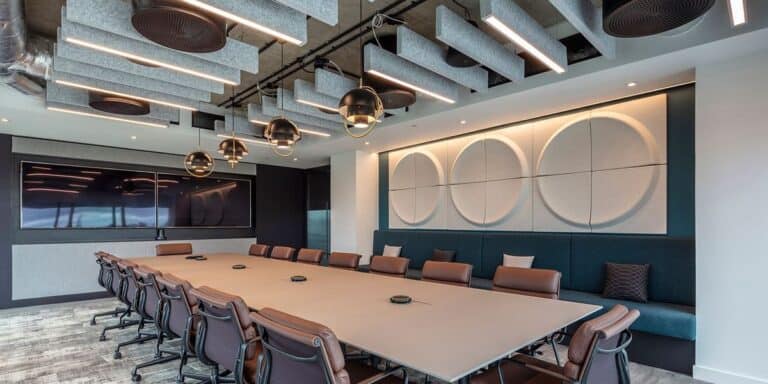
Oświetlenie akustyczne działa najlepiej, gdy jest instalowane bezpośrednio nad podstawowymi strefami aktywności dźwiękowej, takimi jak stanowiska robocze, stoły konferencyjne, obszary współpracy i siedzenia na otwartym planie. Umieszczenie sufitu ma kluczowe znaczenie, ponieważ sufit działa jako główna powierzchnia odbicia dla mowy. Właściwe odstępy, wysokość i rozkład decydują o tym, jak skutecznie oprawa zmniejsza pogłos i poprawia przejrzystość mowy.
W tym artykule wyjaśniono optymalne strefy umieszczania, względy wzrostu, logikę kontroli odbicia, strategie typu pomieszczeń i typowe błędy instalacyjne. Nacisk kładziony jest wyłącznie na wydajność stacjonowania, aby architekci, projektanci, konsultanci akustycznych i menedżerowie obiektów mogli podejmować świadome decyzje instalacyjne.
Dlaczego rozmieszczenie sufitu ma większe znaczenie niż rozmieszczenie ścian
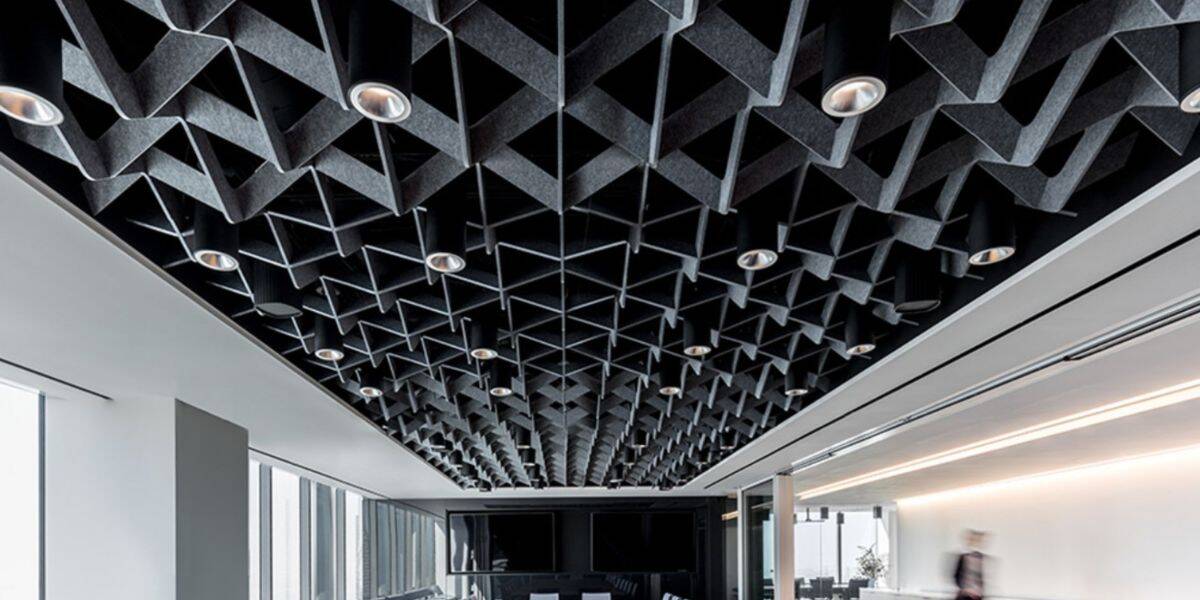
W większości komercyjnych wnętrz, energia mowy przemieszcza się w górę natychmiast po opuszczeniu ust głośnika. Pierwsze znaczące odbicie często występuje na płaszczyźnie sufitu przed powrotem w dół do strefy okupowanej. To tworzy to, co akustycy nazywają pierwszą ścieżką odbicia:
Źródło mowy → sufit → energia odbita → słuchacze.
Gdy sufity są twarde, powierzchnie odbijające, takie jak płyta gipsowa, odsłonięty beton lub metalowe tarasy, odbite energia mowy szybko wnika do pomieszczenia, zwiększając czas pogłosu i zmniejszając przejrzystość.
Wchłanianie naścienne pomaga, ale przede wszystkim odnosi się do odbić bocznych. Odbicia narzutowe są zazwyczaj bardziej dominujące w środowiskach otwartych i konferencyjnych, ponieważ:
- Sufit obejmuje całą strefę okupowaną.
- Odbija energię z powrotem w polu mowy.
- Wzmacnia hałas w dużych poziomych obszarach.
Oświetlenie akustyczne Przerywa tę pionową pętlę odbicia bezpośrednio na płaszczyźnie odbicia. Umieszczając oprawy akustyczne w ścieżce odbicia sufitu, energia mowy o średniej częstotliwości (zazwyczaj 500–2000 Hz) jest pochłaniana przed powrotem do osób.
Umieszczenie ściany obwodowej nie przechwytuje tego wczesnego pionowego odbicia. Filcowe oprawy oświetleniowe na bazie sufitu skuteczniej zmniejszają intensywność pierwszych odbić, ponieważ znajdują się bezpośrednio na ścieżce dźwiękowej.
Szczególnie w otwartych środowiskach absorpcja napowietrzna zapewnia większy wpływ akustyczny na metr kwadratowy w porównaniu z obróbką obwodową.
Podstawowe strefy umieszczania
Odp.: Powyżej stacji roboczych i klastrów biurkowych
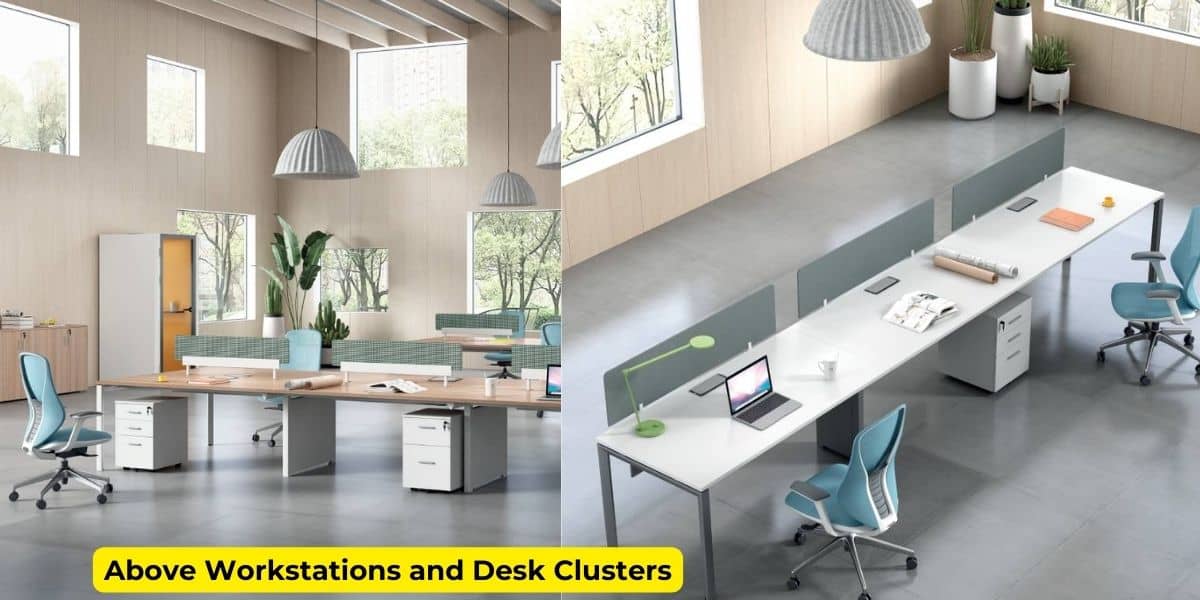
Biura na planie otwartym koncentrują mowę w grupach stacji roboczych. Rozmowy, rozmowy wideo i wspólne wymiany generują trwałą energię dźwięku o średniej częstotliwości.
Instalowanie oświetlenia akustycznego bezpośrednio nad klastrami biurowymi:
- Pochłania mowę, zanim rozprzestrzeni się na boki.
- Zmniejsza nagromadzenie pogłosu w wierszach.
- Ogranicza wzajemne rozmowy między zespołami.
Filcowe oprawy oświetleni są szczególnie skuteczne, ponieważ gęsty filc poliestrowy pochłania mowę o średniej częstotliwości, w której leży najwięcej energii zrozumiałości.
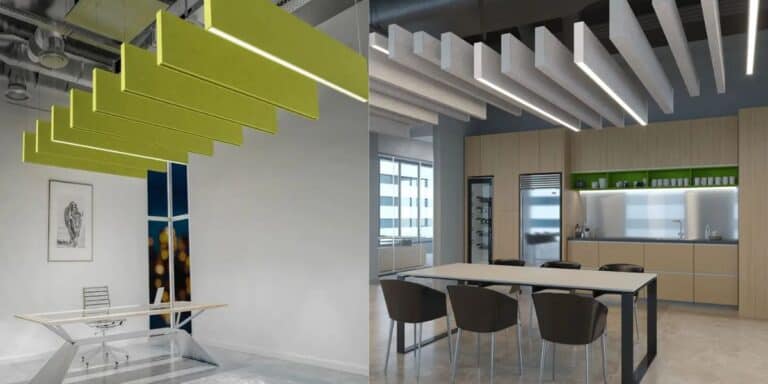
Logika dystrybucji ma znaczenie. Zamiast umieszczać armatura wzdłuż korytarzy lub w pobliżu ścian, oprawy powinny być wyśrodkowane nad aktywnymi biurkami i wystać nieco poza ślad siedzenia. Jako wytyczne:
- Celuj w sufit 20–351 TP3T nad strefami biurek o wysokiej aktywności.
- Utrzymuj spójne odstępy, aby uniknąć nieleczonych luk odblaskowych.
- Unikaj układów tylko obwodowych, które pozwalają na odbicie centralnych stref mowy.
Niewykonające układy zazwyczaj umieszczają oświetlenie dekoracyjne wzdłuż ścieżek krążenia, a nie nad źródłami dźwięku.
B: Powyżej stolików konferencyjnych
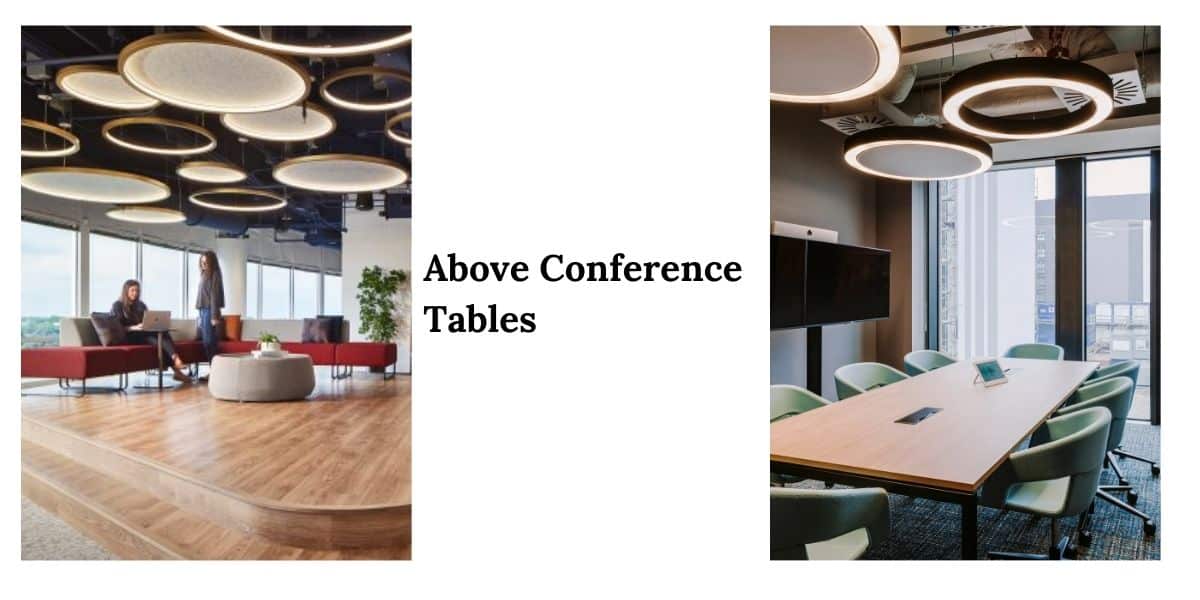
Sale konferencyjne koncentrują mowę bezpośrednią na stałym obszarze. Wielu uczestników mówi w kierunku środka stołu, a dźwięk odbija się pionowo z sufitu.
Optymalna konfiguracja:
- Zainstaluj oświetlenie akustyczne centralnie nad stołem.
- Rozszerz pokrycie 300–600 mm poza powierzchnię stołu.
- Wyrównaj oprawy z osią stołu, aby uzyskać równomierne pochłanianie.
Jeśli pomieszczenie jest wydłużone, układ liniowy, który odzwierciedla kształt stołu, działa lepiej niż pojedynczy zwarty klaster.
Wysokość też ma znaczenie. W typowych sufitach 2,7–3 m podwieszanie oprawy 400–800 mm poniżej płyty poprawia wydajność absorpcji poprzez umieszczenie materiału bliżej strefy odbicia.
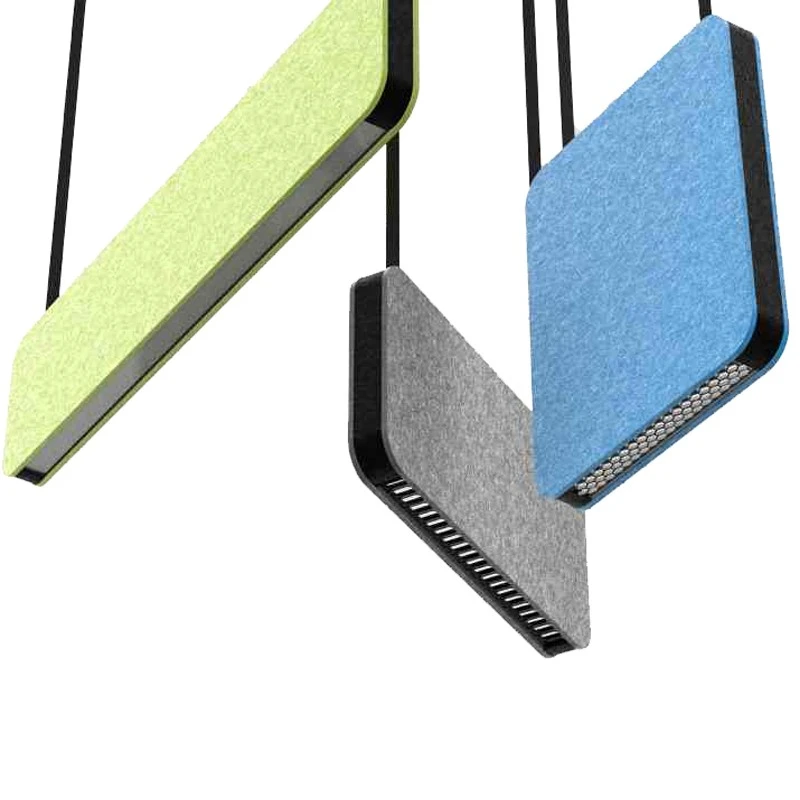
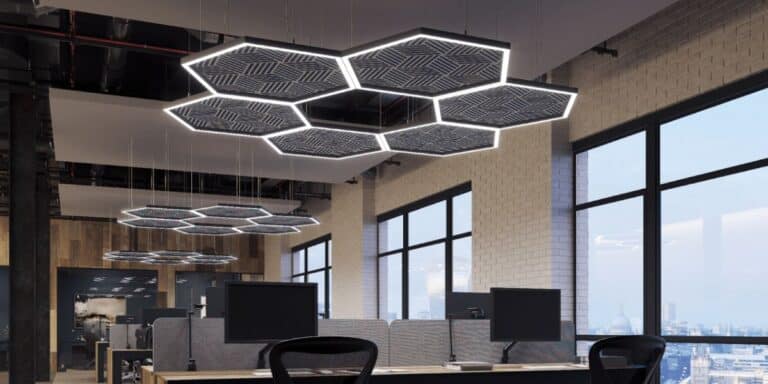
Super smukłe akustyczne światło liniowe LED
- Napięcie wejściowe: AC100-277V / AC220-240V,50-60Hz
- Kierunek emitowania: w dół
- Rozmiar: 121836400mm
- CCT: 3000K/4000K/6000K
- Moc: 30W
- Strumień świetlny: 100-110lm/w
- CRI: >80ra
- PF: >0,90
- fllicker za darmo: tak
- Kąt wiązki: 120°
- Stopień ochrony IP: IP20
- Gwarancja: 5 lat
- Filcowa płyta akustyczna Kolor: czerwony/zielony/niebieski/szary Ponad 48 kolorów opcja
C: Strefy współpracy i strefy wypoczynkowe
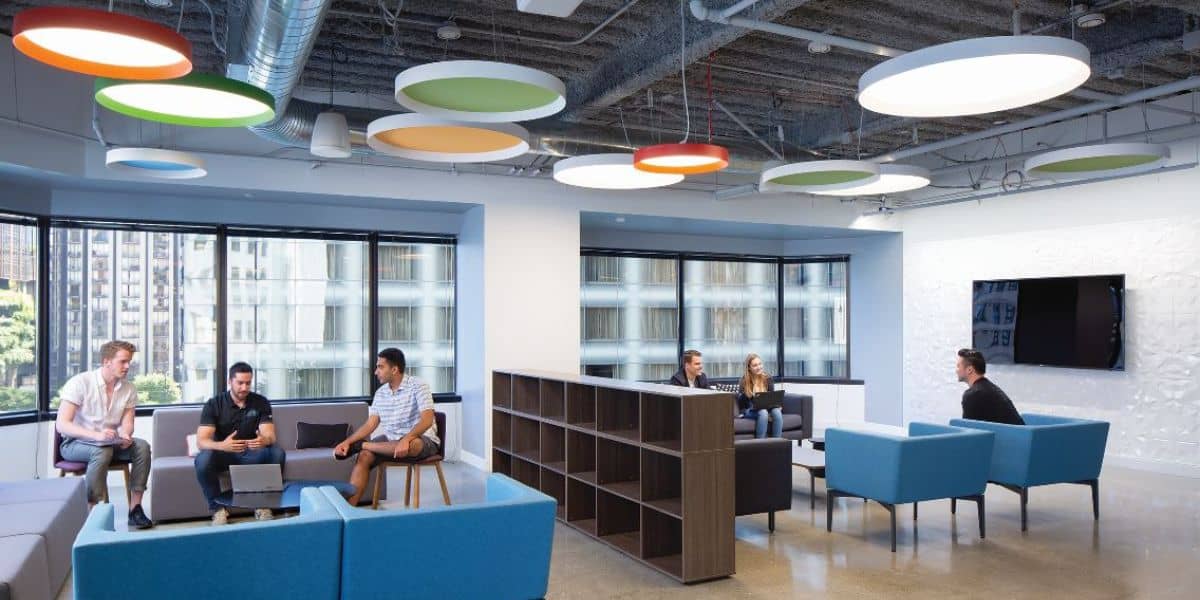
Strefy nieformalne generują nieprzewidywalne, ale skoncentrowane klastry mowy. Bez absorpcji narzutowej hałas rozlewa się do sąsiednich stref cichych.
Instalacja oświetlenia akustycznego powyżej:
- Klastry miękkie siedzenia
- Space w zgrupowaniu
- Nieformalne strąki spotkań
Tworzy zlokalizowane strefy absorpcji. Zawiera dźwięk w pobliżu źródła i zapobiega nagromadzeniu pogłosu na płycie podłogowej.
Strategia umieszczania powinna traktować priorytetowo powstrzymywanie dźwięku, a nie symetrię wizualną.
Wytyczne dotyczące wysokości i zawieszenia instalacji
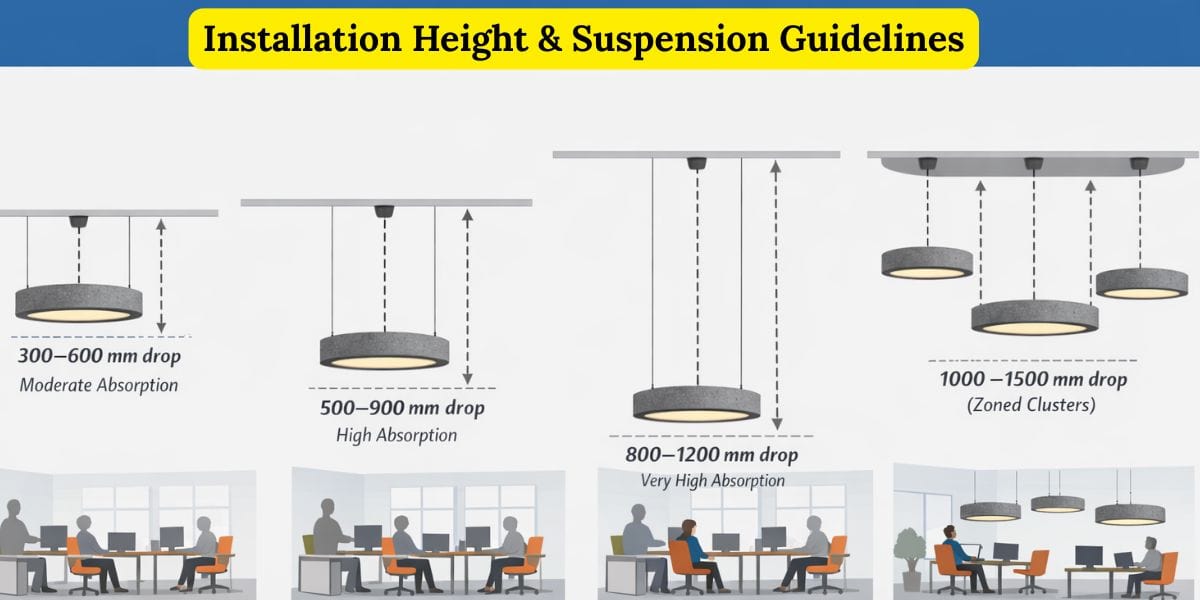
Głębokość zawieszenia znacząco wpływa na wydajność. Obniżenie oświetlenia akustycznego zwiększa jego interakcję z falami dźwiękowymi poprzez pozycjonowanie materiału w aktywnych ścieżkach odbicia.
W przypadku odsłoniętych sufitów lub wysokich płyt, głębsze zawieszenie poprawia przechwytywanie akustyczne.
Tabela 1 – Zalecane wytyczne dotyczące zawieszenia
| Wysokość sufitu | Sugerowana głębokość zawieszenia | Wpływ akustyczny | notatki |
| 2,6–2,8 m | 300–600 mm | Umiarkowany do wysokiego | Nadaje się do sal konferencyjnych i biur |
| 2,8–3,2 m | 500–900 mm | Wysoki | Poprawia kontrolę mowy w otwartym planie |
| 3,2–4,0 m | 800–1200 mm | Wysoki (strefy zlokalizowane) | Niezbędne do odsłoniętych sufitów |
| >4,0 m | 1000–1500 mm (grupy strefowe) | skierowany | Połącz z dodatkowymi oprawami akustycznym |
Niższe zawieszenie zwiększa efektywną absorpcję, ponieważ dźwięk napotyka materiał przed całkowitym rozproszeniem.
W wysokich sufitach powyżej 3 m zamontowanie mocowania szczelnie do płyty zmniejsza wydajność znacznie. Sprowadzenie oświetlenia akustycznego w dół poprawia interakcję z częstotliwościami mowy.
Strategia zasięgu i dystrybucji
Procent pokrycia i wzorzec dystrybucji determinują ogólną skuteczność.
Z reguły:
- 20–251 TP3T zasięg w biurach o umiarkowanym hałasie.
- Pokrycie 30–40% w strefach o wysokiej współpracy.
- Wyższa gęstość zlokalizowana nad obszarami konferencyjnymi.
Równomierny rozkład w strefach aktywnych przewyższa klastrowanie wszystkich urządzeń w jednym obszarze.
Małe wisiorki rozmieszczone równomiernie mogą działać tak samo dobrze, jak duże panele, jeśli są odpowiednio rozłożone. Duże panele oświetlenia akustycznego tworzą szersze pola absorpcyjne, ale wymagają starannego wyrównania ze strefami aktywności.
Tabela 2 – Strategia dystrybucji według typu przestrzeni
| Typ spacji | Podstawowa strefa umieszczania | Wzór dystrybucji | Potrzebne dodatkowe leczenie? |
| otwarte biuro | Klastry nad biurkiem | Nawet siatka na obszarach roboczych | Czasami ścienne oprawy akustyczne, jeśli są wysoce odblaskowe |
| sala konferencyj | Wyśrodkowany nad stołem | Klaster liniowy lub prostokątny | Rzadko, jeśli pokrycie jest odpowiednie |
| przestrzeń coworkingowa | Obszary współpracy mieszanej | Klastry strefowe | Często tak dla szklanych ścian |
| odbiór rt | Czekam strefa siedzenia | skoncentrowany na siedzeniu | Ewentualnie do wysokich sufitów |
| Atrium wysokiego sufitu | Kieszenie aktywności | Klastry zawieszone | Tak dla regulacji głośności |
Unikaj umieszczania całego oświetlenia akustycznego wzdłuż krawędzi obwodu. Rozproszone rozmieszczenie zgodne z koncentracją mowy zapewnia lepszą wydajność niż grupowanie dekoracyjne.
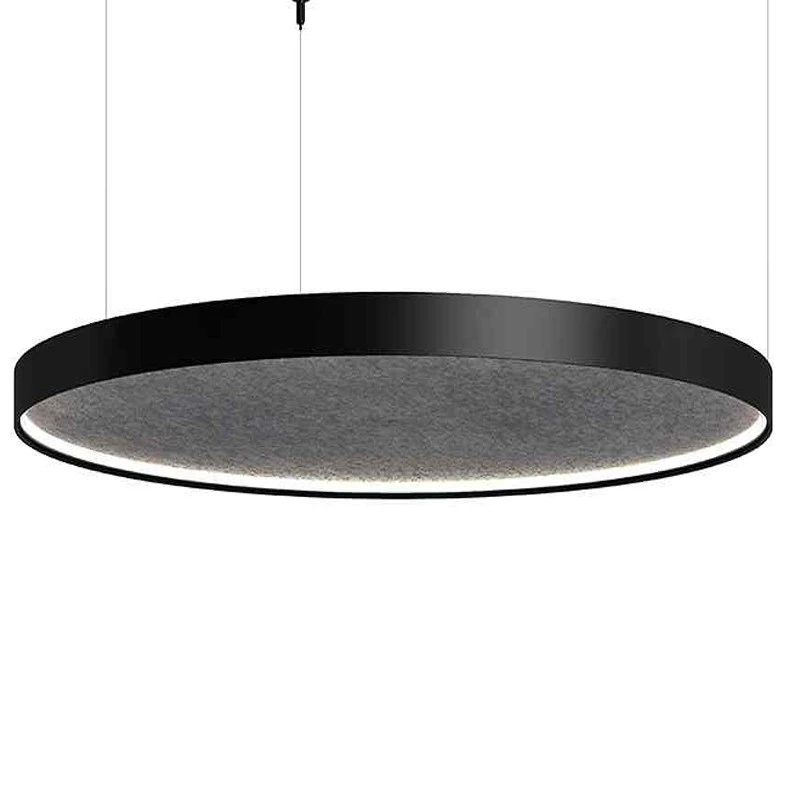
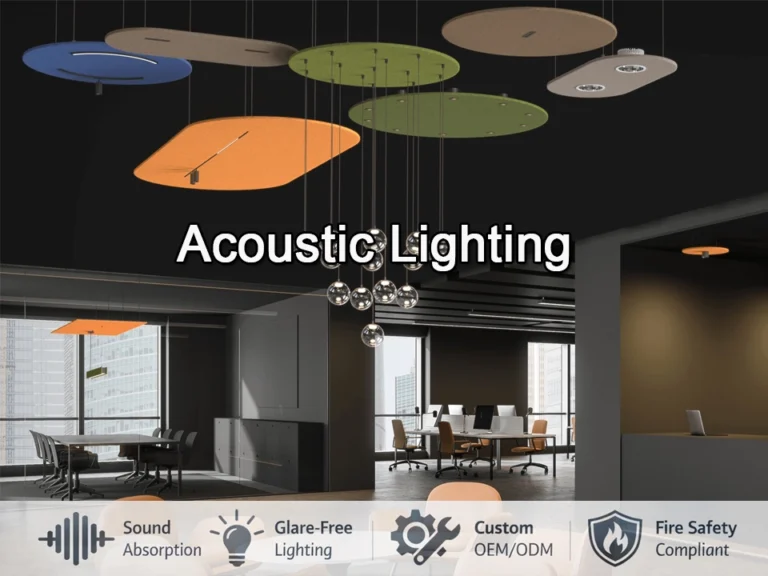
Direct Circle Akustyczne światło wiszące LED
- Napięcie wejściowe: AC100-277V / AC220-240V,50-60Hz
- Wysokość Rozmiar: H65mm
- Rozmiar D: 600mm/800mm/1000mm/1200mm
- CCT: 3000K/4000K/6000K
- Moc: 40 W / 60 W / 80 W / 96 W
- Strumień świetlny: 100-110lm/w
- antywirus -ogląda: tak
- CRI: >80ra
- PF: >0,90
- fllicker za darmo: tak
- Kąt wiązki: 120°
- Stopień ochrony IP: IP20
- Gwarancja: 5 lat
- Filcowa płyta akustyczna Kolor: czerwony/zielony/niebieski/szary Ponad 48 kolorów opcja
Wskazówki dotyczące instalacji dla poszczególnych pomieszczeń
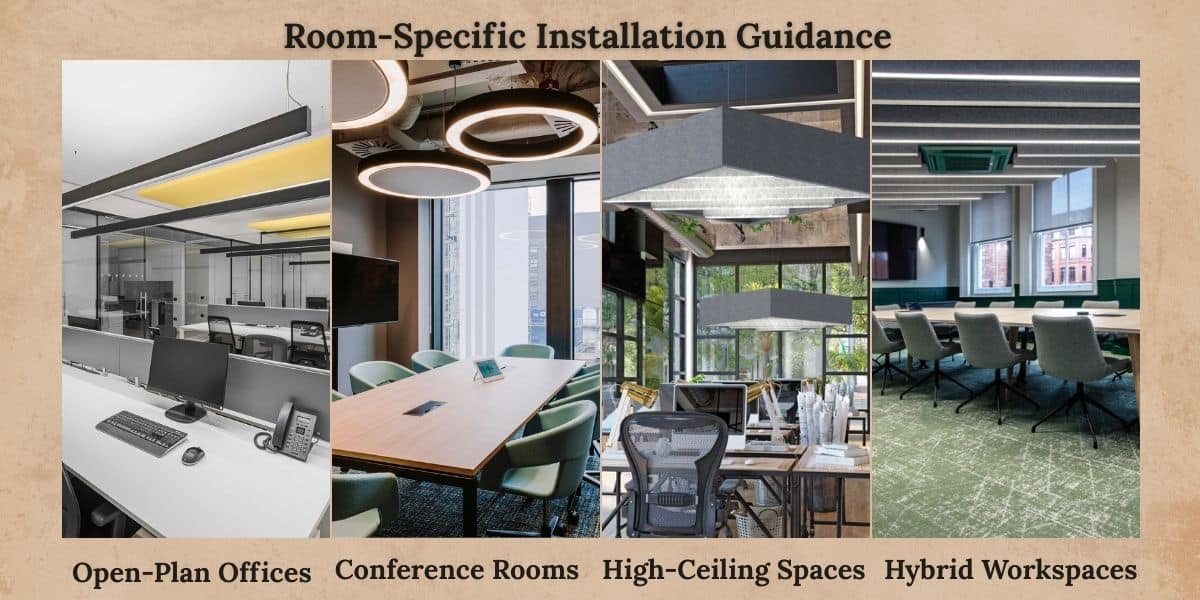
Biura na planie otwartym
Użyj rozproszonych siatek nad biurkami, a nie korytarzami. Scentralizowane układy tylko korytarzowe nie odnoszą się do mowy u jej źródła.
Jeśli sufity przekraczają 3 m:
- Zwiększ głębokość zawieszenia.
- Klaster oprawy akustyczne bezpośrednio nad aktywnymi biurkami.
- Uzupełnij o dodatkowe oprawy akustyczne, jeśli pogłos pozostaje wysoki.
sale konferencyjne
Zainstaluj centralne oświetlenie akustyczne nad stołem. Do długich pokoi:
- Użyj tablic liniowych, które następują po geometrii tabeli.
- W razie potrzeby dodaj osprzęt pomocniczy w pobliżu końców stołu.
Unikaj umieszczania opraw w pobliżu ścian, chyba że odbicia boczne są poważne.
Przestrzenie o wysokim sufitu
Wysokie sufity zwiększają pogłos dzięki większej objętości. W tych przestrzeniach:
- Zawiesić oprawy w dół do strefy okupowanej.
- Klaster nad aktywnymi miejscami do siedzenia lub współpracy.
- Połącz z oprawami akustycznymi ściennymi, jeśli dominują szklane powierzchnie.
Miejsce docelowe musi kierować obszary aktywności, a nie otwarte miejsce na puste miejsce.
Hybrydowe obszary robocze
Biura hybrydowe często zmieniają konfigurację układów biurkowych. Modułowe systemy oświetlenia akustycznego zapewniają elastyczność.
Strategia umieszczania:
- Zidentyfikuj prawdopodobne klastry mowy.
- Użyj rekonfigurowalnych systemów zawieszenia.
- Unikaj stałych dekoracyjnych elementów centralnych, które nie dostosowują się do zmian w układzie.
Logika akustyczna musi pozostać zgodna z zmieniającymi się wzorcami zajętości.
Gdy samo oświetlenie akustyczne nie wystarczy
Niektóre warunki ograniczają samodzielną wydajność:
- Bardzo długi czas pogłosu.
- Duże szklane fasady.
- Ściany betonowe.
- Objętości o podwójnej wysokości.
W takich przypadkach oświetlenie akustyczne powinno służyć jako absorpcja napowietrzna, uzupełniona pionową Oprawy akustyczne.
Obróbka sufitowa przechwytuje pionowe odbicia, podczas gdy obróbka ścienna kontroluje odbicia boczne. Połączenie zapewnia zrównoważoną wydajność.
Ignorowanie współczynnika odbicia ścian w bardzo przeszklonych przestrzeniach może podważyć rozwiązania tylko sufitowe.
Typowe błędy instalacyjne
- Instalowanie tylko na obwodzie, a nie nad strefami mowy.
- Traktowanie oświetlenia akustycznego jako czysto dekoracyjnego.
- Ignorowanie wysokości zawieszenia w wysokich sufitach.
- oprawy o przegrzaniu, tworząc nieprzetworzone luki odblaskowe.
- Instalowanie tylko powyżej ścieżek obiegowych.
- Niedopasowanie miejsca docelowego do rzeczywistych wzorców mowy.
Większość problemów z wydajnością wynika z niewłaściwego umieszczenia, a nie w niewystarczającej liczbie urządzeń.
Lista kontrolna decyzji o umieszczeniu
Tabela 3 – Lista kontrolna decyzji dotyczących instalacji
| Współczynnik oceny | Co ocenić | Dlaczego wpływa to na wydajność |
| Stężenie aktywności mowy | Gęstość biurka, strefy spotkań | określa, gdzie absorpcja musi być najwyższa |
| Wysokość sufitu | Wymiar płyty do podłogi | Wpływa na głębokość zawieszenia |
| Odbicie powierzchni | Szkło, beton, metal | Większy współczynnik odbicia zwiększa zapotrzebowanie na pokrycie |
| Objętość pomieszczenia | metrów sześciennych | Większa objętość zwiększa pogłos |
| Hybrydowy układ stały | Częstotliwość rekonfiguracji | Wpływy na modularne rozmieszczenie |
| Potrzeba dodatkowych opraw akustycznych | Stopień odbicia ściany | Zapewnia zrównoważoną kontrolę akustyczną |
Ta lista kontrolna obsługuje ustrukturyzowane podejmowanie decyzji, a nie instalację opartą na estetyce.
Praktyczny przepływ pracy w miejscu pracy
Profesjonalny proces umieszczania zazwyczaj przebiega w następujących krokach:
Krok 1: Zidentyfikuj strefy obciążone mową
Mapowanie klastrów stacji roboczych, stolików spotkań i nieformalnych miejsc do siedzenia.
Krok 2: Mapa powierzchni odbicia
Oceń współczynnik odbicia sufitu i wysokość pomieszczenia.
Krok 3: Określ zakres zawieszenia
Wybierz głębokość zawieszenia w oparciu o wysokość sufitu i pożądaną wydajność absorpcji.
Krok 4: Wzorzec dystrybucji planu
Wybierz układy siatki, liniowe lub klastrowe wyrównane ze strefami aktywności.
Krok 5: Oceń dodatkowe leczenie
Oceń, czy oprawy akustyczne ścienne są wymagane do zrównoważenia sterowania.
Ten przepływ pracy traktuje priorytety wyrównania wydajności nad jednorodność wizualną.
Trendy w 2026 miejsca
Pojawiające się trendy podkreślają integrację wydajności:
- Zintegrowane systemy sufitowe łączące oświetlenie i absorpcję.
- Modułowe oświetlenie akustyczne dla hybrydowych środowisk pracy.
- Elastyczne systemy zawieszenia zapewniające regulowaną wydajność.
- Strefowa kontrola akustyczna zastępująca siatki panelowe w pełnym sufitu.
Coraz częściej oświetlenie akustyczne zastępuje oddzielne panele sufitowe, łącząc oświetlenie i ukierunkowaną absorpcję w strefie odbicia.
Wniosek
Oświetlenie akustyczne powinno być instalowane bezpośrednio nad podstawowymi strefami dźwięku, strategicznie rozmieszczone w obszarach sufitu i zawieszone na wysokościach, które maksymalizują wydajność absorpcji. Logika rozmieszczenia ma większe znaczenie niż liczba urządzeń. Po dopasowaniu do wzorców mowy i geometrii sufitu oświetlenie akustyczne znacznie poprawia komfort i przejrzystość.
Najczęściej zadawane pytania
Powiązane posty