Português
  English
  简体中文
简体中文  Deutsch
  Español
  Français
  Italiano
  日本語
日本語  한국어
한국어  Polski
  Русский
  Türkçe
  Nederlands
  Tiếng Việt
  ไทย
ไทย 
A seleção da iluminação acústica se resume a equilibrar o controle de som, a qualidade da iluminação, o desempenho do material e como o sistema se encaixa em um espaço comercial real. A iluminação acústica combina iluminação com absorção de som, de modo que a escolha certa pode reduzir o eco, melhorar a clareza da fala e oferecer conforto visual em escritórios, interiores públicos e ambientes compartilhados. Para arquitetos, designers e gerentes de instalações, a decisão afeta diretamente a usabilidade do local de trabalho, a conformidade e os custos operacionais de longo prazo.
Este artigo explica os principais fatores técnicos, acústicos e de design a serem considerados ao selecionar a iluminação acústica para ambientes comerciais.
Como funciona a iluminação acústica dentro de um sistema de construção
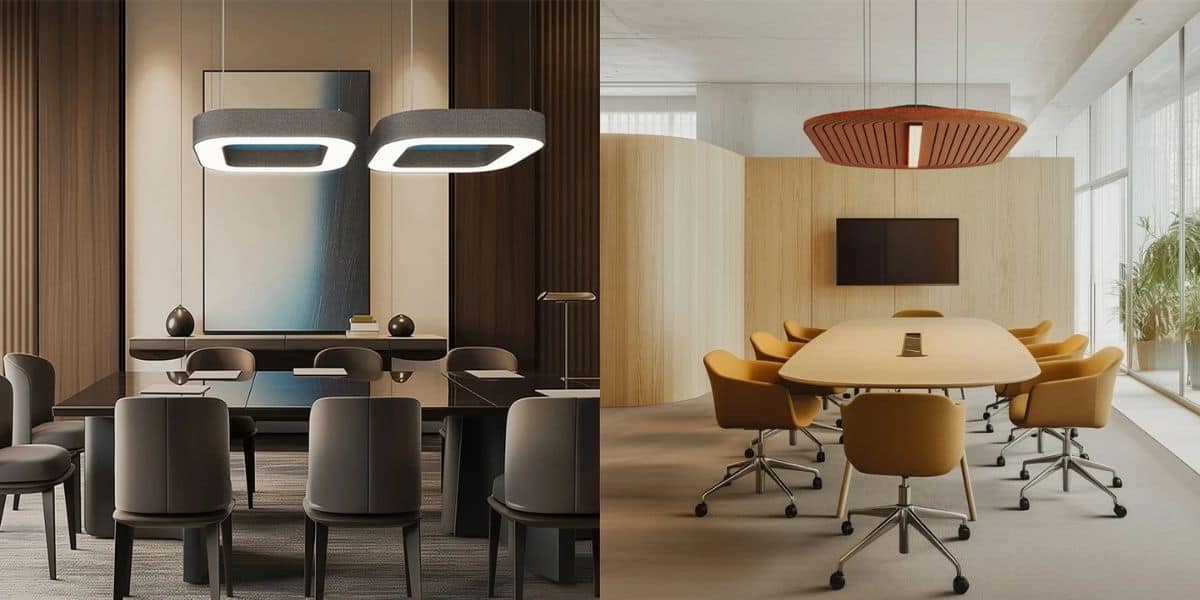
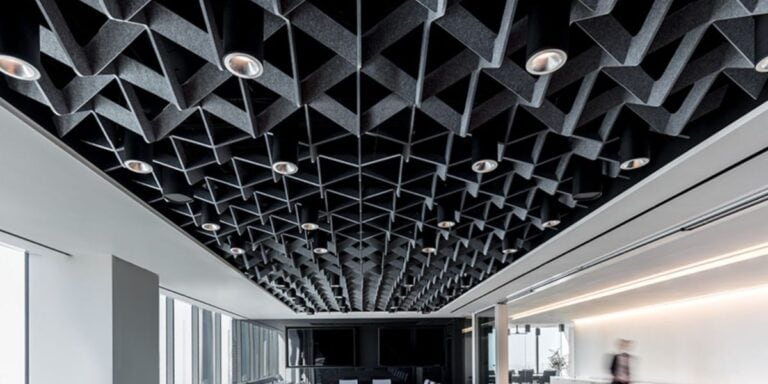
iluminação acústica Não deve ser entendido como simplesmente uma luminária coberta de feltro. Em ambientes comerciais, ele opera como parte da estratégia geral de iluminação e acústica do edifício.
Na maioria dos interiores modernos, os tetos representam a maior superfície reflexiva ininterrupta. Quando a fala e o som ambiente aumentam, eles refletem nos tetos e se espalham pela sala. As luminárias tradicionais instaladas em tetos duros contribuem pouco para o controle de som e podem até aumentar os padrões de reflexão.
A iluminação acústica muda essa dinâmica introduzindo massa de absorção diretamente no plano do teto. Em vez de permitir que a energia sonora reflita livremente, o corpo acústico integrado captura e dissipa as ondas sonoras de média e alta frequências. Isso reduz o tempo de reverberação e limita a disseminação da fala em áreas abertas.
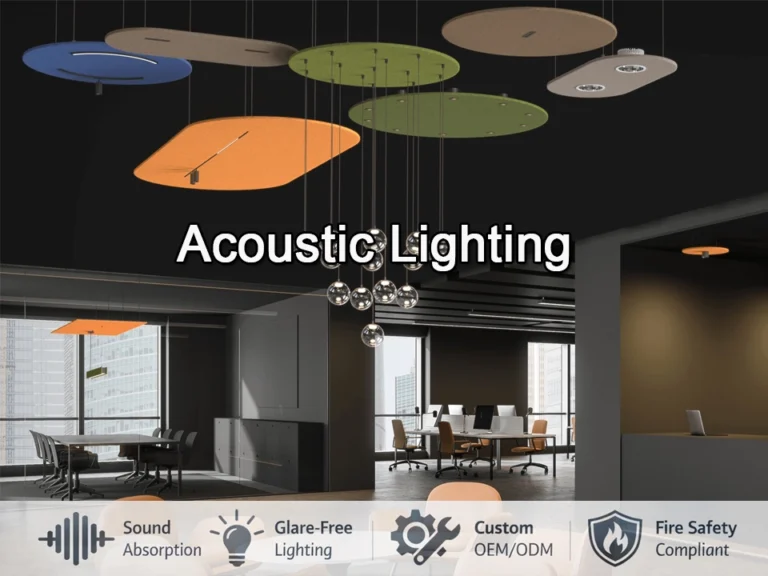
Ao contrário dos painéis e luminárias acústicas separadas, a iluminação acústica consolida dois sistemas em um elemento arquitetônico. O componente de iluminação fornece iluminação de acordo com os níveis de Lux exigidos e os padrões de conforto visual, enquanto a estrutura acústica modifica o comportamento do som na mesma zona.
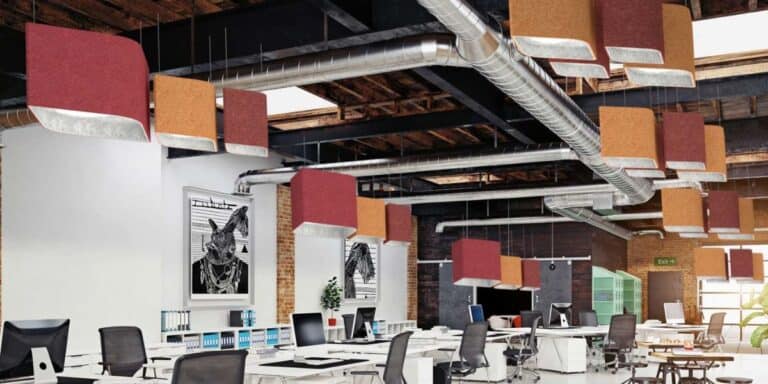
Essa abordagem de função dupla é mais importante em ambientes onde o espaço no teto é limitado ou visualmente sensível. Em escritórios abertos, áreas de colaboração e salas de conferências, a iluminação acústica permite que os designers controlem a reverberação sem cobrir todo o teto com painéis.
Do ponto de vista do desempenho do edifício, a iluminação acústica deve ser avaliada com base em:
- Como ele altera os caminhos de reflexão dentro da sala
- Se contribui significativamente para o controle de reverberação
- Como a cobertura acústica uniformemente é distribuída pelo teto
- Se o componente de iluminação mantém padrões de conforto visual
Quando especificada corretamente, a iluminação acústica se torna uma parte estrutural do desempenho espacial e não uma adição decorativa.
Fatores-chave a serem considerados ao selecionar a iluminação acústica
desempenho acústico
O desempenho acústico é a principal razão pela qual esses sistemas existem, mas muitas vezes é o menos compreendido.
O coeficiente de redução de ruído (NRC) é a métrica mais comum usada para descrever a quantidade de som que um material absorve. Em termos simples, o NRC indica quanta energia sonora é absorvida em vez de refletida em um espaço. Para interiores comerciais, os valores de NRC médios a altos são especialmente importantes porque a fala humana, as ligações telefônicas e os ruídos de colaboração geralmente ficam na faixa de frequência média.
A absorção de média frequência é mais importante do que muitos compradores percebem. Um acessório que funciona bem apenas em altas frequências pode não melhorar significativamente a clareza da fala em escritórios ou salas de reunião. A revisão de dados de desempenho específicos da frequência, não apenas de um único número NRC, ajuda a evitar esse problema.
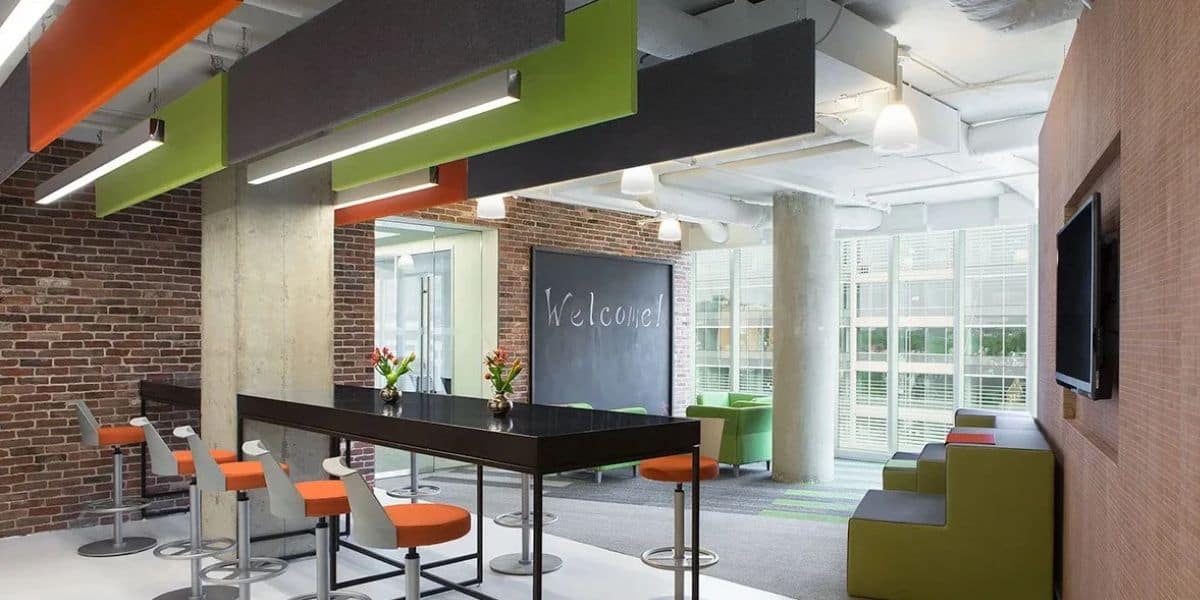
A colocação também afeta o desempenho. A iluminação acústica funciona melhor quando posicionada onde a energia sonora se acumula, como estações de trabalho acima, zonas de colaboração ou mesas de conferência. mesmo de alto desempenho acessórios acústicos Podem entregar-se menos se forem mal distribuídos ou tratados como elementos de teto puramente decorativos.
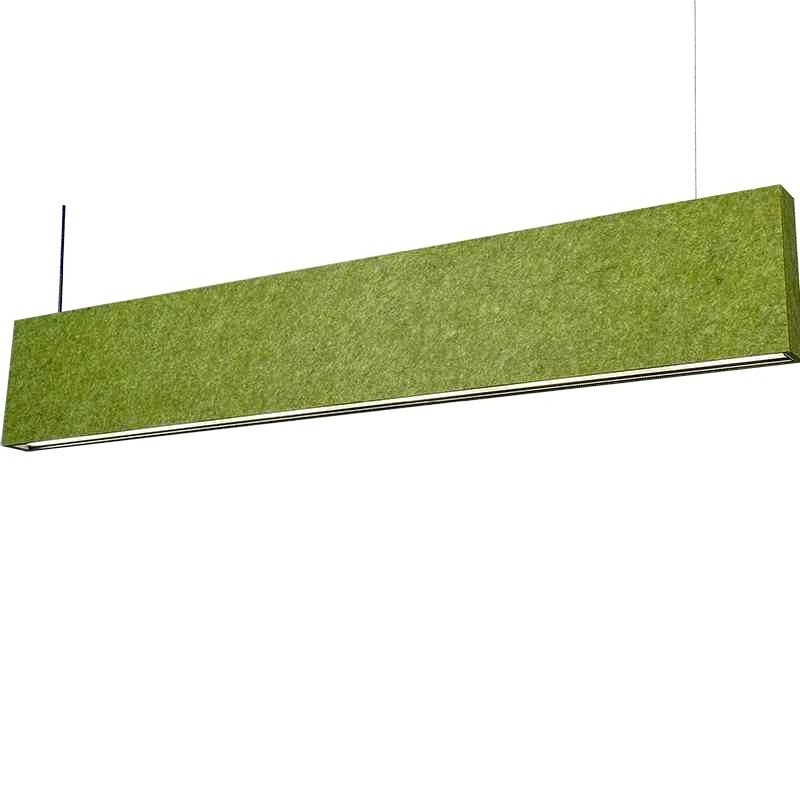
Luz linear acústica anti-reflexo e fina
- Tensão de entrada: AC100-277V / AC220-240V, 50-60Hz
- Tamanho da carcaça: W58*H200 mm/W58*H300mm
- Sentido de emissão: para baixo
- Opção de comprimento: 1218mm / 1220mm/1288mm
- CCT: 3000K/4000K/6000K
- Potência: 30W / 32W
- Fluxo luminoso: 100-110LM/W
- CRI: >90ra
- PF: >0,90
- sem cintilação: sim
- Ângulo do feixe: 36°
- Grau IP: IP20
- Garantia: 5 anos
- Cor de placa acústica em feltro: vermelho/verde/azul/cinza mais do que 48 cores opção
qualidade do material
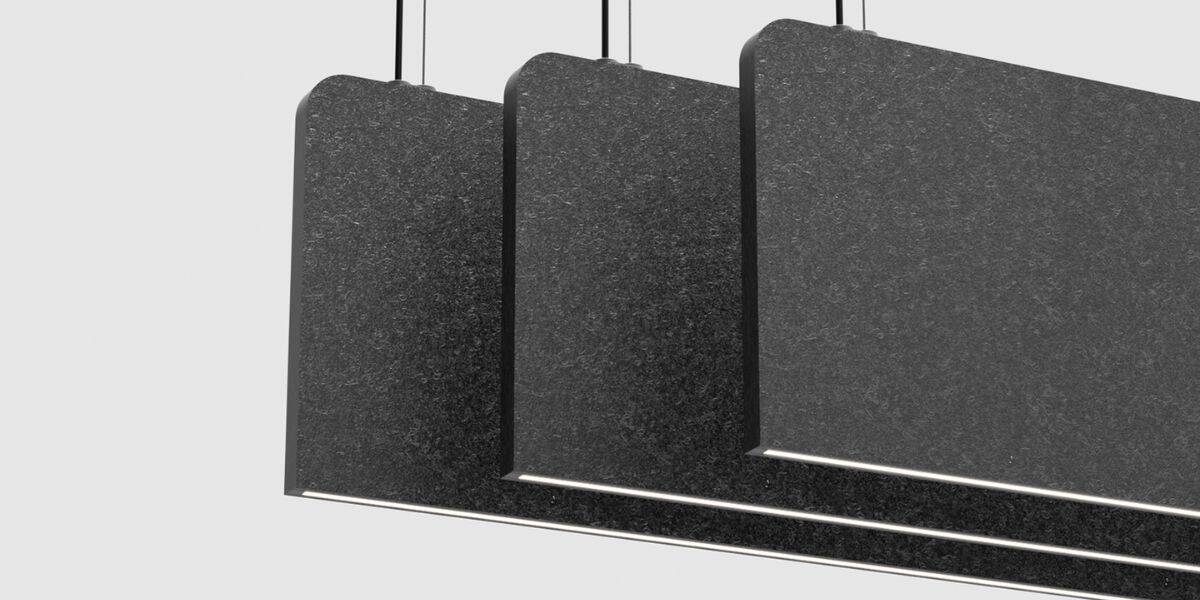
A seleção de material determina em grande parte se a iluminação acústica funciona de forma consistente ao longo do tempo.
O feltro PET é o material mais comum em iluminação acústica de grau comercial, porque oferece comportamento acústico previsível, estabilidade dimensional e desempenho de incêndio. Os materiais de feltro de baixo grau ou de baixa qualidade podem parecer semelhantes inicialmente, mas tendem a ceder, descolorir ou perder a eficiência de absorção à medida que envelhecem.
Densidade, espessura e camadas influenciam diretamente na absorção. Painéis mais grossos e densos geralmente têm um desempenho melhor em frequências mais baixas e médias. Construções em camadas podem melhorar o desempenho sem aumentar significativamente o volume visual.
A classificação de incêndio não é negociável em projetos comerciais. A iluminação acústica deve atender aos padrões relevantes de segurança contra incêndio para produtos montados no teto, especialmente em escritórios, hospitalidade e interiores públicos.
Durabilidade e envelhecimento são frequentemente esquecidos. Materiais de alta qualidade resistem ao acúmulo de poeira, mantêm a estabilidade da cor e mantêm suas propriedades acústicas ao longo de anos de uso, reduzindo os ciclos de substituição.
desempenho de iluminação
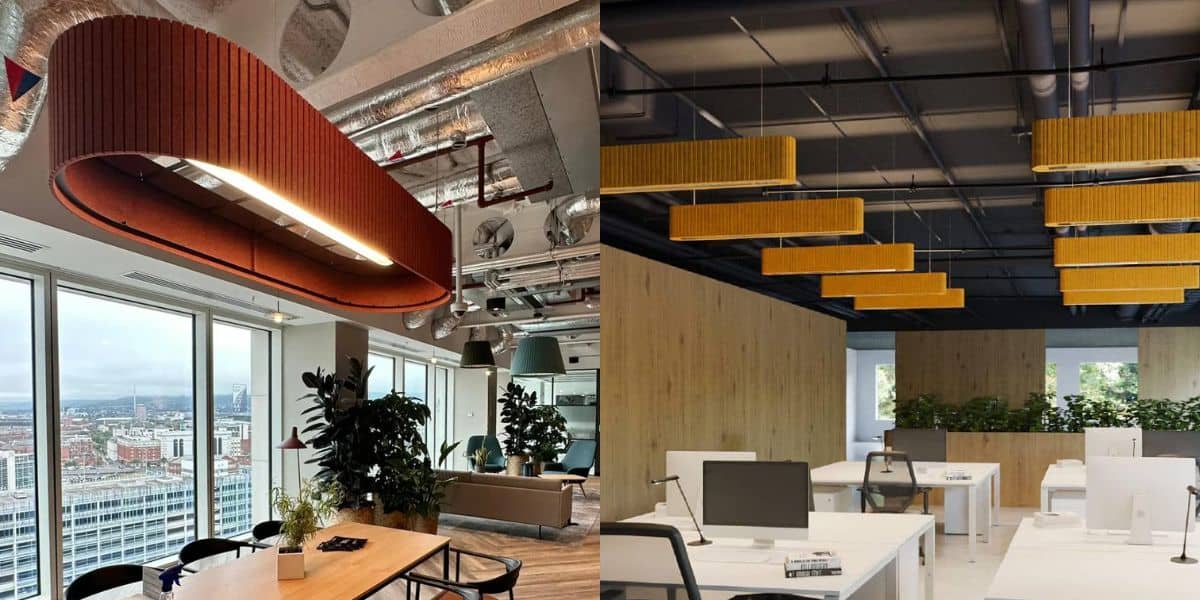
Os benefícios acústicos nunca devem comprometer a qualidade da iluminação.
A distribuição de luz deve ser adequada à tarefa. Escritórios e salas de reunião exigem iluminação controlada e uniforme, sem pontos de acesso agressivos. O design óptico ruim pode levar a um brilho desigual que prejudica a usabilidade.
O controle de brilho é fundamental, principalmente em ambientes pesados na tela. A iluminação acústica geralmente fica diretamente acima dos ocupantes, então difusores, blindagens e ângulos ópticos são mais importantes do que nos pingentes decorativos padrão.
A estabilidade da temperatura da cor afeta o conforto visual e a consistência em um espaço. Luminárias com CCT instável podem criar zonas de iluminação incompatíveis ao longo do tempo.
A qualidade do motorista e a vida útil influenciam os ciclos de manutenção e o custo total de propriedade. Os projetos comerciais se beneficiam de motoristas confiáveis com desempenho previsível, em vez de ganhos de eficiência de curto prazo.

58 mm de largura, luz linear LED acústica
- Tensão de entrada: AC110-120V / AC220-240V, 50-60Hz
- Largura: 58mm
- Tamanho: 1288*58*400mm/1288*80*400mm
- chip led: smd2835
- UGR: <19
- PF: >0,90
- CRI: >90ra
- Fluxo luminoso: 100 lm/w
- CCT: 3000K/4000K/6000K
- Potência: 30W
- Grau IP: IP20
- Garantia: 5 anos
- Opção de cor do painel acústico: vermelho/verde/azul/cinza mais de 48 cores
Design e integração
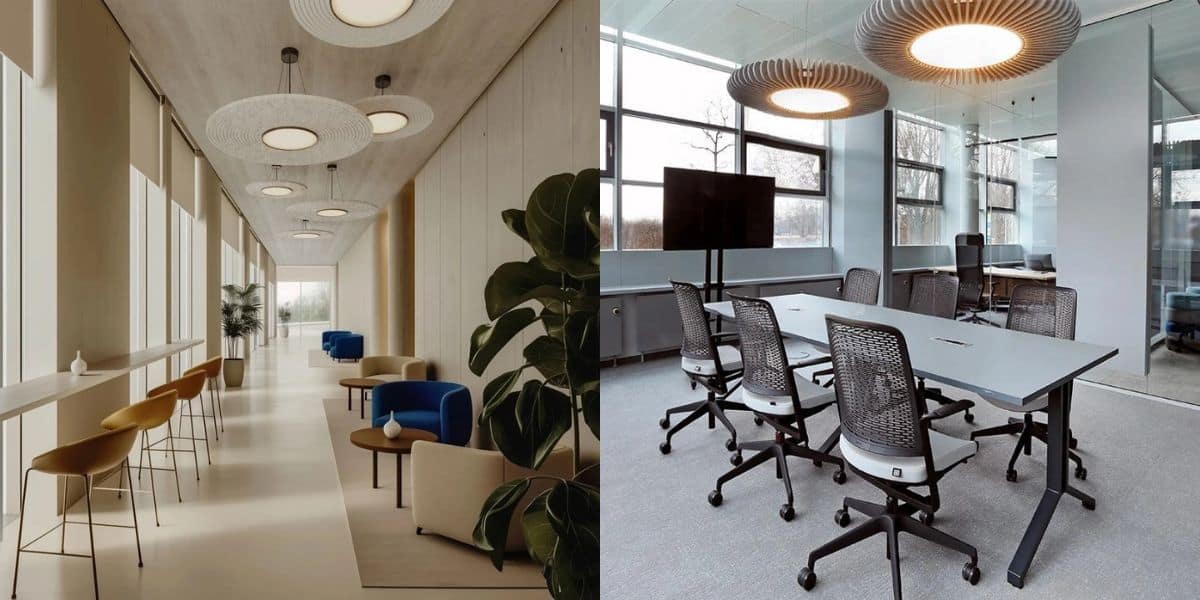
A iluminação acústica deve integrar tanto a planta do teto quanto o conceito geral do interior.
Os imóveis de teto são limitados em muitos projetos comerciais. Combinar acústica e iluminação em um único sistema pode liberar espaços, de outra forma ocupados por painéis e luminárias separados.
Visualmente, a iluminação acústica suaviza os interiores dominados por superfícies duras como vidro, concreto e metal. O objetivo não é a decoração, mas o equilíbrio visual que apóia o conforto.
A compatibilidade com os interiores modernos é importante. Formas neutras, geometrias escaláveis e configurações adaptáveis permitem que a iluminação acústica funcione em escritórios, hospitalidade e espaços públicos sem prender o design a uma tendência específica.
Instalação e manutenção
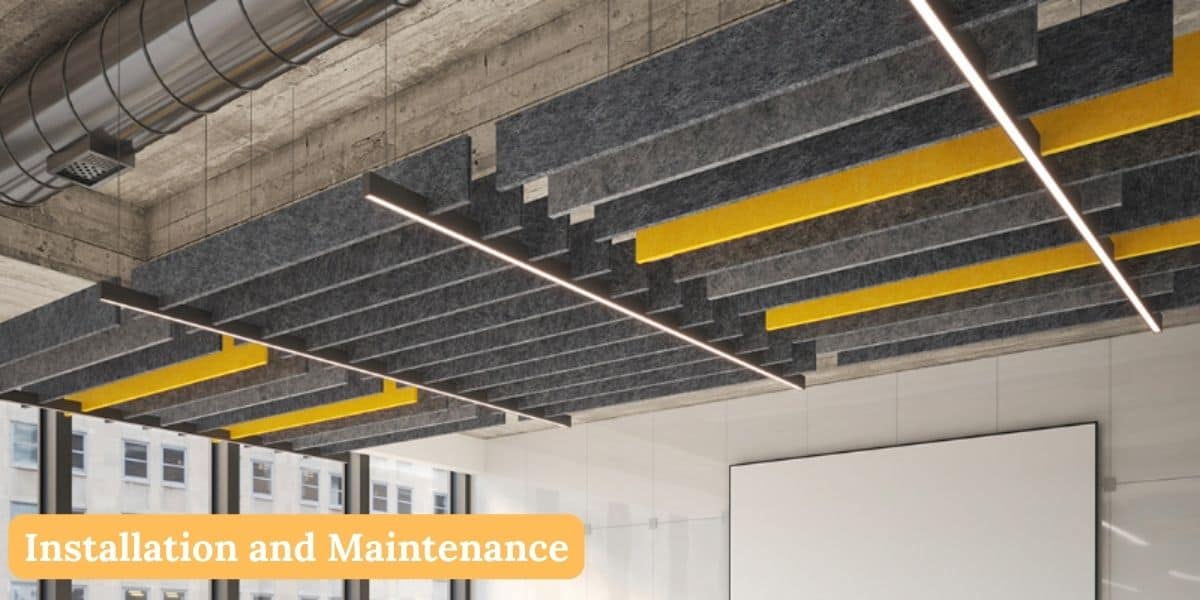
O método de instalação afeta a flexibilidade e usabilidade a longo prazo.
Os sistemas suspensos são comuns porque colocam a absorção mais próximo das fontes sonoras e permitem um posicionamento ajustável. As opções montadas na superfície podem funcionar onde a altura do teto é limitada, mas pode reduzir a eficácia acústica.
A limpeza e a manutenção devem ser simples. Materiais que retêm poeira ou que exigem limpeza especializada aumentam a sobrecarga operacional. Drivers acessíveis e componentes modulares simplificam a manutenção a longo prazo.
Expectativas claras em relação aos intervalos de manutenção ajudam os gerentes das instalações a planejar os custos com mais precisão ao longo da vida útil do equipamento.
Sustentabilidade e conformidade
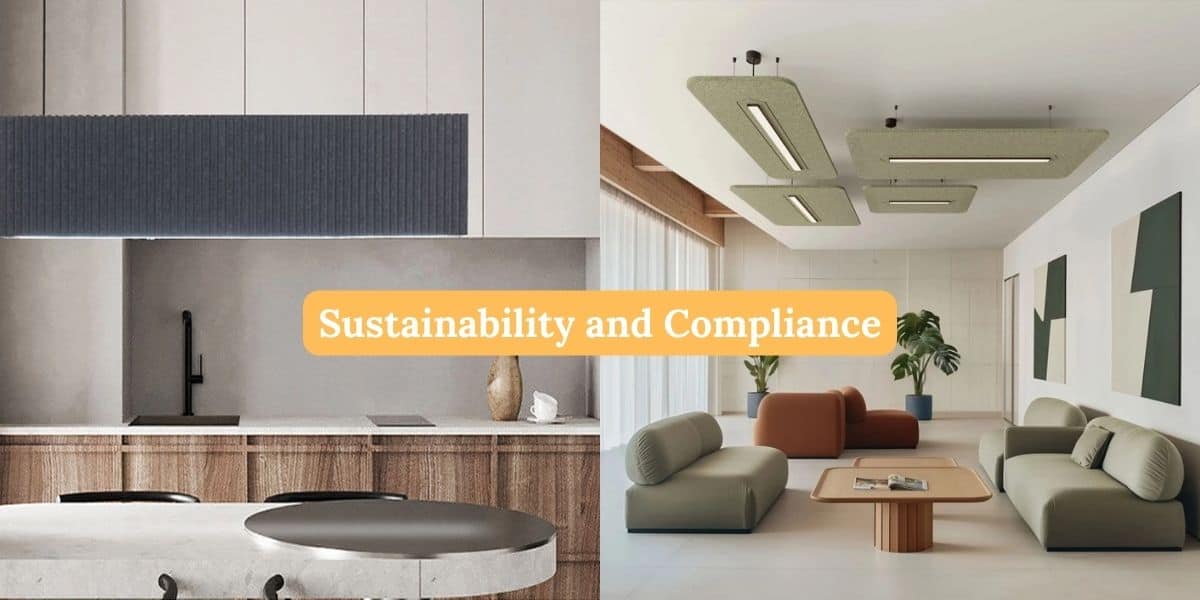
A sustentabilidade agora é um requisito básico para muitos compradores comerciais.
conteúdo reciclado, principalmente em feltro de estimação, reduz o impacto ambiental sem sacrificar o desempenho. Muitos sistemas agora usam altas porcentagens de material reciclado pós-consumo.
Certificações ambientais e conformidade com as aprovações de projetos de construção e metas de sustentabilidade. Para os compradores B2B, isso geralmente está relacionado aos compromissos corporativos do ESG, e não à estética.
O fornecimento de materiais responsáveis e longa vida útil também contribuem para a sustentabilidade, reduzindo a frequência de substituição e o desperdício.
Comparação rápida para compradores B2B
| fator de seleção | O que verificar | Porque é que é importante |
| desempenho acústico | Faixa NRC, área de cobertura | Determina o eco e o controle da fala |
| material de feltro | Densidade de animais de estimação, classificação de fogo | Segurança, durabilidade, consistência |
| qualidade de iluminação | Controle de brilho, estabilidade de CCT | Conforto visual e usabilidade |
| projeto de fixação | Painel, pendente, sistema integrado | Integração e flexibilidade do teto |
| Manutenção | Método de limpeza, acesso a componentes | Custo e confiabilidade a longo prazo |
Onde a iluminação acústica faz mais sentido
A iluminação acústica é mais eficaz em ambientes onde o controle de som e o conforto visual são igualmente críticos.
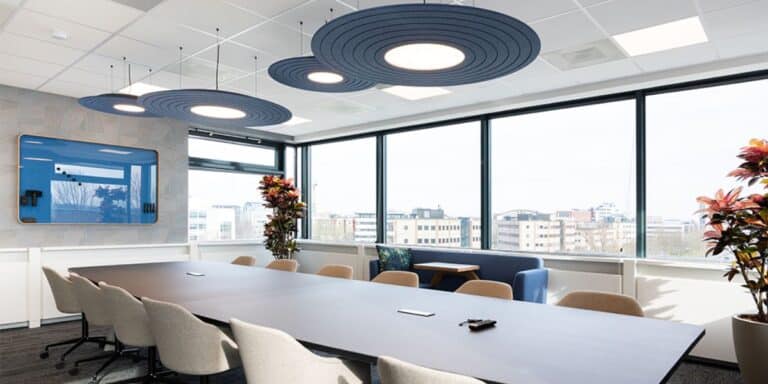
Em escritórios e espaços de coworking, ele suporta foco e clareza de fala em layouts abertos sem adicionar desordem visual. As salas de conferências beneficiam de uma inteligibilidade melhorada durante reuniões e videochamadas. Os espaços de hospitalidade usam a iluminação acústica para gerenciar o ruído ambiente, mantendo uma atmosfera refinada. Os interiores públicos, como bibliotecas ou instalações educacionais, contam com isso para equilibrar a abertura com o controle acústico.
A decisão deve ser sempre orientada pela forma como o espaço é usado, não apenas pela aparência do aparelho.
Erros comuns que os compradores cometem
Um erro frequente é escolher a iluminação acústica com base apenas na aparência, assumindo que todos os acessórios baseados em feltro fornecem uma absorção significativa. Outro é ignorar as especificações do material e os dados acústicos, o que leva a um desempenho inferior em espaços reais.
Alguns compradores assumem que a colocação não importa, instalando acessórios onde eles parecem melhores, em vez de onde absorvem o som de forma eficaz. Outros subestimam as necessidades de manutenção, selecionando materiais que se degradam rapidamente em ambientes de alto uso.
Evitar esses erros requer tratar a iluminação acústica como um sistema funcional de construção, não como um acessório decorativo.
Tendências de seleção de iluminação acústica para 2026
As tendências atuais enfatizam a iluminação e a acústica integradas em vez de soluções complementares. Os sistemas modulares que se adaptam à mudança de layouts estão ganhando força, principalmente em ambientes de trabalho híbridos. Há também um foco mais forte no bem-estar, com o design voltado para o desempenho, tendo precedência sobre as características puramente decorativas.
Conclusão
Os principais fatores a serem considerados ao selecionar a iluminação acústica são o desempenho acústico, a qualidade do material, a confiabilidade da iluminação e a adequação do espaço pretendido. Para projetos comerciais, a escolha certa depende de dados de desempenho verificados, materiais duráveis e integração cuidadosa, não apenas estética. A iluminação acústica é uma decisão funcional de design que influencia o conforto, a produtividade e o valor a longo prazo.
FAQs
Postagens relacionadas