Português
  English
  简体中文
简体中文  Deutsch
  Español
  Français
  Italiano
  日本語
日本語  한국어
한국어  Polski
  Русский
  Türkçe
  Nederlands
  Tiếng Việt
  ไทย
ไทย 
A iluminação acústica funciona melhor quando instalada diretamente acima das zonas de atividade de som primária, como estações de trabalho, mesas de conferência, áreas de colaboração e assentos em plano aberto. A colocação do teto é fundamental porque o teto atua como uma superfície de reflexão importante para a fala. Espaçamento adequado, altura e distribuição determinam com que eficácia o acessório reduz a reverberação e melhora a clareza da fala.
Este artigo explica as zonas ideais de posicionamento, considerações de altura, lógica de controle de reflexão, estratégias do tipo sala e erros comuns de instalação. O foco é estritamente no desempenho do posicionamento para que arquitetos, designers, consultores acústicos e gerentes de instalações possam tomar decisões informadas sobre a instalação.
Por que o posicionamento do teto é mais importante do que a colocação da parede
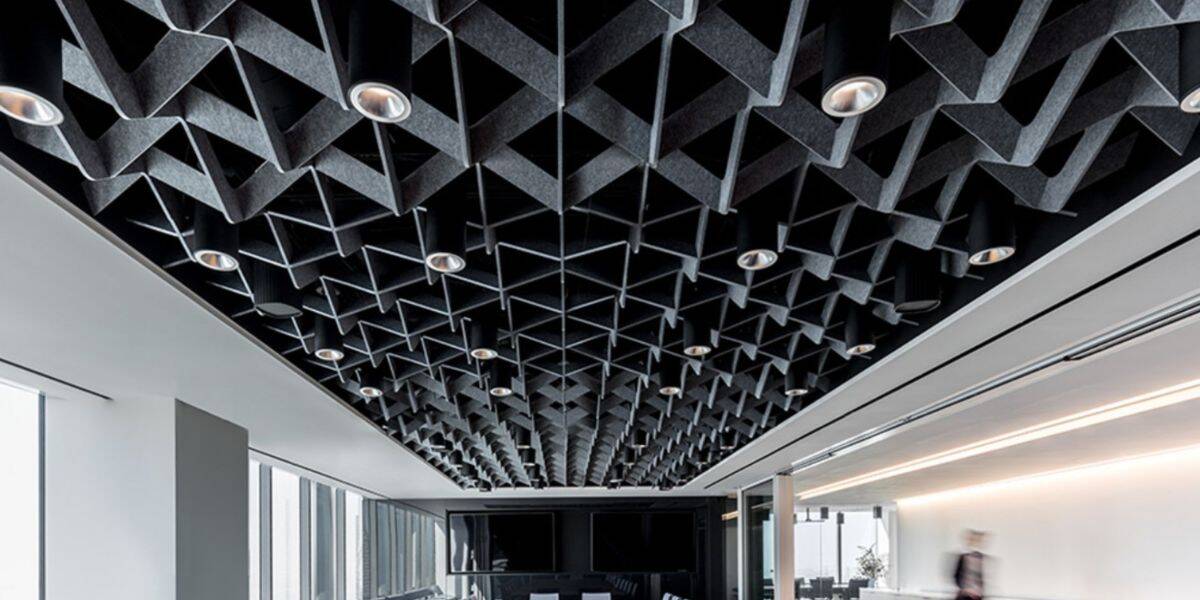
Na maioria dos interiores comerciais, a energia da fala se move para cima imediatamente após deixar a boca do falante. A primeira reflexão significativa geralmente ocorre no plano do teto antes de retornar para a zona ocupada. Isso cria o que os acústicos chamam de primeiro caminho de reflexão:
Fonte de fala → teto → energia refletida → ouvintes.
Quando os tetos são duros, superfícies reflexivas, como placa de gesso, concreto aparente ou decks de metal, a energia de fala refletida entra na sala rapidamente, aumentando o tempo de reverberação e reduzindo a clareza.
A absorção na parede ajuda, mas aborda principalmente os reflexos laterais. As reflexões indiretas são tipicamente mais dominantes em ambientes de plano aberto e conferências porque:
- O teto abrange toda a zona ocupada.
- Ele reflete a energia de volta no campo da fala.
- Reforça o ruído em grandes áreas horizontais.
iluminação acústica Interrompe este loop de reflexão vertical diretamente no plano de reflexão. Ao colocar as luminárias acústicas dentro do caminho de reflexão do teto, a energia de fala de média frequência (tipicamente 500–2000 Hz) é absorvida antes de retornar aos ocupantes.
A colocação da parede do perímetro não intercepta esse salto vertical inicial. As luminárias de feltro com base no teto reduzem a intensidade dos primeiros reflexos de forma mais eficaz porque elas se sentam diretamente no caminho do som.
Em ambientes abertos, especialmente, a absorção overhead oferece maior impacto acústico por metro quadrado em comparação com o tratamento apenas com perímetro.
Zonas de colocação do núcleo
A: Abaixo das estações de trabalho e clusters de mesa
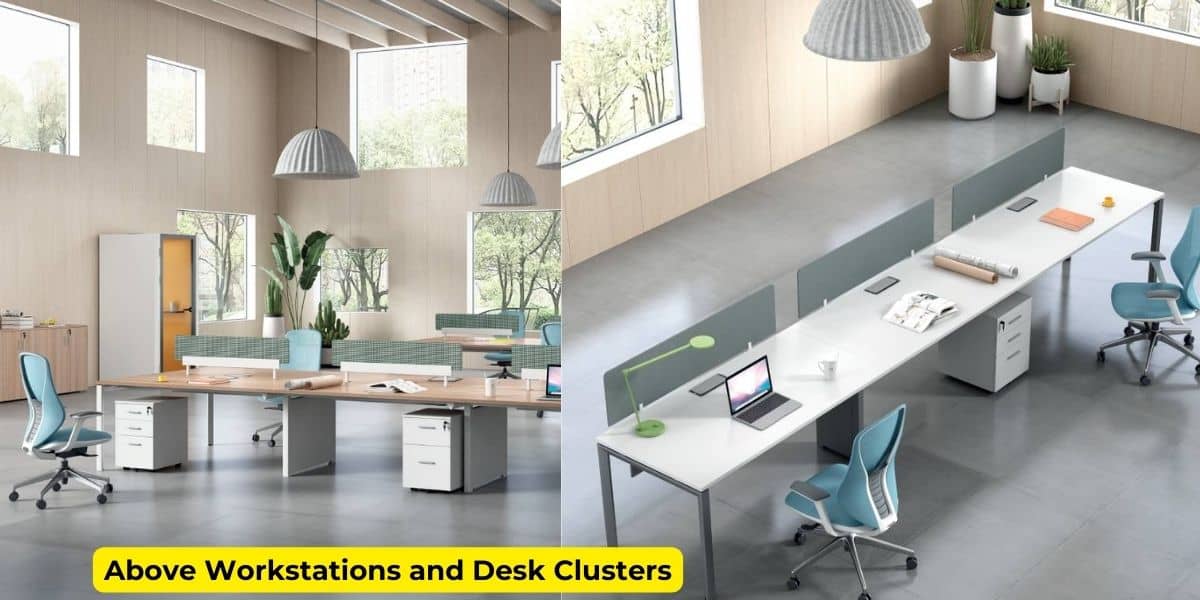
Os escritórios de plano aberto concentram a fala dentro dos grupos de estações de trabalho. Conversas, videochamadas e trocas colaborativas geram energia sonora sustentada de média frequência.
Instalando a iluminação acústica diretamente acima dos clusters de mesa:
- Absorve a fala antes de se espalhar lateralmente.
- Reduz o acúmulo reverberante entre as linhas.
- Limita a conversa cruzada entre as equipes.
luminárias de feltro São particularmente eficazes porque o feltro denso de poliéster absorve a fala de média frequência, onde a maior parte da energia de inteligibilidade está.
A lógica de distribuição é importante. Em vez de colocar os acessórios ao longo dos corredores ou nas paredes próximas, os acessórios devem ser centralizados acima das mesas ativas e se estender um pouco além da pegada do assento. Como uma diretriz:
- Alcance o teto de 20–35% acima das zonas de alta atividade.
- Mantenha espaçamento consistente para evitar lacunas reflexivas não tratadas.
- Evite layouts exclusivos de perímetro, que permitem que as zonas de fala centrais permaneçam reflexivas.
Os layouts com baixo desempenho normalmente colocam a iluminação decorativa ao longo dos caminhos de circulação, em vez das fontes sonoras acima.
B: As mesas de conferência acima
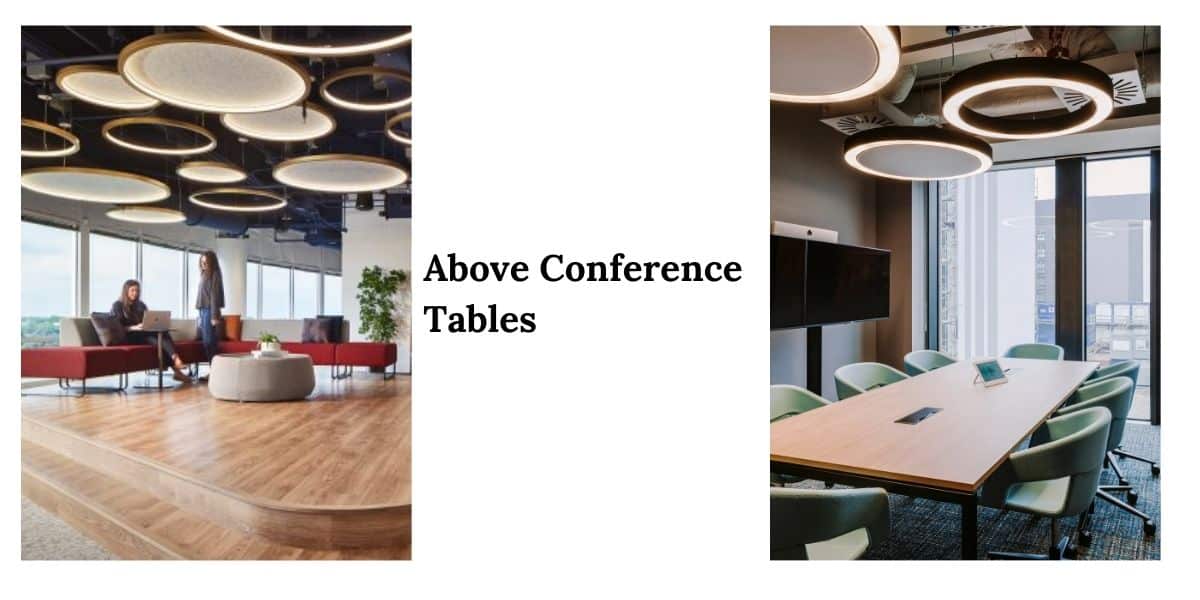
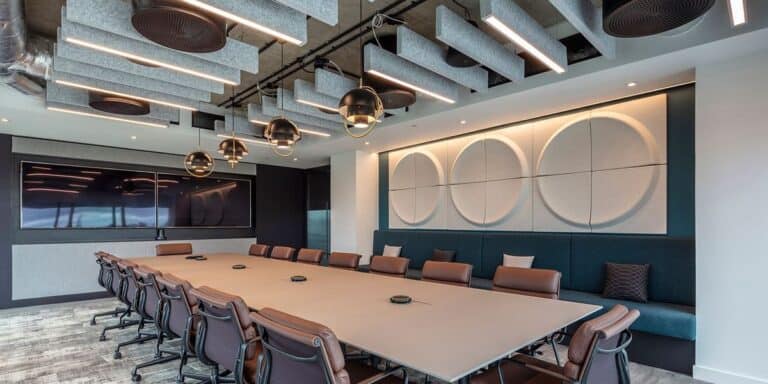
As salas de conferências concentram a fala direta em uma área fixa. Vários participantes falam em direção ao centro da mesa, e o som reflete verticalmente no teto.
A configuração ideal:
- Instale a iluminação acústica centralmente acima da mesa.
- Estenda a cobertura 300–600 mm além da pegada da mesa.
- Alinhe as luminárias com o eixo da mesa para uma absorção uniforme.
Se uma sala for alongada, um arranjo linear que espelha a forma da mesa tem um desempenho melhor do que um único cluster compacto.
A altura também importa. Em tetos típicos de 2,7 a 3 m, a suspensão de luminárias 400–800 mm abaixo da laje melhora a eficiência de absorção, colocando o material mais próximo da zona de reflexão.
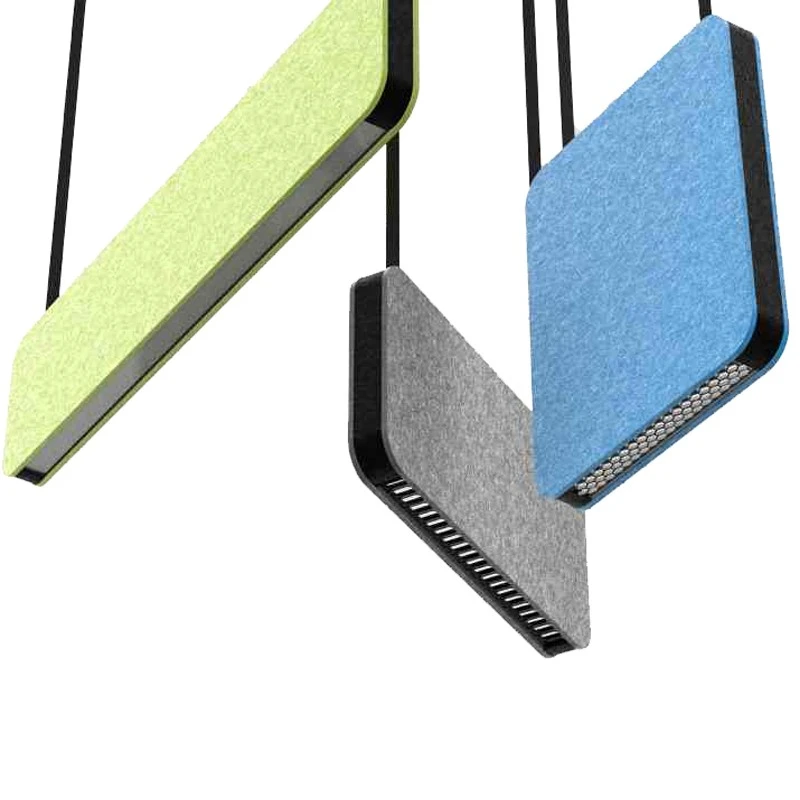
Luz linear de LED acústica super fina
- Tensão de entrada: AC100-277V / AC220-240V, 50-60Hz
- Sentido de emissão: para baixo
- Tamanho: 121836400mm
- CCT: 3000K/4000K/6000K
- Potência: 30W
- Fluxo luminoso: 100-110LM/W
- CRI: >80ra
- PF: >0,90
- Flicker grátis: sim
- Ângulo de feixe: 120°
- Grau IP: IP20
- Garantia: 5 anos
- Cor de placa acústica em feltro: vermelho/verde/azul/cinza mais do que 48 cores opção
C: Zonas de colaboração e áreas de estar
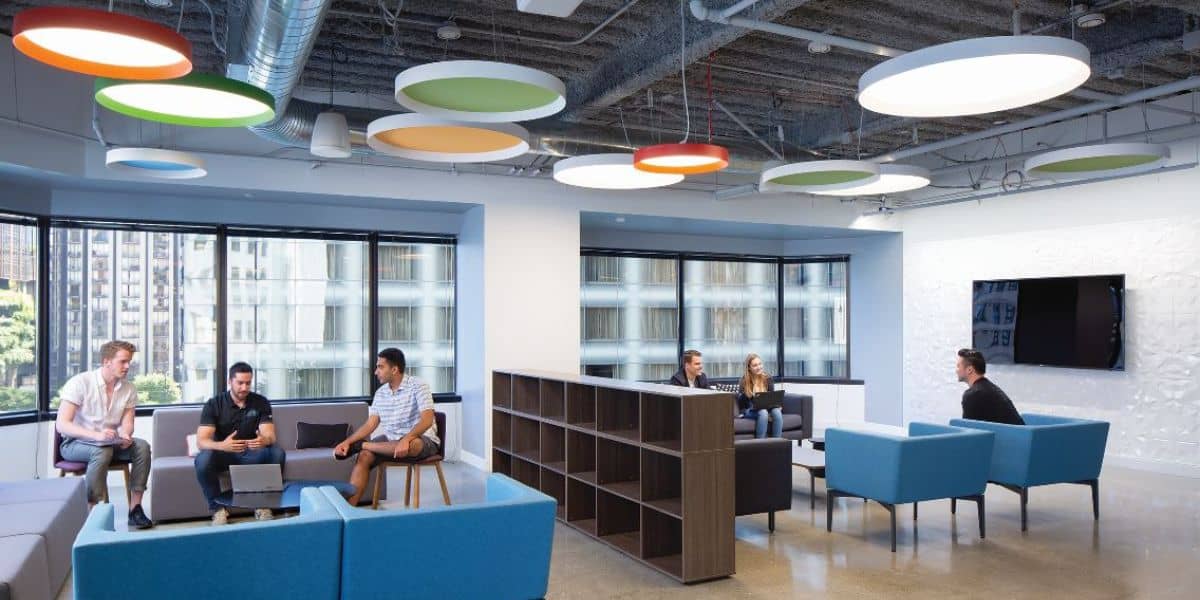
As zonas informais geram agrupamentos de fala imprevisíveis, mas concentrados. Sem absorção de sobrecarga, o ruído se espalha em zonas silenciosas adjacentes.
Instalando a iluminação acústica acima:
- Aglomerados de assentos macios
- Espaços de amontoado
- Pods de reunião informais
Cria zonas de absorção localizadas. Isso contém som próximo à sua fonte e evita o acúmulo reverberante na placa do piso.
A estratégia de colocação deve priorizar a contenção do som, não a simetria visual.
Diretrizes para altura e suspensão da instalação
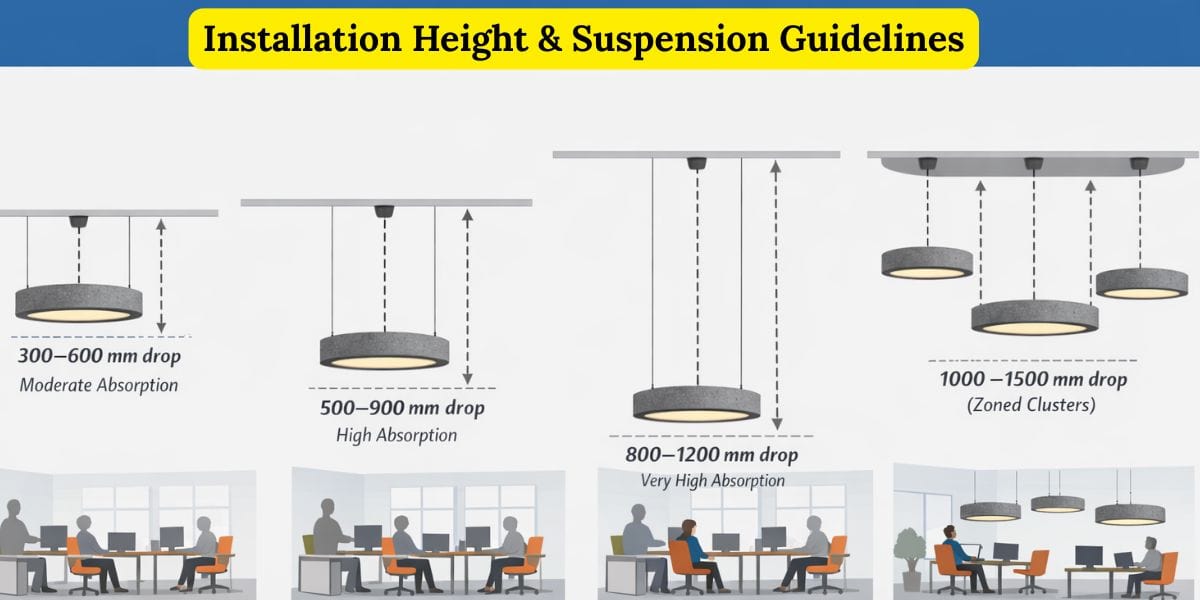
A profundidade da suspensão influencia significativamente o desempenho. A redução da iluminação acústica aumenta sua interação com as ondas sonoras, posicionando o material em caminhos de reflexão ativos.
Para tetos expostos ou lajes altas, a suspensão mais profunda melhora a captura acústica.
Tabela 1 – Diretrizes de suspensão recomendadas
| altura do teto | Profundidade da suspensão sugerida | impacto acústico | notas |
| 2,6–2,8 m | 300–600 mm | Moderado a elevado | Adequado para salas de conferências e escritórios |
| 2,8–3,2 m | 500–900 mm | Elevado | Melhora o controle de fala em plano aberto |
| 3,2–4,0 m | 800–1200 mm | Alta (zonas localizadas) | Essencial para tetos expostos |
| >4,0 m | 1000–1500 mm (agrupamentos zoneados) | direcionado | Combine com acessórios acústicos adicionais |
A suspensão inferior aumenta a absorção efetiva porque o som encontra o material antes de se dispersar totalmente.
Em tetos altos acima de 3 m, a instalação de luminárias firmes na laje reduz significativamente o desempenho. Trazer a iluminação acústica para baixo melhora a interação com as frequências de fala.
Estratégia de cobertura e distribuição
A porcentagem de cobertura e o padrão de distribuição determinam a eficácia geral.
Como regra geral:
- Cobertura 20–25% em escritórios moderados de ruído.
- Cobertura 30–40% em zonas de alta colaboração.
- Maior densidade localizada acima das áreas de conferência.
A distribuição uniforme em zonas ativas supera o agrupamento de todos os acessórios em uma área.
Pequenos pendentes espaçados uniformemente podem funcionar tão bem quanto painéis grandes se distribuídos corretamente. Grandes painéis de iluminação acústica criam campos de absorção mais amplos, mas exigem um alinhamento cuidadoso com as zonas de atividade.
Tabela 2 – Estratégia de distribuição por tipo de espaço
| Tipo de espaço | Zona de colocação principal | padrão de distribuição | Tratamento adicional necessário? |
| escritório aberto | Clusters acima da mesa | até mesmo grade sobre as áreas de trabalho | Às vezes, as luminárias de parede se altamente reflexivas |
| sala de conferências | centralizado acima da mesa | Cluster linear ou retangular | Raramente se a cobertura adequada |
| espaço de coworking | Áreas de colaboração mistas | clusters zoneados | Muitas vezes sim para paredes de vidro |
| recepção | zona de estar em espera | concentrado sobre os assentos | possivelmente para tetos altos |
| átrio de teto alto | Bolsos de atividade | clusters suspensos | Sim para controle de volume |
Evite colocar toda a iluminação acústica ao longo das bordas do perímetro. A colocação distribuída alinhada com a concentração de fala produz melhor desempenho do que o agrupamento decorativo.
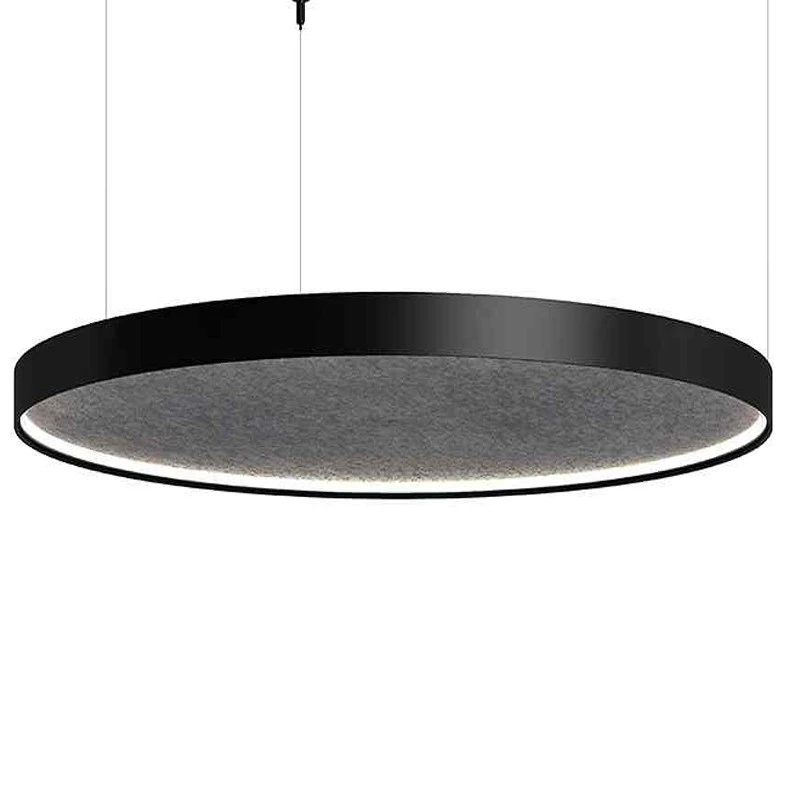
Luz pendente LED acústico de círculo direto
- Tensão de entrada: AC100-277V / AC220-240V, 50-60Hz
- Tamanho da altura: H65mm
- Tamanho D: 600mm/800mm/1000mm/1200mm
- CCT: 3000K/4000K/6000K
- Potência: 40W/60W/80W/96W
- Fluxo luminoso: 100-110LM/W
- anti -olhado: sim
- CRI: >80ra
- PF: >0,90
- Flicker grátis: sim
- Ângulo de feixe: 120°
- Grau IP: IP20
- Garantia: 5 anos
- Cor de placa acústica em feltro: vermelho/verde/azul/cinza mais do que 48 cores opção
Orientações sobre a instalação específica da sala
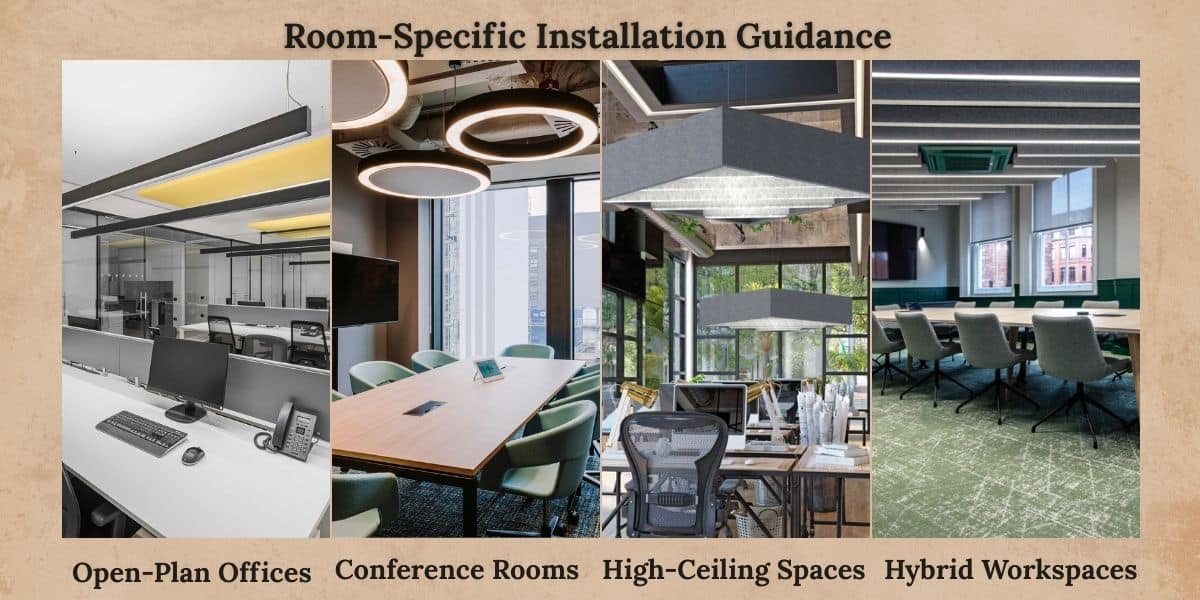
escritórios em plano aberto
Use grades distribuídas acima das mesas, não corredores. Os layouts centralizados somente para corredores não conseguem endereçar a fala em sua origem.
Se os tetos excederem 3 m:
- Aumente a profundidade da suspensão.
- Cluster Acoustic Fixtures diretamente acima das mesas ativas.
- Complemente com acessórios acústicos adicionais se a reverberação permanecer alta.
salas de conferência
Instale a iluminação acústica central acima da mesa. Para quartos longos:
- Use matrizes lineares que seguem a geometria da tabela.
- Adicione acessórios secundários próximos às extremidades da mesa, se necessário.
Evite colocar acessórios próximos às paredes, a menos que os reflexos laterais sejam graves.
Espaços de alto teto
Tetos altos aumentam a reverberação devido ao maior volume. Nestes espaços:
- Suspenda os acessórios para baixo na zona ocupada.
- Cluster acima de áreas de assentos ativos ou de colaboração.
- Combine com as luminárias de parede se as superfícies de vidro dominarem.
O posicionamento deve segmentar as áreas de atividade, não abrir espaço vazio.
Espaços de trabalho híbridos
Os escritórios híbridos frequentemente reconfiguram os layouts de mesa. Os sistemas modulares de iluminação acústica oferecem flexibilidade.
Estratégia de colocação:
- Identifique os agrupamentos de falas prováveis
- Use sistemas de suspensão reconfiguráveis.
- Evite peças centrais decorativas fixas que não se adaptam às mudanças de layout.
A lógica acústica deve permanecer alinhada com os padrões de ocupação em evolução.
Quando a iluminação acústica por si só não é suficiente
Certas condições limitam o desempenho autônomo:
- Tempos de reverberação muito altos.
- Grandes fachadas de vidro.
- Paredes de concreto.
- Volumes de altura dupla.
Nesses casos, a iluminação acústica deve servir como absorção de sobrecarga, complementada por acessórios acústicos.
O tratamento do teto intercepta os reflexos verticais, enquanto o tratamento da parede controla os reflexos laterais. A combinação produz um desempenho equilibrado.
Ignorar a refletividade da parede em espaços altamente vidrados pode minar soluções somente no teto.
Erros comuns de instalação
- Instalando apenas no perímetro e não nas zonas de fala acima.
- Tratando a iluminação acústica como puramente decorativa.
- Ignorando a altura da suspensão em tetos altos.
- Luminárias de sobreespaçamento, criando lacunas reflexivas não tratadas.
- Instalando apenas os caminhos acima da circulação.
- Falha ao alinhar o posicionamento com os padrões de fala reais.
A maioria dos problemas de desempenho decorrem do posicionamento desalinhado, não da contagem de fixações insuficiente.
Lista de verificação de decisão de colocação
Tabela 3 – Lista de verificação de decisão de instalação
| fator de avaliação | O que avaliar | Por que isso afeta o desempenho |
| Concentração de atividade de fala | Densidade da mesa, zonas de encontro | Determina onde a absorção deve ser mais alta |
| altura do teto | Dimensão do piso | Influencia a profundidade da suspensão |
| Refletividade da superfície | vidro, concreto, metal | Maior refletividade aumenta a necessidade de cobertura |
| Volume da sala | metros cúbicos | Volume maior aumenta a reverberação |
| Layout híbrido versus fixo | Frequência de Reconfiguração | Impacta a necessidade de colocação modular |
| Necessidade de acessórios adicionais acústicos | gravidade do reflexo da parede | Garante um controle acústico equilibrado |
Esta lista de verificação suporta a tomada de decisão estruturada em vez de uma instalação orientada por estética.
Fluxo de trabalho prático de colocação
Um processo de colocação profissional normalmente segue estas etapas:
Etapa 1: identificar zonas com pesos de fala
Mapeie os clusters das estações de trabalho, mesas de reunião e áreas de estar informais.
Etapa 2: superfícies de reflexão do mapa
Avalie a refletividade do teto e a altura do quarto.
Etapa 3: determinar o alcance da suspensão
Selecione a profundidade da suspensão com base na altura do teto e na eficiência de absorção desejada.
Etapa 4: padrão de distribuição do plano
Escolha layouts de grade, lineares ou agrupados alinhados com as zonas de atividade.
Etapa 5: avaliar o tratamento adicional
Avalie se os acessórios de parede são necessários para um controle equilibrado.
Esse fluxo de trabalho prioriza o alinhamento de desempenho em detrimento da uniformidade visual.
Tendências de colocação de 2026
As tendências emergentes enfatizam a integração de desempenho:
- Sistemas de teto integrados que combinam iluminação e absorção.
- Iluminação acústica modular para ambientes de trabalho híbridos.
- Sistemas de suspensão flexíveis para desempenho ajustável.
- Controle acústico zoneado substituindo as grades do painel de teto inteiro.
Cada vez mais, a iluminação acústica substitui os painéis de teto separados, combinando iluminação e absorção direcionada na zona de reflexão.
Conclusão
A iluminação acústica deve ser instalada diretamente acima das zonas de som primária, distribuídas estrategicamente nas áreas do teto e suspensas em alturas que maximizam a eficiência de absorção. A lógica de posicionamento importa mais do que a contagem de fixtures. Quando alinhada com os padrões de fala e geometria do teto, a iluminação acústica melhora significativamente o conforto e a clareza.
FAQs
Postagens relacionadas