Português
  English
  简体中文
简体中文  Deutsch
  Español
  Français
  Italiano
  日本語
日本語  한국어
한국어  Polski
  Русский
  Türkçe
  Nederlands
  Tiếng Việt
  ไทย
ไทย 
Para a maioria dos painéis industriais trifásicos, a melhor escolha geralmente é uma Dispositivo de proteção contra surtos tipo 2 instalado no painel (nível de distribuição), coordenado com proteção upstream e boa aterramento. um tipo 1 unidade se torna a melhor escolha no entrada de serviço Quando a exposição ao surto de entrada é alta, enquanto tipo 3 Os dispositivos são principalmente para terminais sensíveis e não são a principal opção para proteção do painel.
Este artigo irá discutir como escolher o tipo de SPD certo para um painel industrial trifásico, quais fatores práticos mais importam e como os detalhes da instalação afetam o desempenho do mundo real.
O que significa “melhor” para um painel industrial trifásico

Em sistemas de energia industrial, “melhor” não significa “maior” ou “classificação mais alta”. Isso significa que a abordagem de instalação e dispositivo que oferece Limitação de surtos repetíveis em condições reais de operação.
Para um painel trifásico, “melhor” normalmente significa:
- Operação confiável Em Eventos de troca frequentes
- Proteção coordenada Entre os painéis principais e jusantes
- Desempenho repetível em muitos eventos de surto (não apenas um grande evento)
- manutenibilidade, incluindo indicação clara do status e substituição prática
- Manuseio eficaz de surtos de comutação De motores, contatores e cargas orientadas por VFD
Uma solução prática deve se adequar à topologia elétrica do painel e ser instalável com conexões curtas e de baixa indutância.
Fontes de surto comuns em painéis trifásicos industriais
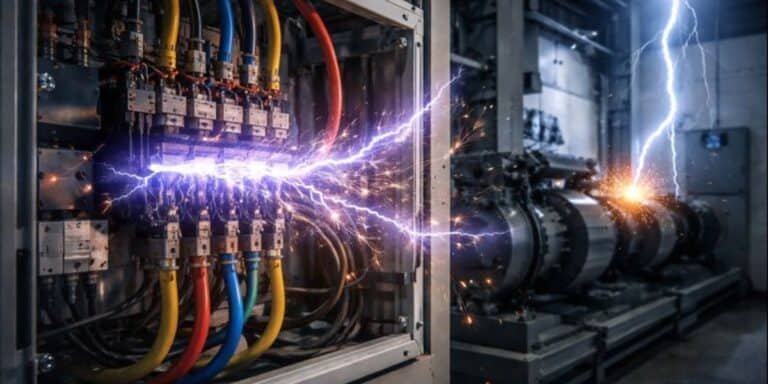
Surtos industriais são frequentemente criados dentro das instalações, não apenas por raios. Mesmo quando não há atividade de tempestade, as operações de comutação podem gerar sobretensões transitórias rápidas que acionam acionamentos, fontes de alimentação do PLC, transformadores de controle e instrumentação.
Fontes comuns de surto incluem:
- comutação do motor (Iniciações por toda a linha, operações do contator, viagens de sobrecarga)
- Atividade do VFD (bordas de comutação rápidas, interações do barramento CC, eventos de frenagem)
- comutação de banco de capacitores e etapas de correção do fator de potência
- distúrbios de utilidade (Clemificação de falhas, religamento, comutação de alimentador)
- cabos longos que se comportam como antenas e aumentam o acoplamento de transientes
Um ponto-chave em ambientes industriais é a repetição: pequenos e médios surtos podem ocorrer muitas vezes por dia.
Os contribuidores típicos de surtos nas fábricas incluem:
- Comutação de grandes cargas indutivas (motores, solenóides, guindastes)
- Comutação de entradas de VFD e eventos do lado da linha de unidade
- Energização do transformador e transientes relacionados ao inrush
- Operações de comutação e limpeza de falhas do alimentador de utilitários
- Alimentadores longos para CCs ou subpainéis remotos
Tipo 2 SPD: a escolha mais prática para painéis industriais
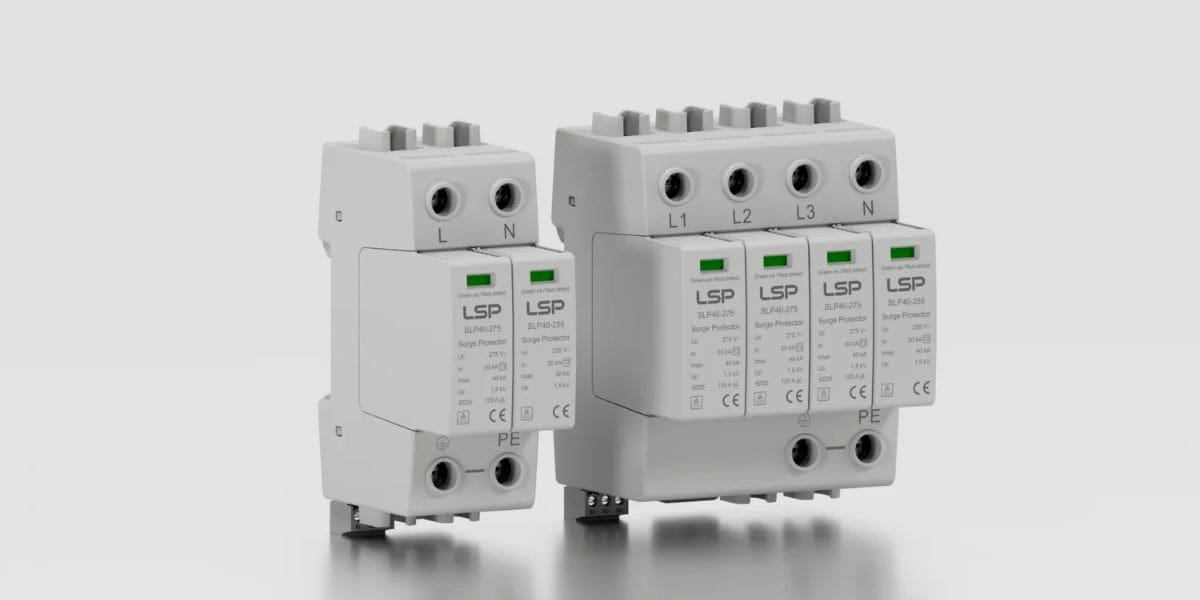
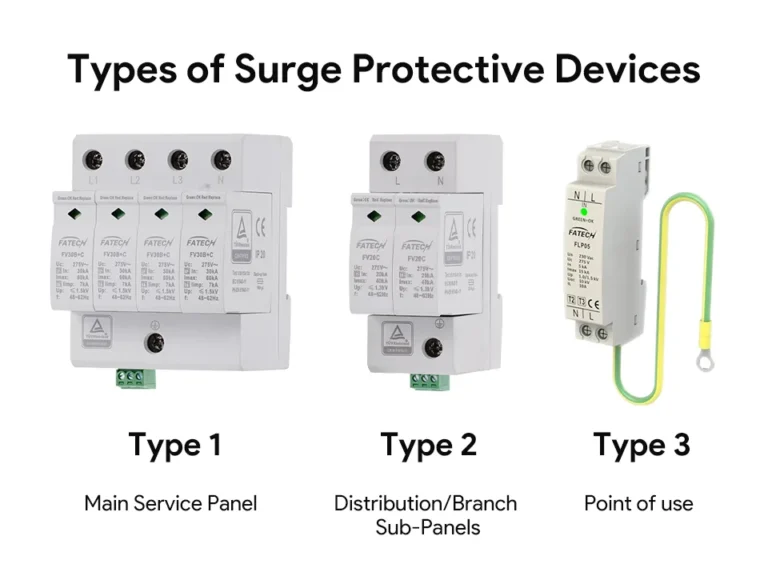
A Dispositivo de proteção contra surtos tipo 2 Geralmente é a opção mais prática para painéis industriais trifásicos, pois é projetado para Instalação em nível de distribuição e para manuseio Transientes de comutação repetitivos.
Em painéis industriais reais, o problema mais frequente não é um único surto extremo, mas uma longa série de transientes menores. Os dispositivos do tipo 2 são comumente selecionados para este serviço porque se destinam a pinçar surtos que aparecem no barramento do painel e proteger vários circuitos de derivação a jusante.
Por que o tipo 2 geralmente é o melhor ajuste no painel
Uma unidade tipo 2 instalada no painel pode:
- proteger Cargas múltiplas Conectado a jusante do painel
- Reduza o estresse Controle de fontes de alimentação, módulos de E/S do CLP e instrumentação
- Ajude a estabilizar os níveis de tensão transitória que causam viagens de incômodo ou reinicializações do controlador
- Forneça uma camada de proteção prática em MCs, painéis de distribuição e painéis de máquina
Notas práticas de instalação que afetam o desempenho
Para proteção em nível de painel, a seleção do dispositivo é importante, mas o layout da fiação geralmente é mais importante.
Colocação perto de barramentos:
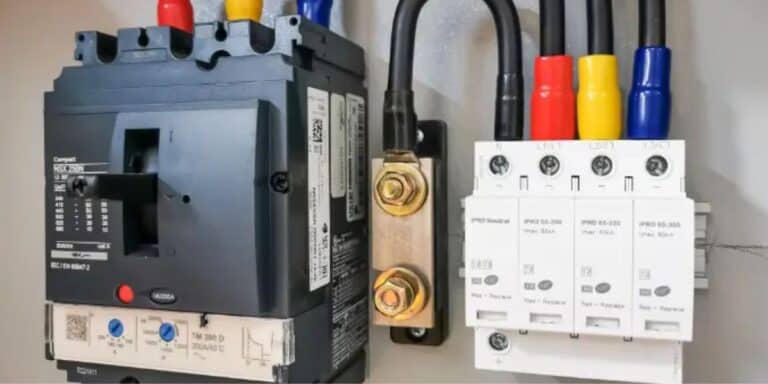
Um SPD de painel tem um desempenho melhor quando conectado o mais próximo possível dos pontos de conexão do barramento e do neutro/barra de terra. O comprimento do fio longo aumenta a queda de tensão indutiva durante um surto rápido.
Leads curtos:
Quanto mais curtos e retos os condutores, menor a impedância efetiva durante um surto. O excesso de comprimento do condutor pode aumentar significativamente a tensão de passagem de passagem pelo equipamento.
Qualidade de ligação e aterramento:
Até mesmo um dispositivo de proteção contra surtos de alta qualidade terá um desempenho ruim se o aterramento e a ligação do painel forem inconsistentes, soltos ou roteados por longos caminhos.
O tipo 2 também é normalmente mais fácil de coordenar em vários painéis: um no ponto de distribuição principal e unidades adicionais nos subpainéis downstream que alimentam cargas sensíveis.
Quando um SPD tipo 1 se torna a melhor escolha
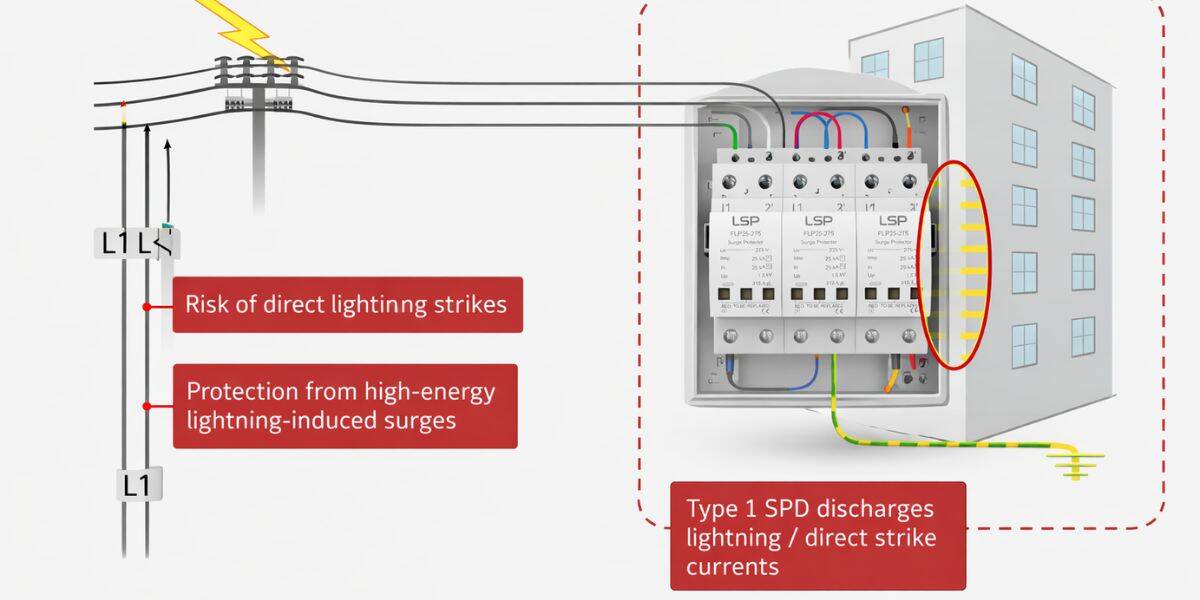
A Dispositivo de proteção contra surtos tipo 1 Torna-se a melhor escolha quando o ponto de instalação está no entrada de serviço ou a instalação tem alta exposição para surtos de entrada. Isso pode ocorrer em plantas com linhas de utilidade, longos condutores de serviço, equipamentos externos ou atividades frequentes de comutação de utilidades.
Os dispositivos do tipo 1 são comumente usados onde a energia de surto que chega ao serviço de construção é maior e onde a proteção é necessária antes que a fiação de distribuição a jusante divulgue o surto pela instalação.
Exposição de entrada de serviço e energia de surto de entrada
Na entrada do serviço, os surtos podem ser mais altos em magnitude e energia. Este é o local onde uma instalação pode desejar a “primeira linha” de proteção mais robusta.
No entanto, a instalação de um dispositivo tipo 1 na entrada do serviço não elimina a necessidade de unidades tipo 2 nos painéis de distribuição. O objetivo é coordenação, não uma estratégia de um único dispositivo.
Coordenação com o tipo 2
Uma abordagem industrial comum é:
- Tipo 1 na entrada do serviço (camada de proteção recebida)
- Digite 2 nos principais painéis de distribuição e CCMs (camada de proteção no nível de equipamento)
Isso reduz a tensão de surto no ponto de entrada principal e limita ainda mais os transientes próximos às cargas.
Um dispositivo tipo 1 é normalmente a melhor escolha quando:
- O SPD é instalado na entrada do serviço ou no local de desconexão principal
- O site tem linhas de fornecimento aéreo ou exposição frequente à tempestade
- Existem condutores de serviço longos alimentando a central telefônica principal
- A instalação experimenta repetidos distúrbios de comutação de utilidade
- Você precisa de uma camada upstream forte antes da proteção de distribuição downstream
Onde o tipo 3 se encaixa
Os dispositivos do tipo 3 são destinados principalmente à proteção de ponto de uso próximo a eletrônicos sensíveis. Em ambientes industriais, eles podem ajudar a proteger os terminais específicos, como fontes de alimentação de instrumentação, racks PLC ou dispositivos de comunicação.
Eles não são um substituto para um Dispositivo de proteção contra sur Para instalação de painéis elétricos. A proteção em nível de painel deve ser abordada primeiro no ponto de distribuição, porque é aí que os surtos entram e se propagam para vários circuitos.
Critérios de seleção para o dispositivo de proteção contra surtos trifásico certo
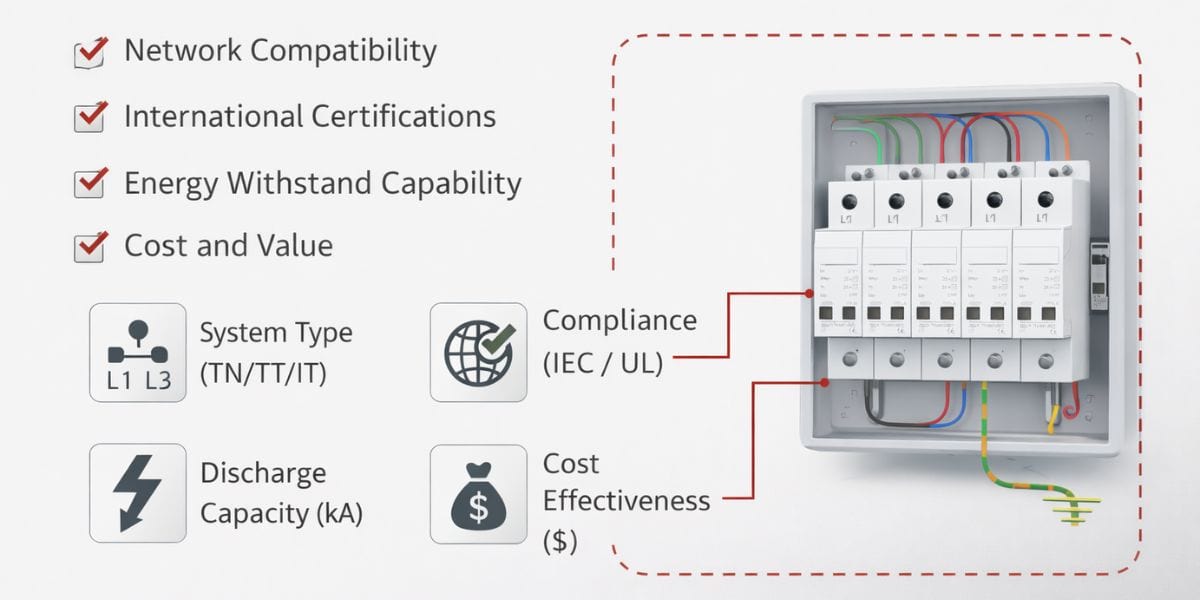
Esta é a seção mais importante porque “melhor” depende da combinação do dispositivo com o sistema e as restrições de instalação. um Dispositivo de proteção contra surtos trifásico Deve ser selecionado com base na topologia do sistema, modos de surto esperados, ciclo de trabalho e capacidade de manutenção.
Tensão e topologia do sistema (3 fios versus 4 fios)
Comece confirmando a configuração da distribuição:
- Sistemas de 3 fios (sem neutro): normalmente arranjos delta
- Sistemas de 4 fios (com neutro): normalmente arranjos em cordão
Isso importa porque o SPD deve ser capaz de abordar os caminhos de surto presentes no sistema.
Modos de surto que importam em painéis trifásicos
Em painéis trifásicos, os surtos não aparecem apenas de fase para terra. Os modos comuns incluem:
- linha a linha (L–L) Surtos, especialmente em sistemas Delta de três fios
- Linha-terra (L–G) Surtos, comuns em sistemas aterrados
- linha para neutra (L–N) Surtos em sistemas de quatro fios
Uma incompatibilidade entre a configuração do SPD e os modos de surto reais podem deixar o equipamento exposto mesmo quando um dispositivo está instalado.
Local de instalação: Painel principal vs subpainel
Onde o dispositivo está instalado, altera a tensão que ele vê:
- Entrada principal do serviço: Maior exposição de entrada, mais surtos relacionados à utilidade
- Painel de distribuição/MCC: Surtos de comutação internas frequentes de motores e unidades
- Painel da máquina: Mais perto de controles sensíveis, mas espaço limitado e fiação curta necessária
O melhor resultado geral geralmente é alcançado colocando proteção onde os surtos entram e onde as cargas sensíveis estão concentradas.
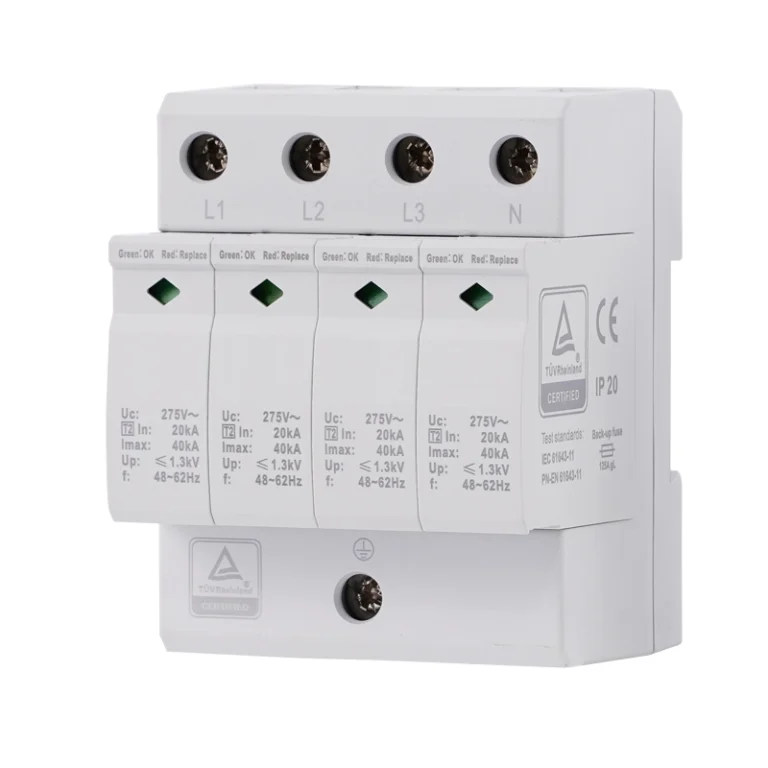
- FDS20C/4-275 Classe II
- Designação: tipo2
- Classificação: Classe II
- Modo de proteção: L→PE, N→PE
- Tensão nominal Un: 230 VAC/50(60)Hz
- máx. Tensão de operação contínua UC (L-N): 275 VAC/50(60)Hz
- Capacidade de suporte a curto-circuito: 20 ka
- IC de corrente de operação contínua: <20 µa
- PC de consumo de energia em espera: ≤25 MVA
- Corrente de descarga máxima (8/20μs) IMAX: 40 ka
- Corrente de descarga nominal (8/20μs) em: 20 ka
- Nível de proteção de tensão: ≤1,3 kV
- Resistência ao isolamento: >1000 mΩ
- Material da carcaça: UL94V-0
- Grau de proteção: IP20
Resistência para surtos frequentes de comutação
Painéis industriais que alimentam motores e VFDs geralmente experimentam transientes repetitivos. O dispositivo deve ser escolhido para maior durabilidade nesse ambiente, não apenas para eventos raros.
Um dispositivo que funciona bem em um ambiente comercial leve pode não ser o melhor para um painel que faz o ciclo de grandes cargas durante todo o dia.
Monitoramento e manutenção
Em ambientes industriais, a manutenção é importante porque a proteção pode se degradar com o tempo.
As características úteis de manutenção incluem:
- Limpar a indicação de status local
- Contatos de status remoto para alarmes (se a instalação usa monitoramento)
- Abordagem prática de substituição durante as janelas de manutenção
Restrições físicas da fiação e comprimento do cabo
O desempenho do surto é fortemente influenciado pela geometria da fiação:
- Leads longos aumentam a tensão de saída
- Loops aumentam o acoplamento indutivo
- O roteamento junto com condutores barulhentos pode reduzir a eficácia
Se o layout do painel forçar a execução de um condutor longo, um dispositivo “melhor” no papel pode ter um desempenho pior do que uma unidade instalada corretamente.
Diferenças essenciais
Abaixo está uma comparação prática focada na tomada de decisões em painéis industriais.
| Recurso / critérios | Dispositivo de proteção contra surtos tipo 1 | Dispositivo de proteção contra surtos tipo 2 | Melhor ajuste para painéis industriais (resposta curta) |
| Ponto de instalação típico | Entrada do serviço / localização a montante | Painel de distribuição / subpainel / MCC | Digite 2 para a maioria das instalações em nível de painel |
| Objetivo principal | Defesa de primeira linha contra surtos de entrada | Fixação prática no barramento do painel para circuitos a jusante | Tipo 2 para proteger os circuitos de ramificação múltiplos |
| Perfil de exposição | Energia de surto de entrada mais alta | Alta repetição de transientes de comutação | Tipo 2 para comutação industrial do dia a dia |
| Função de coordenação | Camada a montante para reduzir o estresse a jusante | Camada a jusante perto de cargas | Use ambos quando a exposição for alta |
| Sensibilidade da fiação | Ainda sensível ao comprimento do chumbo, mas frequentemente instalado na engrenagem principal | Muito sensível ao comprimento do chumbo devido a transientes rápidos no nível do painel | O tipo 2 requer fiação curta e cuidadosa |
| Melhor caso de uso | Sites de alta exposição, proteção de entrada de serviço | A maioria dos painéis de distribuição industrial | O tipo 2 geralmente é a escolha principal |
Esta tabela reflete por que um dispositivo tipo 2 é tipicamente a escolha padrão para painéis industriais, enquanto o tipo 1 se torna a opção preferida na entrada do serviço ou em ambientes de alta exposição.
Práticas recomendadas de instalação
A qualidade da instalação pode decidir se um dispositivo de proteção contra surtos funciona conforme o esperado. Um dispositivo bem selecionado com fiação ruim pode permitir que uma tensão transitória mais alta alcance o equipamento.
Mantenha os condutores curtos e diretos
Os condutores curtos reduzem o aumento da tensão indutiva durante eventos de surto rápido. Em termos práticos:
- Evite folgas extras ou caminhos de roteamento longos
- Use os pontos de conexão práticos mais próximos
- Mantenha os caminhos de fase e retorno fisicamente próximos
Evite loops e curvas desnecessárias
Grandes loops se comportam como indutores e aumentam a impedância efetiva durante os transientes rápidos. O roteamento firme e limpo ajuda o dispositivo de braçadeira a subir mais rápido e mais.
Integridade de ligação e aterramento
Um SPD de painel depende de um caminho de baixa impedância para o ponto de referência (terrestre/neutro, dependendo do projeto do sistema). As alças soltas, tinta sob pontos de ligação ou jumpers longos reduzem o desempenho.
Ponto de conexão correto
Conecte o mais próximo possível do barramento do painel e das barras neutras, não na extremidade da fiação do ramo.
Coordenação com proteção upstream e downstream
As instalações industriais geralmente se beneficiam da proteção encenada. A proteção a montante reduz o estresse de entrada; a proteção a jusante limita os transientes locais de comutação perto de cargas críticas.
As práticas recomendadas de instalação em nível de painel incluem:
- Monte o SPD próximo aos pontos de conexão do barramento de fase
- Mantenha os leads curtos, retos e bem direcionados
- Evite rotear condutores SPD ao lado de cabos de alta tensão
- Garantir uma ligação sólida e as práticas corretas de torque de terminação
- Coordene os SPDs principais e downstream para proteção em camadas
Erros comuns que reduzem o desempenho do SPD
Muitas “falhas de SPD” em locais industriais não são causadas por dispositivos com defeito, mas por opções de instalação que aumentam a tensão de saída ou estressam o dispositivo desnecessariamente.
Instalando muito longe do ônibus
A distância adiciona impedância. Se o SPD for montado longe e conectado com condutores longos, a tensão de surto observada no barramento pode permanecer alta mesmo que o SPD esteja operando.
Fios longos e grandes laços
Condutores longos e loops agem como indutores e resistem a mudanças rápidas de corrente de surto. Isso pode causar uma tensão mais alta nos terminais do equipamento.
Contando com apenas um dispositivo para toda a instalação
Um único dispositivo na entrada do serviço pode não proteger adequadamente os subpainéis distantes ou cargas sensíveis. Os surtos de comutação internas ainda podem ocorrer profundamente dentro da instalação.
Ignorando a qualidade do aterramento
Se o aterramento e a ligação forem inconsistentes, o SPD pode não prender de forma eficaz ou pode criar mudanças de referência inesperadas que ainda enfatizam a eletrônica.
Seleção de tipo incorreta para o local
Usar o tipo de dispositivo errado para o ponto de instalação pode reduzir a eficácia. A exposição à entrada de serviço e os ambientes de comutação em nível de distribuição são perfis de tensão diferentes.
Erros comuns que reduzem o desempenho incluem:
- Montagem do SPD longe dos pontos de conexão do barramento do painel
- Usar condutores longos e soltos com folga desnecessária
- Assumir que um SPD protege cada subpainel e painel da máquina igualmente
- Com vista para o aterramento e a qualidade do caminho de ligação dentro do painel
- Selecionando um tipo de dispositivo que não corresponde ao local de instalação
Conclusão
Para a maioria dos painéis industriais trifásicos, um Dispositivo de proteção contra surtos tipo 2 Instalado no painel geralmente é a melhor escolha prática. um tipo 1 unidade é mais adequada na entrada de serviço Quando a exposição ao surto de entrada é alta, geralmente coordenada com a proteção tipo 2 a jusante. Em ambientes industriais reais, Qualidade da instalação e layout da fiação Muitas vezes importa mais do que superdimensionar o dispositivo.
FAQs
Postagens relacionadas