Русский
  English
  简体中文
简体中文  Deutsch
  Español
  Français
  Italiano
  日本語
日本語  한국어
한국어  Polski
  Português
  Türkçe
  Nederlands
  Tiếng Việt
  ไทย
ไทย 
Оптовая покупка светодиодного светового листа — это не просто решение о поиске. Это структурированная оценка рисков, которая влияет на согласованность освещения, экспозицию соответствия, масштабируемость производства и долгосрочную операционную надежность. В B2B-закупке правильный поставщик должен продемонстрировать измеримый технический контроль, документированную сертификацию, воспроизводимые производственные процессы и обеспечивающие принудительные коммерческие условия.
Надежный поставщик должен доказать контролируемое светодиодное биннинг (≤3 SDCM для однородных установок), подтвержденные тепловые характеристики, поддерживаемые данными LM-80 и TM-21, стабильную архитектуру системы 24 В для широкоформатных приложений и задокументированную продолжительность жизни L70 50 000+ часов при определенных условиях испытаний. Без такого уровня документации оптовые заказы вносят производительность и договорный риск.
В этой статье будет показано, как оптовые покупатели должны оценивать Светодиодный светильник B2B Поставщик с точки зрения технической, операционной и коммерческой комплексной проверки, чтобы уменьшить неопределенность, прежде чем приступать к закупкам больших объемов.
Качество продукции и техническая согласованность

При оптовых закупках качество не определяется одной утвержденной пробой. Он определяется повторяемостью для партий, производственных циклов и долгосрочных контрактов на поставку. При поиске Светодиодная панель или большие объемы Светодиодные панели, группы по закупкам должны проверить, есть ли у поставщика структурированные процессы контроля качества, которые обеспечивают согласованность в масштабе.
Следует тщательно изучить следующие элементы:
- Светодиодная корзина
Проверьте, как поставщик управляет выбором яркости и цветопередачи. В больших однородных слоях освещения светодиодные светильники несовместимость бункера может привести к видимым изменениям в панелях между установками. Запросите документированные политики диапазона BIN и записи пакетной отслеживания. Для архитектурных или розничных установок коммерческого уровня приемлемая допуск цветности обычно составляет ≤3 SDCM для поддержания непрерывности зрения на панелях, в то время как более широкие допуски увеличивают риск видимых изменений цвета при фазированных развертываниях. - Термостойкость
Высокая плотность макетов, например, высокая яркость Светодиодный световой лист генерировать больше тепла. Просмотрите данные о термическом моделировании, отчеты о повышении температуры и спецификации материала. Плохое термоуправление сокращает срок службы и вызывает раннее амортизацию просвета. При утверждении коммерческого уровня срока службы должны ссылаться на данные испытаний LM-80 с методологией проекции TM-21, а не на номинальные часовые заявления, поскольку заявления о неподтвержденных сроках жизни увеличивают долгосрочный риск замены. - Стандарты качества и материалов для печатных плат
Подтвердите толщину печатной платы, вес меди, тип подложки и аудит качества поставщиков сырья. Тонкие или несогласованные доски могут деформироваться или выйти из строя при длительной нагрузке. - Оптическая однородность
Для проектов, требующих однородного освещения, оцените фотометрические отчеты. Проверьте карты распределения света, а не полагайтесь на описательные утверждения. Отклонение однородности по производству партий является распространенным риском крупного заказа. - Образцы проверки производительности
Утверждать образцы из фактической производственной линии, а не отобранных вручную инженерных образцов. В идеале запросите предсерийные образцы, полученные из того же процесса, что и послужит оптовый заказ.
Игнорирование структурированной проверки качества может привести к несоответствию яркости при поэтапных закупках. В торговых, архитектурных или брендинговых средах несогласованное освещение может потребовать дорогостоящей доработки или замены. В многосайтовых развертываниях даже незначительные отклонения могут ставить под угрозу визуальную согласованность в разных местах.
Сертификация и проверка соответствия
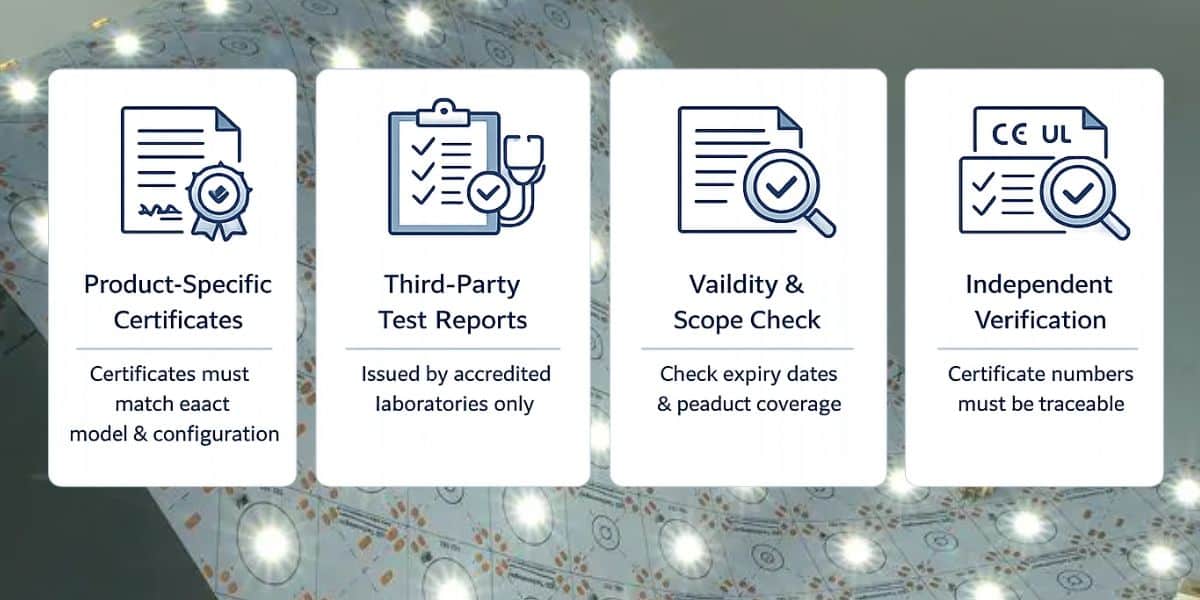
Сертификация часто рассматривается как элемент контрольного списка, но в закупках B2B она должна быть независимо валидирована. Претензии, касающиеся CE, UL, RoHS или других региональных соответствия, должны быть перекрестно проверены с помощью номеров сертификатов, органов-эмитентов и отчетов об испытаниях.
Покупатели должны:
- Запросить копии действительных отчетов об испытаниях, а не только логотипов сертификатов.
- Подтвердите, что отчеты соответствуют точной модели и конфигурации продукта.
- Проверить срок годности и выдать лаборатории.
- Проверьте, подпадают ли такие модификации, как DIMMable и RGBW LED Light Lights, подлежит той же сертификации.
Непроверенное соблюдение может создавать задержки импорта, отказы таможенных обязательств или воздействие ответственности. Если поставщик модифицирует компоненты драйвера или материалы без повторной сертификации, покупатель несет риск соответствия.
Для проектов, связанных с государственными или коммерческими контрактами на недвижимость, во время аудита также может потребоваться документация по соблюдению. Закупочные группы должны вести документированный файл подтвержденных сертификатов, а не полагаться на маркетинговые материалы поставщиков.
Производственные возможности и контроль производства

Массовые закупки требуют уверенности в производственной инфраструктуре поставщика. надежный Гибкий светодиодный лист Поставщик должен обеспечить прозрачность производственных процессов, оборудования и внутренних контрольных точек качества.
Основные области оценки включают:
- SMT (технология поверхностного монтажа) емкость и уровень автоматизации.
- Встроенные системы контроля, такие как AOI (автоматическая оптическая проверка).
- Протоколы тестирования и продолжительность выживания.
- Системы нумерации и отслеживания партий.
- Документированные процедуры контроля качества.
Контроль производства имеет значение, потому что дрейф качества часто происходит постепенно. Без структурированных контрольных точек проверки не могут быть обнаружены изменения качества припоя, размещения светодиодов или текущего регулирования.
Согласованность партии в больших заказах имеет решающее значение. Например, если план закупок включает поставки в шахматном порядке в течение шести месяцев, постоянная яркость должна поддерживаться на каждом производстве. Запросите документацию, показывающую, как поставщик управляет контролем процесса для предотвращения дрейфа.
Покупатели также должны оценить, встроены ли инженерные группы в производство или на аутсорсинг. Комплексное инженерное надзор за сокращением коммуникационных пробелов между проектными корректировками и выполнением производства.

Оптические светодиодные листы
- Размер( л х Ш х В ): 500ммх250ммх8мм
- Тип светодиода: 2835 СМД
- Светодиодное количество: 98шт
- Рабочее напряжение: 24 В постоянного тока
- Сила: 20W
- КСТ: 2700к/3000к/4000к/6000к/6500к
- Подсветка флюса: 1800LM
- CRI: > 90RA
- Угол луча: 180°
- Размер среза: 1 СВЕТОДИОД
- ИП класс: Водонепроницаемость IP20
- Продолжительность жизни: >35 000 часов
- Гарантия: 3 года
Мощность, время выполнения заказа и стабильность логистики

Одно только качество изготовления недостаточно, если не может быть гарантирована постоянная поставка. Поставщик B2B должен продемонстрировать документированные производственные мощности, соответствующие прогнозируемым объемам заказа.
Закупочные группы должны запросить:
- Максимальная месячная производственная мощность.
- Исторические объемы экспорта.
- Документация по времени выполнения стандартных и индивидуальных продуктов.
- Стратегии поиска сырья.
Проверка емкости особенно важна для конфигураций светодиодного светового листа высокой яркости, для которых могут потребоваться специальные компоненты. Если светодиодные чипы или драйверы драйверов поступают от отдельных поставщиков без буферной инвентаризации, перебои в поставках становятся вероятными.
Надежность времени выполнения также влияет на планирование проекта. Задержки в одной партии могут нарушить поэтапные установки на нескольких сайтах. Покупатели должны оценить, сохраняет ли поставщик страховочный запас или работает строго на основе сборки на заказ.
Стабильность логистики выходит за рамки заводских выпусков. Подтверждайте опыт работы с международной транспортной документацией, стандартами экспортной упаковки и протоколами предотвращения повреждений. Навалочные поставки должны прибыть без повреждения оптической поверхности или деформации печатной платы.
Настройка и инженерная поддержка
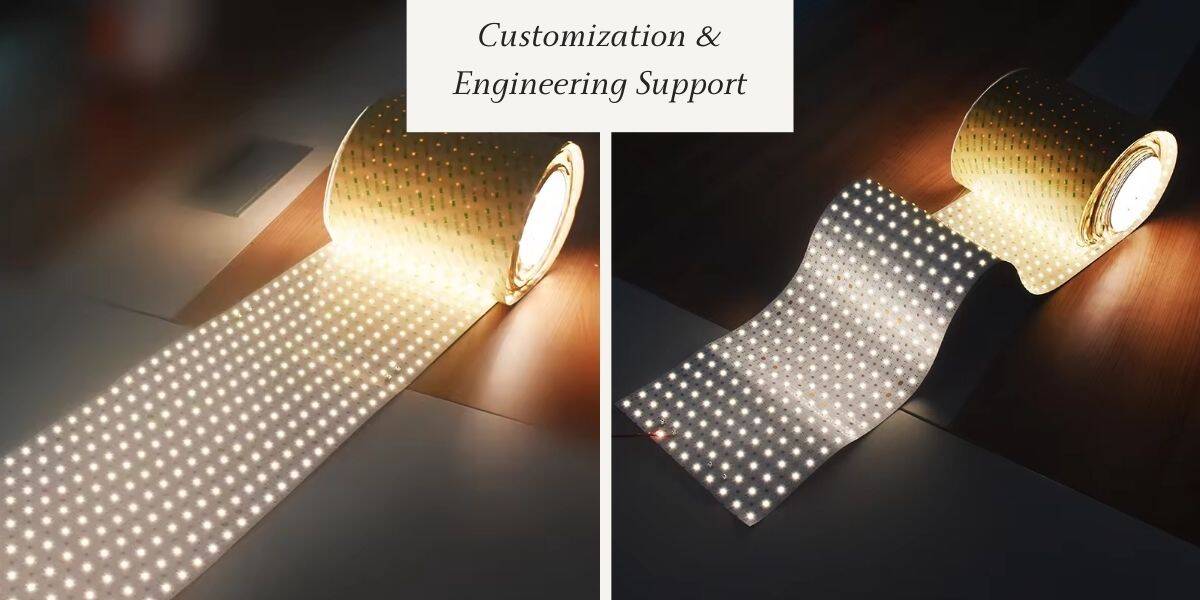
Многие проекты B2B требуют корректировки спецификаций, включая изменение размера, пользовательский вход напряжения или совместимость с расширенным управлением, например, с возможностью регулировки. RGBW светодиодный свет Конфигурации листов.
Возможности настройки должны оцениваться с точки зрения инженерной точки зрения, а не только с точки зрения продаж. Вопросы, которые следует учитывать, включают:
- Предлагает ли поставщик НИОКР внутренними?
- Предоставляются ли инженерные чертежи до производства?
- Можно ли делиться фотометрическими моделированиями?
- Есть ли документированное тестирование на валидацию модифицированных версий?
Например, при поиске специализированной конфигурации листа отражателя светодиодов, интегрированной в более крупную осветительную сборку, механические допуски и оптические характеристики должны точно соответствовать требованиям системы.
Недостаточная инженерная поддержка может привести к несоответствию производительности между утверждением образца и результатами производства. Группы по закупкам должны подтвердить, что любая настройка отражается в контролируемой производственной документации, а не в неформальных соглашениях по электронной почте.
Финансовая стабильность и долгосрочная надежность
Долговечность поставщиков имеет значение в многолетних соглашениях о поставках. Оптовые покупатели должны провести базовую финансовую осмотрительность для оценки операционной стабильности.
В зоны для обзора входят:
- лет в эксплуатации.
- История экспорта.
- Проверка регистрации бизнеса.
- Кредитные ссылки, когда это возможно.
Финансово нестабильный поставщик представляет риск при гарантийных претензиях или повторных циклах закупок. Если поставщик прекращает свою работу или реструктурирует право собственности, гарантийное обеспечение и непрерывность партии становятся неопределенными.
Долгосрочная стабильность отношений с поставщиками также поддерживает поэтапные закупки. Если планируется расширение на дополнительные площадки, тот же поставщик должен поддерживать те же характеристики продукта в течение долгого времени. Внезапные замены компонентов из-за финансового давления могут привести к несоответствию.
Коммерческие условия, гарантийные и послепродажные услуги

Коммерческая ясность так же важна, как и техническая производительность. Условия гарантии должны быть задокументированы с четкими определениями объема покрытия, исключениями и процедурами претензий.
Закупочные группы должны различать длительность гарантии и принудительное принуждение к гарантии. Пятилетняя гарантия без документированного протокола претензии может обеспечивать меньшую защиту, чем более короткая, но четко структурированная гарантия.
Изучите:
- Покрывает ли гарантия пороги амортизации люмена.
- Условия замены и ремонта.
- Ответственность за перевозку.
- Необходимая документация по претензиям.
Послепродажная поддержка должна также включать техническую помощь, отслеживание пакетов для возврата и обязательства по времени ответа.
Неопределенный язык гарантий увеличивает финансовую подверженность. Например, если на большой световой установке светодиодной подсветки появляется несоответствие яркости, ответственность должна быть четко определена в договорных условиях.
Красные флажки при оценке поставщика
Некоторые предупреждающие знаки указывают на повышенный риск закупок и должны быть тщательно изучены:
- Непроверяемые сертификаты
Если номера сертификатов не могут быть независимо верифицированы или отчеты не соответствуют спецификации продукта, риск соответствия высок. - Нет записей о серийном тестировании
Отсутствие документированных отчетов по контролю качества предполагает отсутствие контроля над процессом. - неопределенный язык гарантии
Неоднозначная формулировка, касающаяся покрытия или исключений, указывает на потенциальный риск спора. - несогласованное общение
Технические ответы, которые различаются в зависимости от отдела продаж и инженеров, предполагают внутреннее смещение. - Нереалистичные цены без документации
Цены, значительно ниже рыночной дальности без прозрачной разбивки затрат, могут указывать на скомпрометированные материалы или несовместимые источники светодиодных бинов.
Игнорирование этих сигналов может привести к нарушению поставок, спорам о качестве или воздействию убытков по контракту.
Структура оценки поставщиков
| Зона оценки | Что проверить | Почему это важно | риск, если игнорировать |
| качество продукции | Светодиодный контрольный бак (≤3 SDCM), данные термотестирования (LM-80/TM-21), спецификации материала печатных плат | Обеспечивает стабильную работу в разных партиях | Видимая несоответствие яркости, преждевременная неисправность |
| Сертификация | Действительные отчеты об испытаниях с номерами моделей и выпуском лабораторных сведений | защищает соблюдение нормативных требований | Отказ ввоза, юридическое воздействие |
| Производственный контроль | Документация контроля качества, записи проверок AOI, журналы отслеживания пакетов | Поддерживает повторяемость | Дрейф и несогласованный результат |
| Емкость и логистика | Документированная месячная продукция, записи о времени выполнения, стратегия поиска сырья | Поддерживает сроки проекта | Задержки и поэтапное сбои в развертывании |
| торговые точки | Письменная гарантия, объем документации, документация, условия ответственности | Снижает риск спора | Неустранимые финансовые потери |
Этот структурированный подход позволяет группам по закупкам объективно оценивать поставщиков, а не полагаться на маркетинговые материалы.
Заключение
Выбор поставщика B2B для закупки сыпучих светодиодных листов является стратегическим решением, которое выходит за рамки сравнения цен. Для этого требуется структурированная оценка производственной дисциплины, согласованность качества, достоверность сертификации и коммерческую подотчетность.
Долгосрочная надежность, прозрачность документации и масштабируемость в рамках поэтапного развертывания должны иметь приоритет над краткосрочными преимуществами в стоимости. Соответствие партии, проверенное соответствие и условия гарантии, которые являются обязательными, являются необязательными гарантиями, а основными компонентами управления рисками закупок.
Организации, которые подходят к оценке поставщиков с помощью документированной структуры, снижают операционную неопределенность и защищают результаты проекта. В больших объемах дисциплинированная оценка представляет собой разницу между предсказуемыми показателями и предотвратимым воздействием.
часто задаваемые вопросы
Похожие посты