Русский
  English
  简体中文
简体中文  Deutsch
  Español
  Français
  Italiano
  日本語
日本語  한국어
한국어  Polski
  Português
  Türkçe
  Nederlands
  Tiếng Việt
  ไทย
ไทย 
В современном дизайне коммерческого пространства все более заметным становится вопрос о шуме и реверберации, особенно в таких средах, как офисы открытой планировки и конференц-залы. Чрезмерный уровень шума сильно влияет на эффективность работы и качество обслуживания клиентов. Отражение шума и реверберация не только заставляют пространства чувствовать себя шумно, но и уменьшают общение и концентрацию.
Акустические светильники предлагают инновационное решение, обеспечивая высококачественную подсветку, эффективно поглощая и уменьшая шум для улучшения акустической среды. Эти светильники объединяют акустические материалы с функцией освещения, обеспечивая двойную пользу для коммерческих помещений, особенно в области контроля шума.
При выборе акустического светодиодного освещения рейтинг коэффициента шумоподавления (NRC) служит ключевым показателем для оценки акустических характеристик. Рейтинг NRC количественно оценивает способность звукопоглощения приспособления, помогая потребителям выбирать наиболее подходящие продукты для оптимизации акустического дизайна пространства.
Понимание важности рейтингов NRC для акустических светодиодных фонарей
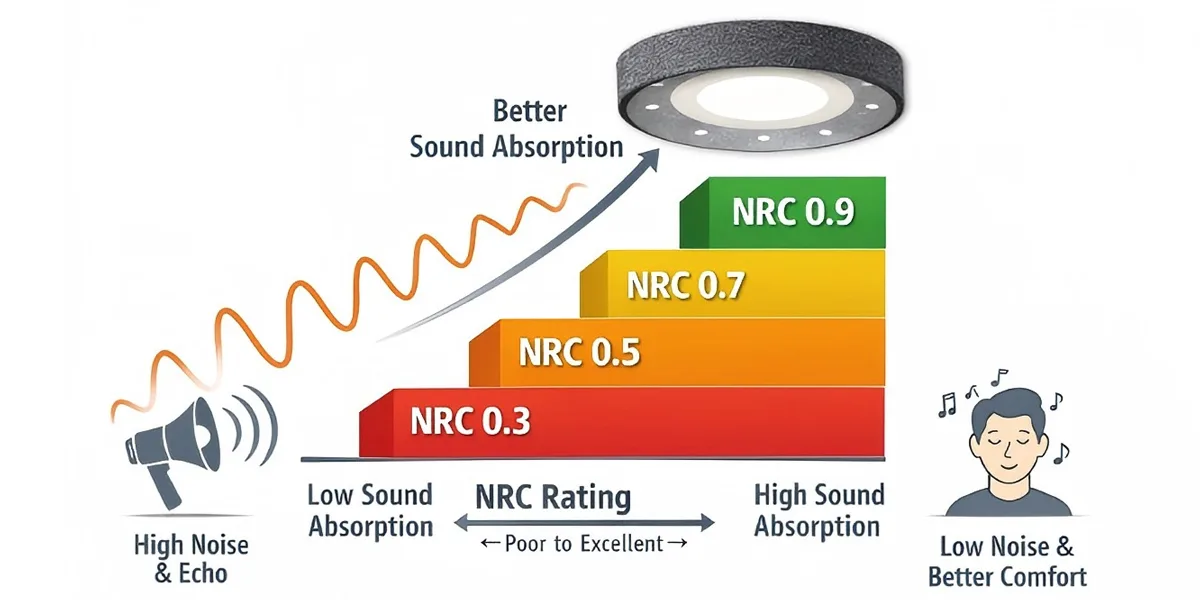
При выборе Акустические светодиодные фонари, рейтинг NRC служит важным индикатором для оценки их возможностей звукопоглощения. Шкала NRC колеблется от 0 до 1, причем более высокие баллы указывают на превосходные свойства звукопоглощения. Звукопоглощающий свет с высоким рейтингом NRC может значительно снизить эхо и шум в пространстве, тем самым повышая его акустическое качество и комфорт. Это особенно важно в современных офисных условиях, конференц-залах, больницах и подобных условиях.
Рейтинг NRC не только отражает способность материала к поглощению звука, но и влияет на общий комфорт окружающей среды. Понимание этого помогает потребителям выбрать наиболее подходящий звукопоглощающий светодиодный светильник в зависимости от их конкретных потребностей.
Какой рейтинг NRC подходит для акустического освещения?
Прежде чем обсуждать, «что представляет собой подходящий NRC», важно сначала уточнить определение NRC и его значение в акустического освещения.
Что такое NRC (коэффициент снижения шума)?
NRC (коэффициент снижения шума) — это стандартизированная числовая метрика, используемая в акустической обстановке для измерения производительности звукопоглощения материала. Он рассчитывается путем измерения коэффициентов звукопоглощения на четырех центральных частотах (250 Гц, 500 Гц, 1000 Гц и 2000 Гц), принимая среднее арифметическое и округление до ближайшего 0,05.
Диапазон значений: 0,00–1,00
Фундаментальное значение: с акустической точки зрения более высокое значение указывает на более сильную способность звукопоглощения, а более низкое значение означает более выраженное отражение звука.
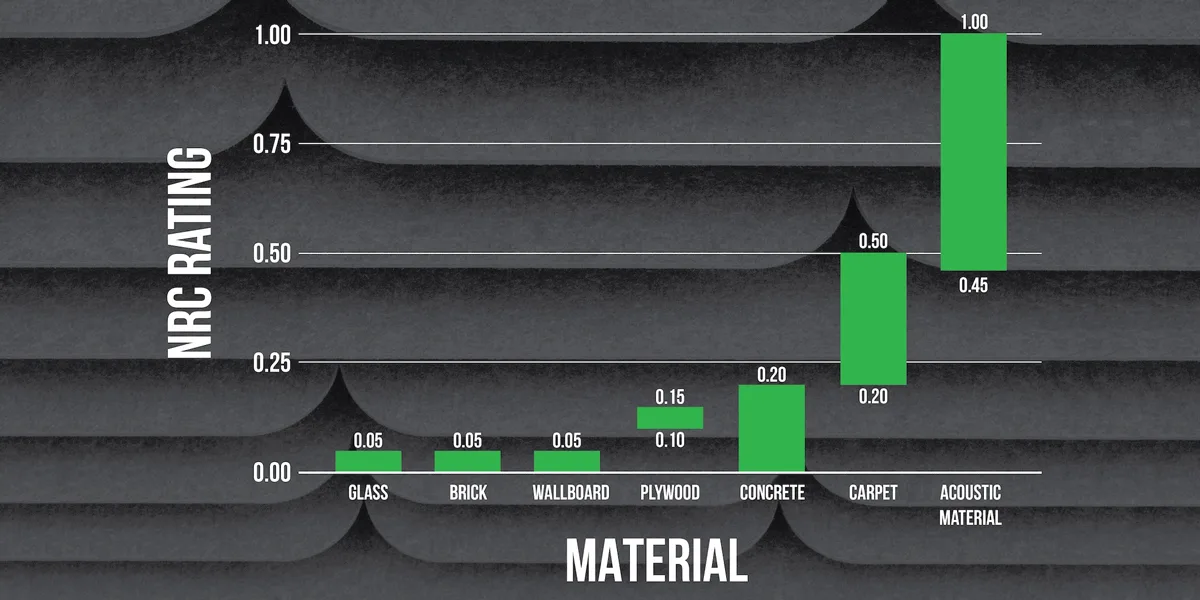
- NRC < 0,20: Обычно классифицируются как отражающие материалы
- NRC ≥ 0,20: Может быть признан как звукопоглощающие материалы
- NRC ≥ 0,80: Относится к высокоэффективным звукопоглощающим материалам, подходящим для помещений с высокими акустической технологией
Как рейтинг NRC влияет на характеристики акустического освещения?
В системах акустического освещения NRC напрямую определяет способность прибора уменьшать реверберацию и контролировать шум окружающей среды. Поскольку акустические светодиодные фонари обычно устанавливаются в потолках или на возвышенностях, их звукопоглощение Свойства существенно влияют на общую акустическая среда пространства. Более высокие значения NRC сводят к минимуму эхо и шумовые отражения, повышая разборчивость речи и слуховой комфорт, что приводит к более стабильной и контролируемой акустической среде.
Какой подходящий рейтинг NRC для разных сценариев применения?
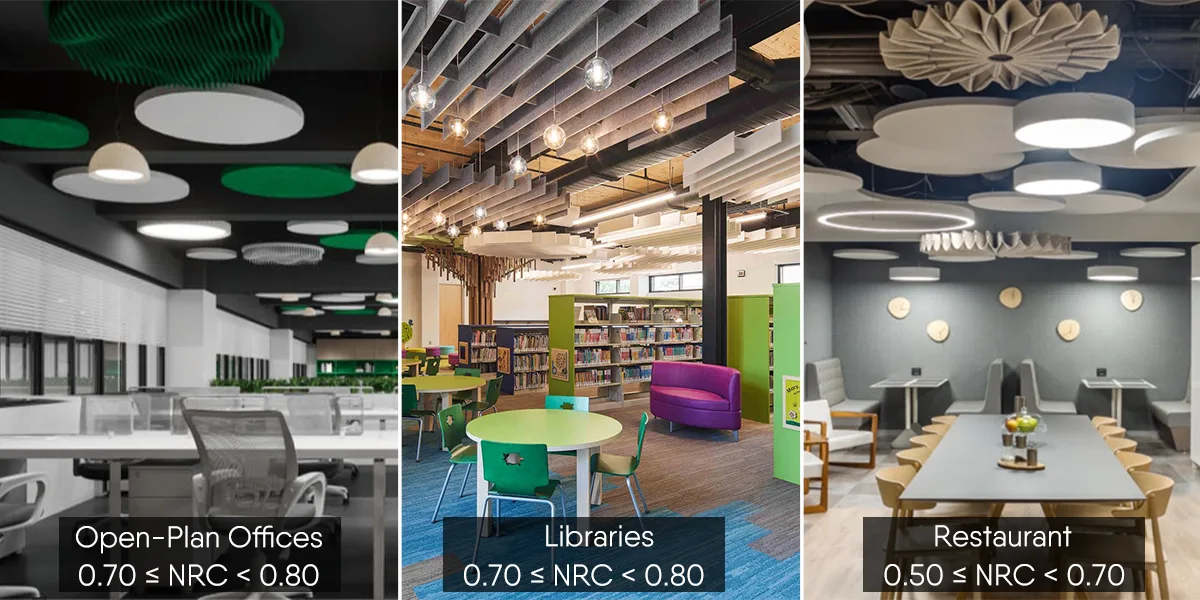
Требования к акустическому освещению для NRC различаются в разных средах использования. Выбор должен учитывать функциональную функциональность, бюджет и спецификации дизайна. Для акустического светодиодного освещения рекомендуется использовать продукты с NRC ≥ 0,70 для достижения оптимальной акустической производительности. Руководства приведены в следующих стандартах рейтинга NRC и таблице применения:
Стандарты рейтинга NRC и приложения
| Диапазон NRC | Класс акустических характеристик | Рекомендуемое | основная функция |
| NRC ≥ 0,80 | Высокоэффективный звукопоглощающий материал | Высокоэффективный звукопоглощающий материал | Достигает оптимального акустического контроля, значительно снижает реверберацию, повышает четкость речи и чистоту звука. |
| 0,70 ≤ NRC < 0,80 | Отличный звукопоглощающий материал | Офисы открытого плана, классы, библиотеки, больницы, конференц-залы | Эффективно уменьшает фоновый шум и реверберацию, повышает эффективность связи и пространственный комфорт. |
| 0,50 ≤ NRC < 0,70 | Умеренный звукопоглощающий материал | Обычные жилые помещения, магазины, коридоры, общественные места отдыха | Значительно улучшает шум окружающей среды, балансирует стоимость и гибкость конструкции, подходит для умеренных акустических потребностей. |
| 0,20 ≤ NRC < 0,50 | Базовый звукопоглощающий материал | Склады, парковки, промышленные предприятия | Обеспечивает базовую функцию звукопоглощения, уменьшает некоторый отраженный звук. |
| NRC < 0,20 | звук отражающий материал | Любая акустическая среда, требующая звукового отражения (например, этапы, музыкальные платформы) | В основном отражает звук, не подходит для сценариев, требующих звукопоглощения. |
Почему NRC особенно подходит для оценки акустического освещения?
NRC широко используется для оценки характеристик архитектурных материалов, таких как потолочные и настенные панели. Акустическое освещение по своей сути сочетает в себе «системы освещения с акусовыми потолочными решениями».
Таким образом, использование NRC в качестве основного метрики для измерения акустических характеристик звукопоглощающих светодиодных ламп не только профессиональны, но и интуитивно понятны, что облегчает сравнение и отбор дизайнерами, подрядчиками и покупателями. Для большинства коммерческих помещений рейтинг NRC от 0,6 до 0,9 считается идеальным акустической освещенностью, поскольку обеспечивает эффективное поглощение звука при сохранении гибкости конструкции и производительности освещения.
Как акустические светодиодные фонари улучшают управление звуком в современных пространствах
Современные здания, особенно офисы открытой планировки, часто страдают от чрезмерного уровня шума. Акустические светодиодные фонари решают это, интегрируя звукопоглощающие материалы или конструкции. Они обеспечивают освещение, поглощая звуковые волны и уменьшая эхо, значительно улучшая четкость и комфорт в пространстве. Их конструкция сочетает в себе источники света с акустические материалы, не только решая проблемы с шумом, но и улучшая общую эстетическую привлекательность окружающей среды.
Благодаря научной конфигурации эти фонари помогают современным пространствам достичь оптимальной акустической характеристики, удовлетворяя эстетические требования и требования к освещению, превращая шум окружающей среды из отвлечения в ненавязчивый элемент.
Роль акустических светодиодных фонарей в улучшении офисных и жилых помещений
В современных рабочих местах и домах звуковые помехи часто ставят под угрозу эффективность и комфорт. Акустические светодиодные фонари, как инновационное слияние акустики и освещения, тихо оптимизируют акустические возможности в этих пространствах.
- Настройки офиса : В то время как открытые макеты способствуют сотрудничеству, они также вплетают жужжание принтера, а клавиатуры клавиатуры в постоянный фоновый шум. Зал для встреч перекликается с дальнейшими путаными обсуждениями. Звукопоглощающие светодиодные фонари включают пористые материалы, которые поглощают звуковые волны и уменьшают отражения, что делает встречи более четкими. Одновременно регулируемая цветовая температура (от холодного белого до теплого желтого) адаптируется к разному времени суток, уменьшая нагрузку на глаза и создавая сфокусированную атмосферу. Эта конструкция «синхронизации звука-света» превращает шумные пространства в эффективные убежища.
- жилые помещения: городской шум, такой как шум движения и соседская деятельность, часто вторгается в спокойствие дома. Звукопоглощающие светодиодные фонари поглощают шум высокочастотного шума, создавая «акустический барьер» в помещении. Используемые в гостиных или спальнях, жители наслаждаются более спокойными моментами для отдыха или чтения. Энергоэффективность светодиодного оборудования и длительный срок службы еще больше соотносятся с потребностями устойчивого образа жизни.
От конференц-залов до спален, звукопоглощающие светодиодные фонари научно-передают пространственное качество, молча улучшая жизнь и работу.
Интерпретация рейтингов NRC: почему они критически важны для акустики Производительность освещения
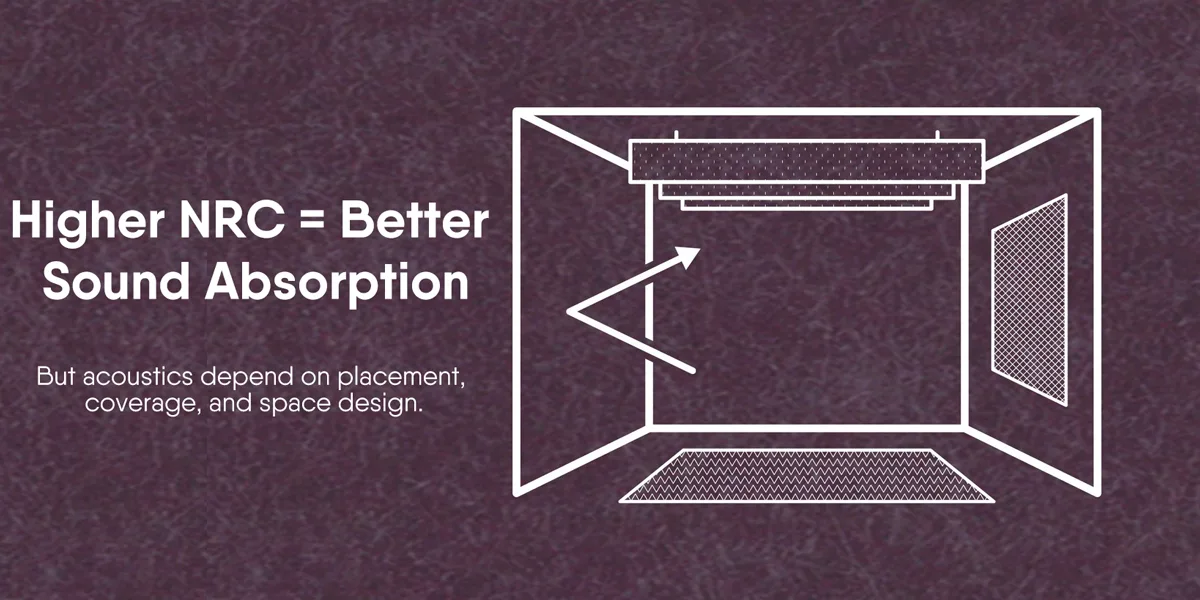
Рейтинг NRC служит основным метриком для оценки акустических характеристик акустического освещения, причем его значение лежит в его непосредственном влиянии на окружающую среду в помещении.
Акустическое освещение обеспечивает преобразование звуковой энергии с помощью интегрированных пористых материалов (например, полиэфирное волокно, перфорированные алюминиевые панели и акустический хлопок). Его значение NRC напрямую определяет:
- Сокращённое время реверберации: В конференц-зале 50㎡ приспособления с NRC ≥ 0,7 сокращают время реверберации с 2,1 секунды до 1,3 секунды, что значительно повышает разборчивость речи.
- Улучшенный индекс передачи речи (STI): измеренное ИПП увеличивается с 0,62 до 0,78, что заметно повышает эффективность связи и фокусировку.
- Подавление помех поме: Эффективно поглощает гул оборудования и человеческий голос эхо, создавая тихий офис с низким уровнем отвлечения или встречу.
Современные стандарты и правила
- международный: ASTM C423 служит авторитетным стандартом для тестирования NRC.
- Нет обязательных правил: В настоящее время не существует специального стандарта для «акустического светодиодного освещения», при этом NRC служит только функциональным эталонным справочником.
- Тенденция совместного дизайна: Стандарты освещения, такие как ISO/CIE 8995-1:2025, подчеркивают синергию между «визуальными комфортами» и «акустической комфортностью», двигая звукопоглощающее освещение в качестве стандартной функции в умных пространствах.
Реальная ценность приложения
Отзывы пользователей от реальных установок показывают, что после установки светодиодных ламп высокого уровня NRC, конференц-залы не испытывают «больше эха при разговоре», «значительно уменьшают шум кондиционирования воздуха» и «усиленный фокус». Его ценность выходит за рамки шумоподавления, чтобы изменить пространственное восприятие, где свет и звук совместно служат когнитивной эффективности и психологическому комфорту.
Отличный рейтинг NRC не только эффективно снижает шум, но и предотвращает его распространение в пространствах, обеспечивая стабильное качество звука в пределах комфортных уровней.
Как выбрать оптимальный акустический светодиодный свет для повышения звукопоглощения
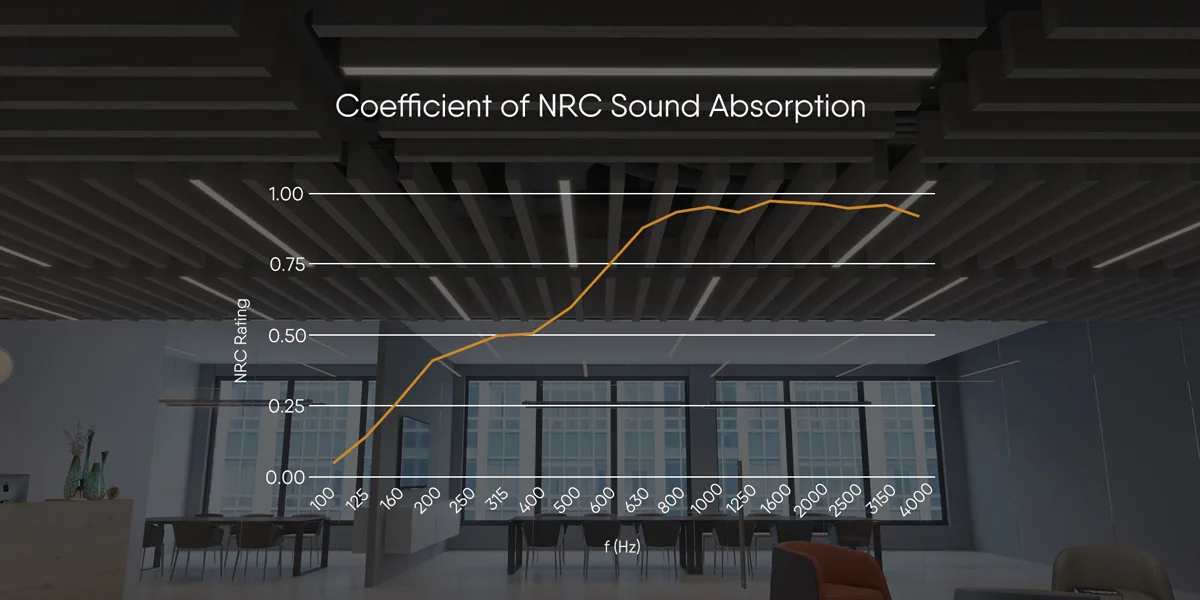
когда Выбор подходящих акустических светодиодных фонарей, расставьте приоритеты рейтинга NRC. Высококачественные приспособления идеально подходят для помещений с строгими требованиями к контролю шума. Кроме того, рассмотрим тип и качество акустических материалов, чтобы обеспечить ожидаемые характеристики звукопоглощения в реальном использовании. Одновременно дизайн приспособления и световая эффективность являются критическими факторами, непосредственно влияющими на общее пространственное впечатление.
- Сценарии сопоставления значений NRC:
а) Небольшие помещения (например, домашние офисы) могут выбрать NRC 0,6 или NRC 0,5-0,7. Этот диапазон эффективно поглощает повседневный шум (например, звуки телевизора или детские воспроизведение), избегая при этом чрезмерного поглощения, что создает неестественно тихое пространство.
б) Большие пространства (например, конференц-залы) рекомендуются для NRC 0,7-0,9. Более высокие значения NRC снижают эхо в конференц-залах, повышают качество видеозвонков и минимизируют помехи фонового шума в офисах открытого плана.
c) Значения NRC выше 0.8 подходят для профессиональных настроек, таких как студии звукозаписи, но жилые/офисные помещения требуют балансировки звукопоглощения с функцией освещения.
- Материалостойкость: Приоритетное огнестойкое и влагостойкое акустическое материал (например, огнеупорная пена класса А) для предотвращения снижения звукопоглощения из-за влажности окружающей среды.
- Параметры освещения: Цветовая температура (2700K-4000K) и индекс цветопередачи (CRI>90) должны соответствовать пространственным требованиям, например, 4000K нейтральный свет повышает фокусировку в офисах.
- Соответствие сертификатам: Выбирайте бренды с строгими сертификатами тестирования, чтобы светильники соответствовали стандартам акустических характеристик.
Акустическое освещение Signliteled Отдает приоритет как акустической производительности, так и эстетическому дизайну. Иллюстрированная сота-структура с соты имеет UGR<19, обеспечивает NRC 0,75 и включает в себя функции предотвращения бликов, что делает его идеальным для жилых комнат.
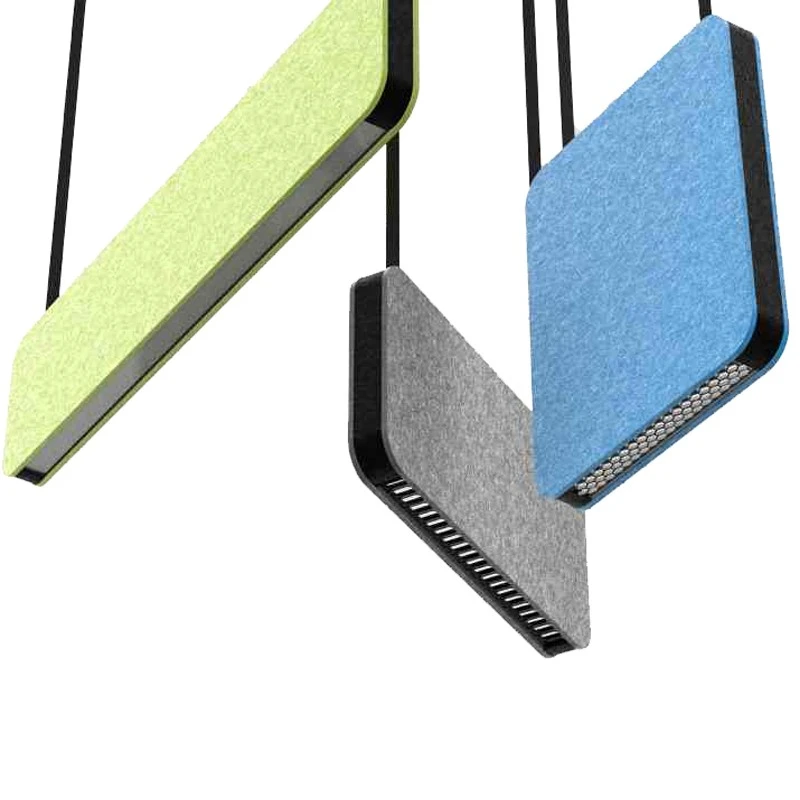
Супер тонкий акустический светодиодный линейный свет
Входное напряжение: AC100-277V / AC220-240V, 50-60 Гц
Направление излучателя: вниз
Размер: 1218 *36*400мм
КСТ: 3000к/4000к/6000к
Сила: 30Вт
Световой поток: 100-110 лм/Вт
ИКР: >80RA
PF: >0.90
Flicker бесплатно: Да
Угол луча: 120°
Степень защиты IP: IP20
Гарантия: 5 лет
Цвет акустической доски войлочного цвета: Красный/зеленый/синий/серый более 48 цветов
Как акустические светильники одновременно обеспечивают как освещение, так и шумоподавление?
Современные потребители все больше предпочитают светосветительную продукцию, сочетающую в себе отличные акустические характеристики с пространственной эстети Благодаря гениальному дизайну акустическое светодиодное освещение легко объединяет функциональность с артистизмом, что делает его незаменимым элементом в современных пространствах.
Акустические светильники интегрируют функциональность с помощью следующих элементов дизайна:
- Материальные слои: Поверхность лампы использует пористую пену или волокнистые ткани (например, полиэфирное волокно), что позволяет звуковым волнам проникать и преобразовывать их в тепло при трении при сохранении светопропускания.
- структурный дизайн: Абажур включает в себя звукопоглощающие структуры хлопка или сот, чтобы максимизировать пути отражения звуковых волн. Светодиодный источник света встроен в звукопоглощающий слой, обеспечивая равномерное распределение света.
Заключение
Как инновационный Решение для акустического освещения, звукопоглощающие светодиодные светильники все больше становятся стандартными в современной архитектуре и пространственном дизайне благодаря своим выдающимся рейтингам NRC и акустическим характеристикам.
От офисных помещений до жилых помещений, от коммерческих площадок до учебных заведений, светодиодное освещение играет жизненно важную роль в повышении пространственного акустического комфорта. Выбирая подходящие рейтинги и светильники NRC, потребители могут создавать более тихие и комфортные условия, повышая качество жизни и работы.
Вопросы и ответы
Похожие посты