Русский
  English
  简体中文
简体中文  Deutsch
  Español
  Français
  Italiano
  日本語
日本語  한국어
한국어  Polski
  Português
  Türkçe
  Nederlands
  Tiếng Việt
  ไทย
ไทย 
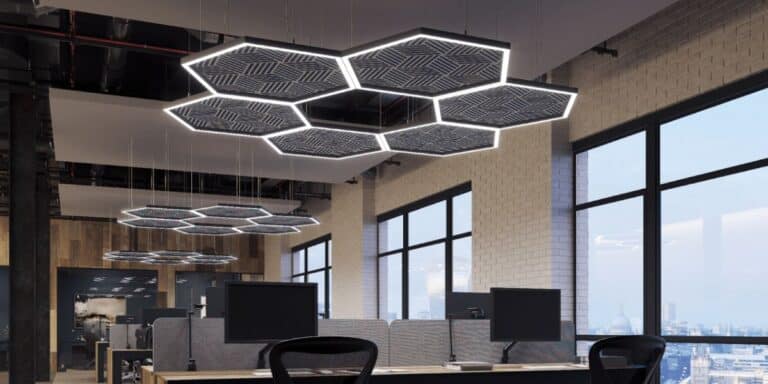
Акустическое освещение лучше всего работает при установке непосредственно над основными зонами звуковой активности, такими как рабочие станции, столы для конференций, зоны для совместной работы и сидения с открытой планировкой. Потолок имеет решающее значение, потому что потолок действует как основная поверхность отражения речи. Правильное расстояние, высота и распределение определяют, насколько эффективно приспособление уменьшает реверберацию и улучшает четкость речи.
В этой статье объясняются оптимальные зоны размещения, соображения по высоте, логика управления отражением, стратегии типа помещения и обычные ошибки установки. Основное внимание уделяется эффективности размещения, чтобы архитекторы, дизайнеры, консультанты по акустике и менеджеры объектов могли принимать обоснованные решения по установке.
Почему размещение потолка имеет значение не только, чем размещение стены
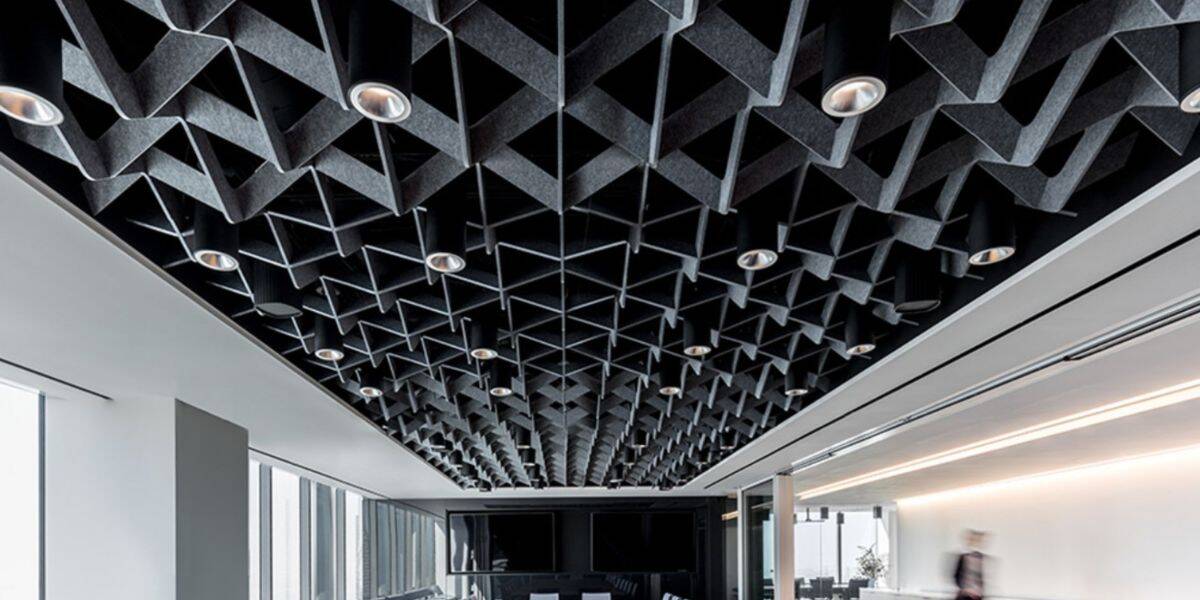
В большинстве коммерческих интерьеров речевая энергия распространяется вверх сразу после выхода из уст говорящего. Первое значительное отражение часто происходит в плоскости потолка, прежде чем вернуться вниз в оккупированную зону. Это создает то, что акустики называют первым путём отражения:
Источник речи → Потолок → Отраженная энергия → Слушатели.
Когда потолки твердые, отражающие поверхности, такие как гипсокартон, открытый бетон или металлическая настила, энергия речи быстро попадает в помещение, увеличивая время реверберации и уменьшая четкость.
Настенная абсорбция помогает, но в первую очередь она направлена на боковые отражения. Накладные отражения, как правило, более доминируют в средах открытого плана и конференций, поскольку:
- Потолок охватывает всю оккупированную зону.
- Он отражает энергию обратно в речевой поле.
- Он усиливает шум в больших горизонтальных областях.
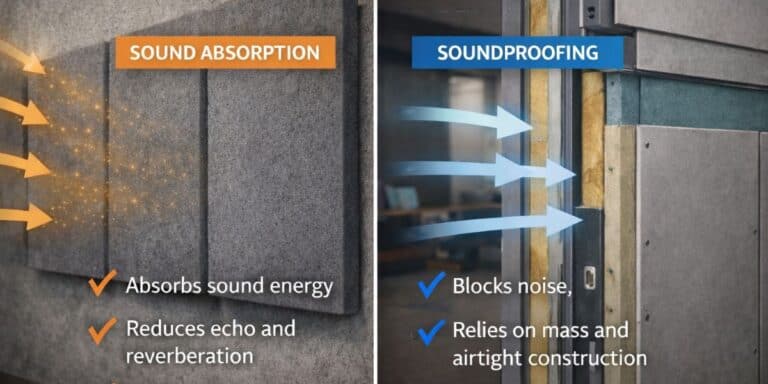
акустическое освещение Прерывает эту вертикальную петлю отражения непосредственно в плоскости отражения. При размещении акустических приспособлений в траектории отражения потолка энергия речи в середине частоты (как правило, 500–2000 Гц) поглощается до того, как она вернется к пассажирам.
Расположение стены по периметру не перехватывает эту раннюю вертикальную отскальзывание. Потолочные светильники войлочные светильники более эффективно снижают интенсивность первых отражений, потому что они находятся прямо на пути звука.
В открытых условиях особенно воздушные поглощения обеспечивают более высокое акустическое воздействие на квадратный метр по сравнению с обработкой только по периметру.
Основные зоны размещения
A: Над рабочими станциями и настольными кластерами
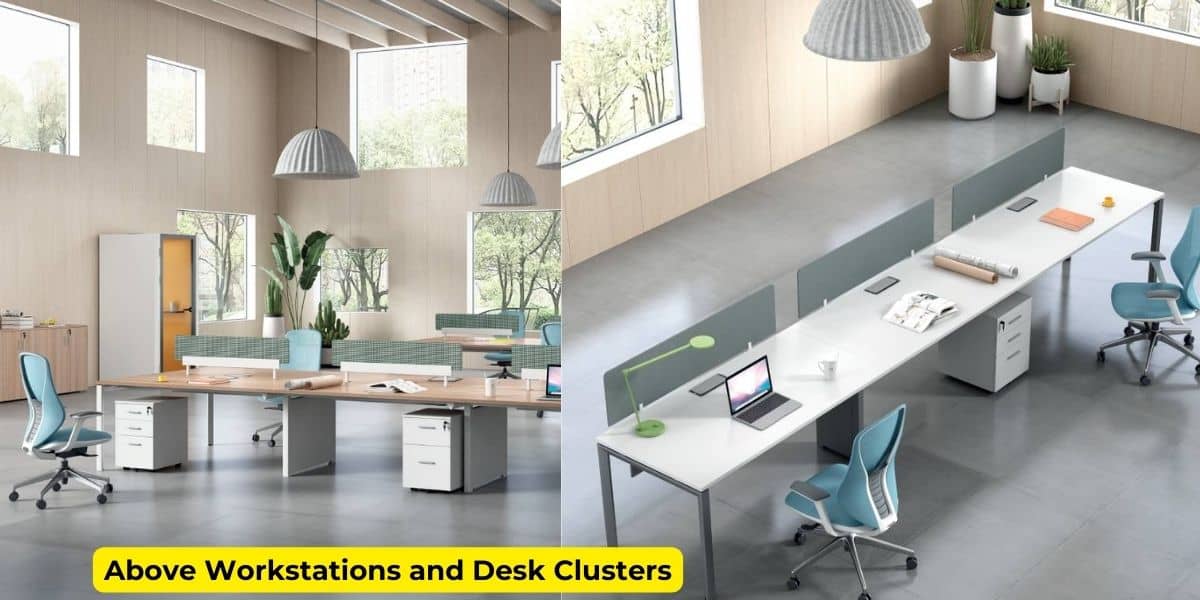
Офисы открытого плана концентрируют речь в группах рабочих станций. Разговоры, видеозвонки и совместные обмены генерируют устойчивую звуковую энергию в середине частоты.
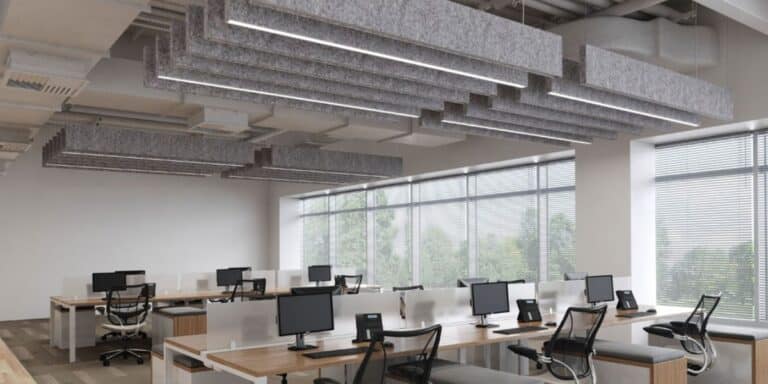
Установка акустического освещения непосредственно над столовыми кластерами:
- Впитывает речь до того, как она распространится вбок.
- Уменьшает реверберацию в рядах.
- Ограничение перекрестных разговоров между командами.
Войлочные светильники особенно эффективны, потому что плотный полиэфирный войлок поглощает среднечастотную речь, где находится большая энергия разборчивости.
Логика распределения имеет значение. Вместо того, чтобы размещать светильники вдоль коридоров или возле стен, светильники должны быть сосредоточены над активными партами и немного выйти за пределы сидения. В качестве ориентира:
- Покрытие потолка Target 20–35% над зонами высокоактивных настольных площадок.
- Соблюдайте постоянные расстояния, чтобы избежать необработанных отражающих пробелов.
- Избегайте планировок только по периметру, которые позволяют центральным речечьему зонам оставаться отражающими.
Неэффективные планировки обычно размещают декоративное освещение вдоль циркуляционных дорожек, а не над источниками звука.
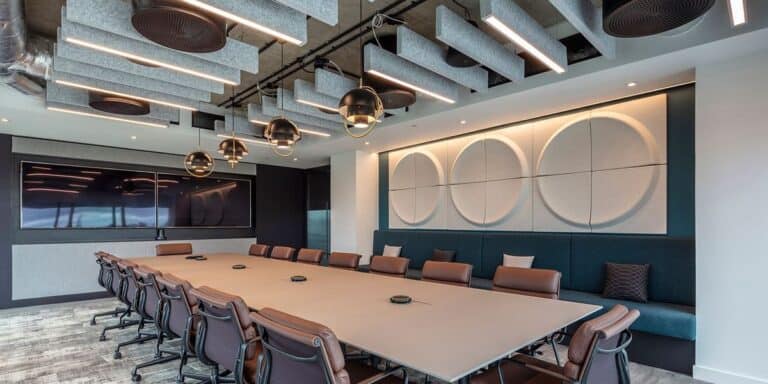
B: над таблицами конференций
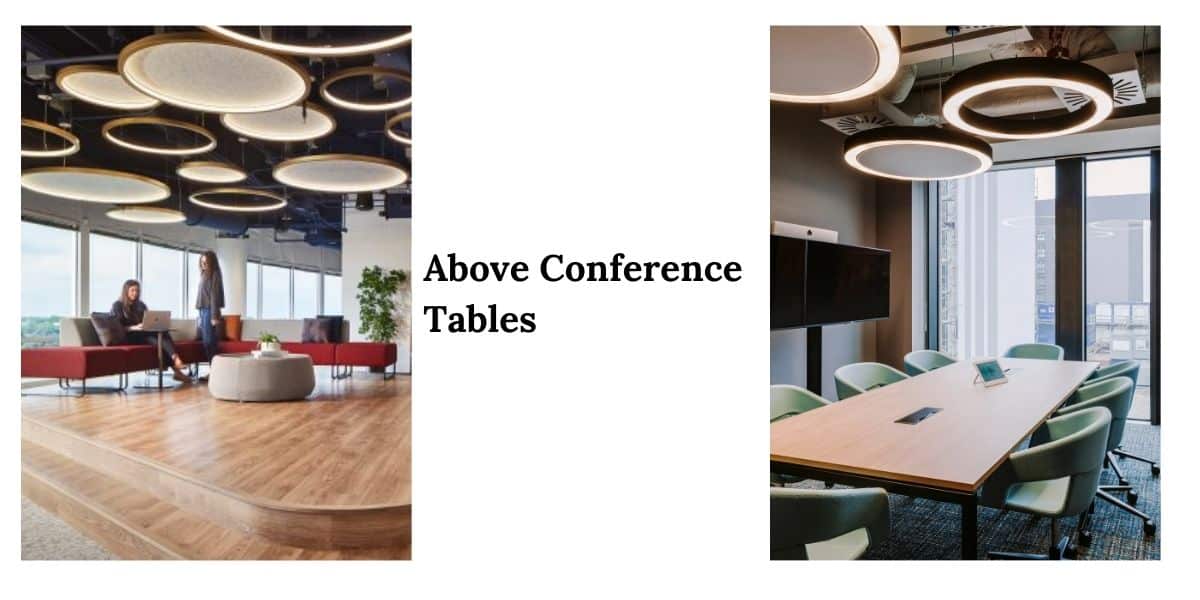
Конференц-залы концентрируют прямую речь в фиксированной области. Несколько участников говорят в центре стола, а звук вертикально отражается от потолка.
Оптимальная конфигурация:
- Установите акустическое освещение централизованно над столом.
- Расширьте охват на 300–600 мм за пределы площади стола.
- Совместите светильники с осью стола для равномерного поглощения.
Если комната удлинена, линейное расположение, которое отражает форму таблицы, работает лучше, чем один компактный кластер.
Высота тоже имеет значение. В типичных потолках 2,7–3 м подвесные приспособления на 400–800 мм ниже плиты повышают эффективность абсорбции, размещая материал ближе к зоне отражения.
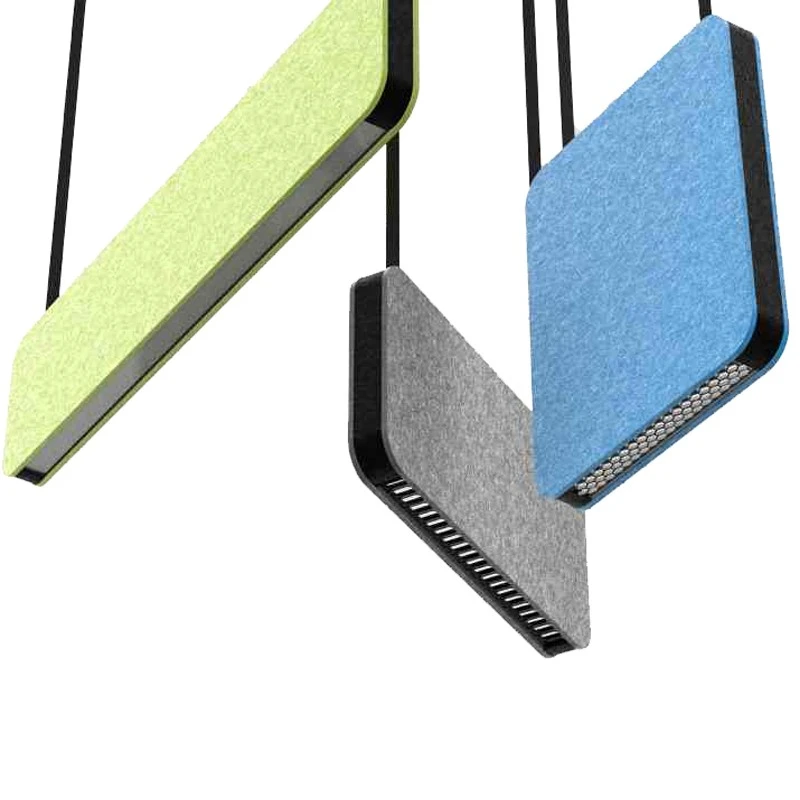
Супер тонкий акустический светодиодный линейный свет
- Входное напряжение: AC100-277V/AC220-240V,50-60Гц
- Направление излучателя: вниз
- Размер: 121836400мм
- CCT: 3000K / 4000K / 6000K
- Мощность: 30 Вт
- Световой поток: 100-110LM/Вт
- CRI: >80RA
- ПФ: >0,90
- Flicker Free: Да
- Угол луча: 120°
- Степень защиты: IP20
- Гарантия: 5 лет
- Цвет акустической доски войлочного цвета: красный/зеленый/синий/серый, более 48 цветов
C: зоны сотрудничества и зоны отдыха

Неофициальные зоны генерируют непредсказуемые, но концентрированные речевые кластеры. Без накладных поглощений шум перетекает в соседние тихие зоны.
Установка акустического освещения выше:
- Мягкие сиденья
- толпа
- Неофициальные кассеты для встреч
Создает локализованные зоны поглощения. Он содержит звук вблизи своего источника и предотвращает реверберацию на плитке пола.
Стратегия размещения должна отдавать приоритет звуковой сдерживанию, а не визуальной симметрии.
Высота монтажа и подвеска
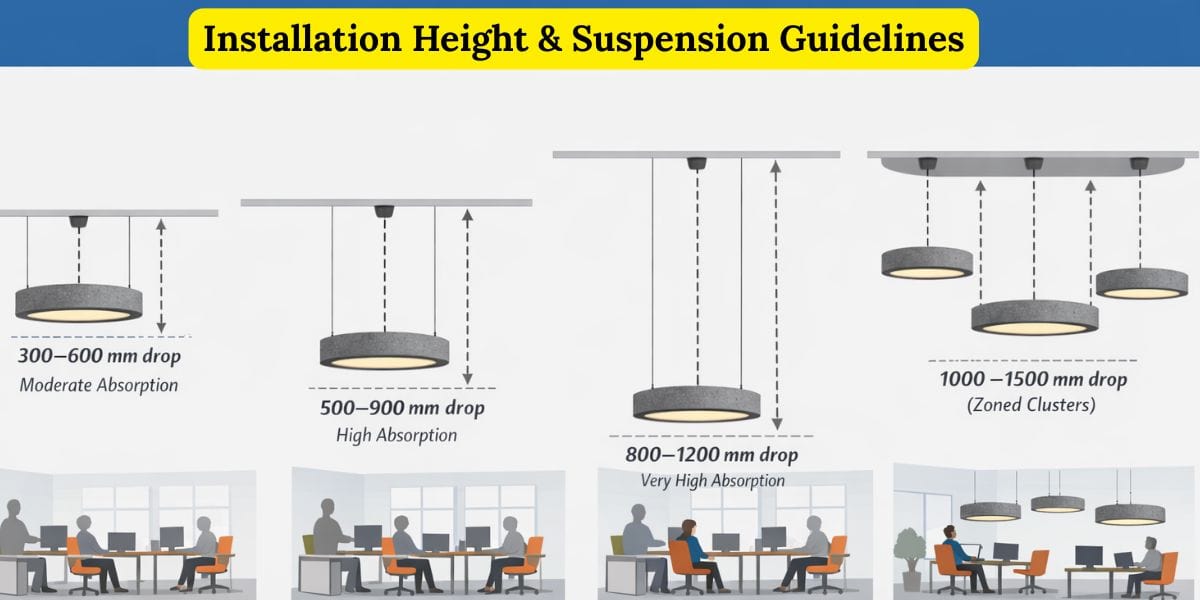
Глубина подвески существенно влияет на производительность. Опускание акустического освещения увеличивает его взаимодействие со звуковыми волнами за счет размещения материала в активных траекториях отражения.
Для открытых потолков или высоких плит более глубокая подвеска улучшает акустический захват.
Таблица 1 – Рекомендуемые рекомендации по подвеске
| высота потолка | Предлагаемая глубина подвес | акустическое воздействие | банкноты |
| 2,6–2,8 м | 300–600 мм | От умеренного до высокого | Подходит для конференц-залов и офисов |
| 2,8–3,2 м | 500–900 мм | Высокий | Улучшает контроль речи в открытом плане |
| 3,2–4,0 м | 800–1200 мм | Высокие (локализованные зоны) | Незаменим для открытых потолков |
| >4,0 м | 1000–1500 мм (зонированные кластеры) | нацеленный | В сочетании с дополнительными акустической подсветкой |
Более низкая суспензия увеличивает эффективное поглощение, поскольку звук сталкивается с материалом перед полным рассеиванием.
В высоких потолках выше 3 м установка крепления к плите значительно снижает производительность. Снижение акустического освещения вниз улучшает взаимодействие с частотами речи.
Стратегия покрытия и распространения
Процент покрытия и модель распределения определяют общую эффективность.
Как правило:
- 20–25% Покрытие в офисах с умеренным шумом.
- 30–40% Покрытие в зонах высокого сотрудничества.
- Более высокая локализованная плотность над конференц-сферами.
Равномерное распределение по активным зонам превосходит кластеризацию всех приспособлений в одной области.
Маленькие подвески, расположенные равномерно, могут работать так же, как большие панели, если правильно распределяться. Большие панели акустического освещения создают более широкие поля поглощения, но требуют тщательного выравнивания с зонами активности.
Таблица 2. Стратегия распределения по типу пространства
| Тип пространства | Основной зоной размещения | шаблон | Нужна дополнительная обработка? |
| открытый офис | Над столовыми кластерами | даже сетка над рабочими зонами | Иногда стеновые акустические светильники, если они сильно отражают |
| конференц-зал | центр над столом | Линейное или прямоугольное скопление | редко, если покрытие адекватное |
| коворкинг | Смешанные области сотрудничества | Зонированные кластеры | Часто да для стеклянных стен |
| приемная | Зона отдыха | сосредоточенный на сиденьях | Возможно для высоких потолков |
| Высокий потолок атриум | Карманы для активности | Подвесные кластеры | Да для регулировки громкости |
Не размещайте все акустические освещения по краям периметра. Распределенное размещение в соответствии с концентрацией речи дает лучшую производительность, чем декоративная группировка.
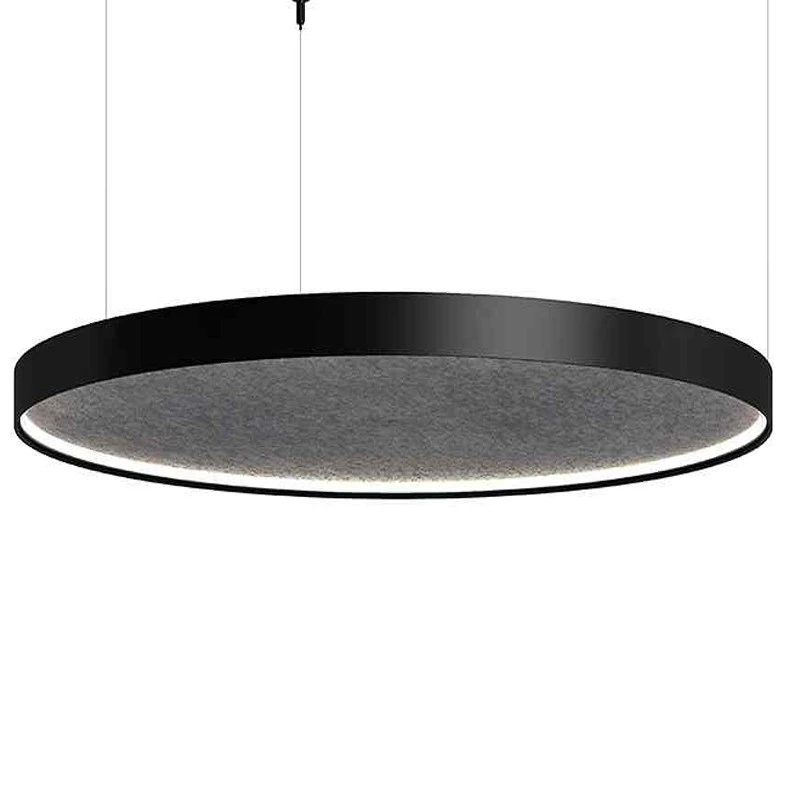
Прямой круг Акустический светодиодный подвесной светильник
- Входное напряжение: AC100-277V/AC220-240V,50-60Гц
- Высота Размер: H65 мм
- Размер D: 600 мм / 800 мм / 1000 мм / 1200 мм
- CCT: 3000K / 4000K / 6000K
- Мощность: 40 Вт / 60 Вт / 80 Вт / 96 Вт
- Световой поток: 100-110LM/Вт
- против -Блед: да
- CRI: >80RA
- ПФ: >0,90
- Flicker Free: Да
- Угол луча: 120°
- Степень защиты: IP20
- Гарантия: 5 лет
- Цвет акустической доски войлочного цвета: красный/зеленый/синий/серый, более 48 цветов
Руководство по установке для конкретного помещения
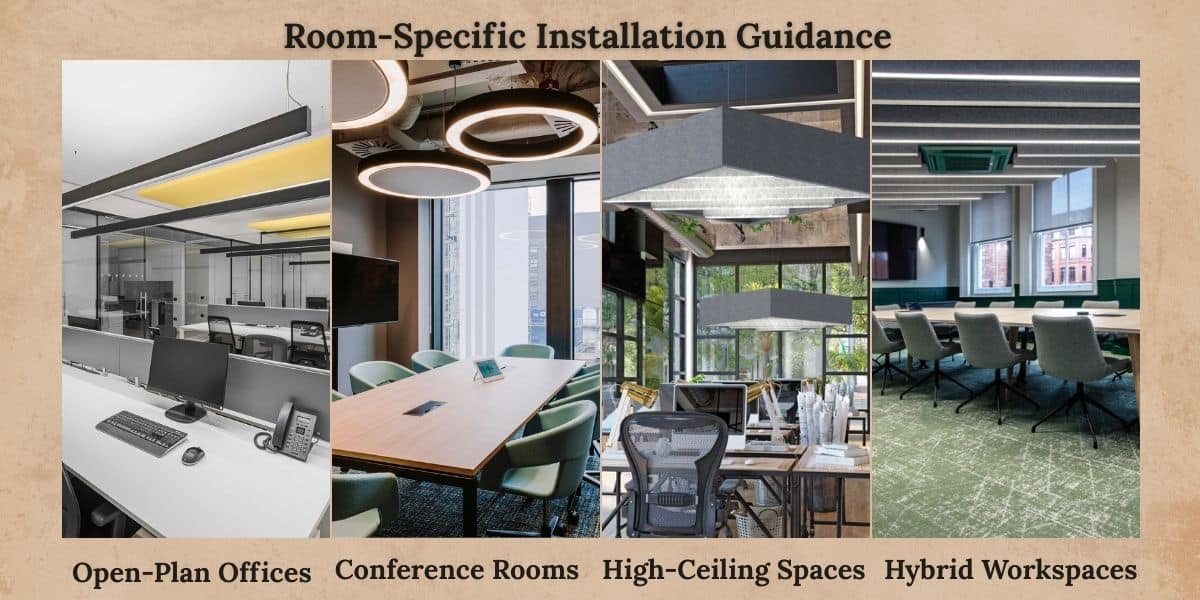
Офисы открытого плана
Используйте распределенные сетки над столами, а не коридоры. Централизованные макеты только в коридоре не могут обращаться к речи у ее источника.
Если потолки превышают 3 м:
- Увеличить глубину подвески.
- Кластерные акустические светильники непосредственно над активными столами.
- Дополняйте дополнительными акустической светильниками, если реверберация остается высокой.
конференц-залы
Установите центральное акустическое освещение над столом. Для длинных комнат:
- Используйте линейные массивы, соответствующие геометрии таблицы.
- При необходимости добавьте вторичные светильники возле концов стола.
Не ставьте приспособления вблизи стен, если только боковые отражения не являются серьезными.
Высокие потолки
Высокие потолки увеличивают реверберацию за счет большего объема. В этих пространствах:
- Подвесить светильники в оккупированную зону.
- Кластер над активными зонами сидения или сотрудничества.
- Соединяйте с акустической настенной акустической сеткой, если преобладают стеклянные поверхности.
Место размещения должно нацеливаться на области активности, а не на открытое пространство пустоты.
Гибридные рабочие области
Гибридные офисы часто перенастраивают макеты стола. Модульные системы акустического освещения обеспечивают гибкость.
Стратегия размещения:
- Определите возможные речевые кластеры.
- Используйте реконфигурируемые системы подвески.
- Избегайте фиксированных декоративных центральных элементов, которые не адаптируются к изменениям компоновки.
Акустическая логика должна оставаться в соответствии с развивающимися паттернами занятости.
Когда одного акустического освещения недостаточно
Определенные условия ограничивают автономную производительность:
- Очень высокая реверберация.
- Большие стеклянные фасады.
- Бетонные стены.
- двойные тома.
В этих случаях акустическое освещение должно служить в качестве накладного поглощения, дополняемое вертикальным Акустические светильники.
Потолочная обработка перехватывает вертикальные отражения, а обработка стенок контролирует боковые отражения. Комбинация обеспечивает сбалансированную производительность.
Игнорирование отражательной способности стен в высокоомованных пространствах может подорвать решения, которые можно использовать только для потолка.
Общие ошибки установки
- Устанавливать только по периметру, а не над речевыми зонами.
- Считая акустическое освещение чисто декоративным.
- Не обращать внимания на высоту подвески в высоких потолках.
- Перемежающиеся приспособления, создающие необработанные отражающие зазоры.
- Устанавливать только над циркуляционными дорожками.
- Невозможность выравнивания местоположения с речевыми паттернами.
Большинство проблем с производительностью связаны с несоосностью размещения, а не с недостаточным количеством приспособлений.
Контрольный список решения о размещении
Таблица 3 – Контрольный список решений по установке
| коэффициент оценки | Что оценивать | Почему это влияет на производительность |
| Концентрация речевой активности | Плотность стола, зоны для встреч | Определяет, где поглощение должно быть наивысшим |
| высота потолка | Размер плиты на этаж | Влияет на глубину подвески |
| Поверхность отражательная способность | стекло, бетон, металл | Более высокая отражательная способность увеличивает потребность в покрытии |
| ОБЪЕМ | кубометр | Большой объем увеличивает реверберацию |
| Гибридная и фиксированная компоновка | Частота перенастройки | Воздействие Необходимость модульного размещения |
| Необходимость дополнительных акустических светильников | Степень отражения стены | Обеспечивает сбалансированное управление акуст |
Этот контрольный список поддерживает структурированное принятие решений, а не эстетическую установку.
Практический рабочий процесс размещения
Профессиональный процесс размещения обычно следует за этими шагами:
Шаг 1: Определите зоны с тяжелыми речами
Карта рабочих станций, столы для встреч и неформальные зоны отдыха.
Шаг 2: сопоставление поверхностей отражения
Оценить отражательную способность потолка и высоту помещения.
Шаг 3: Определите диапазон подвески
Выбирайте глубину подвески в зависимости от высоты потолка и желаемой эффективности поглощения.
Шаг 4: Схема распределения плана
Выберите сетку, линейную или кластерную компоновку, выровненные с зонами активности.
Шаг 5: Оцените дополнительное лечение
Оцените, требуются ли настенные акустические приспособления для сбалансированного управления.
Этот рабочий процесс ставит приоритеты в выравнивание производительности, а не визуальной однородности.
2026 Тренды размещения
Новые тенденции подчеркивают интеграцию производительности:
- Встроенные потолочные системы, сочетающие в себе освещение и абсор
- Модульное акустическое освещение для гибридной рабочей среды.
- Гибкие системы подвески для регулируемой производительности.
- Зональная акустическая система замены сеток с полным потолочным щитом.
Все чаще акустическое освещение заменяет отдельные потолочные панели, сочетая освещение и целевое поглощение в зоне отражения.
Заключение
Акустическое освещение должно быть установлено непосредственно над основными звуковыми зонами, стратегически распределенными по потолочным площадям и подвешенным на высоте, что максимизирует эффективность поглощения. Логика размещения имеет значение больше, чем количество приспособлений. В соответствие с речевыми узорами и геометрией потолка акустическое освещение значительно повышает комфорт и четкость.
Вопросы и ответы
Похожие посты