Türkçe
  English
  简体中文
简体中文  Deutsch
  Español
  Français
  Italiano
  日本語
日本語  한국어
한국어  Polski
  Português
  Русский
  Nederlands
  Tiếng Việt
  ไทย
ไทย 
2026'daki LED PCB tedarik zinciri, kısa vadeli bozulmadan ziyade yapısal değişimlerle tanımlanmaktadır. Aydınlatma, ekranlar ve entegre LED sistemlerine olan talep artmaya devam ediyor, ancak arz bölgesel çeşitlilik, daha sıkı bileşen bağımlılıkları ve aşırı kapasiteden ziyade veriler tarafından yönlendirilen planlama ile şekilleniyor. Sonuç olarak, PCB LED ürünleri için teslim süreleri daha az tahmin edilebilir, üreticileri, mühendisleri ve alıcıları sabit programlar yerine belirsizlik etrafında planlamaya zorluyor.
2026 yılında LED PCB tedarik zincirinde neler değişiyor?
2026'ya giren tedarik zinciri ortamı, kesinti öncesi normlara dönüş değildir. Temel birkaç değişiklik artık kalıcıdır ve LED PCB'ler genel PCB'lere kıyasla belirli şekillerde etkilenir.
2026'yı şekillendiren önemli değişiklikler şunları içerir:
- Sürdürülebilir küresel talep baskısı
LED uygulamaları mimari, endüstriyel, otomotiv ve akıllı altyapı projelerinde genişlemeye devam ediyor. Bu talep, tedarik zinciri boyunca boşta kalma kapasitesini sınırlayan döngüsel olmaktan ziyade sabittir. - Kaynak ve üretimin yapısal yeniden düzenlenmesi
Üreticiler artık sadece maliyet için optimize etmiyor. Bölgesel denge, arz sürekliliği ve riske maruz kalma artık her düzeyde kaynak bulma kararlarını etkiliyor. - LED'e özgü bağımlılıklar
Standart kartların aksine, bir PCB LED'i, tam olarak hizalanması gereken optik, termal ve elektronik bileşenleri birleştirir. Bu, LED PCB'leri bileşen kullanılabilirliği ve zamanlama uyumsuzluklarına karşı daha duyarlı hale getirir.
Bu değişiklikler, arz kısıtlamalarının genellikle dolaylı olduğu anlamına gelir. Bir yönetim kurulu üretilebilir olabilir, ancak tek bir yukarı akış bağımlılığı tarafından geciktirilebilir.
2026'yı tanımlayan anahtar LED PCB tedarik zinciri trendleri
2026 yılında LED PCB tedarik zincirini şekillendiren trendler uzun vadelidir. Günlük operasyonlardan ziyade kullanılabilirliği, zamanlamayı ve planlama varsayımlarını etkilerler.
Otomasyon ve AI odaklı planlama
Üreticiler, kapasiteyi, malzemeleri ve zamanlamayı yönetmek için otomatik planlama sistemlerine giderek daha fazla güveniyor. Bu sistemler dahili verimliliği artırır, ancak aynı zamanda üretim pencerelerini de sıkılaştırır.
- Kapasite daha erken tahsis edilir ve daha hızlı kilitlenir
- Geç tasarım değişikliklerinin daha büyük zamanlama etkisi vardır
- Kısa süreli siparişlerin, hacim küçük olsa bile emilmesi daha zordur
İçin PCB LED projeler, bu, teslim sürelerinin planlama doğruluğuna geçmişte olduğundan daha duyarlı olduğu anlamına gelir.
Bölgesel çeşitlendirme ve yakın tasfiye
“Çin+1” yaklaşımı artık deneysel olmaktan ziyade standarttır. Tek ülke riskine maruz kalmayı azaltmak için üretim birden fazla bölgeye yayılır.
LED PCB tedarik zinciri üzerindeki etkiler şunlardır:
- Yeni tedarikçiler için daha uzun yeterlilik döngüleri
- Bölgeler arasındaki malzeme bulunabilirliğindeki değişim
- Mutlak hız yerine teslim süresi güvenilirliğinde farklılıklar
Yakındaşlık esnekliği artırır ancak gecikmeleri ortadan kaldırmaz. Nerede ve nasıl göründükleri değişir.
Teknoloji karmaşıklığı ve bulunabilirlik baskısı
LED PCB tasarımları uygulamaya daha özel hale geliyor. Termal yerleşimler, mevcut kontrol entegrasyonu ve form faktörü kısıtlamaları karmaşıklığı artırır.
Karmaşıklık arttıkça:
- Daha az tesis, belirli özel PCB kartı gereksinimlerini karşılayabilir
- Mühendislik doğrulaması, üretimin başlaması için daha uzun sürer
- Bileşen hizalaması zamanlama için daha kritik hale gelir
Karmaşık tasarımlar, tedarik koşulları değiştiğinde esnekliği azaltır.
Sürdürülebilirlik ve malzeme kaynak kullanımı etkisi
Çevresel düzenlemeler ve sürdürülebilirlik hedefleri, malzeme seçimlerini ve tedarikçi kalifikasyonunu etkiliyor.
Bu eğilim şunu etkiler:
- Temel malzeme mevcudiyeti
- Yüzey kaplamaları ve uyumlu süreçler
- Tedarikçi onay zaman çizelgeleri
Sürdürülebilirlik uzun vadeli istikrarı geliştirirken, geçişler sırasında kısa vadeli teslim süresi değişkenliği getirebilir.
LED PCB'ler için teslim süreleri neden daha az öngörülebilir hale geliyor?
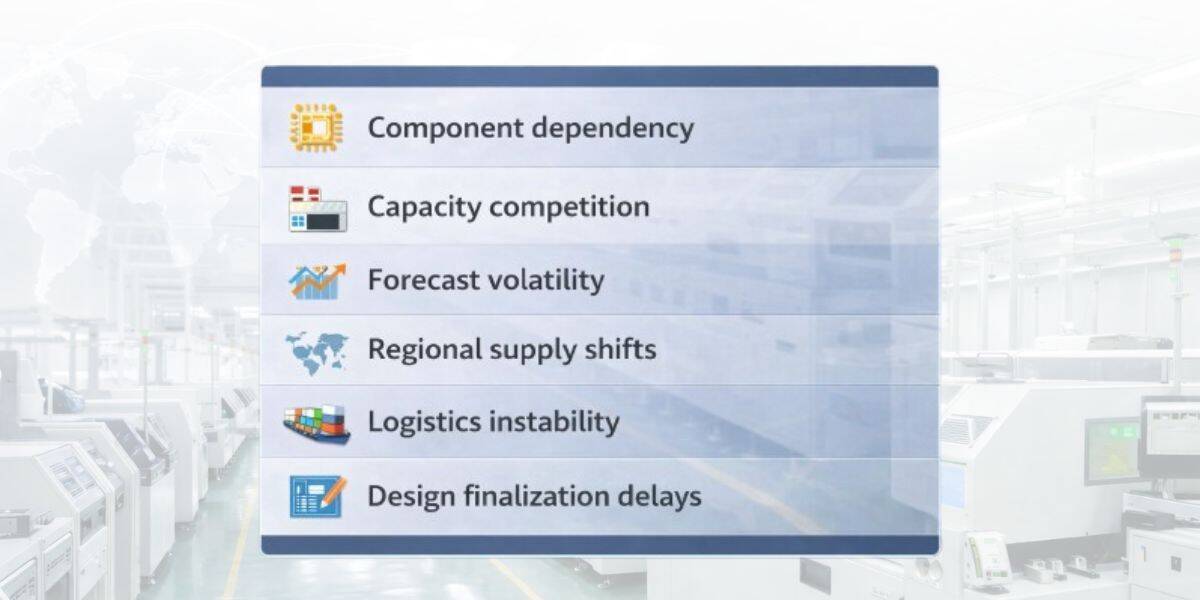
2026'daki teslim süresi istikrarsızlığı, tek bir darboğazdan ziyade birden fazla örtüşen faktör tarafından yönlendirilir. LED PCB'ler için bu faktörler birleşir.
bileşen bağımlılığı
LED PCB'ler her zaman değiştirilemeyen belirli LED'lere, sürücülere ve destekleyici bileşenlere bağlıdır.
- LED Binning ve Performans Tutarlılığı Limiti İkame
- Sürücü kullanılabilirliği son montajı yapabilir
- Küçük bileşen eksiklikleri tamamlanan panoları geciktirebilir
PCB üretim kapasitesi mevcut olsa bile, eksik bileşenler zaman çizelgelerini uzatabilir.
kapasite yarışması
Yüksek karışımlı, düşük hacimli üretim, aynı üretim kaynakları için büyük hacimli sözleşmelerle rekabet ediyor.
Bu sonuç:
- Uzun vadeli veya tahmin destekli siparişlere verilen öncelik
- Plansız üretim için azaltılmış esneklik
- Daha küçük özel çalışmalar için zamanlama oynaklığı
Özel PCB üretim zaman çizelgeleri, erken talebin nasıl iletildiğinden giderek daha fazla etkilenir.
Lojistik istikrarsızlık
Ulaşım güvenilirliği bölgeler arasında eşitsiz kalır.
Faktörler şunları içerir:
- Liman tıkanıklığı değişkenliği
- Ticaret Uyumluluklarının Değiştirilmesi
- Bölgesel ulaşım kapasitesi limitleri
Lojistik gecikmeler genellikle süreçte geç ortaya çıkar ve üretim tamamlandıktan sonra hafifletmeyi zorlaştırır.
2026'da alıcıların karşı karşıya olduğu ortak teslim süresi riskleri
2026'daki teslim süresi riskleri, en iyi şekilde izole olaylardan ziyade kategoriler olarak anlaşılır. Alıcılar genellikle aynı anda birden fazla riskle karşılaşırlar.
- Malzeme gecikmeleri
Temel malzemeler veya kaplamalar, özellikle özel panolar için uzun süreli tahsis sürelerine sahip olabilir. - Bileşen darboğazları
LED'ler, sürücüler veya kontrol bileşenleri, PCB üretimi hazır olduğunda bile kritik yol haline gelebilir. - Jeopolitik bozulma
Politika değişiklikleri, ticaret kısıtlamaları veya bölgesel istikrarsızlık, çok az farkla tedarik yollarını etkileyebilir. - üretim kapasitesi dengesizliği
Bazı tesisler fazla rezerve edilebilirken, diğerleri belirli LED PCB gereksinimleri için yeterlilikten yoksun olabilir.
Bu riskler her zaman bireysel olarak uzun gecikmelere neden olmaz, ancak birlikte program kesinliğini azaltır.
Üreticiler ve alıcılar teslim süresi riskini nasıl azaltabilir?
2026'da teslim süresi riskini azaltmak, belirsizliği ortadan kaldırmak yerine yönetmekle ilgilidir. Etkili yaklaşımlar hazırlık ve hizalamaya odaklanır.
Tasarıma Hazırlık
Kararlı tasarımlar yeniden çalışmayı ve yeniden planlamayı azaltır.
- Son dakika mühendislik değişiklikleri sınırlandırıldı
- Açık termal ve elektrik gereksinimleri, netleştirme döngülerini azaltır
- Kullanılabilirlik ile uyumlu bileşen seçimleri sürekliliği artırır
Tasarım olgunluğu, zamanlama güvenilirliğini doğrudan etkiler.
tahmini paylaşım
Erken ve gerçekçi talep görünürlüğü, daha iyi kapasite planlaması sağlar.
- Bağlayıcı olmayan tahminler hala kaynakları tahsis etmeye yardımcı oluyor
- Yuvarlanan tahminler ani talep artışlarını azaltır
- Şeffaflık, öncelik uyumunu iyileştirir
Tahmin doğruluğu, kesinlikten daha önemlidir.
Tedarikçi çeşitlendirme
Tek bir kaynağa güvenmek, yerelleştirilmiş bozulmaya maruz kalmayı artırır.
- Çoklu nitelikli tedarikçiler esnekliği artırır
- Bölgesel denge lojistik riskini azaltır
- Yedekleme seçenekleri, sorunlar ortaya çıktığında kurtarma süresini kısaltır
Çeşitlendirme, baz teslim sürelerini kısaltmasa bile planlama seçeneklerini artırır.
Deneyimli bir özel PCB üreticisinin rolü
Deneyimli bir özel PCB üreticisi, tedarik zinciri riskini ortadan kaldırmaz, ancak aşağıdakileri yaparak belirsizliği azaltabilir:
- Ortak darboğazlar tahmin etmek
- Tasarım ve kaynak bulma kararlarını erken hizalamak
- Mevcut kapasiteye dayalı gerçekçi zaman çizelgeleri iletmek
Deneyim, hız garantilerini değil, öngörülebilirliği artırır.
LED PCB Tedarik Zinciri Trendleri Uzun Vadeli Planlamayı Nasıl Etkiler?
2026 tedarik zinciri trendlerinin kümülatif etkisi, kuruluşların planlanma şekline göre bir değişikliktir.
Ürün lansman planlaması
Başlatma zaman çizelgeleri, giderek artan bir şekilde tampon dönemlerini içerir.
- Erken taahhüt olmadan sabit lansman tarihlerini desteklemek daha zordur
- Pilot yapılar daha erken zamanlama gerektirir
- Acil durum planlaması standart hale gelir
Tek başına hız artık birincil amaç değildir.
Envanter Stratejisi
Tam zamanında modeller yeniden değerlendiriliyor.
- Stratejik envanter, aksama etkisini azaltır
- Kritik bileşenleri tutmak sürekliliği artırır
- Envanter Kararları Riske Maruz Kalma Maliyetini Den
Envanter artık verimsizlikten ziyade bir dayanıklılık aracı olarak görülüyor.
Risk ve Maliyet Takasları
En düşük maliyetli kaynak kullanımı her zaman en düşük riskli değildir.
- Daha istikrarlı tedarikçiler daha uzun nominal teslim sürelerine sahip olabilir
- Bölgesel kaynak kullanımı maliyeti artırabilir ancak oynaklığı azaltabilir
- Planlama kararları, kısa vadeli tasarruflar üzerinde sürekliliği tartar
Dayanıklılık ölçülebilir bir planlama hedefi haline geldi.
Tedarik zinciri trendleri ve planlama etkisi
| eğilim | pratik etki | Planlama Etkisi |
| bölgesel çeşitlendirme | Konumlara göre değişken teslim süreleri | Çoklu Bölge Planlama Gerekli |
| Artan otomasyon | Daha sıkı zamanlama pencereleri | Daha önceki tasarım ve tahmin taahhüdü |
| bileşen bağımlılığı | Tek parça gecikmeler yapıları etkiler | Erken bileşen hizalaması |
| Sürdürülebilirlik Gerek | Daha uzun malzeme kalifikasyonu | Önceden malzeme planlaması |
Çözüm
2026 yılında, LED PCB tedarik zincirleri, geçici bozulmadan ziyade yapısal değişimle şekillenmektedir. Talep artışı, bölgesel çeşitlendirme, artan tasarım karmaşıklığı ve bileşen bağımlılığı, teslim sürelerini daha az öngörülebilir hale getirdi. Üreticiler ve alıcılar için temel zorluk hız değil, güvenilirliktir. Etkili planlama artık tasarıma hazır olma, erken görünürlük ve dayanıklılığa odaklanıyor. Bu eğilimleri anlamak, kuruluşların teslim süresi riskini tepki yerine net bir şekilde yönetmelerine olanak tanır.
SSS
İlgili Yazılar