Türkçe
  English
  简体中文
简体中文  Deutsch
  Español
  Français
  Italiano
  日本語
日本語  한국어
한국어  Polski
  Português
  Русский
  Nederlands
  Tiếng Việt
  ไทย
ไทย 
24V LED strip lights are constant-voltage LED strip systems designed to operate at a nominal 24 volts DC, typically powered by external LED drivers that regulate voltage rather than current. Compared with lower-voltage constant-voltage systems such as 12V or 5V LED strips, 24V systems deliver the same optical output with significantly lower electrical current, which directly improves efficiency, thermal behavior, and voltage stability over distance.
In practical terms, 24V LED strip lights outperform lower-voltage options because they reduce current-related losses, minimize voltage drop along the strip, and allow longer continuous runs with more consistent brightness. This advantage becomes especially important in professional, architectural, and commercial lighting installations.
This article explains the electrical and system‑level advantages of higher‑voltage LED strip operation. For a deeper understanding of high‑density designs and continuous‑phosphor technology, see our detailed reference guide: COB LED Şerit Işıklar için Nihai Kılavuz.
The comparison throughout refers strictly to constant-voltage LED strip systems, not constant-current luminaires or integrated fixtures.
What Technically Changes When You Increase LED Strip Voltage from 12V to 24V?
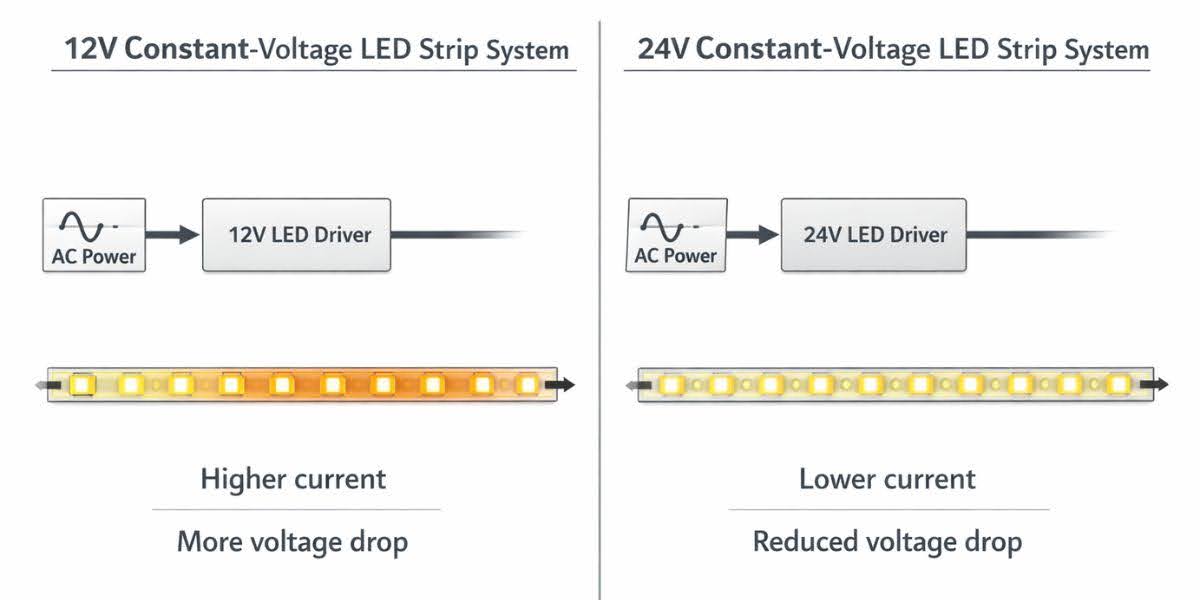
Increasing the supply voltage of a constant-voltage LED strip does not change the fundamental light-producing mechanism of the LEDs. What changes is the electrical relationship between voltage, current, resistance, and power delivery across the system. The benefits of 24V systems come directly from these relationships, not from marketing differences.
Why Higher Voltage Means Lower Current (P = V × I Explained Clearly)
Electrical power is defined by the equation:
P = V × I
nerede:
- P is power in watts
- V is voltage in volts
- I is current in amperes
For a given LED strip that consumes a fixed amount of power per meter, increasing the operating voltage reduces the required current proportionally. For example, a 10-watt LED strip segment requires approximately:
- 0.83 A at 12V
- 0.42 A at 24V
This reduction in current is fundamental. The LED output does not increase, but the electrical stress on conductors, connectors, and power supply components decreases significantly.
Why Lower Current Reduces Heat and Resistive Loss
All conductive materials have resistance. When current flows through copper traces, wires, and connectors, energy is lost as heat according to the equation:
Power loss = I² × R
Because current is squared, even a modest reduction in current produces a disproportionately large reduction in resistive heat loss. Doubling the voltage halves the current, but resistive losses drop to one quarter.
This is one of the most important technical reasons 24V LED strip lights are more efficient and thermally stable than 12V or 5V systems.
Why Voltage Drop Becomes Less Severe at 24V
Voltage drop is not caused by voltage itself. It is caused by current flowing through resistance. When current travels along the copper traces of an LED strip, a voltage drop occurs progressively along the length of the strip.
At higher voltage:
- Current is lower for the same power
- Lower current causes less voltage loss per unit length
- The remaining voltage at the end of the strip stays closer to nominal
As a result, brightness degradation along the strip length is reduced.
Why Longer Continuous Runs Become Possible
Because voltage drop accumulates more slowly in a 24V system, longer continuous strip runs can be powered from a single feed point before brightness variation becomes noticeable. This does not eliminate voltage drop entirely, but it significantly extends the practical installation length.
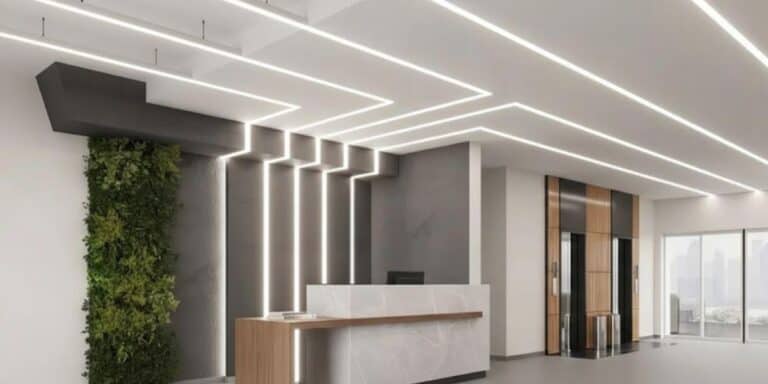
This property is particularly important in architectural coves, linear profiles, and commercial spaces where uninterrupted light lines are required.
How Does 24V Reduce Voltage Drop on Long LED Strip Runs?
To understand why 24V performs better, it is necessary to examine voltage drop at the physical level of the LED strip itself.
Internal Copper Resistance in LED Strips
LED strips contain thin copper traces laminated onto a flexible substrate. These traces have:
- Finite cross-sectional area
- Measurable resistance per unit length
As current flows along the strip, resistance causes incremental voltage loss. The farther electricity travels, the more voltage is lost before reaching downstream LEDs.
Current Flow Across the Strip Length
In a constant-voltage strip:
- The first LEDs draw current directly from the power source
- Remaining current continues flowing down the strip to supply downstream segments
- The total current is highest near the feed point and decreases along the length
Higher initial current means higher resistive losses near the beginning of the strip, which accelerates voltage drop in low-voltage systems.
Why 12V Drops Brightness Faster
At 12V, the required current for a given power density is relatively high. This higher current:
- Increases resistive loss per meter
- Causes faster voltage decay along the strip
- Results in visibly dimmer LEDs toward the end of long runs
In contrast, 24V systems operate with lower current, so the voltage remains closer to nominal over the same distance.
Why 24V Improves End-of-Run Consistency
Because voltage drop is reduced, LEDs near the end of a 24V strip receive voltage closer to their design operating point. This improves:
- Brightness uniformity
- Color consistency, especially on white channels
- Predictability of dimming behavior
Structured Comparison: 12V vs 24V LED Strip Systems
| Özellik | 12V Strip | 24V Strip |
| Max practical run length | Shorter before noticeable drop | Longer before noticeable drop |
| Voltage drop sensitivity | Yüksek | Daha düşük |
| Power injection frequency | sık sık | Less frequent |
| Brightness consistency | Declines quickly with length | More stable across run |
This comparison reflects electrical behavior, not product quality.
Why Is 24V More Efficient and Thermally Stable?
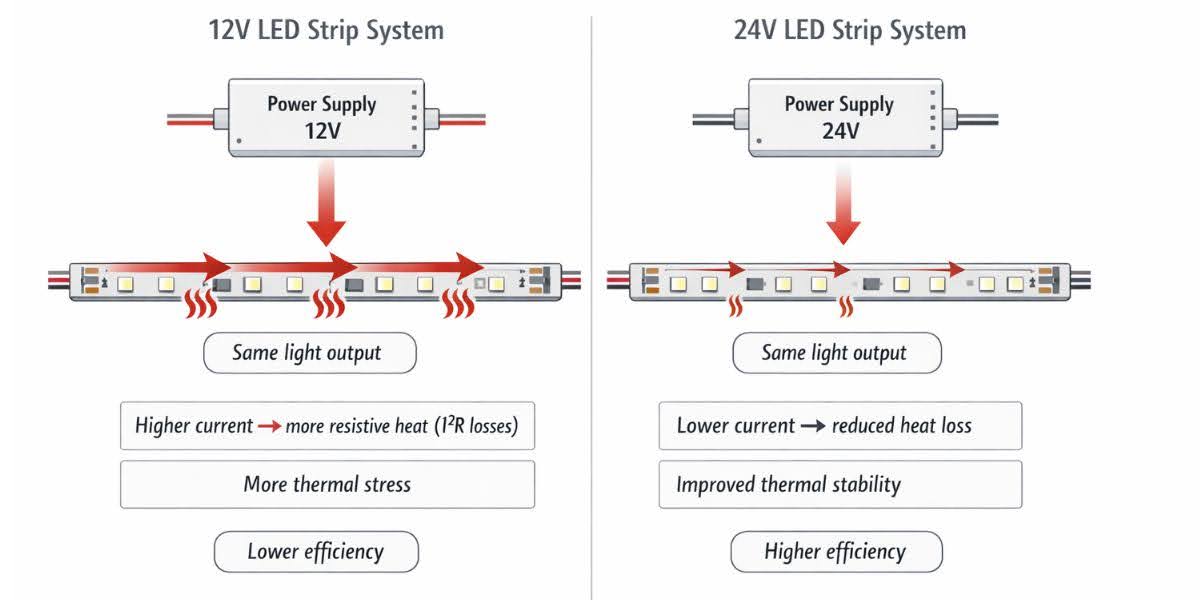
Electrical efficiency and thermal stability are closely linked. Heat is both a symptom and a cause of inefficiency in LED systems.
Lower Current and Conductor Stress
Lower current reduces:
- Heating of copper traces
- Stress on solder joints
- Thermal expansion effects over time
This helps maintain consistent electrical characteristics throughout the life of the installation.
Reduced Connector Heating
Connectors and terminal blocks often represent localized resistance points. High current magnifies heating at these junctions. By operating at 24V, connector current is lower, which:
- Reduces contact temperature rise
- Improves long-term contact reliability
- Lowers the risk of intermittent failures
Improved Driver Stability
LED drivers operating at 24V typically deliver:
- Lower output current for the same power
- More stable regulation under load changes
- Reduced thermal stress within the driver itself
This improves system-level reliability rather than just strip-level performance.
Reduced Resistive Energy Loss
Energy lost as heat in wiring and conductors does not contribute to light output. By lowering current, 24V systems reduce these losses, allowing a greater proportion of supplied energy to reach the LEDs.
Long-Term Reliability Implications
Lower operating temperatures slow:
- Phosphor degradation
- Adhesive aging
- Mechanical fatigue of solder joints
Over time, this translates to longer usable life and more predictable performance.
Why Is 24V Preferred in Professional and Commercial Installations?
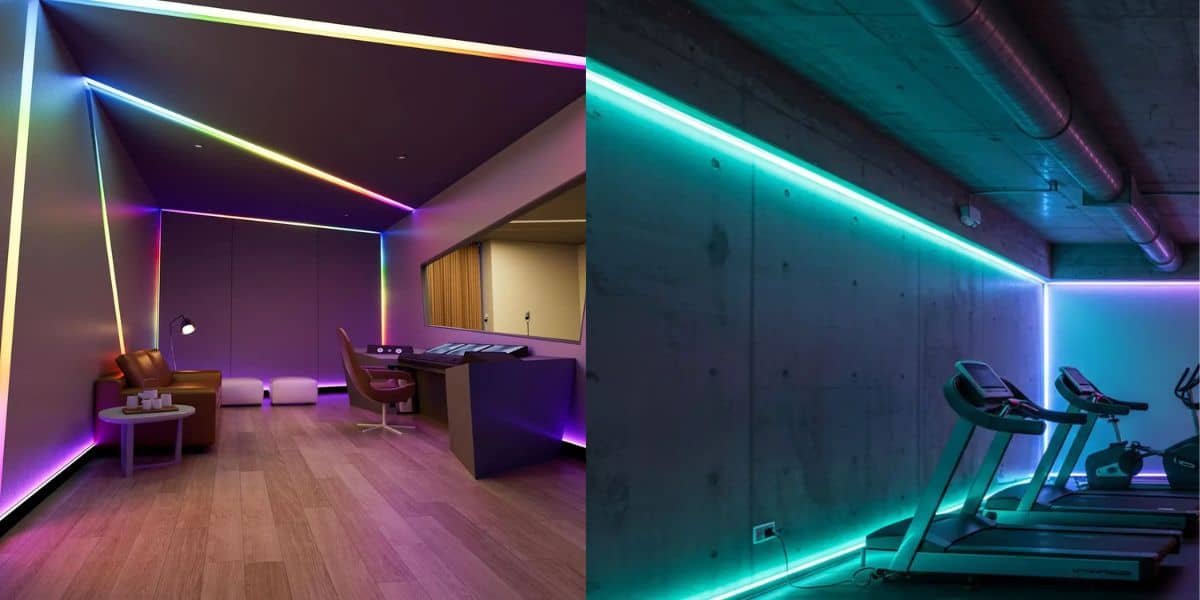
Professional lighting design prioritizes predictability, scalability, and system simplicity. The electrical characteristics of 24V systems align well with these priorities.
pulluk
24V systems scale more easily because:
- Longer runs can be powered from fewer feed points
- Additional segments can be added with less redesign
- Voltage drop calculations are more forgiving
Wiring Simplification
Lower current allows:
- Smaller gauge wiring for the same power
- Fewer parallel feeds
- Cleaner installation layouts
This reduces installation complexity without compromising performance.
Fewer Power Supplies
Because each power supply can support longer runs, fewer drivers are needed for a given project size. This simplifies maintenance and reduces system points of failure.
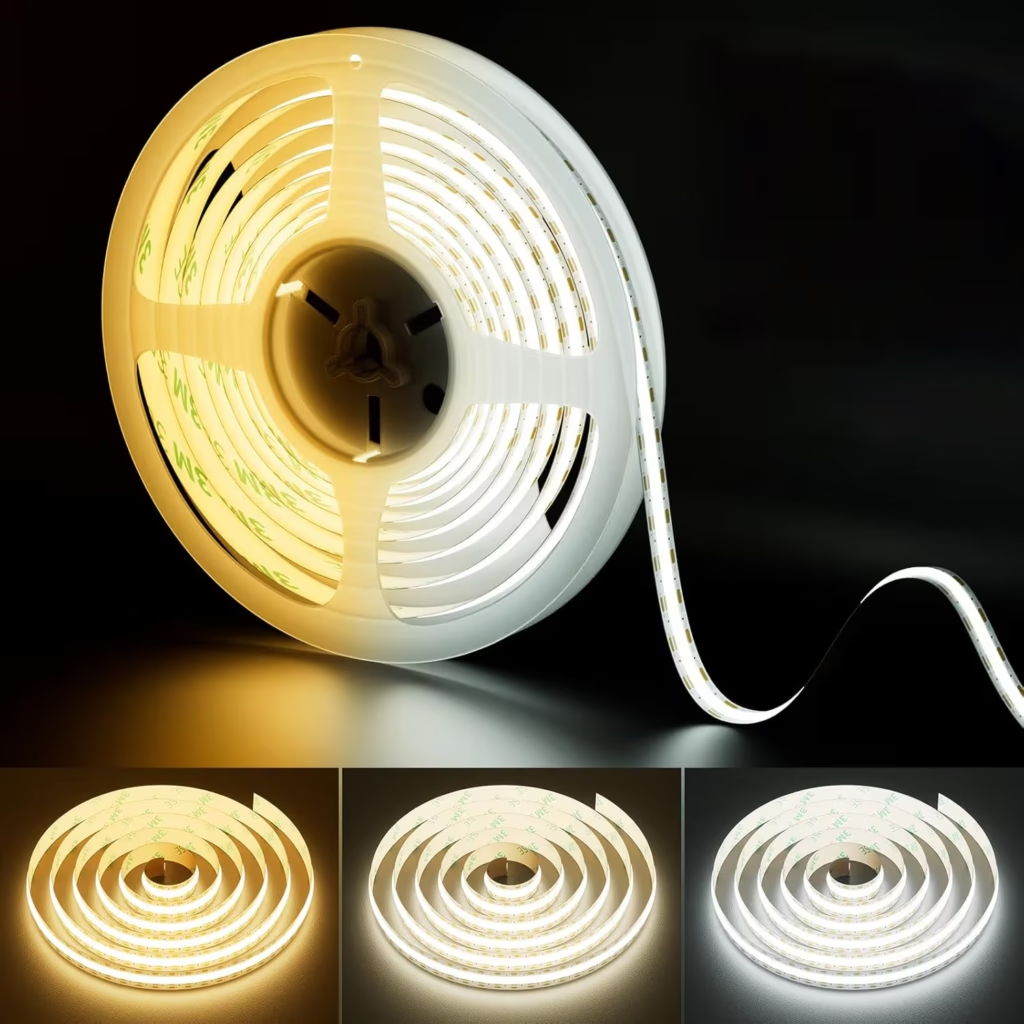
Çift Renkli Ayarlanabilir Beyaz COB LED Şerit Işık
- Ana Model: FYT10T608C
- Metre Başına LED Miktarı Opsiyon: 608/640chips (Sanan)
- PCB Genişlik Seçeneği: 10mm
- Renk Seçeneği: 2700K - 6500K ayarlanabilir
- CRI:>90
- Giriş Voltajı: DC12V/DC24V
- Metre Başına Güç: 14W/16W
- Yeterlik: 90-110 lümen/watt
- IP Sınıfı Seçeneği: IP20/IP54/IP65/IP67/IP68
- Garanti: 3Yıl
Compatibility with Dimming Systems
In professional contexts, dimming refers specifically to white-light brightness control, not RGB color changing. Stable voltage at the strip level ensures that dimming curves behave predictably, especially at low brightness levels where voltage sensitivity is highest.
Lower voltage drop improves dimming smoothness and reduces flicker or uneven fade behavior caused by inconsistent supply voltage.
For a technical comparison of durable and bright constant‑voltage 24V LED strip lighting systems — including how COB LED strips impact long‑term performance — see our guide on the Best Brands For Durable And Bright 24V LED Strip Lighting.
How Do COB LED Strip Designs Benefit Specifically from 24V Systems?
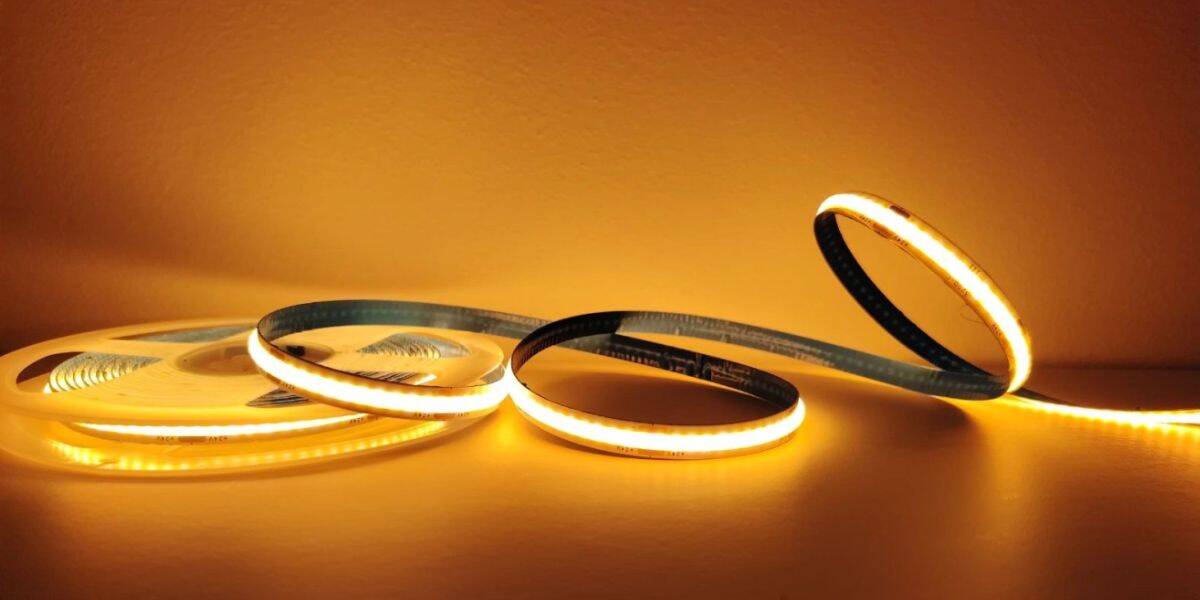
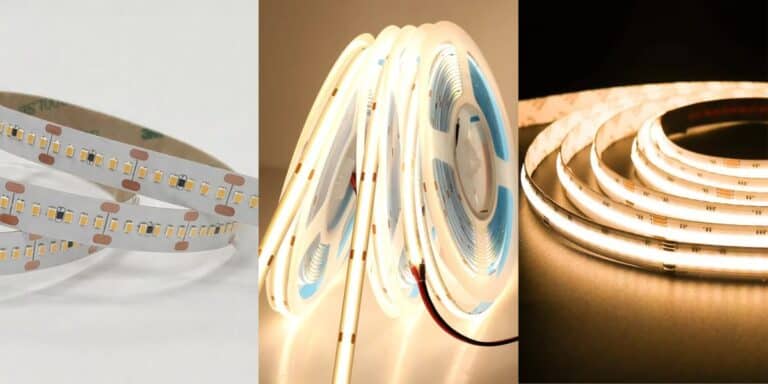
COB LED strip lights use densely packed LED chips mounted directly under a continuous phosphor layer. This design changes how electrical stability affects visual performance.
High-Density COB LED Strip Lights and Current Distribution
Because cob led strip lights place many emitters per unit length, total power density can be higher than in traditional SMD designs. At lower voltages, this requires high current, which exacerbates voltage drop and thermal stress.
Operating these designs at 24V reduces current while maintaining the same luminous output.
Strip COB LED Architectures and Long Runs
In strip cob led designs, uniformity is a primary advantage. Any voltage variation along the strip can translate into:
- Subtle brightness variation
- White point inconsistency
- Reduced visual smoothness
24V systems preserve voltage stability across longer lengths, allowing the continuous phosphor surface to appear truly uniform.
RGBW Systems and White-Channel Stability
İçinde COB rgbw LED strip light 24v systems, voltage stability is especially important for the white channel. White LEDs typically operate at higher forward voltages and tighter tolerances than color channels. Reduced voltage drop helps ensure:
- Consistent white brightness across the run
- Stable color mixing
- Predictable dimming behavior
This benefit is electrical, not aesthetic marketing.
When Do Lower Voltages (12V or 5V) Still Make Sense?
Despite the advantages of 24V systems, lower voltages remain appropriate in specific, limited contexts.
Appropriate Use Cases for Lower Voltage Systems
Lower-voltage LED strips are suitable when:
- Run lengths are very short
- Power is supplied by batteries or USB sources
- Integration with compact electronics is required
Limitations of 24V Systems
24V systems may be less suitable when:
- Only minimal lengths are required
- Extremely low power levels are needed
- Voltage compatibility with existing electronics is constrained
Choosing voltage should always be based on system requirements rather than general preference.
Key Electrical Advantages of 24V
- Lower current for the same power output
- Reduced resistive losses and heat generation
- Improved voltage stability over distance
- Better end-of-run brightness consistency
Installation and System-Level Advantages
- Longer continuous runs with fewer feed points
- Simplified wiring and reduced conductor stress
- Improved dimming stability for white light
- Greater scalability in professional installations
Çözüm
24V LED strip lights outperform lower-voltage constant-voltage systems because they operate with lower current, which directly reduces resistive losses, thermal stress, and voltage drop. These electrical advantages lead to more stable brightness, improved efficiency, and longer practical run lengths.
By minimizing voltage degradation along the strip, 24V systems provide more consistent light output, better dimming behavior, and greater reliability, especially in high-density designs such as COB LED strip lights and RGBW configurations. While lower voltages still serve niche applications, 24V remains the preferred choice for professional, architectural, and commercial LED strip installations due to its balance of efficiency, stability, and scalability.
SSS
İlgili Yazılar