Tiếng Việt
  English
  简体中文
简体中文  Deutsch
  Español
  Français
  Italiano
  日本語
日本語  한국어
한국어  Polski
  Português
  Русский
  Türkçe
  Nederlands
  ไทย
ไทย 
Tại Signitel, chúng tôi hỗ trợ người mua chuyên nghiệp bằng cách cung cấp các giải pháp LED đáng tin cậy, dựa trên ứng dụng.
Khi ngành công nghiệp chiếu sáng toàn cầu tiến vào năm 2026, hiệu suất LED không còn được quyết định chỉ bởi chip LED. Hôm nay, PCB LED Thiết kế đóng vai trò quyết định đến độ ổn định nhiệt, tính nhất quán màu sắc, an toàn điện và tuổi thọ hệ thống tổng thể. Đối với các nhà sản xuất chiếu sáng, người mua OEM và kỹ sư dự án, chọn PCB LED bên phải Cấu hình đã trở thành một quyết định thương mại và kỹ thuật quan trọng.
Trong blog này, chúng tôi sẽ giải thích cách xếp hạng công suất ảnh hưởng đến hiệu suất nhiệt trong đèn LED PCB. Nó cho thấy nhiệt độ màu tương quan phụ thuộc vào việc kiểm soát nhiệt và thiết kế như thế nào. Chúng tôi cũng sẽ giải thích cách Vật liệu PCB Hiệu quả, tuổi thọ và độ tin cậy của ánh sáng.
PCB LED là gì?

PCB LED là một bảng mạch in được thiết kế đặc biệt để hỗ trợ các điốt phát sáng. Nó cung cấp kết nối điện và hỗ trợ cơ học trong khi quản lý nhiệt được tạo ra trong quá trình vận hành. riêng Thiết kế PCB LED Đảm bảo hiệu suất ổn định, độ sáng ổn định và tuổi thọ cao hơn trong các ứng dụng chiếu sáng.
Không giống như PCB tiêu chuẩn, PCB LED tập trung nhiều vào việc quản lý nhiệt và lựa chọn vật liệu. Chúng thường sử dụng chất nền kim loại hoặc có độ dẫn điện cao để tản nhiệt hiệu quả. Điều này giúp ngăn ngừa quá nhiệt, chuyển màu và lỗi sớm trong hiện đại Hệ thống đèn LED.
Cấu trúc cơ bản của PCB LED

PCB LED là các bo mạch nhiều lớp được thiết kế cẩn thận, trong đó mỗi lớp đóng một vai trò duy nhất trong việc cung cấp điện, quản lý nhiệt và độ bền. Cấu trúc của chúng được thiết kế không chỉ hỗ trợ chip LED một cách cơ học mà còn duy trì hiệu suất tối ưu trong điều kiện hoạt động liên tục, công suất cao.
Vật liệu cơ sở (chất nền)
Chất nền tạo thành nền tảng của PCB LED. Nhôm là lựa chọn phổ biến nhất do tính dẫn nhiệt tuyệt vời, nhưng thiết kế cao cấp có thể sử dụng đồng hoặc gốm để truyền nhiệt lớn hơn. Lớp này đảm bảo bo mạch vẫn cứng trong khi truyền nhiệt hiệu quả ra khỏi đèn LED.
lớp đồng dẫn điện
Lớp đồng mang điện từ nguồn điện đến các chip LED. Mô hình và độ dày của nó là rất quan trọng, vì chúng ảnh hưởng đến sự phân bố dòng điện, độ ổn định điện áp và tính đồng nhất của sản lượng ánh sáng. Ngoài ra, một mạng lưới đồng được thiết kế tốt giúp giảm tích tụ nhiệt và ngăn chặn các điểm nóng.
Lớp cách điện điện môi
Nằm giữa lớp đồng và đế kim loại, lớp điện môi hoạt động vừa là chất cách điện vừa là cầu nhiệt. Nó cho phép nhiệt chảy xuống dưới trong khi giữ các mạch điện cách ly, đảm bảo hoạt động an toàn mà không làm mất hiệu suất nhiệt.
Mặt nạ hàn bảo vệ và bề mặt hoàn thiện
Một mặt nạ hàn bảo vệ bao gồm các dấu vết đồng lộ ra, che chắn chúng khỏi bị ăn mòn và ngắn mạch ngẫu nhiên. Trong khi đó, bề mặt hoàn thiện tăng cường các mối hàn và tăng cường độ tin cậy lâu dài, đặc biệt là trong các chu kỳ làm nóng và làm mát lặp đi lặp lại.
Tối ưu hóa đường dẫn nhiệt
PCB LED hiệu quả cung cấp đường dẫn nhiệt trực tiếp từ chip LED đến tản nhiệt hoặc vật cố định. Nhiệt di chuyển tuần tự qua mối hàn, mạch đồng, lớp điện môi và chất nền. Một đường dẫn ngắn, có điện trở thấp giảm thiểu sự gia tăng nhiệt độ, kéo dài tuổi thọ LED và ổn định sản lượng ánh sáng theo thời gian.
Các loại LED PCB khác nhau bằng vật liệu
PCB LED được làm từ các vật liệu khác nhau, mỗi loại ảnh hưởng đến tản nhiệt, hiệu suất điện và độ bền. Chọn chất liệu phù hợp đảm bảo chiếu sáng lâu dài, đáng tin cậy, đặc biệt là cho các ứng dụng công nghiệp và công suất cao.
| Loại vật liệu PCB | Đặc điểm chính | lợi ích nhiệt | Ứng dụng điển hình |
| fr-4 | giá thấp | Nhiệt vừa phải | đèn led trang trí |
| nhôm | Thiết kế bền | Tản nhiệt cao | Đường phố & Thương mại |
| dây đồng | Độ dẫn cao | Truyền nhiệt tuyệt vời | Đèn LED công nghiệp |
| đồ gốm | vật liệu cao cấp | Khả năng chịu nhiệt vượt trội | Ô tô & Hàng không |
1: FR-4 PCB LED
FR-4 PCB được cấu tạo từ vật liệu sợi thủy tinh tiêu chuẩn với một lớp đồng cho các mạch điện. Chúng có giá cả phải chăng và phù hợp cho các ứng dụng LED công suất thấp với mức nhiệt tối thiểu.
Những bảng này lý tưởng cho đèn LED trang trí hoặc đèn báo. Tuy nhiên, độ dẫn nhiệt hạn chế của chúng hạn chế sử dụng trong ánh sáng công suất cao hoặc công nghiệp, nơi quản lý nhiệt là rất quan trọng đối với hiệu suất và tuổi thọ.
2 : Nhôm LED PCB
PCB nhôm sử dụng lõi kim loại để truyền nhiệt hiệu quả từ chip LED. Điều này cho phép đèn LED công suất cao hoạt động hiệu quả mà không quá nóng.
Chúng được sử dụng rộng rãi trong chiếu sáng đường phố, đèn chiếu sáng thương mại và các ứng dụng công nghiệp. PCB nhôm cung cấp độ bền cơ học, ổn định nhiệt và hiệu suất hiệu quả về chi phí để hoạt động liên tục.
3: Đồng LED PCB
PCBs làm từ đồng cung cấp độ dẫn nhiệt cao nhất, cho phép tản nhiệt cực kỳ hiệu quả. Chúng phù hợp cho các thiết kế LED công suất cao nhỏ gọn, nơi nhiệt được tập trung ở những khu vực nhỏ.
Các PCB này thường được tìm thấy trong các hệ thống LED công nghiệp, bảng mật độ cao và thiết bị chuyên dụng. Chi phí cao hơn được bù đắp bởi độ tin cậy được cải thiện, tuổi thọ cao hơn và sản lượng ánh sáng ổn định trong hoạt động liên tục.
4: PCB LED gốm
PCB gốm kết hợp cách điện với khả năng chịu nhiệt đặc biệt. Chúng duy trì hiệu suất ổn định trong điều kiện hoạt động quá nhiệt và đòi hỏi cao, làm cho chúng lý tưởng cho các ứng dụng chính xác.
Chúng thường được sử dụng trong ánh sáng ô tô, hàng không vũ trụ, và các ứng dụng cao cấp hoặc chuyên dụng khác. PCB gốm hỗ trợ đèn LED công suất cao mà vẫn đảm bảo độ ổn định màu sắc, hiệu quả, độ bền lâu dài.
Làm thế nào để chọn đúng thiết kế của LED PCB?
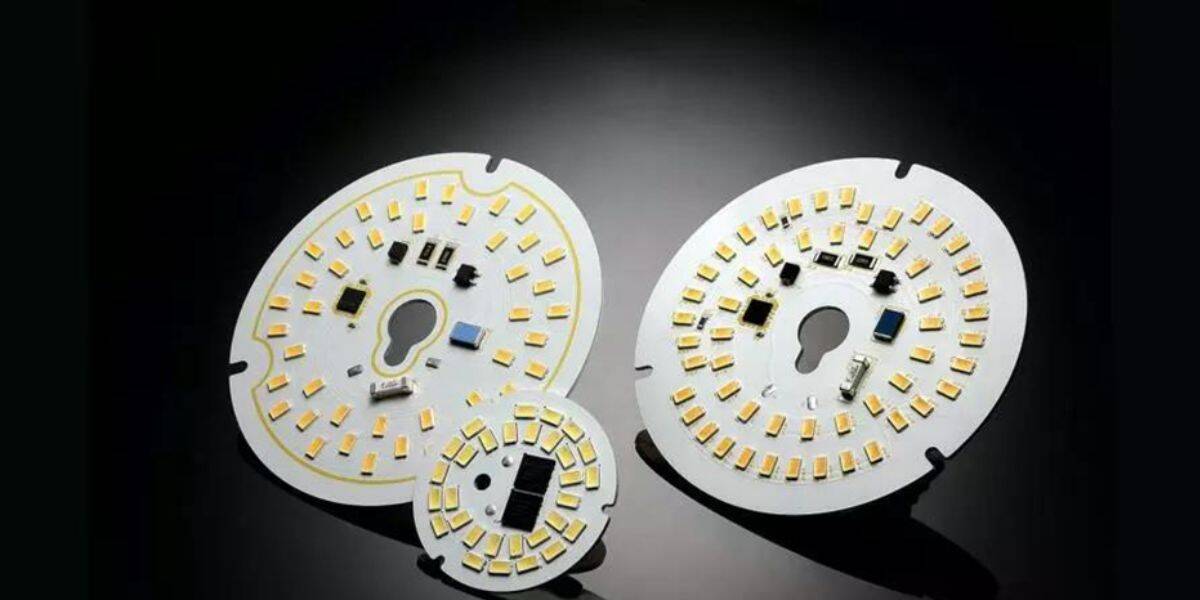
nốt thứ sáu trong PCB LED được thiết kế tốt Cân bằng quản lý nhiệt, ổn định điện và chất lượng ánh sáng. Các yếu tố này làm việc cùng nhau để đảm bảo đèn LED vẫn sáng, hiệu quả và đáng tin cậy trong suốt tuổi thọ của chúng.
- Quản lý nhiệt: Nhiệt là yếu tố chính làm hạn chế hiệu suất của đèn LED. Một thiết kế PCB tốt sẽ dẫn nhiệt ra khỏi đèn LED một cách hiệu quả, giảm các điểm nóng và ngăn chặn sự cố sớm, đặc biệt là trong các ứng dụng công suất cao.
- Tản nhiệt, vias nhiệt và độ dày đồng: Tản nhiệt giải phóng nhiệt ra môi trường xung quanh, còn vias nhiệt và lớp đồng dày hơn tỏa nhiệt đều lên bảng. Điều này đảm bảo nhiệt độ tiếp giáp thấp hơn và tuổi thọ LED lâu hơn.
- Bố trí mạch và cân bằng dòng điện: Một mạch bố trí mạch tối ưu phân phối dòng điện đồng đều cho mọi đèn LED. Dòng điện cân bằng ngăn chặn sự mờ, điểm nóng hoặc nhấp nháy, đảm bảo độ sáng nhất quán trên toàn bộ bảng.
- Khoảng cách và vị trí LED: Khoảng cách giữa các đèn LED giúp cải thiện luồng không khí và giảm tích tụ nhiệt cục bộ. Vị trí chiến lược cũng tạo ra ánh sáng đồng đều hơn, loại bỏ các đốm đen và chói.
- An toàn điện và cách ly: PCB phải tách mạch nguồn ra khỏi lõi kim loại một cách an toàn. Cách điện tốt ngăn ngừa ngắn mạch, giảm rủi ro điện, và tăng cường độ tin cậy tổng thể của hệ thống.
- Thiết kế quang học: Bố cục PCB không chỉ ảnh hưởng đến hiệu suất mà còn ảnh hưởng đến sự phân bố nhẹ. Vị trí, góc và căn chỉnh chính xác giúp đạt được độ sáng mịn, đều và duy trì độ đồng nhất màu.
Làm thế nào để tạo ra PCB LED?

Trong phần này, chúng tôi sẽ giải thích cách PCB LED được thiết kế và sản xuất. Từ việc chọn vật liệu phù hợp đến gắn chip LED, mỗi bước đảm bảo quản lý nhiệt tối ưu, hiệu suất điện và độ tin cậy lâu dài.
Bước 1: Chọn chất nền
Chọn vật liệu cơ sở phù hợp dựa trên nhu cầu nhiệt và điện. Các tùy chọn bao gồm FR-4 cho công suất thấp, nhôm cho công suất cao, đồng cho độ dẫn điện tối đa và gốm cho các ứng dụng chuyên dụng. Chất nền xác định nhiệt độ tản nhiệt và độ bền cơ học.
Bước 2: Bôi và khắc lớp đồng
Đồng được áp dụng lên bề mặt và được khắc chính xác để tạo thành các mạch điện. Bố cục kiểm soát dòng điện, đảm bảo ổn định điện áp và giúp phân phối nhiệt đồng đều trên bảng.
Bước 3: Thêm cách điện điện môi
Lớp điện môi tách mạch đồng ra khỏi đế kim loại. Nó cách điện trong khi cho phép nhiệt đi qua hiệu quả, duy trì hoạt động an toàn và hỗ trợ quản lý nhiệt.
Bước 4: Đắp mặt nạ hàn và bề mặt hoàn thiện
Một mặt nạ hàn bảo vệ che chắn các dấu vết đồng khỏi quá trình oxy hóa và quần short. Bề mặt hoàn thiện tăng cường các mối hàn, đảm bảo độ tin cậy trong các chu kỳ nhiệt và hoạt động LED kéo dài.
Bước 5: Gắn chip LED và kiểm tra
Chip LED được đặt và hàn lên bảng. PCB sau đó được kiểm tra về hiệu suất nhiệt, hiệu suất điện và tính nhất quán nhẹ, đảm bảo đáp ứng các yêu cầu về thiết kế và ứng dụng.
Lợi ích chính của PCB LED

Một đèn LED PCB là điều cần thiết cho ánh sáng hiệu suất cao. Nó kết hợp quản lý nhiệt, ổn định điện và hỗ trợ cơ học. được thiết kế tốt Bảng PCB LED Đảm bảo đèn LED hoạt động hiệu quả và đáng tin cậy. Sử dụng chất lượng cao Bảng PCB đèn LED Ngăn chặn sự sụt giảm điện áp và ngắn mạch. riêng Thiết kế PCB LED Đảm bảo dòng điện ổn định. sự tiến bộ Thiết kế LED PCB Tăng cường độ bền và hiệu suất lâu dài.
Tản nhiệt hiệu quả
Bảng mạch PCB LED SMD Và Đèn LED PCB tròn Chất nền truyền nhiệt ra khỏi chip LED. Bảng điều khiển PCB LED 2835 Bố trí ngăn chặn quá nhiệt. LED cho PCB Sắp xếp duy trì nhiệt độ đồng đều. Bảng công suất cao như 100W LED PCB Và Bảng điều khiển LED 220V quản lý dòng điện một cách an toàn. Những thiết kế này kéo dài tuổi thọ LED và bảo vệ các thành phần nhạy cảm.
Đồng nhất ánh sáng
những con đường đồng cân bằng trong một Thiết kế PCB đèn LED Đảm bảo tất cả các đèn LED đều sáng đều. đang dùng đèn led pcb Board loại bỏ các điểm nóng và các khu vực mờ. PCB với đèn LED Bố cục cung cấp độ sáng nhất quán. riêng Bảng mạch PCB LED Thiết kế đảm bảo chiếu sáng mượt mà trên tất cả các ứng dụng.
Độ tin cậy điện
Vật liệu chất lượng cao từ các nhà sản xuất bảng LED PCB đáng tin cậy và các nhà cung cấp bảng PCB LED cải thiện độ ổn định của mạch. Cụm PCB LED tùy chỉnh chính xác giúp giảm ngắn mạch và mất năng lượng. Giải pháp dải LED PCB hỗ trợ thiết kế ánh sáng linh hoạt mà không ảnh hưởng đến sự an toàn.
Độ bền cơ học và khả năng tương thích
Bảng PCB LED cứng hoặc được gia cố 18W cung cấp hỗ trợ mạnh mẽ. Chúng làm giảm thiệt hại trong quá trình lắp đặt hoặc hoạt động lâu dài. Thiết kế LED 3W được thiết kế tốt Không có PCB và RGB PCB thiết kế LED xử lý căng thẳng cơ học. PCB tiên tiến là lý tưởng cho đèn LED công suất cao thương mại, công nghiệp và ngoài trời.
Cải thiện hiệu suất quang học
Vị trí cẩn thận của đèn LED trên PCB LED Philips và PCB bảng LED OSRAM cải thiện sự phân phối ánh sáng. Lựa chọn đường kính PCB LED thích hợp đảm bảo nhiệt độ màu đồng nhất. Bố cục được tối ưu hóa nâng cao chất lượng hình ảnh và chiếu sáng mượt mà trên tất cả các không gian.
Các ứng dụng phổ biến của PCB LED

PCB LED được sử dụng trong một loạt các hệ thống chiếu sáng. Hiệu quả, quản lý nhiệt và độ tin cậy của chúng làm cho chúng phù hợp cho cả ứng dụng hàng ngày và chuyên dụng.
Chiếu sáng khu dân cư
PCB LED được sử dụng rộng rãi trong nhà cho đèn trần, đồ đạc trang trí và chiếu sáng dưới tủ. Chúng cung cấp ánh sáng tiết kiệm năng lượng với hiệu suất lâu dài.
Chiếu sáng thương mại
Văn phòng, cửa hàng bán lẻ và nhà hàng sử dụng PCB LED trong bảng điều khiển, đèn chiếu sáng và đèn chiếu sáng hiển thị. Chúng đảm bảo độ sáng nhất quán và giảm chi phí năng lượng.
công nghiệp ánh sáng
Các nhà máy, nhà kho và xưởng sản xuất dựa vào PCB LED công suất cao cho đèn pha và ánh sáng bay cao. Thiết kế mạnh mẽ của chúng hỗ trợ hoạt động liên tục trong môi trường đòi hỏi khắt khe.
Chiếu sáng đường phố và ngoài trời
PCB nhôm và lõi kim loại được sử dụng trong đèn đường, bãi đậu xe và không gian công cộng. Chúng xử lý công suất cao trong khi duy trì hiệu suất đáng tin cậy trong điều kiện khắc nghiệt.
Ô tô chiếu sáng
PCB LED được sử dụng trong đèn pha, đèn hậu và đèn nội thất xe. Thiết kế nhỏ gọn, quản lý nhiệt và độ bền của chúng hỗ trợ các ứng dụng ô tô lâu dài.
Ứng dụng chuyên biệt
PCB gốm và linh hoạt được sử dụng trong hàng không vũ trụ, thiết bị y tế và thiết bị điện tử đeo được. Chúng cung cấp độ tin cậy cao, hiệu suất nhiệt và tính linh hoạt trong thiết kế.
Hướng dẫn mua hàng từng bước trước khi chọn PCB LED

Lựa chọn PCB LED bên phải không chỉ là chọn một bảng — nó ảnh hưởng đến hiệu suất nhiệt, độ ổn định điện và chất lượng chiếu sáng. Hướng dẫn này giúp người mua đưa ra quyết định sáng suốt cho các hệ thống LED đáng tin cậy, hiệu suất cao.
Hiểu yêu cầu về năng lượng của bạn
Xác định tổng công suất và nhu cầu hiện tại của thiết lập LED của bạn. Đèn LED công suất thấp có thể sử dụng bo mạch FR-4, trong khi đèn LED công suất cao hoặc công nghiệp cần lõi nhôm hoặc đồng để xử lý nhiệt tối ưu.
Ưu tiên quản lý nhiệt
Đánh giá mức nhiệt mà đèn LED của bạn sẽ tạo ra. Chọn thiết kế có vias nhiệt, lõi kim loại, hoặc cấu trúc nhiều lớp để đảm bảo hoạt động ổn định và ngăn ngừa hỏng hóc sớm.
Chọn vật liệu PCB tối ưu
FR-4 cho các ứng dụng tiết kiệm chi phí, năng lượng thấp, nhôm cho chiếu sáng thương mại và công nghiệp, đồng cho các thiết lập mật độ cao hoặc dòng điện cao, và gốm cho các ứng dụng cao cấp hoặc chuyên dụng.
Quyết định cấu trúc lớp
PCB một lớp phù hợp với các cài đặt đơn giản. Thiết kế nhiều lớp hoặc hai lớp cải thiện sự phân phối nhiệt, giảm nhiễu điện và hỗ trợ các giải pháp chiếu sáng nhỏ gọn hoặc thông minh.
Bố trí mạch kế hoạch và vị trí LED
Đảm bảo dòng điện đều dòng chảy trên tất cả các đèn LED. Khoảng cách và bố trí chính xác ngăn chặn các điểm nóng, tăng cường luồng không khí và tạo ra sự phân bố ánh sáng nhất quán.
Kiểm tra an toàn điện và cách điện
PCB phải cách ly các mạch điện khỏi đế kim loại. Cách điện thích hợp ngăn ngừa ngắn mạch, tăng độ tin cậy, và đảm bảo hoạt động an toàn trong mọi điều kiện.
Xác thực với việc tạo mẫu và kiểm tra
Mô phỏng hoặc tạo mẫu PCB của bạn trước khi triển khai hàng loạt. Kiểm tra tản nhiệt, ổn định điện áp và độ đồng đều ánh sáng để xác nhận nó đáp ứng cả yêu cầu về chức năng và tuổi thọ.
Xem xét nâng cấp và khả năng mở rộng trong tương lai
Lập kế hoạch lựa chọn PCB của bạn với các nâng cấp trong tương lai. Thiết kế linh hoạt, bảng nhiều lớp và bố cục mô-đun cho phép dễ dàng thích ứng với đèn LED mới hoặc hệ thống điều khiển thông minh.
Phần kết luận
Chọn PCB LED phù hợp đảm bảo kiểm soát nhiệt tối ưu, ổn định điện, chất lượng ánh sáng. Vật liệu, bố cục và thiết kế phù hợp cải thiện hiệu quả, độ tin cậy và tuổi thọ. Đối với các nhà sản xuất và người mua, việc lựa chọn PCB được thông báo thúc đẩy các giải pháp chiếu sáng LED hiệu suất cao, nhất quán và bền.
hỏi Ẩn
Bài viết liên quan