Tiếng Việt
  English
  简体中文
简体中文  Deutsch
  Español
  Français
  Italiano
  日本語
日本語  한국어
한국어  Polski
  Português
  Русский
  Türkçe
  Nederlands
  ไทย
ไทย 
Cải thiện âm thanh của tòa nhà có nghĩa là kiểm soát cách âm thanh hoạt động bên trong không gian để nó hỗ trợ sự thoải mái, giao tiếp và sử dụng hàng ngày hơn là làm việc chống lại nó. Âm thanh tốt làm giảm tiếng ồn không mong muốn, hạn chế tiếng vọng và tiếng vang, và giúp lời nói vẫn rõ ràng và dễ hiểu. Khi âm thanh kém, mọi người trải qua mệt mỏi, mất tập trung, căng thẳng và giảm năng suất. Điều này đúng trong văn phòng và không gian làm việc chung, nhưng cũng có trong nhà, trường học, bệnh viện và các tòa nhà công cộng, nơi mà hạnh phúc và sự rõ ràng cũng quan trọng như thẩm mỹ.
Cải thiện âm thanh không phải là loại bỏ hoàn toàn âm thanh. Đó là về quản lý âm thanh theo cách phù hợp với chức năng của không gian.
Bài viết này giải thích các cách thực tế để cải thiện âm học xây dựng, bao gồm các lựa chọn vật liệu, chiến lược bố trí và các giải pháp âm thanh hiện đại được sử dụng trong các dự án thực tế.
1. "Tiếng Anh xây dựng tốt" có nghĩa là gì?
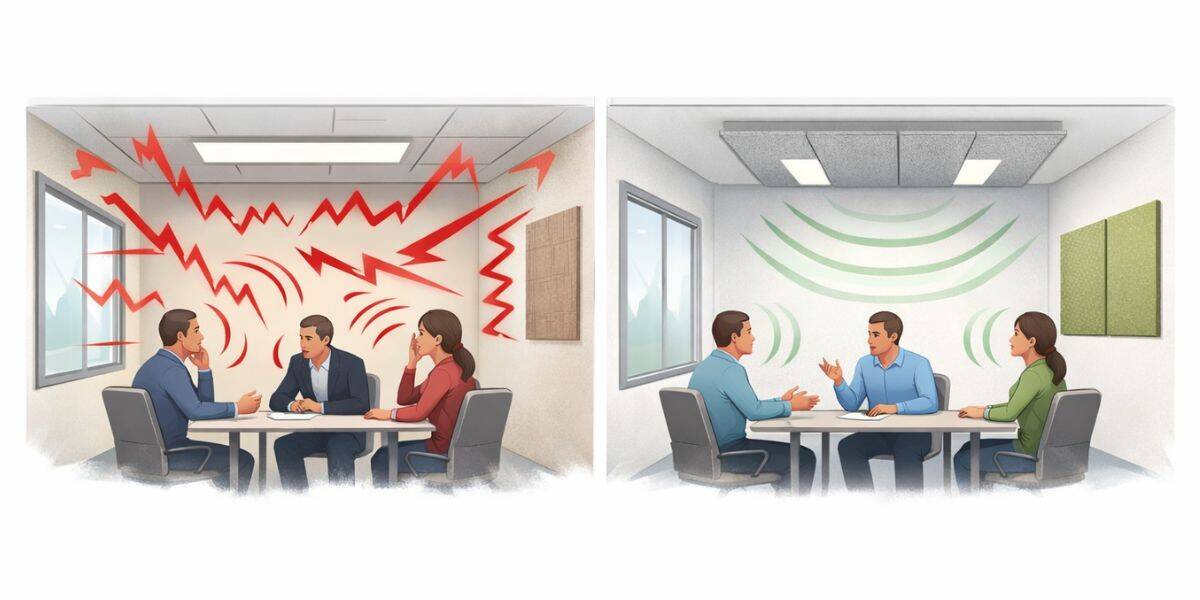
Âm thanh tòa nhà tốt đề cập đến cách âm thanh điều khiển không gian hiệu quả để phù hợp với mục đích sử dụng của nó. Điều này liên quan đến nhiều hơn mức độ ồn. Nó đòi hỏi sự hiểu biết cách âm thanh truyền đi, phản xạ và được người cư ngụ cảm nhận.
Một điểm khác biệt quan trọng là giữa hấp thụ âm thanh, chặn âm thanh và mặt nạ âm thanh. Sự hấp thụ âm thanh làm giảm tiếng vang và tiếng vang bằng cách thu năng lượng âm thanh hơn là phản xạ nó. Các vật liệu như bảng âm thanh, hệ thống trần và các sản phẩm dựa trên cảm giác hấp thụ sóng âm thanh và ngăn chúng nảy xung quanh phòng. Ngược lại, việc chặn âm thanh tập trung vào việc ngăn chặn âm thanh đi qua tường, sàn nhà hoặc trần nhà. Điều này thường đạt được thông qua việc xây dựng khối lượng, kín khí và tách kết cấu. Mặt nạ âm thanh không làm giảm tiếng ồn trực tiếp. Thay vào đó, nó giới thiệu một âm thanh nền có kiểm soát giúp tiếng ồn gây rối ít đáng chú ý hơn, điều này thường gặp trong các văn phòng không gian mở.
Acoustics thường bị coi là một từ đồng nghĩa với việc giảm tiếng ồn, nhưng quan điểm đó quá hẹp. Một không gian có thể yên tĩnh và vẫn có âm thanh kém nếu giọng nói không rõ ràng hoặc nếu căn phòng cảm thấy không thoải mái khi sử dụng. Trong văn phòng, âm thanh kém làm giảm sự tập trung và tăng tải nhận thức. Trong các tòa nhà dân cư, chúng ảnh hưởng đến sự riêng tư và chất lượng giấc ngủ. Trong trường học, âm thanh ảnh hưởng đến kết quả học tập và khả năng hiểu lời nói. Trong bệnh viện, chúng ảnh hưởng đến sự phục hồi của bệnh nhân và hiệu suất của nhân viên. Trong không gian thương mại, họ định hình trải nghiệm khách hàng và thời gian dành cho môi trường.
Âm thanh tòa nhà tốt cân bằng việc hấp thụ, chặn và bố trí các quyết định để hỗ trợ cách mọi người thực sự sử dụng không gian.
2. Các vấn đề âm thanh phổ biến trong các tòa nhà
Một số vấn đề âm thanh lặp lại xuất hiện trên các tòa nhà hiện đại, đặc biệt là khi thiết kế ưu tiên sự mở và hoàn thiện khó khăn.
- Tiếng vọng và sự vang dội quá mức
Âm thanh phản xạ liên tục từ các bề mặt chưa được xử lý sẽ gây ra tiếng ồn kéo dài, làm cho không gian cảm thấy to hơn và hỗn loạn hơn so với thực tế. - Vấn đề về khả năng hiểu lời nói
Âm thanh phản xạ cản trở lời nói trực tiếp, giảm sự rõ ràng trong phòng họp, lớp học, văn phòng mở và tăng mệt mỏi khi nghe. - Truyền tiếng ồn giữa các phòng
Âm thanh truyền qua tường, trần nhà, sàn nhà và hệ thống tòa nhà chung, ảnh hưởng đến sự riêng tư trong môi trường dân cư, văn phòng và chăm sóc sức khỏe. - lạm dụng quá nhiều bề mặt cứng
Các vật liệu như thủy tinh, bê tông, vách thạch cao, đá và kim loại phản ánh âm thanh hiệu quả và đóng góp ít vào việc kiểm soát âm thanh khi sử dụng mà không cần bù. - Trần cao và bố trí mở
Khối lượng lớn và bề mặt không bị gián đoạn làm tăng đường phản xạ, khuếch đại âm vang trừ khi sự hấp thụ được thêm vào một cách chiến lược.
3. Các cách thực tế để cải thiện âm thanh xây dựng
Cải thiện âm thanh không yêu cầu một giải pháp duy nhất. Kết quả hiệu quả đến từ việc kết hợp vật liệu, vị trí và chiến lược thiết kế nhằm giải quyết cách âm thanh hoạt động trong không gian.
bề mặt hấp thụ trên tường và trần nhà
Thêm hấp thụ vào bề mặt phòng là một trong những cách hiệu quả nhất để giảm tiếng vang và cải thiện độ rõ. Các tấm âm thanh treo tường thường được sử dụng, nhưng trần nhà thường không được sử dụng thấp mặc dù tác động của chúng. Âm thanh truyền đi lên trên và phản xạ các bề mặt trần, làm cho chúng trở thành một khu vực quan trọng để điều trị.
Các bề mặt hấp thụ nên được đặt ở nơi năng lượng âm thanh cao nhất, chẳng hạn như khu vực gần chỗ ngồi, máy trạm và vị trí nói. Mục tiêu không phải là bao phủ mọi bề mặt, mà là làm gián đoạn các đường phản xạ và kiểm soát thời gian vang dội.
Tại sao trần nhà lại quan trọng trong thiết kế âm thanh
Trần nhà ảnh hưởng đến âm thanh nhiều hơn nhiều người nhận ra. Trong không gian mở, phản xạ trần đóng góp rất nhiều vào mức độ ồn tổng thể. Xử lý trần nhà cho phép các nhà thiết kế kiểm soát âm thanh mà không phải hy sinh không gian tường có thể cần thiết để lưu trữ, trưng bày hoặc lắp kính.
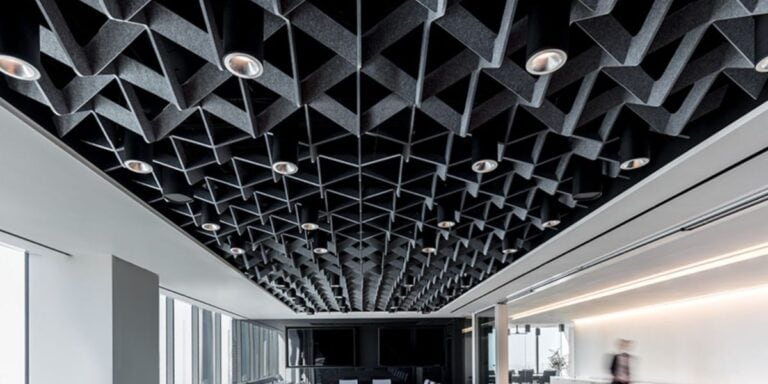
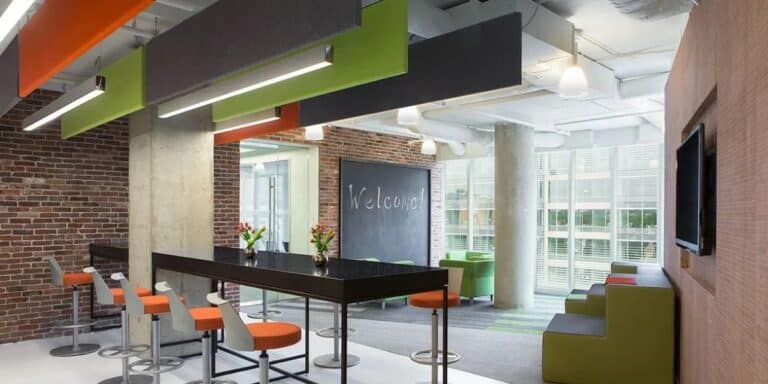
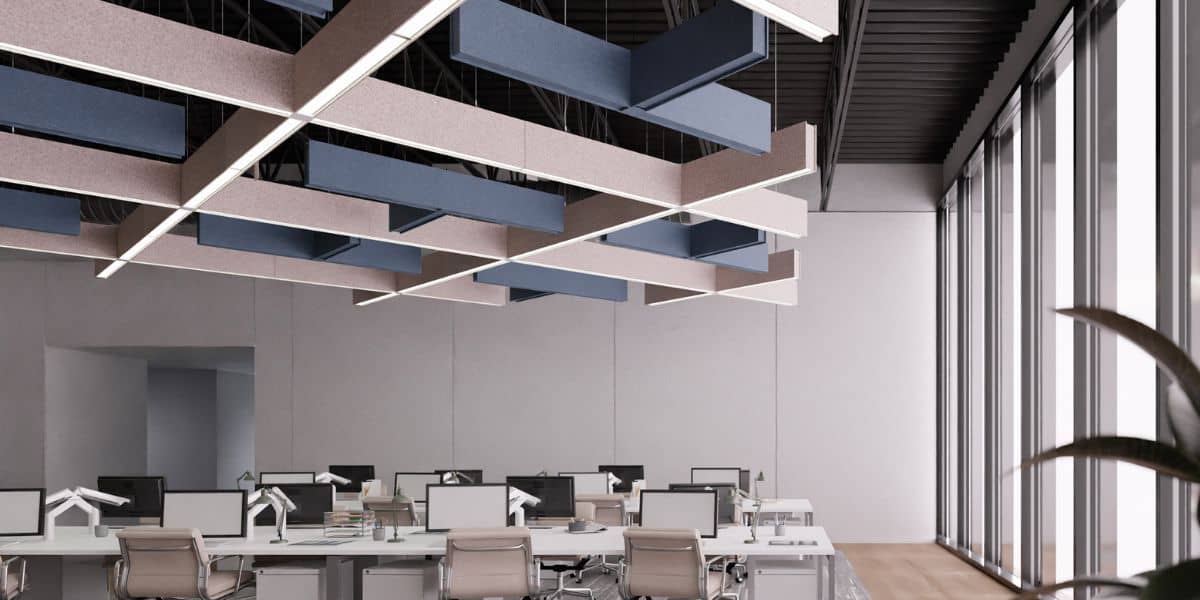
Các giải pháp dựa trên trần nhà bao gồm gạch âm thanh, vách ngăn và mây. Các hệ thống này đặc biệt hữu ích trong các không gian có trần cao hoặc diện tích tường hạn chế. Bằng cách đặt sự hấp thụ phía trên người ở, âm thanh được kiểm soát gần hơn với nguồn của nó.
Vai trò của đồ đạc âm thanh trong các tòa nhà hiện đại
Nội thất hiện đại thường đòi hỏi các yếu tố đa chức năng phục vụ cả mục đích kỹ thuật và thẩm mỹ. Đây là nơi mà các thiết bị âm thanh ngày càng đóng một vai trò quan trọng. Các yếu tố này kết hợp sự hấp thụ âm thanh với các chức năng khác, chẳng hạn như ánh sáng hoặc định nghĩa không gian.
Đồ đạc âm thanh đặc biệt có giá trị trong các văn phòng hiện đại và không gian công cộng, nơi thiết kế sạch sẽ và tính linh hoạt là ưu tiên hàng đầu. Chúng cho phép điều trị âm thanh được tích hợp vào thiết kế tổng thể hơn là được thêm vào như một suy nghĩ sau đó.
Cách âm thanh cải thiện âm thanh mà không phải hy sinh thiết kế
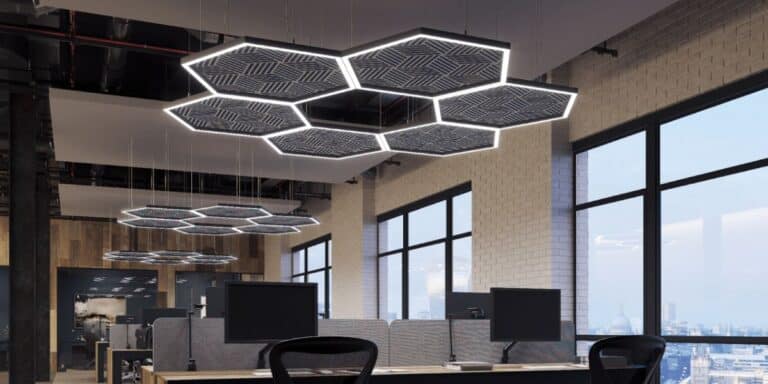
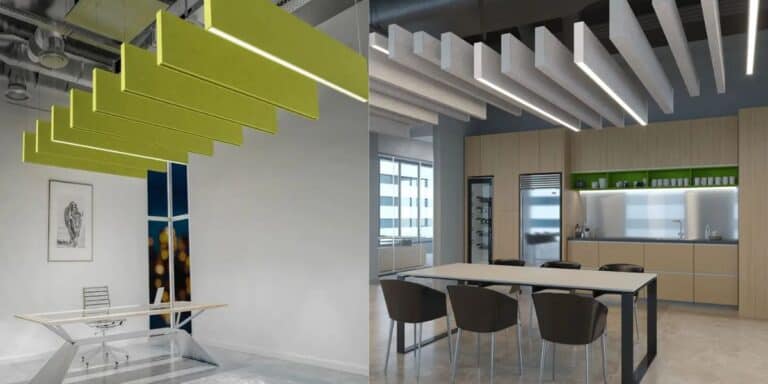
ánh sáng âm thanh Kết hợp vật liệu hấp thụ âm thanh với ánh sáng tích hợp. Cách tiếp cận này giải quyết hai hệ thống tòa nhà thiết yếu cùng một lúc: chiếu sáng và điều khiển âm thanh. Thay vì thêm các tấm ốp và đèn chiếu sáng riêng biệt, các nhà thiết kế có thể giảm bớt sự lộn xộn về thị giác đồng thời cải thiện hiệu suất.
Được sử dụng đúng cách, ánh sáng âm thanh giúp quản lý âm vang trong văn phòng mở, phòng hội nghị và không gian chung. Các sản phẩm được thiết kế cho mục đích này thường có dạng tấm treo hoặc đồ đạc có khả năng hấp thụ âm thanh đồng thời cung cấp ánh sáng chức năng. Khi được chỉ định một cách chu đáo, ánh sáng âm thanh trở thành một phần của ngôn ngữ kiến trúc của không gian hơn là một sự can thiệp thuần túy kỹ thuật. Ví dụ về các giải pháp tích hợp như vậy có thể được tìm thấy trong hệ thống chiếu sáng âm thanh hiện đại được thiết kế đặc biệt cho nội thất thương mại.
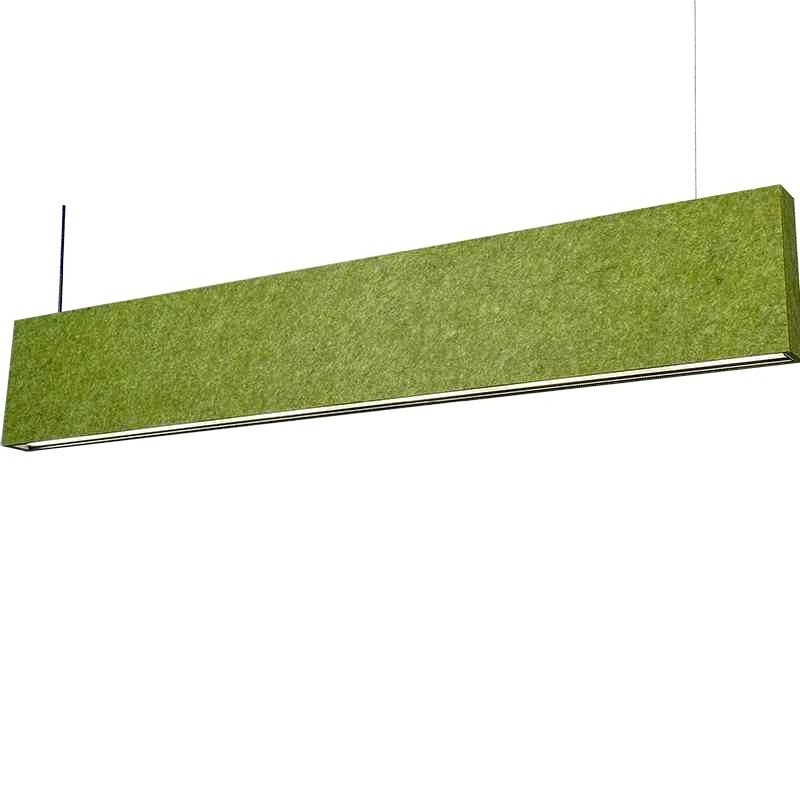
Đèn LED tuyến tính chống chói mỏng
- Điện áp đầu vào: AC100-277V / AC220-240V, 50-60Hz
- Kích thước nhà ở: W58 * H200 mm / W58 * H300mm
- Hướng phát ra: Xuống
- Tùy chọn chiều dài: 1218mm / 1220mm / 1288mm
- CCT: 3000k/4000k/6000k
- Công suất: 30W/32W
- Thông lượng phát sáng: 100-110lm / W
- CRI:> 90ra
- pf:> 0,90
- Flicker miễn phí: Có
- Góc chùm: 36 °
- IP cấp: IP20
- Bảo hành: 5 năm
- Bảng màu cảm ứng: Đỏ / Xanh lục / Xanh / Xám Hơn 48 Màu tùy chọn
Đèn chiếu sáng và đồ đạc trong nội thất hiện đại
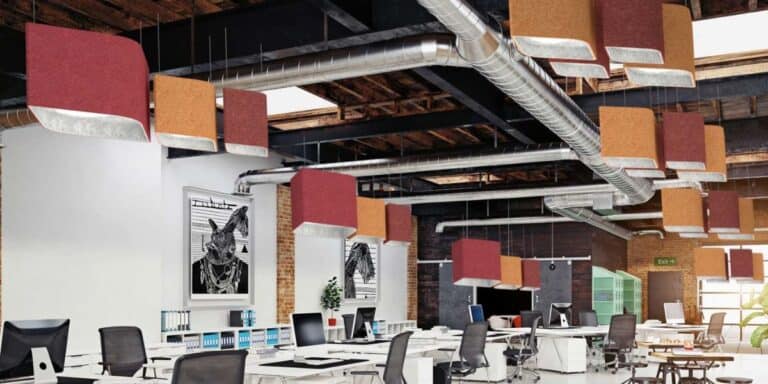
Vật liệu dựa trên nỉ ngày càng được sử dụng nhiều hơn trong các ứng dụng âm thanh do tính chất hấp thụ và tính linh hoạt trong thiết kế của chúng. Ánh sáng và thiết bị chiếu sáng bằng nỉ làm dịu cả âm thanh và hình ảnh, làm cho chúng phù hợp với không gian hợp tác, phòng chờ và môi trường sáng tạo.
Các giải pháp này hoạt động tốt trong không gian mà mong muốn tính thẩm mỹ ấm hơn, kém kỹ thuật. Các thiết bị âm thanh dựa trên cảm giác có thể làm giảm âm vang tần số trung bình và cao đồng thời góp phần tạo nên bầu không khí thoải mái hơn.
4. Mẹo thiết kế cải thiện âm thanh
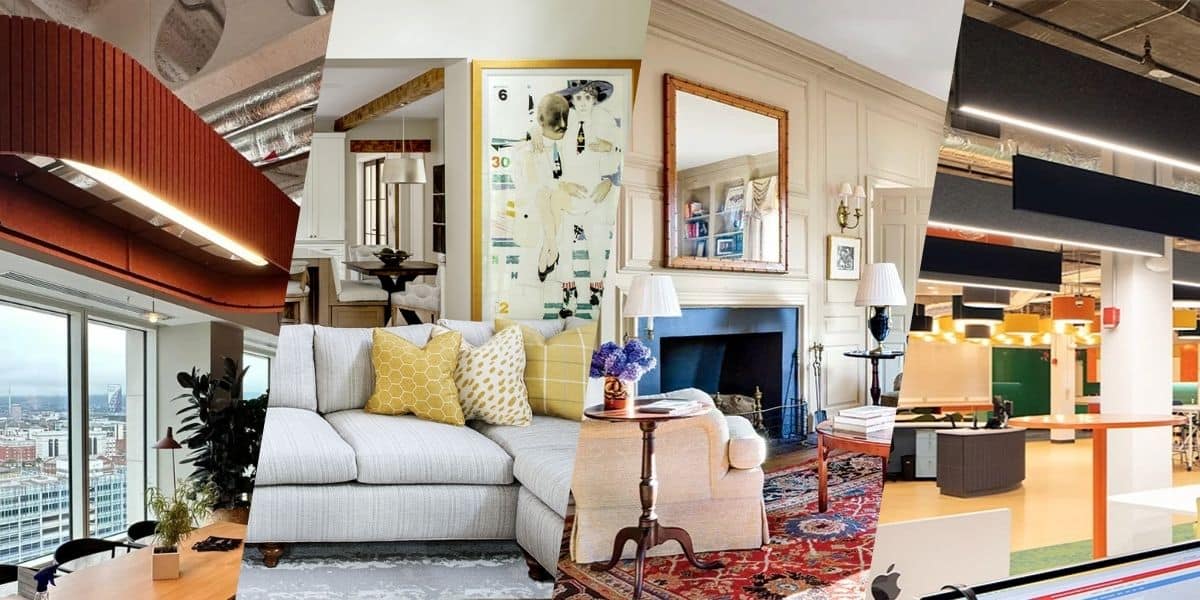
Nhiều cải tiến âm thanh có thể đạt được thông qua lựa chọn thiết kế và bố trí mà không làm thay đổi cấu trúc tòa nhà.
- Chiến lược khoanh vùng
Tách các hoạt động ồn ào khỏi các hoạt động yên tĩnh bằng cách lập kế hoạch bố trí có chủ ý, chẳng hạn như đặt các khu vực họp cách xa các khu vực làm việc tập trung. - Vị trí đồ nội thất
Ghế bọc đệm, giá sách, vách ngăn và bộ phận lưu trữ giúp hấp thụ và khuếch tán âm thanh khi được định vị dọc theo các đường phản chiếu. - Sử dụng vật liệu mềm và hoàn thiện
Thảm, thảm, rèm và đồ nội thất bọc vải làm giảm âm thanh phản xạ, đặc biệt là trong không gian dân dụng và hỗn hợp. - Ưu tiên vị trí hơn số lượng
Một số ít các yếu tố hấp thụ được đặt tốt thường hoạt động tốt hơn so với việc xử lý quá mức mà không có logic âm thanh.
5. Vật liệu âm thanh và giải pháp so sánh
| Loại giải pháp | Chức năng chính | trường hợp sử dụng tốt nhất | lời ghi chép |
| Tấm tường âm thanh | sự thấm nước | văn phòng, hành lang | Giảm tiếng vang và cải thiện độ rõ |
| vách ngăn hoặc mây | sự thấm nước | Không gian mở | Điều khiển âm vang từ trên cao |
| Tấm chiếu sáng âm thanh | ánh sáng và sự hấp thụ | Văn phòng, không gian làm việc chung | Giải pháp song song |
| Thiết bị chiếu sáng nỉ | hấp thụ và thiết kế | Nội thất hiện đại | Cân bằng trực quan và âm thanh |
| Hệ thống mặt nạ âm thanh | Kiểm soát phân tâm | Mở văn phòng | Hỗ trợ chiến lược hấp thụ |
So sánh này cho thấy rằng không có giải pháp nào giải quyết mọi thách thức về âm thanh. Mỗi tùy chọn phục vụ một vai trò cụ thể trong một chiến lược âm thanh rộng hơn.
6. Nơi ánh sáng âm thanh phù hợp nhất trong thiết kế tòa nhà
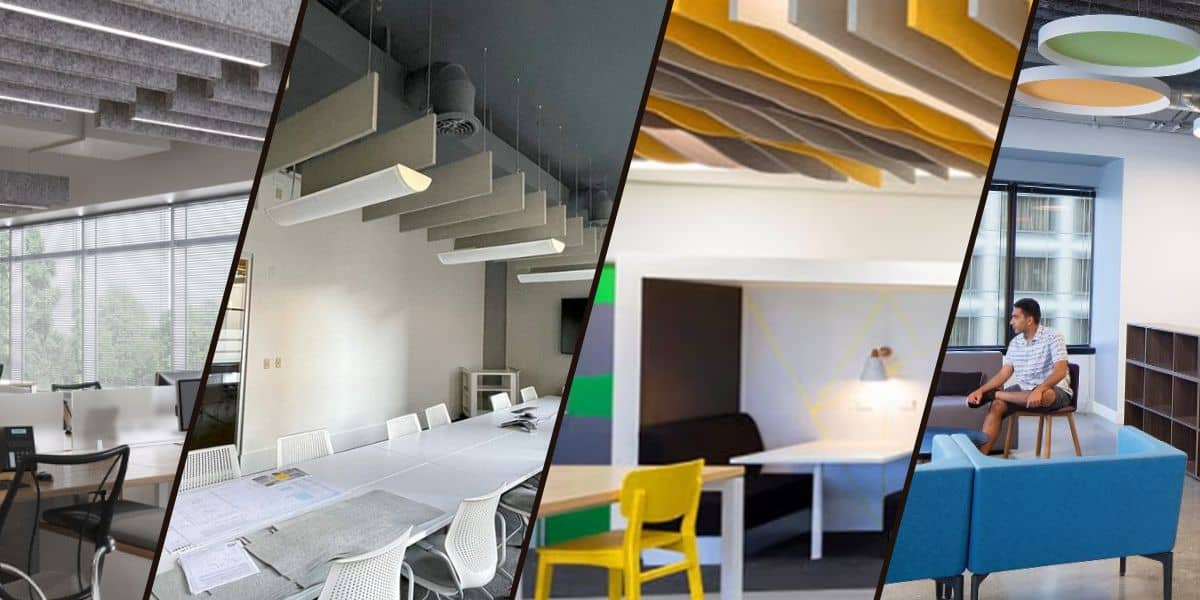
Ánh sáng âm thanh hiệu quả nhất trong không gian mà cả điều khiển âm thanh và chất lượng ánh sáng đều rất quan trọng và nơi các giải pháp dựa trên tường bị hạn chế.
trong Văn phòng và không gian làm việc chung, ánh sáng âm thanh giúp quản lý tiếng ồn trong môi trường không gian mở. Nó làm giảm âm vang trong khi cung cấp ánh sáng phù hợp, phù hợp với nhiệm vụ. Điều này hỗ trợ tập trung và giảm mệt mỏi mà không làm thay đổi tính chất mở của không gian.
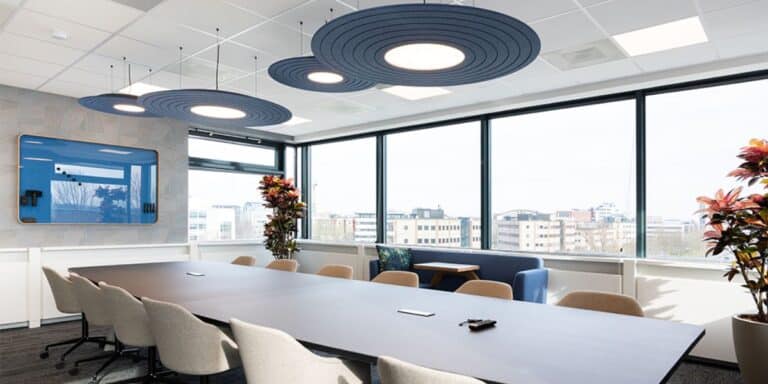
phòng hội nghị Lợi ích từ ánh sáng âm thanh vì sự rõ ràng của giọng nói là điều cần thiết. Sự hấp thụ trên trần nhà gần bàn làm giảm phản xạ cản trở cuộc trò chuyện, trong khi ánh sáng tích hợp đảm bảo khả năng hiển thị đồng đều cho người tham gia.
tòa nhà giáo dục Thường phải đối mặt với những hạn chế đối với không gian tường do ván, màn hình và lưu trữ. Tấm chiếu sáng âm thanh Cung cấp sự hấp thụ mà không cạnh tranh với các yếu tố tường chức năng, cải thiện khả năng nói về giọng nói trong lớp học và không gian giảng bài.
Chăm sóc sức khỏe và không gian công cộng Yêu cầu âm thanh hỗ trợ sự bình tĩnh và riêng tư. Ánh sáng âm thanh có thể giúp giảm tiếng ồn xung quanh trong các khu vực chờ và hành lang trong khi vẫn duy trì thiết kế trần sạch sẽ, gọn gàng.
Trong tất cả các trường hợp này, bảng chiếu sáng âm thanh đặc biệt hữu ích khi không gian tường bị hạn chế hoặc nhạy cảm với thị giác, làm cho tích hợp trần trở thành cách tiếp cận thực tế nhất.
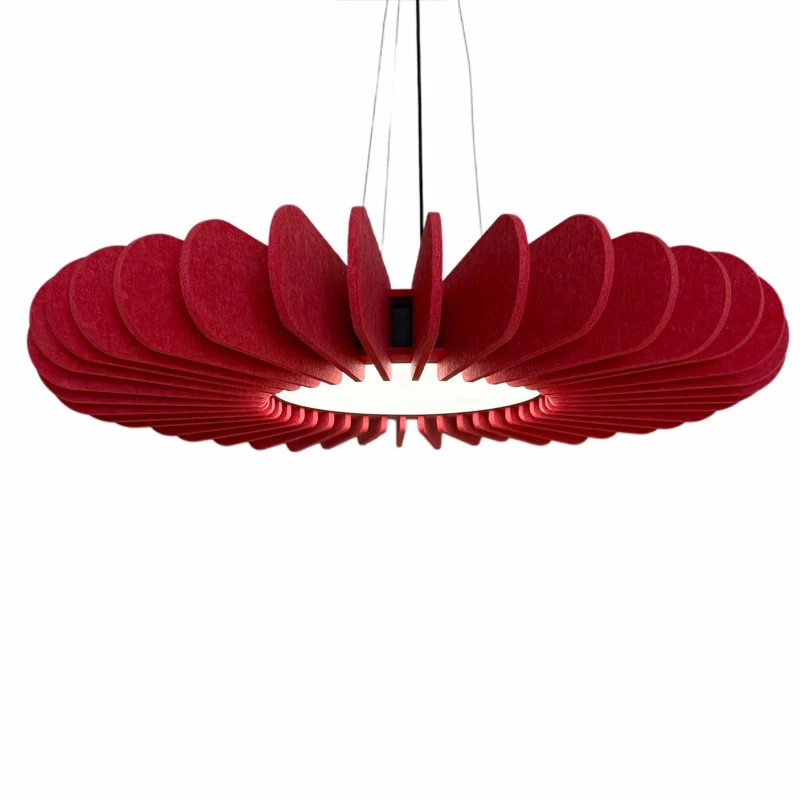
Đèn LED siêu mỏng tròn mỏng
- Điện áp đầu vào: AC100-277V / AC220-240V, 50-60Hz
- Kích thước nhà ở: 120 mm
- Hướng phát ra: Xuống
- Kích thước DH: 50080mm
- CCT: 3000k/4000k/6000k
- Công suất: 15W
- Thông lượng phát sáng: 100-110lm / W
- CRI:> 90ra
- pf:> 0,90
- Fllicker miễn phí: Có
- Góc chùm: 120 °
- IP cấp: IP20
- Bảo hành: 5 năm
- Tùy chọn màu sắc bảng điều khiển: Đỏ / Xanh lục / Xanh / Xám Tùy chọn nhiều hơn 48 màu
7 . Những sai lầm phổ biến trong thiết kế âm thanh
Ngay cả các dự án có thiện chí thường không thành công do các giả định thiết kế có thể tránh được.
- Bỏ qua bề mặt trần
Chỉ xử lý các bức tường để lại một mặt phẳng phản xạ lớn, đặc biệt là trong các phòng có sàn cứng. - Dựa vào các yếu tố trang trí mà không có giá trị âm thanh
Không phải tất cả các vật liệu mềm trực quan đều hấp thụ âm thanh một cách hiệu quả, dẫn đến cải tiến tối thiểu trong thế giới thực. - Mong đợi một giải pháp để giải quyết tất cả các vấn đề
Acoustic đòi hỏi một cách tiếp cận dựa trên hệ thống kết hợp các chiến lược hấp thụ, chặn và bố trí. - Vị trí kém của các yếu tố âm thanh
Ngay cả vật liệu chất lượng cao kém hiệu quả khi được lắp đặt cách xa các điểm phản xạ chính hoặc nguồn âm thanh.
8. 2026 Xu hướng xây dựng âm học
Xây dựng âm học đang hướng tới tích hợp hơn là các giải pháp bổ sung. Các hệ thống kết hợp ánh sáng, hấp thụ và thậm chí quản lý không khí đang trở nên phổ biến hơn khi các nhà thiết kế tìm kiếm hiệu quả và sự rõ ràng về hình ảnh.
thuộc về mô đất đồ đạc âm thanh đang trở nên phổ biến vì chúng thích ứng với việc thay đổi bố cục, đặc biệt là trong môi trường làm việc lai. Tính linh hoạt hiện nay là yêu cầu cốt lõi.
Ngoài ra còn có sự tập trung ngày càng tăng vào hạnh phúc. Âm học ngày càng được công nhận là một yếu tố trong sức khỏe tâm thần, năng suất và sự thoải mái tổng thể, ảnh hưởng đến cách không gian được thiết kế từ những giai đoạn đầu tiên.
Phần kết luận
Cải thiện âm thanh xây dựng đòi hỏi một cách tiếp cận cân bằng. Các giải pháp hiệu quả kết hợp hấp thụ âm thanh, vị trí thông minh và hiểu biết về cách sử dụng không gian. Các bức tường, trần nhà, đồ đạc và bố cục đều góp phần vào hiệu suất âm thanh.
Các giải pháp tích hợp như ánh sáng âm thanh và thiết bị âm thanh được thiết kế tốt cho phép điều khiển âm thanh cùng tồn tại với các yêu cầu thiết kế hiện đại. Khi được áp dụng một cách chu đáo, những chiến lược này tạo ra không gian thoải mái, chức năng và hỗ trợ sức khỏe mà không dựa vào các phương pháp điều trị quá mức hoặc xâm nhập.
hỏi Ẩn
Bài viết liên quan