Tiếng Việt
  English
  简体中文
简体中文  Deutsch
  Español
  Français
  Italiano
  日本語
日本語  한국어
한국어  Polski
  Português
  Русский
  Türkçe
  Nederlands
  ไทย
ไทย 
Mua sắm ánh sáng thương mại không phải là một quyết định thiết kế. nó là một quyết định rủi ro. Hiệu suất chiếu sáng, mức độ tuân thủ, chi phí vận hành và bảo trì dài hạn đều phụ thuộc vào các thông số kỹ thuật có thể đo lường được. Tóm tắt tiếp thị không liên quan ở cấp độ này.
Đối với người mua B2B, tấm đèn led là tài liệu xác thực chính. Nó chứa các chỉ số đo quang, điện và môi trường xác định liệu một sản phẩm có hoạt động như được chỉ định sau khi lắp đặt hay không.
Hướng dẫn này giải thích bảy thông số kỹ thuật ảnh hưởng trực tiếp đến hiệu suất, độ tin cậy trong vòng đời và rủi ro dự án khi tìm nguồn cung ứng tấm đèn led hoặc các hệ thống liên quan. Mỗi số liệu có thể được xác minh trong tài liệu kỹ thuật. Mỗi loại có các tiêu chuẩn thương mại có thể đo lường được.
7 Thông số kỹ thuật Mọi người mua B2B nên kiểm tra
1. Hiệu quả phát sáng (LM/W)
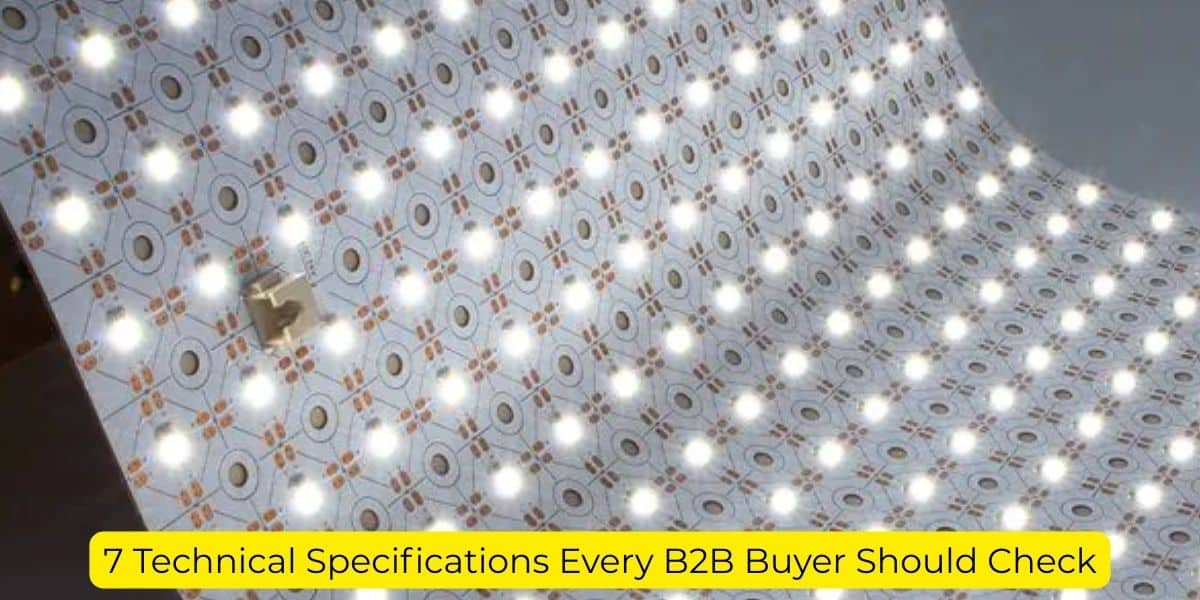
Hiệu quả phát sáng đo lường mức độ hiệu quả của điện năng được chuyển đổi thành ánh sáng nhìn thấy. Nó được biểu thị bằng lumen trên mỗi watt (Lm / W). Số liệu này thường bị nhầm lẫn với độ sáng, nhưng độ sáng được đo bằng lumen. Hiệu quả đo lường hiệu quả, không phải đầu ra.
Trong các hệ thống cấp thương mại, phạm vi thực tế cho một tấm đèn led thường 110–160 lm / w ở cấp hệ thống, tùy thuộc vào chất lượng trình điều khiển và quản lý nhiệt. Các số liệu trên phạm vi này thường phản ánh các giá trị phòng thí nghiệm cấp chip hơn là hiệu suất hệ thống tích hợp.
Trong các cài đặt thực tế, hiệu quả ảnh hưởng trực tiếp đến chi phí vận hành và tải nhiệt. Một tấm hoạt động ở tốc độ 95 lm / w sẽ tiêu thụ nhiều năng lượng hơn đáng kể để đạt được mật độ lumen tương tự như một tấm hoạt động ở tốc độ 140 lm / w. Trên các đợt triển khai bán lẻ hoặc biển báo lớn, sự khác biệt đó sẽ làm tăng chi phí có thể đo lường được.
Nếu bị bỏ qua, các nhóm mua sắm có nguy cơ phê duyệt các sản phẩm đáp ứng các mục tiêu về độ sáng nhưng không thành công các giả định về mô hình hóa năng lượng. Để xác minh, hãy kiểm tra trường “Hệ thống phát sáng” hoặc “Lumens trên mỗi watt” trong bảng đèn LED, không chỉ thông số kỹ thuật của chip LED.
2. Tổng sản lượng lumen (Lm / m²)
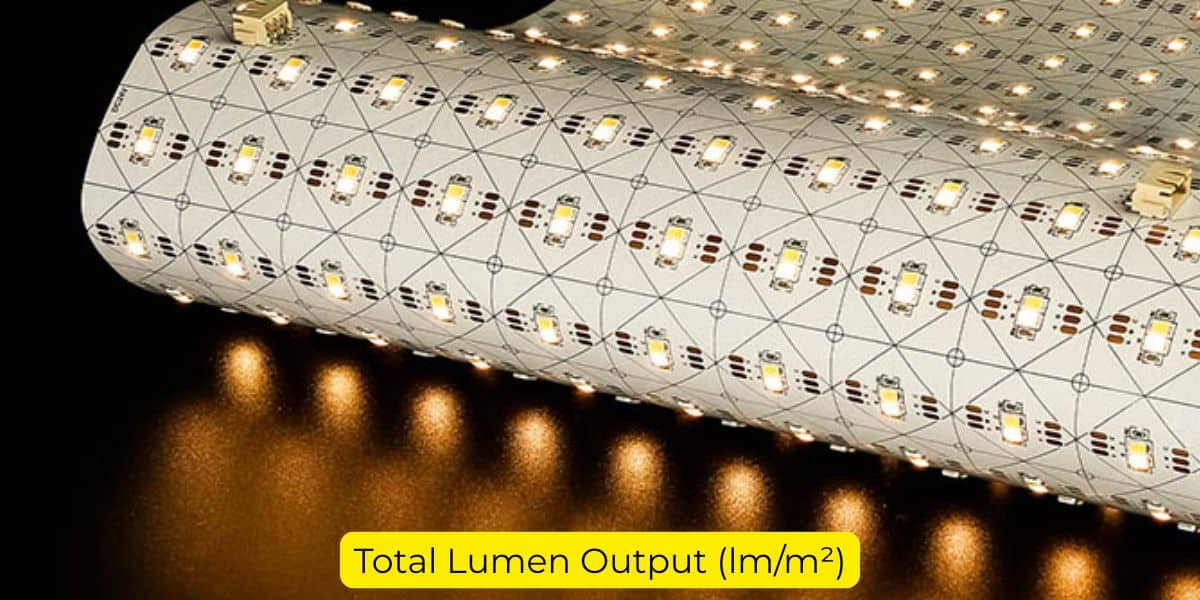
Tổng sản lượng lumen trên mỗi mét vuông xác định mật độ độ sáng có thể sử dụng được. Đối với các hệ thống dựa trên tấm, mật độ lumen phù hợp hơn tổng số lumen trên mỗi dải vì khu vực lắp đặt thúc đẩy hiệu suất trực quan.
Đèn nền kiến trúc nội thất thường yêu cầu 3.000–6.000 lm / m², tùy thuộc vào độ sâu khuếch tán. Các ứng dụng bảng hiệu và hộp đèn bán lẻ có thể yêu cầu 6.000–10.000+ lm / m², đặc biệt là trong môi trường xung quanh cao. Đây là nơi a Tấm đèn LED độ sáng cao trở nên cần thiết.
Nếu mật độ lumen không được xác định, kết quả là ánh sáng không đồng đều, bóng mờ đằng sau đồ họa hoặc các điểm nóng có thể nhìn thấy. Việc bù đắp quá mức với các tấm bổ sung làm tăng mức tiêu thụ điện năng và độ phức tạp của hệ thống dây điện.
Xác minh xuất hiện trong bảng đèn LED trong “Tổng sản lượng lumen”, “thông lượng phát sáng trên mỗi khu vực” hoặc kết quả kiểm tra trắc quang. Người mua nên xác nhận khoảng cách thử nghiệm và điều kiện đo lường.
3. CRI & LED nhất quán
Chỉ số kết xuất màu (CRI) đo lường chính xác mức độ chính xác của nguồn sáng so với ánh sáng tự nhiên. Đối với hầu hết các môi trường thương mại, CRI ≥80 là đường cơ sở. môi trường bán lẻ, thời trang và thương hiệu thường yêu cầu CRI ≥90.
Ngoài CRI, tính nhất quán của binning là rất quan trọng. Các nhà sản xuất LED phân loại điốt vào thùng dựa trên độ sắc. Nếu dung sai thùng không được kiểm soát chặt chẽ, các bản triển khai nhiều trang web có thể hiển thị sự thay đổi màu sắc có thể nhìn thấy giữa các lần cài đặt.
Trong triển khai trong thế giới thực, việc đóng thùng không nhất quán tạo ra sự không nhất quán thương hiệu trên các mạng cửa hàng. Các bức tường được lắp đặt cách nhau vài tháng có thể không khớp với nhau về mặt thị giác. Đó là một lỗi mua sắm, không phải là một vấn đề cài đặt.
Tấm đèn LED nên chỉ định giá trị CRI và dung sai màu, thường được biểu thị bằng SDCM (độ lệch chuẩn của màu sắc phù hợp). Một tiêu chuẩn thương mại là ≤3 SDCM cho vẻ ngoài đồng đều.
4. Độ chính xác của nhiệt độ màu (CCT)
Nhiệt độ màu tương quan (CCT) xác định độ ấm hoặc độ mát của ánh sáng trắng. Các tiêu chuẩn thương mại thường bao gồm:
- 3000K cho sự hiếu khách và môi trường bán lẻ ấm áp
- 4000K Đối với văn phòng và nội thất thương mại nói chung
- 6500K cho không gian kỹ thuật hoặc khả năng hiển thị cao
Độ chính xác cũng quan trọng như giá trị danh nghĩa. Hệ thống 4000K với dung sai ± 500K có thể tạo ra sự thay đổi đáng chú ý giữa các lô.
Trong các công trình kiến trúc, CCT thay đổi không chính xác làm thay đổi nhận thức vật liệu và nhận dạng thương hiệu. Trong các dự án nhiều pha, phạm vi nhiệt độ không khớp tạo ra sự phân đoạn có thể nhìn thấy giữa các phần.
Tấm đèn LED nên nêu CCT danh nghĩa và phạm vi dung sai. Tìm từ ± 100K đến ± 300K dung sai trong các sản phẩm thương mại. Dung sai rộng hơn làm tăng nguy cơ không nhất quán về thị giác.
5. Bảo trì lumen (L70 & TM-21)
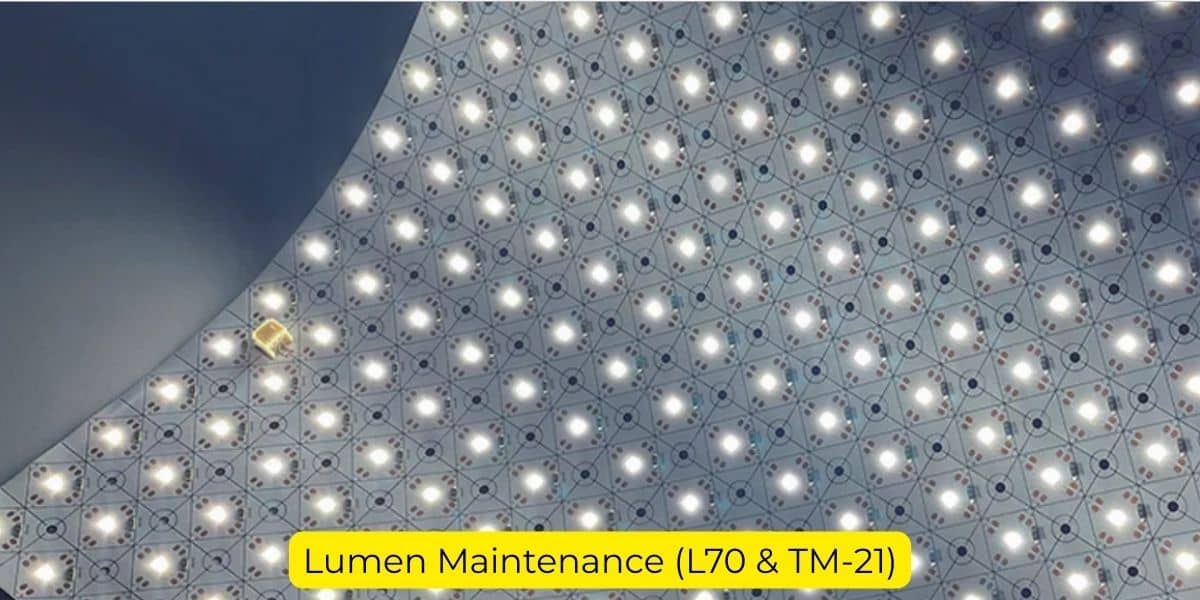
L70 đại diện cho số giờ hoạt động cho đến khi sản lượng ánh sáng giảm xuống 70% giá trị ban đầu. nó không phải là một điểm thất bại. Đó là ngưỡng khấu hao.
Các nhà sản xuất thường ghi “50.000 giờ” mà không có ngữ cảnh. Xác nhận quan trọng hơn là Dữ liệu thử nghiệm LM-80 kết hợp với phương pháp chiếu TM-21. TM-21 ngoại suy duy trì lumen lâu dài dựa trên hiệu suất đo được.
chỉ phương hướng dự án thương mại, hệ thống đáng tin cậy cung cấp l70 ≥50.000 giờ ở nhiệt độ môi trường quy định, được hỗ trợ bởi các tính toán TM-21. Nếu không có TM-21, các yêu cầu về tuổi thọ không được chứng minh về mặt kỹ thuật.
Nếu bị bỏ qua, người mua có nguy cơ mất giá sớm, dẫn đến độ sáng không đồng đều trên các khu vực lắp đặt. Trong tấm đèn LED, hãy xác minh tham chiếu LM-80, báo cáo chiếu TM-21 và điều kiện nhiệt độ thử nghiệm.
6. Xếp hạng IP & Bảo vệ môi trường
Xếp hạng bảo vệ xâm nhập (IP) cho biết khả năng chống bụi và độ ẩm. Định dạng xếp hạng theo IPXX, trong đó chữ số đầu tiên liên quan đến chất rắn và chữ số thứ hai với chất lỏng.
ip20 là điển hình cho việc lắp đặt khô trong nhà.
ip65 hoặc cao hơn là bắt buộc đối với biển báo, mặt tiền bên ngoài, hoặc môi trường tiếp xúc với độ ẩm.
Trong các ứng dụng Lightbox hoặc Façade, ngưng tụ có thể làm suy giảm mạch và rút ngắn tuổi thọ hoạt động. Ngay cả các biển báo bán lẻ bên trong gần lối vào cũng có thể yêu cầu bảo vệ IP trên cao.
Nếu đánh giá môi trường không đủ, sự ăn mòn và hỏng hóc của trình điều khiển xảy ra trước khi vòng đời dự kiến. Bảng đèn LED nên liệt kê rõ ràng xếp hạng IP, tiêu chuẩn kiểm tra và phạm vi nhiệt độ hoạt động.
7 .Tiện thế & khả năng tương thích mờ
Hệ thống tấm LED thương mại thường hoạt động ở 24V DC, hỗ trợ phân phối ổn định trên các bảng lớn hơn và giảm điện áp giảm so với hệ thống 12V.
Khả năng tương thích mờ phải phù hợp với hệ thống điều khiển tòa nhà. Các tiêu chuẩn thương mại chung bao gồm 0-10V analog dimming Và Điều khiển kỹ thuật số Dali. Dự án kết hợp Tấm ánh sáng LED có thể điều chỉnh độ sáng và RGBW Yêu cầu xác nhận khả năng tương thích của trình điều khiển.
Sự không tương thích dẫn đến các đường cong nhấp nháy, không đồng đều hoặc tích hợp với hệ thống tự động hóa tòa nhà. Những vấn đề này thường xuất hiện sau khi lắp đặt khi khắc phục rất tốn kém.
Bảng đèn LED phải chỉ định điện áp hoạt động, độ dài chạy tối đa, loại trình điều khiển, khả năng tương thích giao thức làm mờ và tần số PWM khi có liên quan.
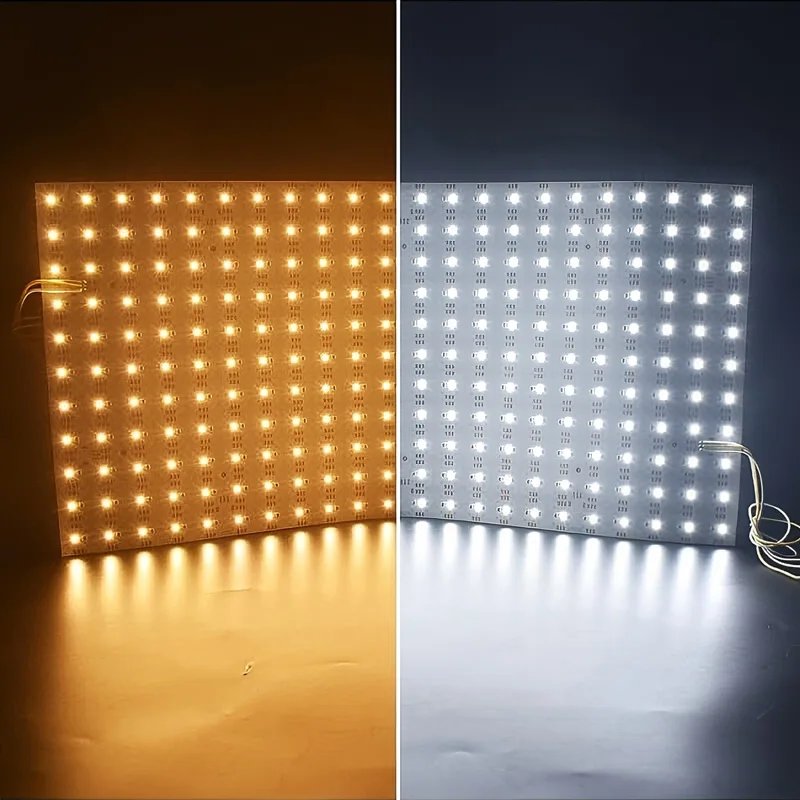
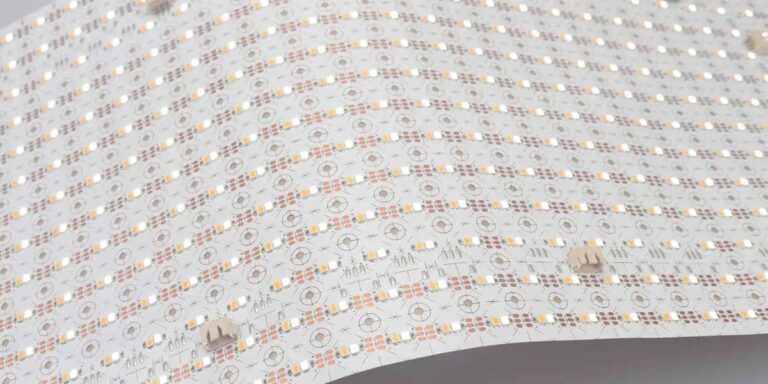
tấm LED trắng có thể điều chỉnh
- Kích thước (L x W): 250mmx250 mm / 490mmx245mm
- Loại LED: 2835 SMD
- Số lượng LED: 200 cái/484 chiếc
- Điện áp làm việc: DC 24V
- Sức mạnh: 16W / 40W
- Nhiệt độ màu điều chỉnh phạm vi: 2700K-6500K
- Thông lượng phát sáng: 1600LM / 3800LM
- CRI: > 90ra
- Chiều dài cắt tối thiểu: 25mmx25mm/22.3mmx22.3mm
- Có thể làm mờ: vâng
- Góc chùm: 120 °
- Mức độ không thấm nước: IP20 không thấm nước, chống nước IP54
- Bảo hành: 3 năm
Danh sách kiểm tra tóm tắt cho người mua B2B
| Thông số kỹ thuật | Những gì cần xác minh | chuẩn đánh giá | rủi ro nếu bị bỏ qua |
| Hiệu quả sáng | Hệ thống LM/W | 110–160 lm / w | Chi phí năng lượng cao hơn, nhiệt dư thừa |
| Tổng sản lượng lumen | lm / m² trong điều kiện thử nghiệm | 3.000–10.000 + lm / m² tùy theo mục đích sử dụng | Độ sáng không đều, bóng |
| CRI & Binning | Giá trị CRI, dung sai SDCM | CRI ≥80 (≥90 bán lẻ), ≤3 SDCM | Sự không nhất quán về màu sắc trên các trang web |
| Độ chính xác của CCT | CCT danh nghĩa và dung sai | ±100K đến ±300K | Sự không phù hợp trực quan giữa các lô |
| bảo trì lumen | Dữ liệu LM-80 & TM-21 | l70 ≥50.000 giờ được hỗ trợ bởi TM-21 | Mất độ sáng sớm |
| Xếp hạng IP | Phân loại IP & phạm vi nhiệt độ | IP20 trong nhà, biển báo IP65 | Độ ẩm hư hỏng, ăn mòn |
| Điện áp & làm mờ | Thông số kỹ thuật 24V, khả năng tương thích điều khiển | 24V, 0-10V hoặc Dali | nhấp nháy, tích hợp thất bại |
cách đọc thông số kỹ thuật đèn LED
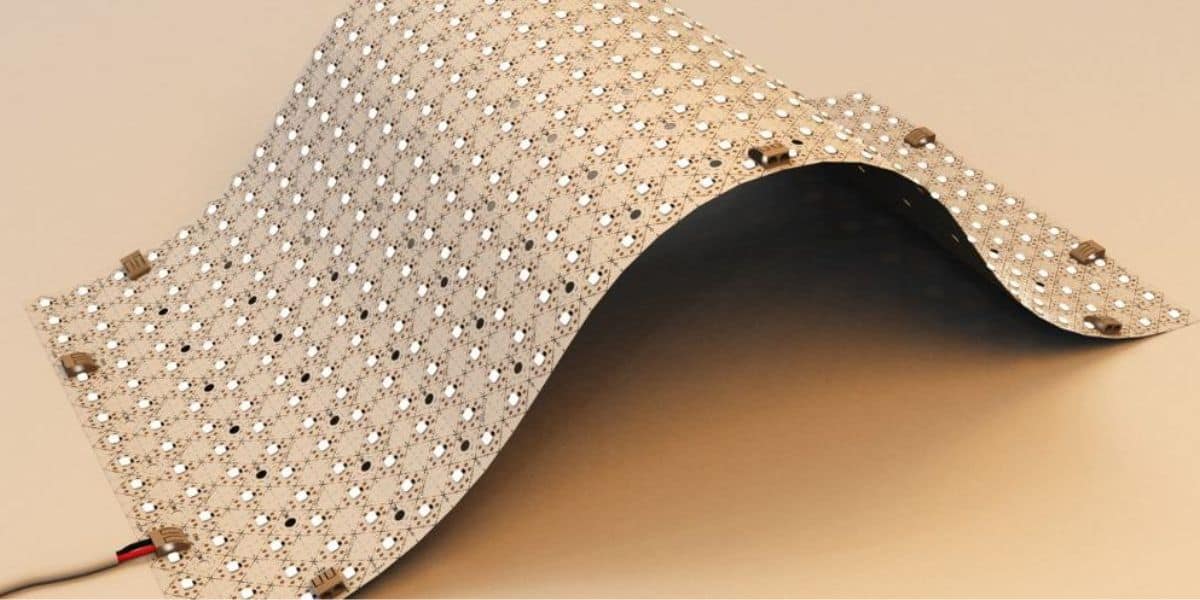
Tấm đèn LED được cấu trúc thành các phần đo quang, điện, nhiệt và tuân thủ. Hiệu quả phát sáng và tổng sản lượng lumen xuất hiện dưới hiệu suất trắc quang. Khả năng chịu đựng CRI, CCT và độ sắc thường được nhóm trong các đặc điểm màu sắc. Điện áp, dòng điện và độ tương thích mờ được tìm thấy trong bảng thông số kỹ thuật điện.
Tuyên bố bảo trì Lumen nên tham chiếu đến các báo cáo thử nghiệm LM-80 và bao gồm các dự báo TM-21. Nếu tuổi thọ được nêu mà không có dữ liệu LM-80, yêu cầu bồi thường thiếu nền tảng kỹ thuật. Tương tự, việc bỏ qua phân loại BIN hoặc dung sai SDCM cho thấy rủi ro không nhất quán về màu sắc tiềm ẩn.
Bảo vệ môi trường xuất hiện dưới các thông số kỹ thuật cơ học hoặc tuân thủ. Nếu xếp hạng IP được liệt kê mà không có tiêu chuẩn tham chiếu, cần phải làm rõ trước khi phê duyệt.
Tài liệu không đầy đủ Tín hiệu tiếp xúc mua sắm. Một nhà cung cấp thương mại nên cung cấp một bảng dữ liệu chi tiết, không phải là một tờ rơi tiếp thị đơn giản.
Những sai lầm mua sắm thường gặp
Một lỗi thường xuyên là phê duyệt các sản phẩm chỉ dựa trên tổng sản lượng lumen mà không xác nhận mật độ lumen trên mỗi khu vực. Một người khác đang chấp nhận các khiếu nại trọn đời mà không xác minh dữ liệu chiếu TM-21. Người mua nhiều địa điểm thường bỏ qua dung sai thùng, dẫn đến sự thay đổi màu sắc có thể nhìn thấy được trên các chi nhánh. Khả năng tương thích điện áp đôi khi được giả định thay vì xác nhận, dẫn đến việc thay thế trình điều khiển trong quá trình vận hành.
Mỗi lỗi này bắt nguồn từ việc xem xét không đủ các tấm đèn LED.
Phần kết luận
Mua sắm tấm LED thương mại là một quá trình đánh giá kỹ thuật. Hiệu suất, chi phí vận hành và độ tin cậy vòng đời phụ thuộc vào các thông số kỹ thuật có thể đo lường được, không phải tóm tắt tiếp thị.
Mọi quyết định phê duyệt phải được hỗ trợ bởi một tấm đèn LED đã được xác minh. Khi tài liệu xác nhận hiệu quả, mật độ lumen, độ ổn định màu sắc, bảo vệ môi trường và khả năng tương thích điện, rủi ro dự án sẽ giảm đáng kể.
Không bao giờ dựa vào các tuyên bố trên tiêu đề. Xác thực dữ liệu trước khi triển khai.
hỏi Ẩn
Bài viết liên quan