Tiếng Việt
  English
  简体中文
简体中文  Deutsch
  Español
  Français
  Italiano
  日本語
日本語  한국어
한국어  Polski
  Português
  Русский
  Türkçe
  Nederlands
  ไทย
ไทย 
Trong thiết kế không gian thương mại hiện đại, các vấn đề về tiếng ồn và độ vang ngày càng nổi bật, đặc biệt là trong các môi trường như văn phòng không gian mở và phòng hội nghị. Mức độ ồn quá mức ảnh hưởng nghiêm trọng đến hiệu quả công việc và trải nghiệm của khách hàng. Sự phản xạ và tiếng vang của tiếng ồn không chỉ làm cho không gian cảm thấy ồn ào mà còn làm giảm sự giao tiếp và tập trung.
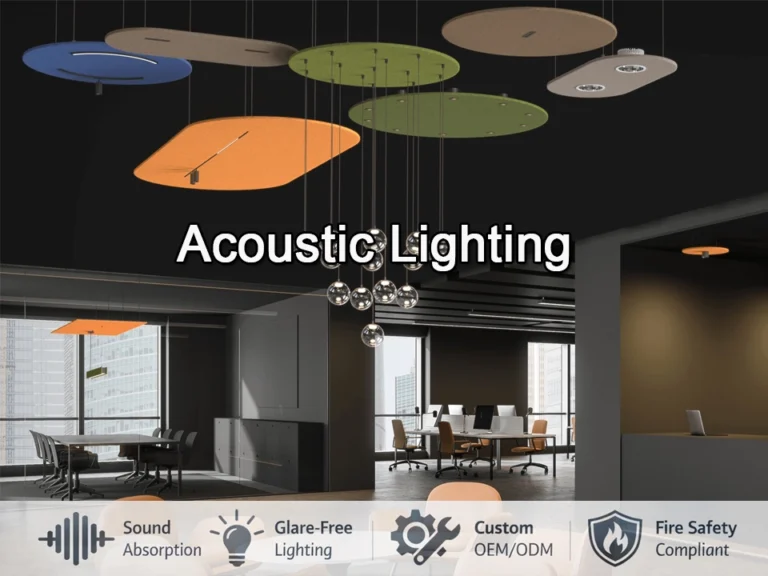
Thiết bị chiếu sáng âm thanh cung cấp một giải pháp sáng tạo, cung cấp ánh sáng chất lượng cao đồng thời có hiệu quả hấp thụ và giảm tiếng ồn để tăng cường môi trường âm thanh. Những vật cố định này tích hợp vật liệu âm thanh với chức năng chiếu sáng, mang lại lợi ích kép cho không gian thương mại — đặc biệt là kiểm soát tiếng ồn.
Khi chọn ánh sáng LED âm thanh, xếp hạng hệ số giảm tiếng ồn (NRC) đóng vai trò là thước đo chính để đánh giá hiệu suất âm thanh. Xếp hạng NRC định lượng khả năng hấp thụ âm thanh của vật cố định, giúp người tiêu dùng chọn được những sản phẩm phù hợp nhất để tối ưu hóa thiết kế âm thanh của không gian.
Hiểu được tầm quan trọng của xếp hạng NRC đối với đèn LED âm thanh
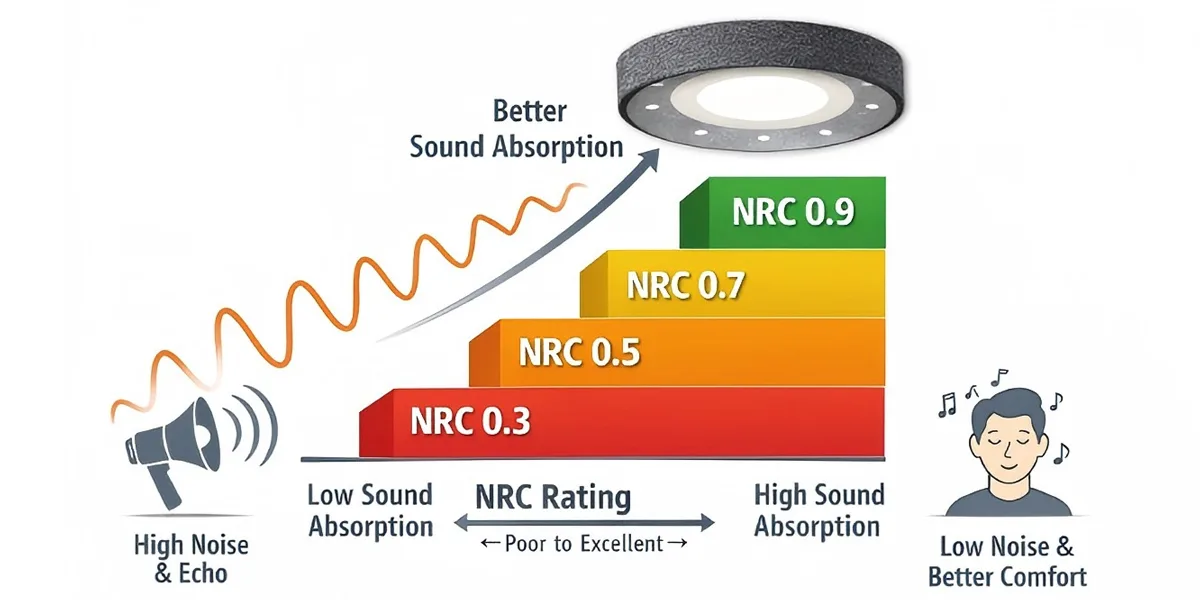
Khi chọn đèn led âm thanh, xếp hạng NRC đóng vai trò là một chỉ số quan trọng để đánh giá khả năng hấp thụ âm thanh của chúng. Thang điểm NRC nằm trong khoảng từ 0 đến 1, với điểm số cao hơn cho thấy đặc tính hấp thụ âm thanh vượt trội. Ánh sáng hấp thụ âm thanh với xếp hạng NRC cao có thể làm giảm đáng kể tiếng vọng và tiếng ồn trong một không gian, do đó nâng cao chất lượng âm thanh và sự thoải mái của nó. Điều này đặc biệt quan trọng trong môi trường văn phòng hiện đại, phòng hội nghị, bệnh viện và các môi trường tương tự.
Xếp hạng NRC không chỉ phản ánh khả năng hấp thụ âm thanh của vật liệu mà còn ảnh hưởng đến sự thoải mái âm thanh tổng thể của môi trường. Hiểu được điều này giúp người tiêu dùng lựa chọn được đèn LED hấp thụ âm thanh phù hợp nhất dựa trên nhu cầu cụ thể của mình.
Đánh giá NRC nào là phù hợp cho ánh sáng âm thanh?
Trước khi thảo luận về “điều gì tạo nên một NRC thích hợp”, điều cần thiết là trước tiên phải làm rõ định nghĩa về NRC và tầm quan trọng của nó trong ánh sáng âm thanh.
NRC (hệ số giảm nhiễu) là gì?
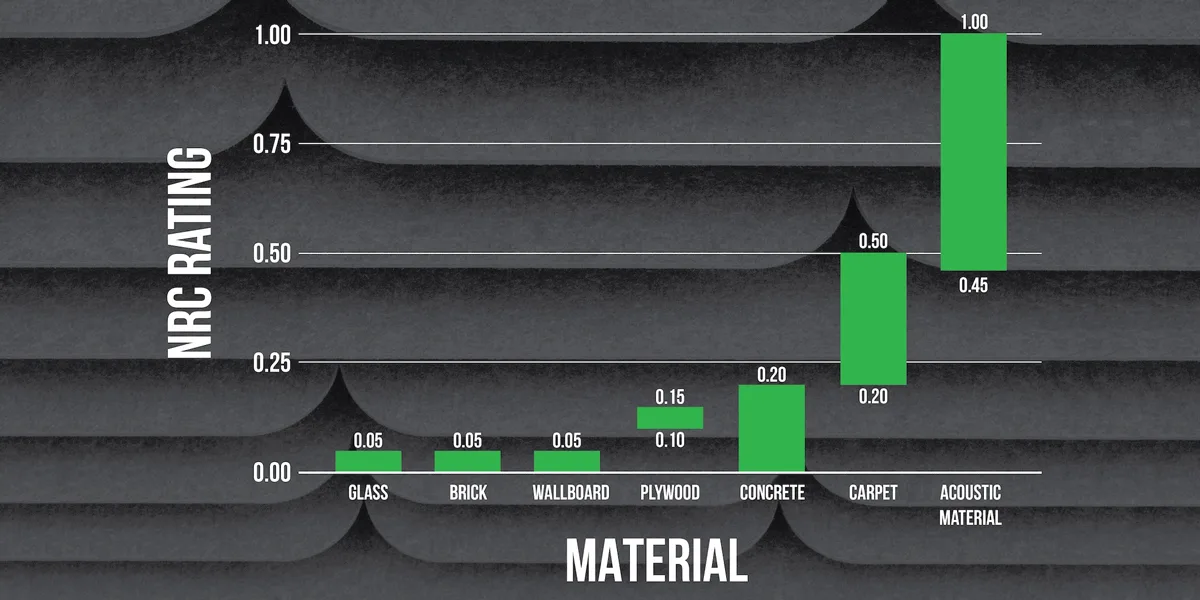
NRC (Hệ số giảm nhiễu) là một số liệu số được tiêu chuẩn hóa được sử dụng trong âm học để đo hiệu suất hấp thụ âm thanh của vật liệu. Nó được tính bằng cách đo hệ số hấp thụ âm thanh ở bốn tần số trung tâm (250 Hz, 500 Hz, 1000 Hz và 2000 Hz), lấy giá trị trung bình số học của chúng và làm tròn đến 0,05.
Phạm vi giá trị: 0,00–1,00
Ý nghĩa cơ bản: Từ góc độ âm thanh, giá trị cao hơn cho thấy khả năng hấp thụ âm thanh mạnh hơn, trong khi giá trị thấp hơn biểu thị sự phản xạ âm thanh rõ rệt hơn.
- nrc <0,20: thường được phân loại là vật liệu phản chiếu
- NRC ≥ 0,20: Có thể nhận biết là vật liệu hấp thụ âm thanh
- NRC ≥ 0,80: Thuộc loại vật liệu hấp thụ âm thanh cao, thích hợp cho những không gian có yêu cầu về âm thanh cao
Xếp hạng NRC ảnh hưởng như thế nào đến hiệu suất chiếu sáng âm thanh?
Trong hệ thống chiếu sáng âm thanh, NRC trực tiếp xác định khả năng của vật cố định để giảm âm vang và kiểm soát tiếng ồn môi trường. Vì đèn LED âm thanh thường được lắp đặt trên trần nhà hoặc khu vực trên cao, sự hấp thụ âm thanh Các đặc tính ảnh hưởng đáng kể đến môi trường âm thanh tổng thể của một không gian. Giá trị NRC cao hơn giảm thiểu tiếng vang và phản xạ tiếng ồn, tăng cường độ dễ hiểu của giọng nói và sự thoải mái thính giác, dẫn đến một môi trường âm thanh ổn định và có thể kiểm soát hơn.
Xếp hạng NRC thích hợp cho các tình huống ứng dụng khác nhau là gì?
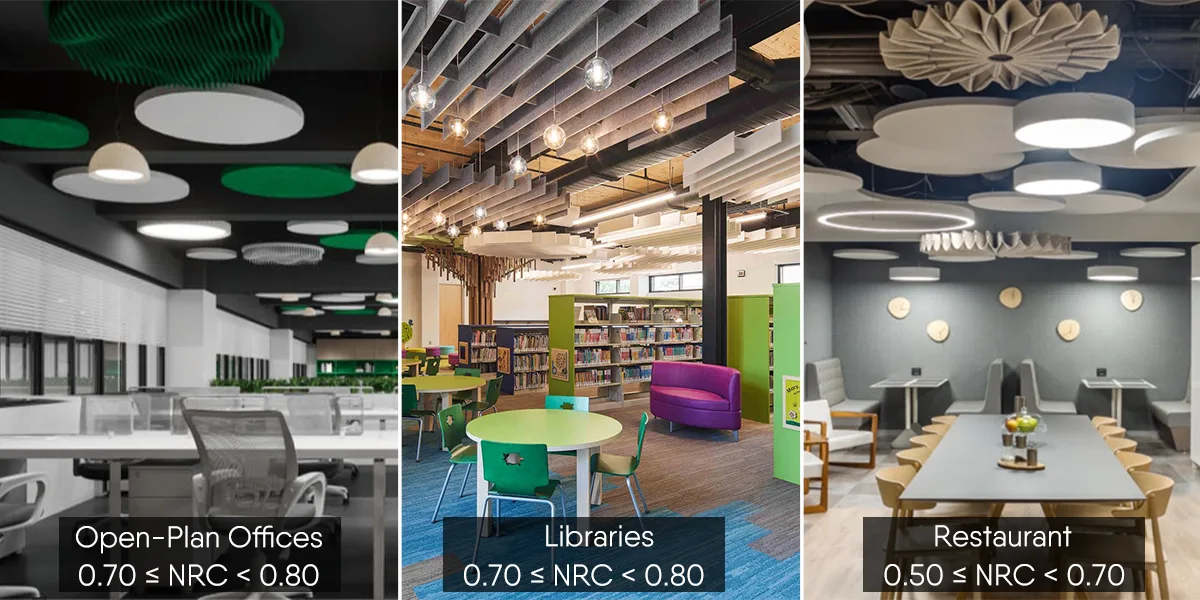
Yêu cầu ánh sáng âm thanh cho NRC khác nhau giữa các môi trường sử dụng khác nhau. Lựa chọn nên xem xét chức năng không gian, ngân sách và thông số kỹ thuật thiết kế. Đối với ánh sáng LED acoustic, các sản phẩm có NRC ≥ 0,70 được khuyến nghị để đạt được hiệu suất âm thanh tối ưu. Tham khảo các tiêu chuẩn xếp hạng NRC sau đây và bảng ứng dụng để được hướng dẫn:
Tiêu chuẩn và ứng dụng xếp hạng NRC
| Phạm vi NRC | Lớp hiệu suất âm thanh | Ứng dụng được đề xuất | chức năng cốt lõi |
| NRC ≥ 0,80 | Chất liệu hấp thụ âm thanh hiệu quả cao | Chất liệu hấp thụ âm thanh hiệu quả cao | Đạt được điều khiển âm thanh tối ưu, giảm đáng kể độ vang, tăng cường độ rõ nét và độ tinh khiết của âm thanh. |
| 0,70 ≤ NRC <0,80 | Chất liệu hấp thụ âm thanh tuyệt vời | Văn phòng không gian mở, phòng học, thư viện, bệnh viện, phòng họp | Hiệu quả giảm tiếng ồn và tiếng vang xung quanh, cải thiện hiệu quả giao tiếp và sự thoải mái không gian. |
| 0,50 ≤ NRC <0,70 | Chất liệu hấp thụ âm thanh vừa phải | Không gian dân cư thông thường, cửa hàng, hành lang, khu vực nghỉ ngơi công cộng | Cải thiện đáng kể tiếng ồn môi trường, cân bằng chi phí và tính linh hoạt trong thiết kế, phù hợp với nhu cầu âm thanh vừa phải. |
| 0,20 ≤ NRC <0,50 | Chất liệu hấp thụ âm thanh cơ bản | Kho bãi, bãi đậu xe, nhà máy công nghiệp | Cung cấp chức năng hấp thụ âm thanh cơ bản, giảm một số âm thanh phản xạ. |
| nrc <0,20 | chất liệu phản chiếu âm thanh | Bất kỳ môi trường âm thanh nào yêu cầu phản xạ âm thanh (ví dụ: sân khấu, nền tảng âm nhạc) | Chủ yếu phản xạ âm thanh, không thích hợp cho các kịch bản yêu cầu hấp thụ âm thanh. |
Tại sao NRC đặc biệt thích hợp để đánh giá ánh sáng âm thanh?
NRC được sử dụng rộng rãi để đánh giá hiệu suất của các vật liệu âm thanh kiến trúc như trần và tấm tường. Acoustic Lighting vốn đã kết hợp “hệ thống chiếu sáng với các giải pháp âm trần acoustic”.
Do đó, sử dụng NRC làm thước đo cốt lõi để đo lường hiệu suất âm thanh của đèn LED hấp thụ âm thanh không chỉ chuyên nghiệp mà còn trực quan, tạo điều kiện thuận lợi cho việc so sánh và lựa chọn bởi các nhà thiết kế, nhà thầu và người mua. Đối với hầu hết các không gian thương mại, xếp hạng NRC từ 0,6 đến 0,9 được coi là ánh sáng âm thanh lý tưởng, vì nó cung cấp khả năng hấp thụ âm thanh hiệu quả trong khi vẫn duy trì tính linh hoạt của thiết kế và hiệu suất chiếu sáng.
Cách đèn LED acoustic tăng cường kiểm soát âm thanh trong không gian hiện đại
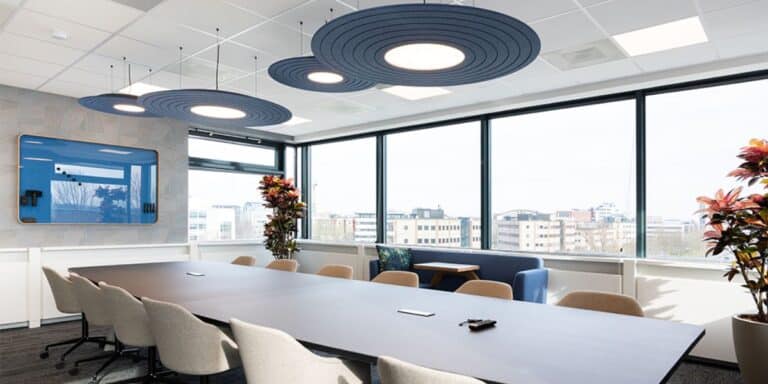
Các tòa nhà hiện đại, đặc biệt là các văn phòng không gian mở, thường bị mức độ ồn quá mức. Đèn LED âm thanh giải quyết vấn đề này bằng cách tích hợp các vật liệu hoặc cấu trúc hấp thụ âm thanh. Chúng cung cấp ánh sáng đồng thời hấp thụ sóng âm thanh và giảm tiếng vang, cải thiện đáng kể độ rõ nét và sự thoải mái trong không gian. Thiết kế của chúng kết hợp nguồn sáng với vật liệu âm thanh, không chỉ giải quyết các vấn đề về tiếng ồn mà còn nâng cao tính thẩm mỹ tổng thể của môi trường.
Thông qua cấu hình khoa học, những chiếc đèn này giúp không gian hiện đại đạt được hiệu suất âm thanh tối ưu đồng thời đáp ứng yêu cầu về thẩm mỹ và ánh sáng, biến tiếng ồn môi trường từ một sự phân tâm thành yếu tố không phô trương.
Vai trò của đèn LED âm thanh trong việc nâng cao môi trường văn phòng và dân cư
Ở những nơi làm việc và nhà hiện đại, sự can thiệp âm thanh thường xuyên làm ảnh hưởng đến hiệu quả và sự thoải mái. Đèn LED âm thanh, như một sự kết hợp sáng tạo của âm thanh và ánh sáng, đang lặng lẽ tối ưu hóa trải nghiệm âm thanh trong những không gian này.
- Cài đặt văn phòng : Trong khi bố cục mở thúc đẩy sự hợp tác, chúng cũng đan tiếng máy in và tiếng nhấp bàn phím thành tiếng ồn xung quanh liên tục. Phòng họp lặp lại các cuộc thảo luận thêm xáo trộn. Đèn LED hấp thụ âm thanh kết hợp vật liệu xốp giúp hấp thụ sóng âm và giảm phản xạ, giúp cho các cuộc họp trở nên rõ ràng hơn. Đồng thời, nhiệt độ màu có thể điều chỉnh (từ trắng mát đến vàng ấm) thích ứng với các thời điểm khác nhau trong ngày, giảm mỏi mắt và thúc đẩy bầu không khí tập trung. Thiết kế “sức mạnh tổng hợp ánh sáng” này biến không gian ồn ào thành nơi trú ẩn hiệu quả.
- Cài đặt khu dân cư: Tiếng ồn ào đô thị - chẳng hạn như tiếng ồn giao thông và các hoạt động của hàng xóm - thường xâm nhập vào sự yên tĩnh tại nhà. Đèn LED hấp thụ âm thanh hấp thụ tiếng ồn cao tần, xây dựng “rào cản âm thanh” trong nhà. Được sử dụng trong phòng khách hoặc phòng ngủ, cư dân tận hưởng những giây phút yên tĩnh hơn để nghỉ ngơi hoặc đọc sách. Hiệu quả năng lượng của đèn LED và tuổi thọ cao phù hợp hơn với nhu cầu sống bền vững.
Từ phòng hội nghị đến phòng ngủ, đèn LED hấp thụ âm thanh xác định lại chất lượng không gian một cách khoa học, âm thầm nâng cao cả cuộc sống và công việc.
Giải thích xếp hạng NRC: Tại sao chúng quan trọng đối với Acoustic Hiệu suất ánh sáng
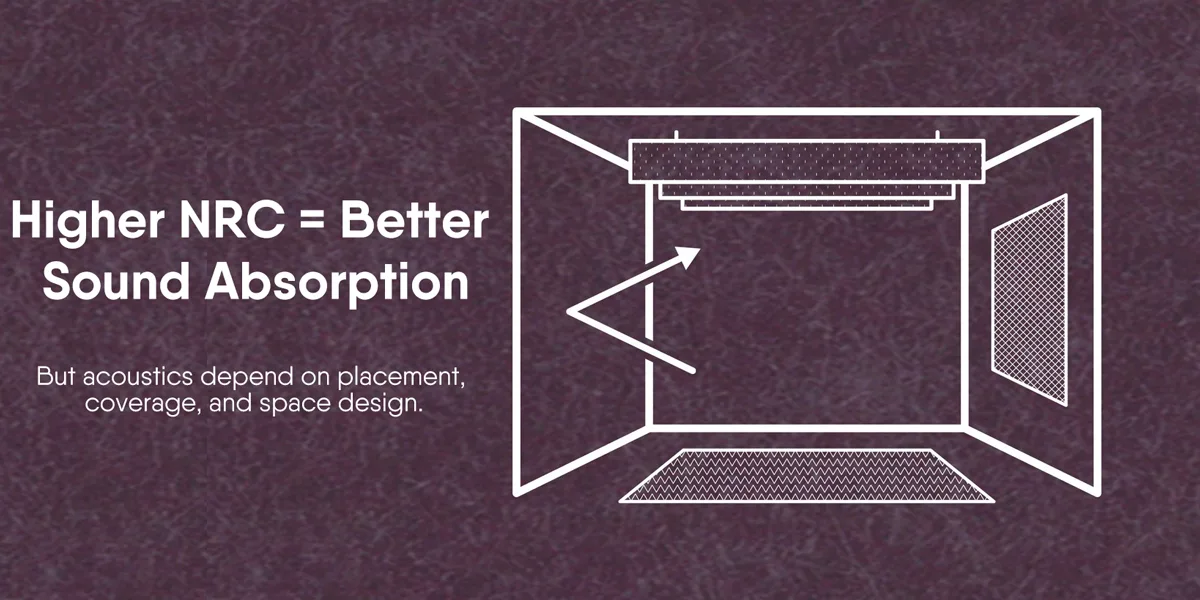
Xếp hạng NRC đóng vai trò là thước đo cốt lõi để đánh giá hiệu suất âm thanh của ánh sáng âm thanh, với ý nghĩa của nó nằm ở ảnh hưởng trực tiếp của nó đối với môi trường âm thanh trong nhà.
Ánh sáng âm thanh đạt được chuyển đổi năng lượng âm thanh thông qua các vật liệu xốp tích hợp (như sợi polyester, tấm nhôm đục lỗ và bông acoustic). Giá trị NRC của nó xác định trực tiếp:
- Giảm thời gian vang dội: Trong phòng hội nghị 50㎡, đồ đạc có NRC ≥ 0,7 giảm thời gian vang từ 2,1 giây xuống 1,3 giây, tăng cường đáng kể độ dễ hiểu về giọng nói.
- Chỉ số truyền giọng nói (STI): STI đo được tăng từ 0,62 lên 0,78, tăng cường hiệu quả và sự tập trung giao tiếp rõ rệt.
- nhiễu nhiễu: Hấp thụ hiệu quả tiếng ồn của thiết bị và tiếng vọng của con người, tạo ra một văn phòng hoặc môi trường họp yên tĩnh, ít phân tâm.
Tiêu chuẩn và quy định hiện hành của ngành
- quốc tế: ASTM C423 đóng vai trò là tiêu chuẩn có thẩm quyền cho thử nghiệm NRC.
- Không có quy định bắt buộc: Hiện tại, không có tiêu chuẩn công nghiệp chuyên dụng nào cho “ánh sáng LED âm thanh”, với NRC chỉ phục vụ như một tham chiếu chức năng.
- Xu hướng thiết kế hợp tác: Tiêu chuẩn chiếu sáng như ISO / CIE 8995-1: 2025 nhấn mạnh sức mạnh tổng hợp giữa “sự thoải mái thị giác” và “sự thoải mái âm thanh”, thúc đẩy ánh sáng hấp thụ âm thanh như một tính năng tiêu chuẩn trong không gian thông minh.
Giá trị ứng dụng trong thế giới thực
Phản hồi của người dùng từ các cài đặt thực tế cho thấy rằng sau khi lắp đặt đèn LED hấp thụ âm thanh cao, phòng hội nghị sẽ “không còn tiếng vang khi nói”, “giảm đáng kể tiếng ồn điều hòa không khí” và “tập trung nâng cao”. Giá trị của nó vượt ra ngoài việc giảm tiếng ồn để định hình lại nhận thức không gian — nơi ánh sáng và âm thanh cùng phục vụ hiệu quả nhận thức và sự thoải mái về tâm lý.
Một xếp hạng NRC tuyệt vời không chỉ làm giảm tiếng ồn hiệu quả mà còn ngăn chặn sự lan truyền của nó trong không gian, đảm bảo chất lượng âm thanh vẫn luôn ở mức thoải mái.
Cách chọn ánh sáng LED âm thanh tối ưu để tăng cường khả năng hấp thụ âm thanh
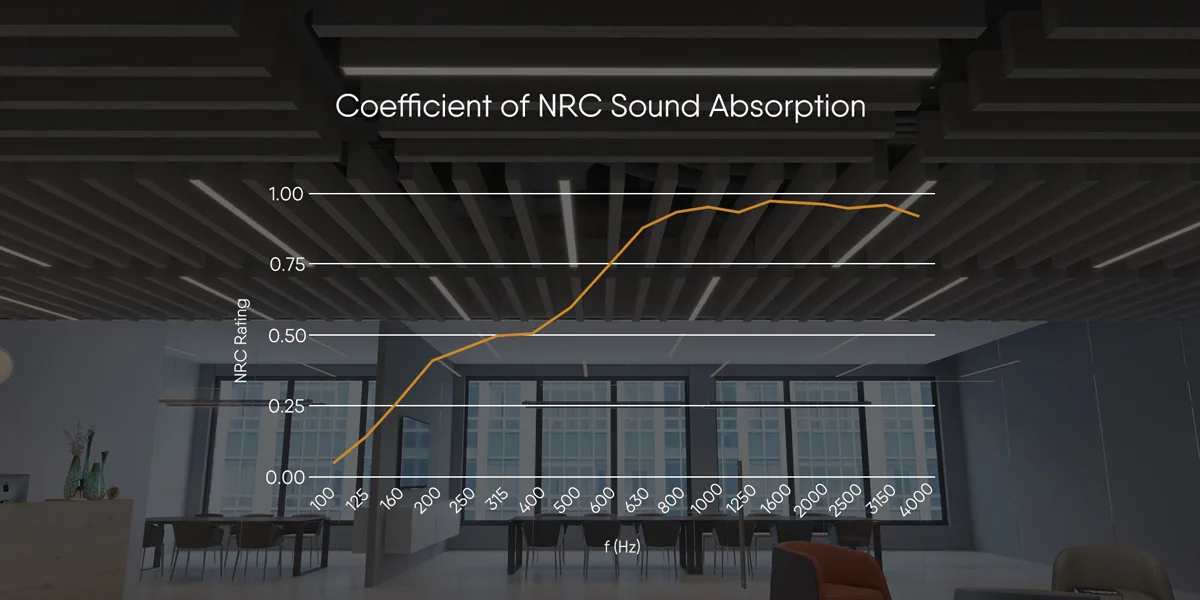
khi nào Lựa chọn đèn LED âm thanh phù hợp, ưu tiên xếp hạng NRC. Đồ đạc được đánh giá cao là lý tưởng cho không gian có yêu cầu kiểm soát tiếng ồn nghiêm ngặt. Ngoài ra, hãy xem xét loại và chất lượng của vật liệu âm thanh để đảm bảo chúng mang lại hiệu suất hấp thụ âm thanh dự kiến trong sử dụng thực tế. Đồng thời, thiết kế cố định và hiệu quả sáng là những yếu tố quan trọng ảnh hưởng trực tiếp đến trải nghiệm không gian tổng thể.
- Các kịch bản đối sánh giá trị NRC:
a) Các không gian nhỏ (ví dụ: văn phòng tại nhà) có thể chọn NRC 0,6 hoặc NRC 0,5-0,7. Phạm vi này hấp thụ hiệu quả tiếng ồn hàng ngày (như âm thanh TV hoặc trẻ em đang chơi) đồng thời tránh hấp thụ quá mức tạo ra một không gian yên tĩnh không tự nhiên.
b) Không gian lớn (ví dụ: phòng hội nghị) được khuyến nghị cho NRC 0,7-0,9. Giá trị NRC cao hơn làm giảm tiếng vọng trong phòng hội nghị, nâng cao chất lượng cuộc gọi video và giảm thiểu nhiễu xung quanh trong các văn phòng không gian mở.
C) Giá trị NRC trên 0,8 phù hợp cho các thiết lập chuyên nghiệp như phòng thu âm, nhưng không gian dân cư / văn phòng yêu cầu cân bằng khả năng hấp thụ âm thanh với chức năng chiếu sáng.
- Độ bền vật liệu: Ưu tiên các vật liệu âm thanh chống cháy và chống ẩm (ví dụ: bọt chống cháy loại A) để ngăn chặn sự hấp thụ âm thanh giảm do độ ẩm môi trường.
- Thông số ánh sáng: Nhiệt độ màu (2700K-4000K) và chỉ số kết xuất màu (CRI> 90) phải phù hợp với các yêu cầu không gian — ví dụ: ánh sáng trung tính 4000K giúp tăng tiêu điểm trong văn phòng.
- Chứng nhận tuân thủ: Chọn các thương hiệu có chứng nhận kiểm tra nghiêm ngặt để đảm bảo đèn chiếu sáng đạt tiêu chuẩn hiệu suất âm thanh.
Ánh sáng âm thanh của Signlited Ưu tiên cả hiệu suất âm thanh và thiết kế thẩm mỹ. Đèn có cấu trúc tổ ong minh họa đạt được UGR <19, cung cấp NRC 0,75 và kết hợp các tính năng ngăn chặn ánh sáng chói, làm cho nó lý tưởng cho các phòng khách dân cư.
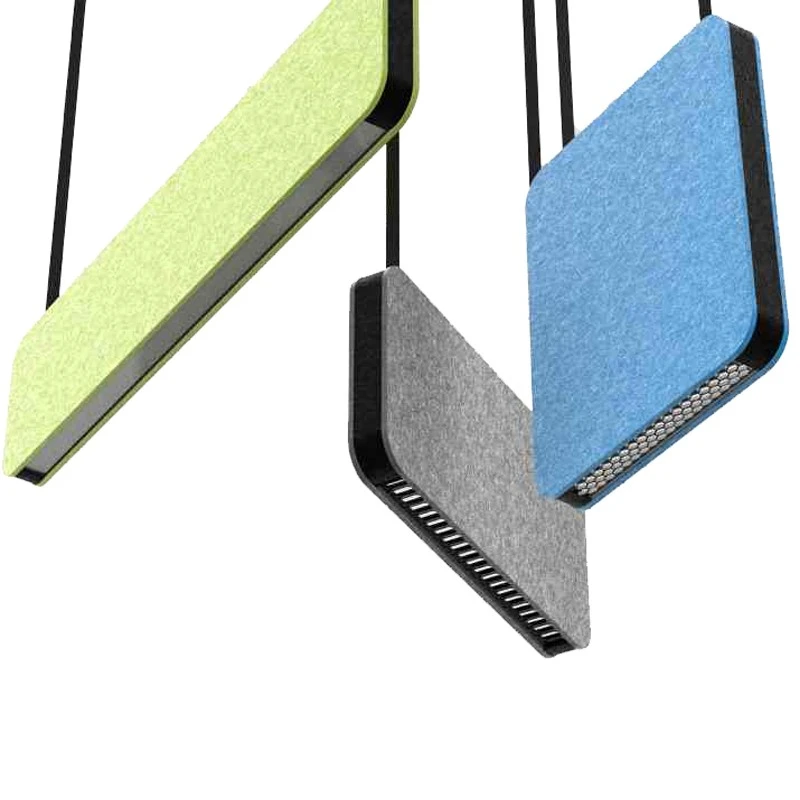
Đèn LED tuyến tính siêu mỏng
Điện áp đầu vào: AC100-277V/AC220-240V, 50-60Hz
hướng phát ra: đi xuống
Kích thước: 1218 * 36 * 400mm
CCT: 3000k/4000k/6000k
Sức mạnh: 30W
Thông lượng phát sáng: 100-110 lm / w
CRI: > 80ra
pf: >0.90
Fllicker miễn phí: vâng
Góc chùm: 120 °
IP cấp: ip20
Bảo hành: 5 năm
Màu sắc bảng acoustic: Đỏ / Xanh lục / Xanh / Xám Hơn 48 Màu tùy chọn
Làm thế nào để thiết bị âm thanh đạt được cả ánh sáng và giảm tiếng ồn đồng thời?
Người tiêu dùng hiện đại ngày càng ưa chuộng các sản phẩm chiếu sáng kết hợp hiệu suất âm thanh tuyệt vời với tính thẩm mỹ không gian. Thông qua thiết kế khéo léo, ánh sáng LED acoustic kết hợp liền mạch chức năng với tính nghệ thuật, khiến nó trở thành một yếu tố không thể thiếu trong không gian đương đại.
Thiết bị âm thanh tích hợp chức năng thông qua các yếu tố thiết kế sau:
- Lớp vật liệu: Bề mặt đèn sử dụng các loại vải xốp hoặc sợi (ví dụ, sợi polyester), cho phép sóng âm thanh đi vào và chuyển hóa thành nhiệt thông qua ma sát trong khi vẫn duy trì truyền ánh sáng.
- kết cấu thiết kế: Bối cảnh kết hợp cấu trúc bông hoặc tổ ong hấp thụ âm bên trong để tối đa hóa đường dẫn phản xạ sóng âm. Nguồn sáng LED được nhúng trong lớp hấp thụ âm thanh, đảm bảo phân phối ánh sáng đồng đều.
Phần kết luận
Như một sáng tạo Giải pháp chiếu sáng âm thanh, đèn LED hấp thụ âm thanh đang ngày càng trở thành tiêu chuẩn trong kiến trúc và thiết kế không gian hiện đại do xếp hạng NRC nổi bật và hiệu suất âm thanh.
Từ môi trường văn phòng đến không gian dân cư, địa điểm thương mại đến các cơ sở giáo dục, đèn LED chiếu sáng đóng một vai trò quan trọng trong việc nâng cao sự thoải mái trong không gian. Bằng cách chọn xếp hạng và đồ đạc NRC phù hợp, người tiêu dùng có thể tạo ra môi trường yên tĩnh hơn, thoải mái hơn, nâng cao chất lượng cuộc sống và công việc.
hỏi Ẩn
Bài viết liên quan