标牌和 LED 灯带工厂,始于 2011 年

标牌和 LED 灯带工厂,始于 2011 年

How to Evaluate LED Light Sheet Suppliers: From Samples to Mass Production

Evaluating suppliers of LED sheet lights requires a structured verification process that begins with technical sample testing and continues through supplier auditing, pilot production, and full-scale manufacturing validation. A supplier cannot be approved based on sample quality alone. The evaluation must confirm that performance, process control, and manufacturing discipline remain consistent from the first prototype to mass production.

Many buyers experience a predictable problem: initial samples perform well, but once orders scale, brightness consistency drops, thermal behavior changes, cutting tolerances drift, or adhesive performance weakens. This “quality fade” happens when the supplier’s process control cannot support volume production, even if their engineering team can produce strong early samples.

This guide outlines a step-by-step evaluation system. It does not recommend specific suppliers. Instead, it defines how procurement managers, OEM/ODM buyers, project engineers, and brand owners should verify suppliers of LED sheet lights from bench testing through full production readiness.

Stage 1: Sample Evaluation

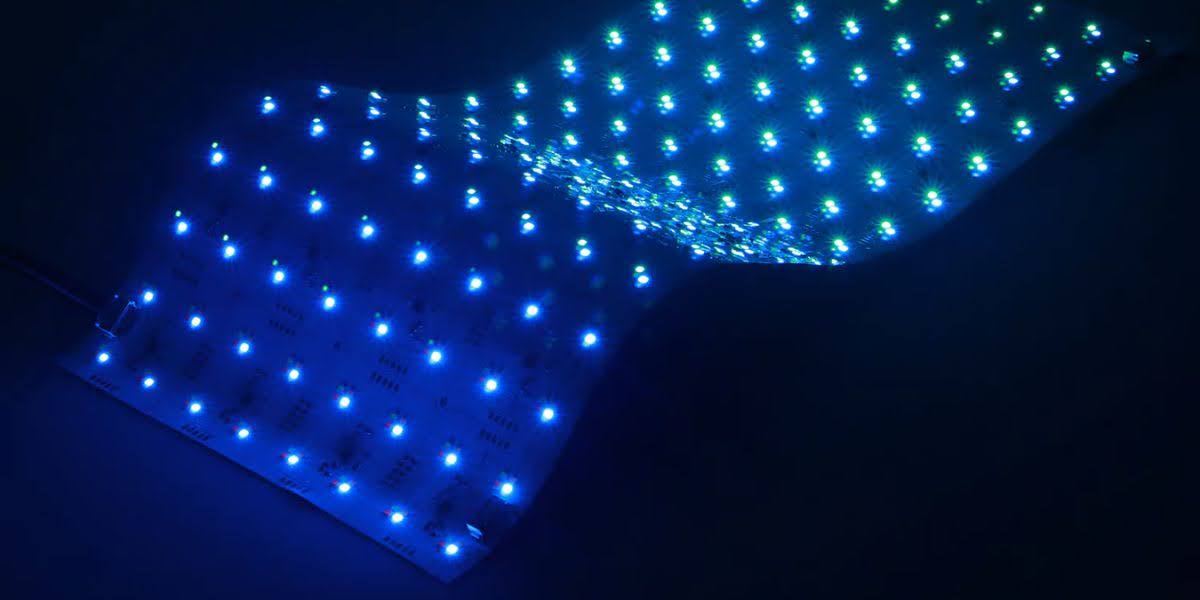
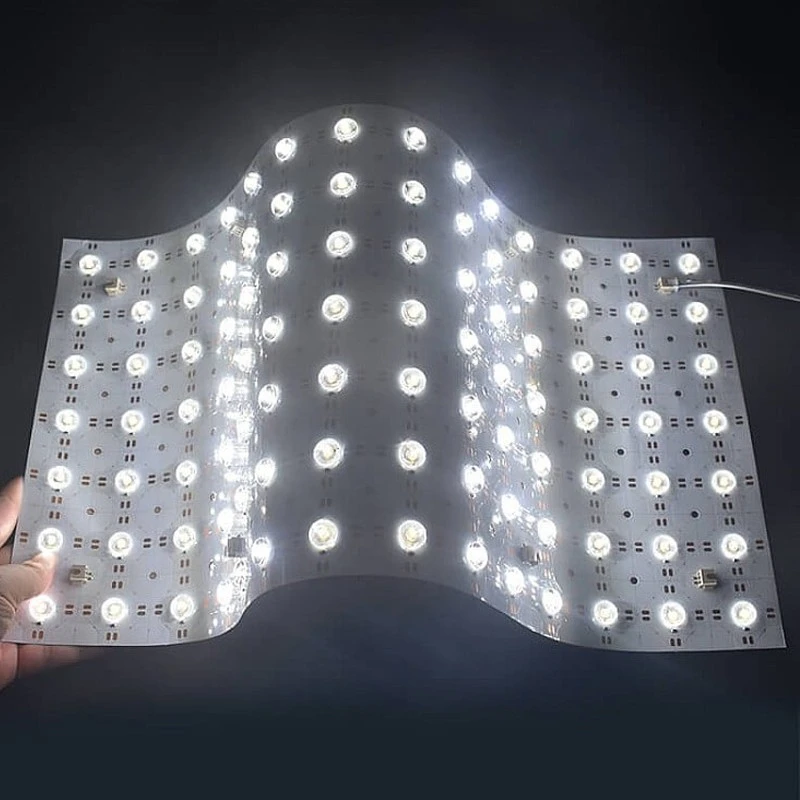
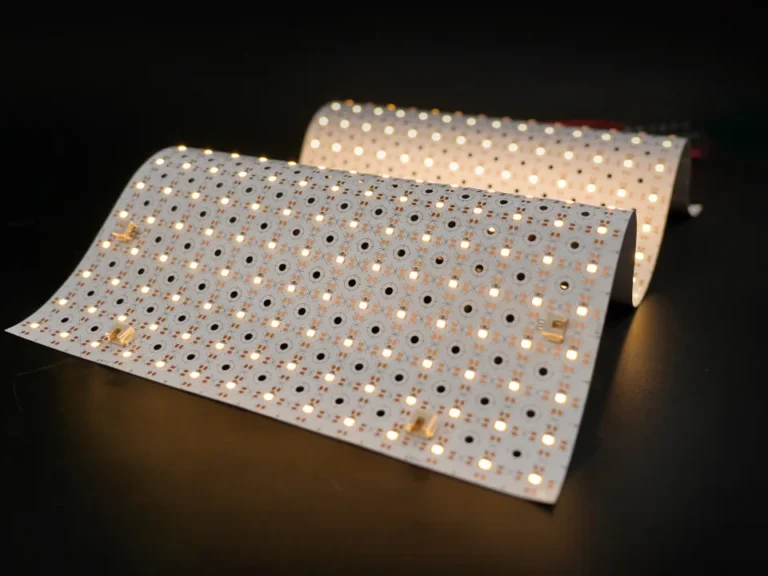
led sheet lights

Sample testing is not about first impressions. It is about repeatability under controlled conditions. Every LED sheet light sample must be evaluated using measurable criteria that can later be applied to production batches.

Buyers should test samples using the following verification framework:

  • Optical uniformity across the LED sheet light panel
    Measure brightness at multiple grid points. Variations in luminous intensity across the sheet of LED lights should stay within a defined tolerance range. Uneven diffusion or inconsistent diode spacing indicates potential scaling issues.
  • Brightness stability under extended runtime
    For high brightness LED light sheet samples, conduct continuous operation tests for 8–24 hours. Track lumen drop, color shift, and current fluctuation. Stability under thermal load is more important than initial peak output.
  • Thermal performance mapping
    Use thermal imaging to record hotspot distribution. Compare center vs edge temperature rise. Excessive heat concentration often predicts long-term degradation when scaling production.
  • Mechanical integrity of flexible and rigid formats
    For flexible LED light sheet formats, perform bending cycle tests. For rigid formats, apply mild torsion stress to confirm solder joint durability. Mechanical stability must be repeatable across multiple samples.
  • Cutting tolerance and electrical continuity
    If the LED sheet light allows field cutting, test multiple cut points. Confirm that electrical continuity remains stable and no edge dimming occurs. Inconsistent copper trace routing becomes visible here.
  • Adhesive performance and substrate bonding
    Evaluate peel strength and adhesion stability under heat exposure. Weak adhesive systems often degrade during large-scale production because of material substitutions.

The key principle is replication. Buyers should test multiple samples from different production dates if possible. If performance varies between units, the supplier likely lacks process consistency.

Stage 2: Supplier Background & Capability Audit

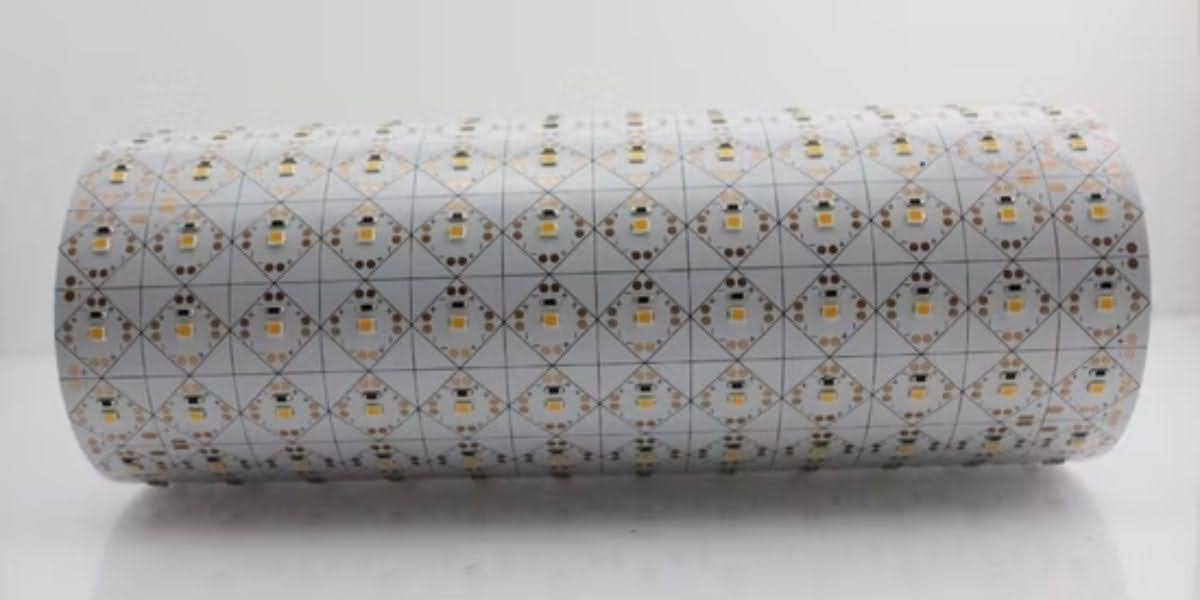
led sheet lights

Strong samples do not guarantee a capable manufacturer. Many suppliers outsource partial production or rely on small engineering batches for evaluation units. A background audit determines whether the supplier can consistently produce LED灯片 at volume.

Start by examining specialization. A factory that primarily produces generic LED strips may not have deep experience in high brightness LED light sheet panel manufacturing. Production lines, SMT configuration, and optical diffusion control differ significantly between formats.

Next, assess engineering depth. Custom LED sheet lighting projects require layout optimization, current balancing, and thermal modeling. Suppliers should demonstrate the ability to modify PCB architecture, not simply adjust brightness levels. Review prior project documentation and engineering change workflows.

Production history also matters. A supplier with limited production cycles may lack structured yield monitoring. Consistent large-batch history reduces scaling risk.

Finally, evaluate quality system maturity. The focus should not be on certificate displays. Instead, verify whether:

  • There are defined in-process inspection checkpoints.
  • Process parameters are documented and locked.
  • Engineering changes require structured approval.
  • Root cause analysis is recorded and traceable.

A capable supplier shows operational discipline, not marketing documentation.

Stage 3: Compliance & Process Verification

Compliance validation is not about listing standards. It is about confirming that the supplier can prove test traceability and regulatory conformity with documented evidence.

First, verify whether safety testing corresponds to the actual LED sheet light configuration being purchased. Documentation must match wattage, substrate type, and driver compatibility. Generic certificates that do not reference specific build configurations present risk.

Second, confirm internal quality checkpoints. Ask how solder paste inspection is verified. Review how LED bin selection is recorded. Examine how current calibration is performed for high brightness LED light sheet variants.

Third, review batch traceability. Each sheet of LED lights should be traceable to LED bin codes, PCB lot numbers, and assembly shift records. Without traceability, field failure investigations become impossible.

Unverifiable documentation signals potential instability. If a supplier cannot explain how a test result was generated or which batch it represents, production reliability cannot be guaranteed.

led sheet lights

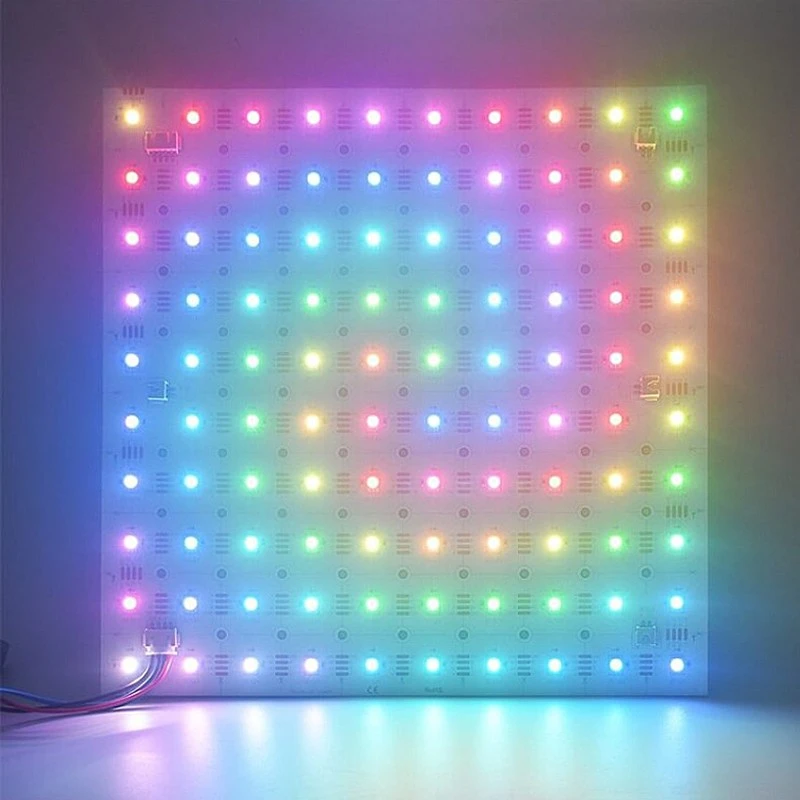
可寻址的 LED 板

  • 尺寸( l x w ): 250mmx250mm
  • LED 类型: 5050 贴片
  • LED数量: 100 件
  • IC类型: 内置WS2812
  • IC数量: 100 件
  • 颜色 RGBIC
  • 工作电压 直流 12V
  • 当前: 1.08A
  • 动力 13W
  • 光通量 20lm/LED
  • 光束角度: 120°
  • 防水等级: IP20 防水、IP54 防水
  • 寿命: >35,000 小时
  • 保修单: 3年


Stage 4: Pilot Run & Pre-Production Validation

Sample approval should always be followed by a controlled pilot run. This is the stage where real manufacturing stress is introduced.

Buyers should evaluate pilot production using these criteria:

  • Small-batch replication of production settings
    The pilot should use actual mass-production tooling and materials, not prototype components.
  • Consistency across multiple LED light sheet panels
    Measure brightness, color temperature, and power draw across at least 20–50 units. Variability reveals process stability.
  • Thermal stability under grouped installation conditions
    Test multiple panels installed together to simulate real application heat accumulation.
  • Yield and defect rate tracking
    Request data on production yield percentage. Early yield instability indicates future scale problems.
  • Packaging and handling durability
    Shipping vibration tests reveal weak solder joints or adhesive flaws.

Pilot runs expose issues that single samples cannot reveal. Minor variations in solder reflow temperature or LED bin mixing often appear only when batch size increases.

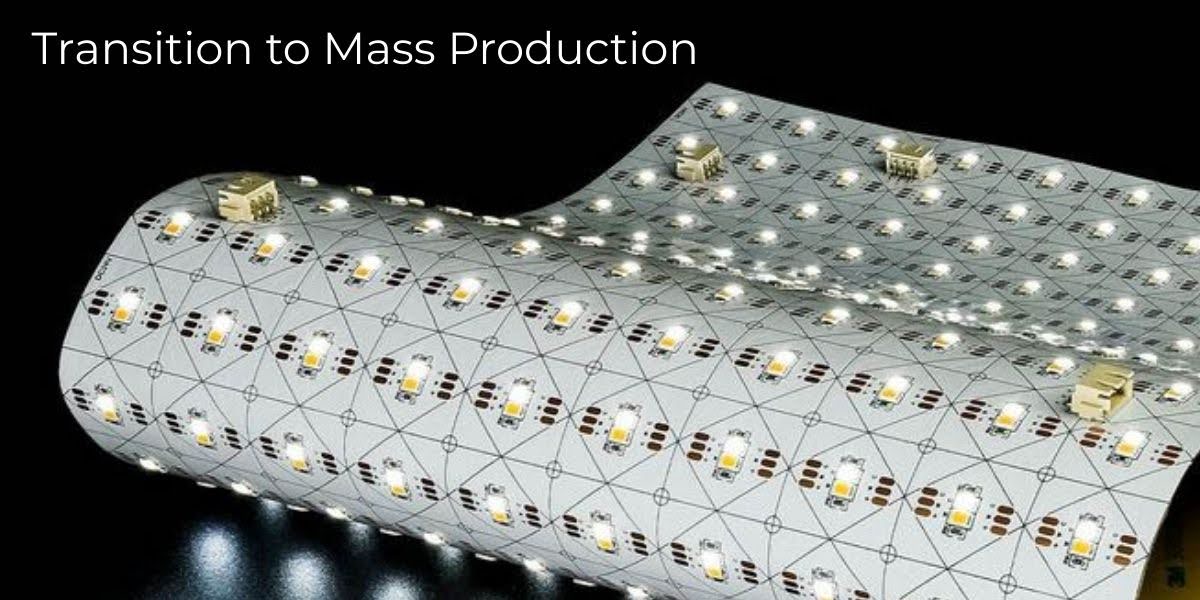
Stage 5: Transition to Mass Production

 led light sheet panel

The transition from pilot to mass production is where quality fade most commonly occurs. Even well-performing flexible LED light sheet products can degrade when volume pressures increase.

Several factors contribute to this risk:

Material substitution is common at scale. Suppliers may switch adhesive brands, PCB copper thickness, or LED batches to meet cost targets. Each substitution affects optical and thermal stability.

Tooling drift can occur when stencil wear changes solder volume deposition. Over time, this affects brightness uniformity across the LED sheet light panel.

Thermal load behavior also shifts at scale. In high brightness LED light sheet production, minor current imbalance becomes amplified across large quantities. Heat dissipation variance may lead to premature lumen depreciation.

Process locking is critical. Once pilot approval is complete, suppliers should freeze component specifications, SMT parameters, and inspection thresholds. Any change must trigger a documented engineering review.

Buyers should request confirmation of:

  • Component locking procedures
  • Approved vendor lists for raw materials
  • Change notification protocols
  • Ongoing performance monitoring methods

Mass production readiness is defined by control, not capacity.

Stage 6: Ongoing Quality Control During Mass Production

Quality assurance does not end at purchase order issuance. Continuous verification is required to maintain performance stability in LED灯片.

Incoming material inspection ensures LED bins match approved specifications. PCB substrates must meet defined copper thickness and insulation resistance criteria.

In-process inspection should monitor solder paste deposition, LED placement accuracy, and current calibration. Automated optical inspection can detect alignment drift before defects multiply.

Final inspection logic should verify:

  • Electrical continuity across cut points
  • Uniform brightness distribution
  • Power consumption within tolerance
  • Adhesive bonding integrity

Factories with disciplined process control outperform larger but loosely managed operations. Consistency is determined by process discipline, not production volume.

led sheet lights

光学透镜LED片

  • 尺寸( l x w x h ): 500mmx250mmx8mm
  • LED类型: 第2835章
  • LED数量: 98 件
  • 工作电压 直流 24V
  • 动力 20W
  • CCT: 2700K/3000K/4000K/6000K/6500K
  • 光通量: 1800LM
  • CRi: > 90Ra
  • 光束角度: 180°
  • 切割尺寸: 1 个 LED
  • IP等级: IP20 非防水
  • 寿命: >35,000 小时
  • 保修单: 3年


Supplier Evaluation Comparison Table

Evaluation StageWhat Buyer Should VerifyWhy It Matters at ScaleRisk If Skipped
Sample TestingOptical uniformity, thermal stability, repeatabilityDetects early design weaknessesHidden defects appear in production
Supplier AuditEngineering depth, process discipline, production historyConfirms ability to scale reliablyStrong samples from weak factories
Compliance CheckTraceable documentation, batch recordsEnables defect trackingUncontrolled regulatory risk
Pilot RunBatch consistency metrics, yield rateSimulates production stressQuality fade after order confirmation
Mass Production LockMaterial control, tooling stabilityPrevents drift over timePerformance decline across batches

Common Buyer Mistakes

Many procurement teams approve suppliers based only on initial sample performance. This ignores process capability and scaling discipline.

Skipping pilot runs is another common mistake. Without batch replication, hidden yield issues remain undetected.

Buyers often assume that flexible LED light sheet products behave identically at volume as they do in small test batches. In reality, soldering tolerance, copper trace stress, and heat distribution change with production scale.

Another mistake is overlooking internal traceability. When failure occurs in field installations, lack of batch documentation prevents root cause analysis.

Supplier evaluation must move beyond price comparisons and aesthetic inspection. It requires structured verification from first sample through ongoing production monitoring.

结论

Evaluating suppliers of LED sheet lights is a process-driven exercise that moves step by step from sample validation to mass production discipline. Strong samples are necessary but insufficient. True supplier capability is proven through repeatability, traceability, pilot replication, and process locking.

Quality fade between sample and scale is preventable when buyers apply structured verification at each stage. Procurement decisions should be based on process control strength, not initial pricing or first impressions.

From bench testing to volume stability, supplier evaluation is a system. When applied rigorously, it protects performance, reliability, and long-term product integrity.

常见问题

定制PCB制造定制PCB制造
2026年LED PCB制造和RoHS合规性
2026年,RoHS合规性已成为LED PCB的核心制造要求,而不是后期生产清单。 监管执行更严格,文件预期更高,供应链问责制正在跨境扩大。 LED PCB 因其材料复杂性、热需求和...
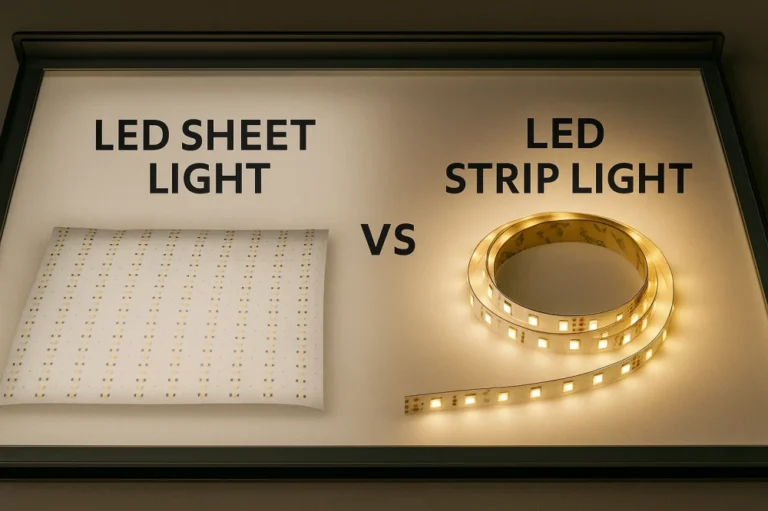
LED 片灯与 LED 条形灯:有什么区别?
LED照明已成为商业和装饰项目的多功能选择,提供从大型背光表面到灵活的重点照明的解决方案。 在众多选项中,经常比较 LED 片灯和 LED 灯带灯,因为它们具有相似的组件,但用途截然不同。 理解...
LED 单灯 — 项目和买家的完整指南LED 单灯 — 项目和买家的完整指南
LED 单灯 — 项目和买家的完整指南
过去十年,LED照明技术发展迅速,市场对更薄、更亮、更节能的光源的需求不断增长。 在众多创新的解决方案中,LED片灯已成为一种流行的选择,被广泛应用于商业和广告应用的美学上,作为一种美学上令人愉悦的背光解决方案。 LED片材...
LED灯片LED灯片
带LED片灯的建筑背光项目
建筑背光已成为当代设计的标志,丰富了从酒店大堂和公司办公室到博物馆画廊和零售展示的空间。 在照明选项中,LED 灯板(也称为 LED 灯片、LED 片模块、LED 灯片板或 LED 灯板)脱颖而出,是一款优雅的灯光板。
边缘照明灯箱_设计和LED刚性条形配置指南边缘照明灯箱_设计和LED刚性条形配置指南
边缘照明灯箱:设计和LED刚性条形配置指南
在商业展示和空间照明领域,边缘灯箱因其独特的灯光效果和艺术表现力而成为增强视觉吸引力的重要工具。 设计具有出色效果的边缘灯箱,必须考虑三个核心要素:光学原理、结构设计、...
LED 灯条完整指南LED 灯条完整指南
LED 灯条完整指南
在广阔的 LED 照明解决方案领域,LED 灯条是一种非常受欢迎的照明解决方案。线性 LED 灯条是商业和住宅照明应用中经济实惠的选择。 LED 灯条本质上是一串通过表面贴装技术安装在柔性或刚性灯条上的 LED 灯,...

分享:

Facebook
叽叽喳喳
Pinterest
LinkedIn
订阅评论
提醒
来宾
0 评论
最老的
最新 最多投票
内联反馈
查看所有评论

搜索 SignliteLED 博客

类别

返回顶部

立即获取报价