简体中文
简体中文  English
  Deutsch
  Español
  Français
  Italiano
  日本語
日本語  한국어
한국어  Polski
  Português
  Русский
  Türkçe
  Nederlands
  Tiếng Việt
  ไทย
ไทย 
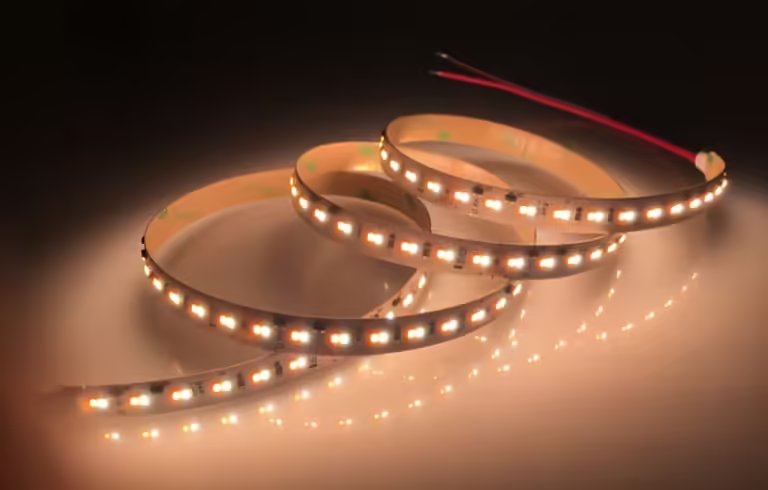
Architectural lighting is the integration of lighting systems into building design to improve functionality, aesthetics, and spatial perception. It goes beyond basic illumination and plays a key role in shaping how a space looks and feels.
In modern projects, LED technology is widely used because it offers high efficiency, flexible installation, and precise lighting control. In practice, different LED systems are combined to create layered lighting solutions that balance performance and design.
Indoor architectural lighting typically uses LED strip lights installed inside aluminum profiles to ensure heat management and long-term stability. Outdoor applications rely on LED neon flex with protective structures to maintain performance under environmental conditions.
In commercial projects such as hotels, retail spaces, and building facades, architectural lighting is not just functional but also a key part of brand identity and visual impact. This makes choosing the right lighting system critical for both performance and design outcomes.
This guide explains the main architectural LED lighting systems, their practical applications, and how to select the right solution based on project requirements.
关键要点
- Architectural lighting combines functionality with visual design in modern buildings.
- LED strip lighting and aluminum profiles are widely used for indoor applications.
- LED neon flex is commonly used for facade and outdoor lighting due to durability.
- Linear lighting systems provide uniform illumination in commercial spaces.
- DMX lighting enables dynamic and programmable architectural lighting effects.
- LED light sheets are ideal for uniform backlighting applications.
What is Architectural Lighting ?

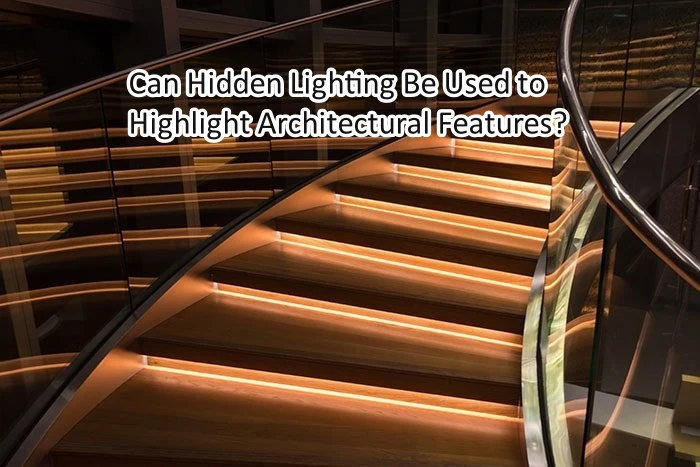
Architectural lighting is the use of lighting systems integrated into building structures to enhance visibility, highlight design elements, and improve spatial experience.
In real projects, lighting is used to emphasize surfaces, reveal textures, and define architectural geometry. It combines multiple lighting layers to achieve both functional illumination and visual impact.
To better understand lighting layouts, beam angles, and layered lighting design, you can explore this Architectural Lighting design principles guide.
Key Elements of Architectural Lighting
- Ambient lighting provides general illumination
It forms the base layer of a lighting system and ensures that a space is evenly lit. Ambient lighting reduces shadows and supports overall visibility without focusing on specific areas. - Task lighting supports specific activities
It is used in areas where focused lighting is required, such as workspaces, kitchens, or reading areas. Task lighting improves clarity and reduces eye strain during detailed tasks. - Accent lighting highlights architectural features
It is used to draw attention to walls, textures, artwork, or structural elements. Accent lighting adds depth and contrast, making spaces more visually engaging.
Architectural lighting design typically combines these elements to create a balanced and structured lighting system.
Types of Architectural LED Lighting Systems
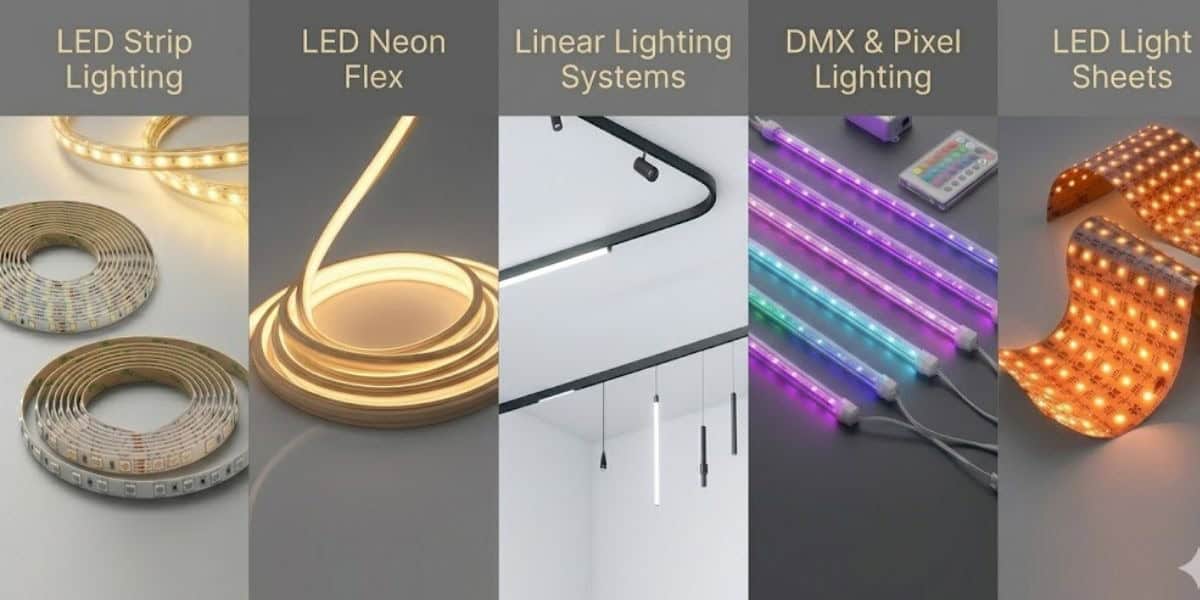
Architectural LED lighting systems refer to different lighting technologies used to illuminate modern buildings efficiently.
Each system is designed for a specific purpose, and in most projects, multiple systems are combined to achieve layered lighting results.
Main Lighting Systems Explained
- LED strip lighting is used for flexible indoor applications
It is commonly installed in concealed areas where adaptability is required. Its flexible structure allows it to follow curves and edges, making it suitable for interior design features. - LED neon flex is used for outdoor and façade lighting
It provides continuous and uniform light output through a diffused structure. It is designed to resist environmental conditions such as moisture and dust. - Linear lighting systems are used for structured environments
These rigid lighting systems provide consistent illumination along straight lines, making them ideal for offices, corridors, and commercial spaces. - DMX and pixel lighting systems enable dynamic effects
These systems allow programmable lighting control, making them suitable for façade lighting and large-scale installations. - LED light sheets are used for backlighting applications
They provide uniform illumination behind surfaces such as marble, glass, or panels, ensuring smooth and even light distribution.
Each system serves a different role depending on installation conditions and design objectives.
LED Strip Lighting in Architectural Projects (Indoor)
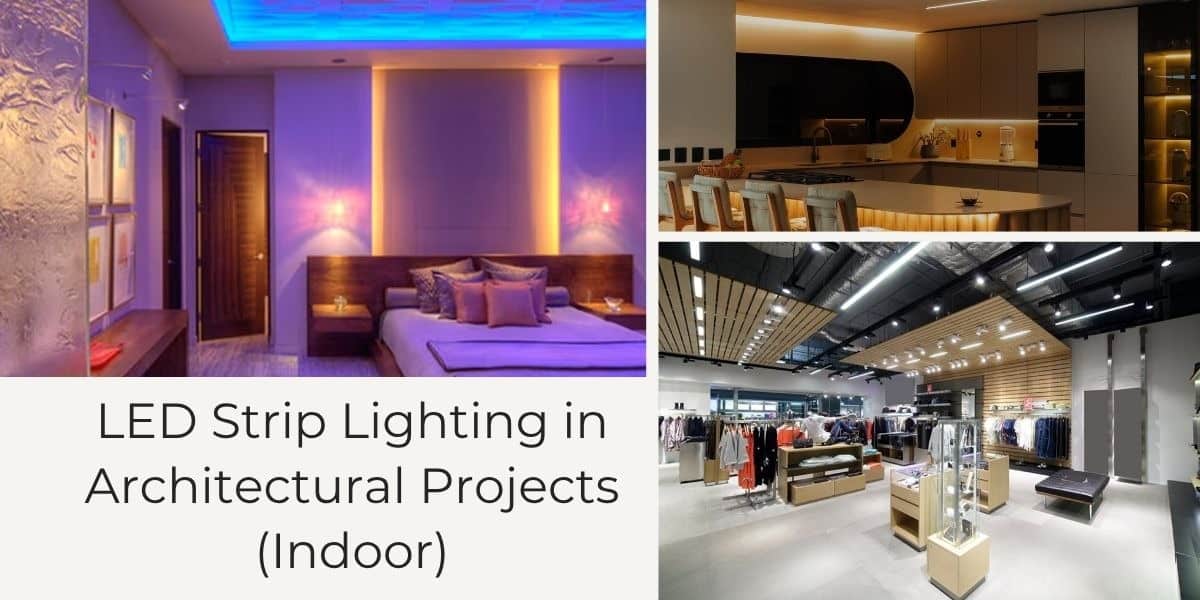
LED strip lighting is a flexible lighting solution designed for continuous and concealed illumination in indoor spaces.
In most installations, LED strips are combined with aluminum profiles to improve heat dissipation, protect the LEDs, and ensure stable long-term performance. This combination is widely used in professional architectural lighting systems.
常见应用
- Ceiling cove lighting creates indirect illumination
It is used to produce soft lighting that reflects off surfaces, enhancing the perception of space without exposing the light source directly. - Cabinet and furniture lighting improves functionality
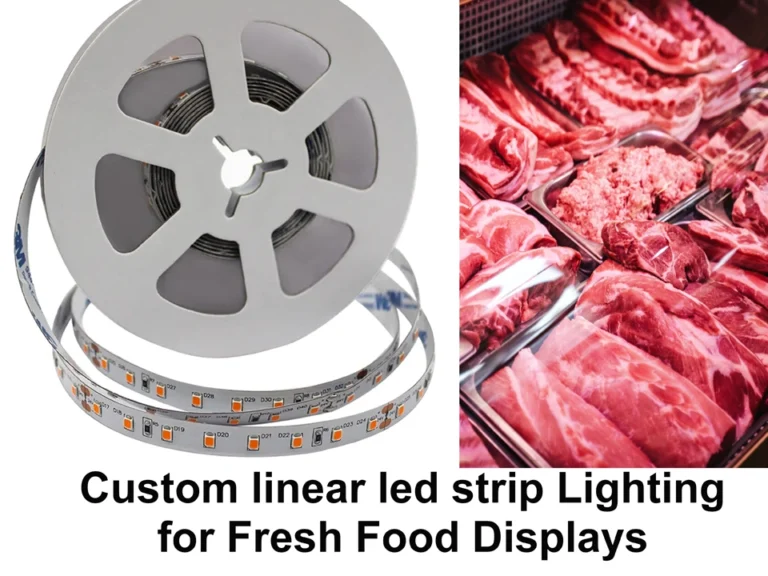
It provides localized brightness for storage areas, making it easier to use cabinets, shelves, and kitchen spaces. - Retail display lighting enhances product visibility
It highlights products in commercial environments, improving presentation and attracting attention.
In real projects, LED strip lighting is preferred because it can adapt to curved surfaces and complex layouts where rigid lighting solutions cannot be used.
To better understand LED strip lighting systems and their applications, explore these guides:
– LED tape lighting applications
– RGB and DMX LED strip systems
关键要点:
LED strip lighting combined with aluminum profiles is the standard solution for indoor architectural lighting.
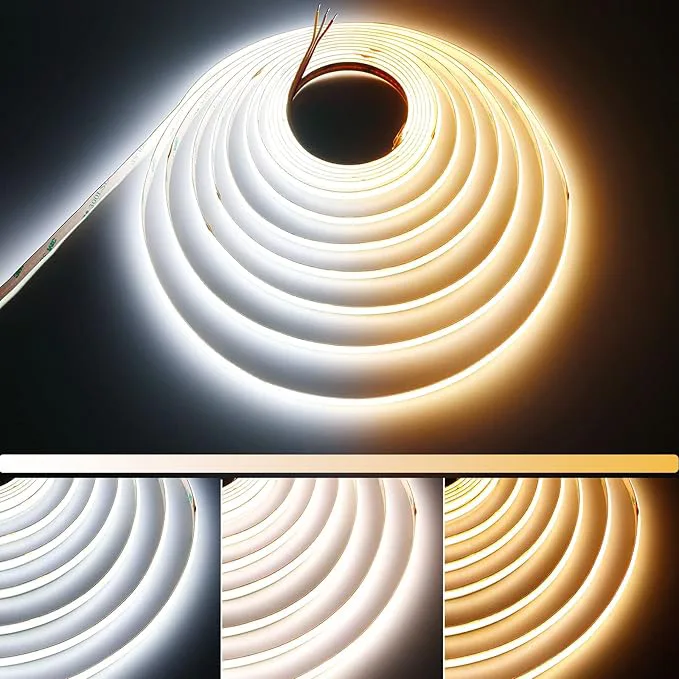
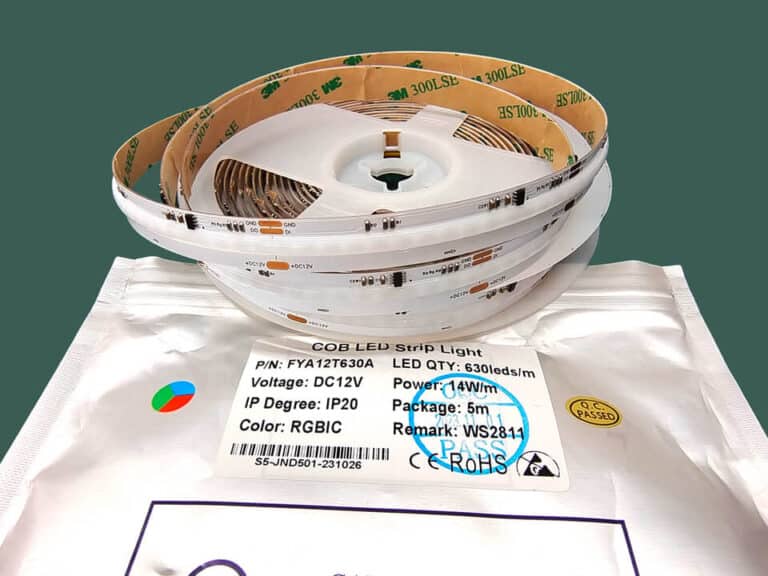
可调谐白色 COB LED 灯带灯用于任务照明
主要型号: FYT10T608C
每米 LED 数量选项: 608/640 芯片(萨南)
PCB宽度选项: 10 毫米
颜色选项: 2700K - 6500K 可调
国际广播电台: >90
输入电压: DC12V/DC24V
每米功率: 14W/16W
效率: 90–110 流明/瓦
IP等级选项: IP20/IP54/IP65/IP67/IP68
保修单: 3年
Neon Light Strips and Aluminum Profiles as a Complete Lighting System
Neon light strips and aluminum profiles together form a complete architectural lighting system that improves performance, durability, and installation stability. Instead of using lighting components separately, modern projects combine these elements to create reliable and long-lasting lighting solutions.
In both indoor and outdoor environments, aluminum profiles are not just mounting accessories. They play a critical role in heat management, structural support, and lighting consistency.
Indoor Lighting Systems: LED Strips and COB with Aluminum Profiles
Indoor architectural lighting systems commonly use LED strip lights or COB LED strips installed inside aluminum profiles. This combination ensures stable performance and clean installation.
- COB and standard LED strips provide continuous illumination
COB (Chip-on-Board) LED strips produce a smooth and uniform light output without visible light points. Standard SMD LED strips offer flexibility and are suitable for a wide range of interior applications. - Aluminum profiles improve heat dissipation
LED strips generate heat during operation, and aluminum profiles help transfer this heat away from the LEDs. This reduces thermal stress and helps maintain consistent brightness over time. - Profiles ensure clean and precise installation
Aluminum channels provide a defined structure for mounting LED strips. This improves alignment, protects the strip, and enhances the overall visual finish of the lighting system.
In real projects, this combination is widely used in ceiling coves, cabinets, and architectural detailing where both performance and appearance are important.
Outdoor Lighting Systems: Neon Strips with Aluminum Profiles
Outdoor architectural lighting systems typically use LED neon flex combined with aluminum profiles to ensure durability and secure installation.
- Neon strips provide uniform and diffused lighting
The diffused outer layer of neon flex eliminates visible LED points and creates a smooth lighting effect suitable for building outlines and facades. - Aluminum profiles provide structural stability
Profiles help securely mount neon strips on building surfaces, preventing movement and maintaining alignment over long periods. - Combined systems improve durability in harsh conditions
Outdoor lighting is exposed to moisture, dust, and temperature variations. The combination of neon strips and aluminum profiles enhances mechanical strength and long-term reliability.
This system is commonly used in façade lighting, landscape lighting, and outdoor architectural accents.
Why Aluminum Profiles Are Essential in Architectural Lighting
Aluminum profiles are a core component in modern architectural lighting systems because they directly affect performance, lifespan, and installation quality.
- Thermal management extends LED lifespan
Efficient heat dissipation helps maintain stable operating temperatures, reducing the risk of early LED degradation. - Mechanical protection improves durability
Profiles protect lighting components from physical damage, especially in commercial and outdoor installations. - Installation precision ensures consistent lighting output
Proper alignment and mounting reduce lighting inconsistencies and improve the overall visual effect.
关键要点:
Architectural lighting systems perform best when LED strips or neon flex are combined with aluminum profiles, creating a complete and reliable lighting solution.
LED Neon Flex for Facade Lighting (Outdoor)
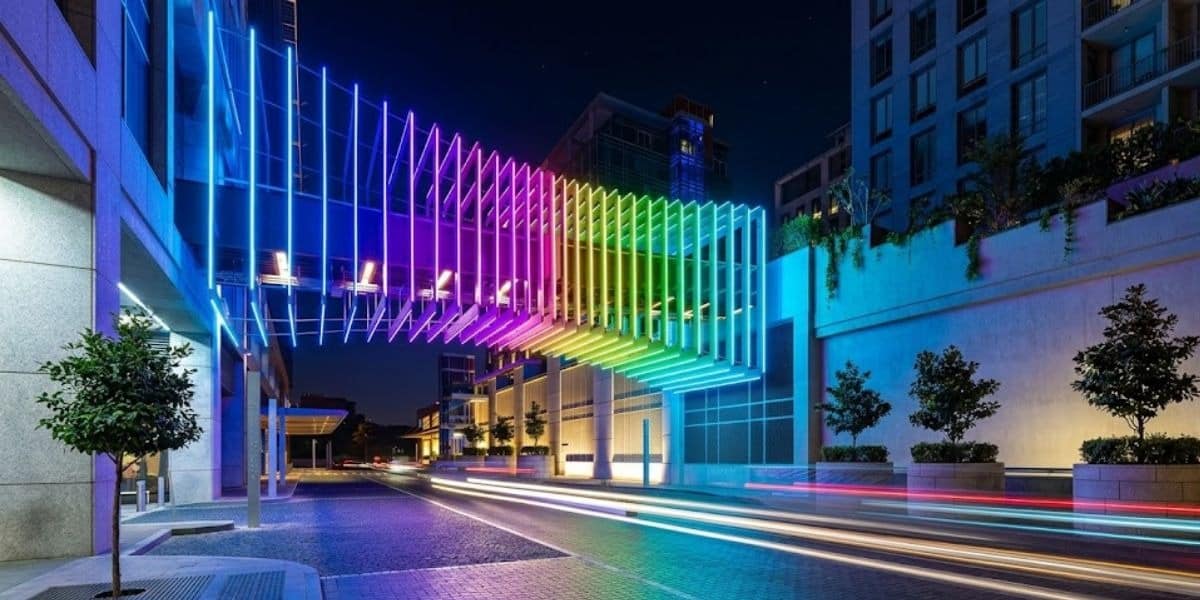
LED neon flex is a sealed lighting system designed to provide continuous and uniform illumination in outdoor environments.
Unlike traditional LED strips, neon flex uses a diffused outer layer that eliminates visible light points and produces smooth lighting effects. It is designed to withstand environmental factors such as moisture, dust, and temperature variations.
典型应用
- Building outlines define architectural shapes
Neon flex is used to trace building edges, making structures visible and visually distinctive at night. - Facade lighting enhances exterior design
It highlights building surfaces and adds visual impact to commercial and residential properties. - Landscape lighting improves outdoor spaces
It is used along pathways, gardens, and outdoor features to enhance visibility and aesthetics.
In most installations, LED neon flex is combined with aluminum profiles to ensure secure mounting and long-term durability.
For deeper understanding of neon flex systems, refer to:
– LED neon vs LED strip comparison
– RGB facade lighting applications
关键要点:
LED neon flex is the preferred solution for outdoor architectural lighting due to its durability and uniform output.
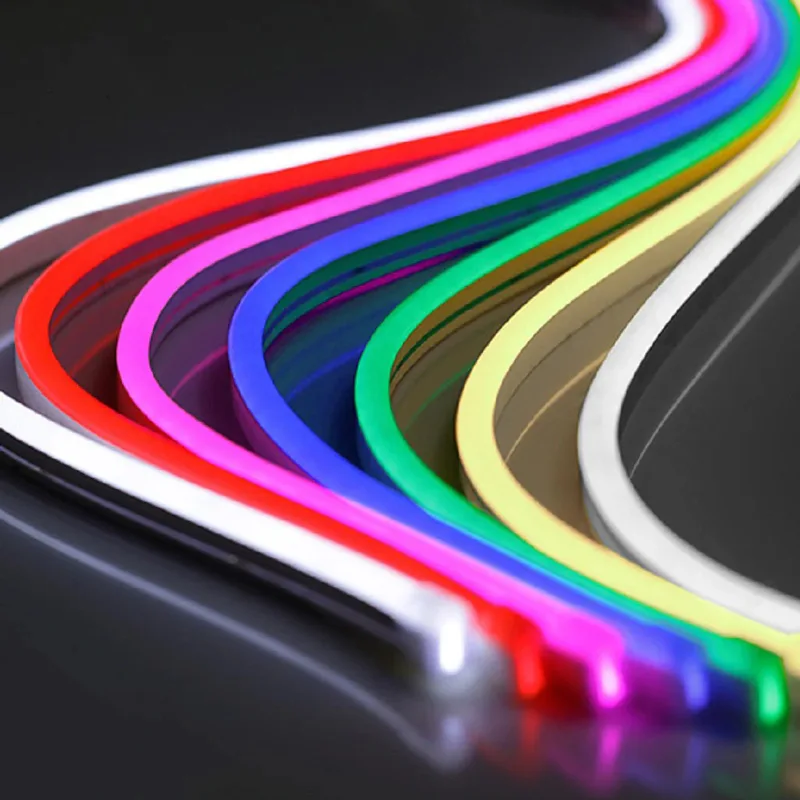
Side Bend S0612 硅胶 LED 标志霓虹灯带
- 输入电压: DC12V/24V
- 瓦特 10 瓦/米
- LED 数量 SMD2835 120LEDs/m
- 颜色 Red/Green/Blue/Yellow/Ice Blue/Light Pink/Pink/Purple/Lemon Yellow/Golden Yellow/Orange/White
- IP 等级: IP67
- 可切割长度: 25 毫米/50 毫米
- 长度: 50meters/roll
Linear Lighting Systems for Architecture
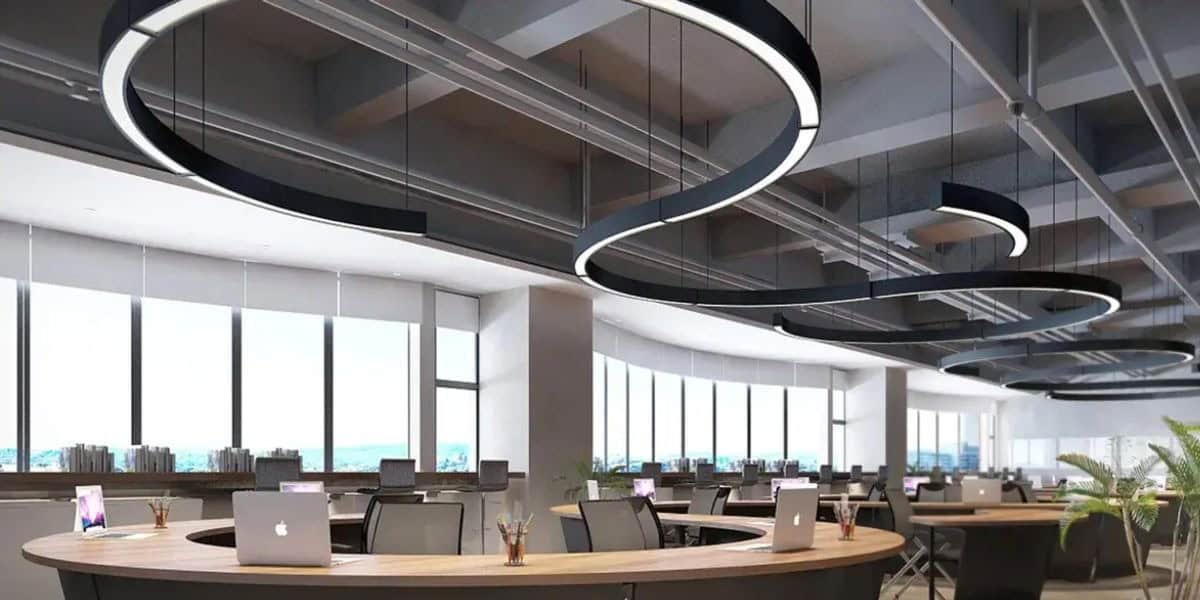
Linear lighting systems are rigid lighting solutions designed to provide continuous and uniform illumination in structured environments.
These systems are widely used in commercial and professional spaces where consistent light distribution is required.
常见用例
- Office ceilings provide uniform working light
Linear lighting ensures consistent brightness, improving productivity and visual comfort. - Commercial corridors improve safety and visibility
Continuous lighting helps guide movement and ensures clear navigation. - Retail environments enhance product display
It provides clean and structured lighting that improves the overall shopping experience.
Linear systems are typically installed inside aluminum housings, which improve heat management and ensure mechanical stability.
To explore system types and applications, read this linear lighting guide for architectural projects:
For a comparison between solutions, this linear modules vs LED strip lighting guide explains the differences:
关键要点:
Linear lighting systems are ideal for structured environments requiring consistent and reliable illumination.
DMX and Pixel Lighting Systems
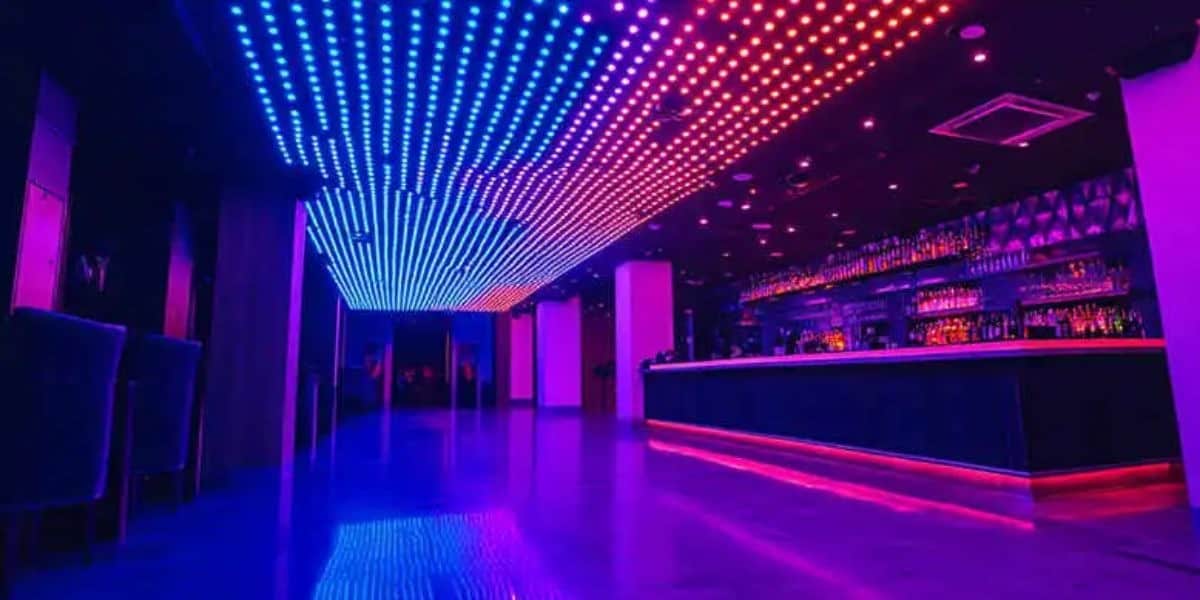
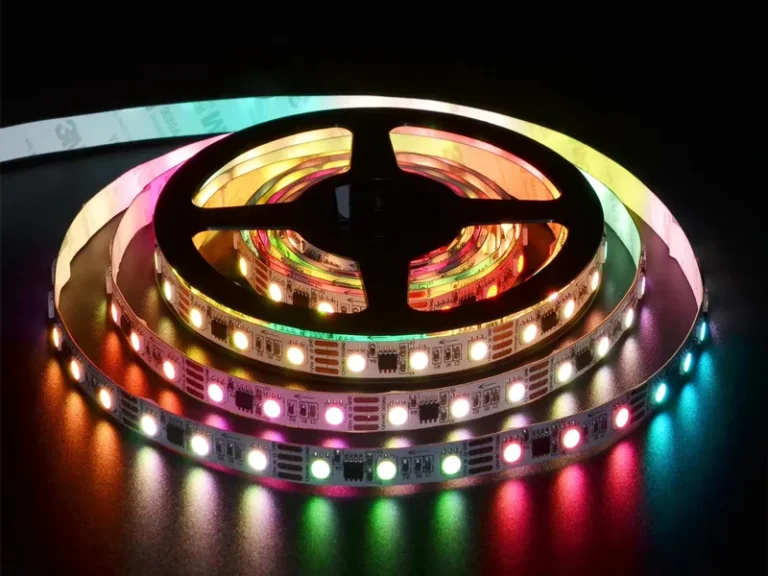
DMX lighting systems are advanced solutions used to create dynamic and programmable lighting effects in architectural projects.
These systems allow precise control of brightness, color, and timing, making them suitable for large-scale installations and façade lighting.
主要功能
- Programmable lighting sequences enable dynamic effects
Lighting can change over time, creating visual movement and patterns. - Color control allows creative design flexibility
Different colors can be applied to enhance visual impact and match design themes. - Synchronization ensures consistent operation
Multiple lighting fixtures can be controlled together for unified effects.
DMX lighting is commonly used in building façades, landmarks, and media architecture projects.
To understand how these systems work, you can explore this DMX pixel lighting technology guide:
For façade lighting applications, this DMX wall washer and pixel tube lighting guide provides practical insights:
关键要点:
DMX lighting enables dynamic and visually engaging architectural lighting designs.
LED Light Sheets for Backlighting
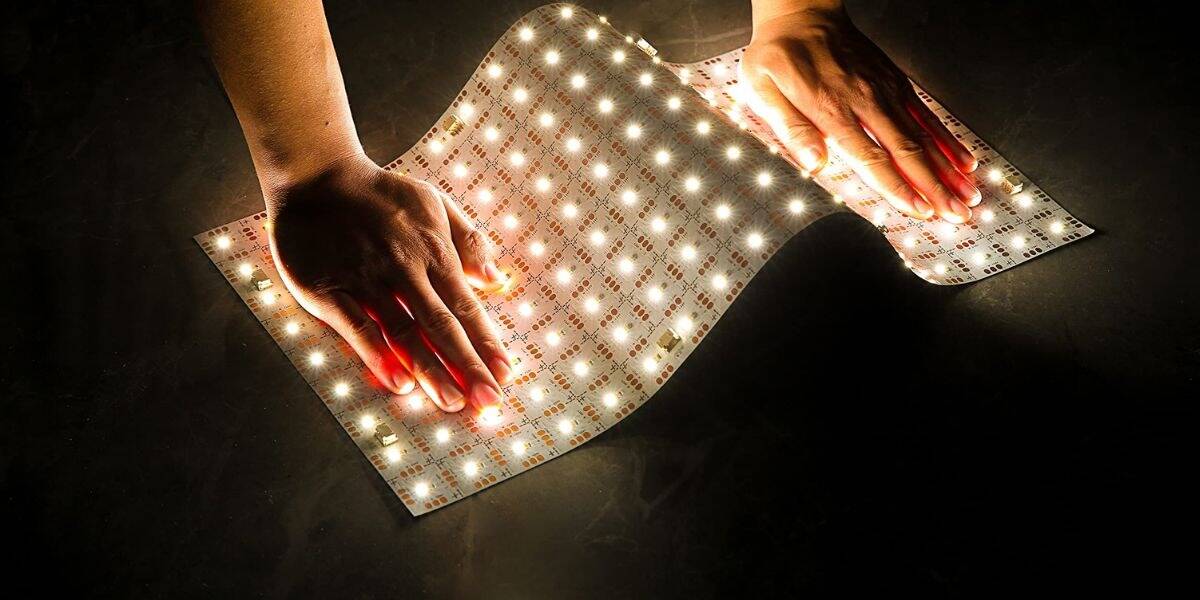
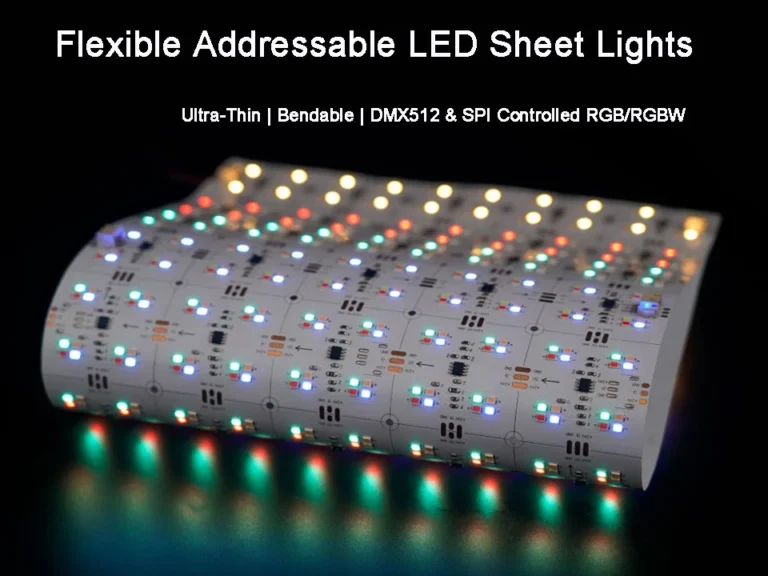
LED light sheets are ultra-thin lighting panels designed to provide uniform backlighting across surfaces.
They are commonly used in applications where even illumination is required behind materials such as marble, glass, or decorative panels.
典型应用
- Backlit marble creates premium interiors
Light passes through stone surfaces, creating a high-end visual effect. - Retail panels improve product presentation
Even lighting enhances visibility and attractiveness of displayed items. - Decorative walls and ceilings enhance design
Backlighting adds depth and visual interest to architectural elements.
LED light sheets ensure consistent illumination without visible hotspots.
To learn more, refer to this LED light sheet guide for architectural projects:
For selection tips, see this LED light sheet selection guide:
For real design applications, explore this backlit marble lighting guide:

关键要点:
LED light sheets are ideal for applications requiring uniform and high-quality backlighting.
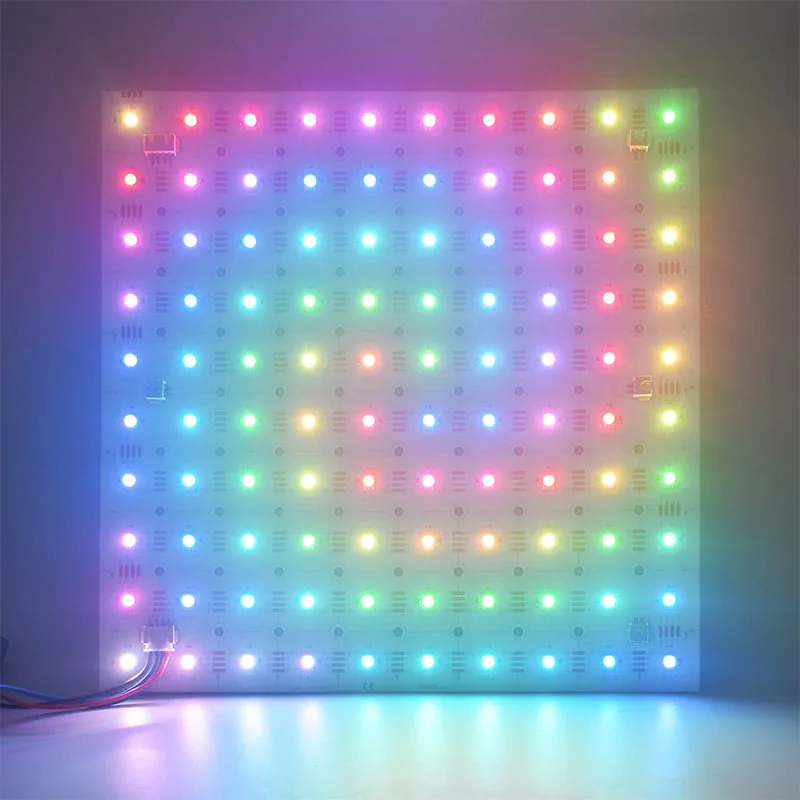
可寻址的 LED 板
主要型号: PAA2525T100A
LED 类型: SMD5050 内置 WS2812
LED 数量 100 件/件
输入电压: DC12V
动力 13W/片
颜色: RGBIC
尺寸( l x w ): 250 mm x 250 mm
最小切割单位: 25 毫米 x 25 毫米
可调光: 是
光束角度: 120°
IP 等级: IP20/IP54
寿命: 50,000 小时
保修单: 3年
认证: CE, RoHS
背面有3M双面胶带。
Specialized Architectural Lighting Applications
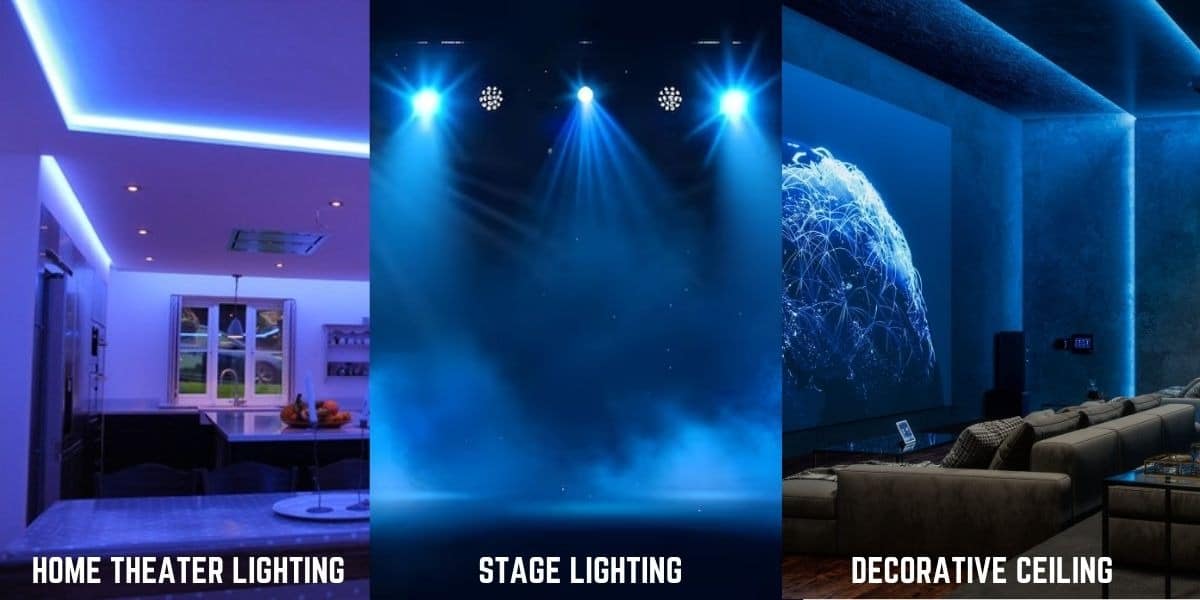
Specialized applications refer to lighting systems designed for environments that require customized solutions.
These applications often involve unique design requirements and advanced control systems.
实例
- Home theater lighting enhances viewing experience through controlled illumination.
- Stage lighting supports performance environments with dynamic lighting effects.
- Decorative ceiling lighting adds visual interest to interior spaces.
For residential applications, you can explore this home theater lighting guide:
For professional environments, this stage lighting systems guide provides further insights:
关键要点:
Specialized lighting requires customized solutions based on environment and application needs.
How to Choose a Reliable Architectural Lighting Manufacturer
Choosing a reliable lighting manufacturer involves evaluating product quality, technical capability, and production consistency.
A strong supplier ensures that lighting systems perform reliably and meet project requirements over time.
关键因素
- Product certification ensures compliance with industry standards.
- Customization capability allows solutions tailored to specific projects.
- Production consistency ensures uniform quality across batches.
- Project experience indicates reliability in real-world applications.
To understand the selection process, refer to this architectural lighting manufacturer guide:
关键要点:
Selecting the right manufacturer is critical for long-term performance and project success.
Architectural Lighting Buying Guide
Selecting the right lighting system depends on application requirements and installation conditions.
推荐解决方案
- Indoor spaces typically use LED strip lighting combined with aluminum profiles.
- Outdoor applications rely on LED neon flex for durability and environmental protection.
- Commercial environments use linear lighting systems for structured illumination.
- Dynamic architectural projects use DMX lighting for programmable effects.
Choosing the correct lighting system improves performance, reduces maintenance costs, and ensures long-term reliability.
Related Architectural Lighting Guides
To explore architectural lighting in more detail, you can refer to these related guides:
- LED Linear Lighting Applications for Modern Architecture
- LED Neon Flex vs LED Strip Lighting
- DMX Pixel Lighting Systems for Facades
- LED Light Sheet Backlighting Solutions
结论
Architectural lighting is a key element of modern building design. It combines lighting technology with structural elements to enhance both functionality and visual appeal.
Indoor lighting systems commonly use LED strip lights with aluminum profiles to achieve flexibility and stability, while outdoor systems rely on LED neon flex for durability and consistent performance.
By understanding the different lighting systems and their applications, it becomes easier to select the right solution and achieve reliable, long-term results in architectural projects.
常见问题解答
相关文章