Deutsch
  English
  简体中文
简体中文  Español
  Français
  Italiano
  日本語
日本語  한국어
한국어  Polski
  Português
  Русский
  Türkçe
  Nederlands
  Tiếng Việt
  ไทย
ไทย 
Der Unterschied zwischen Schallabsorption und Schallschutz ist einfach, aber oft missverstanden. Schallabsorption schafft das Verhalten von Schall in einem Raum, indem es Reflexionen und Nachhall reduziert, während Schallschutz verhindert, dass Schall durch strukturelle Barrieren in einen Raum eindringt oder verlässt. Die Verwirrung der beiden führt zu verschwendeten Budgets, da die Menschen in Oberflächenbehandlungen investieren, wenn sie tatsächlich Konstruktionsänderungen benötigen, oder wenn dekorative Lösungen zur Lösung von strukturellen Lärmproblemen erwarten. Dieses Missverständnis ist besonders häufig bei akustischer Beleuchtung, bei der die Erwartungen häufig übertreffen, wofür die Lösung ausgelegt ist.
Dieser Artikel erklärt die Unterscheidung klar, warum die Verwirrung anhält und wo die akustische Beleuchtung realistisch ohne Hype oder Annahmen passt.
Was ist Schallabsorption?

Schallabsorption ist die Kontrolle des reflektierten Schalls in einem Raum. Es konzentriert sich darauf, wie sich der Schall nach seiner Erzeugung verhält, und nicht darauf, dass sich der Ton zwischen den Räumen bewegt.
Was Schallabsorption bewirkt
Schallabsorption reduziert Echos, Flattern und übermäßigen Nachhall, indem Schallenergie beim Kontakt mit absorbierenden Oberflächen abfließen kann. Anstatt immer wieder von harten Oberflächen abzuspringen, wird der Schall weicher und kontrolliert.
Welches Problem löst es?
Das Hauptproblem Schallabsorptionsadressen ist eine schlechte akustische Klarheit. In unbehandelten Räumen wird Sprache schwerer zu verstehen, Musik klingt schlammig und Hintergrundgeräusche entstehen. Die Absorption hilft, die Sprachverständlichkeit und den akustischen Gesamtkomfort zu verbessern.
Wo Schallabsorption verwendet wird
Schallabsorption wird in Büros, Besprechungsräumen, Studios, Klassenzimmern, Restaurants und anderen Innenräumen verwendet, in denen Klarheit und Komfort wichtig sind. Es wird üblicherweise durch Decken, Wandpaneele und andere Innenelemente aufgetragen, die zur Verwaltung von Reflexionen ausgelegt sind.
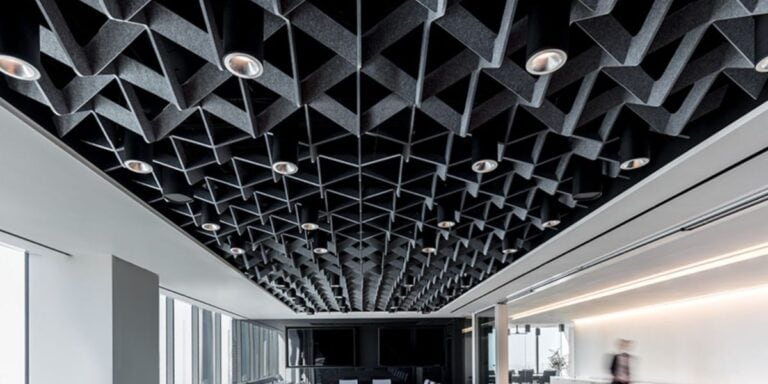
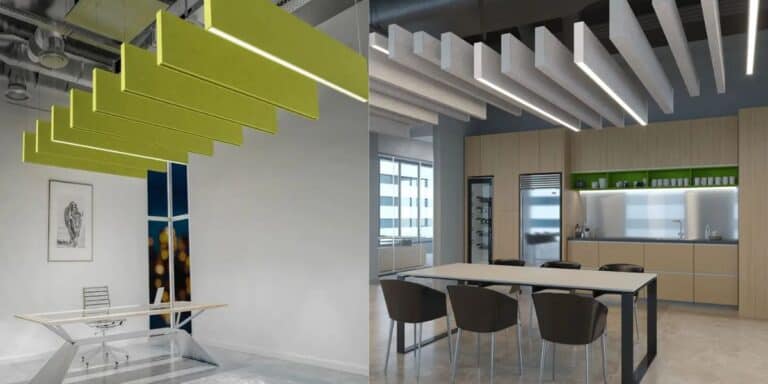
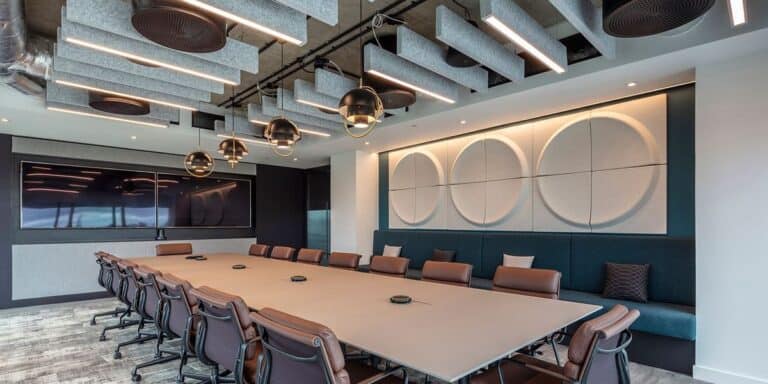
Akustische Beleuchtung gehört in diese Kategorie. Es soll zur Schallabsorption beitragen und gleichzeitig eine Beleuchtung bieten, insbesondere bei Deckenanwendungen.
Was ist Schalldämmung?

Schallschutz ist die Verhinderung der Schallübertragung zwischen Räumen. Es geht darum, wie sich der Schall durch Wände, Decken, Böden und strukturelle Lücken bewegt.
Was schallisoliert macht
Schallschutz begrenzt die Menge an Schall, die von einem Raum in einen anderen übergeht. Es konzentriert sich auf das Blockieren, Isolieren oder Entkoppeln von Schallwegen durch Konstruktionssysteme.
Welches Problem löst es?
Schallschutz löst Probleme im Zusammenhang mit Datenschutz und Lärmleckage. Dazu gehört, dass nebenan keine Gespräche mehr gehört werden, Musik nicht zwischen den Räumen wandern oder das Eindringen von externem Lärm reduziert werden.
Warum Schalldämmung strukturell und nicht dekorativ ist
Die Schalldämmung hängt von Masse, luftdichter Konstruktion, Trennung und strukturellen Details ab. Es handelt sich normalerweise um Wände, Böden, Decken und Durchdringungen. Dadurch kann es nicht allein durch oberflächenmontierte oder dekorative Produkte erreicht werden. Beleuchtungskörper, Absorptionsplatten und Deckenelemente ersetzen keine strukturellen Schallschutzsysteme.
Warum verwechseln die Menschen Schallabsorption und Schalldämmung?
Die Verwirrung ergibt sich aus der Art und Weise, wie Soundprobleme auftreten und wie Lösungen vermarktet oder missverstanden werden.
Ähnliche Symptome, verschiedene Ursachen
In vielen Büros und Studios erleben die Menschen Lärm und gehen davon aus, dass der Ton „leckt“. In der Realität ist das Thema oft interne Reflexion, bei der sich der Schall aufbaut und überwältigend wird. Die Absorption hilft in diesen Fällen, aber sie verhindert nicht, dass der Ton in andere Räume reisen kann.
Beispiele aus der realen Welt
In offenen Büros können sich Mitarbeiter über Lärm und Privatsphäre beschweren. Das Hinzufügen von Absorptionsdecken verbessert den Komfort, verhindert jedoch nicht, dass Gespräche in angrenzenden Räumen gehört werden.
In Studios können Reflexionen dazu führen, dass Aufzeichnungen unklar klingen, während externes Rauschen immer noch eintritt, da die Struktur selbst nicht isoliert ist. Die Behandlung eines Problems löst das andere nicht.
Wie falsche Annahmen Geld verschwenden
Wenn die Absorption mit Schallschutz verwechselt wird, werden Budgets für Produkte ausgegeben, die nicht das erwartete Ergebnis liefern können. Umgekehrt, wenn die Schalldämmung dort installiert ist, wo die Absorption ausreichend gewesen wäre, werden Projekte unnötig komplex und teuer. Die Kosten sind nicht nur finanziell, sondern auch betriebsbereit, da die Erwartungen nicht erfüllt werden.
Wo akustische Beleuchtung passt

Akustikbeleuchtung ist oft mitten in dieser Verwirrung gefangen. Das Verständnis seiner Rolle verhindert eindeutig unrealistische Erwartungen.

Schlankes, blendfreies akustisches LED-Linearlicht
- Eingangsspannung: AC100–277V / AC220–240V, 50–60Hz
- Gehäusegröße: W58 × H200 mm / W58 × H300 mm
- Aussendenrichtung: nach unten
- Längenoptionen: 1218 mm / 1220 mm / 1288 mm
- Korrelierte Farbtemperatur (CCT): 3000K / 4000K / 6000K
- Macht: 30 W / 32 W
- Lichtstrom: 100–110 lm/W
- CRI: > 90 RA
- Leistungsfaktor (PF): > 0,90
- Flimmerfrei: Ja
- Abstrahlwinkel: 36°
- IP-Bewertung: IP20
- Garantie: 5 Jahre
- Farboptionen für die Filzakustiktafel: Rot / Grün / Blau / Grau (mehr als 48 Farboptionen)
Die Rolle der akustischen Beleuchtung bei der Schallabsorption
Akustische Beleuchtung integriert die Lichtabgabe mit schallabsorbierenden Elementen. Es wurde entwickelt, um den akustischen Komfort zu unterstützen, indem er den reflektierten Schall aus der Decke reduziert und gleichzeitig die Anforderungen an die Beleuchtung erfüllt. Sein Zweck ist die funktionale Integration, nicht die Geräuschisolierung.
Warum Akustische Deckenbeleuchtung Reflexionen und nicht Isolation beeinflusst
Decken spielen eine wichtige Rolle bei der Schallreflexion. Akustische Deckenbeleuchtung hilft, diese Reflexionen zu verwalten, indem sie absorbierende Oberflächen mit Leuchten kombiniert. Es fügt jedoch keine Masse, Luftdichtheit oder Trennung hinzu. Aus diesem Grund verhindert es nicht, dass das Geräusch ein Betreten oder Verlassen eines Raums verhindert.
Wie integrierte Akustik-Beleuchtungslösungen helfen, Decken zu verwalten
In modernen Innenräumen müssen die Decken Beleuchtung, Akustik und Dienstleistungen ohne Unordnung aufnehmen. Akustische Beleuchtungslösungen ermöglichen es den Designern, Schallabsorption und Beleuchtung gemeinsam anzugehen, die Koordination zu vereinfachen und gleichzeitig realistische akustische Ziele beizubehalten.
Gemäß der referenzierten Produktkategorie sind diese Systeme als integrierte Deckenelemente konzipiert, die Beleuchtung mit akustischer Unterstützung verbinden. Jede Erwartung, die über die Absorption hinausgeht, würde außerhalb ihres beabsichtigten Einsatzes liegen.
Schallabsorption vs. Schalldämmung: ein klarer Vergleich

| Aspekt | Schalldämpfung | schalldämpfend |
| Zweck | Verbessern Sie den akustischen Komfort in einem Raum | Schallübertragung zwischen Räumen reduzieren |
| Methode | Verwalten von Schallreflexionen | Blockieren oder Isolieren von Schallpfaden |
| Typische Materialien | Absorbierende Oberflächen und Behandlungen | Baugruppen und Barrieren |
| Was es lösen kann | Echo, Nachhall, Klarheitsprobleme | Lärmleckage, Datenschutzprobleme |
| Was es nicht lösen kann | Schall durch Wände oder Decken | Schlechte interne Akustik |
Diese Unterscheidung ist entscheidend bei der Auswahl von Lösungen und der Festlegung von Erwartungen.
Wie Missverständnisse Projektentscheidungen beeinflussen
Konsequenzen für die Design-Stufe
Wenn die Absorption und Schalldämmung nicht klar getrennt sind, werden Designentscheidungen falsch ausgerichtet. Dekorative Behandlungen werden für Probleme spezifiziert, die sie nicht lösen können, während strukturelle Bedürfnisse übersehen werden.
Budget- und Nachrüstrisiken
Das falsche Problem zu beheben führt häufig zu Nachrüstungen. Dies erhöht die Kosten und stört den Betrieb. In vielen Fällen hätte das ursprüngliche Problem mit der richtigen Diagnose richtig behoben werden können.
Erwartungen der Interessengruppen
Architekten, Designer und Facility Manager stehen häufig unter dem Druck, „Lärm zu beheben“. Eine klare Kommunikation darüber, was jede Lösung tut, hilft dabei, Erwartungen zu verwalten und Unzufriedenheit nach der Installation zu vermeiden.
Abschluss
Das Missverständnis des Unterschieds zwischen Schallabsorption und Schallschutz führt zu kostspieligen Fehlern. Die Absorption verbessert den akustischen Komfort durch die Verwaltung von Reflexionen, während die Schalldämmung die Schallübertragung durch strukturelle Mittel anspricht. Die Behandlung eines als Ersatz für die anderen führt zu verschwendeten Budgets und unerfüllten Erwartungen.
Akustische Beleuchtung passt eindeutig in die Kategorie Schallabsorption. Es hilft, den reflektierten Klang zu verwalten und gleichzeitig die Beleuchtung zu gewährleisten, insbesondere bei Deckenanwendungen. Es ist nicht dazu ausgelegt, Lärm zu blockieren oder strukturelle Schalldämmsysteme zu ersetzen.
Klare Definitionen und realistische Erwartungen sind die Grundlage effektiver akustischer Entscheidungen. Die Wahl der richtigen Lösung beginnt mit dem Verständnis, welches Problem Sie tatsächlich lösen möchten.
FAQs
Verwandte Artikel