Deutsch
  English
  简体中文
简体中文  Español
  Français
  Italiano
  日本語
日本語  한국어
한국어  Polski
  Português
  Русский
  Türkçe
  Nederlands
  Tiếng Việt
  ไทย
ไทย 
Bei den meisten Solarmodulen ist der optimale Ansatz der Überspannungsschutz: ein DC-SPD am PV-Array oder Wechselrichter-DC-Eingang, ein AC-SPD am Ausgang oder Verteilerpanel des Wechselrichters und Typ 2-SPDs als primäre Schutzschicht. Typ-3-Geräte werden nur in der Nähe von sensiblen Endpunkten verwendet.
Das bedeutet, dass es für jede Solaranlage keine einzige „beste“ Überspannungsschutzvorrichtung gibt. Das beste Ergebnis ist die richtige SPD-Art, bei korrekter Installation und Erdung, damit die Überspannungen schrittweise reduziert werden, bevor sie den Wechselrichter oder eine andere Elektronik beschädigen können.
Was „beste SPD“ in Solar-PV-Anlagen bedeutet
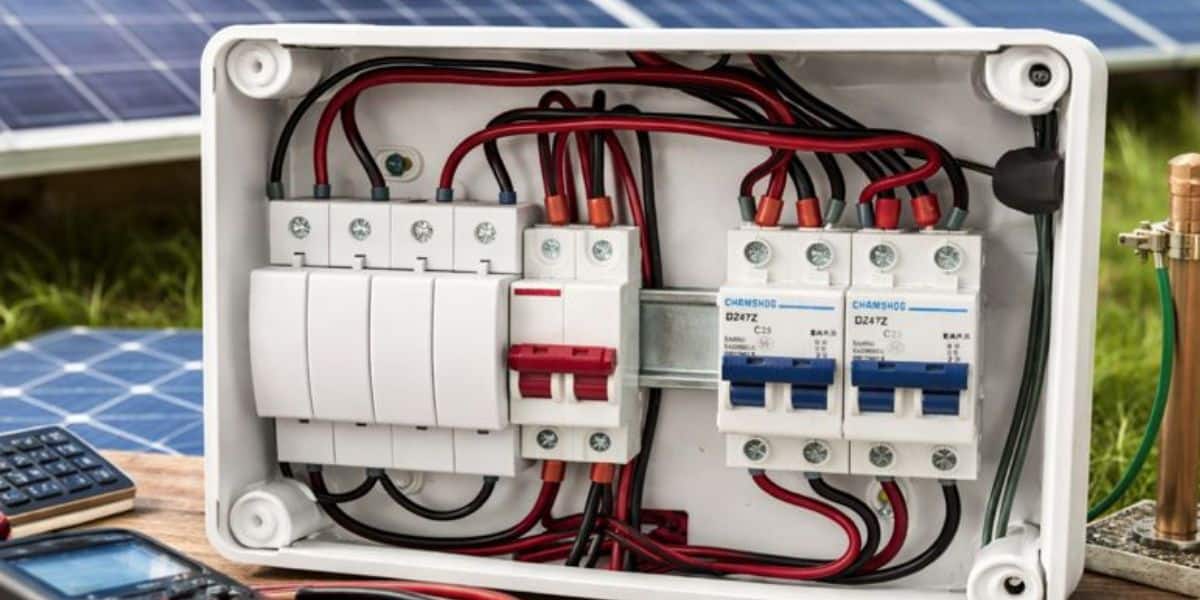
In Solar-PV-Systemen bedeutet „best“ nicht das größte Gerät, die höchste Strombewertung oder das teuerste Produkt. Es bedeutet, dass das Schutzkonzept zum System passt und wie Überspannungen tatsächlich in dieses eindringen.
In der Praxis bedeutet „bestes“:
korrekte Position
Ein Sonnensystem hat zwei verschiedene elektrische Welten: die Gleichstromseite von den Panels und die AC-Seite mit dem Netz oder den Lasten verbunden. Beide Seiten können Überspannungen bekommen, und beide Seiten benötigen normalerweise einen eigenen Schutz.
Korrigieren Sie den SPD-Typ
Typ-2-Geräte sind normalerweise die Hauptschutzschicht in PV-Systemen. Typ-3-Geräte sind nur für den lokalen Feinschutz in der Nähe empfindlicher Geräte vorgesehen.
Verdrahtungsabstand und Erdungsqualität
Selbst ein sehr gutes Überspannungsschutzgerät funktioniert schlecht, wenn es mit langen Drähten, Schlaufen oder schlechter Verbindung zur Erde installiert ist.
Wiederholte Überspannungsausdauer
Solaranlagen sind seit vielen Jahren freigelegt. Die SPD muss im Laufe der Zeit viele kleinere Überspannungen tolerieren, nicht nur ein einziges großes Ereignis.
Die „beste“ SPD für ein Solarsystem ist also diejenige, die für die DC- oder AC-Seite richtig ausgewählt, richtig auf andere Schutzstufen abgestimmt und mit kurzen, gut verbundenen Verbindungen installiert ist.
Warum Solarmodul-Installationen stoßempfindlich sind

Solar-PV-Anlagen sind stärkeren Überspannungsproblemen ausgesetzt als viele andere elektrische Anlagen. Dies liegt nicht daran, dass die Ausrüstung schwach ist, sondern weil das System installiert ist.
lange DC-Kabel
PV-Saiten verlaufen oft mehrere zehn oder sogar Hunderte von Metern über Dächer oder Felder. Lange Kabel wirken wie Antennen und können induzierte Spannungen aus der nahen Blitzaktivität aufnehmen, auch wenn es keinen direkten Schlag gibt.
Freilicht
Paneele, Kombinierboxen und Teile der Verkabelung werden im Freien installiert. Dies erhöht die Wahrscheinlichkeit von direkten oder indirekten Blitzeffekten und schnellen Überspannungen.
Empfindliche Wechselrichterelektronik
Moderne Wechselrichter enthalten Hochleistungselektronik, Steuerplatinen und Kommunikationsschnittstellen. Diese Komponenten können durch relativ kleine Überspannungsimpulse beschädigt werden.
Zwei Hauptüberspannungseintrittswege
Überspannungen können von der kommen Array-Seite (durch die DC-Kabel aus dem PV-Feld) und aus der Gitterseite (über das AC-Netzwerk). Ist nur eine Seite geschützt, kann die andere Seite den Wechselrichter noch zerstören.
Aufgrund dieser Faktoren ist der koordinierte Überspannungsschutz in den meisten PV-Anlagen nicht optional. Es ist Teil der grundlegenden Zuverlässigkeit und des Uptime-Designs.
DC SPD vs AC SPD in Solarmodulinstallationen
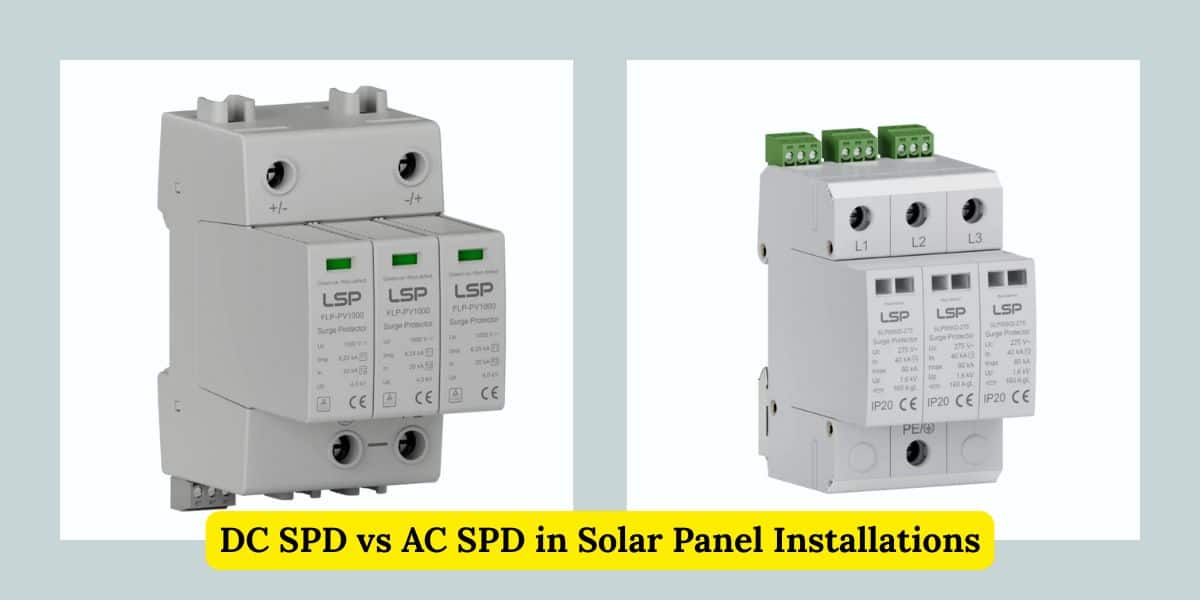
DC-SPDs und AC-SPDs haben unterschiedliche Aufgaben in einer Solaranlage. Sie sind nicht austauschbar, auch wenn sie ähnlich aussehen.
A DC SPD ist für die Arbeit auf der PV-Seite ausgelegt, wo es eine kontinuierliche Gleichspannung gibt, die häufig auf hohen Pegeln (600 V, 1000 V, 1500 V oder mehr) anliegt. Es muss DC-spezifisches Lichtbogenverhalten verarbeiten und auf die PV-Strangspannung abgestimmt sein.
Eine AC SPD ist für die Arbeit auf der Gitterseite ausgelegt, wo Spannungswechsel und Nulldurchgänge helfen, Bögen zu löschen. Es schützt vor Überspannungen aus dem Versorgungsnetz oder vor Wechselereignissen innerhalb der Installation.
Um dies klarer zu machen, betrachten Sie den folgenden Vergleich.
DC-seitiger Überspannungsschutz in Solar-PV-Anlagen
| Aspekt | DC-seitiger Schutz | AC-Seitenschutz |
| Einbauort | Nahe PV-Strings, Combiner-Box oder Wechselrichter-DC-Eingang | Bei Wechselrichterausgang, Hauptverteiler oder Unterfeld |
| SPD-Typ häufig verwendet | DC SPD (normalerweise Typ 2) | AC SPD (in der Regel Typ 2, manchmal abgestimmt auf Typ 3) |
| Hauptquelle | Induzierte Blitze durch lange PV-Kabel, nahegelegene Streiks | Netzschaltschübe, Blitzeintritt von der Versorgungsseite |
| Schutzziel | Schützen Sie den Wechselrichter-DC-Eingang und die String- | Schützen Sie Wechselrichter AC-Seite und nachgeschaltete Lasten |
| Warum es wichtig ist | PV-Seite ist lang und freigelegt, hohe Gleichspannung ist empfindlich | Netzseite kann starke Transienten in Wechselrichter und Lasten einspritzen |
Diese Tabelle zeigt, dass DC- und AC-SPDs gegen verschiedene Überspannungswege schützen und an verschiedenen Stellen installiert werden. Sie arbeiten als System zusammen. Nur eine Seite zu schützen, verlässt die andere Seite als offene Tür für Überspannungen.
Typ 2 gegen Typ 3 SPDs in Solaranlagen
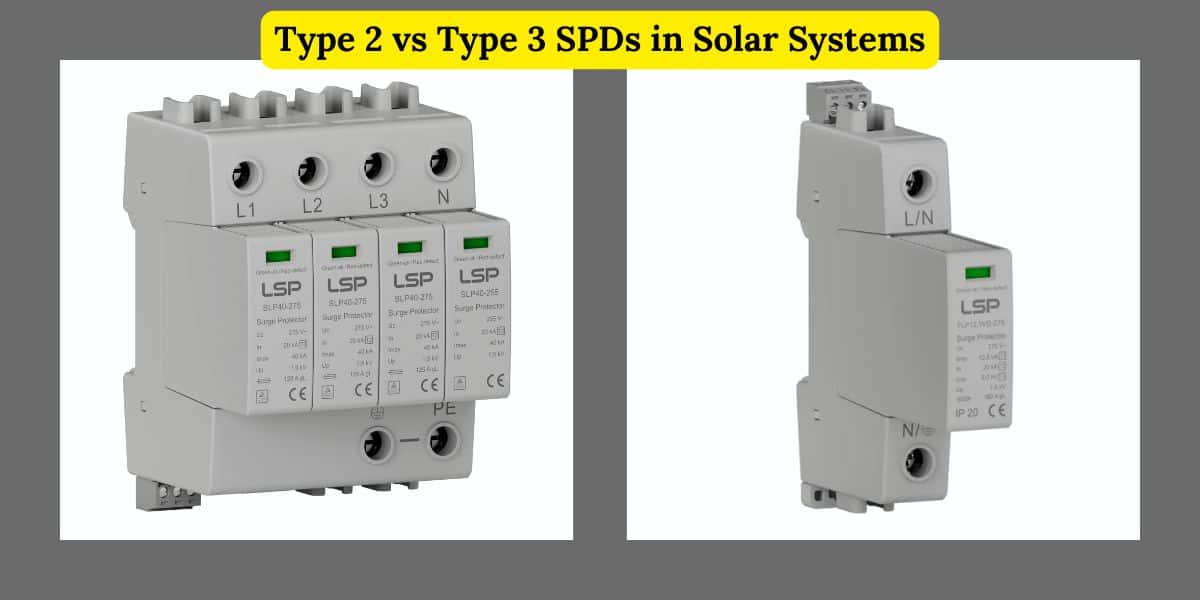
In den meisten Solaranlagen liegt die Hauptentscheidung nicht zwischen vielen exotischen SPD-Typen, sondern zwischen Typ 2 Und Typ 3 Geräte richtig.
- Warum Typ 2 die Standardeinstellung für PV-Panels ist
Typ 2 SPDs sind für die meisten induzierten und schaltenden Überspannungen in normalen Installationen ausgelegt. Sie verfügen über genügend Entladungskapazität und Energiehandling, um wiederholte Ereignisse über viele Jahre zu überstehen. Aus diesem Grund ist Typ 2 die Standardwahl sowohl für DC- als auch AC-Seiten in den meisten PV-Systemen. - Warum Typ 3 ergänzend ist
Typ 3 SPDs sind für feinen Schutz sehr nahe an empfindlichen Geräten. Sie haben eine geringere Entladekapazität und sollen nicht die erste oder einzige Schutzstufe sein. In PV-Systemen werden sie manchmal in der Nähe von Überwachungsgeräten, Kommunikationsanschlüssen oder sehr empfindlicher Steuerelektronik verwendet. - Warum Typ 3 den Panelschutz nicht ersetzen kann
Ein Gerät vom Typ 3 allein kann die Energie von Überspannungen aus langen Außenkabeln oder aus dem Netz nicht sicher bewältigen. Wenn es ohne ein geeignetes Upstream-Typ-2-Gerät verwendet wird, kann es schnell ausfallen oder nur wenig wirklichen Schutz bieten.
Kurz gesagt, Typ 2 ist das Arbeitspferd des Überspannungsschutzes in Solaranlagen. Typ 3 ist nur eine zusätzliche lokale Ebene.
Schlüsselauswahlkriterien für SPD für Solaranlage
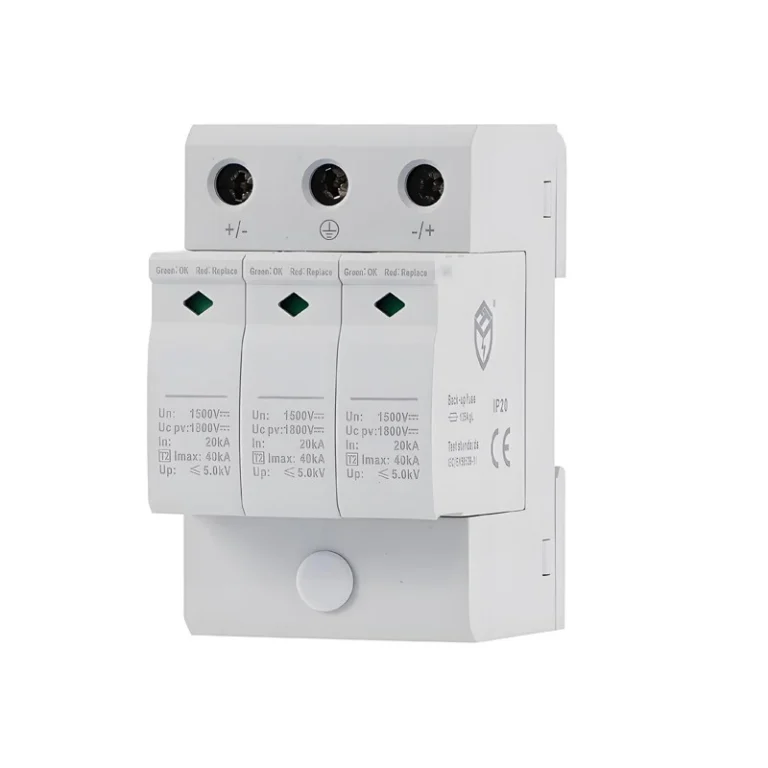
- SPD20C/3-1500 PV S Klasse II
- Bezeichnung: Typ2
- Klassifizierung: Klasse II
- Schutzmodus: (+/-)–>PE , (-/+)–> PE , (+/-)–>(-/+)
- Nennspannung UN: 1500 VDC
- max. Dauerbetriebsspannung UC (L-N): 180 VDC
- Kurzschlussstrom Nennwert IscpV: 100 A
- Dauerbetriebsstrom ICPV: <20 µA
- Bemessungslaststrom: 80 A
- Max. Entladestrom (8/20μs) IMAX:40 kA
- Nennentladestrom (8/20μs) in:20 kA
- Spannungsschutzniveau UP: ≤5,0 kV
- Isolationswiderstand: >1000 MΩ
- Gehäusematerial: UL94V-0
- Schutzart: IP20
Auswahl eines SPD für Solarsysteme Es geht nicht um Marken- oder Marketingansprüche. Es geht darum, das Gerät an die elektrischen und physikalischen Bedingungen der Installation anzupassen. Die folgende Checkliste deckt die wichtigsten Punkte ab.
Auswahl-Checkliste
- PV-Strangspannung (VOC + Temperatureffekte)
Die maximale Leerlaufspannung des PV-Strings steigt bei niedrigen Temperaturen an. Der DC-SPD muss eine kontinuierliche Betriebsspannung (UC) haben, die über diesem Worst-Case-Wert liegt, nicht nur die Systemnennspannung. - DC- vs AC-Platzierung
Stellen Sie sicher, dass das Gerät speziell für die Verwendung von Gleichstrom oder Wechselstrom konzipiert und zertifiziert ist, je nachdem, wo es installiert wird. Mischen Sie sie nicht. - Kabellänge und Belichtung
Lange Außenkabel erhöhen das Überspannungsrisiko und rechtfertigen häufig die Platzierung von SPDs sowohl auf der Array- als auch auf der Wechselrichterseite, nicht nur an einem Ort. - Erdungs- und Bondsystem
Die SPD kann die Überspannungsenergie nur bei einem niedrigen, gut gebundenen Erdungssystem auf die Erde leiten. Das Erdungskonzept und die SPD-Auswahl müssen zusammen betrachtet werden. - Koordination zwischen den Stufen
Wenn mehr als eine SPD verwendet wird (z. B. eine an der Hauptplatine und eine in der Nähe des Wechselrichters), sollten ihre Spannungsschutzniveaus und ihr Energiehandling so koordiniert werden, dass sie den Stress richtig teilen, anstatt sich gegenseitig zu bekämpfen.
Wenn diese Punkte eingehalten werden, werden die ausgewählten Überspannungsschutzgerät für Solarpanel Installationen werden ihre Arbeit viele Jahre lang ausführen, anstatt nur auf Papier.
Typische SPD-Platzierungslayouts in Solaranlagen
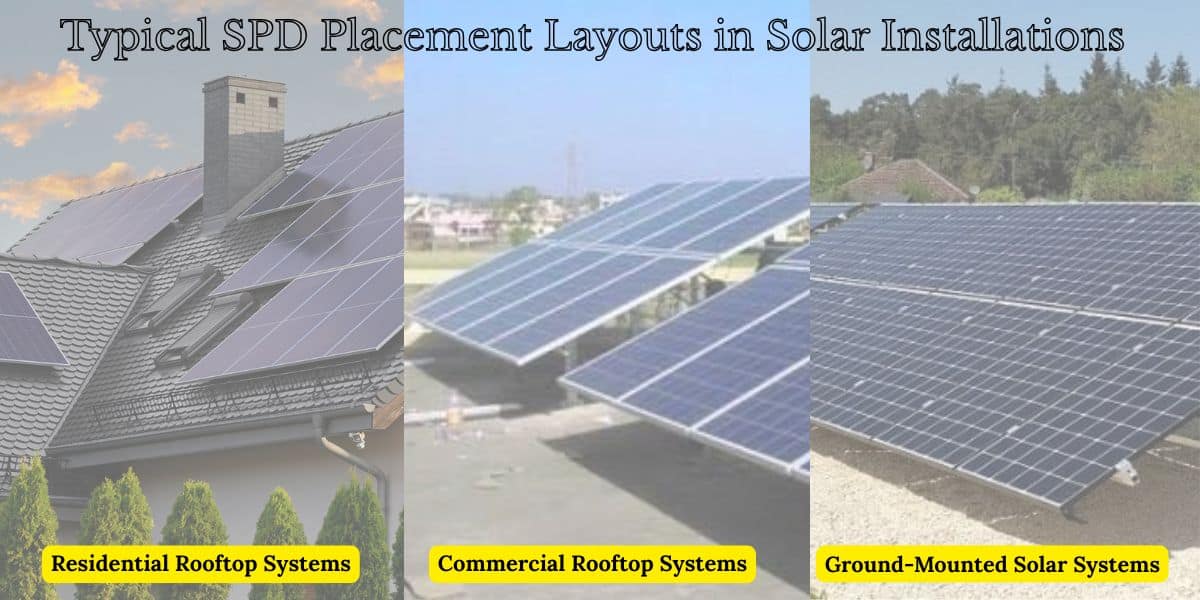
Die genaue Anordnung hängt von der Größe und Struktur des Systems ab, aber die Logik ist in den meisten Fällen ähnlich: Stoppen Sie Überspannungen so nah wie möglich an ihrem Eintritt und schützen Sie den Wechselrichter von beiden Seiten.
Wohnanlagen auf dem Dach
In einem typischen Wohnsystem verlaufen PV-Strings vom Dach direkt zu einem einzelnen Wechselrichter.
- auf dem DC-Seite, wird eine Typ-2-DC-SPD oft entweder in der Dachkombiniererbox (falls vorhanden) oder am DC-Eingang des Wechselrichters installiert.
- auf dem AC-Seite, wird eine Typ 2 AC SPD in der Hauptverteilerplatine oder in der Nähe des Wechselrichterausgangs installiert.
Ziel ist es, den Wechselrichter zwischen zwei Schutzpunkten zu halten, einen für jeden Überspannungsweg.
Kommerzielle Dachsysteme
Kommerzielle Systeme haben normalerweise längere Kabelstrecken, mehrere Stränge und manchmal mehrere Wechselrichter.
- DC-Seite SPDs werden häufig in Combiner-Boxen und manchmal wieder in der Nähe der Wechselrichtereingänge platziert, wenn die Entfernungen groß sind.
- AC-Seite SPDs werden an den Wechselrichterausgängen und am Haupt-Niederspannungsverteiler angeordnet.
Hier wird die Koordination zwischen mehreren SPDs wichtiger, da an vielen Stellen Überspannungen eintreten können.
Bodenmontage-Solaranlagen
Erdungsanlagen können über offene Bereiche sehr lange DC-Kabelstrecken haben.
- DC-Seite Der Schutz wird häufig sowohl am Array-Feld (in Feld-Combiner-Boxen) als auch am Wechselrichter oder Kraftwerk installiert.
- AC-Seite Der Schutz wird am Ausgang des Wechselrichters und am Netzanschlusspunkt installiert.
Die Logik ist immer dieselbe: Reduzieren Sie den Überspannungsstoß Schritt für Schritt, anstatt ihn die volle Kabellänge in die Elektronik eintragen zu lassen.
Installationspraktiken, die die Leistung bestimmen
Auch die beste Überspannungsschutzvorrichtung kann bei unsachgemäßer Installation schlecht funktionieren. Bei vielen echten Ausfällen liegt das Problem nicht beim Gerät selbst, sondern in der Art und Weise, wie es verbunden ist.
- Kurze Anschlussleitungen
Die Drähte von der SPD zur Phase, Gleichstromleiter und Erde sollten so kurz wie möglich sein. Jeder zusätzliche Zentimeter erhöht die Induktivität und erhöht die Spannung, die während eines Überspannungs am Gerät auftritt. - Keine Schleifen in der Verkabelung
Schlingen- oder Spiraldrähte wirken wie Induktoren und machen die SPD bei schnellen Transienten viel weniger effektiv. - Schließen Sie die Montage an der geschützten Ausrüstung oder dem Einstiegspunkt
Die SPD sollte in der Nähe des Kabels installiert werden, der in den Wechselrichter oder das Gebäude eindringt, nicht weit in einem anderen Schrank, es sei denn, es gibt einen guten Grund. - Hochwertige Bindung an die Erde
Die Erdverbindung muss niedrigohmig und gut mit dem Rest des Erdungssystems verbunden sein. Eine schlechte Erde macht jede Überspannungsschutzvorrichtung fast unbrauchbar.
Diese Installationsdetails wirken sich häufig mehr auf die tatsächliche Schutzleistung aus als kleine Unterschiede bei den Werten des SPD-Datenblatts.
Häufige Fehler im Solar-SPD-Design
Viele Solaranlagen haben irgendeinen Überspannungsschutz, erleiden jedoch durch grundlegende Konstruktionsfehler immer noch Schäden.
Nur AC- oder nur DC-Schutz
Durch Schutz nur der Netzseite oder nur der PV-Seite wird der Wechselrichter aus der anderen Richtung freigelegt.
Falsche Platzierung
Eine weit entfernt vom Kabeleinführungspunkt oder mit langen Anschlusskabeln installierte SPD kann die Spannung nicht klemmen, wo es darauf ankommt.
Überbeanspruchung von Typ-3-Geräten
Typ-3-Geräte werden manchmal als einzige Schutzstufe verwendet, da sie klein und billig sind. Dies ist nicht das, wofür sie in PV-Systemen konzipiert sind.
Schlechte Grundannahmen
Angenommen, "irgendwo eine Erdverbindung gibt" reicht nicht aus. Ohne ein gut durchdachtes und niederohmiges Erdungs- und Verbindsystem können Überspannungsschutzgeräte nicht wie vorgesehen funktionieren.
Die Vermeidung dieser Fehler ist oft wichtiger als die Wahl zwischen zwei ähnlichen Produkten.
Neben Stromleitungen können auch Kommunikationsanschlüsse wie RS485 oder Ethernet Überspannungsenergie transportieren. In einigen Installationen werden Datenleitungs-Überspannungsschutzgeräte eingesetzt, um das Risiko von Schäden durch Überwachungs- und Kommunikationskabel zu verringern.
Abschluss
Der beste Überspannungsschutz für Solarmodulinstallationen ist kein einziges Gerät, sondern ein koordiniertes Schutzsystem, das sowohl die Gleichstrom- als auch die AC-Seite der Installation abdeckt. Da Überspannungen aus dem PV-Array oder aus dem Netz eintreten können, müssen beide Wege geschützt werden, wenn der Wechselrichter und andere Elektronik langfristig zuverlässig bleiben sollen. In den meisten Solaranlagen stellen Überspannungsschutzgeräte Typ 2 die Hauptschutzschicht bereit, während Typ-3-Geräte nur für den lokalen und zusätzlichen Schutz in der Nähe empfindlicher Geräte verwendet werden. Über die Rohwerte eines einzelnen Geräts, die richtige Auswahl für den DC- oder Wechselstrom, die richtige Abstimmung zwischen den Schutzstufen, gute Erdung und Verbindung sowie sorgfältige Installationspraktiken bestimmen, ob der Überspannungsschutz tatsächlich unter realen Betriebsbedingungen funktioniert.
FAQs
Verwandte Artikel