Deutsch
  English
  简体中文
简体中文  Español
  Français
  Italiano
  日本語
日本語  한국어
한국어  Polski
  Português
  Русский
  Türkçe
  Nederlands
  Tiếng Việt
  ไทย
ไทย 
Die Wahl der Akustikdeckenleuchten für ein Büro erfordert eine klare Bewertung der akustischen Leistung, der Beleuchtungsqualität, der Energieeffizienz, der visuellen Integration und der langfristigen Einhaltung. Jeder dieser Faktoren wirkt sich direkt auf den Fokus der Mitarbeiter, die Klarheit der Sprache, die Betriebskosten und den allgemeinen Komfort am Arbeitsplatz aus.
Akustische Beleuchtungskörper kombinieren schallabsorbierende Materialien mit professioneller LED-Beleuchtung, um den Nachhall und das ablenkende Sprachgeräusch in einem Raum zu reduzieren und gleichzeitig eine gleichmäßige, komfortable Beleuchtung zu erzielen. Sie verbessern die internen akustischen Bedingungen, sind jedoch nicht dazu ausgelegt, externe Lärm aus angrenzenden Räumen oder Außenquellen zu blockieren.
Dieses Handbuch bietet ein strukturiertes, Spezifikations-basiertes Framework, das Büromanager, Architekten und Designer verwenden können, um fundierte Entscheidungen zu treffen. Es erläutert die Kernleistungsmetriken, bietet eine schrittweise Auswahlmatrix, beschreibt anwendungsspezifische Anleitungen für verschiedene Bürobereiche und zeigt, wie Herstelleransprüche anhand von Testdaten nach Industriestandard überprüft werden.
Akustische Leistung: Messgeräuschkontrolle
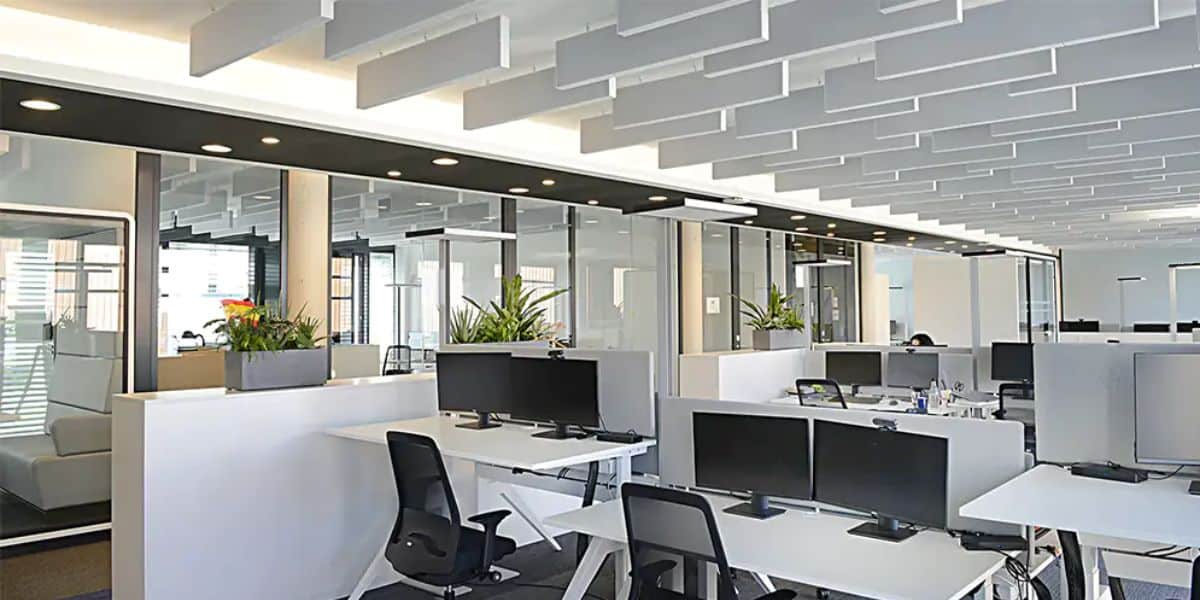
Das primäre akustische Ziel in einem Büro ist es, Nachhall und Sprachaufbau zu reduzieren, die Ablenkung, Müdigkeit und weniger Privatsphäre verursachen. Akustische Deckenbeleuchtung erreicht dies, indem sie Schallenergie absorbiert, anstatt sie in den Raum zurückzuspiegeln.
Rauschunterdrückungskoeffizient (NRC)
NRC ist die am weitesten verbreitete Metrik zur Bewertung der akustischen Absorption. Es reicht von 0,0 bis 1,0 und zeigt an, wie viel einfallende Schallenergie eine Oberfläche über die wichtigsten Sprachfrequenzen absorbiert. Höhere NRC-Werte führen zu einem geringeren Echo und einer verbesserten Sprachverständlichkeit.
In Büroumgebungen sollten die NRC-Ziele je nach Funktion und Auslastungsdichte variieren.
Empfohlene NRC-Ziele nach Bürozone
| Bürozone | Primäre Lärmbelästigung | Mindestziel NRC | Leistungsziel |
| Freiraum-/Bullpen-Bereiche | Überlappende Gespräche, schlechte Privatsphäre | 0,75 – 0,90+ | Absorbieren Sie Sprachgeräusche und verringern Sie den Gesamtschallaufbau. |
| Fokus Räume / Telefonzellen | Ton aus dem Raum | 0,80 – 0,95 | Reduzieren Sie internen Nachhall und Geräuschverlust. |
| Konferenz- und Besprechungsräume | Echo, schlechte Anrufklarheit | 0,80 – 0,95+ | Verbessern Sie die Sprachverständlichkeit für Besprechungen. |
| Privatbüro | Mäßiger Nachhall | 0,60 – 0,75 | Schaffen Sie eine ruhigere, kontrolliertere Umgebung. |
Deckendeckungsstrategie
Die Leistung hängt nicht nur vom NRC, sondern auch vom Deckungsgrad ab. Als allgemeine Richtlinie sollten 30 bis 60 Prozent der Deckenfläche schallabsorbierende Oberflächen enthalten, um eine spürbare Verringerung des Nachhalls zu erreichen. Geringere Abdeckung schränkt die akustische Wirkung auch bei hoch-NRC-Materialien ein.
Optik und Lichtqualität: Komfort und Produktivität sicherstellen

Die Lichtqualität spielt bei der Büroleistung eine ebenso wichtige Rolle. Schlechte Beleuchtung erhöht die Belastung der Augen und Ermüdung und untergräbt die Vorteile einer verbesserten Akustik.
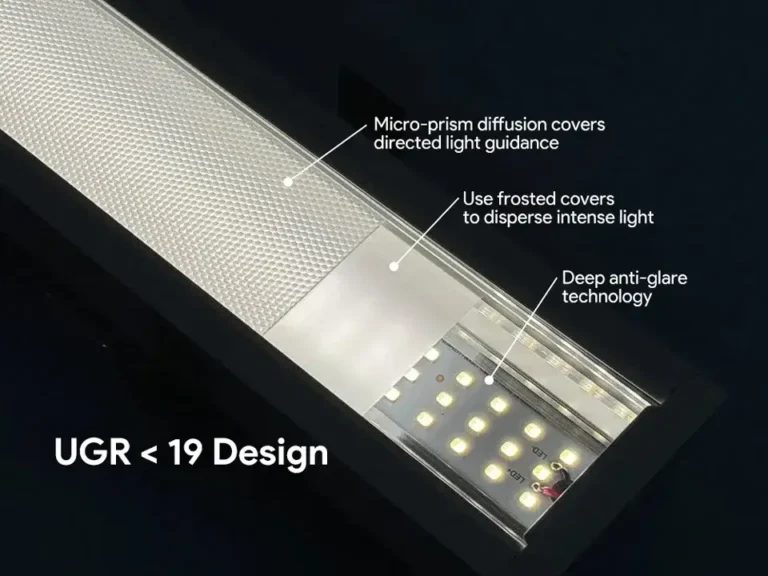
- Blendkontrolle (UGR): Eine einheitliche Blendung unter 19 gilt als obligatorisch für Büroumgebungen. Akustische Deckenbeleuchtung erreicht dies typischerweise durch kontrollierte Optiken wie Einbaulichtquellen, perforierte Diffusoren oder tiefere Gehäusekonstruktionen, die direkte Blendung begrenzen.
- Leuchtende Wirksamkeit: Moderne Büros sollten die Lichtausbeute von über 120 Lumen pro Watt ansprechen. Eine höhere Wirksamkeit verringert den Energieverbrauch bei gleichzeitiger Beibehaltung der erforderlichen Beleuchtungsstärke.
- Farbwiedergabe (CRI): CRI-Werte über 80 sind für allgemeine Büroaufgaben akzeptabel. Für Räume, die Design-Überprüfung, detaillierte Dokumentation oder farbsensible Arbeiten beinhalten, bieten Werte näher an 90 eine genauere visuelle Wahrnehmung.
- Korrelated Color Temperature (CCT): Neutrales weißes Licht um 4000K wird in Büros weit verbreitet, da es die Aufmerksamkeit unterstützt, ohne eine raue visuelle Umgebung zu schaffen.
Energieeffizienz und Lebensdauer
Die Energieeffizienz sollte praktisch bewertet werden. Im Vergleich zu älteren Leuchtstoff- oder Halogen-Büro-Leuchten senken moderne LED-basierte Akustikdeckenleuchten in der Regel den Energieverbrauch um 40% auf 60%, abhängig vom ersetzten System und den täglichen Betriebsstunden. Diese Reduzierung senkt die Stromkosten in Büroumgebungen, in denen die Beleuchtung täglich für längere Zeit betrieben wird.
Die Lebensdauer definiert, wie lange das Beleuchtungssystem realistisch sein kann, bevor ein Austausch erforderlich ist. Herkömmliche Bürobeleuchtungen müssen aufgrund von Lampenausfall oder Leistungsabfall innerhalb von 1 bis 2 Jahren häufig ausgetauscht werden. Im Gegensatz dazu werden ordnungsgemäß gestaltete LED-Akustikdeckenleuchten für 3 bis 5 Jahre in Büroumgebungen unter normalen Betriebsbedingungen verwendet. Diese längere Lebensdauer reduziert Wartungshäufigkeit, Ersatzkosten und Betriebsstörungen.
Ästhetische und visuelle Integration
Akustische Deckenleuchten müssen optisch und funktional in die Büroumgebung integriert werden. Deckenhöhe, räumliche Anordnung und architektonische Absicht beeinflussen alle, ob abgehängte, versenkte oder oberflächenmontierte Vorrichtungen für einen bestimmten Raum geeignet sind.
In Großraumbüros können schwebende akustische Beleuchtungselemente Zonen definieren und gleichzeitig zur Schallabsorption beitragen. In geschlossenen Büros und Besprechungsräumen sorgen subtilere Decken integrierte Lösungen für ein sauberes Erscheinungsbild. Durch die richtige Integration wird sichergestellt, dass die akustische Beleuchtung sowohl die Konsistenz als auch die funktionale Leistung unterstützt, ohne dass visuelle Unordnung eintritt.
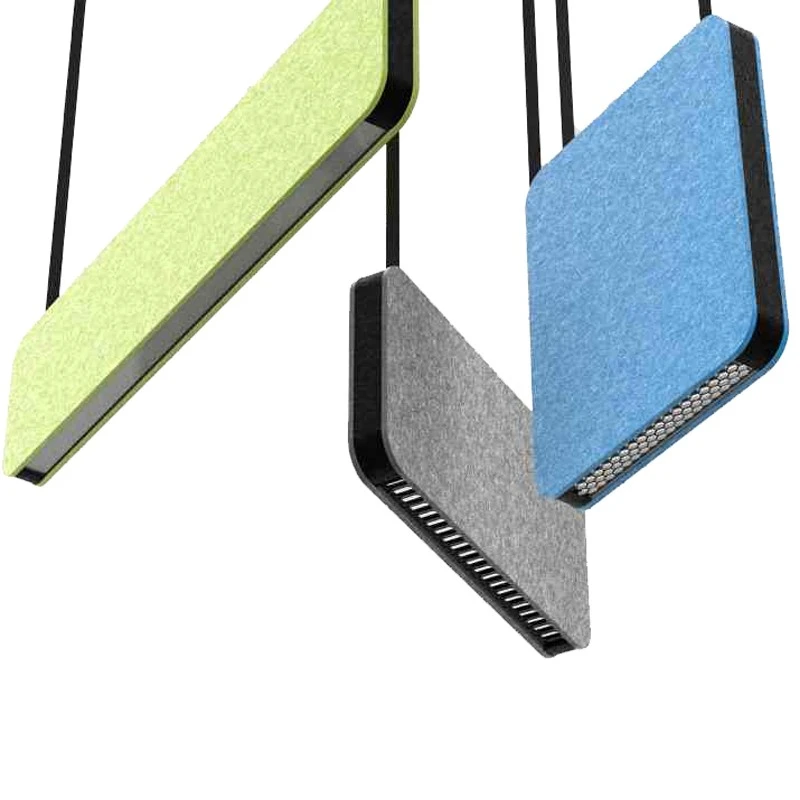
Super Slim Akustisches LED Linearlicht
- Eingangsspannung: AC100-277V / AC220-240V,50-60Hz
- Aussendenrichtung: nach unten
- Größe: 1218 * 36 * 400 mm
- CCT: 3000K / 4000K / 6000K
- Macht: 30W
- Lichtstrom: 100-110lm/W
- CRI: > 80ra
- PF: > 0,90
- Flicker frei: Ja
- Abstrahlwinkel: 120°
- IP-Grad: IP20
- Garantie: 5 Jahre
- Filz Akustikplatte Farbe: Rot / Grün / Blau / Grau Mehr als 48 Farben Option
Compliance und langfristiger Wert
Der langfristige Wert hängt davon ab, ob das Akustikdeckenbeleuchtungssystem seine angegebene Leistung über seine Lebensdauer hinweg konsequent liefern kann. Die akustische Absorptionsleistung und die Beleuchtungsleistung sollten durch dokumentierte Testdaten unterstützt werden, um zu bestätigen, dass die Leistungsniveaus während des normalen Betriebs stabil bleiben und nicht vorzeitig abnehmen.
Die Einhaltung anerkannter elektrischer Sicherheits- und Umweltstandards gewährleistet eine vorhersehbare Installation und einen zuverlässigen mehrjährigen Betrieb. In Kombination mit messbaren Energieeinsparungen und einer klar definierten Lebensdauer ermöglichen es den Büromanagern, die Gesamtbetriebskosten auf der Grundlage realer Betriebsbedingungen anstelle von Annahmen oder Marketingansprüchen zu bewerten.
Die Office-Auswahl-Matrix: Eine Schritt-für-Schritt-Anleitung
Die folgende Tabelle enthält eine praktische Checkliste zur Bewertung Akustikbeleuchtung Lösungen auf konsistente, datengesteuerte Weise.
Auswahl-Checkliste für Akustikbeleuchtung für Büros
| Entscheidungsfaktor | Was zu bewerten | Wichtige Fragen und Datenpunkte |
| Akustische & Lichtleistung | NRC, UGR, LM/W | Ist NRC über 0,7 klar aufgeführt? Ist UGR unter 19? Was ist die angegebene Lichtausbeute (LM/W)? |
| Formular & Integration | Montagetyp, Abmessungen, Oberflächen | Ist die Befestigung abgehängt, versenkt oder auf der Oberfläche montiert? Passt es zur Deckenhöhe und -aufteilung? |
| Effizienz & Langlebigkeit | Lebensdauer-Bewertung (L80), Garantie | ist die LED-Lebensdauer (L80) Glaubwürdig bewertet (z. B. > 50.000 Std.)? Gibt der Hersteller eine materielle Garantie als Indikator für das Produktvertrauen? |
| Compliance & Verifizierung | Unabhängige Prüfberichte, Sicherheitsstandards | Sind ASTM C423 (akustische) und LM-79 (photometrische) Testberichte verfügbar? Entspricht das Produkt den einschlägigen UL-, CE- oder RoHS-Standards? |
Anwendungshandbuch: Anpassen von Einrichtungen an Bürozonen

Die Akustikdeckenbeleuchtung sollte je nach Verwendungszweck ausgewählt werden.
- Großraumbüros: Hoch-NRC-Geräte mit geringer Blendung sind kritisch. Hängende akustische Leitbleche und lineare Systeme sind effektiv, da sie dem Raum mehrere absorbierende Oberflächen freisetzen.
- Konferenz- und Besprechungsräume: Priorisieren Sie das höchste praktische NRC, um das Echo zu reduzieren und die Sprachklarheit sowohl für persönliche als auch für Remote-Teilnehmer zu verbessern. Größere Akustikdeckenplatten oder Wolken eignen sich in diesen Räumen gut.
- Fokusräume und Ruhezonen: Ein Gleichgewicht zwischen akustischer Kontrolle und visueller Subtilität wird oft bevorzugt. An der Oberfläche montierte Akustikplatten können den Nachhall reduzieren, ohne die Deckengestaltung zu dominieren.
Häufiger Fehler, den man vermeiden sollte: Auswahl von Geräten allein auf der Grundlage der akustischen Leistung. Büros erfordern sowohl einen geringen Nachhall als auch eine geringe Blendung, um einen nachhaltigen visuellen und kognitiven Komfort zu unterstützen.
Von den Spezifikationen zum installierten Wert: Ein verifizierter Ansatz
Entscheidungsträger sollten sich eher auf technische Dokumentation als auf Marketingansprüche verlassen.
- Verifizierte Leistungsdaten: NRC-Werte sollten von ASTM C423-Testberichten unterstützt werden, während die Beleuchtungsleistung durch photometrische LM-79-Tests validiert werden muss. Für glaubwürdige Lebensdaueransprüche suchen Sie nach Daten, die aus LM-80-Tests der LED-Komponenten stammen.
- Gesamtbetriebskosten: Über die vorab anfallenden Kosten den Energieverbrauch über die Nennlebensdauer, die reduzierte Wartung und die Beseitigung separater akustischer Behandlungen berücksichtigen. Die integrierte akustische Beleuchtung senkt häufig die Gesamtsystemkosten im Vergleich zur separaten Installation von Beleuchtungs- und Schallschutzplatten.
Abschluss
Die Auswahl der Akustikdeckenbeleuchtung ist eine strategische Investition in die Arbeitsleistung. Durch die Anwendung des oben stehenden strukturierten Frameworks – Bewertung der verifizierten Akustik (NRC) und Beleuchtung (UGR, LM/W) unter Berücksichtigung anwendungsspezifischer Anforderungen und anspruchsvoller normkonformer Testberichte können Sie eine messbare Verbesserung der Büroakustik und des Komforts gewährleisten.
Der letzte Schritt ist die praktische Anwendung. Um zu sehen, wie sich diese technischen Prinzipien in Produktspezifikationen übersetzen, können Sie technische Datenblätter für akustische Beleuchtungslösungen überprüfen. Die Analyse von Spezifikationen, die PET-Filz-Akustikkerne für eine gezielte NRC-Leistung und Aluminiumgehäuse für das Thermomanagement hervorheben, zeigt beispielsweise, wie die Auswahlkriterien in der Praxis erfüllt werden. Detaillierte Spezifikationen für solche Produkte können überprüft werden.
FAQs
Verwandte Artikel