Deutsch
  English
  简体中文
简体中文  Español
  Français
  Italiano
  日本語
日本語  한국어
한국어  Polski
  Português
  Русский
  Türkçe
  Nederlands
  Tiếng Việt
  ไทย
ไทย 
Hochwertige Filzleuchten werden in der Regel durch Hersteller-Websites, Spezialisierte architektonische Beleuchtungsmarken, OEM-/ODM-Beleuchtungshersteller, Und Professionelle B2B-Sourcing-Plattformen Diese konzentrieren sich eher auf kommerzielle Beleuchtung als auf die Verbraucherdekoration.
Für kaufmännische und architektonische Projekte ist das hersteller-direkte Sourcing der zuverlässigste Ansatz. Es bietet Zugriff auf verifizierte Materialspezifikationen, konsistente Produktionsstandards, akustische Testdaten und kontrollierte LED-Integration. Marken-Reseller und Verbrauchermarktplätze priorisieren häufig das Aussehen gegenüber der Leistung, was sie weniger für Projekte geeignet macht, bei denen Lichtqualität, akustisches Verhalten und Compliance-Standards wichtig sind.
Dieser Artikel erklärt, wo man hochwertige Filz-Leuchten beschafft, wie man Hersteller, Schlüsselmaterialien, Qualitätsindikatoren und Überlegungen zur Beschaffung von kommerziellen Projekten bewertet.
Was sind Filzleuchten?

Filzleuchten sind Leuchten, die als Teil des Leuchtenkörpers, des Schirms oder des akustischen Gehäuses technisch konstruierte Filzmaterialien verwenden. Der Filz ist kein dekorativer Stoff. Es handelt sich in der Regel um ein dichtes, technisch bedingtes Material, das für die Klangsteuerung bestimmt ist und gleichzeitig integrierte Beleuchtungskomponenten unterstützt.
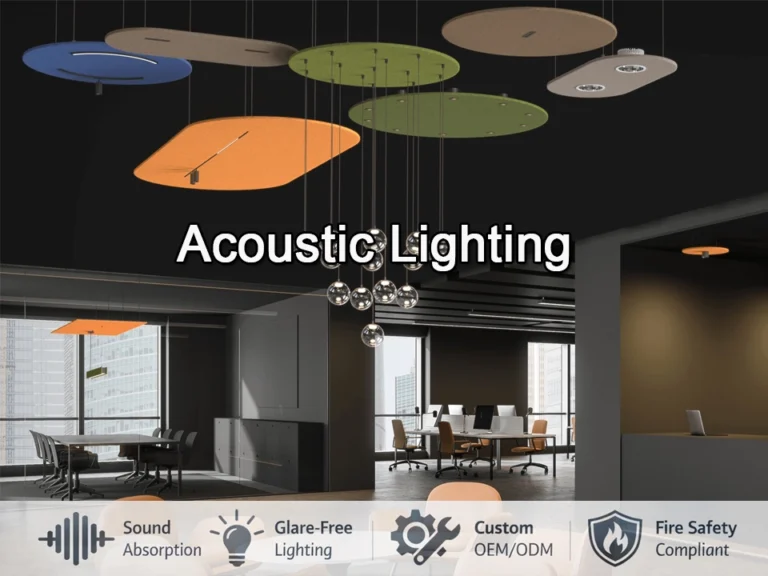
Filz wird in der Beleuchtung verwendet, weil es kombiniert Lichtstreuung, Schallabsorption, Und Sehkraft in einer einzigen Vorrichtung. Im gewerblichen Innenraum reduziert diese Doppelfunktion den Bedarf an separaten Beleuchtungs- und Schallschutzsystemen.
Es gibt einen wichtigen Unterschied zwischen dekorativen Filzlampen und akustischer Filzbeleuchtung. Dekorative Filzlampen konzentrieren sich auf das Aussehen und sind oft dünn, leicht und nicht getestet akustisch. Akustische Filzbeleuchtung hingegen ist als Teil einer breiteren akustischen Strategie konzipiert. Diese Vorrichtungen funktionieren als Akustik die das mittlere und hochfrequente Geräusch absorbieren und gleichzeitig eine kontrollierte Beleuchtung liefern.
Wenn die Filzkomponente für die Schallsteuerung konzipiert und in professionelle LED-Systeme integriert ist, ist das Ergebnis akustische Beleuchtung für Büros, Besprechungsräume, Gastgewerberäume und öffentliche Innenräume.
Schlüsselmaterialien für hochwertige Filzbeleuchtung
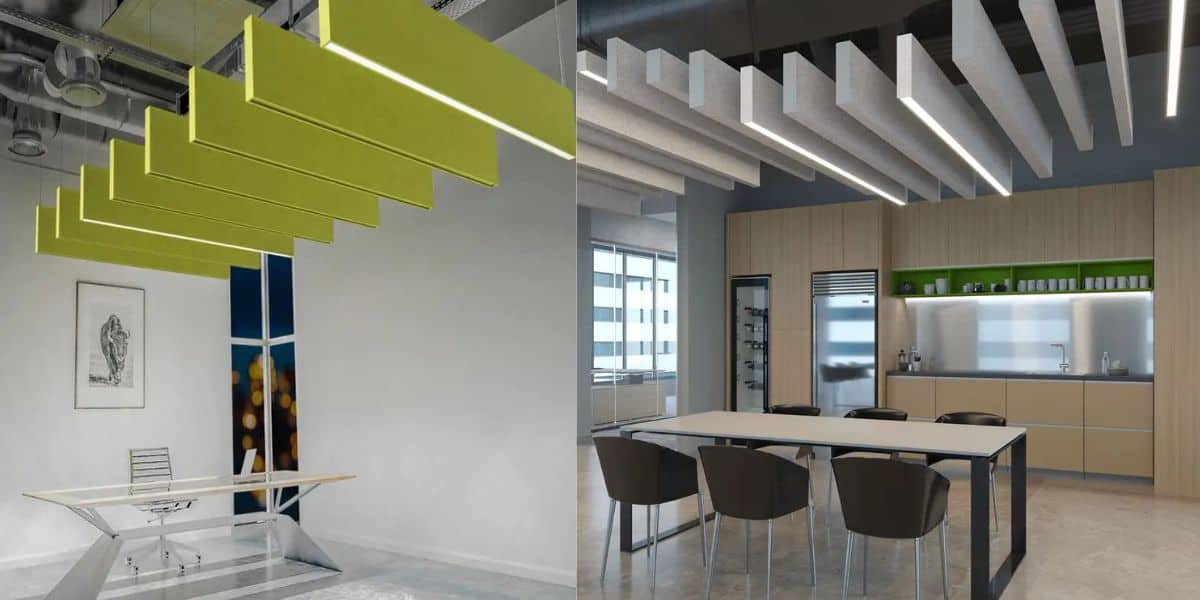
Die Qualität der Filzleuchten wird in erster Linie durch die Materialzusammensetzung und -verarbeitung bestimmt, nicht durch Form oder Farbe.
Haustierfilz ist das gängigste Material in hochwertiger Akustikbeleuchtungdrohen Es wird aus recycelten Polyesterfasern hergestellt und auf eine definierte Dichte komprimiert. PET-Filz mit höherer Dichte bietet eine bessere akustische Absorption, verbesserte Haltbarkeit und strukturelle Stabilität für größere Vorrichtungen.
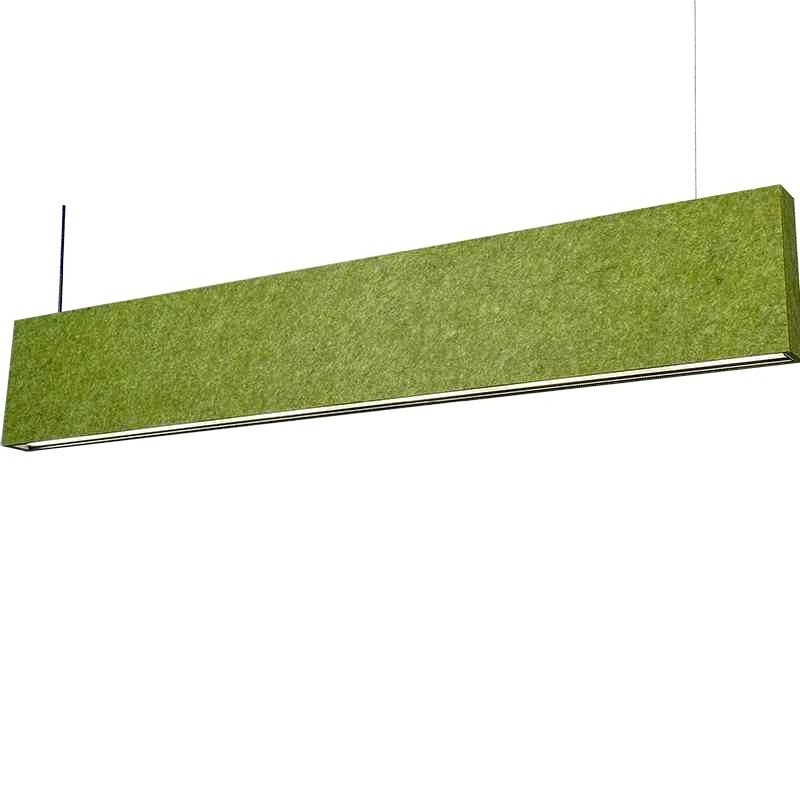
Schlankes, blendfreies akustisches LED-Linearlicht
- Eingangsspannung: AC100-277V / AC220-240V,50-60Hz
- Gehäusegröße: W58*H200 mm/ W58*H300mm
- Ausstrahlen: Abwärts
- Längenoption: 1218mm / 1220mm / 1288mm
- CCT: 3000K / 4000K / 6000K
- Leistung: 30W / 32W
- Lichtstrom: 100-110lm/W
- CRI:> 90ra
- PF:> 0,90
- Flicker frei: ja
- Abstrahlwinkel: 36°
- IP-Grad: IP20
- Garantie: 5 Jahre
- Filz Akustiktafel Farbe: rot / grün / blau / grau mehr als 48 Farben Option
Dicke und Schichtung sind kritisch. Die akustische Leistung steigt mit der Materialstärke und der mehrschichtigen Konstruktion. Dünne Filzplatten, die für die Dekorierung verwendet werden, bieten eine begrenzte Schallabsorption und sollten nicht mit Filz mit Schallqualität verwechselt werden.
Bei kommerziellen Projekten sind Überlegungen zur Brandschutzbewertung von wesentlicher Bedeutung. Hochwertige Filzleuchten verwenden typischerweise Filzmaterialien, die den anerkannten Brandstandards entsprechen, die für öffentliche Innenräume geeignet sind.
Auch Farbstabilität und Oberflächenbeschaffenheit spielen eine Rolle. Filz von schlechter Qualität verblasst, Pillen oder zeigt ungleichmäßige Textur im Laufe der Zeit. Konsistente Faserbindung und kontrollierte Färbungsprozesse sind Indikatoren für eine professionelle Fertigung.
Nachhaltigkeit ist ein weiterer Qualitätsmarker. Prozentsätze für recycelte Inhalte, emissionsarme Produktion und Materialzertifizierungen sind häufig direkt von Herstellern erhältlich, die sich auf akustische Beleuchtung spezialisiert haben.
Woher Qualitätsunterschiede kommen

Qualitätsunterschiede bei Filzleuchten entstehen in der Regel eher auf der Fertigungsebene als in der Entwurfsphase.
OEM- und ODM-Hersteller steuern Werkzeuge, Filzformen, LED-Integration und Endmontage. Dies ermöglicht engere Toleranzen, eine wiederholbare Dichtekontrolle und ein konsistentes akustisches Verhalten über Produktionschargen hinweg.
Marken-Reseller setzen häufig auf Fabriken von Drittanbietern und konzentrieren sich auf visuelles Design. In diesen Fällen können die Filzdichte, die interne Konstruktion und das LED-Thermomanagement zwischen den Produktionsläufen variieren.
Die LED-Integrationsqualität ist ein weiteres Unterscheidungsmerkmal. Professionelle akustische Beleuchtung erfordert eine sorgfältige Wärmeableitung, um eine Beeinträchtigung der LEDs und des Filzmaterials zu verhindern. Hersteller mit internen Engineering-Teams können die Platzierung, Treiber und Wärmewege der LEDs optimieren.
Die Konsistenz der akustischen Leistung hängt von der Kompression der Filz, der Gleichmäßigkeit der Dicke und der Geometrie der Vorrichtung ab. Ohne Produktionssteuerung können zwei identische Fixtures in realen Räumen sehr unterschiedlich abschneiden.
Lieferanten- / Quellenklassifizierung
| Quelltyp | Qualitätsniveau | Personalisierung | Typischer Anwendungsfall | Schlüsselhinweise |
| architektonische Beleuchtungsmarken | Hoch | begrenzt | Design-gesteuerte Projekte | Starke Designkontrolle, weniger flexibel für Spezifikationen |
| OEM/ODM-Hersteller | hoch (variiert) | Hoch | Kommerzielle und Großprojekte | Beste Option für B2B-Sourcing und Konsistenz |
| B2B-Sourcing-Plattformen | Mittel-Hoch | Mittel | Beschaffungsvergleich | Qualität hängt von Herstellertransparenz ab |
| Online-Marktplätze | niedrig-mittel | Niedrig | Kleine dekorative Verwendung | Inkonsistente Materialien und Leistung |
Diese Klassifizierung hilft, zwischen appetiousfokussierten Produkten und leistungsgetriebenen Filz-Leuchten zu unterscheiden.
Wie man einen hochwertigen Filzbeleuchtungshersteller bewertet
Die Bewertung eines Herstellers beginnt mit der Materialtransparenz. Zuverlässige Lieferanten geben die Zusammensetzung, Dicke, Dichte und Feuerleistung der Filz klar an. Vage Beschreibungen wie „Eco Filz“ ohne Daten sind ein Warnzeichen.
Akustische Leistungsindikatoren sind ebenso wichtig. Hersteller sollten erklären können, wie ihre Vorrichtungen zur Schallabsorption beitragen und in welchen Frequenzbereichen sie wirksam sind. Während nicht jedes Projekt Laborberichte erfordert, sollte das Design akustische Absichten zeigen.
Die Lichtleistung sollte über die Lumenleistung hinaus bewertet werden. Gleichmäßige Farbtemperatur, geringe Blendung, richtige Diffusion und stabile LED-Treiber sind für den kommerziellen Gebrauch von entscheidender Bedeutung. Schlechte LED-Integration führt zu ungleichmäßiger Beleuchtung und verkürzter Lebensdauer.
Die Anpassungsfähigkeit ist für B2B-Projekte wichtig. Dies umfasst Größenanpassungen, Montageoptionen, Farbauswahl und Änderungen der LED-Spezifikation. Hersteller, die OEM- oder ODM-Produktion unterstützen, sind in der Regel besser für diese Anforderungen gerüstet.
Schließlich bietet Projekterfahrung Kontext. Lieferanten mit Erfahrung in Büros, Gastgewerbe oder öffentlichen Innenräumen verstehen die Einhaltung von Compliance-Erwartungen und Installationsrealitäten besser als auf dekorierte Anbieter.
Filzbeleuchtung vs. Standard-Akustikarmaturen

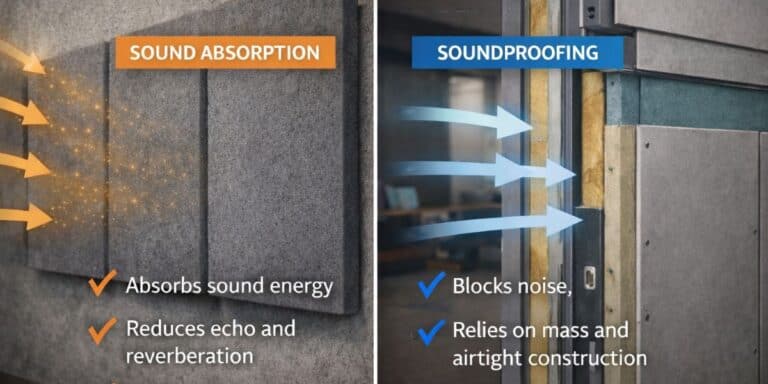
Standard-Akustik-Einbauten sind hauptsächlich für die Schallabsorption ausgelegt und dürfen keine integrierte Beleuchtung enthalten. Sie sind für eine dedizierte akustische Behandlung wirksam, erfordern jedoch separate Leuchten.
Filzleuchten vereinen Beleuchtung und Akustikfunktion in einem Element. Das reduziert Deckensack und vereinfacht die Abstimmung zwischen Beleuchtung und Akustikplanung.
Die Filzbeleuchtung ist besonders effektiv in Räumen, in denen die Deckenimmobilie begrenzt ist oder optische Einfachheit erforderlich ist. In Umgebungen mit akustischen Herausforderungen können jedoch neben der Beleuchtung immer noch spezielle Akustikplatten erforderlich sein.
Zu verstehen, ob das Ziel die Schallverbesserung, die Beleuchtung oder beides ist, bestimmt, welche Lösung geeigneter ist.
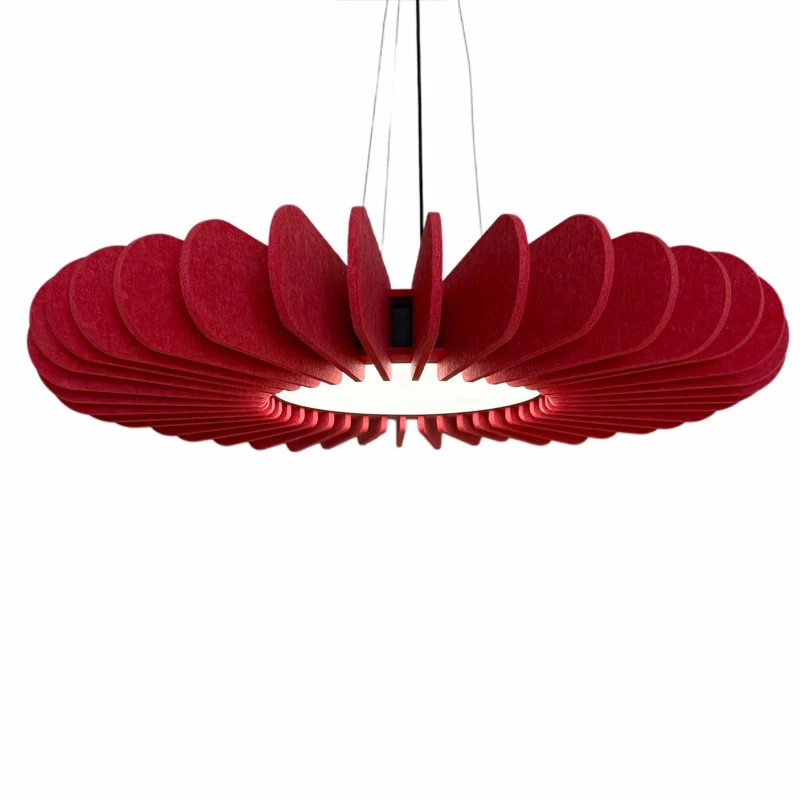
Ultradünne, runde akustische LED-Pendelleuchte
- Eingangsspannung: AC100-277V / AC220-240V,50-60Hz
- Gehäusegröße: 120 mm
- Ausstrahlen: Abwärts
- Größe DH: 50080mm
- CCT: 3000K / 4000K / 6000K
- Leistung: 15W
- Lichtstrom: 100-110lm/W
- CRI:> 90ra
- PF:> 0,90
- Flicker Free: Ja
- Abstrahlwinkel: 120°
- IP-Grad: IP20
- Garantie: 5 Jahre
- Akustikpanel Farboption: Rot / Grün / Blau / Grau Mehr als 48 Farben Option
Qualitäts- und technische Bewertungsfaktoren
| Bewertungsfaktor | Was zu überprüfen | Warum es wichtig ist |
| Filzmaterial | PET-Dichte, Brandschutz | Akustische Wirksamkeit und Sicherheit |
| LED-System | Effizienz, Wärmesteuerung | Lebensdauer und Leistungsstabilität |
| Akustikrolle | Schallabsorptionsabsicht | Benutzerkomfort und Platznutzung |
| Herstellung | OEM-Kontrolle | Konsistenz und Wiederholbarkeit |
| Personalisierung | Größe und Spezifikation Flexibilität | Projektspezifische Anforderungen |
Diese Tabelle zeigt die Kernkriterien, die Beschaffungsteams bei der Bewertung von Filzleuchten verwenden.
Rolle der akustischen Beleuchtung in Gewerberäumen

Akustische Beleuchtung spielt eine funktionale Rolle in modernen kommerziellen Innenräumen, in denen offene Layouts und harte Oberflächen den Geräuschpegel erhöhen.
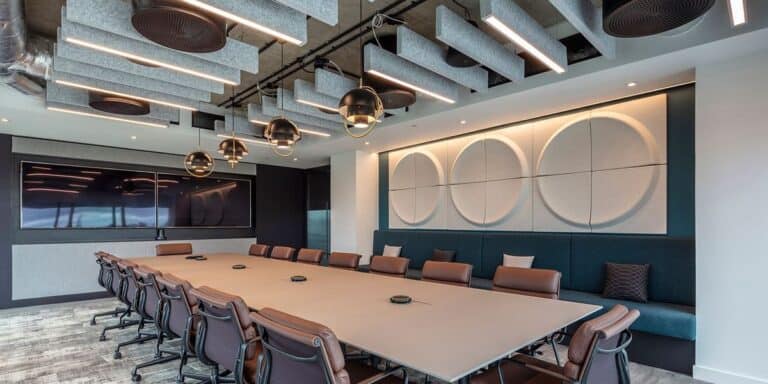
In Büros und Coworking Spaces helfen Filzleuchten, den Nachhall zu reduzieren und gleichzeitig eine einheitliche Aufgaben- und Umgebungsbeleuchtung zu bieten. In Konferenzräumen verbessern sie die Sprachklarheit, ohne sichtbare Akustikplatten hinzuzufügen.
Gastronomieumgebungen verwenden akustische Beleuchtung, um den Klang zu mildern und gleichzeitig eine raffinierte visuelle Atmosphäre zu erhalten. Restaurants, Hotels und Lounges profitieren von reduziertem Lärm, ohne die Designabsicht zu beeinträchtigen.
Öffentliche Innenräume wie Bibliotheken, Lobbys und Bildungsräume verwenden akustische Einrichtungen, um Haltbarkeit, Leistung und visuelle Integration auszugleichen. In diesen Kontexten bietet die akustische Beleuchtung sowohl funktionale als auch räumliche Effizienz.
Häufige Beschaffungsfehler
Ein häufiger Fehler ist die Auswahl dekororientierter Filzlampen, die nicht für die akustische Leistung ausgelegt sind. Diese Produkte sehen oft ähnlich aus, aber es fehlt die Dichte und Konstruktion, die für die Schallabsorption erforderlich sind.
Das Ignorieren von Materialspezifikationen ist ein weiteres Problem. Ohne das Verständnis der Filzdichte, der Dicke und des Brandverhaltens zu riskieren, riskieren Käufer, Geräte zu installieren, die nicht den Projektanforderungen entsprechen.
Einige Käufer kaufen Filzbeleuchtung ohne klare akustische Absicht, vorausgesetzt, alle Filzprodukte wirken akustisch. In der Realität variiert die akustische Wirksamkeit sehr.
Auch das Vertrauen in Katalogbilder kann irreführend sein. Visuals kommunizieren selten interne Konstruktionsqualität, LED-Integration oder akustisches Verhalten. Direkte Herstellerkommunikation ist unerlässlich.
Abschluss
Hochwertige Filzleuchten werden am besten direkt von Herstellern, spezialisierten Architekturbeleuchtungsanbietern und OEM- oder ODM-Produzenten bezogen, die sich auf kommerzielle Anwendungen konzentrieren. Die Bewertung auf Herstellerebene ist entscheidend, da während der Produktion Materialqualität, akustische Leistung und Beleuchtungsintegration bestimmt werden.
Filzbeleuchtung ist nicht nur eine Wahl für Design. Richtig konstruiert, wirkt es sowohl als Beleuchtungslösung als auch als Akustik-Leuchte und unterstützt den Komfort und die Benutzerfreundlichkeit in modernen Gewerberäumen. Das Verständnis der Beschaffungskanäle und Bewertungskriterien sorgt für eine konsistente Leistung und einen langfristigen Wert.
FAQs
Verwandte Artikel