Español
  English
  简体中文
简体中文  Deutsch
  Français
  Italiano
  日本語
日本語  한국어
한국어  Polski
  Português
  Русский
  Türkçe
  Nederlands
  Tiếng Việt
  ไทย
ไทย 
Las luces de pesca verdes son ampliamente utilizadas en la pesca nocturna, desde pequeños botes recreativos hasta grandes buques comerciales. Muchos pescadores creen que las luces verdes atraen más peces que otros colores, pero ¿es esto siempre cierto?
En este artículo, nos enfocamos específicamente en las luces de pesca verdes y examinamos si son más eficaces para atraer peces por la noche. En lugar de repetir teorías básicas, observamos cómo se comporta la luz verde en el agua, por qué se elige comúnmente en escenarios de pesca reales y en qué situaciones funciona mejor, o no, en comparación con otros colores claros.
Si está seleccionando luces de pesca Para embarcaciones, muelles o aplicaciones montadas en superficie, comprender el papel de la luz verde puede ayudarle a tomar una decisión más práctica y rentable.
Por qué es importante el color claro en la pesca nocturna
En la pesca nocturna, el color claro juega un papel práctico más allá de la visibilidad.
Los diferentes colores de luz tienen diferentes longitudes de onda y la longitud de onda determina cómo viaja la luz en el agua. Algunos colores se absorben rápidamente, mientras que otros se extienden más y mantienen una zona iluminada más clara. Esto afecta directamente a lo bien que una luz de pesca puede crear un área de alimentación estable por la noche.
Debido a que los peces que atraen luces funcionan formando una zona de actividad visible en lugar de simplemente aumentar el brillo, la selección de color se convierte en un factor importante. En muchos casos, la elección del color de luz adecuado tiene un mayor impacto en los resultados de pesca que aumentar la potencia de producción por sí sola.
Comprender por qué es importante el color claro que importa por qué se usan con más frecuencia ciertos colores en la pesca nocturna y establece las bases para comparar las luces verdes con otras opciones.
Cómo responden los peces a la luz verde por la noche
Los peces no reaccionan al color, sino al comportamiento ligero
Los peces no se sienten atraídos por la luz de la misma manera que los humanos.
No están "ver" verde como una opción de color, sino que responden a cómo se comporta la luz bajo el agua.
Por la noche, la visión depende más del contraste y del brillo que del reconocimiento preciso del color. Por eso es más importante el rendimiento físico de la luz en el agua que su apariencia visual.
Por qué la luz verde es más fácil de detectar para los peces por la noche
La luz verde opera dentro de un rango de longitud de onda que muchas especies de peces pueden detectar de manera más eficiente en entornos con poca luz.
En comparación con la luz roja o amarilla, la luz verde permanece visible en distancias más largas bajo el agua y forma una zona iluminada más estable. Esto hace que sea más fácil para los peces sentir los cambios en su entorno sin estimulación repentina.
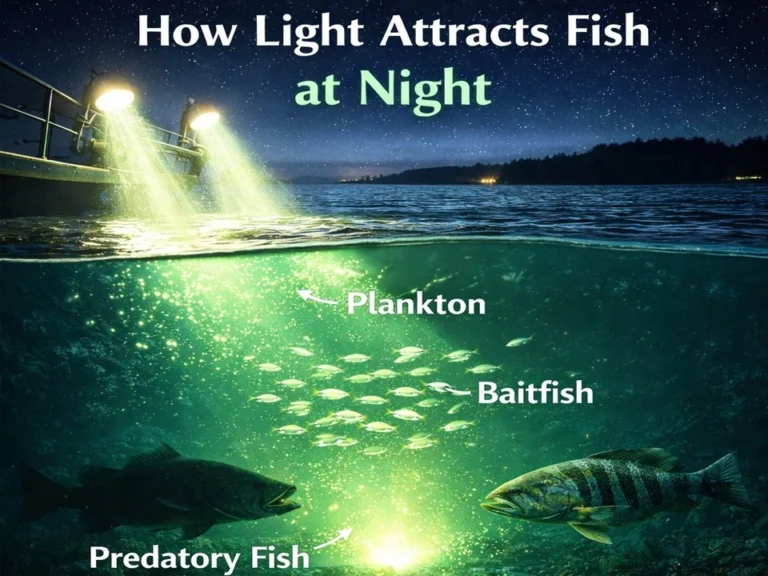
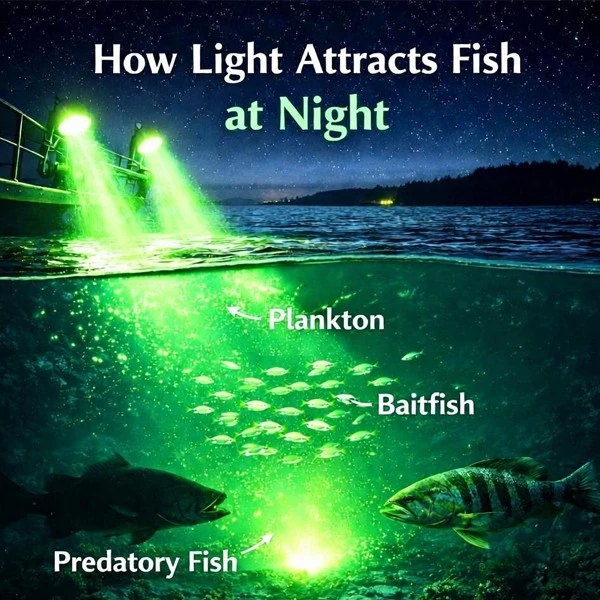
La reacción en cadena: del plancton a los peces depredadores
Las luces de pesca no atraen a los peces grandes directamente.
El proceso generalmente sigue una respuesta en capas:
- La luz primero atrae el plancton y los microscópicos
- Pequeños cebo se reúnen para alimentarse
- Peces depredadores más grandes siguen al pez cebo
Por qué la luz verde funciona bien en la práctica de la pesca nocturna
Desde una perspectiva práctica, la luz verde ofrece un equilibrio entre brillo y perturbación.
Es lo suficientemente fuerte como para activar la actividad bajo el agua, pero no demasiado dura o estresante para los peces. En muchas situaciones de pesca nocturna, esto hace que las luces de pesca verde sean más fáciles de controlar y más consistentes en el rendimiento.
Luces de pesca verdes vs azules vs rojas vs cian vs blancas: ¿cuál es la diferencia?
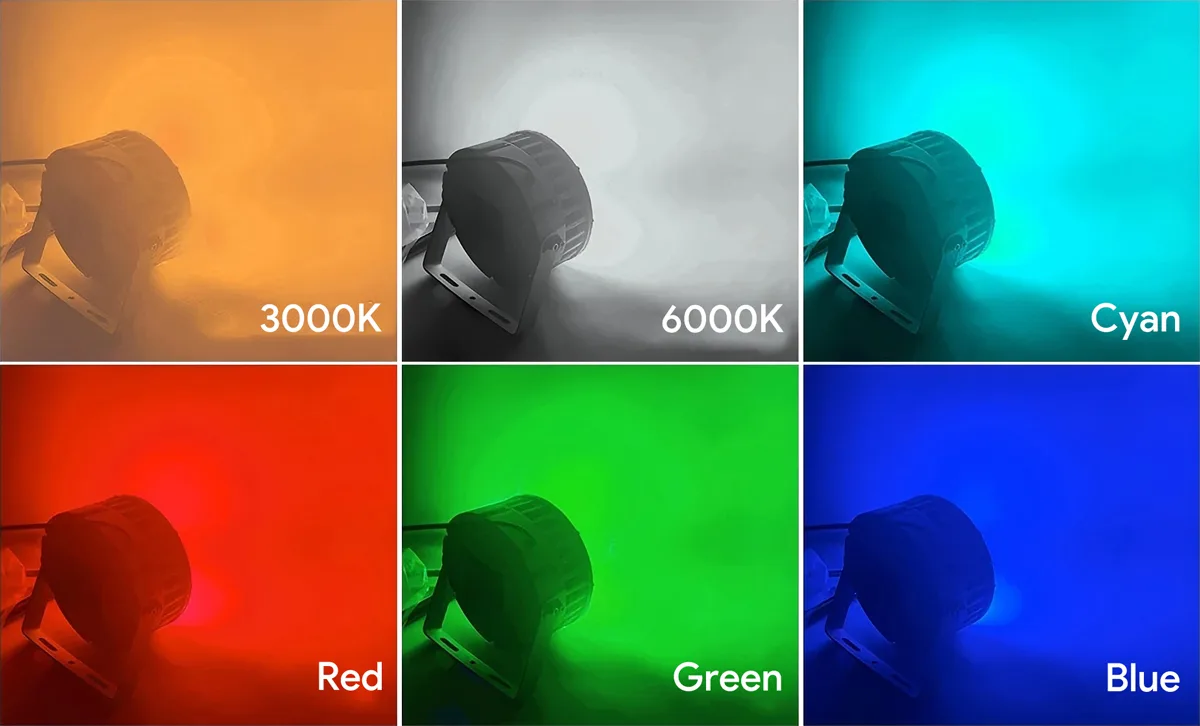
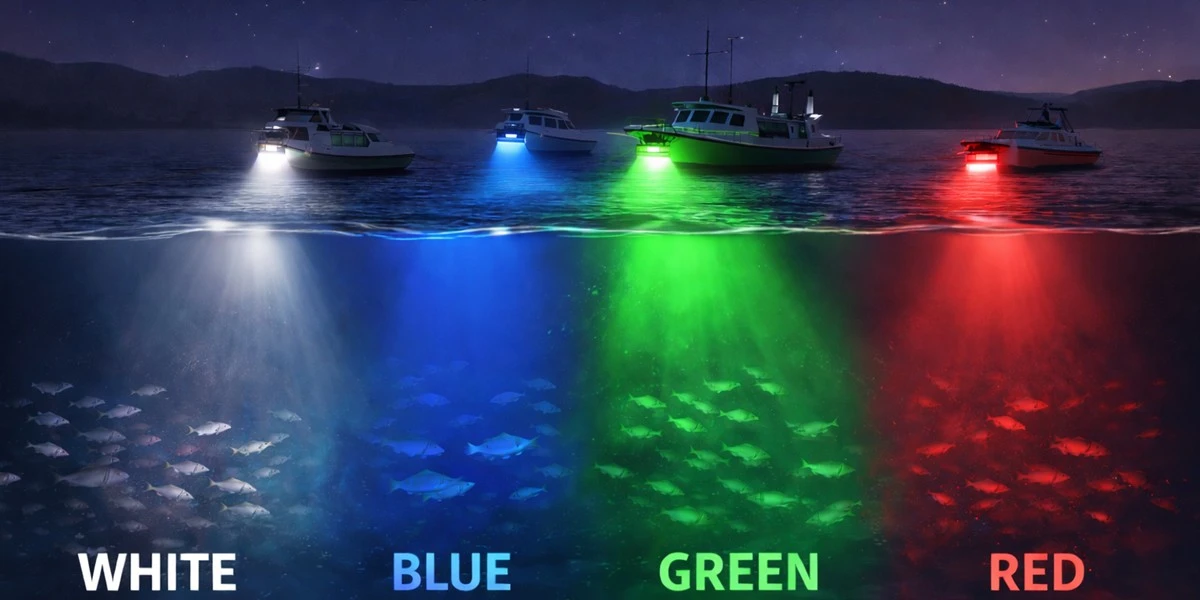
Elegir el color de luz de pesca adecuado para 2026 depende de su objetivo específico y las condiciones del agua. Cada color tiene una longitud de onda diferente que afecta la profundidad que penetra y qué vida marina específica atrae.
Tabla de comparación rápida
| Color | mejor para | eficacia |
| Verde | Universal / Mejor en general | Atrae el plancton de manera más efectiva; trabaja en agua dulce y salada. |
| Azul | agua salada profunda | Penetra más profundamente en agua salada clara; atrae cebo de agua salada y cangrejos. |
| Blanco | Aguas poco profundas / camarones | Alta intensidad pero poco profunda; atrae el cebo más grande (pero menos). |
| ciano | Tasas de captura comercial | Probado que supera a blanco/verde para especies específicas como el calamar (Coleoidea). |
| Rojo | Sigilo / Visión Nocturna | No atrae a "bichos" ni asusta a los peces tímidos; preserva tu visión nocturna. |
Verde: el ganador de todo uso
Verde (aprox. 520nm) se considera el estándar de oro para atraer la vida marina porque estimula efectivamente el plancton, la base de la cadena alimentaria submarina.
- Agua dulce: es la mejor opción para lagos y ríos, especialmente para apuntar a especies como el tipo de pez y la lubina.
- La luz verde agua turbia proporciona un alto contraste, lo que hace que el agua parezca más clara, lo que ayuda a los peces carnada a encontrar la fuente de luz.
Azul: Especialista en aguas profundas
Blue Light (aprox. 470 nm) es altamente especializado para entornos de agua salada y tiene ventajas únicas.
- Rendimiento en alta mar: penetra más profundamente en aguas de mar claras que otros colores, por lo que es ideal para la pesca en alta mar.
- Advertencia de agua dulce: la luz azul tiende a fallar en la atracción de peces cebo en agua dulce, e incluso puede asustarlos.
- Especies diana: Particularmente efectiva para atraer cangrejos nadadores azules y especies pelágicas en alta mar específicas.
Blanco: intenso y superficial
La luz blanca se usa comúnmente por su alta intensidad, pero tiene limitaciones en términos de penetración de profundidad.
- Cebo grande: mientras que el verde atrae a más pequeños carnada, la luz blanca atrae a los peces cebos individuales más grandes.
- Limitaciones: la luz blanca se disipa rápidamente en el agua y no penetra de manera efectiva en las aguas profundas. Es ideal para áreas poco profundas cerca del barco o muelle.
Cian: la opción “comercial”
Cyan Light (430–600 nm) está ganando popularidad en 2026 por sus beneficios únicos, lo que cierra la brecha entre el azul y el verde.
- Mejores rendimientos: se ha demostrado que el cian atrae a especies como el calamar (Coleoidea), el camarón (Penaeus merguiensis) y las sardinas de manera más efectiva que la luz blanca.
- Viajes más profundos: tiene un coeficiente de atenuación más bajo que la luz blanca en el agua de mar, lo que le permite viajar más lejos y alcanzar mayores profundidades.
Rojo: la opción de sigilo
La luz roja no se usa normalmente para atraer peces, pero tiene varios fines funcionales que benefician a los pescadores.
- Ceguera nocturna: la luz roja permite a los pescadores ver su equipo sin arruinar su visión nocturna natural.
- Especies tímidas: es ideal para atraer especies de peces cautelosos como bagre o róbalo que pueden ser asustados por luces más brillantes.

Cómo elegir la luz verde de pesca adecuada
Elegir una luz de pesca verde no se trata simplemente de seleccionar un color específico. Para lograr una atracción constante de los peces por la noche, se deben considerar varios factores prácticos juntos. Comprender estos conceptos básicos ayuda a evitar las configuraciones sobrecargadas al tiempo que garantiza una cobertura efectiva en condiciones reales de pesca.
Primero, considere la claridad del agua. En aguas relativamente claras, la luz verde viaja de manera eficiente y mantiene una fuerte visibilidad sobre un área amplia, lo que la hace ideal para Luces de pesca montadas en superficie en barcos o muelles. En aguas más turbias o ricas en plancton, la luz verde todavía funciona bien, pero la distribución uniforme del haz se vuelve más importante que el brillo sin procesar.
En segundo lugar, la producción de luz debe coincidir con el entorno de pesca. La potencia más alta no significa automáticamente mejores resultados. En muchos escenarios de pesca nocturna, la iluminación estable y uniformemente distribuida atrae más peces cebo que un rayo demasiado estrecho y demasiado intenso. Esta es la razón por la que muchos operadores prefieren los faros de pesca verdes para la cobertura del área, mientras que los focos de pesca verdes son más adecuados para dirigir la luz hacia una zona específica.
En tercer lugar, preste atención al control de haz y la estabilidad de la luz. Un ángulo de haz controlado ayuda a concentrar la luz donde se espera la actividad de los peces, mientras que la estabilidad eléctrica garantiza una salida constante durante las operaciones nocturnas largas. La luz parpadeante o inestable reduce la eficacia, independientemente del color.
Finalmente, considere la altura de montaje y el propósito de iluminación como parte del proceso de selección. Las luces montadas sobre la línea de flotación deben proporcionar suficiente extensión para iluminar la superficie y las capas superiores de agua sin deslumbramiento excesivo. El objetivo no es inundar el agua con luz, sino crear una zona de alimentación estable y atractiva a la que los peces vuelvan repetidamente.
Al centrarse en las condiciones del agua, el tipo de viga y la estabilidad de la salida, no solo en el color, puede seleccionar una luz verde de pesca que ofrezca un rendimiento confiable en diferentes situaciones de pesca nocturna.
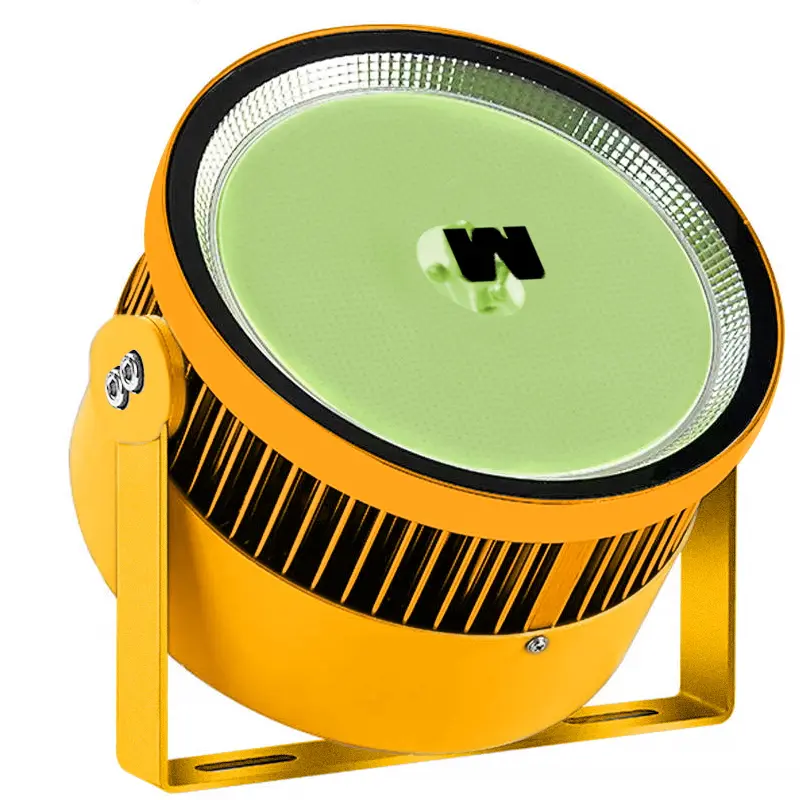
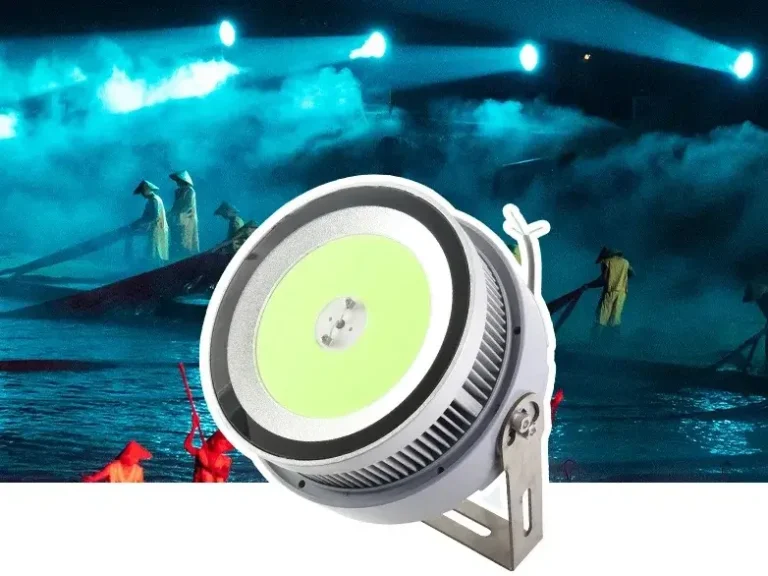
ILUMINACIÓN DE PECES COB DE ALTA POTENCIA
Modelo.: Tipo redondo
Tensión de entrada: AC100-320V
Sobretensión: 10000V
Vatios/unidad: 800W/1000W/1200W
Tipo LED: COB
Tamaño (mm): Φ230 × 140
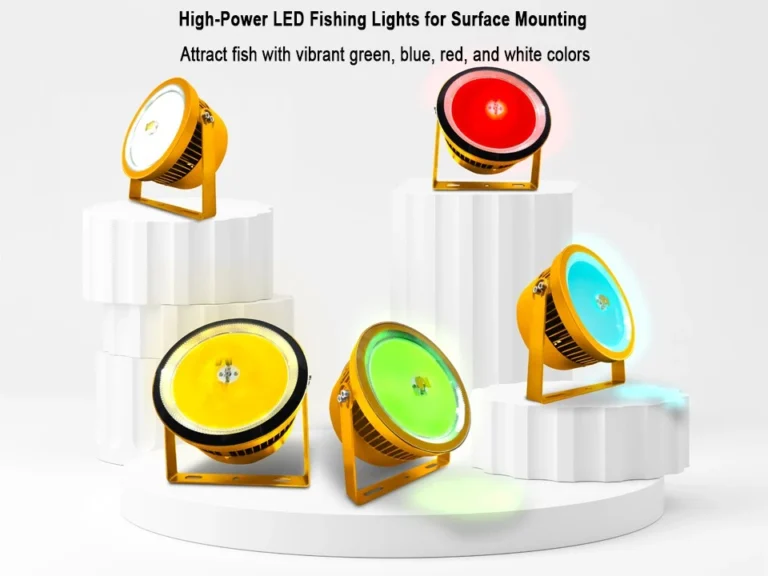
Color: 3000K / 4000K / 5000K / 6000K/ Rojo / Verde / Azul / Violeta
CRI: >80@3000K / 4000K / 5000K / 6000K/
Lumen: >120lm/w@3000K / 4000K / 5000K / 6000K/
Grado IP: IP67
donde las luces de pesca verdes se usan comúnmente
Las luces de pesca verdes se adoptan ampliamente en diferentes escenarios de pesca nocturna porque ofrecen una combinación equilibrada de penetración, cobertura y comodidad visual. En lugar de limitarse a un solo uso, las luces verdes respaldan la atracción constante de los peces en múltiples entornos.
1. Pesca nocturna montada en barco
buques pesqueros. Estas luces iluminan las capas de agua superficial y superior, formando una zona de alimentación estable que atrae a los peces cebo y especies depredadoras más grandes. Esta configuración es ampliamente utilizada tanto en barcos de pesca comercial como en pesca nocturna recreativa.
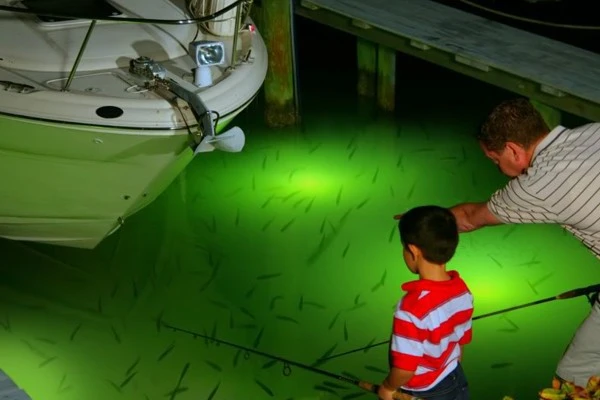
2. Zonas de pesca de muelle y muelle
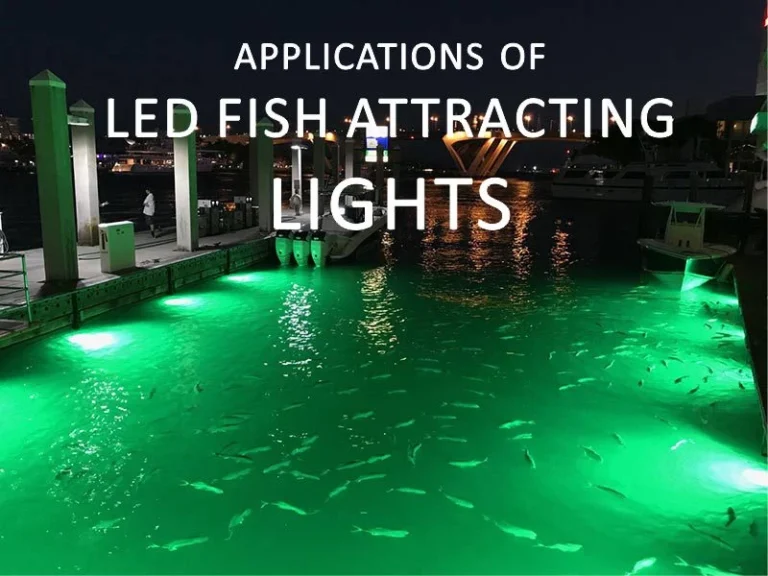
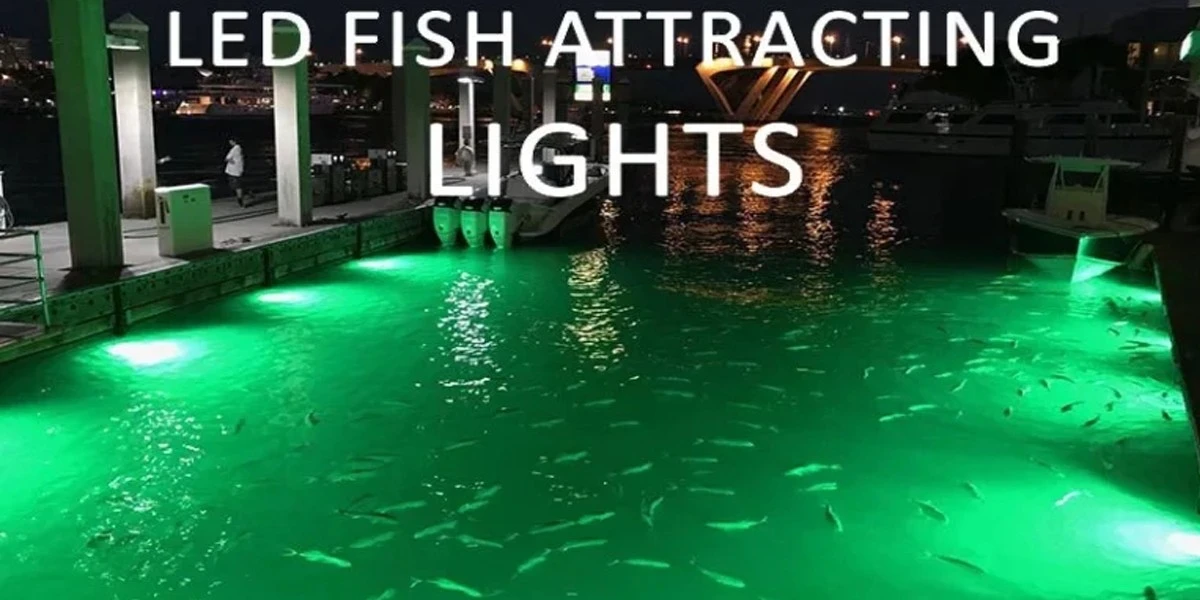
Las luces de pesca verdes también se utilizan ampliamente para la iluminación de muelles y muelles. Cuando se montan a lo largo de muelles o muelles, se extienden la luz hacia el agua circundante, fomentando el plancton y los peces cebo a reunirse cerca de la estructura. Con el tiempo, esto crea un lugar de pesca confiable sin deslumbramiento o perturbación excesiva.
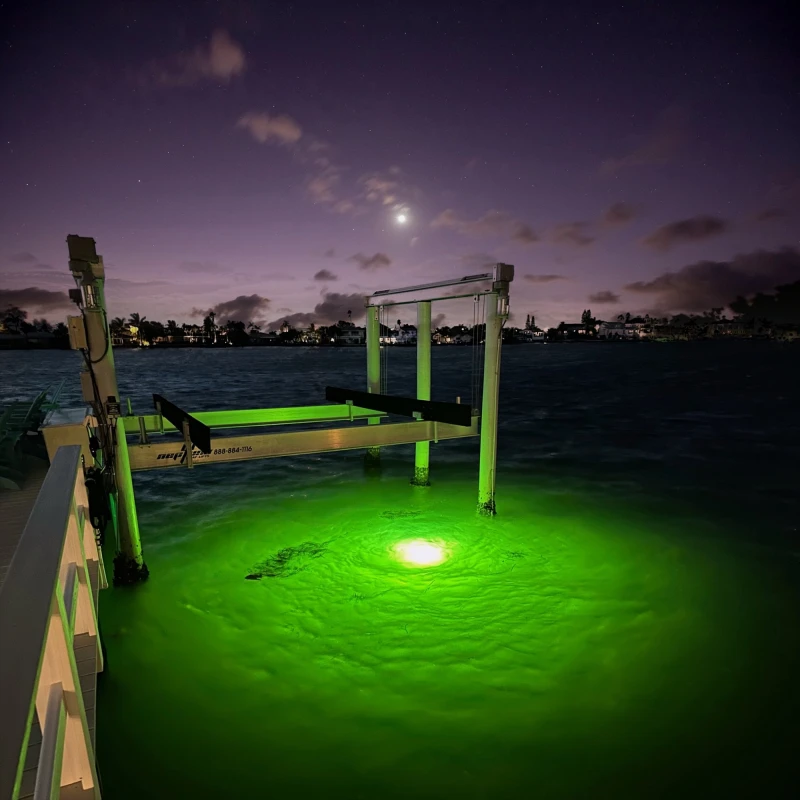
3. Pesca nocturna y costera cercana
En entornos costeros y costeros, las luces de pesca verde mejoran la visibilidad nocturna y la actividad de los peces en aguas poco profundas. Su extensión de haz controlado los hace adecuados para la pesca de costa, pequeños puertos y operaciones nocturnas costeras donde se prefiere una iluminación precisa.
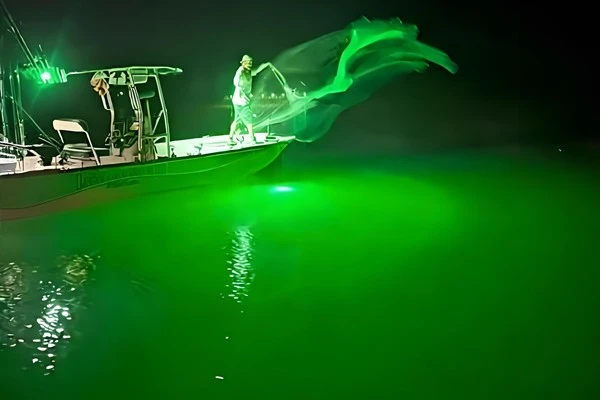
4. Operaciones de pesca en alta mar y comerciales
Para la pesca en alta mar y comercial, las luces de pesca verdes suelen formar parte de sistemas de iluminación más grandes. La producción de luz constante y la colocación equilibrada en todo el barco son más importantes que la intensidad de la lámpara individual, lo que ayuda a mantener la concentración de los peces durante las sesiones nocturnas de pesca prolongada.
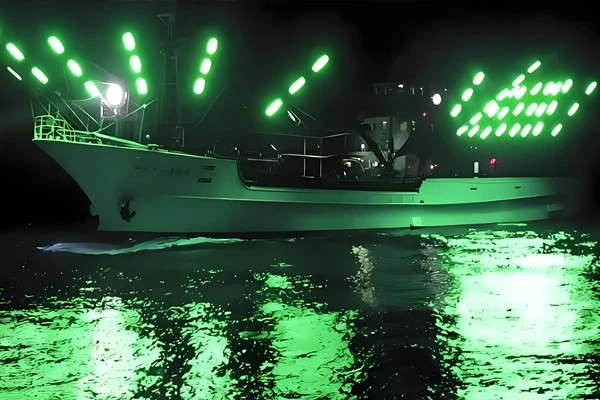
Estas aplicaciones explican por qué las luces de pesca verdes siguen siendo una opción estándar en barcos, muelles y entornos de pesca costera en todo el mundo. Para obtener más detalles sobre cómo funcionan estas luces en diferentes configuraciones, consulte Principales aplicaciones de peces LED que atraen luces en botes, muelles, estanques y proyectos en alta mar.
Conclusión
Las luces de pesca verdes se utilizan ampliamente en la pesca nocturna porque proporcionan un equilibrio confiable entre la penetración de agua, la cobertura de los rayos y la estabilidad visual. En la mayoría de las condiciones nocturnas, la luz verde crea una zona de alimentación clara y eficaz sin abrumar el entorno circundante.
Sin embargo, el color por sí solo no determina la atracción de los peces. La salida de luz, el control de haz y la colocación adecuada a menudo juegan un papel más importante que el brillo o la elección del color por sí mismo. Comprender estos factores ayuda a lograr resultados consistentes al tiempo que evita el consumo de energía innecesario.
Si está planeando una configuración de pesca nocturna para barcos o muelles, elegir la luz verde de pesca adecuada es solo el primer paso. Explorar los tipos de vigas, las opciones de montaje y el diseño general del sistema lo ayudará a crear una configuración de luz de pesca más eficiente y estable.
Preguntas más frecuentes (FAQ)
Publicaciones relacionadas