Español
  English
  简体中文
简体中文  Deutsch
  Français
  Italiano
  日本語
日本語  한국어
한국어  Polski
  Português
  Русский
  Türkçe
  Nederlands
  Tiếng Việt
  ไทย
ไทย 
The best LED tape lights for dimming and color accuracy are purpose-built white LED systems that deliver smooth brightness control while maintaining stable, accurate white light across the entire dimming range. In professional lighting, dimming does not mean changing colors or creating visual effects. It refers strictly to reducing light output in a controlled, predictable way without introducing flicker, color shift, or loss of visual quality.
High-performance dimming is defined by how well a light source behaves at low brightness levels, how consistently it renders colors as output decreases, and how stable the electrical and optical performance remains over time. Many LED tape lights appear acceptable at full brightness but reveal serious limitations once dimmed, especially in commercial and architectural environments where precision matters.
This article will explain how professional dimming is defined, how color accuracy behaves during brightness reduction, and which LED tape light technologies provide the most reliable results for white-light applications.
Early comparison: white-light dimming performance
| LED tape light type | Dimming smoothness | Color stability during dimming | Low-level performance | White-light suitability |
| Standard white LED strips | Moderado | Often shifts warmer or greener | Limited, flicker or dropout common | Acceptable for basic use |
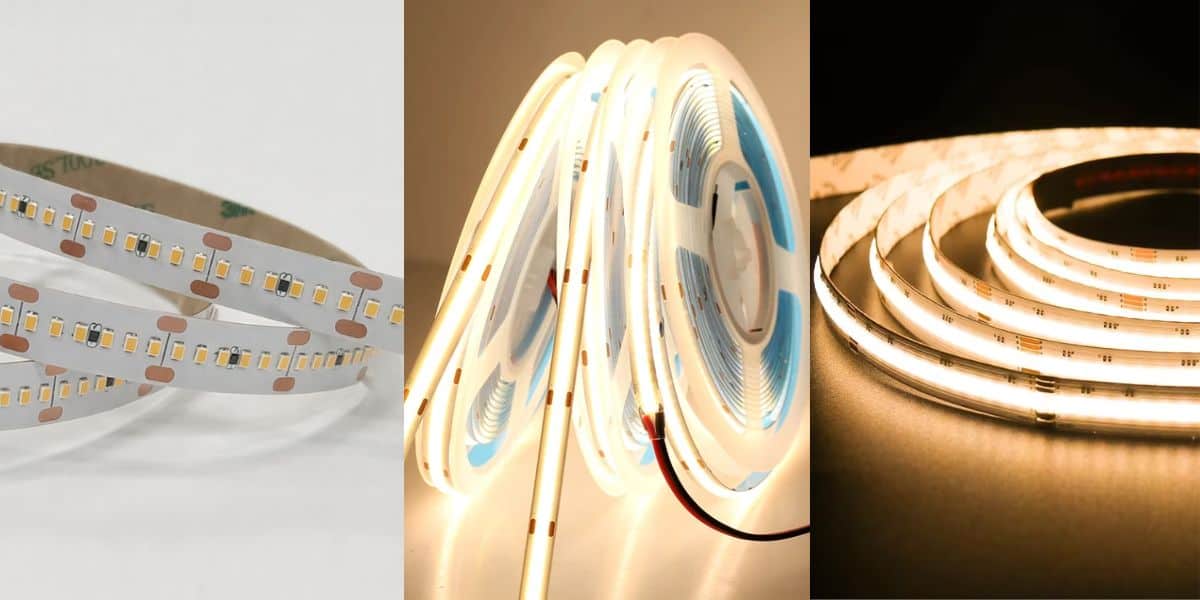
| COB white LED strips | Alta | Very stable across range | Strong, usable at low output | Excellent for professional spaces |
| COB RGBW LED strip light 24V | High when white channel is used | Stable only on dedicated white LEDs | Strong if driver and channel control are correct | Suitable when white channel is primary |
This comparison is based strictly on white-light dimming behavior. RGB and RGBW products are included only where they affect white-light accuracy and brightness control, not for color effects.
What dimming really means in professional lighting
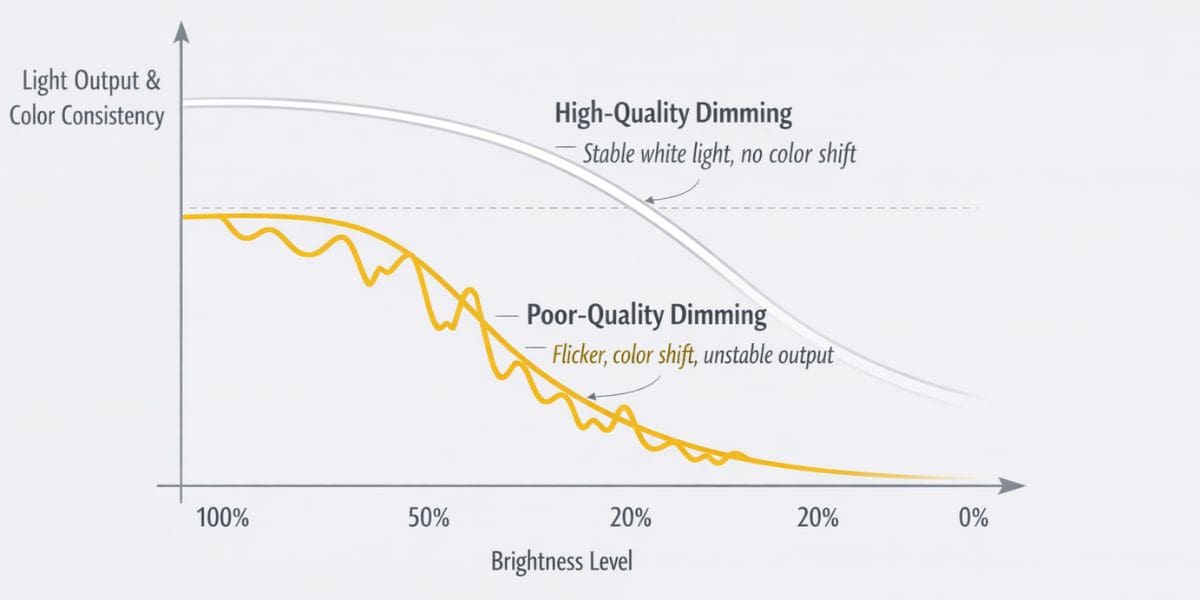
In residential conversations, dimming often means turning the lights down. In professional lighting, dimming has a much more specific meaning. It refers to controlled reduction of luminous output while maintaining consistent spectral quality, visual comfort, and system stability.
True dimming is evaluated across the entire curve, not just at the midpoint. A system that dims from 100 percent to 40 percent smoothly but becomes unstable below that threshold is not considered a high-quality dimming solution. Professionals look for linear or logarithmic response that aligns with human perception, minimal flicker at all levels, and predictable behavior when multiple fixtures are controlled together.
White-light dimming also exposes electrical and optical weaknesses. At lower drive currents, poorly designed LEDs can show color separation, uneven phosphor excitation, or abrupt shutdown. These issues are invisible at full brightness and only appear when the system is pushed to perform precisely.
What color accuracy means during dimming
Color accuracy is often discussed as a static specification, measured at full output under laboratory conditions. In real installations, color accuracy must be maintained while brightness changes. This is where many LED tape lights fall short.
As current is reduced, the spectral output of an LED can shift. In lower-quality products, white light may drift warmer, cooler, or develop a green or magenta tint. This shift affects how materials, skin tones, and surfaces appear under dimmed conditions. In retail or hospitality environments, these changes are immediately noticeable.
High-quality LED tape lights are engineered so that the phosphor system remains stable as current decreases. This stability ensures that color rendering indices and visual appearance remain consistent across the usable dimming range. The result is light that feels natural whether it is bright or subdued.
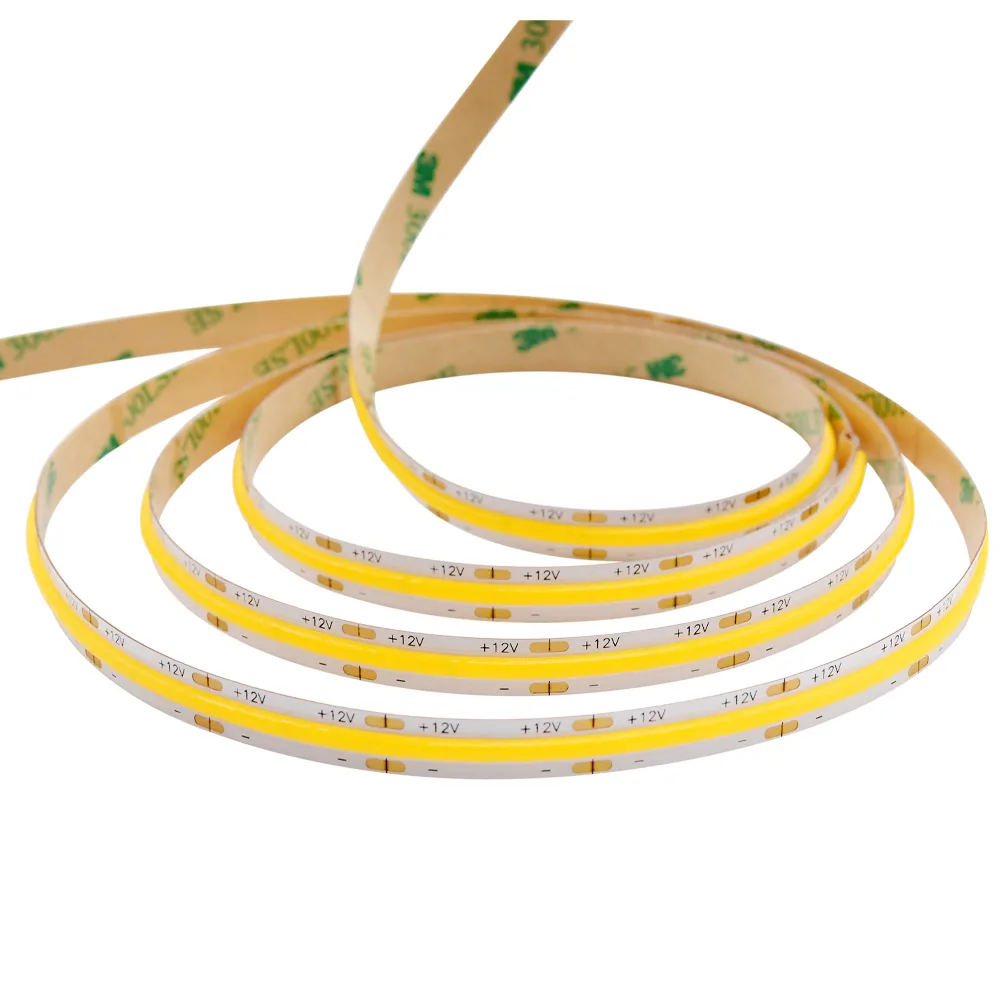
Tira de luz LED COB de un solo color
- Modelo principal: FYX08T480C
- Cantidad de chips LED por metro: 320/384/480/528chips (Sanan)
- CRI: >90CRI: >90
- Anchura PCB: 8mm/10mm
- Temperatura de color: 2700K/3000K/4000K/6500K
- Tensión de entrada: DC12V/DC24V
- Potencia por metro: 8W/10W/11W/14W
- Eficiencia: 130-150lm/W
- Grado IP: IP20/IP54/IP65/IP67/IP68
- Garantía: 3 años
Why low-level dimming exposes poor spectral quality
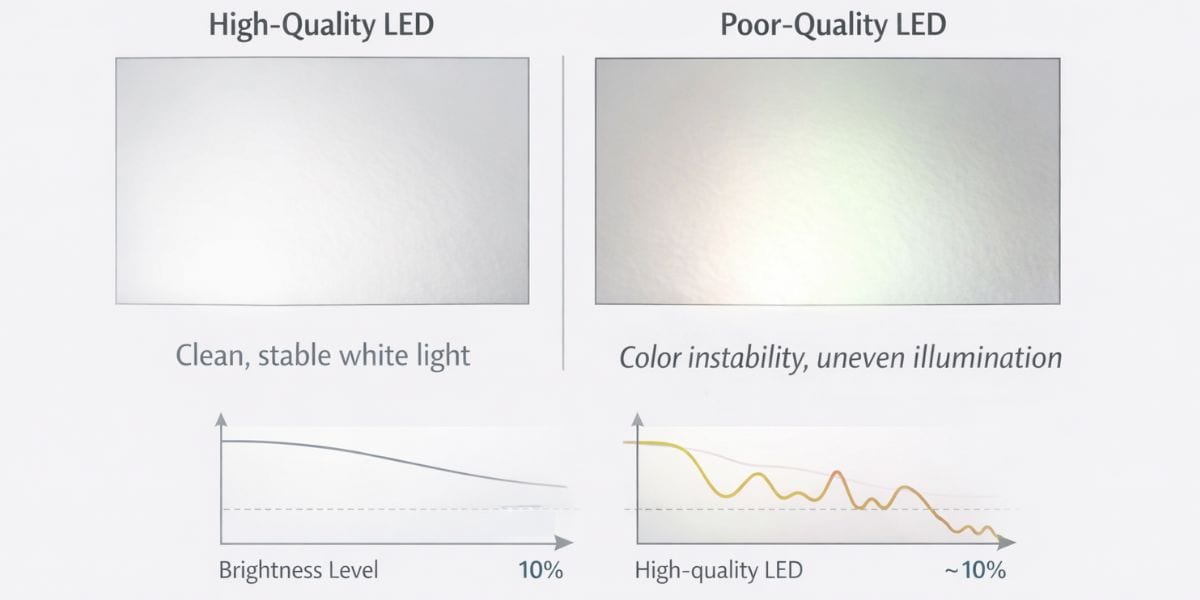
Low-level dimming is the most demanding test for any LED system. At these levels, the LED operates far from its nominal design point. Any inconsistency in binning, phosphor coating, or driver control becomes visible.
At low brightness, human vision becomes more sensitive to color shifts and flicker. Small spectral deviations that are ignored at full output become obvious. This is why a strip that looks acceptable during a showroom demonstration may fail in a finished space when lights are dimmed for atmosphere or energy control.
Professional-grade LED tape lights are designed to remain electrically stable and optically consistent down to very low output levels. This capability separates architectural and commercial products from entry-level solutions.
Performance factors that affect dimming quality
- LED binning consistency across the strip
- Phosphor formulation stability at reduced current
- Driver resolution and control accuracy
- Electrical design that prevents flicker at low output
- Thermal management that maintains consistent junction temperature
Common mistakes that reduce dimming and color accuracy
- Selecting strips based only on maximum brightness
- Ignoring low-level performance during testing
- Mixing LED batches with inconsistent binning
- Using drivers not designed for deep dimming
- Treating RGB output as a substitute for true white LEDs
Why COB LED strip lights improve dimming performance
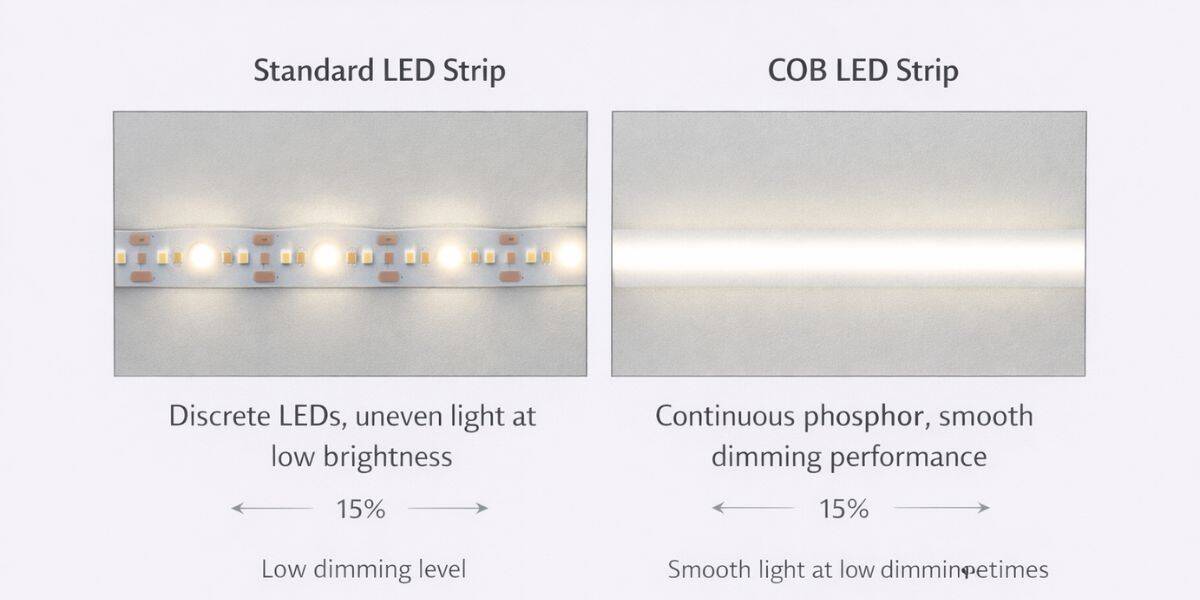
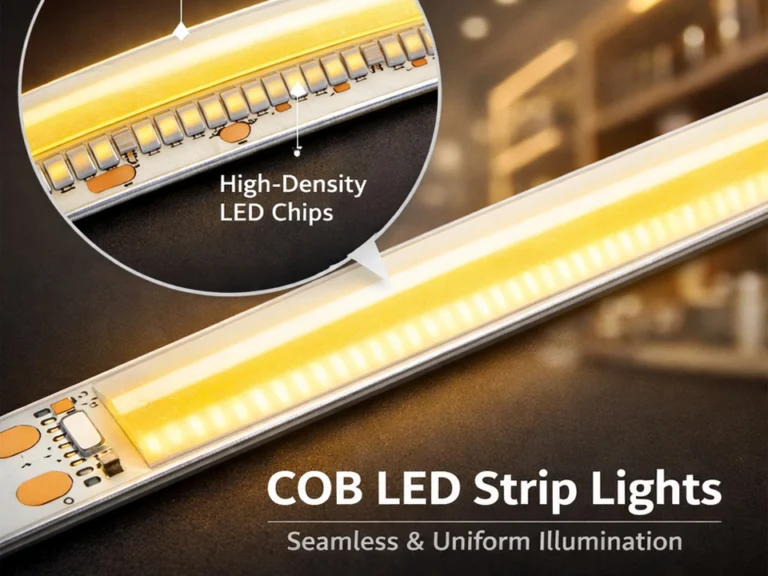
Tiras de LED COB use a continuous phosphor layer over densely packed LED chips. This construction creates a uniform emitting surface rather than visible individual points of light. From a dimming perspective, this design offers several advantages.
First, uniform light emission reduces visual artifacts as brightness changes. Traditional discrete LEDs can reveal spacing or intensity differences at low output. COB technology minimizes these effects, producing smoother fades and more even illumination.
Second, the shared phosphor layer promotes consistent spectral behavior across the strip. When current is reduced, the light output decreases evenly without localized color shifts. This stability is especially important in applications where long runs of LED tape are dimmed together.
Finally, COB designs typically operate at lower current per chip. This reduces stress on individual emitters and improves control at the bottom end of the dimming curve. The result is light that remains usable and visually clean at very low brightness levels.
These characteristics make COB LED strip lights a preferred choice in professional environments where dimming quality is a priority.
RGB vs RGBW in the context of white-light dimming
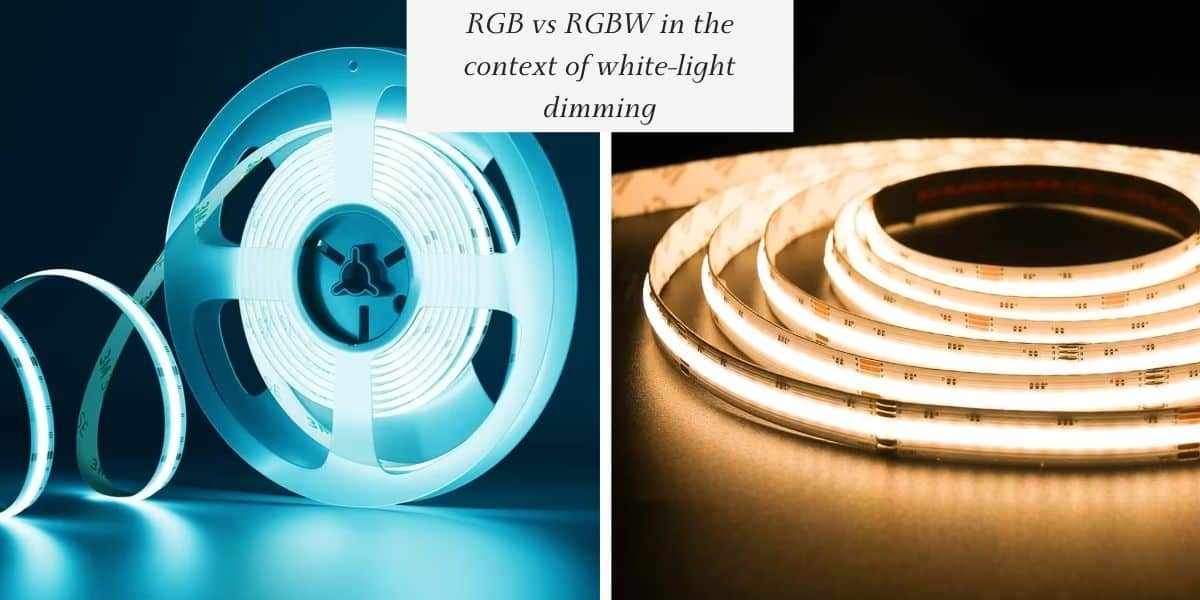
RGB systems are often misunderstood in discussions about dimming. RGB output is created by mixing red, green, and blue light. While this can approximate white at certain levels, it does not provide the spectral completeness required for accurate color rendering. More importantly, RGB mixing does not behave predictably when dimmed. Channel imbalance becomes more pronounced at low output, leading to visible color shifts.
RGB is not a dimming solution for white light. It is a color-mixing method that lacks the spectral stability needed for professional white-light control.
RGBW systems introduce a dedicated white channel. When this white channel is built with high-quality phosphor-converted LEDs and controlled independently, it can support accurate white-light dimming. In a COB rgbw LED strip light 24v, the white LEDs, not the RGB channels, are responsible for dimming performance and color accuracy. The RGB elements should be considered supplemental and irrelevant to brightness control when white-light quality is the goal.
Proper channel separation and driver design are essential. If the system dims by reducing RGB output instead of the white channel, color accuracy will suffer. When designed correctly, RGBW systems can meet professional white-light requirements, but only by treating the white LEDs as the primary source.
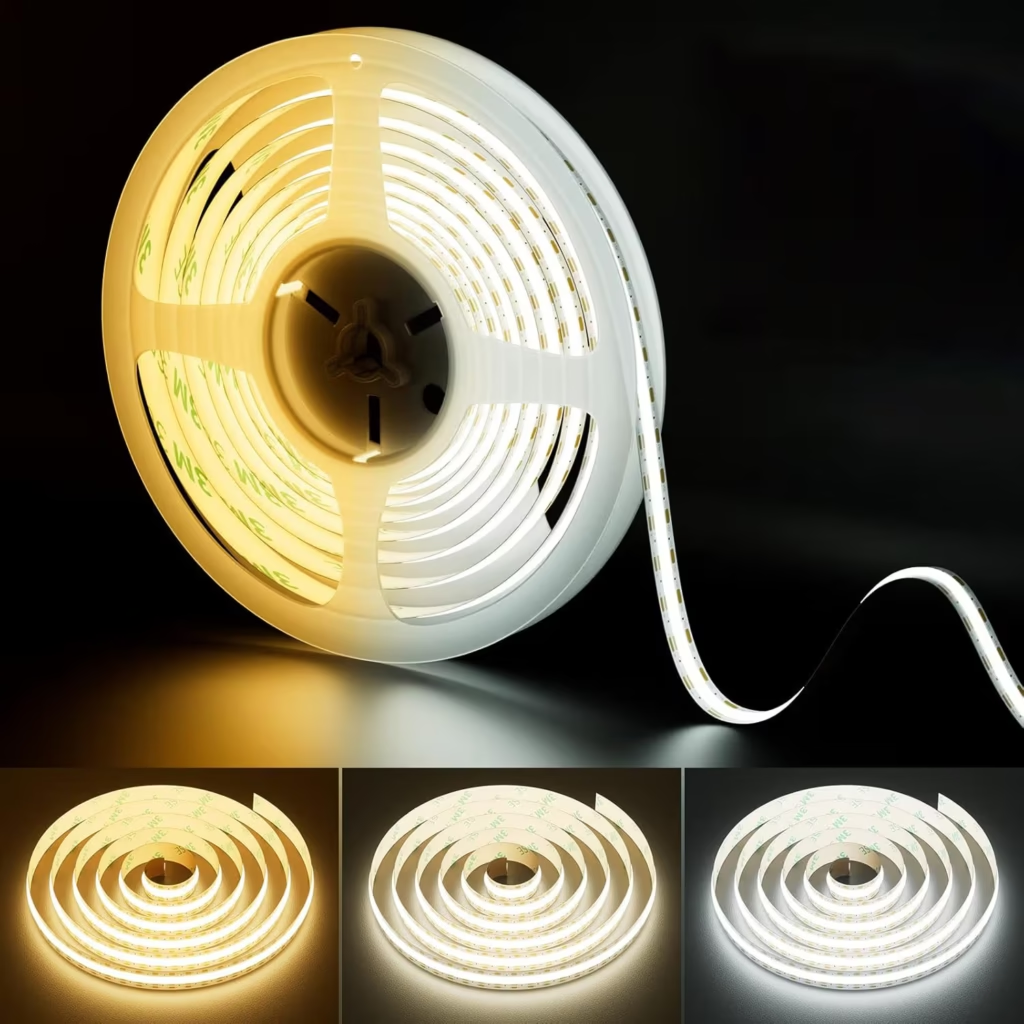
Tira de luz LED COB blanca ajustable de dos colores
- Modelo principal: FYT10T608C
- LED CANT. por metro Opción: 608/640chips (Sanan)
- Opción de ancho de PCB: 10 mm
- Opción de color: 2700K - 6500K sintonizable
- CRI:>90
- Voltaje de entrada: DC12V/DC24V
- Potencia por metro: 14W/16W
- Eficiencia: 90-110 lúmenes/vatios
- Opción de grado IP: IP20/IP54/IP65/IP67/IP68
- Garantía: 3años
Application-based guidance
Retail environments
Retail lighting demands consistency. Products must look the same at different times of day and under varying brightness levels. High-quality COB white LED strips are well suited for this purpose because they maintain color stability during dimming. In display shelving and accent lighting, smooth low-level control prevents harsh transitions and preserves material appearance.
Iluminación arquitectónica
Architectural spaces rely on light to define form and texture. Dimming is often used to adapt spaces throughout the day. COB LED strip lights provide the uniformity needed for coves, reveals, and linear details. Their smooth dimming behavior ensures that architectural lines remain clean and free from visual noise as brightness changes.
Hospitality environments
Hotels and restaurants frequently operate lighting at reduced levels. Poor dimming performance is immediately noticeable in these settings. Stable white light at low output is essential for comfort and atmosphere. Systems that shift color or flicker undermine the intended experience. COB-based solutions are commonly specified because they deliver reliable performance across the entire dimming range.
Studios and camera-facing spaces
Camera sensors are unforgiving. Flicker, spectral gaps, and color instability are amplified on screen. For studios, showrooms, and broadcast-adjacent environments, dimming performance must be precise. COB LED strip lights with stable drivers provide consistent white light that behaves predictably under both human and camera perception.
Conclusión
Choosing the best LED tape lights for dimming and color accuracy requires a clear understanding of what professional dimming actually means. It is not about changing colors or adding effects. It is about controlling brightness while preserving the integrity of white light across the entire output range.
High-quality COB white LED strip systems offer superior uniformity, stable spectral behavior, and reliable low-level performance. RGB systems do not solve dimming challenges for white light, and RGBW solutions only succeed when the white channel is properly designed and used as the primary source.
When evaluated correctly, the right LED tape light delivers smooth fades, consistent color rendering, and dependable performance in real environments. These qualities are what define professional-grade dimming and long-term lighting quality.
FAQ,s
Publicaciones relacionadas