Français
  English
  简体中文
简体中文  Deutsch
  Español
  Italiano
  日本語
日本語  한국어
한국어  Polski
  Português
  Русский
  Türkçe
  Nederlands
  Tiếng Việt
  ไทย
ไทย 
LED strip wholesale prices vary based on technical specifications such as LED type, density, CRI, waterproof rating, and order quantity. These factors directly influence brightness, consistency, durability, and overall application performance.
Price differences are usually tied to measurable product characteristics rather than branding. Entry-level products are designed for basic lighting, while higher-priced options are built for commercial and architectural use where consistency and reliability are critical.
In this article, we will explain LED strip cost per meter, pricing structure, key cost factors, and how to select the right option based on your project requirements.
réponse rapide
The wholesale price of LED strip lights typically falls within these ranges:
- $0.2–$0.5/m → entry-level, low-density strips
- $0.5–$1.5/m → standard commercial grade
- $1.5–$3/m → COB or high CRI LED strips
- $3–$6+/m → architectural or outdoor lighting
Prices vary depending on chip quality, LED density, CRI level, waterproof rating, PCB design, and order quantity.
LED Strip Wholesale Price by Type
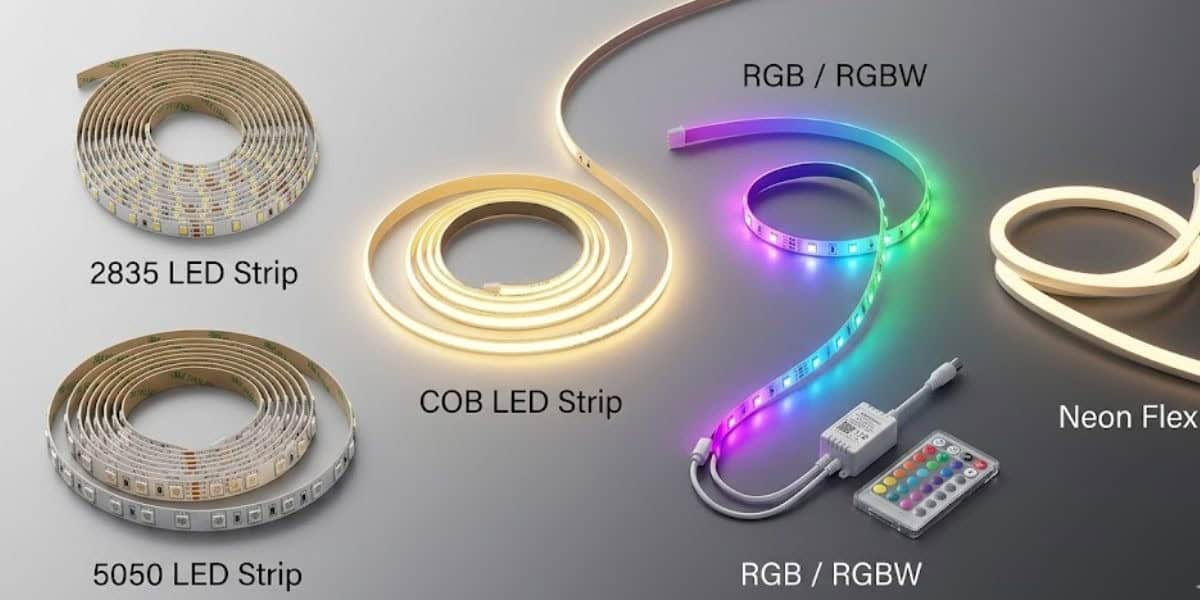
Different LED strip types are designed for specific applications, and each type has a distinct cost structure based on materials, design, and performance requirements.
| Type | Price ($/m) | Application |
| Bande LED 2835 | $0.2–$0.5 | Basic lighting |
| 5050 LED Strip | $0.7–$1.5 | Éclairage commercial |
| Bande LED COB | $1.5–$3 | Dot-free lighting |
| RGB / RGBW | $1.2–$3 | Éclairage décoratif |
| Flex au néon | $2–$6+ | Outdoor / facade |
2835 strips are typically used in cost-sensitive projects where basic illumination is sufficient. 5050 strips offer higher brightness and are commonly used in commercial spaces. COB strips provide continuous light output without visible dots, making them suitable for premium applications. Neon Flex products are designed for outdoor environments with higher protection levels.
Aperçu de la décision : Always match the strip type to the application instead of selecting based on price alone.
For a more detailed breakdown of LED strip pricing categories and manufacturer comparisons, you can refer to our complete guide on LED strip wholesale pricing.
What Determines LED Strip Wholesale Price
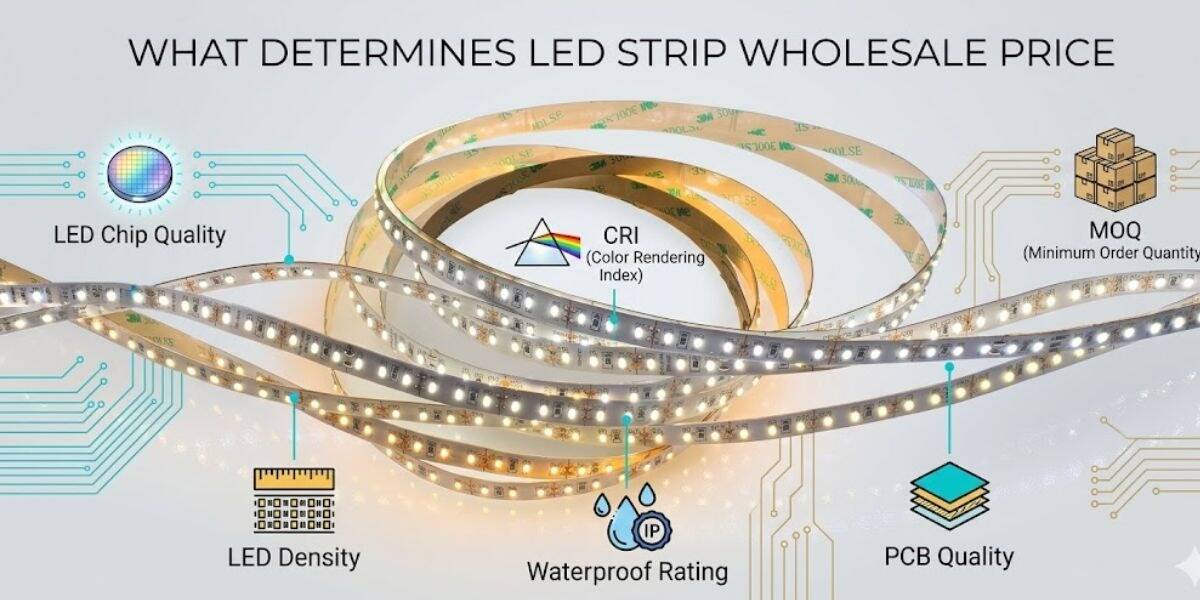
Several technical and commercial factors directly influence LED strip cost per meter. Understanding these parameters helps avoid overpaying or selecting unsuitable products.
LED Chip Quality
Higher-grade LED chips provide stable brightness, better efficiency, and longer lifespan. Lower-grade chips reduce initial cost but may degrade faster over time.
Impact: +20%–30%
LED Density (LEDs per meter)
LED density determines brightness output. Lower density (60 LEDs/m) is suitable for basic use, while higher density (120–240 LEDs/m) provides stronger and more uniform lighting.
Impact: +20%–50%
IRC (Indice de rendu des couleurs)
CRI defines how accurately colors appear under light. CRI 80 is standard, while CRI ≥90 is used in retail, hospitality, and architectural environments.
Impact: +10%–25%
Indice d'imperméabilité
| Indice de protection IP | cas d'utilisation | Impact des prix |
| IP20 | Indoor use | Base price |
| IP65 | résistant aux éclaboussures | +15%–25% |
| IP67/IP68 | utilisation en extérieur | +30%–60% |
PCB Quality
Thicker PCBs with higher copper content improve heat dissipation and electrical stability. This increases cost but significantly improves durability and performance.
MOQ (Minimum Order Quantity)
Small orders typically result in higher unit prices, while bulk orders reduce costs due to production efficiency.
Discount Range: 10%–40%
Aperçu de la décision : Technical specifications are the main drivers of pricing, not brand labels.
Also See Our Guide On : The Best Brands for High-Quality Side Emitting LED Lights
LED Strip Price Comparison by Market
LED strip pricing varies across regions due to differences in manufacturing, distribution, and branding.
| marché | Price ($/m) | notes |
| Chine | $0.2–$2 | Factory direct / OEM |
| L'Europe | $1–$4 | Brand pricing |
| USA | $1.5–$5 | Distribution markup |
China offers the most competitive pricing because most LED strip manufacturing is based there. Buyers can source directly from factories, reducing intermediary costs.
In contrast, European and US markets include additional costs related to branding, certification, logistics, and distribution channels.
Aperçu de la décision : Direct factory sourcing provides better pricing and customization flexibility.
How to Get the Best LED Strip Wholesale Price
Getting the best LED strip price depends on both product selection and purchasing strategy. Buyers can reduce costs by optimizing specifications and sourcing approaches.
• Order in bulk to reduce per-meter cost (typically 10%–40% lower)
• Standardize specifications to avoid custom production costs
• Source directly from OEM manufacturers instead of distributors
• Choose appropriate specifications instead of over-specifying products
• Compare multiple suppliers based on technical parameters, not just price
Focusing on these factors helps balance cost, performance, and long-term reliability.
Aperçu de la décision : The best price comes from optimizing specifications and sourcing strategy, not simply choosing the lowest quote.
How to Choose LED Strip Based on Budget
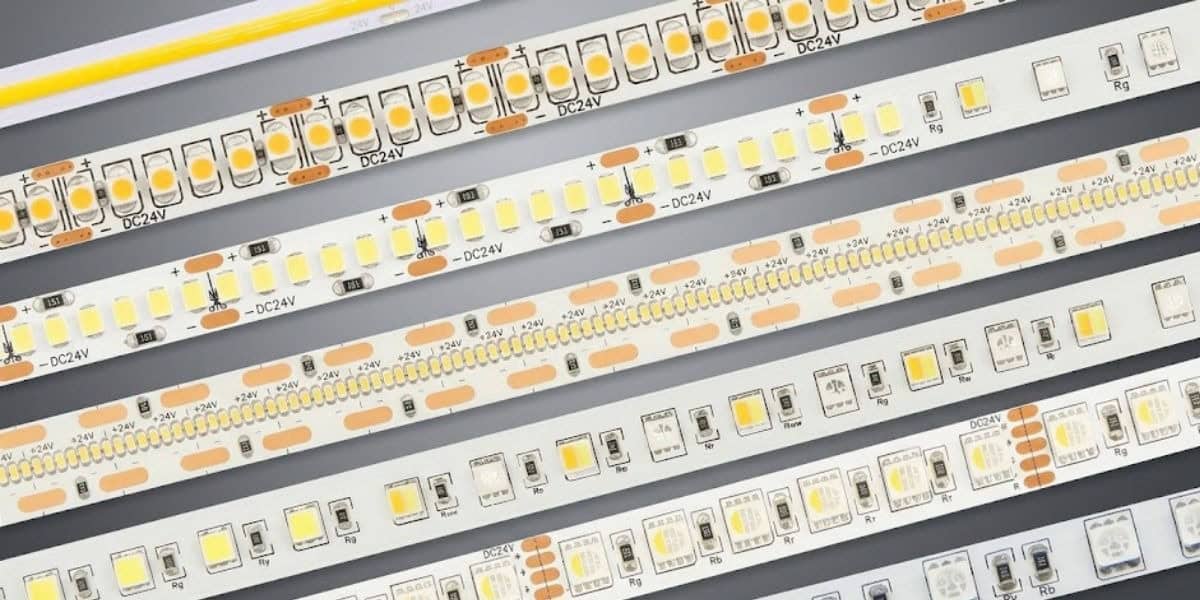
Bande LED selection should be based on project requirements rather than cost alone. Each budget level corresponds to a different performance category.
Budget projects typically use 2835 LED strips priced between $0.2 and $0.5 per meter. These are suitable for basic lighting applications where high performance is not required.
Commercial projects often use 5050 LED strips priced between $0.7 and $1.5 per meter. These provide balanced brightness and reliability for offices, retail stores, and indoor environments.
High-end projects require COB LED strips with CRI ≥90, priced between $1.5 and $3 per meter. These are used where visual quality and uniform lighting are important.
Outdoor and architectural applications use Neon Flex products with IP67 or higher ratings, typically costing $2 to $6+ per meter.
Aperçu de la décision : Select based on performance requirements, not the lowest available option.
How to Evaluate a Wholesale LED Strip Supplier
Choosing the right supplier ensures consistent quality, stable pricing, and reliable delivery. A lower price does not always mean better value if performance is inconsistent.
Key Factors
- Color consistency (SDCM ≤3) → ensures uniform lighting
- Certifications (UL, CE, RoHS) → required for compliance
- Production capability → stable quality in bulk orders
- OEM/ODM support → customization for projects
- Lead time (2–5 weeks) → predictable delivery
- Warranty (3–5 years) → product reliability
Supplier Comparison
| Critères | Recommandé | Pourquoi c'est important |
| DDCM | ≤3 | Avoids color variation |
| CRI | ≥90 | Accurate color output |
| Certifications | UL / CE / RoHS | Compliance |
| Délai d'exécution | 2 à 5 semaines | Project planning |
| Garantie | 3 à 5 ans | Fiabilité à long terme |
Aperçu de la décision : Choose suppliers based on consistency and capability, not just the lowest price.
Also Read our Guide On: How to Evaluate a Reliable COB LED Strip Manufacturer in China
Common Mistakes When Buying LED Strip Lights
Certain purchasing mistakes can lead to performance issues and higher long-term costs.
- Choosing the lowest price without evaluating specifications often results in shorter lifespan
- Ignoring SDCM can cause visible color inconsistency in installations
- Not verifying certifications may create compliance and safety issues
- Overlooking warranty can increase maintenance and replacement costs
Choosing a Reliable LED Strip Manufacturer
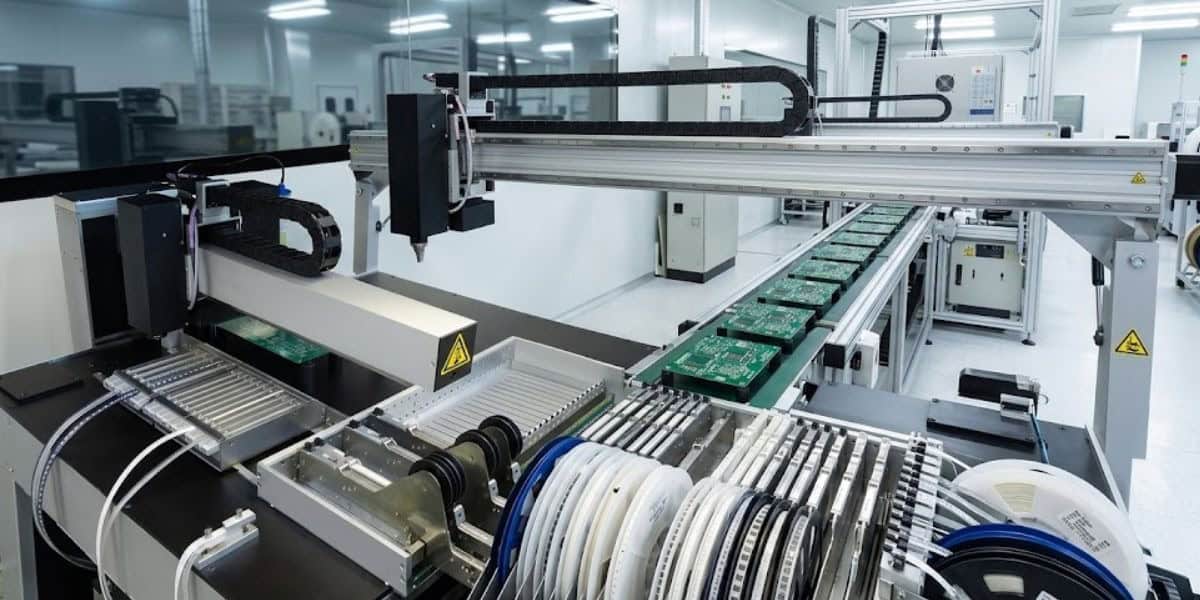
A reliable manufacturer ensures consistent quality, stable production, and compliance with industry standards.
Key indicators include controlled color consistency (typically SDCM ≤3), proper certifications such as UL, CE, and RoHS, and the ability to support OEM/ODM customization.
Manufacturers with strong production capacity can maintain consistent lead times, which is critical for project-based orders.
Manufacturers such as SignliteLED operate as OEM suppliers, providing customized LED strip solutions with controlled quality standards and scalable production capabilities.
Aperçu de la décision : Long-term reliability depends more on supplier capability than initial price.
Conclusion
LED strip wholesale pricing is influenced by a combination of technical specifications and purchasing conditions. Factors such as LED type, density, CRI, waterproof rating, and order volume all contribute to cost per meter.
For most applications, the typical price range is $0.5 to $1.5 per meter, while higher-end projects require products priced above $2 per meter.
Final takeaway: Selecting LED strips based on specifications and application needs leads to better long-term results than choosing the lowest price.
FAQ
Articles Similaires