Français
  English
  简体中文
简体中文  Deutsch
  Español
  Italiano
  日本語
日本語  한국어
한국어  Polski
  Português
  Русский
  Türkçe
  Nederlands
  Tiếng Việt
  ไทย
ไทย 
LED lighting has become the dominant technology in commercial and architectural applications due to its high energy efficiency, long operational lifespan, and flexible integration into modern lighting systems. Compared to traditional lighting technologies such as fluorescent and HID systems, LED lighting can reduce energy consumption by approximately 50–70%, while also delivering more stable light output, better color control, and reduced maintenance requirements.
In commercial environments such as offices, retail stores, warehouses, and public buildings, lighting systems must provide consistent illumination, meet defined lux standards, and operate efficiently for extended periods, often exceeding 10–14 hours per day. In contrast, architectural lighting focuses on enhancing visual aesthetics, highlighting structural elements, and creating controlled lighting effects that support design intent.
Because of these differences, selecting the right LED manufacturer is critical. The choice directly affects system performance, installation quality, long-term reliability, and total project cost.
In this article, we will explain:
• what commercial and architectural LED lighting is
• key product categories and real-world applications
• performance metrics such as efficacy, CRI, and lifespan
• cost comparison across different manufacturer types
• how to choose a reliable LED supplier for B2B projects
réponse rapide
Commercial LED lighting is designed for efficient, uniform illumination in work environments, while architectural LED lighting focuses on design, visual impact, and color accuracy. Typical costs range from $4–$20 per meter for LED strips et $30–$100 per unit for panels, while complete systems vary based on specifications. The best manufacturers balance performance, certifications, customization capability, and long-term reliability.
What Is Commercial LED Lighting
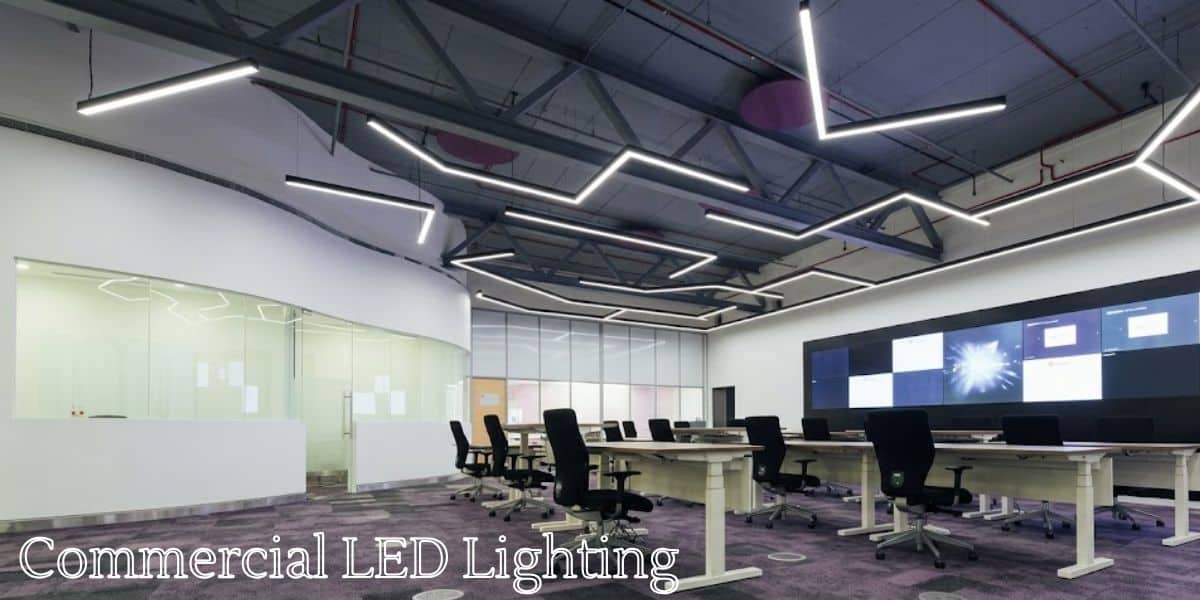
Commercial LED lighting refers to lighting systems engineered to deliver consistent, efficient, and long-lasting illumination in professional environments such as offices, retail spaces, hospitals, warehouses, and educational facilities. The primary objective is to achieve uniform light distribution while minimizing energy consumption and maintenance costs over time.
Modern commercial LED systems typically operate at an efficacy of 110–150 lumens per watt, significantly outperforming older fluorescent systems that average 60–90 lm/W. These systems are designed with a CRI ≥80, ensuring acceptable color rendering for most work environments. In addition, they offer a lifespan of 50,000–70,000 hours, reducing replacement frequency and lowering operational costs.
Commercial lighting must also comply with standard illumination levels. For example, office spaces generally require 300-500 lux, while retail environments may require 500–800 lux depending on display requirements.
Decision Insight:
For commercial applications, lighting should prioritize efficiency, uniformity, and long-term operational stability rather than advanced design features.
What Is Architectural LED Lighting
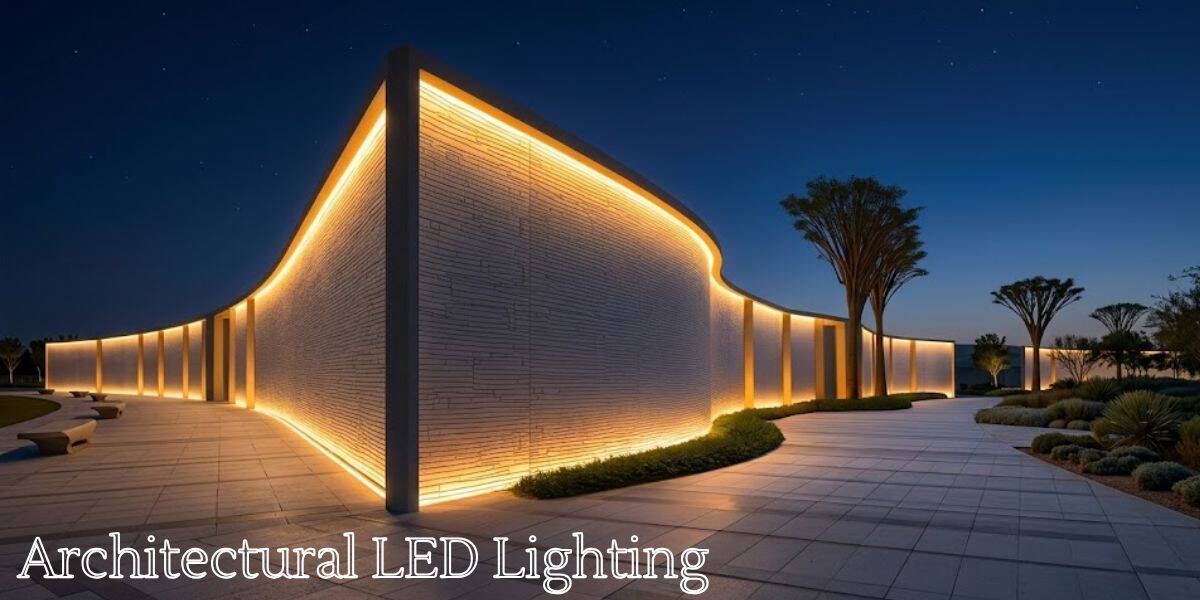
Architectural LED lighting is used to enhance the visual appearance of buildings and interior spaces. It emphasizes aesthetics, contrast, and design integration rather than purely functional illumination. These systems are commonly used for facade lighting, landscape lighting, hospitality environments, and high-end retail spaces.
Architectural lighting systems require higher color accuracy, typically CRI ≥90, to ensure materials and surfaces appear natural and consistent. Color consistency is also critical and is usually controlled within SDCM ≤3–5, preventing visible color variation across fixtures.
Unlike commercial lighting, architectural lighting often incorporates advanced control systems such as dimming, RGB color mixing, and dynamic lighting effects. However, this flexibility typically reduces system efficacy to around 80–120 lm/W, as design precision is prioritized over maximum efficiency.
Decision Insight:
Architectural lighting should prioritize color quality, beam precision, and visual consistency rather than maximizing luminous efficiency.
Key Differences Between Commercial and Architectural LED Lighting
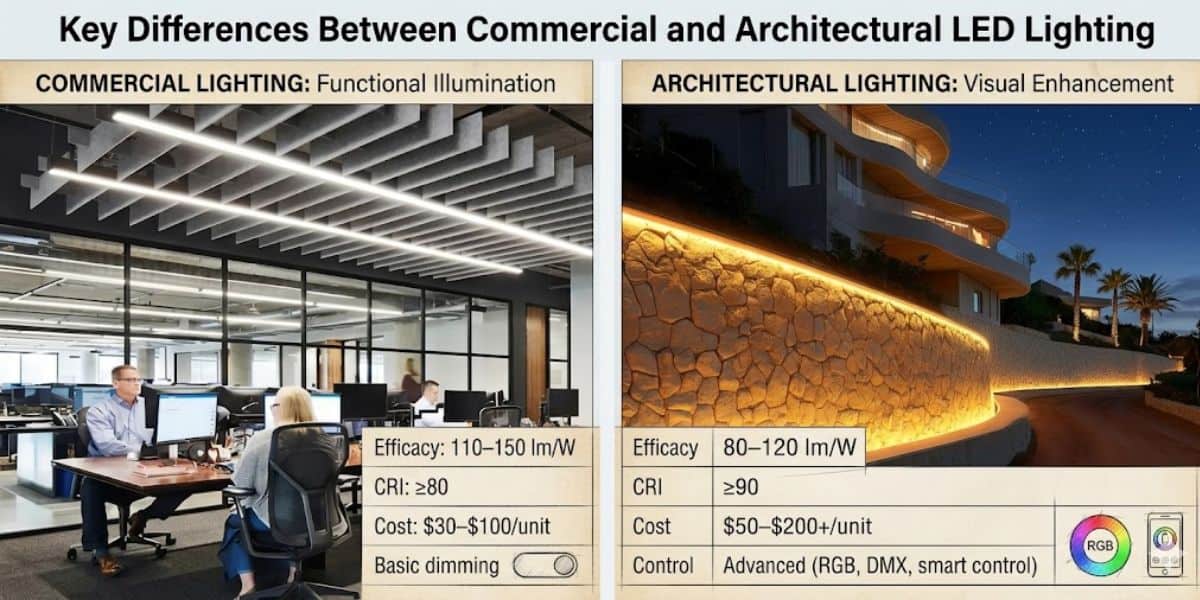
| Fonctionnalité | Éclairage commercial | Éclairage architectural |
| Objectif | Functional illumination | Visual enhancement |
| Efficacité | 110–150 lm/W | 80–120 lm/W |
| CRI | ≥80 | ≥90 |
| Coût | $30–$100/unit | $50–$200+/unit |
| Contrôle | Basic dimming | Advanced (RGB, DMX, smart control) |
Decision Insight:
Commercial lighting is optimized for cost and efficiency, while architectural lighting is optimized for design flexibility and visual impact.
Types of Commercial and Architectural LED Lighting Products
LED Linear Lighting
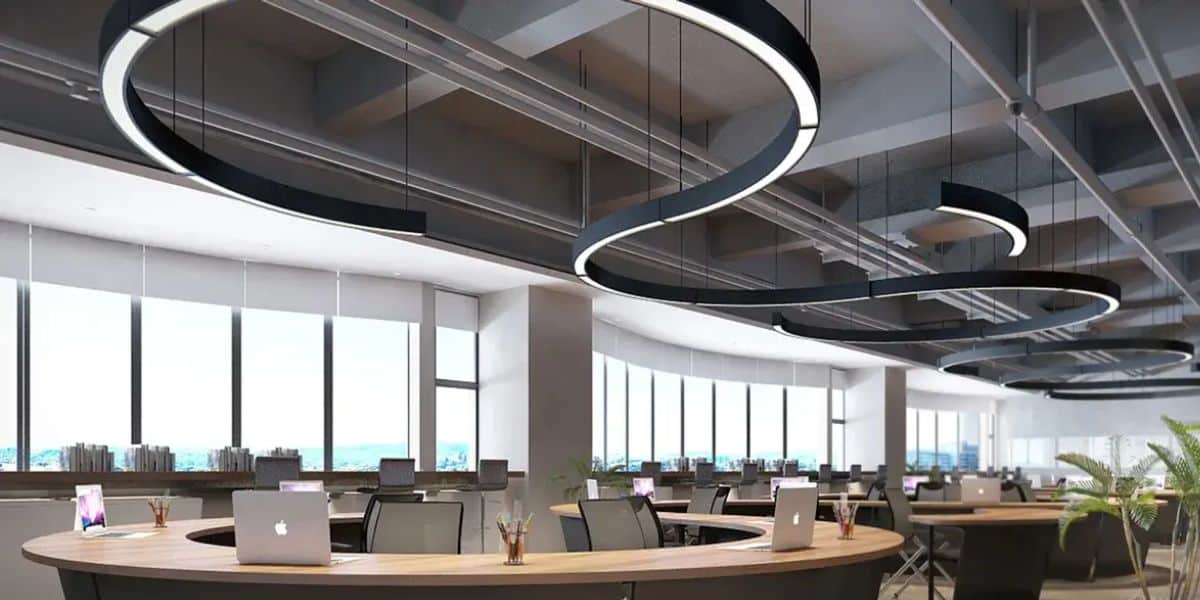
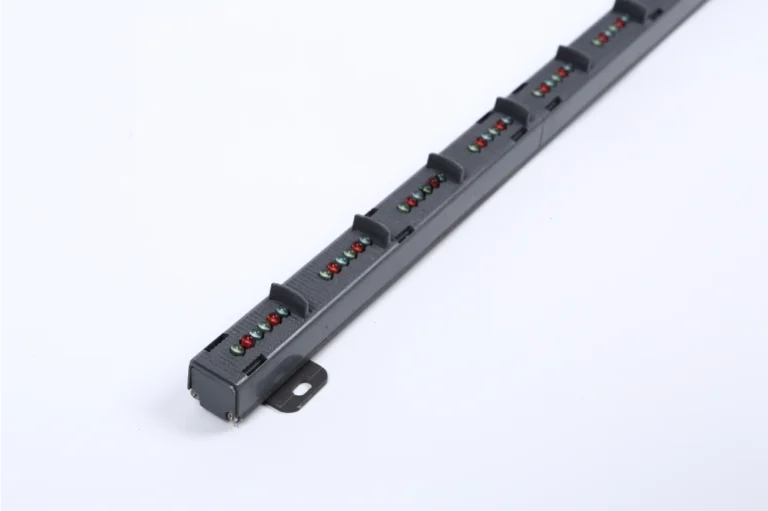
Éclairage linéaire à LED is widely used in offices, corridors, and commercial buildings to provide continuous and uniform illumination. These systems are often integrated into ceilings or suspended installations. Typical efficacy ranges from 110–140 lm/W, with costs between $25 and $70 per meter depending on build quality and driver specifications.
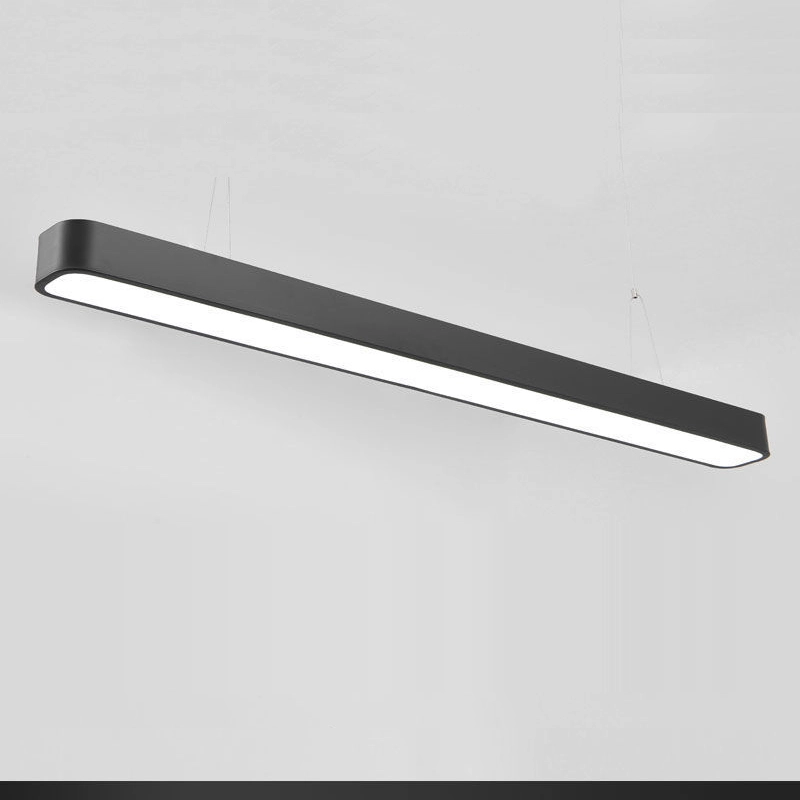
W60xH80mm Profil rond LED Lumière linéaire
- Tension d'entrée : AC100-277V/AC220-240V, 50/60Hz
- Taille du profil : W60*H80mm
- Longueur : 600mm/1200mm/1500mm/1800mm/2400mm
- Flux lumineux : 100-110lm/W
- Watt : 20W/40W/60W/80W
- Température de couleur : 3000K/4000K/6000K
- Angle du faisceau : 120°
- Puce LED : SMD2835
- Matériau : 6063 Profil en aluminium + diffuseur opale
- Option de couleur de finition : Noir/Blanc/Argent
- Option de fonction : Non-gradation/Dimming 0-10V/Dali Variation DALI
- Option d'installation : Support de suspension/plafond
- PF : >0.95
- IRC : >82
- Classe IP : IP20
LED Panel Lights
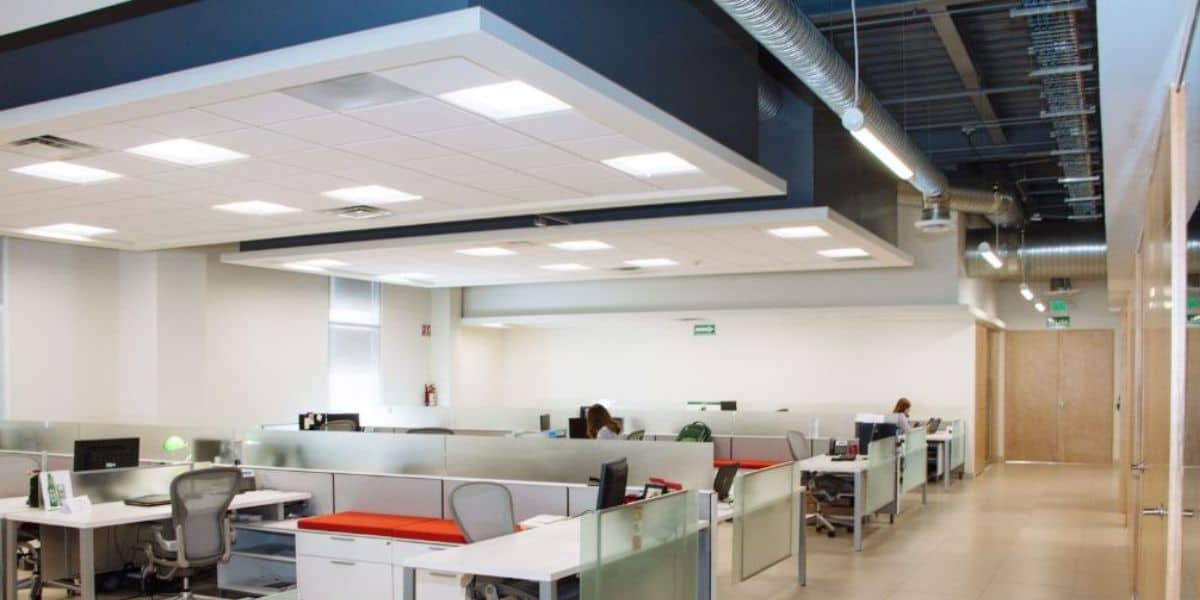
Panel lights are commonly installed in office ceilings to deliver soft, diffused illumination with minimal glare. These fixtures typically operate at 90–130 lm/W and cost between $30 and $100 per unit, depending on size and quality.
Downlights
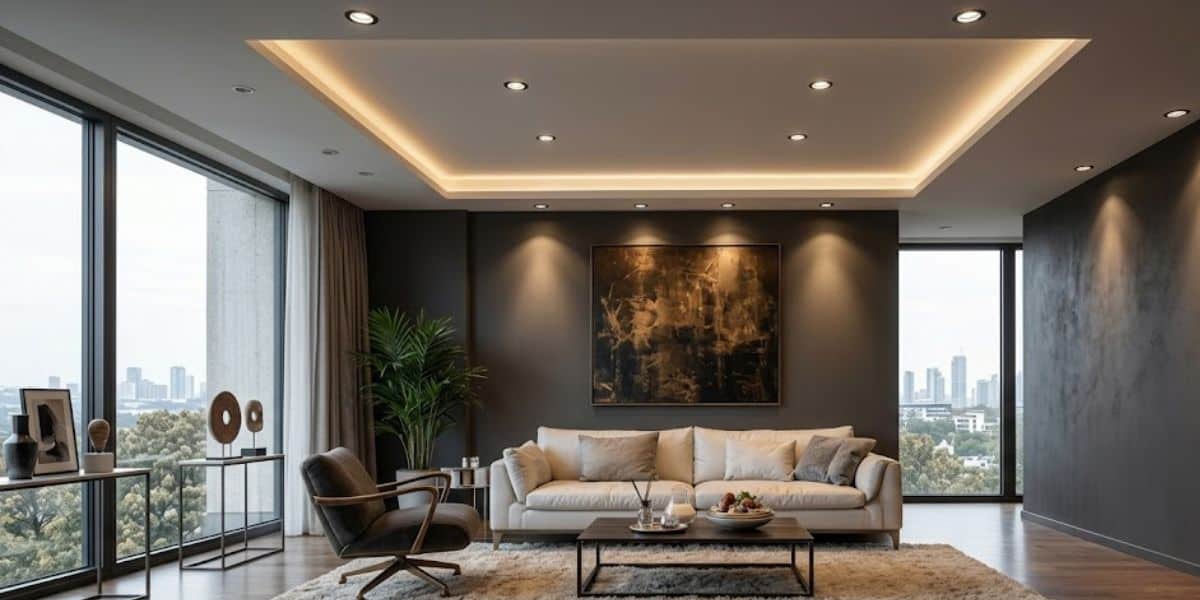
Downlights provide focused illumination and are widely used in hospitality, retail, and residential environments. They offer beam angles ranging from 15° to 60° and typically cost between $12 and $50 per unit.
LED Strip Lighting
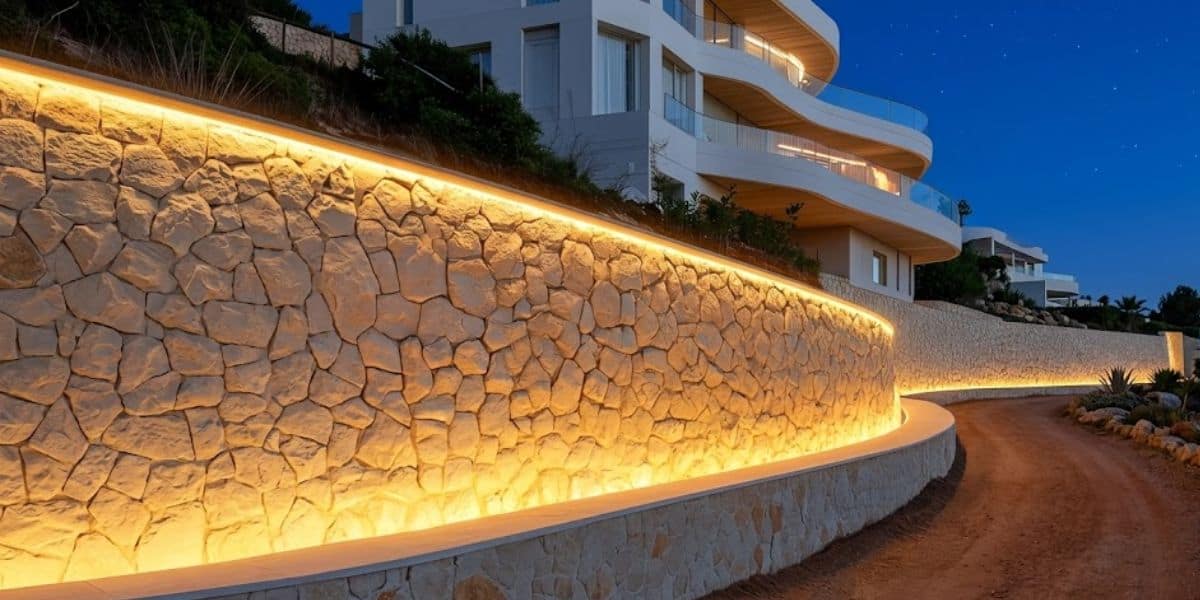
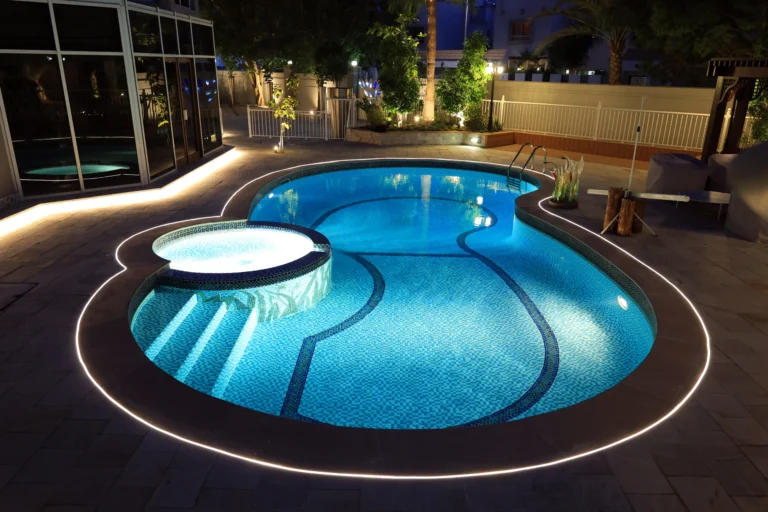
LED strip lighting is a flexible and widely used solution in architectural applications such as cove lighting, facade outlines, and indirect lighting. High-quality strips offer CRI ≥90 and cost between $4 and $20 per meter.
In scenarios where uniform backlighting is required instead of linear illumination, LED light sheets are often a better alternative. A detailed comparison is available in our LED Light Sheet selection guide.
Eclairage des façades
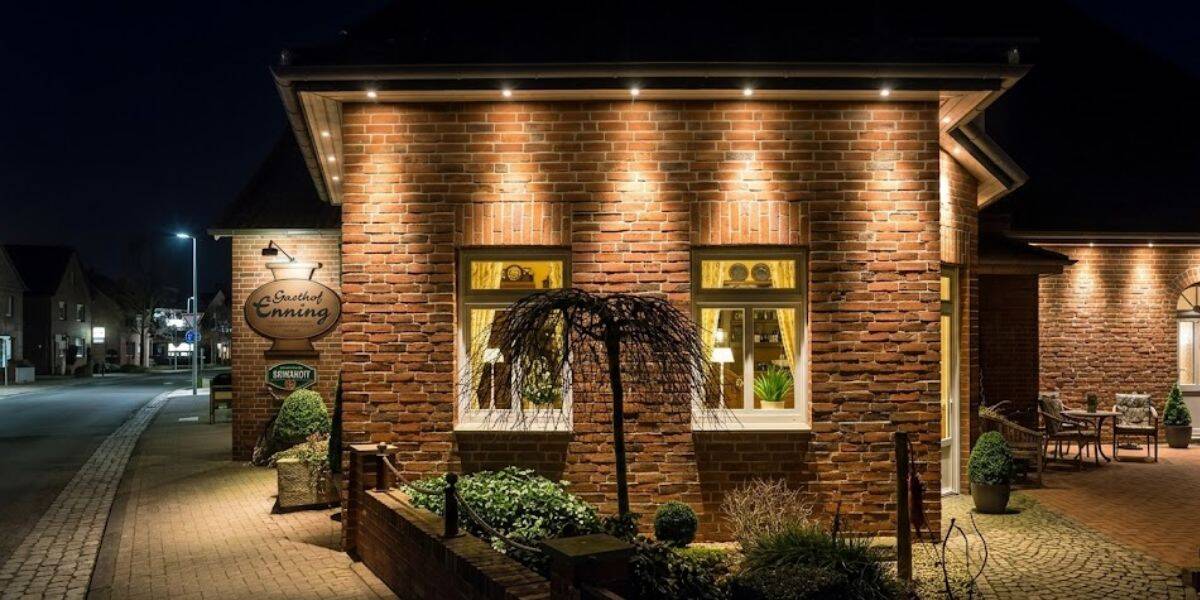
Facade lighting systems include wall washers and floodlights designed for exterior building illumination. These systems typically operate at 80–120 lm/W and cost between $60 and $250 per unit depending on power and optical design.
Decision Insight:
Product selection should always be based on application requirements, installation conditions, and performance specifications rather than product category alone.
Scénarios d'application
| Application | Lux recommandé | Typical Lighting |
| Bureau | 300-500 lux | Linear lighting |
| Vente au détail | 500–800 lux | Track lighting |
| L'hospitalité | 200-400 lux | Downlights |
| Facade | 50–150 lux | Bandes LED |
| Warehouse | 300–700 lux | High bay lighting |
Decision Insight:
Correct lux levels are essential for achieving both functional performance and energy efficiency.
Key Technologies Used by LED Manufacturers
LED lighting performance is determined by a combination of chip technology, driver design, thermal management, and optical engineering. High-quality LED chips typically provide 160–200 lm/W, while complete systems operate at 110–150 lm/W after accounting for system losses.
Driver efficiency usually ranges from 88% to 93%, ensuring stable current output and preventing flickering. Thermal management systems, such as aluminum heat sinks, are essential to maintaining performance and extending lifespan.
Optical design determines beam angles and light distribution. Advanced optics ensure uniform illumination while reducing glare and improving visual comfort.
Decision Insight:
Overall system design, including drivers and thermal management, has a greater impact on performance than individual component specifications.
Manufacturing Capabilities of LED Manufacturers
LED manufacturers vary significantly in their production capabilities. OEM and ODM manufacturers provide customized solutions, including PCB design, optical configuration, and housing development. Typical production lead times range from 2 to 5 weeks, with minimum order quantities between 100 and 500 units.
Manufacturers such as SignliteLED specialize in LED strip and linear lighting production, offering flexible OEM/ODM services tailored to commercial and architectural projects. This allows clients to customize specifications such as CRI, voltage, waterproofing level, and form factor.
Decision Insight:
Manufacturers with strong customization and production capabilities are better suited for large-scale and project-specific applications.
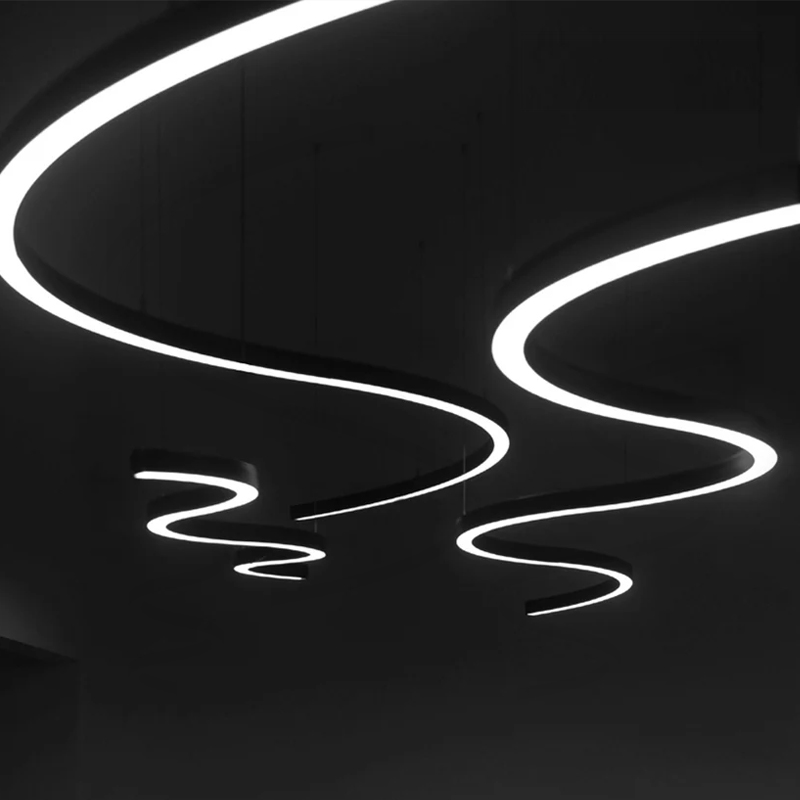
S Forme S Forme Profile Lumière Linéaire LED
- Tension d'entrée : AC100-277V/AC220-240V, 50-60Hz
- Matériau : 6063 Profilé en aluminium extrudé + PMMA
- Taille du profil : W60H80mm/W60H60mm
- Taille du produit : L890W235mm/L1230W306mm/L1455W355mm/L1655W395mm/L2160W500mm/L2590W590mm/L2870*W645mm/Customized Available
- Puissance : 10W/15W/20W/25W/30W/40W/50W/60W/personnalisé disponible
- Puce LED : SMD2835
- Efficacité lumineuse : 110lm/W
- Émettant de la couleur : 3000K/4000K/6000K
- Couleur de finition : Noir/Blanc/Argent/Or
- Flicker sans scintillement : Oui
- IRC : >80
- PF : >0.95
- Fonction : Marche/Arrêt, gradation 0-10V, gradation du triac, gradation DALI
- Classe IP : IP20
Certifications and Standards
| Certification | Objectif |
| CE | European compliance |
| UL | Safety certification |
| RoHS | Environmental compliance |
| ERP | Efficacité énergétique |
Decision Insight:
Products with proper certifications ensure regulatory compliance and reduce project risk.
Types of LED Manufacturers
LED manufacturers can generally be categorized into three groups: global brands, OEM/ODM manufacturers, and low-cost suppliers. Global brands offer high reliability and standardized products but at a higher price. OEM manufacturers provide flexible customization and competitive pricing, while low-cost suppliers focus on affordability but may compromise consistency.
Manufacturers such as SignliteLED represent OEM-focused suppliers that balance cost, customization, and production scalability.
Decision Insight:
OEM manufacturers often provide the best balance between cost efficiency and customization flexibility for B2B projects.
Top Commercial and Architectural LED Lighting Manufacturers
Signify
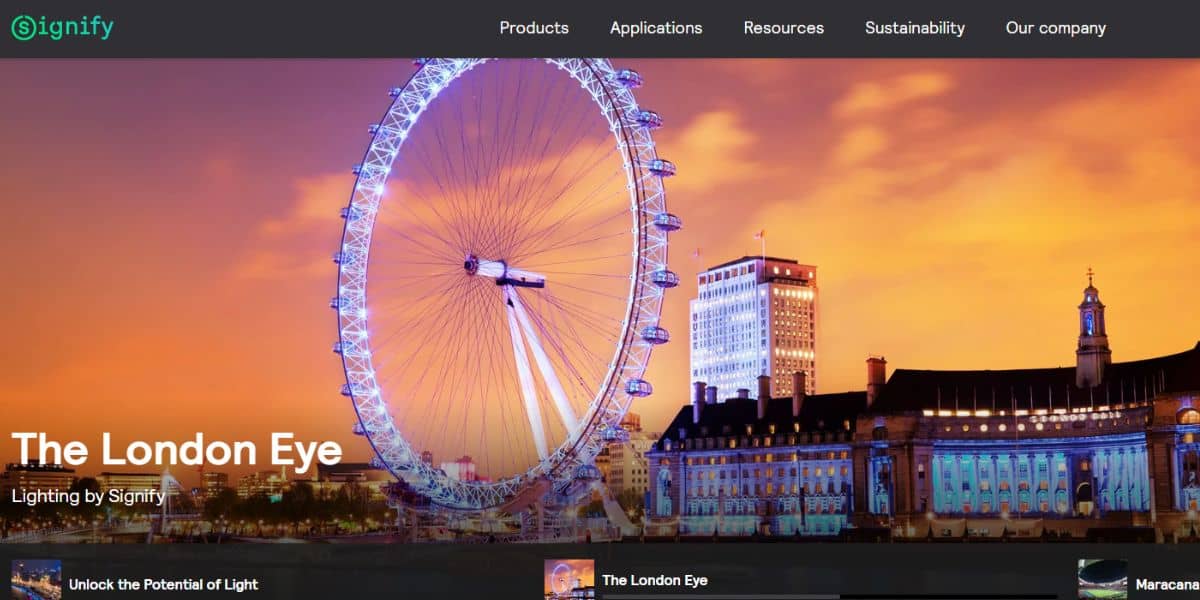
Signify, formerly Philips Lighting, is one of the largest lighting companies globally. It offers a wide range of commercial and architectural lighting solutions, including smart lighting systems and connected lighting platforms. Its products are known for reliability, global certification compliance, and integration with advanced control systems, making it a preferred choice for large-scale projects.
osram
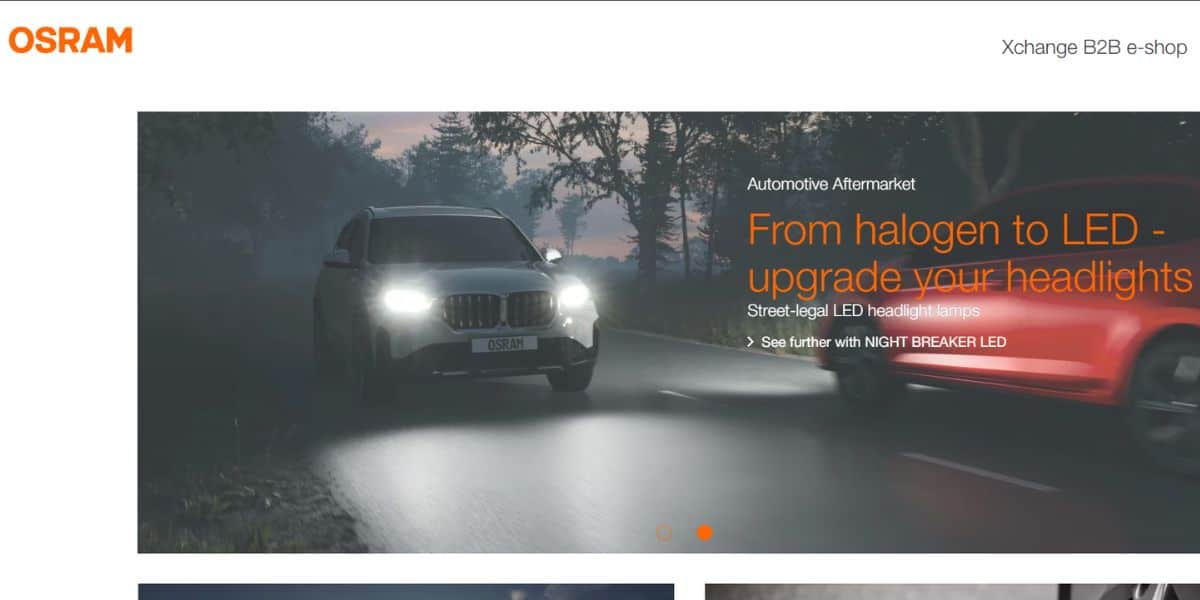
OSRAM is a German-based lighting manufacturer with a strong focus on advanced lighting technologies. It specializes in high-performance LED solutions for industrial, automotive, and architectural applications. OSRAM products are recognized for precision engineering, strong optical performance, and consistent quality across demanding environments.
Acuity Brands
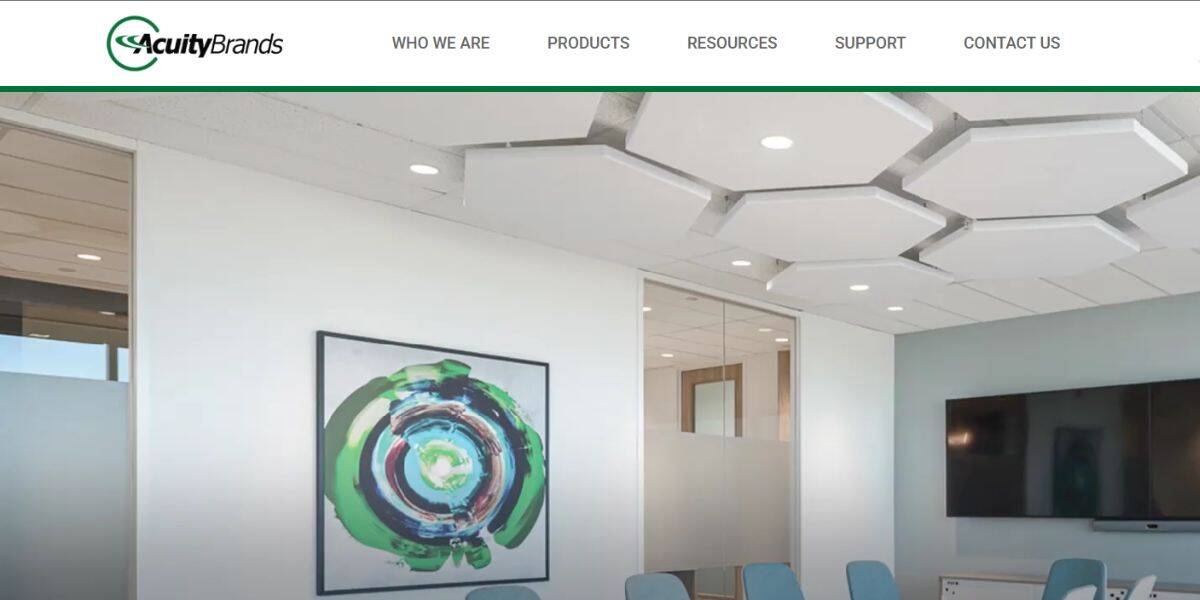
Acuity Brands is a leading North American manufacturer focusing on commercial and industrial lighting systems. The company provides a wide range of lighting fixtures, control systems, and smart building solutions. Its strength lies in integrated lighting systems designed for large infrastructure and commercial projects.
Éclairage cri
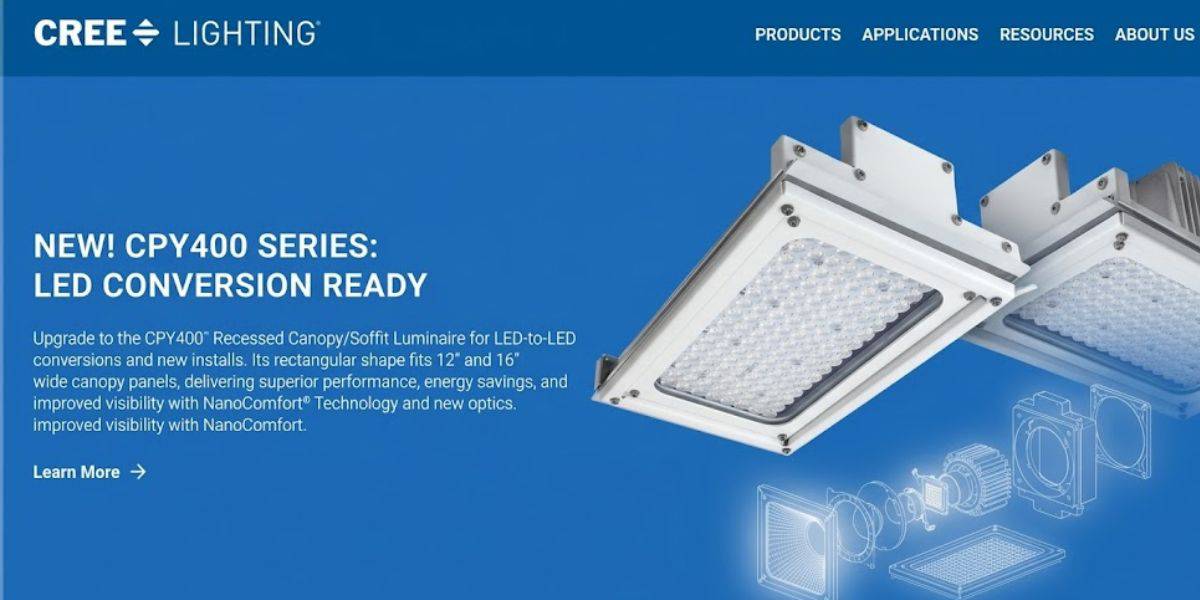
Cree Lighting is known for its innovation in LED chip technology and high-efficiency lighting systems. The company has played a significant role in improving LED performance standards, particularly in terms of efficacy and thermal management. Its products are widely used in commercial and industrial environments.
SignliteLED
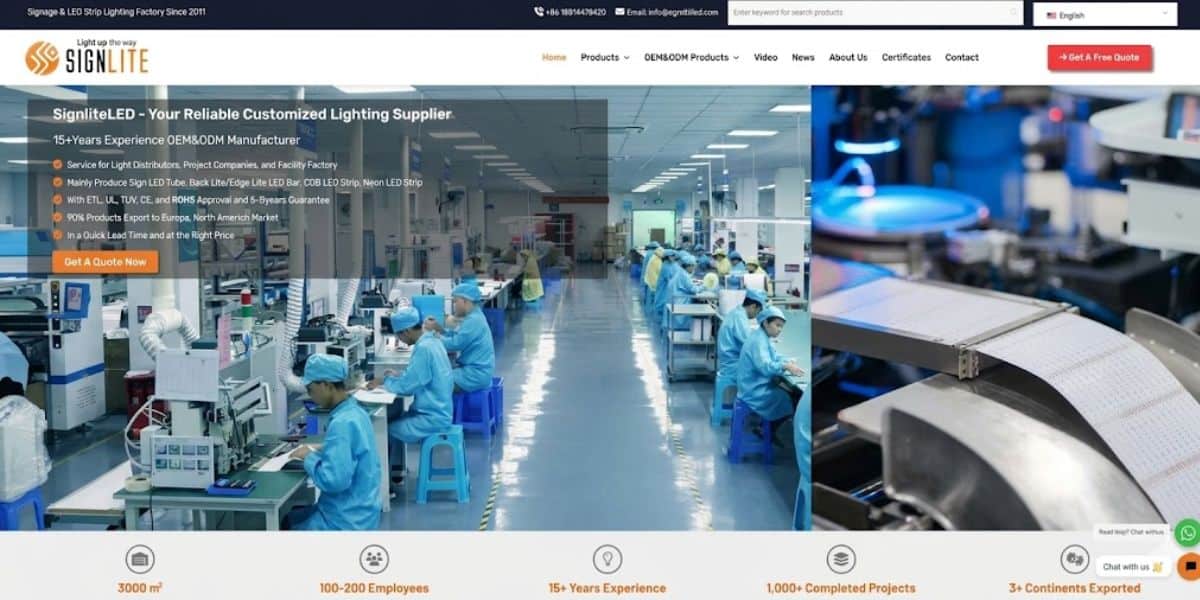
SignliteLED is an OEM/ODM LED manufacturer specializing in LED strip lighting and linear lighting solutions for commercial and architectural applications. The company focuses on customization, offering flexible options in terms of CRI, waterproof ratings (IP20 to IP68), voltage configurations, and installation formats. It is particularly suited for B2B clients requiring tailored lighting solutions for specific projects.
Decision Insight:
Global brands offer standardized and high-reliability solutions, while OEM manufacturers such as SignliteLED provide flexible and cost-effective customization for project-based requirements.
Cost Comparison of LED Manufacturers
| Type | Fourchette de prix | MOQ | Garantie |
| Global Brands | $50–$150 | Faible | 5 ans |
| OEM Manufacturers | $20–$80 | Moyen | 3 à 5 ans |
| Low-cost Suppliers | $10–$40 | Faible | 1–2 years |
Decision Insight:
OEM manufacturers typically provide the best cost-to-performance ratio for large-scale commercial and architectural projects.
How to Choose a Commercial LED Lighting Manufacturer
Selecting the right LED manufacturer requires evaluating several factors, including product performance, certifications, customization capability, pricing structure, and delivery timelines. Performance metrics such as efficacy, CRI, and lifespan should be verified through technical documentation rather than marketing claims.
It is also important to assess production capacity and consistency, especially for large-scale projects where uniformity across batches is critical.
Decision Insight:
The most reliable manufacturer is one that delivers consistent quality, transparent specifications, and stable production capacity.
Procurement Checklist
• define lighting requirements and application scenarios
• verify certifications and compliance standards
• request samples for testing
• confirm warranty and lifespan claims
• evaluate supplier production capacity and lead time
OEM vs Brand Manufacturers
| Facteur | OEM Manufacturers | Brand Manufacturers |
| Coût | $20–$80 | $50–$150 |
| Personnalisation | Haut | limité |
| Délai d'exécution | Flexible | Fixed |
| Gamme de produits | Project-based | Standardized |
Future Trends in LED Lighting
The LED lighting industry is evolving toward smart lighting systems, IoT integration, and higher energy efficiency. Modern lighting systems increasingly include sensors, automation, and remote control capabilities that allow dynamic adjustment based on occupancy and environmental conditions.
Energy efficiency is also improving, with next-generation LED systems targeting system efficacy above 150 lm/w while maintaining high color quality.
Decision Insight:
Future-ready lighting systems should support smart control, automation, and improved energy efficiency.
Final Decision
Choosing the right LED lighting manufacturer depends on project priorities. If the focus is on standardized products and global reliability, brand manufacturers are suitable. If customization, cost efficiency, and project-specific solutions are required, OEM manufacturers provide a more practical approach.
For most commercial and architectural projects, a balance between performance, cost, and flexibility is the key factor in decision-making.
Conclusion
Commercial and architectural LED lighting serve distinct but complementary roles in modern lighting design. Commercial lighting ensures efficient and uniform illumination for functional environments, while architectural lighting enhances visual impact and design aesthetics.
Selecting the right LED manufacturer requires a comprehensive understanding of performance metrics, product categories, application requirements, and cost structures. Factors such as efficacy, CRI, thermal management, and system reliability all contribute to long-term performance and operational efficiency.
In B2B projects, the choice of manufacturer has a direct impact on installation quality, maintenance costs, and overall project success. Global brands provide standardized and highly reliable solutions, while OEM manufacturers offer flexibility and cost advantages for customized applications.
By carefully evaluating technical specifications, certifications, manufacturing capabilities, and cost structures, buyers can make informed decisions that balance performance, reliability, and budget. A well-selected LED lighting system not only improves energy efficiency but also enhances the overall value and functionality of the project.
FAQ
Articles Similaires