Français
  English
  简体中文
简体中文  Deutsch
  Español
  Italiano
  日本語
日本語  한국어
한국어  Polski
  Português
  Русский
  Türkçe
  Nederlands
  Tiếng Việt
  ไทย
ไทย 
Dans l'industrie de la fabrication électronique, "PCB" et "PCBA" sont mentionnés presque quotidiennement. Cependant, ces deux concepts suscitent souvent la confusion, même parmi les startups matérielles ou les équipes d'approvisionnement sans expérience en électronique.
Certains pensent qu'ils ne sont que des synonymes, d'autres supposent à tort que PCBA est simplement une "version améliorée du PCB", et certains membres du personnel d'approvisionnement ne savent même pas quel service ils ont vraiment besoin lors de la demande de devis.
En réalité, la distinction entre les PCB et les PCBA va au-delà des définitions, ce qui a un impact direct sur les coûts des produits, les cycles de livraison, les risques de qualité et la complexité de la chaîne d'approvisionnement. En particulier dans le contexte de 2026, où l'électronique est très intelligente et la technologie de l'IA est profondément intégrée dans les processus de fabrication, la compréhension correcte de la distinction entre PCB et PCBA est devenue essentielle pour que les entreprises réduisent les risques et améliorent leur efficacité.
Cet article analysera systématiquement les principales différences entre les PCB et les PCBA à partir de plusieurs dimensions (définitions techniques, processus de fabrication, structures de coûts, tendances de l'industrie et décisions d'approvisionnement) pour aider les ingénieurs et le personnel d'approvisionnement à faire des choix plus éclairés au début des projets.
Qu'est-ce qu'un PCB ? (carte de circuit imprimé)
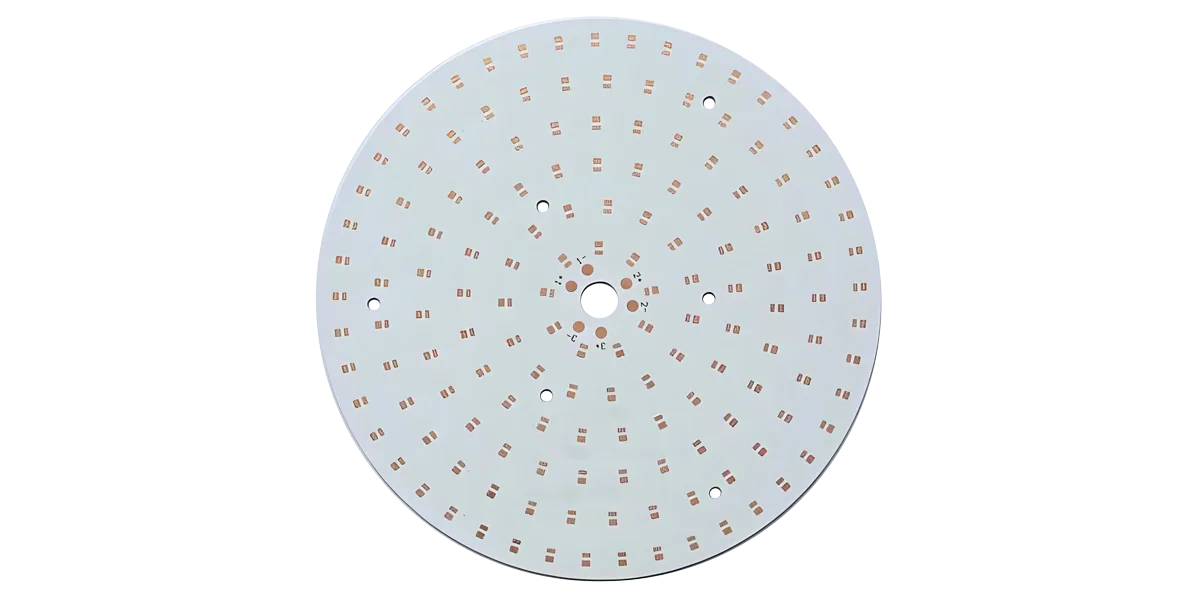
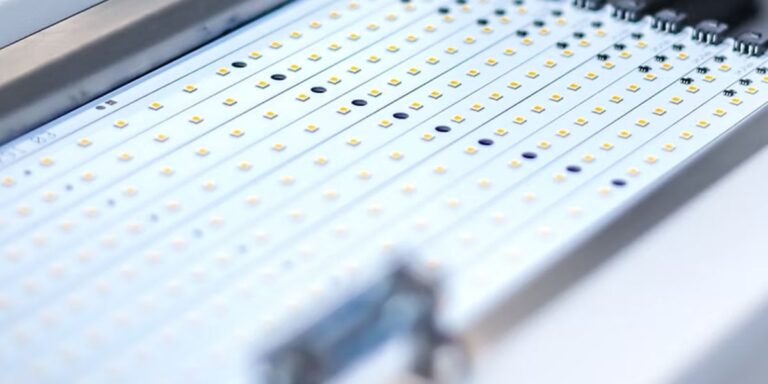
Un circuit imprimé (carte de circuit imprimé) sert de support fondamental pour les composants électroniques, permettant des connexions électriques via des traces de feuille de cuivre, des plots et des vias. Un PCB fait uniquement référence à la « carte nue » sans aucun composant électronique monté dessus. Cependant, il constitue la base physique des produits électroniques, fournissant le substrat pour les circuits et facilitant les connexions électriques.
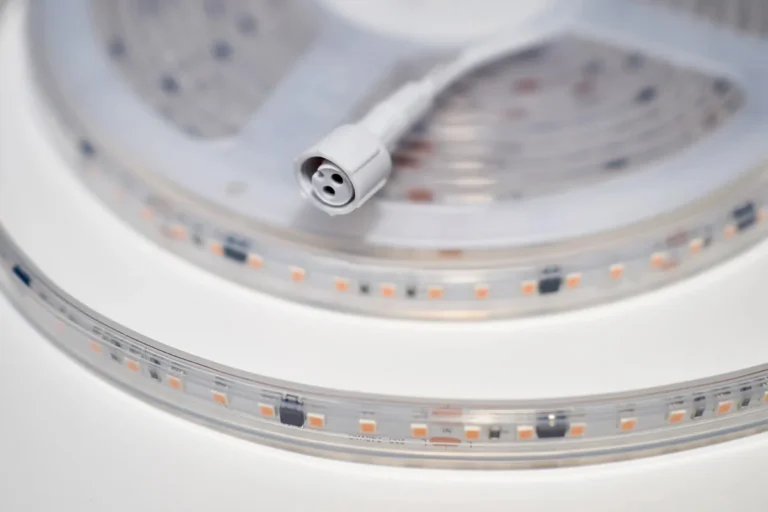
Les circuits imprimés servent de point de départ pour tous les systèmes d'éclairage LED, qu'il s'agisse de bandes LED flexibles ou de modules LED haute puissance.
Composants structurels des circuits imprimés LED
Un circuit imprimé LED typique comprend généralement :
1. matériau de base
- FR-4 : convient aux LED de puissance faible à moyenne
- PCB à noyau métallique (MCPCB): à base d'aluminium ou de cuivre, largement utilisé dans les bandes et modules LED haute puissance pour des performances thermiques supérieures
- Matériaux haute fréquence : utilisés dans les systèmes d'éclairage intelligent et de LED IoT
2 Couche de cuivre
L'épaisseur du cuivre (1 oz–6 oz) a directement impacté :
- Capacité de charge actuelle
- Contrôle des chutes de tension
- Performance de gestion thermique des bandes LED
3. Masque de soudure
Empêche les courts-circuits et l'oxydation. Dans l'industrie de la LED, le masque à souder blanc est largement adopté pour ses propriétés réfléchissantes supérieures.
4. Sérigraphie
Les marquages indiquent la polarité des LED, l'orientation et les numéros de pièces, facilitant la production et la maintenance de masse.
Types de circuits imprimés courants dans l'industrie des LED
Les types de PCB et les applications de l'industrie des LED sont principalement les suivants :
| Type | Matériau | Scénario d'application |
| PCB à bande flexible LED | Circuit imprimé flexible (FPC) | Emplacements d'éclairage, armoires, environnements d'installation irrégulières |
| Compacteur de module LED | panneau de fibre de verre FR-4 / fond de base en aluminium | Lumières linéaires, plafonniers (FR-4 pour faible puissance, aluminium pour haute puissance) |
| PCB à bande rigide LED | CIDE ALUMINIUM BASE PCB / CUIVRE ÉPAISSE FR | Éclairage linéaire, éclairage industriel |
| Carte de circuit imprimé LED personnalisée | Carte de circuit imprimé LED personnalisée | Éclairage haut de gamme / professionnel |
Qu'est-ce que la PCBA ? (ensemble de carte de circuit imprimé)
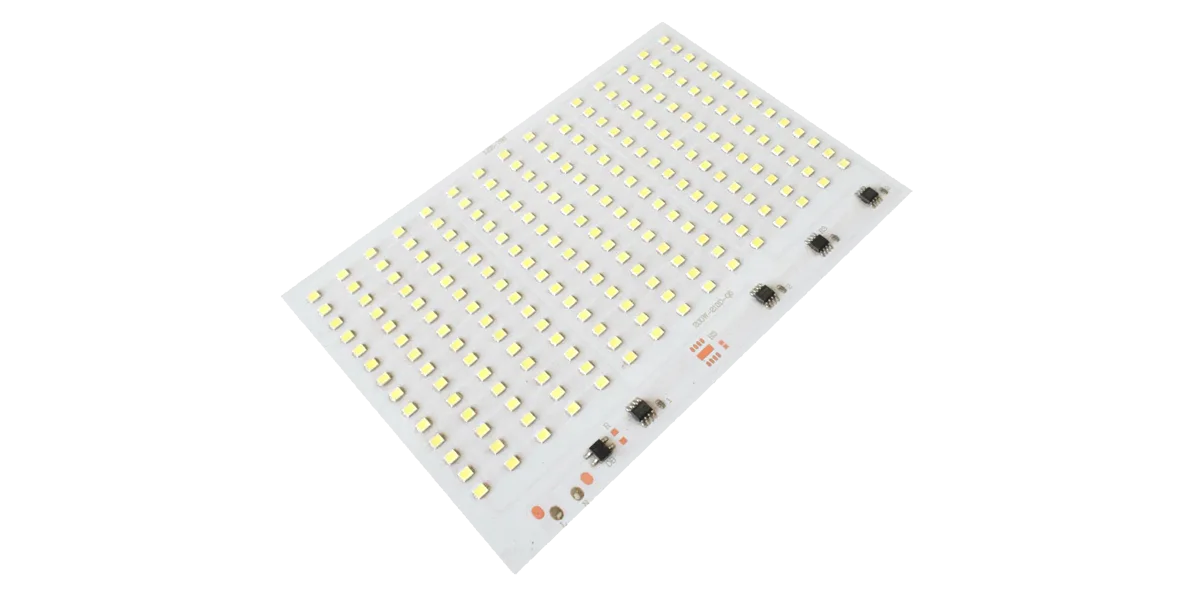
PCBA (ensemble de circuits imprimés) Se réfère à la carte de circuits imprimés finie produite en soudant des composants électroniques tels que des résistances, des condensateurs, des circuits intégrés, des LED et des connecteurs sur un PCB à l'aide de processus SMT ou THT. Il possède des propriétés électriques et fonctionnelles complètes. C'est le système de circuit fini après que les composants électroniques sont soudés, assemblés et testés sur le PCB.
La PCBA est l'étape critique qui rend un PCB "vraiment fonctionnel".
1. Pourquoi les produits LED doivent-ils subir un PCBA ?
Sans PCBA :
- Les LED ne peuvent pas s'allumer.
- Les conducteurs à courant constant ne peuvent pas fonctionner de manière stable.
- Les fonctions de contrôle et de gradation intelligents ne peuvent pas être implémentées.
Puces LED soudées, résistances, condensateurs, circuits intégrés de pilote, connecteurs et autres composants du PCBA sur le PCB, le transformant en un système d'éclairage fonctionnel.
2 Processus d'assemblage de PCBA LED
- SMT (technologie de montage en surface)
– Processus grand public pour les bandes et modules LED
– Automatisation, efficacité et cohérence élevées
– Convient aux arrangements de LED haute densité
- THT (technologie traversante)
– Utilisé pour les interfaces électriques et les terminaux à courant élevé
– Haute résistance mécanique et stabilité
– Assemblage hybride (SMT + THT)
– Commun dans les luminaires à LED commerciaux et industriels, équilibrant performances et fiabilité.
Comparaison des processus de fabrication de PCB et de PCBA (étape par étape)
Comprendre les processus de fabrication est essentiel pour saisir leurs différences.
Le processus de fabrication de PCB comprend principalement l'exposition, la gravure, le perçage, le placage, etc. Reportez-vous au schéma suivant pour le flux de travail spécifique :
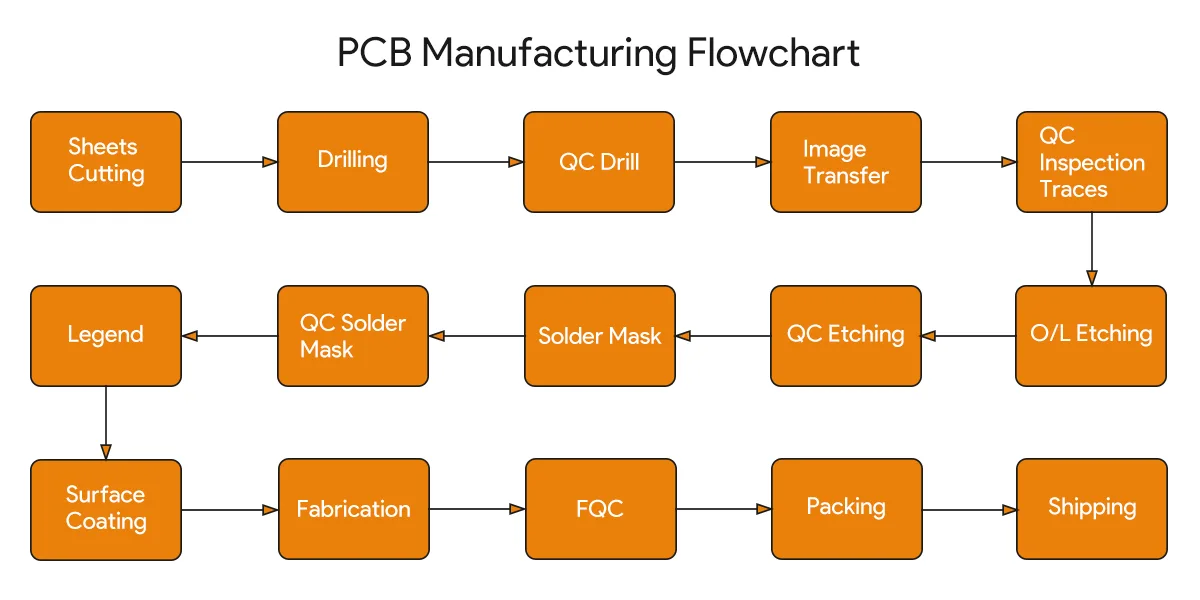
À ce stade, le circuit imprimé reste une carte nue sans aucune fonction d'éclairage ou de contrôle.
Le processus de fabrication de PCBA comprend principalement le placement, l'assemblage et les tests de SMT. Le flux de travail spécifique est illustré dans le tableau ci-dessous :
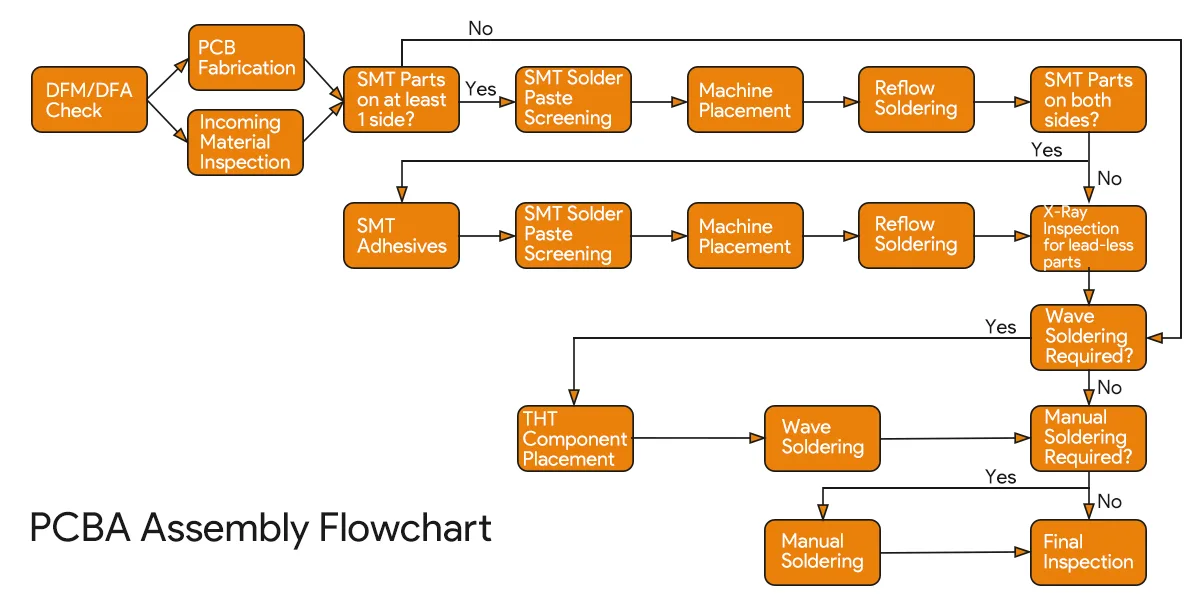
Comme indiqué, le processus de PCBA est nettement plus long que la fabrication de PCB et repose davantage sur l'expertise, l'équipement et les capacités de gestion.
PCB vs PCBA : différences clés en un coup d'œil
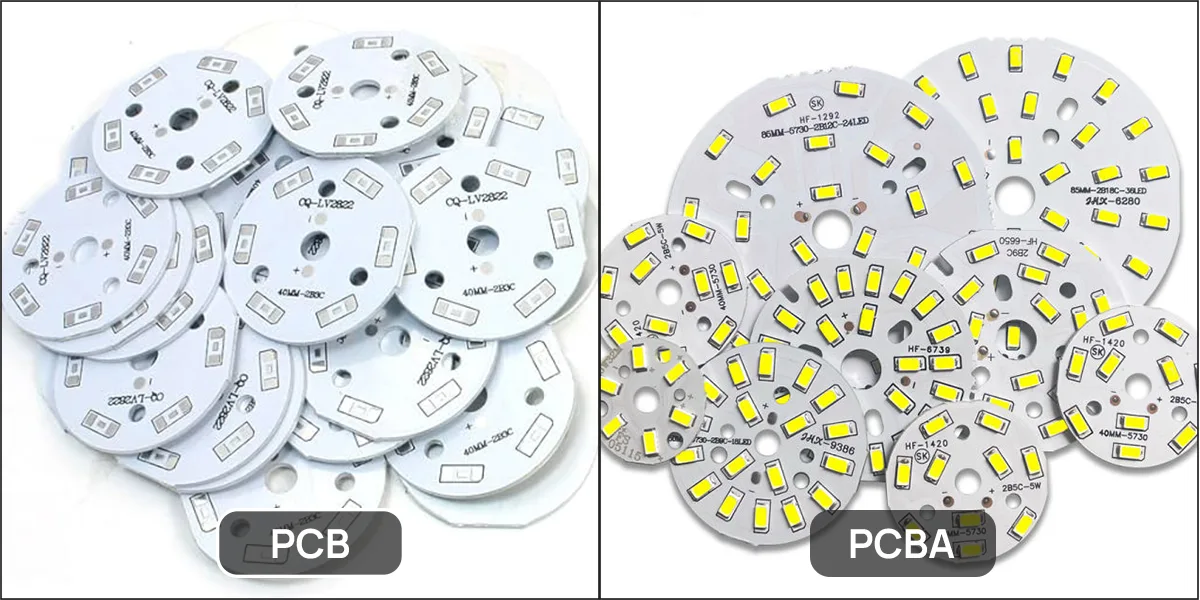
Quelle est la différence entre la carte PCB et la PCBA? Une analogie simple : PCB = la structure fondamentale, semblable à la structure et à la tuyauterie d'un bâtiment ; PCBA = le produit fini fonctionnel, un bâtiment entièrement alimenté et opérationnel.
Dans les produits d'éclairage LED, un PCB nu seul ne peut pas émettre de lumière. Ce n'est qu'après avoir terminé la PCBA que les bandes ou les modules de LED peuvent fonctionner correctement.
| Ccatégorie | PCB (carte de circuit imprimé) | PCBA (ensemble de carte de circuit imprimé) |
| Définition | Une planche nue en substrat isolant et des traces de cuivre conductrice, sans composants électroniques | Un module fonctionnel créé par l'assemblage de composants électroniques (résistances, condensateurs, ICS, etc.) sur un circuit imprimé |
| fonction principale | Fournit des chemins de connexion électriques et un support mécanique pour les composants | Exécute des fonctions électroniques réelles telles que le traitement du signal, la gestion de l'alimentation et la logique de contrôle |
| état physique | "Plan nu" non peuplé | « Module fini » entièrement assemblé et soudé |
| Apparence | Masque de soudure vert (ou autre couleur) avec des traces et des coussinets en cuivre visibles | Couvert de composants, de joints de soudure et de fils; disposition fonctionnelle clairement visible |
| Portée de fabrication | Fabrication de planches uniquement | Sourcing de composants + assemblage + test |
| Processus de production | Découpe de matériaux → Lamination en cuivre → Gravure de circuit → Perçage → Finition de surface | Inspection entrante → Placement SMT → Reflux / soudure à la vague → Inspection et tests fonctionnels |
| Principale orientation technique | Exactitude des traces, contrôle d'impédance, précision de gravure au niveau micron | Qualité de soudure, précision de placement, contrôle du rendement (généralement ≥99,9%) |
| Structure des coûts | Matières premières + processus de fabrication de PCB | Composants électroniques (BOM) + Assemblage + Test |
| Niveau de coût typique | relativement faible (PCB personnalisé : env. $0.1–$5 par carte) | Plus élevé (les prototypes de PCBA commencent généralement à partir de $30, selon la nomenclature) |
| Délai de livraison | Porte-véhicule électrique sans fonctionnalité | Circuit électronique prêt à l'emploi avec des fonctions définies |
1. Différences fonctionnelles
- PCB : fournit uniquement les voies de circuit
- PCBA : système LED entièrement opérationnel prêt à être mis sous tension
2. Portée de fabrication
- PCB : fabrication de cartes de circuits
- PCBA : Approvisionnement des composants + Assemblage + Test
3. Documentation requise (questions d'approvisionnement fréquemment posées)
La fabrication de PCB nécessite :
- Fichiers Gerber
- Fichiers d'exploration NC
PCBA nécessite :
- BOM (publicité)
- Pick-and-Place (fichiers de coordination)
- Fichiers de gabarit
4. Test et contrôle de la qualité
PCB :
- Test de continuité électrique
- Contrôle visuel
- Mesure d'épaisseur de cuivre
- Test d'impédance
PCBA :
- Inspection de la pâte de soudure SPI
- Inspection optique automatique AOI
- Radiographie (BGA, inspection des joints de soudure IC du conducteur)
- TIC/Tests fonctionnels (luminosité, courant, stabilité)
- Tests de vieillissement et de fiabilité
- Flux lumineux et tests de performances électriques
5. Emballage et logistique
- PCB : emballage anti-humidité sous vide
- PCBA : emballage antistatique (ESD), plateaux personnalisés
Pourquoi la PCBA est-elle nettement plus chère que le PCB ?
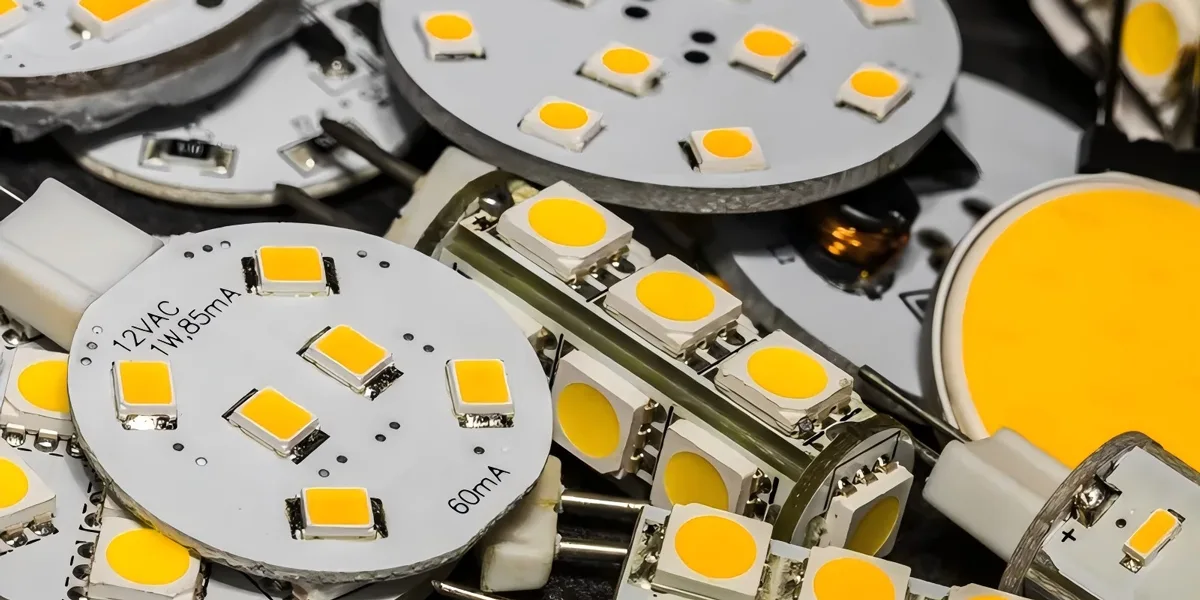
Il s'agit de l'une des questions les plus fréquemment posées par le personnel des achats. Le coût plus élevé de la PCBA n'est pas simplement dû à des "frais de traitement accrus", mais plutôt à la suite de multiples facteurs :
- Coûts des composants: Les puces, les résistances, les condensateurs, les LED, les circuits intégrés de commande et d'autres composants constituent souvent la plus grande partie des coûts de PCBA.
- Investissement de main-d'œuvre: Les machines à pick-and-place, les fours de refusion, les systèmes AOI et les équipements de test sont tous des atouts de grande valeur.
- Coûts de rendement et de risque: Les défauts de soudure, les défauts de matière et les problèmes de conception comportent tous des risques de retouches ou de rebuts.
- Coûts de gestion de la chaîne d': Les pénuries de matériaux, les substitutions de composants et les fluctuations du calendrier de livraison nécessitent une coordination supplémentaire.
D'un point de vue commercial, la PCBA est fondamentalement un « service d'ingénierie système », et non simplement de fabrication.
Tendances de l'industrie 2026 : comment l'IA transforme-t-elle les PCB/PCBA ?
D'ici 2026, l'intelligence artificielle est passée au-delà des étapes conceptuelles pour s'intégrer profondément dans la production de PCB et de PCBA, accélérant le passage de l'industrie vers une fabrication hautement intégrée et intelligente.
Les principales tendances comprennent :
- Analyse DFM assistée par l'IA: Prédit les problèmes de fabrication potentiels avant la production, réduisant les essais.
- Détection de défauts AOI alimenté par l'IA: Identifie les défauts complexes comme les joints de soudure à froid et le désalignement grâce à l'apprentissage en profondeur, ce qui réduit les taux de mauvaise évaluation.
- Planification intelligente et prévision des matériaux: Optimise l'utilisation de la capacité tout en réduisant l'incertitude de livraison.
- Données de qualité en boucle fermée: Améliore continuellement le rendement et la cohérence grâce à l'analyse des données.
À l'avenir, les usines de PCBA compatibles avec l'IA bénéficieront d'avantages importants en matière de délais de livraison, de contrôle de la qualité et de gestion des coûts.
Faut-il opter pour un PCB nu ou un PCBA unique ?
Il n'y a pas de réponse unique, tout dépend de votre type de projet.
Si vous avez une équipe d'électronique expérimentée et des ressources SMT fiables et que vous n'avez besoin que de cartes nues, les PCB offrent une plus grande flexibilité et peuvent être plus rentables.
Si vous visez à réduire les coûts de coordination, à minimiser les risques de qualité et à accélérer la mise sur le marché, la PCBA unique est généralement le choix supérieur.
Pour des produits comme les panneaux d'éclairage LED, Modules LED, et l'éclairage intelligent, PCBA améliore considérablement la cohérence et la fiabilité de la livraison.
Pécules courants des marchés publics/PCB
Les erreurs suivantes sont fréquemment rencontrées dans des projets réels :
- Fournir des fichiers de conception incomplets ou non vérifiés
- Différences entre les nomenclatures et la conception réelle
- Négliger les exigences de test tout en se concentrant uniquement sur le prix unitaire
- Attribution de projets PCBA complexes à des fournisseurs de PCB
Ces problèmes restent souvent inaperçus lors de la citation, mais amplifient les risques lors de la production de masse.
Guide de décision d'approvisionnement : comment choisir ?
Avant de finaliser votre sélection, priorisez l'évaluation de ces facteurs :
- Complexité du projet et taille du lot
- Ingénierie interne et capacités de la chaîne d'approvisionnement
- Exigences en matière de délai et de cohérence
- Besoin d'un partenaire stable et à long terme
Le choix optimal n'est pas nécessairement le devis le plus bas, mais la solution avec le risque global le plus faible.
Conclusion
En résumé, les PCB et les PCBA jouent des rôles distincts mais complémentaires dans la fabrication électronique. Les circuits imprimés fournissent la structure de base et les connexions électriques, tandis que la PCBA offre une fonctionnalité et une valeur commerciale complètes au produit.
Pour les fabricants d'éclairage LED, la compréhension de la distinction entre les PCB et les PCBA transcende les considérations techniques, c'est une décision stratégique. La sélection de la solution de fabrication et d'assemblage appropriées aide à réduire les coûts, à améliorer la qualité et à accélérer les lancements de produits sur les marchés mondiaux. Alors que l'intégration des produits continue de progresser, les solutions PCBA avec des capacités d'ingénierie et des avantages de contrôle de la qualité joueront un rôle de plus en plus essentiel sur les marchés mondiaux de l'électronique et de l'éclairage LED.
FAQ
Articles Similaires